NEET-UG 2004

AIPMT 2004

Physics (Maximum Marks: 184)
  • This section contains 46 questions.
  • Each question has FOUR options (A), (B), (C) and (D). ONLY ONE of these four options is the correct answer.
  • Full Marks : +4 If ONLY the correct option is chosen;
  • Zero Marks : 0 If none of the options is chosen (i.e. the question is unanswered);
  • Negative Marks : −1 In all other cases.
Q.1
The dimensions of universal gravitational constant are
(A)
[M1L3T2]
(B)
[ML2T1]
(C)
[M2L3T2]
(D)
[M2L2T1]
(A)

Solution

F =

G =

Dimension of G = =
Q.2
The unit of permittyvity of free space, , is
(A)
coulomb/newton-metre
(B)
newton-metre2/coulomb2
(C)
coulomb2/newton-metre2
(D)
coulomb2/(newton-metre)2
(C)

Solution

F =


Unit of = coulomb2/newton-metre2
Q.3
If then the value of is
(A)
(A2 + b2 + AB)1/2
(B)
(C)
A + B
(D)
(A2 + B2 + AB)1/2.
(A)

Solution


    = 60o


= (A2 + b2 + AB)1/2
Q.4
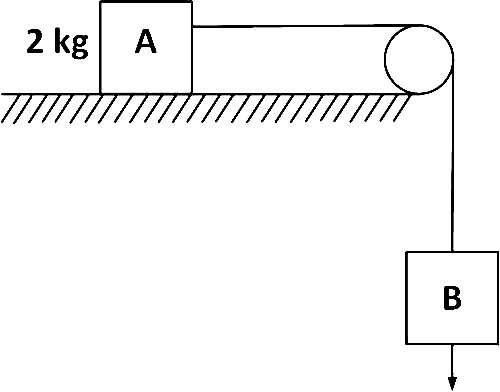
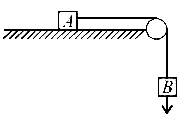
The coefficient of static friction, s, between block A of mass 2 kg and the table as shown in the figure is 0.2. What would be the maximum mass value of block B so that the two blocks do not move? The string and the pulley are assumed to be smooth and massless. (g = 10 m/s2)

AIPMT 2004 Physics - Laws of Motion Question 21 English
(A)
2.0 kg
(B)
4.0 kg
(C)
0.2 kg
(D)
0.4 kg
(D)

Solution

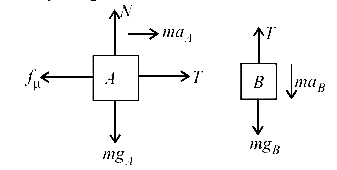
AIPMT 2004 Physics - Laws of Motion Question 21 English Explanation 1 Free body diagram of two masses is

AIPMT 2004 Physics - Laws of Motion Question 21 English Explanation 2

We get equations
or

and T = ma + mg or T = mBg (for a = 0)


Q.5
A block of mass m is placed on a smooth wedge of inclination . The whole system is accelerated horizontally so that the block does not slip on the wedge. The force exerted by the wedge on the block will be (g is acceleration due to gravity)
(A)
mg cos
(B)
mg sin
(C)
mg
(D)
mg/cos
(D)

Solution

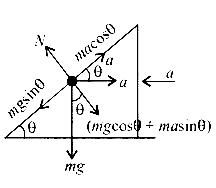
AIPMT 2004 Physics - Laws of Motion Question 38 English Explanation The wedge is given an acceleration to the left.
The block has a pseudo acceleration to the right, pressing against the wedge because of which the block is not moving.

mgsin = macos

or

Total reaction of the wedge on the block is N = mgcos + masin.


Q.6
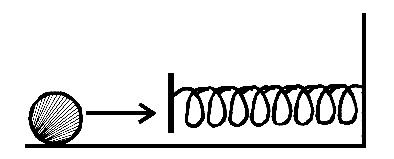
A mass of 0.5 kg moving with a speed of 1.5 m/s on horizontal smooth surface, collides with a nearly weightless spring of force constant k = 50 N/m. The maximum compression of the spring would be

AIPMT 2004 Physics - Work, Energy and Power Question 23 English
(A)
0.15 m
(B)
0.12 m
(C)
1.5 m
(D)
0.5 m
(A)

Solution

It is observed that if mass colloids with spring in such case, spring will be compressed, so kinetic energy of mass will be equal to that of springs potential energy.

Further, if y is the compression, then


y = 0.15 m
Q.7
A particle of mass m1 is moving with a velocity v1 and another particle of mass m2 is moving with a velocity v2. Both of them have the same momentum but their different kinetic energies are E1 and E2 respectively. If m1 > m2 then :
(A)
E1 < E2
(B)
(C)
E1 > E2
(D)
E1 = E2
(A)

Solution

Kinetic energy =

as m1 > m2

E1 < E2
Q.8
A ball of mass 2 kg and another of mass 4 kg are dropped together from a 60 feet ball building. After a fall of 30 feet each towards earth, their respective kinetic energies will be in the ratio of
(A)
: 1
(B)
1 : 4
(C)
1 : 2
(D)
1 :
(C)

Solution

From the question, as height is same for both balls, so their velocities on reaching the ground will be same.

Hence in such case kinetic energy ∝ mass

So,
Q.9
Consider a system of two particles having masses m1 and m2. If the particle of mass m1 is pushed towards the mass centre of particles through a distance d. by what distance would be particle of mass m2 move so as to keep the mass centre of particles at the original position?
(A)
d
(B)
d
(C)
d
(D)
d
(B)

Solution

   ...(i)

After changing position of m1 and to keep the position of C.M. same


   [Substituting value of C.M. from (i)]

Q.10
The ratio of the radii of gyration of a circular disc about a tangential axis in the plane of the disc and of a circular ring of the same radius about a tangential axes in the plane of the ring is
(A)
2 : 3
(B)
2 : 1
(C)
(D)
(C)

Solution

Radius of gyration of disc about a tangential axis in the plane of disc is , radius of gyration of circular ring of same radius about a tangential axis in the plane of circular ring is


Q.11
A round disc of moment of inertia 2 about its axis perpendicular to its plane and passing through its centre is placed over another disc of moment of inertia 1 rotating with an angular velocity about the same axis. The final angular velocity of the combination of discs is
(A)
(B)
(C)
(D)
(C)

Solution

The initial angular momentum of the system is and final angular momentum is where

= final angular velocity of combination of discs
On equating the initial and final angular momentum, we get

Q.12
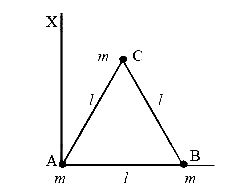
Three particles, each of mass m gram, are situated at the vertices of an equilateral triangle ABC of side cm (as shown in the figure). The moment of inertia of the system about a line AX perpendicular to AB and in the plane of ABC, in gram-cm2 units will be

AIPMT 2004 Physics - Rotational Motion Question 42 English
(A)
m2
(B)
2m2
(C)
m2
(D)
m2
(C)

Solution

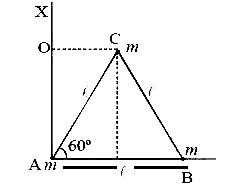
AIPMT 2004 Physics - Rotational Motion Question 42 English Explanation
IAX = m(AB)2 + m(OC)2
= m2 + m ( cos 60º)2
= m2 + m2/4 = 5/4 m2
Q.13
A wheel having moment of inertia 2 kg m2 about its vertical axis, rotates at the rate of 60 rpm about this axis. The torque which can stop the wheel's rotation in one minute would be
(A)
N m
(B)
N m
(C)
N m
(D)
N m
(C)

Solution


where is retardation.

The torque on the wheel is given by


N m

This is the torque required to stop the wheel in 1 min. (or 60 sec.).
Q.14
The density of a newly discovered planet is twice that of earth. The acceleration due to gravity at the surface of the planet is equal to that at the surface of the earth. If the radius of the earth is R, the radius of the planet would be
(A)
2R
(B)
4R
(C)
R
(D)
R
(D)

Solution

From equation of acceleration due to gravity.


Acceleration due to gravity of planet


  ( Re = R)
Q.15
If m denotes the wavelength at which the radioactive amission from a black body at a temperature TK is maximum, then
(A)
(B)
is independent of T
(C)
T
(D)
(D)

Solution

From Wein’s displacement law

= constant

Q.16
One mole of an ideal gas at an initial temperature of T K does 6R joule of work adiabatically. If the ratio of specific heats of this gas at constant pressure and at constant volume is 5/3, the final temperature of gas will be
(A)
(T + 2.4) K
(B)
(T 2.4) K
(C)
(T + 4) K
(D)
(T 4) K
(D)

Solution


Q.17
The equation of state for 5 g of oxygen at a pressure P and temperature T, when occupying a volume V, will be
(where R is the gas constant)
(A)
PV = (5/32)RT
(B)
PV = 5RT
(C)
PV = (5/2)RT
(D)
PV = (5/16) RT
(A)

Solution

As PV = nRT


Q.18
A particle executing simple harmonic motion of amplitude 5 cm has maximum speed of 31.4 cm/s. The frequency of its oscillation is
(A)
4 Hz
(B)
3 Hz
(C)
2 Hz
(D)
1 Hz
(D)

Solution

In S.H.M,

Hz per sec.
Q.19
Two springs of spring constants k1 and k2 are joined in series. The effective spring constant of the combination is given by
(A)
(B)
(k1 + k2)/2
(C)
k1 + k2
(D)
k1k2/(k1 + k2)
(D)

Solution


Q.20
The phase difference between two waves. represented by
y1 = 106 sin[100t + (x/50) + 0.5] m
y2 = 106 cos[100t + (x/50)] m,
where x is expressed in metres and t is exressed in secondss, is approximately.
(A)
1.07 radians
(B)
2.07 radians
(C)
0.5 radians
(D)
1.5 radians
(A)

Solution

y1 = 10–6sin[100t + (x/50) + 0.5]

y2 = 10–6cos[100t + (x/50)]
[using cosx = sin(x + /2)]

= 10–6sin[100t + (x/50) + /2]

= 10–6sin[100t + (x/50) + 1.57]

The phase difference = 1.57 – 0.5 = 1.07

[or using sinx = cos(/2 – x). We get the same result.]
Q.21
A car is moving towards a high cliff. The driver sounds a horn of frequency . The reflected sound heard by the driver has frequency . If v is the velocity of sound, then the velocity of the car, in the same velocity units, will be
(A)
v/
(B)
v/3
(C)
v/4
(D)
v/2
(B)

Solution

Let f' be the frequency of sound heard by cliff.

   ...(1)

Now, for the reflected wave, cliff acts as a source,

   ...(2)


Q.22
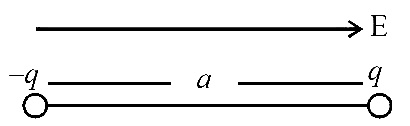
An electric dipole has the magnitude of its charge as q and its dipole moment is p. It is placed in a uniform electric field E. If its dipole moment is along the direction of the field, the force on it and its potential energy are respectively
(A)
2q.E and minimum
(B)
q.E and p.E
(C)
zero and minimum
(D)
q.E and maximum
(C)

Solution

When the dipole is in the direction of field then net force is qE + (–qE) = 0

AIPMT 2004 Physics - Electrostatics Question 40 English Explanation
and its potential energy is minimum = – P.E. = –qaE
Q.23
A bullet of mass 2 g is having a charge of 2 C. Through what potential difference must it be accelerated, starting from rst, to acquire a speed of 10 m/s ?
(A)
5 kV
(B)
50 kV
(C)
5 V
(D)
50 V
(B)

Solution

Using

Q.24
A 6 volt battery is connected to the terminals of a three metre long wire of uniform thickness and resistance of 100 ohm. The difference of potential between two points on the wire separated by a distance of 50 cm will be
(A)
2 volt
(B)
3 volt
(C)
1 volt
(D)
1.5 volt
(C)

Solution


For 300 cm, R = 100

For 50 cm,

IR = 6

Q.25
In India electricity is supplied for domestic use at 220 V. It is supplied at 110 V in USA. If the resistance of a 60 W bulb for use in India is R, the resistance of a 60 W bulb for use in USA will be
(A)
R
(B)
2R
(C)
R/4
(D)
R/2
(C)

Solution


Q.26
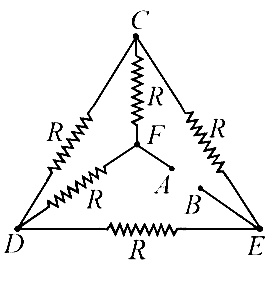
Five equal resistances each of resistances R are connected as shown in the figure. A battery of V volts is connected between A and B. The current flowing in AFCEB will be

AIPMT 2004 Physics - Current Electricity Question 64 English
(A)
(B)
(C)
(D)
(C)

Solution

A balanced Wheststone’s bridge exists between A & B.

Req = R

Current through circuit = V/R

Current through AFCEB = V/2R
Q.27
The electric resistance of a certain wire of iron is R. If its length and radius are both doubled, then
(A)
The resistance will be doubled and the specific resistance will be halved.
(B)
The resistance will be halved and the specific resistance will remain unchanged.
(C)
The resistance will be halved and the specific resistance will be doubled.
(D)
The resistance and the specific resistance, will both remain unchanged.
(B)

Solution

Resistance of wire =


When length and radius are both doubled


The specific resistance of wire is independent of geometry of the wire, it only depends on the material of the wire.
Q.28
Resistance n, each of r ohm, when connected in parallel give an equivalent resistance of R ohm. If these resistances were connected in series, the combination would have a resistance in ohms, equal to
(A)
n2R
(B)
R/n2
(C)
R/n
(D)
nR
(A)

Solution


When connected in series,

= n (nR) = n2R
Q.29
when three identical bulbs of 60 watt, 200 volt rating are connected in series to a 200 volt supply, the power drawn by them will be
(A)
60 watt
(B)
180 watt
(C)
10 watt
(D)
20 watt
(D)

Solution

The resistance of each bulb


When three bulbs are connected in series their resultant resistance


Thus power drawn by bulb when connected across 200 V supply

Q.30
To convert a galvanometer into a voltmeter one should connect a
(A)
high resistance in series with galvanometer
(B)
low resistance in series with galvanometer
(C)
high resistance in parallel wilh galvanometer
(D)
low resistance in parallel with galvanometer.
(A)

Solution

For converting galvanometer to voltmeter, a high resistance should be connected in series with galvanometer.
Q.31
A galvanometer of 50 ohm resistance has 25 divisions. A current of 4 104 ampere gives a deflection of one division. To convert this galvanometer into a voltmeter having a range of 25 volts, it should be connected with a resistance of
(A)
as a shunt
(B)
2450 as a shunt
(C)
2550 in series
(D)
2450 in series
(D)

Solution

The total current shown by the galvanometer,

Ig = 25 4 10-4 A = 10-2 A

The value of resistance connected in series to convert galvanometer into voltmeter of 25 V is

V = Ig(Re + Rg)

Re = = 2450
Q.32
The magnetic flux through a circuit of resistance R changes by an amount in a time t. Then the total quantity of electric charge Q that passes any point in the circuit during the time t is represented by
(A)
(B)
(C)
(D)
(B)

Solution

= E = iR

= QR

Q =
Q.33
A coil of 40 henry inductance is connected in series with a resistance of 8 ohm and the combination is joined to the terminals of a 2 volt battery. The time constant of the circuit is
(A)
5 seconds
(B)
1/5 seconds
(C)
40 seconds
(D)
20 seconds
(A)

Solution

Time constant of LR circuit is = L/R.

= 40/8 = 5 sec.
Q.34
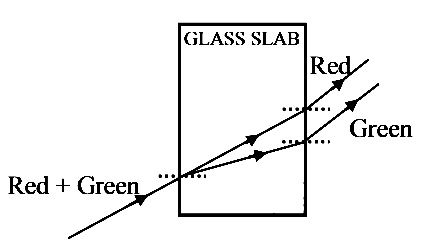
A beam of light composed of red and green ray is incident obliquely at a point on the face of rectangular glass slab. When coming out on the opposite parallel face, the red green ray emerge from
(A)
Two points propagating in two different non parallel directions
(B)
Two points propagating in two different parallel directions.
(C)
One point propagating in two different directions.
(D)
One point propagating in the same firections.
(B)

Solution

AIPMT 2004 Physics - Geometrical Optics Question 46 English Explanation

Red and green rays emerge from two points, propagating in two different parallel directions.
Q.35
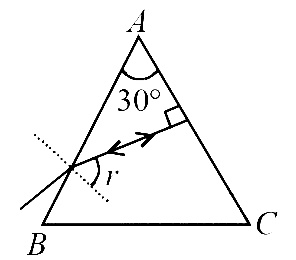
The refractive index of the material of a prism is and its refracting angle is 30o. One of the refracting surfaces of the prism is made a mirror inwards. A beam of monochromatic light entering the prism from the other face with retrace its path after reflection from the mirrored surface if its angle of incidence on the prism is
(A)
45o
(B)
60o
(C)
0
(D)
30o
(A)

Solution

AIPMT 2004 Physics - Geometrical Optics Question 47 English Explanation

Using law of triangle, we get = 30o

=

= sini

sini =

i = 45o
Q.36
A telescope has an objective lens of 10 cm diameter and is situated at a distance of one kilometer from two objects. The minimum distance between these two objects, which can be resolved by the telescope, when the mean wavelength of light is 5000 , is of the order of
(A)
0.5 m
(B)
5 m
(C)
5 mm
(D)
5 cm
(C)

Solution

Here,

x =

x = 1.22 5 10-3 m = 6.1 mm

x is of the order of 5 mm.
Q.37
The half life of radian is about 1600 years. Of 100 g of radium existing now, 25 g will remain unchanged after
(A)
4800 years
(B)
6400 years
(C)
2400 years
(D)
3200 years
(D)

Solution

N = N0

=

n = 2

The total time in which radium change to 25 g is

= 2 × 1600 = 3200 yr.
Q.38
The Bohr model of atoms
(A)
Assumes that the angular momentum of electrons is quantized.
(B)
Uses Einstein's photoelectric equation.
(C)
Predicts continuous emission spectra fror atoms.
(D)
Predicts the same emission spectra for all types of atoms.
(A)

Solution

Bohr model of atoms assumes that the angular momentum of electrons is quantised.
Q.39
If in a nuclear fusion process the masses of the fusing nuclei be m1 and m2 and the mass of the resultant nucleus be m3, then
(A)
m3 = m1 + m2
(B)
m3 =
(C)
m3 < (m1 + m2)
(D)
m3 > (m1 + m2)
(C)

Solution

In nuclear fusion the mass of end product or resultant is always less than the sum of initial product, the rest is liberated in the form of energy, like in Sun energy is liberated due to fusion of two hydrogen atoms.

As m1 + m2 = m3 + E

Since E = (m1 + m2 – m3) × c2
Q.40
A nucleus represented by the symbol has
(A)
Z neutrons and A Z protons
(B)
Z protons and A Z neutrons
(C)
Z protons and A neutrons
(D)
A protons and Z A neutrons
(B)

Solution

Z is number of protons and A is the total number of protons and neutrons.
Q.41
If M(A; Z), Mp and Mn denote the masses of the nucleus proton and neutron respectively in units of u (1 u = 931.5 MeV/c2) and BE represents its bonding energy in MeV, then
(A)
M(A, Z) = ZMp + (A Z)Mn BE
(B)
M(A, Z) = ZMp + (A Z)Mn + BE/c2
(C)
M(A, Z) = ZMp + (A Z)Mn BE/c2
(D)
M(A, Z) = ZMp + (A Z)Mn + BE
(C)

Solution

Mass defect = ZMp + (A –Z)Mn – M(A, Z)

= ZMp + (A –Z)Mn – M(A, Z)

M(A, Z) = ZMp + (A Z)Mn
Q.42
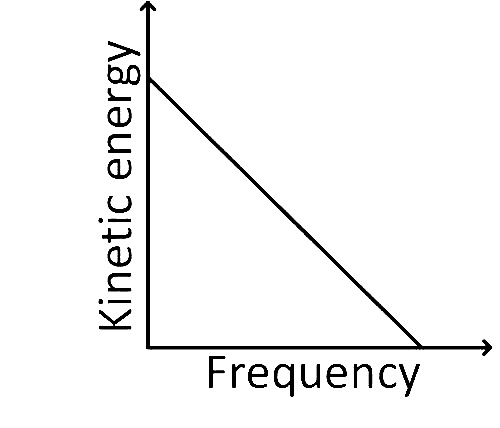
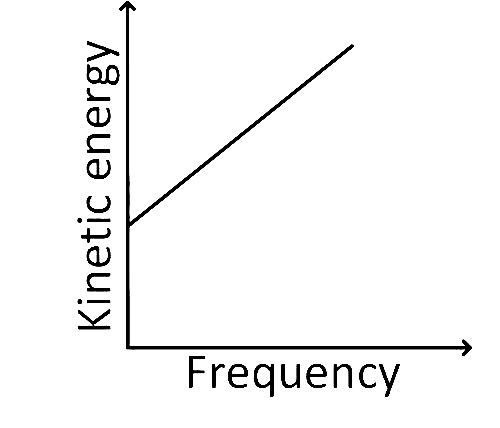
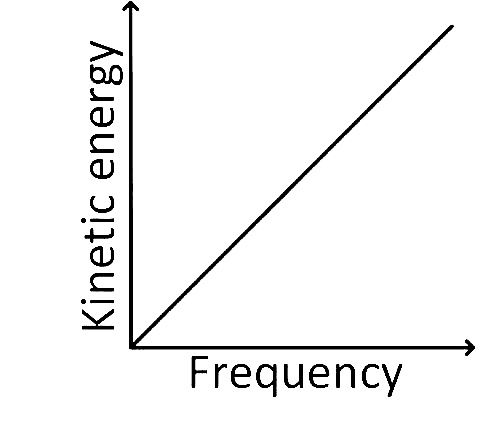
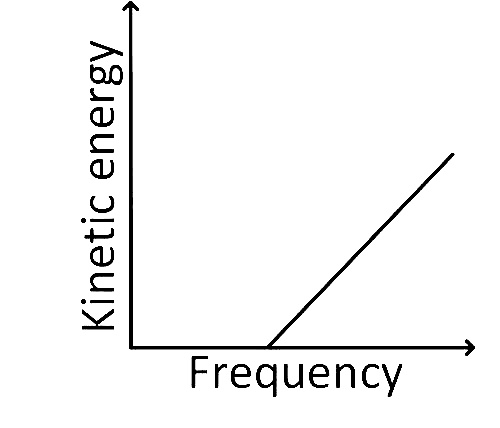
According to Einstein's photoelectric equation, the graph between the kinetic energy of photoelectrons ejected and the frequency of incident radiation is
(A)
AIPMT 2004 Physics - Dual Nature of Radiation and Matter Question 39 English Option 1
(B)
AIPMT 2004 Physics - Dual Nature of Radiation and Matter Question 39 English Option 2
(C)
AIPMT 2004 Physics - Dual Nature of Radiation and Matter Question 39 English Option 3
(D)
AIPMT 2004 Physics - Dual Nature of Radiation and Matter Question 39 English Option 4
(D)

Solution

The maximum kinetic energy of photoelectron ejected is given by

K.E. = h - W = h – h0
Q.43
The output of OR gate is 1
(A)
if both inputs are zero
(B)
if either or both inputs are 1
(C)
only if both inputs are 1
(D)
if either inputs is zero
(B)

Solution

The truth table of OR gate is


It is seen that output of OR gate is Y = A + B.
If both or any one has 1 input then output will be 1.
Q.44
Of the diodes shown in the following diagrams, which one is reverse biased ?
(A)
AIPMT 2004 Physics - Semiconductor Electronics Question 55 English Option 1
(B)
AIPMT 2004 Physics - Semiconductor Electronics Question 55 English Option 2
(C)
AIPMT 2004 Physics - Semiconductor Electronics Question 55 English Option 3
(D)
AIPMT 2004 Physics - Semiconductor Electronics Question 55 English Option 4
(C)

Solution

A diode is said to be reverse biased if p-type semiconductor of p-n junction is at low potential with respect to n-type semiconductor of p-n junction. It is so for circuit (c).
Q.45
In semiconductors at a room temperature
(A)
the valence band is partially empty and the conduction band is partially filled
(B)
the valence band is completely filled and the conduction band is partially filled
(C)
the valence band is completely filled
(D)
the conduction band is completely empty
(A)

Solution

In semiconductors at room temperature the electrons get enough energy so that they are able to over come the forbidden gap. Thus at room temperature the valence band is partially empty and conduction band is partially filled. Conduction band in semiconductor is completely empty only at 0 K.
Q.46
The peak voltage in the output of a half wave diode rectifier fed with a sinusoidal signal without filter is 10 V. The d.c. component of the output voltage is
(A)
(10/) V
(B)
(C)
10 V
(D)
(20/) V
(B)

Solution

V =

V =
Chemistry (Maximum Marks: 192)
  • This section contains 48 questions.
  • Each question has FOUR options (A), (B), (C) and (D). ONLY ONE of these four options is the correct answer.
  • Full Marks : +4 If ONLY the correct option is chosen;
  • Zero Marks : 0 If none of the options is chosen (i.e. the question is unanswered);
  • Negative Marks : −1 In all other cases.
Q.1
The maximum number of molecules is present in
(A)
15 L of H2 gas at STP
(B)
5 L of N2 gas at STP
(C)
0.5 g of H2 gas
(D)
10 g of O2 gas
(A)

Solution

At STP, 22.4 L H2

= 6.023 1023 molecules

15 L H2 = =

5 L N2 = = 1.344 1023

2 g of H2 = 6.023 1023

0.5 g H2 = = 1.505 1023

32 g O2 = 6.023 1023

10 g O2 = = 1.882 1023
Q.2
The frequency of radiation emitted when the electron falls from n = 4 to n = 1 in hydrogen atom will be (Given ionization energy of H = 2.18 1018 J atom1 and h = 6.625 1034 J s)
(A)
1.54 1015 s1
(B)
1.03 1015 s1
(C)
3.08 1015 s1
(D)
2.00 1015 s1
(C)

Solution

E = h or = E/h

For H atom, E =


= 20.40 10-19 J atm-1

= = 3.079 1015 s-1
Q.3
Which is the best description of the behaviour of bromine in the reaction given below?
H2O + Br2 HOBr + HBr
(A)
Proton acceptor only
(B)
Both oxidised and reduced
(C)
Oxidised only
(D)
Reduced only
(B)

Solution

H2O + 2 HO + H

In the above reaction the oxidation number of Br2 increases from zero (in Br2 ) to +1 (in HOBr) and decreases from zero (in Br2 ) to –1 (in HBr). Thus Br2 is oxidised as well as reduced and hence it is a redox reaction.
Q.4
The rapid change of pH near the stoichiometric point of an acid-base titration is the basis of indicator detection. pH of the solution is related to ratio of the concentrations of the conjugate acid (HIn) and base (In) forms of the indicator by the expression
(A)
(B)
(C)
(D)
(D)

Solution

For an acid-base indicator

HIn ⇌ H+ + In-

Kin =


Take – log on both sides


pH = –log KIn +

pH = pKIn +

= pH - pKIn
Q.5
The solubility product of a sparingly soluble salt AX2 is 3.2 1011. Its solubility (in moles/L) is
(A)
5.6 106
(B)
3.1 104
(C)
2 104
(D)
4 104
(C)

Solution

AX2 A2+ + 2X-
s s 2s


Ksp = = [A2+] [X ]2 = s × (2s)2 = 4s3

3.2 1011 = 4s3

s3 = 8 × 10–12

s = 2 × 10⁻⁴ mol L–1
Q.6
Standard enthalpy and standard entropy changes for the oxidation of ammonia at 298 K are 382.64 kJ mol1 and 145.6 kJ mol1, respectively. Standard Gibb's energy change for the same reaction at 298 K is
(A)
221.1 kJ mol1
(B)
339.3 kJ mol1
(C)
439.3 kJ mol1
(D)
523.2 kJ mol1
(B)

Solution

G = H – TS

G = –382.64 × 10³ J mol–1 – (298K) (–145.6 JK–1 mol–1)

= –382640 + 43388.8

= – 339251.2 J mol–1 = – 339.3 kJ mol–1
Q.7
If the bond energies of H H, Br Br, and H Br are 433, 192 and 364 kJ mol1 respectively, the Ho for the reaction

H2(g) + Br2(g) 2HBr(g) is
(A)
261 kJ
(B)
+103 kJ
(C)
+261 kJ
(D)
103 kJ
(D)

Solution

H2(g) + Br2(g) 2HBr(g),   Hof = ?

Hof = (B.E.)reactants(B.E.)products

= (B.E.)H–H + (B.E.)Br–Br –2(B.E)H-Br

= [433 + 192] – 2(364) kJ mol–1

= (625 – 728) kJ mol–1 = –103 kJ mol–1
Q.8
Considering entropy (S) as a thermodynamic parameter, the criterion for the spontaneity of any process is
(A)
(B)
(C)
only
(D)
only
(A)

Solution

For the reaction to be spontaneous, the total entropy of system and universe increases i.e.,

Q.9
The work done during the expansion of a gas from a volume of 4 dm3 to 6 dm3 against a constant external pressure of 3 atm is (1 L atm = 101.32 J)
(A)
6 J
(B)
608 J
(C)
+ 304 J
(D)
304 J
(B)

Solution

Work done during the expansion, W = – pdV

W = –3 atm (6 dm3 – 4 dm3)

= – 3 atm ( 2 dm3 ) (1 dm3 = 1 L)

= – 3 atm × 2 L

= – 6 L atm

As, 1 L atm = 101.32 J

W = – 6 × 101.32 J = – 607.92 J ≈ – 608 J
Q.10
The standard e.m.f. of a galvanic cell involving cell reaction with n = 2 is found to be 0.295 V at 25oC. The equilibrium constant of the reaction would be
(A)
2.0 1011
(B)
4.0 1012
(C)
1.0 102
(D)
1.0 1010
(D)

Solution

We know, from Nernst Equation

Ecell = Eocell -

At equilibrium Ecell = 0

0 = Eocell -

0 = 0.295 -

0.295 =

= 10

K = 1 1010
Q.11
The rate of a first order reaction is 1.5 102 mol L1 min1 at 0.5 M concentration of the reactant. The half-life of the reaction is
(A)
0.383 min
(B)
23.1 min
(C)
8.73 min
(D)
7.53 min
(B)

Solution

For a first order reaction, A products

Rate(r) = k[A]

k =

k =

So, = 23.1 min
Q.12
The radioactive isotope Co which is used in the treatment of cancer can be made by (n.p) reaction. For this reaction the tarfet nucleus is
(A)
Ni
(B)
Co
(C)
Ni
(D)
Co
(C)

Solution

Ni + n Co + n
Q.13
A compound formed by elements X and Y crystallizes in a cubic structure in which the X atoms are at the corners of a cube and the Y atoms are at the face-centers. The formula of the compound is :-
(A)
XY3
(B)
X3Y
(C)
XY
(D)
XY2
(A)

Solution

To determine the formula of the compound formed by elements X and Y based on their positions in a cubic structure, we need to count the number of atoms per unit cell for each type of atom and then simplify the ratio.

For element X:

  • Corners of a cube: Each corner atom is shared by 8 adjacent cubes, so each corner contributes 1/8 of an atom to the cube. Since there are 8 corners in a cube, the total contribution from corners is atom of X per unit cell.

For element Y:

  • Face-centers of a cube: Each face-centered atom is shared by 2 adjacent cubes, so each face-center contributes 1/2 of an atom to the cube. Since there are 6 faces on a cube, the total contribution from face-centers is atoms of Y per unit cell.

Therefore, within one unit cell, we have 1 atom of X and 3 atoms of Y, giving us the simplest ratio of . Hence, the formula of the compound is .

So, the correct answer is:

Option A: XY3
Q.14
The enzyme which hydrolyses triglycerides to fatty acids and glycerol is called
(A)
maltase
(B)
lipase
(C)
zymase
(D)
pepsin
(B)

Solution

Triglycerides are lipids, hence these are hydrolysed by lipases to glycerol and fatty acids.
Q.15
Ionic radii are
(A)
inversely proportional to effective nuclear charge
(B)
inversely proportional to square of effective nuclear charge
(C)
directly proportional to effective nuclear charge
(D)
directly proportional to square of effective nuclear charge.
(A)

Solution

Ionic radius in the nth orbit is given by

rn = or,

When n is the principal quantum number, a0 the Bohr's radius of H-atom and Z*, the effective nuclear charge.
Q.16
H2O is dipolar, whereas BeF2 is not. It is because
(A)
the electronegativity of F is greater than that of O
(B)
H2O involves hydrogen bonding whereas BeF2 is a discrete molecule
(C)
H2O is linear and BeF2 is angular
(D)
H2O is angular and BeF2 is linear.
(D)

Solution

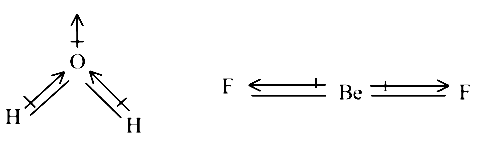
In H2O the central atom oxygen has two lone pairs of electrons and two bond pairs of electrons. Thus, the shape of H2O is bent or V-shape. Thus, the two dipoles of H-O bonds have some resultant value as they are not exactly in the opposite direction to cancel out each other. While in BeF2, there are two bond pairs on central atom Be, hence it is linear in shape. Thus, the two dipoles of bonds are exactly in opposite direction to each other and cancel each other to give net zero dipole moment. AIPMT 2004 Chemistry - Chemical Bonding and Molecular Structure Question 63 English Explanation
Q.17
In BrF3 molecule, the lone pairs occupy equatorial positions to minimize
(A)
lone pair - bond pair repulsion only
(B)
bond pair - bond pair repulsion only
(C)
lone pair - lone pair repulsion and lone pair - bond pair repulsion
(D)
lone pair - lone pair repulsion only.
(D)

Solution

Lone pair - Lone pair repulsion > lone pair - bond pair repulsion > bond pair-bond pair repulsion.

The lone pairs of electrons are arranged on equatorial position as they are at maximum distance at these positions and hence they have minimum repulsion at these positions.
Q.18
Among the following, the pair in which the two species are not isostructural is
(A)
SiF4 and SF4
(B)
IO3 and XeO3
(C)
BH4 and NH4+
(D)
PF6 and SF6
(A)

Solution

SiF4 has symmetrical tetrahedral shape which is due to sp3 hybridisation of the central silicon atom in its excited state configuration.

SF4 has distorted tetrahedral or sea-saw geometry which arises due to sp3d hybridisation of the central sulphur atom and due to the presence of one lone pair of electrons in one of the equatorial hybrid orbital.
Q.19
In a regular octahedral molecule, MX6 the number of X M X bonds at 180o is
(A)
three
(B)
two
(C)
six
(D)
four
(A)

Solution

The MX6 molecule with regular octahedral geometry is as follows : AIPMT 2004 Chemistry - Chemical Bonding and Molecular Structure Question 64 English Explanation
Thus, there are three X—M—X bonds with bond angle 180o.
Q.20
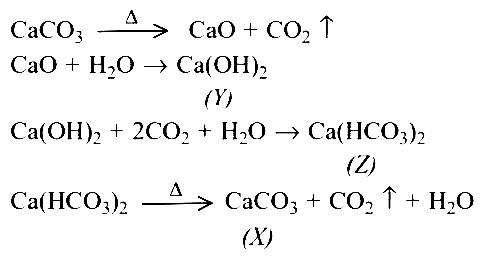
A solid compound X on heating gives CO2 gas and a residue. The residue mixed with water forms Y. On passing an excess of CO2 through Y in water, a clear solution Z is obtained. On boiling Z, compound X is reformed. The compound X is
(A)
Ca(HCO3)2
(B)
CaCO3
(C)
Na2CO3
(D)
K2CO3
(B)

Solution

The given compound X must be CaCO3.

AIPMT 2004 Chemistry - s-Block Elements Question 20 English Explanation
Q.21
Among K, Ca, Fe and Zn, the element which can from more than one binary compound with chlorine is
(A)
Fe
(B)
Zn
(C)
K
(D)
Ca
(A)

Solution

A binary compound is one made of two different elements.

Metals which have variable oxidation number can form more than one type of binary compound like Fe shows the oxidation state +2 and +3. Hence it forms two types of binary compounds. e.g., FeCl2, FeCl3.
Q.22
Which one of the following statements about the zeolite is false?
(A)
They are used as cation exchangers.
(B)
They have open structure which enables them to take up small molecules.
(C)
Zeolites are aluminosilicates having three dimensional network.
(D)
Some of the SiO units are replaced by AlO and AlO ions in zeolites.
(D)

Solution

Zeolites are alumino silicates having three dimensional open structure in which four or six membered ring predominates. Thus, due to open chain structure, they have cavities and can take up water and other small molecules.
Q.23
lanthanoids are
(A)
14 elements in the sixth period (atomic no. 90 to 103) that are filling 4f sublevel
(B)
14 elements in the seventh period (atomic number = 90 to 103) that are filling 5f sublevel
(C)
14 elements in the sixth period (atomic number = 58 to 71) that are filling the 4f sublevel
(D)
14 elements in the seventh period (atomic number = 50 to 71) that are filling 4f sublevel.
(C)

Solution

As sixth period can accommodate only 18 elements in the table, 14 members of 4f series (atomic number 58 to 71) are separately accommodated in a horizontal row below the periodic table. These are called as lanthanides.
Q.24
Among the following series of transition metal ions, the one where all metal ions have 3d2 electronic configuration is
[At. Nos. Ti = 22, V = 23, Cr = 24, Mn = 25]
(A)
Ti3+, V2+, Cr3+, Mn4+
(B)
Ti+, V4+, Cr6+, Mn7+
(C)
Ti4+, V3+, Cr2+, Mn3+
(D)
Ti2+, V3+, Cr4+, Mn5+
(D)

Solution

Ti+2 = [Ar]18 3d24s0

V3+ = [Ar]18 3d24s0

Cr+4 = [Ar]18 3d24s0

Mn+5 = [Ar]18 3d24s0
Q.25
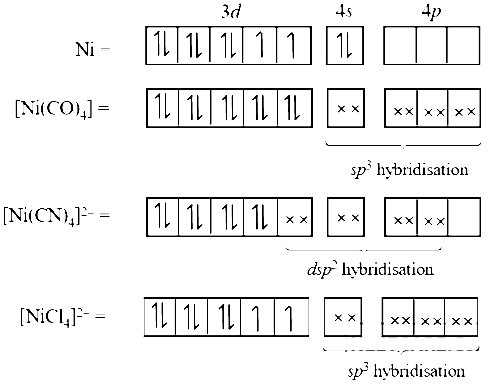
Among [Ni(CO)4], [Ni(CN)4]2, [NiCl4]2 species, the hybridisation states at the Ni atom are, respectively
[Atomic number of Ni = 28]
(A)
sp3, dsp2, dsp2
(B)
sp3, dsp2, sp3
(C)
sp3, sp3, dsp2
(D)
dsp2, sp3, sp3
(B)

Solution

AIPMT 2004 Chemistry - Coordination Compounds Question 58 English Explanation
Q.26
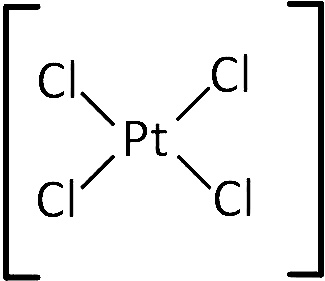
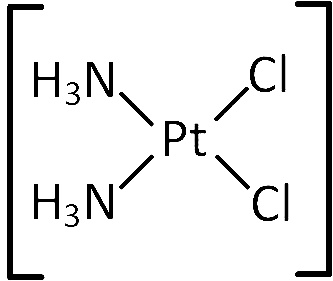
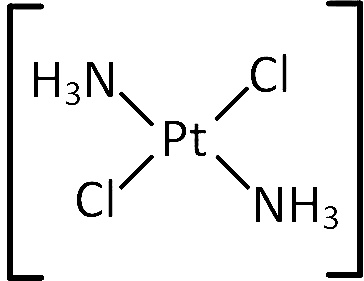
Which of the following is considered to be an anticancer species?
(A)
AIPMT 2004 Chemistry - Coordination Compounds Question 39 English Option 1
(B)
AIPMT 2004 Chemistry - Coordination Compounds Question 39 English Option 2
(C)
AIPMT 2004 Chemistry - Coordination Compounds Question 39 English Option 3
(D)
AIPMT 2004 Chemistry - Coordination Compounds Question 39 English Option 4
(C)

Solution

Diaminodichloroplatinum (II) commonly known as cis - platin is found to have anticancer property.
Q.27
Which of the following coordination compounds would exhibit optical isomerism?
(A)
Pentaamminenitrocobalt (III) iodide
(B)
Diamminedichloroplatinum (II)
(C)
trans-Dicyanobis (ethyleneddiamine) chromium (III) chloride
(D)
tris-(Ethylenediamine) cobalt (III) bromide.
(D)

Solution

tris-(Ethylenediamine) cobalt (III) bromide [Co(en)3]Br3 exhibits optical isomerism.

AIPMT 2004 Chemistry - Coordination Compounds Question 59 English Explanation
Q.28
In an octahedral structure, the pair of orbitals involved in d2sp3 hybridisation is
(A)
d x2y2, d z2
(B)
d xz, d x2y2
(C)
d z2, d xz
(D)
d xy, d yz
(A)

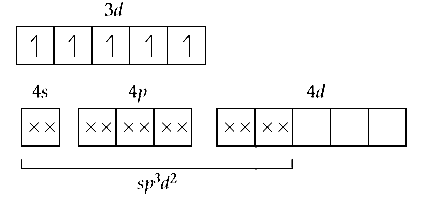
Solution

In the formation of d2sp3 hybrid orbitals, two (n – 1)d orbitals of eg set [i.e. (n – 1)dz2 and (n – 1)dx2 – y2 orbitals)], one ns and three np (npx, npy and npz) orbitals combine together and form six d2sp3 hybrid orbitals.
Q.29
Which of the following does not have a metal carbon bond?
(A)
Al(OC2H5)3
(B)
C2H5MgBr
(C)
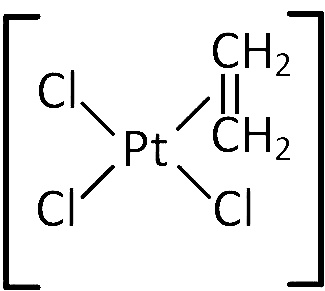
K[Pt (C2H4)Cl3]
(D)
Ni(CO)4
(A)

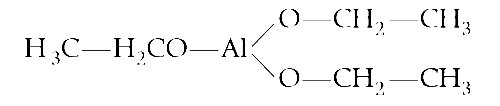
Solution

Al(OC2H5)3 does not have metal-carbon bond. Its structure is
AIPMT 2004 Chemistry - Coordination Compounds Question 55 English Explanation
Q.30
CN is a strong field ligand. This is due to the fact that
(A)
it carries negative charge
(B)
it is a pseudohalide
(C)
it can accept electrons from metal species
(D)
it forms high spin complexes with metal species.
(B)

Solution

CN is a pseudohalide, i.e., it is a stronger coordinating ligand with the ability to form and -bonds.
Q.31
Considering H2O as a weak field ligand, the number of unpaired electrons in [Mn(H2O)6]2+ will be (atomic number of Mn = 25)
(A)
three
(B)
five
(C)
two
(D)
four
(B)

Solution

In [Mn(H2O)6]2+

Mn+2 = [Ar] 3d54s0 AIPMT 2004 Chemistry - Coordination Compounds Question 56 English Explanation

In presence of weak field ligand H2O, there will be no pairing of electrons. So it will form a high spin complex, i.e. the number of unpaired electrons = 5.
Q.32
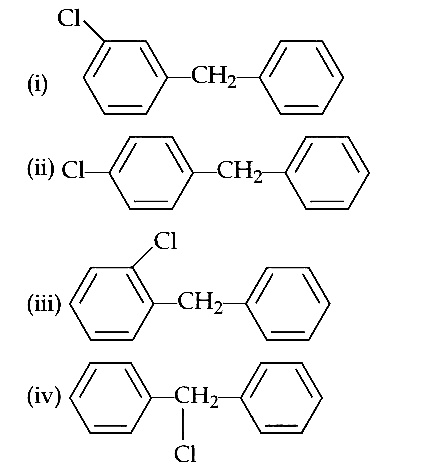
The molecular formula of diphenyl methane,

AIPMT 2004 Chemistry - Some Basic Concepts of Organic Chemistry Question 61 English

How many structural isomers are possible when one of the hydrogen is replaced by a chlorine atom ?
(A)
6
(B)
4
(C)
8
(D)
7
(B)

Solution

Only four structural isomers are possible for diphenyl methane.

AIPMT 2004 Chemistry - Some Basic Concepts of Organic Chemistry Question 61 English Explanation
Q.33
Reaction of HBr with propene in the presence of peroxide gives
(A)
isopropyl bromide
(B)
3-bromopropane
(C)
allyl bromide
(D)
n-propyl bromide
(D)

Solution

Reaction of HBr with propene in the presence of peroxide gives n-propyl bromide. This addition reaction is an example of anti-Markovnikov’s addition reaction.

AIPMT 2004 Chemistry - Hydrocarbons Question 31 English Explanation
Q.34
Using anhydrous AlCl3 as catalyst, which one of the following reactions produces ethylbenzene (PhEt)?
(A)
H3C CH2OH + C6H6
(B)
CH3 CH CH2 + C6H6
(C)
H2C CH2 + C6H6
(D)
H3C CH3 + C6H6
(C)

Solution

With ethene in presence of anhydrous AlCl3, benzene gives ethyl benzene (PhEt). AIPMT 2004 Chemistry - Hydrocarbons Question 32 English Explanation
Q.35
Which of the following is least reactive in a nucleophilic sibstitution reaction?
(A)
(CH3)3C Cl
(B)
CH2CHCl
(C)
CH3CH2Cl
(D)
CH2CHCH2Cl
(B)

Solution

Chlorine of vinyl chloride (CH2==CHCl) is non-reactive substitution reaction because it shows the following resonating structure due to +M effect of –Cl atom.

AIPMT 2004 Chemistry - Haloalkanes and Haloarenes Question 32 English Explanation In second Cl–atom has positive charge and partial double bond character with C of vinyl group, so it is more tightly attracted towards the nucleus and it does not get replaced by nucleophile in nucleophilic substitution reaction.
Q.36
Which one of the following will not form a yellow precipitate on heating with an alkaline solution of iodine?
(A)
CH3CH(OH)CH3
(B)
CH3CH2CH(OH)CH3
(C)
CH3OH
(D)
CH3CH2OH
(C)

Solution

Formation of a yellow precipitate on heating a compound with an alkaline solution of iodine is known as iodoform reaction. Methyl alcohol does not respond to this test. Iodoform test is exhibited by ethyl alcohol, acetaldehyde, acetone, methyl ketones and those alcohols which possess CH3CH(OH) – group.
Q.37
Which one of the following can be oxidised to the corresponding carbonyl compound?
(A)
2-Hydroxypropane
(B)
ortho-Nitrophenol
(C)
Phenol
(D)
2-Methyl-2-hydroxypropane
(A)

Solution

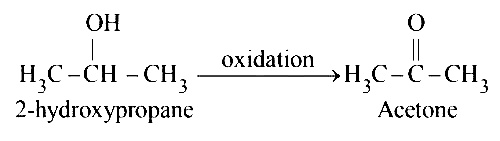
Carbonyl compounds (aldehydes and ketones) are obtained by the oxidation of 1° and 2° alcohols respectively. Among the given options, only (a) is 2° alcohol hence it can be oxidized to ketone. AIPMT 2004 Chemistry - Aldehydes, Ketones and Carboxylic Acids Question 51 English Explanation
Q.38
The OH group of an alcohol or the COOH group of a carboxylic acid can be replaced by Cl using
(A)
phosphorus pentachloride
(B)
hypochlorous acid
(C)
chlorine
(D)
hydrochloric acid
(A)

Solution

ROH + PCl5 RCl + POCl3 + HCl

RCOOH + PCl5 RCOCl + POCl3 + HCl
Q.39
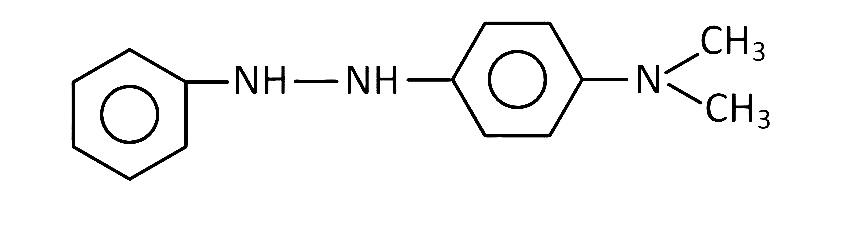
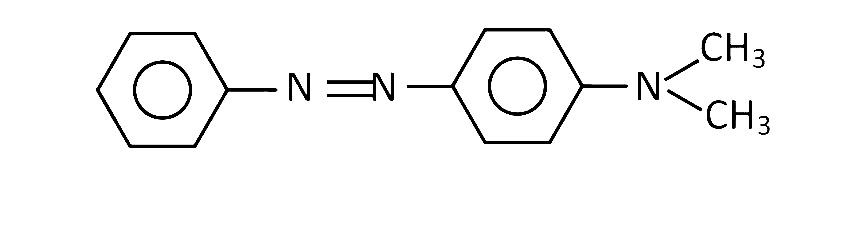
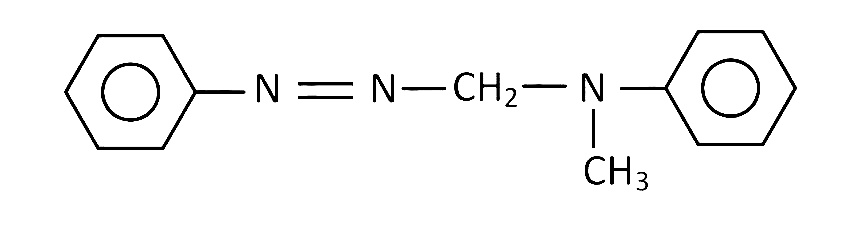
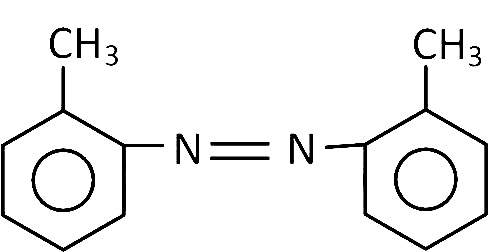
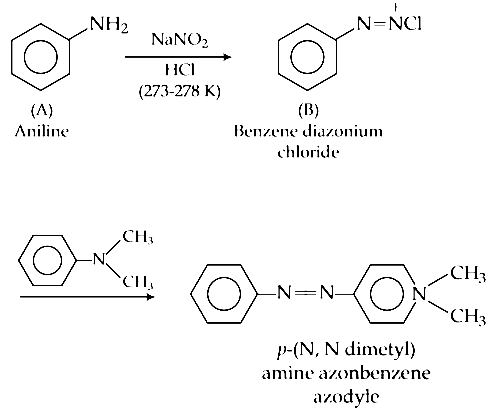
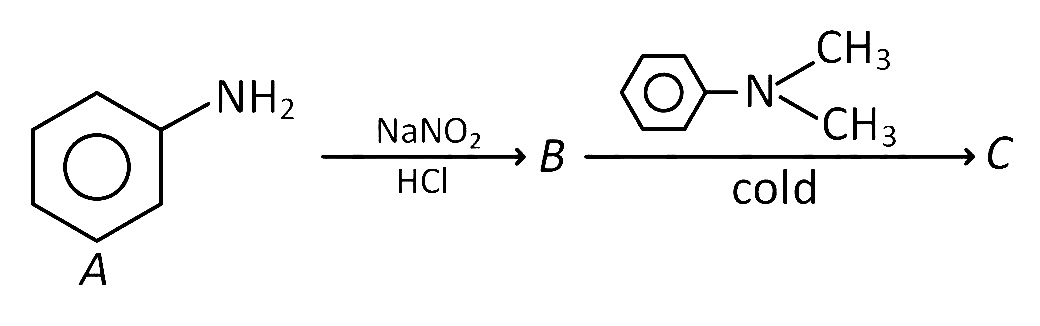
In a reaction of aniline a coloured product C was obtained.
AIPMT 2004 Chemistry - Organic Compounds Containing Nitrogen Question 26 English
The structure of C would be
(A)
AIPMT 2004 Chemistry - Organic Compounds Containing Nitrogen Question 26 English Option 1
(B)
AIPMT 2004 Chemistry - Organic Compounds Containing Nitrogen Question 26 English Option 2
(C)
AIPMT 2004 Chemistry - Organic Compounds Containing Nitrogen Question 26 English Option 3
(D)
AIPMT 2004 Chemistry - Organic Compounds Containing Nitrogen Question 26 English Option 4
(B)

Solution

AIPMT 2004 Chemistry - Organic Compounds Containing Nitrogen Question 26 English Explanation
Q.40
Which one of the following is a chain growth polymer?
(A)
Starch
(B)
Nucleic acid
(C)
Polystyrene
(D)
Protein
(C)

Solution

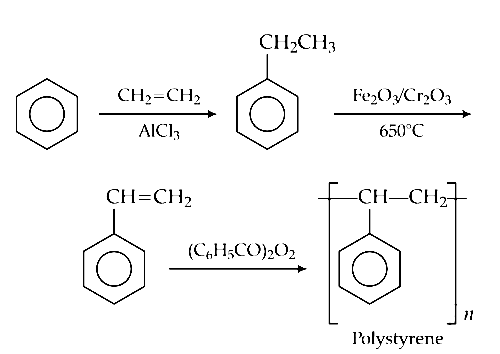
Polystyrene is a chain growth polymer. AIPMT 2004 Chemistry - Polymers Question 25 English Explanation
Q.41
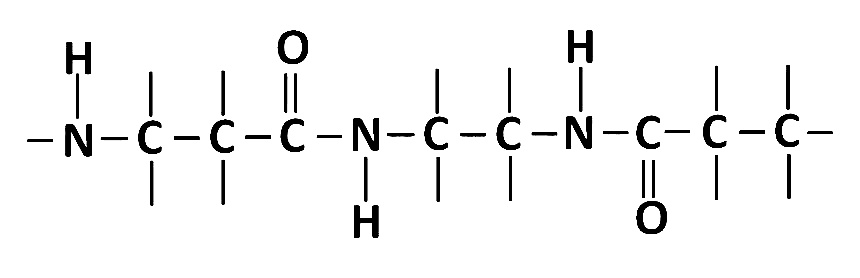
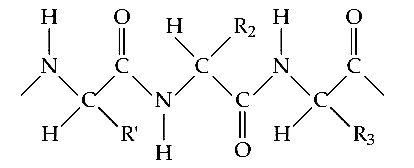
Which of the following structures represents the peptide chain?
(A)
AIPMT 2004 Chemistry - Biomolecules Question 21 English Option 1
(B)
AIPMT 2004 Chemistry - Biomolecules Question 21 English Option 2
(C)
AIPMT 2004 Chemistry - Biomolecules Question 21 English Option 3
(D)
AIPMT 2004 Chemistry - Biomolecules Question 21 English Option 4
(C)

Solution

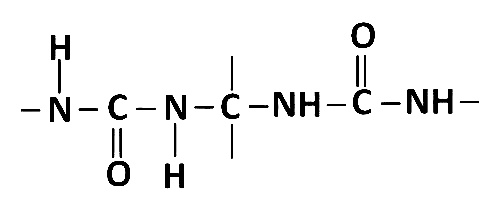
In peptide linkage i.e., (– CONH) group, the carboxyl group of one amino acid molecule forms an amide by combination with the amino group of the next amino acid molecule with the liberation of water molecule. AIPMT 2004 Chemistry - Biomolecules Question 21 English Explanation
Q.42
A sequence of how many nucleotides in messenger RNA makes a codon for an amino acid?
(A)
Three
(B)
Four
(C)
One
(D)
Two
(A)

Solution

There are four bases in mRNA, i.e., adenine, cytosine, guanine and uracil. They form triplets and each triplet behave as a code for the synthesis of a particular amino acid.
Q.43
The correct statement in respect of protein haemoglobin is that it
(A)
functions as a catalyst for biological reactions
(B)
maintains blood sugar level
(C)
acts as an oxygen carrier in the blood
(D)
forms antibodies and offers resistance to diseases.
(C)

Solution

Haemoglobin acts as an oxygen carrier in the blood since it reacts with oxygen to form unstable oxyhaemoglobin which easily breaks to give back haemoglobin and oxygen.
Q.44
The helical structure of protein is stablised by
(A)
dipeptide bonds
(B)
hydrogen bonds
(C)
ether bonds
(D)
peptide bonds
(B)

Solution

The -helix structure is formed when the chain of -amino acids coils as a right handed screw (called -helix) because of the formation of hydrogen bonds between amide groups of the same peptide chain, i.e., NH group in one unit is linked to carbonyl oxygen of the third unit by hydrogen bonding. This hydrogen bonding between different units is responsible for holding helix in a position.
Q.45
The hormone that helps in the conversion of glucose to glycogen is
(A)
cortisone
(B)
bile acids
(C)
adrenaline
(D)
insulin
(D)

Solution

Insulin is a hormone secreted by the pancreas that lowers blood glucose level by promoting the uptake of glucose by cells and the conversion of glucose to glycogen by the liver and skeletal muscle.
Q.46
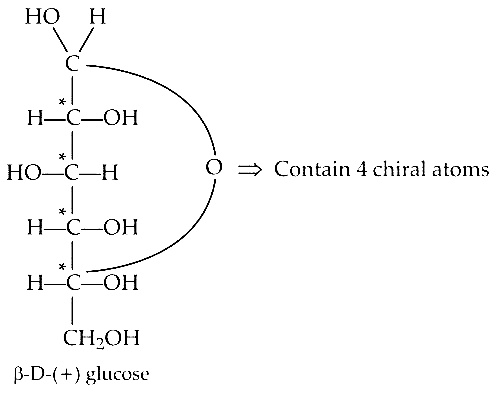
Number of chiral carbons in --(+) glucose is
(A)
five
(B)
six
(C)
three
(D)
four
(D)

Solution

AIPMT 2004 Chemistry - Biomolecules Question 36 English Explanation
Q.47
Which of the following forms cationic micelles above certain concentration?
(A)
Sodium dodecyl sulphate
(B)
Sodium acetate
(C)
Urea
(D)
Ceryltrimethylammonium bromide.
(D)

Solution

Cetyl trimethyl ammonium bromide forms cationic micelles above certain concentration.
In the molecules of detergents, the negative ions aggregate to form a micelle of colloidal size. In polar medium like water the negative ion has a long hydrocarbon chain and a polar group –Br at one end and on the other hand it has N+ ion thus cationic micelle is formed.
Q.48
Chloropicrin is obtained by the reaction of
(A)
sream on carbon tetrachloride
(B)
nitric acid on chlorobenzene
(C)
chlorine on picric acid
(D)
nitric acid on chloroform
(D)

Solution

When CHCl3 is treated with conc. HNO3 its hydrogen is replaced by NO2 group to form chloropicrin.

CHCl3 + HONO2 CNO2Cl3 + H2O
Biology (Maximum Marks: 340)
  • This section contains 85 questions.
  • Each question has FOUR options (A), (B), (C) and (D). ONLY ONE of these four options is the correct answer.
  • Full Marks : +4 If ONLY the correct option is chosen;
  • Zero Marks : 0 If none of the options is chosen (i.e. the question is unanswered);
  • Negative Marks : −1 In all other cases.
Q.1
In chloroplasts, chlorophyll is present in the :-
(A)
Outer membrane
(B)
Inner membrane
(C)
Thylakoids
(D)
Stroma
(C)

Solution

The thylakoid membranes possess the chlorophylls. The outer membrane is permeable to a number of solutes. Inner membrane has a number of carrier proteins. Stroma forms the matrix containing the enzyme for Calvin cycle.
Q.2
The telomeres of eukaryotic chromosomes consist of short sequences of
(A)
Adenine rich repeats
(B)
Cytosine rich repeats
(C)
Thymine rich repeats
(D)
Guanine rich repeats
(D)

Solution

Telomeres are non sticky terminal ends of the chromosomes. It has heterochromatin and repetitive DNA.
Q.3
Which one of the following enzymes, is copper necessarily associated as an activator?
(A)
Carbonic anhydrase
(B)
Tryptophanase
(C)
Lactic dehydrogenase
(D)
Tyrosinase
(D)

Solution

Copper is associated as an activator with tyrosinase. It is widely distributed in plants, animals and man. It is also known as polyphenol oxidase or catecholase. It oxidizes tyrosine to melanin in mammals and causes the cut surfaces of many fruits and vegetable to darken.
Q.4
In the somatic cell cycle
(A)
in G1 phase DNA content is double the amount of DNA present in the original cell
(B)
DNA replication takes place in S phase
(C)
a short interphase is followed by a long mitotic phase
(D)
G2 phase follows mitotic phase.
(B)

Solution

DNA replication is restricted to Sphase of interphase. G2 phase is followed by the mitotic phase which is shorter than the interphase. In G2 phase, DNA content is double than the amount present in the original cell.
Q.5
If you are provided with root-tips of onion in your class and are asked to count the chromosomes, which of the following stages can you most conveniently look into?
(A)
Metaphase
(B)
Telophase
(C)
Anaphase
(D)
Prophase
(A)

Solution

Metaphase is the best time to count and study the number and morphology of chromosomes. The distinctly visible chromosome arrange themselves at the equatorial or metaphasic plate. The centromeres lie at the equatorial plate while the limbs are placed variously according to their size and spiral arrangement. At prophase the chromosomes appear thin and filamentous, forming a network.

So they are not very clearly visible. At telophase the chromosomes uncoil and lengthen and therefore are not clearly seen. Anaphase also shows chromosomes distinctly and they can be counted. But during anaphase chromatids seperate and start moving towards opposite pole. So for counting metaphase is the best stage.
Q.6
Which one of the following precedes reformation of the nuclear envelope during M phase of the cell cycle?
(A)
Decondensation fromchromosomes. and reassembly of the nuclear lamina
(B)
Transcription from chromosomes, and reassembly of the nuclear lamina
(C)
Formation of the contractile ring, and formation of the phragmoplast
(D)
Formation of the contractile ring, and transcription from chromosomes.
(C)

Solution

At the beginning of M phase or mitotic phase, the nuclear membrane and nucleolus disappear. The decondensation of chromosomes occur. But when nuclear envelop start forming then nuclear lamina assemble and chromosomes start condensing.
Q.7
When a diploid female plant is crossed with a tetraploid male, the ploidy of endosperm cells in the resulting seed is
(A)
tetraploidy
(B)
pentaploidy
(C)
diploidy
(D)
triploidy
(A)

Solution

Endosperm is formed due to fusion of the haploid male gamete with the polar nucleus of the embryo sac. But in this case the male plant is tetraploid so that its gametes would be diploid. When these diploid gametes fuse with two polar nuclei of the embryo sac the resultant endosperm would be tetraploid.
Q.8
Anthesis is a phenomenon which refers to
(A)
reception of pollen by stigma
(B)
formation of pollen
(C)
development of anther
(D)
opening of flower bud.
(D)

Solution

Anthesis is the process of opening floral buds. Reception of pollen by stigma is called pollination. Formation of pollen is called microsporogenesis.
Q.9
An ovule which becomes curved so that the nucellus and embryo sac lie at right angles to the funicle is
(A)
hemitropous
(B)
campylotropous
(C)
anatropous
(D)
orthotropous.
(A)

Solution

In campylotropous ovule, the body is curved but the embryosac is straight eg. Capsella. In Anatropous, the body of ovule is inverted and gets fused with funiculus along its whole length on one side (most of the angiosperms). In orthotropous condition the body of ovule lies straight and upright over the funicle. e.g. Piperaceae, Polygonaceae.
Q.10
A major component of gobar gas is
(A)
ethane
(B)
methane
(C)
butane
(D)
ammonia
(B)

Solution

Methane forms a major part of gobargas. Ammonia is toxic. Ethane and butane are not major components of gobar gas.
Q.11
The most thoroughly studied of the known bacteria-plant interactions is the :-
(A)
Nodulation of Sesbania stems by nitrogen fixing bacteria
(B)
Cyanobacterial symbiosis with some aquatic ferns
(C)
Plant growth stimulation by phosphate– solubilising bacteria
(D)
Gall formation on certain angiosperms by Agrobacterium
(D)

Solution

Agrobacterium tumefaciens is the causative agent of crown gall, an important disease of many commercial crops. This disease has come to be recognized in recent years as being caused by a DNA plasmid (Ti plasmid) carried by bacterium and transferred to the plant cells.
Q.12
Dough kept overnight in warm weather becomes soft and spongy because of :-
(A)
Cohesion
(B)
Absorption of carbon dioxide from atmosphere
(C)
Osmosis
(D)
Fermentation
(D)

Solution

Cohesion is the force of attraction between similar molecules. Osmosis is the movement of solvent molecules from a region of low solute concentration to a region of high solute concentration through a semipermeable membrane.
Q.13
Which one of the following pairs is not correctly matched ?
(A)
Spirulina – Single cell protein
(B)
Streptomyces – Antibiotic
(C)
Rhizobium – Biofertilizer
(D)
Serratia – Drug addiction
(D)

Solution

Serratia marcescens is considered a harmful human pathogen which has been known to cause urinary tract infections, wound infections and pneumonia. Serratia bacteria also have many antibiotic resistance properties which may become important if the incidence of Serratia infections dramatically increases.
Q.14
In a longitudinal section of a root, starting from the tip upward, the four zones occur in the following order :-
(A)
Cell division, cell enlargement, cell maturation, root cap
(B)
Root cap, cell division, cell enlargement, cell maturation
(C)
Root cap, cell division, cell maturation, cell enlargement
(D)
Celldivision,cell maturation, cell enlargement, root cap
(B)

Solution

Root shows the following regions
Root cap or calyptra - caplike protective covering over tip of the root
Meristematic region is the subapical position
Zone of elongation - receives new cells from the growing point
Root hair zone - is the zone of differentiation
Zone of mature cells - having thick walled impermeable cells.
Q.15
If by radiation all nitrogenase enzyme are inactivated, then there will be no
(A)
fixation of nitrogen in legumes
(B)
fixation of atmospheric nitrogen
(C)
conversion from nitrate to nitrite in legumes
(D)
conversion from ammonium to nitrate in soil.
(A)

Solution

Nitrogenase is an enzyme involved in biological nitrogen fixation. Enzyme nitrate reductase is involved in conversion of nitrate to nitrite. Conversion of ammonia to nitrate is carried out by Nitrosomonas and Nitrobacter.
Q.16
In glycolysis, during oxidation electrons are removed by
(A)
ATP
(B)
glyceraldehyde-3-phosphate
(C)
NAD+
(D)
molecular oxygen.
(C)

Solution

ATP is the energy currency in all cells. Glyceraldehyde 3 - phosphate is reduced during glycolysis. Molecular oxygen is the terminal electron acceptor in ETS.
Q.17
In transgenics expression of transgene in target tissue is determined by :-
(A)
Enhancer
(B)
Promoter
(C)
Reporter
(D)
Transgene
(C)

Solution

The plants, in which a functional foreign gene has been incorporated by any biotechnological methods that generally is not present in plant, are called transgenic plants. When plant cell are transformed by any of the transformation methods it is necessary to isolate the transformed cells/tissue. There are certain selectable marker genes present in vectors that facilitate the selection process. In transformed cells the selectable marker genes are introduced through vector.

There is a number of marker genes which are commonly described as reporter genes screenable genes. Some of the reporter genes which are most commonly used in plant transformation are : cat, gus, lux, nptII., etc.
Q.18
Restriction endonucleases :-
(A)
Are used for in vitro DNA synthesis
(B)
Are present in mammalian cells for degradation of DNA when the cell dies
(C)
Are synthesized by bacteria as part of their defense mechanism
(D)
Are used in genetic engineering for ligating two DNA molecules
(C)

Solution

Restriction endonucleasses are enzymes that digest double stranded DNA following recognition of specific nucleotide sequences. This is achieved by cleaving the two phosphodiester bonds, one within each strand of the DNA duplex. They are found in bacteria and their function in bacteria is to cut up any invading virus as a part of its defense mechanism, thus restricting the multiplication of viruses in the bacterial cell. Different species of bacteria produce different restriction endonucleases.
Q.19
In your opinion, which is the most effective way to conserve the plant diversity of an area ?
(A)
By creating botanical garden
(B)
By creating biosphere reserve
(C)
By tissue culture method
(D)
By developing seed bank
(B)

Solution

Tissue culture method is used to propagate plant. Creating biosphere reserve conserves both flora and fauna. Botanical gardens can conserve only a few specific varieties of plants.
Q.20
Lichens are well known combination of an alga and a fungus where fungus has
(A)
a saprophytic relationship with the alga
(B)
an epiphytic relationship with the alga
(C)
a parasitic relationship with alga
(D)
a symbiotic relationship with alga.
(D)

Solution

Walking fern is named so because when its leaf tips come in contact with soil, form new plants as adventitious buds develop at leaf tips. This helps in the spread of fern over a large soil surface and thus the name ‘walking fern’.
Q.21
Phenetic classification of organisms is based on
(A)
observable characteristics of existing organisms
(B)
the ancestral lineage of existing organisms
(C)
dendrogram based on DNA characteristics.
(D)
sexual characteristics.
(A)

Solution

Phenetic classification is based upon observable characteristics of an organism. Phylogenetic system of classification is a system indicating the evolutionary or phylogenetic relationship of organisms.
Q.22
A free living nitrogen-fixing cyanobacterium which can also symbiotic association with the water ferm Azolla is
(A)
Tolypothrix
(B)
Chlorella
(C)
Nostoc
(D)
Anabaena.
(D)

Solution

The freshwater fern Azolla harbours Anabaena (a blue green alga) in its leaf cavities. Chlorella is simply a green alga. Nostoc is a free living cyanobacteria involved in N2 fixation and so is Tolypothrix.
Q.23
During replication of a bacterial chromosome DNA synthesis starts from a replication origin site and
(A)
RNA primers are involved
(B)
is facilitated by telomerase
(C)
moves in one direction of the site
(D)
moves in bi-directional way.
(D)

Solution

During replication of a bacterial chromosome DNA synthesis starts from a replication origin site and moves in a bidirectional way. This means that two replication forks move away from the origin site in opposite directions, leading to the synthesis of two new DNA strands simultaneously. RNA primers are involved in the initiation of DNA synthesis, but they are eventually replaced by DNA nucleotides during the process. Telomerase is not involved in bacterial DNA replication as bacteria have circular chromosomes and do not have the telomere sequences found in eukaryotic chromosomes.
Q.24
Viruses that infect bacteria multiply and cause their lysis, are called
(A)
lysozymes
(B)
lipolytic
(C)
lytic
(D)
lysogenic.
(C)

Solution

Cycas belongs to Order Cycadales of gymnosperms. Its leaves show circinate vernation (i.e., the leaves are coiled in young stage). The coralloid roots in Cycas arise from the lateral branches of the normal roots and contain blue-green algae like Nostoc and Anabaena.

A well developed flower like that of angiosperms is absent in Cycas. It has compact cones containing microsporophylls and megasporophylls. The megaspores are loosely arranged on the megasporophyll. The male cone is a compact structure. Vessels in xylem are absent and it contains only tracheids for conduction of water.
Q.25
Which of the following statements is not true for retroviruses?
(A)
DNA is not present at any stage in the life cycle of retroviruses.
(B)
Retroviruses carry gene for RNA-dependent DNA polymerase.
(C)
The genetic material in mature retroviruses is RNA.
(D)
Retroviruses are causative agents for certain kinds of cancer in man.
(A)

Solution

Retroviruses have RNA as the genetic material and hence they exhibit reverse transcription whereby DNA is synthesized on RNA template. They have reverse transcriptase as the enzyme.
Q.26
Edible part of mango is
(A)
endocarp
(B)
receptacle
(C)
epicarp
(D)
mesocarp.
(D)

Solution

Mango (Mangifera indica) of Family Anacardiaceae is a drupe. The edible part in mango is mesocarp.
Q.27
Plants adapted to low light intensity have
(A)
larger photosynthetic unit size than the sum plants
(B)
higher rate of CO2 fixation than the sun plants
(C)
more extended root system
(D)
leaves modified to spines.
(A)

Solution

To absorb more sunlight (quantitatively), the plants growing in low light conditions have larger photosynthetic unit size. It means that they have more number of chlorophyll molecules per reaction center. to trap more light energy available to them.
Q.28
In C3 plants, the first stable product of photosynthesis during the dark reaction is
(A)
malic acid
(B)
oxaloacetic acid
(C)
3-phosphoglyceric acid
(D)
phosphoglyceraldehyde.
(C)

Solution

3-phosphoglyceric acid, a 3 carbon compound is the first product formed in the C3 cycle. It is then converted to glyceraldehyde 3-phosphate. Oxaloacetic acid, 4 carbon compound is the first product formed in C4 cycle. It is then converted to malic acid.
Q.29
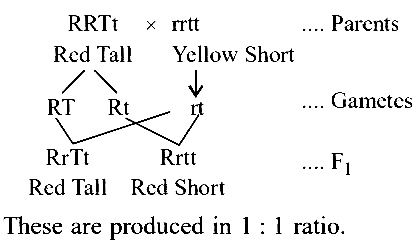
In a plant, red fruit (R) is dominant over yellow fruit (r) and tallness (T) is dominant over shortness (t). If a plant with RRTt genotype is crossed with a plant that is rrtt
(A)
75% will be tall with red fruit
(B)
25% will be tall with red fruit
(C)
50% will be tall with red fruit
(D)
All the offspring will be tall with red fruit
(C)

Solution

Since red fruit colour is dominant over yellow fruit colour and tallness is dominant over shortness. AIPMT 2004 Biology - Principles of Inheritance and Variation Question 103 English Explanation
Q.30
One of the parents of a cross has a mutation in its mitochondria. In that cross, that parent is taken as a male. During segregation of F2 progenies that mutation is found in -
(A)
50% of the progenies
(B)
1/3 of the progenies
(C)
None of the progenies
(D)
All the progenies
(C)

Solution

Mitochondria is an organelle present in the cytoplasm. A zygote receives its cytoplasm from the female parent gamete. Hence in the given question, the F2 progenies receive the mitochondrial genome from the male parent, so mutation is not passed to progenies.
Q.31
Lack of independent assortment of two genes A and B in fruit fly Drosophila is due to :-
(A)
Linkage
(B)
Recombination
(C)
Repulsion
(D)
Crossing over
(A)

Solution

The lack of independent assortment in sweet pea and Drosophila is due to linkage.
Q.32
A male human is heterozygous for autosomal genes A and B and is also hemizygous for hemophilic gene h. What proportion of his sperms will be abh :-
(A)
1/16
(B)
1/32
(C)
1/8
(D)
1/4
(C)

Solution

The male human is heterozygous for autosomal gene A and B and also hemizygous for haemophilic gene h, then his genotype will be AaBbXhY because haemophilia is a sex linked trait that is present on X-chromosome. So, the total number of gametes will be abXh, abY, ABXh, ABY, AbXh, AbY, aBXh, aBY. So the proportion of abXh sperm will be 1/8.
Q.33
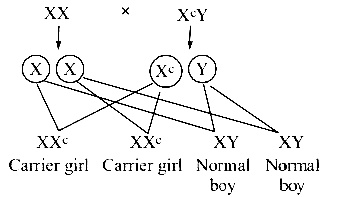
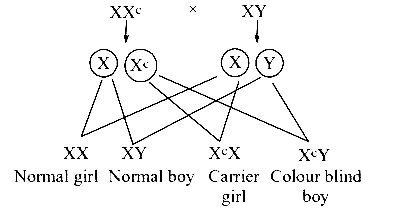
A normal woman, whose father was colour-blind is married to a normal man. The sons would be :-
(A)
All colour-blind
(B)
75 % colour-blind
(C)
All normal
(D)
50% colour-blind
(D)

Solution

In question, where the genotype of the other parent is not mentioned then that should be considered normal. Colour blindness is a recessive sex- linked trait
(i) To find out the genotype of a woman. Her father is colour-blind \ his genotype is XcY and her mother is normal so her genotype is XX. AIPMT 2004 Biology - Principles of Inheritance and Variation Question 99 English Explanation 1 So, woman is carrier
(ii) When this woman marries normal man
50% of the sons would be colour blind. AIPMT 2004 Biology - Principles of Inheritance and Variation Question 99 English Explanation 2
Q.34
The recessive genes located on X-chromosomes in humans are always-
(A)
Expressed in females
(B)
Sub-lethal
(C)
Expressed in males
(D)
Lethal
(C)

Solution

Males have only one X - chromosome. Hence any gene present on the one X - chromosome expresses itself n males. Females have two X- chromosomes . The mutant allele must be present on both the X-Chromosomes to express itself phenotypically. If only one copy of allele present, then the female only becomes a carrier showing no external manifestation of the gene. Sublethal condition can never arise in males.
Q.35
In a mutational event, when adenine is replaced by guanine, it is a case of -
(A)
Frameshift mutation
(B)
Transition
(C)
Transversion
(D)
Transcription
(B)

Solution

In transition substitution a purine is replaced by another purine base (A with G or vice versa). In transversion substitution a purine is replaced by a pyrimidine base or vice versa. Frameshift mutation is a type of mutation where the reading of codons is changed due to insertion or deletion of nucleotides. Transition is the formation of RNA over the template of DNA.
Q.36
The following ratio is generally constant for a given species :-
(A)
A + C / T + G
(B)
G + C / A+ T
(C)
A + G / C +T
(D)
T + C / G + A
(B)

Solution

According to Chargaff purines and pyrimidines are in equal amounts. Purine (adenine) is equimolar with pyrimidine (thymine) and purine (guanine) is equimolar with pyrimidine (cytosine).
Base ratio is specific for species.
Q.37
Which form of RNA has a structure resembling clover leaf ?
(A)
r-RNA
(B)
m-RNA
(C)
t-RNA
(D)
hn-RNA
(C)

Solution

rRNA occurs inside ribosomes. m RNA carries information from DNA to polypeptides. hnRNA are heterogenous nuclear RNA.
Q.38
During transcription, if the nucleotide sequence of the DNA strand that is being coded is ATACG, then the nucleotide sequence in the mRNA would be -
(A)
UAUGC
(B)
TCTGG
(C)
UATGC
(D)
TATGC
(A)

Solution

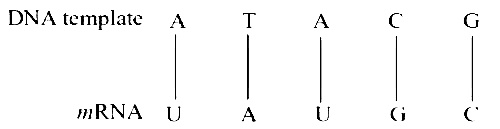
During transcription RNA synthesis from a DNA template takes place. It involves rewriting of the code without a change in its language. In mRNA, adenine pairs with uracil because thymine is not present in mRNA. So the nucleotide sequence in mRNA would be– AIPMT 2004 Biology - Molecular Basis of Inheritance Question 113 English Explanation
Q.39
After a mutation at a genetic locus the character of an organism changes due to the change in :-
(A)
Protein synthesis pattern
(B)
RNA transcription pattern
(C)
DNA replication
(D)
Protein structure
(D)

Solution

Change in genetic locus, changes the gene and in turn the amino acid it codes for. This alters the nature of protein synthesized which produces change in the organism. DNA replication is not affected neither the method of protein synthesis. Synthesis of RNA over DNA template is called transcription.
Q.40
India's wheat yield revolution in the 1960s was possible primarily due to :-
(A)
Hybrid seeds
(B)
Quantitative trait mutations
(C)
Increased chlorophyll content
(D)
Mutations resulting in plant height reduction
(B)

Solution

Green revolution was possible due to hybridization. Increased chlorophyll extent has no effect on yield of crops. Hybrid plants were dwarf because of selection. Quantitative trait mutations are not involved in hybridization.
In 1963, ICAR introduced many selections from CIMMYT include those developed by Norman Borlaug using Norin-10 as the source of dwarfing genes (CIMMYT-Centro International de Mejoramiento de Maiz Y Trigo).
Q.41
The technique of obtaining large number of plantlets by tissue culture method is called –
(A)
Macropropagation
(B)
Organ culture
(C)
Plantlet culture
(D)
Micropropagation
(D)

Solution

Micropropagation is the latest method of obtaining a large number of plantlets from plant tissue culture. It is called micropropagation because of the minute size of the propagules. It involves repeated subculture of the explant by changing the medium so as to form a large number of plantlets from that single explant. Somatic embryogenesis i.e., developing embryos from somatic cells is one of the techniques of micropropagation.
Q.42
ELISA is used to detect viruses, wherethe key reagent is :-
(A)
Catalase
(B)
Southern
(C)
DNA probes
(D)
Alkaline phosphatase
(D)

Solution

ELISA test is a technique used to detect and quantitate extremely small amount of a protein, antibody or antigen with the help of enzyme. The commonly used enzymes are peroxidase and alkaline phosphatase. Southern blotting and DNA probes are used in molecular analysis of DNA. Catalase is not involved in ELISA.
Q.43
DNA fingerprinting refers to :-
(A)
Techniques used for molecular analysis of different specimens of DNA
(B)
Anlysis of DNA samples using imprinting devices
(C)
Molecular analysis of profiles of DNA samples
(D)
Techniques used for identification of fingerprints of individuals
(C)

Solution

DNA fingerprinting is the technique of determining nucleotide sequences of certain areas of DNA which are unique to each individual. DNA contains noncistronic hypervariable repeat sequences called VNTR. DNA fingerprinting involves the identification of these VNTRs.
Q.44
The Ti plasmid is often used for making transgenic plants. This plasmid is found in
(A)
Agrobacterium
(B)
Rhizobium of the roots of leguminous plants
(C)
Azotobacter
(D)
Yeast as a 2 µm plasmid
(A)

Solution

Ti plasmid (tumor inducing) from the soil bacterium Agrobacterium tumefaciens is effectively used as vector for gene transfer to plant cells. The part of Ti plasmid transferred into plant cell DNA, is called the T-DNA. This T-DNA with desired DNA spliced into it, is inserted into the chromosomes of the host plant where it produces copies of itself, by migrating from one chromosomal position to another at random. Such plant cells are then cultured, induced to multiply and differentiate to form plantlets. Transferred into soil, the plantlets grow into mature plants, carrying the foreign gene, expressed throughout the new plant.
Q.45
In which one of the following habitats does the diurnal temperature of soil surface vary most ?
(A)
Grassland
(B)
Desert
(C)
Shrub land
(D)
Forest
(B)

Solution

Desert show maximum difference between day and night temperature.
Q.46
The maximum growth rate occurs in :-
(A)
Exponential phase
(B)
Stationary phase
(C)
Senescent phase
(D)
Lag phase
(A)

Solution

Maximum growth rate occurs in exponential or acceleration or log phase. The point at which the exponential growth begins to slow down is known as inflexion point.
Q.47
In which of the following pairs is the specific characteristic of a soil not correctly matched ?
(A)
Chernozems – Richest soil in the world
(B)
Laterite – Contains aluminium compound
(C)
Terra rossa – Most suitable for roses
(D)
Black soil – Rich in calcium carbonate
(D)

Solution

Black soil forms the largest group. It is developed mainly on the Deccan traps of Maharashtra, Madhya Pradesh and Kathiawar. Because of its hydrology and climatic conditions of the environment, the medium and deep black soils are very suitable for cotton cultivation. Laterite soil is rich in insoluble iron oxides and aluminium compounds, which gives laterites a reddish appearance. Chernozems are rich in nutrients (due to abundant organic rich compounds) and consequently the most fertile in the world.
Q.48
What is a keystone species ?
(A)
A dominant species that constitutes a large proportion of the biomass and which affects many other species
(B)
A species which makes up only a small proportion of the total biomass of a community, yet has a huge impact on the community's organization and survival
(C)
A common species that has plenty of biomass, yet has a fairly low impact on the community's organization
(D)
A rare species that has minimal impact on the biomass and on other species in the community
(B)

Solution

A keystone species is the one which makes up only a small proportion of the total biomass of a community, yet has a huge impact on the community’s organization and survival.
Q.49
Certain characteristic demographic features of developing countries are -
(A)
High fertility, low or rapidly falling mortality rate, rapid population growth and a very young age distribution
(B)
High mortality high density, uneven population growth and a very old age distribution
(C)
High fertility, high density, rapidly rising mortality rate and very young age distribution
(D)
High infant mortality, low fertility, uneven population growth and a very young age distribution
(A)

Solution

Demography is the study of population in all aspects. Fertility refers to the number of children per couple. Mortality rate is the average number of natural deaths per unit population per unit time. Age distribution refers to the proportionate occurrence of individuals of the three age groups. Developing countries usually have high rate of population growth, because of increasing fertility and declining mortality.
Q.50
In 1984, the Bhopal gas tragedy took place because methyl isocyanate :-
(A)
Reacted with DDT
(B)
Reacted with water
(C)
Reacted with ammonia
(D)
Reacted with CO2
(B)

Solution

Bhopal gas tragedy occurred on 3 December 1984 in a Union Carbide pesticide plant. When water and MIC mixed, an exothermic chemical reaction started, which produced a lot of heat. As a result, the safety valve of the tank burst because of the increase in pressure. This burst was so violent that even the concrete around the tank also broke. The high moisture content (aerosol) in the discharge while evaporating gave rise to a heavy gas which rapidly sank to the ground. It caused several ailments like partial or complete blindness, disorders like, gastrointestinal disorders in many surviving people.
Q.51
Lead concentration in blood is considered alarming if it is -
(A)
4-6 µg/100 ml
(B)
30 µg/100 ml
(C)
20 µg/100 ml
(D)
10 µg/100 ml
(B)

Solution

The concentration level of lead in blood is about 25 µg/100 ml. So any value above this is considered alarming.
Q.52
Common indicator organism of water pollution is :-
(A)
Escherichia coli
(B)
Lemna pancicostata
(C)
Entamoeba histolytica
(D)
Eichhornia crassipes
(A)

Solution

E.coli is the most common indicator of water pollution. It naturally occurs in the intestines of human beings and animals. They are commonly found in sewage and if E.coli are detected in water then it indicates faecal contamination. So if E.coli are detected in drinking water it indicates a serious health risk and that water should not be used for drinking.
Q.53
Angiosperms have dominated the land flora primarily because of their
(A)
power of adaptability in diverse habitat
(B)
property of producting large number of seeds
(C)
nature of self pollination
(D)
domestication by man.
(A)

Solution

Angiosperms have adapted themselves to all kinds of habitat - terrestial, aquatic, tropical, deciduous and alpine. Self pollination is seen in very few angiosperms. Production of large number of seeds ensure that at least some will germinate. Not all plants have been domesticated by man.
Q.54
Diversification in plant life appeared
(A)
due to long periods of evolutionary changes
(B)
due to abrupt mutations
(C)
suddenly on earth
(D)
by seed dispersal.
(A)

Solution

Diversification in plant life appeared due to long periods of evolutionary changes. Algae and bryophytes have thalloid plant body with no differentiation into root, stem and leaves. They had no vascular tissues but later in pteridophytes vascular tissues (xylem and phloem) developed and plant body became differentiated into root, stem and leaves. But the vascular tissues lack vessels and companion cells and they reproduce by spores.

In gymnosperms seed habit developed but the seeds are not enclosed inside fruit. In angiosperms vessels and companion cells are present, flowers are present and seeds are enclosed inside fruits. Thus the path of evolution is from algae to bryophytes to pteridophytes to gymnosperms and finally to angiosperm.
Q.55
One set of the plant was grown at 12 hours day and 12 hours night period cycles and it flowered while in the other set night phase was interrupted by flash of light and it did not produce flower. Under which one of the following categories will you place this plant?
(A)
Long day
(B)
Darkness neutral
(C)
Day neutral
(D)
Short day
(D)

Solution

Short day plants require long uninterrupted dark period for flowering. They will not produce flower if night was interrupted by flash of light.
Q.56
Cell elongation in internodal regions of the green plants takes place due to
(A)
indole acetic acid
(B)
cytokinins
(C)
gibberellins
(D)
ethylene.
(C)

Solution

Gibberellins induces elongation of internodes.
Q.57
An ecosystem which can be easily damaged but can recover after some time if damaging effect stops will be having -
(A)
High stability and high resilience
(B)
Low stability and high resilience
(C)
High stability and low resilience
(D)
Low stability and low resilience
(B)

Solution

An ecosystem having low stability can be easily damaged. An ecosystem having high resilience will take less time to recover.
Q.58
Which of the following is expected to have the highest value (gm/m2/yr) in a grassland ecosystem ?
(A)
Net production (NP)
(B)
Secondary production
(C)
Tertiary production
(D)
Gross production (GP)
(D)

Solution

Grasslands will have highest value of gross production. Net production is obtained after subtracting the respiratory utilization from gross production. Secondary and tertiary production is related with secondary and tertiary consumers respectively.
Q.59
Which one of the following is not correctly matched ?
(A)
Anopheles culifaciens – Leishmaniasis
(B)
Glossina palpalis – Sleeping sickness
(C)
Culex pipiens – Filariasis
(D)
Aedes aegypti – Yellow fever
(A)

Solution

Among the given options, the incorrect match with respect to the disease and the vector responsible for transmitting it is:

Option A: Anopheles culicifaciens – Leishmaniasis

Anopheles is actually a genus of mosquito known for transmitting malaria, not Leishmaniasis. The vector for Leishmaniasis is typically the sandfly from the genus Phlebotomus in the Old World or Lutzomyia in the New World.

Now let's look at the other options for correctness:

Option B: Glossina palpalis – Sleeping sickness

This is correctly matched. Glossina palpalis is a species of tsetse fly that is responsible for transmitting Trypanosoma brucei, the parasite that causes sleeping sickness, also known as African trypanosomiasis.

Option C: Culex pipiens – Filariasis

This is also correct. Culex pipiens, commonly known as the common house mosquito, is known to be a vector for the nematodes such as Wuchereria bancrofti and Brugia malayi, which cause lymphatic filariasis.

Option D: Aedes aegypti – Yellow fever

This is correct as well. Aedes aegypti is a mosquito that acts as the primary vector for yellow fever virus, as well as for other diseases like dengue fever, chikungunya, and Zika virus.

Therefore, the incorrect match here is indeed Option A, with Anopheles culicifaciens incorrectly matched to Leishmaniasis instead of malaria.

Q.60
You are required to draw blood from a patient and to keep it in a test tube for analysis of blood corpuscles and plasma. You are also provided with the following four types of test tubes.
which of these you will not use for the purpose.
(A)
Test tube containing calcium bicarbonate
(B)
Chilled test tube
(C)
Test tube containing heparin
(D)
Test tube containing sodium oxalate.
(A)

Solution

The correct option for a test tube that should not be used for the purpose of analyzing blood corpuscles and plasma is Option A: Test tube containing calcium bicarbonate.

Let's analyze each option:

  • Option A: Test tube containing calcium bicarbonate - Calcium bicarbonate can affect the coagulation process of blood. The coagulation cascade requires calcium ions (Ca2+) to function. By introducing calcium bicarbonate into the blood sample, it can potentially disrupt this process and alter the condition of the blood, making it unsuitable for accurate analysis of blood corpuscles and plasma.

  • Option B: Chilled test tube - Chilling a test tube prior to drawing blood can help to preserve certain components of the blood for analysis, especially when looking into specific enzymes or hormones. It does not interfere with the analysis of blood corpuscles and plasma. Therefore, this option is suitable for the purpose.

  • Option C: Test tube containing heparin - Heparin is used as an anticoagulant that prevents the blood from clotting, which is crucial when analyzing blood corpuscles and plasma. The presence of heparin ensures that the blood remains in a fluid state, allowing for accurate analysis of its components. Thus, this option is appropriate for the purpose.

  • Option D: Test tube containing sodium oxalate - Sodium oxalate also acts as an anticoagulant by binding calcium ions, thus preventing the blood from clotting. Like heparin, it helps keep the blood in a state suitable for analyzing blood corpuscles and plasma. Therefore, this option is suitable for the purpose.

Given this analysis, the test tube containing calcium bicarbonate (Option A) is the one that should not be used for the purpose of drawing blood for analysis of blood corpuscles and plasma, as it can interfere with the coagulation process crucial for such analysis.
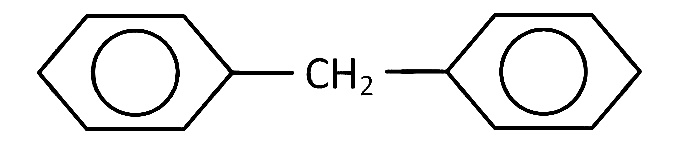
Q.61
In the resting state of the neural membrane, diffusion due to concentration gradients, if allowed, would drive
(A)
K+ into the cell
(B)
K+ and Na+ out of the cell
(C)
Na+ into the cell
(D)
Na+ out of the cell.
(C)

Solution

In a resting state of the neural membrane, Na+ concentration is higher on the outer side and K+ concentration is more within the cell. This concentration gradient is maintained by voltage gated channels. Hence if diffusion is allowed Na+ would enter the cell and K+ would leave.
Q.62
Injury to vagus nerve in humans is not likely to affect
(A)
tongue movements
(B)
gastrointestinal movements
(C)
pancreatic secretion
(D)
cardiac movements.
(A)

Solution

Vagus nerve arises from the side of medulla oblongata. It innervates the larynx, trachea, oesophagus, stomach, lungs, heart and intestines. It is a mixed nerve. It controls the visceral sensations and visceral movements, i.e., heart beat, respiratory movements, peristalsis, sound production, etc. Movement of the tongue is controlled by hypoglossal nerve as it innervates the muscles of the tongue.
Q.63
In oogamy, fertilization involves
(A)
a small non-motile female gamete and a large motile male gamete
(B)
a large non-motile female gamete and a small motile male gamete
(C)
a large non - motile female gamete and a small non-motile male gamete
(D)
large motile female gamete and a small non-motile male gemete.
(B)

Solution

In oogamy male and female gametes are morphologically as well as physiologically different. Female gametes are large and nonmotile. Male gametes are small but motile.
Q.64
Mast cells of connective tissue contain -
(A)
Heparin and calcitonin
(B)
Heparin and histamine
(C)
Vasopressin and relaxin
(D)
Serotonin and melanin
(B)

Solution

Mast cells are granulated leucocyte cells. Their granules contain histamine which is a vasodilator and heparin (an anticoagulant). These take part in body defence and allergic reaction. Vasopressin is released by posterior lobe of pituitary. Relaxin is released by placenta. Calcitonin is released by thyroid. Serotonin and melanin are released by intermediate lobe of pituitary gland.
Q.65
Duodenum has characteristics Brunner's gland which secrete two hormones called
(A)
kinase, estrogen
(B)
secretin, cholecystokinin
(C)
prolactin, parathormone
(D)
estradiol, progesterone.
(B)

Solution

Brunner’s glands are present in the duodenum region of small intestine. They secrete two hormones secretin and cholecystokinin. Secretin is secreted by cells in the duodenum when they are exposed to the acidic contents of the emptying stomach.
Cholecystokinin (CCK), a mixture of peptides, is secreted by cells in the duodenum when they are exposed to food.
Q.66
Which one of the following pairs is not correctly matched?
(A)
Vitamin B12   -   Pernicious anaemia
(B)
Vitamin B6   -   Convulsions
(C)
Vitamin B1   -   Beri-beri
(D)
Vitamin B2   -   Pellagra
(D)

Solution

Deficiency of vitamin B2 leads to inflammation of eyes, sores on the lips and skin diseases. Pellagra is caused due to deficiency of nicotinic acid or vitamin B3 . It is characterised by dermatitis (skin inflammation), diarrhoea and dementia (nervous disorder).
Q.67
The richest sources of vitamin B12 are
(A)
goat's liver and Spirulina
(B)
chocolate and green gram
(C)
rice and hen's egg
(D)
carrot and chicken's breast.
(A)

Solution

Carrots are a source of vitamin A. Egg is a good source of vitamin E.
Q.68
Chemically hormones are
(A)
biogenic amines only
(B)
proteins, steroids and biogenic amines
(C)
proteins only
(D)
steroids only
(B)

Solution

Hormones are chemical messengers formed by endocrine cells. Chemically hormones are of the following types: Amines–composed of amino group e.g., Melatonin.
Q.69
Which one of the following hormones is modified amino acid?
(A)
Epinephrine
(B)
Progesterone
(C)
Prostaglandin
(D)
Estrogen
(A)

Solution

Epinephrine is synthesized from amino acid tyrosine. While estrogen and progesterone are modified steroids and prostaglandins are basically fat.
Q.70
Which one of the following pairs correctly matches a hormone with a disease resulting from its deficiency?
(A)
Luteinizing hormone    -    Failure of ovulation
(B)
Insulin    -    Diabetes insipidus
(C)
Thyroxine    -    Tetany
(D)
Parathyroid    -    Diabetes mellitus
(A)

Solution

Luteinizing hormone (LH) stimulates ovulation. Deficiency of insulin causes diabetes mellitus. Deficiency of ADH or vasopressin causes diabetes insipidus. Deficiency of parathormone causes tetany. Deficiency of thyroxine causes cretinism in infants and myxoedema in adults.
Q.71
Which of the following hormones is not a secretion product of human placenta -
(A)
Estrogen
(B)
Progesterone
(C)
Prolactin
(D)
Human chorionic gonadotropin
(C)

Solution

Human chorionic gonadotropin is released by Anophoblast cells of the placenta. Estrogen and progesterone are also released by placental cells to maintain pregnancy. Prolactin is secreted from anterior lobe of pituitary. Placenta secretes Human Placental Lactogenic Factor which prepare mammary glands to secrete milk.
Q.72
Ovulation in the human female normally takes place during the menstrual cycle -
(A)
At the beginning of the proliferative phase
(B)
At the mid secretory phase
(C)
Just before the end of the secretory cycle
(D)
At the end of the proliferative phase
(D)

Solution

Ovulation (the release of secondary oocyte from the graafian follicle) takes place at the end of proliferative phase of menstrual cycle. During this phase, the follicle stimulating hormone (FSH) secreted by the anterior lobe of the pituitary gland stimulates the ovarian follicle to secrete estrogen. Estrogen stimulates the proliferation of the endometrium of the uterine wall. The endometrium becomes thicker by rapid cell multiplication and this is accompanied by an increase of uterine glands and blood vessels. This phase ends when the ovarian follicle ruptures and ovulation occurs and at the same time the production of estrogen stops.
Q.73
In Arthropoda, hend and thorax are often used to form cephalothorax, but in which one of the following classes, is the body divided into head thorax and abdomen?
(A)
Insecta
(B)
Myriapoda
(C)
Crustacea
(D)
Arachnida and curstacea
(A)

Solution

Body in arthropoda is segmented. Segments are grouped into 3 forms - head, thorax and abdomen. When head and thorax are fused then they are referred to as cephalothorax. Class Insecta of Phylum Arthropoda have body divided into head, thorax and abdomen.
Q.74
Uricotelism is found in
(A)
mammals and birds
(B)
fish and fresh water protozoans
(C)
birds, land reptiles and insects
(D)
frogs and toads.
(C)

Solution

In uricotelic animals nitrogenous waste is eliminated in the form of uric acid. Ammonotelism is seen in aquatic animals wherein nitrogenous wastes is eliminated in the form of ammonia eg. Fishes, tadpole. Ureotelism is observed in human beings in which nitogenous waste is eliminated as urea.
Q.75
When a fresh-water protozoan possessing a contractile vacuole, is placed in a glass containing marrine water, the vacuole will
(A)
increase in number
(B)
disappear
(C)
increase in size
(D)
decrease in size
(D)

Solution

A fresh water protozoan when placed in marine water medium, loss of water takes place i.e., exosmosis. Hence the contractile vacuole will decrease in size.
Q.76
Presence of gills in the tadpole of frog indicates that
(A)
fish were amphibious in the past
(B)
fish evolved from frog-like ancestors
(C)
frog will have gills in future
(D)
frog evolved from gilled ancestors.
(D)

Solution

It is universally accepted that amphibians (frogs) have originated from fishes. Resemblance of amphibia to fish is seen in most systems of the body. Both are cold blooded. Fish respire by gills and also tadpole of frog respires by gills. To prevent dessication in air, both usually lay eggs in water.
Q.77
The animals with bilateral symmetry in young stage, and radial pentamerous symmetry in the adult stage, belong to the Phylum
(A)
Annelida
(B)
Mollusca
(C)
Cnidaria
(D)
Echinodermata.
(D)

Solution

Echinoderms show bilateral symmetry in their larval stage and pentamerous radial symmetry in the adult stage. Annelids are bilaterally symmetrical, coelenterates show radial symmetry. Molluscs are also bilaterally symmetrical.
Q.78
One of the following is a very unique feature of the mammalian body
(A)
homeothermy
(B)
presence of diaphragm
(C)
four chambered heart
(D)
rib cage.
(B)

Solution

The unique feature of mammals is the presence of diaphragm. It is a membrane that separates thoracic cavity from abdominal cavity. The cavity of other animals is not divided into thoracic and abdominal cavities. Homeothermy, four chambered heart and rib cage are the characters of mammals as well as some other animals also.
Q.79
When CO2 concentration in blood increases breathing becomes
(A)
shallower and slow
(B)
there is no effect on breathing
(C)
slow and deep
(D)
faster and deeper
(D)

Solution

The breathing becomes faster and deeper in order to oxygenate the blood at a fast rate. Shallow and slow breathing occurs during rest.
Q.80
Blood analysis of a patient reveals an unusually high quantity of carboxyhaemoglobin content. Which of the following conclusions is most likely to be correct?
The patient has been inhaling polluted air containing unusually high content of
(A)
carbon disulphide
(B)
chloroform
(C)
carbon dioxide
(D)
carbon monoxide.
(D)

Solution

Carboxyhaemoglobin, a stable compound, is formed when haemoglobin readily combines with carbon monoxide. Carbon monoxide converts iron (II) to iron (III) in its reaction with haemoglobin. In this form haemoglobin does not carry oxygen resulting in its (oxygen) starvation and leads to asphyxiation and in extreme cases to death. The affinity of haemoglobin for CO is 250 times its affinity for O2 and COHb liberates CO very slowly and also due to that compound the dissociation curve of the remaining HbO2 shifts to the left, decreasing the amount of O2 released.
Q.81
According to oparin, which one of the following was not present in the primitive atmosphere of the earth ?
(A)
Water vapour
(B)
Oxygen
(C)
Methane
(D)
Hydrogen
(B)

Solution

The first scientific explanation of origin of life was put forward by a Russian Scientist, A.I. Oparin in 1923. J.B.S. Haldane (1928), England-born Indian Scientist, also made similar observations regarding the origin of life. According to them primitive atmosphere was reducing atmosphere because hydrogen atoms (most numerous and most reactive) combined with all available oxygen atoms to form water and leaving no free oxygen.
Q.82
Age of fossils in the past was generally determined by radio-carbon method and other methods involving radioactive elements found in the rocks. More precise methods, which were used recently and led to the revision of the evolutionary periods for different groups of organisms includes -
(A)
Electron spin resonance (ESR) & fossil DNA
(B)
Study of carbohydrates/proteins in fossils
(C)
Study of the conditions of fossilization
(D)
Study of carbohydrates/proteins in rocks
(A)

Solution

ESR, Electron Spin Resonance measures number of charges occupying deep traps in crystal band gap.
Electron Paramagnetic Resonance (EPR) or Electron Spin Resonance (ESR) is a spectroscopic technique which detects species that have unpaired electrons, generally meaning that the molecule in question is a free radical if it is an organic molecule, or that it has transition metal ions if it is an inorganic complex. Because most stable molecules have a closed-shell configuration without a suitable unpaired spin, the technique is less widely used than nuclear magnetic resonance (NMR). The EPR was first discovered in Kazan State University by Soviet physicist Yevgeniy Zavoyskiy in 1944.
Q.83
What kind of evidence suggested that man is more closely related with chimpanzee than with other hominoid apes ?
(A)
Evidence from fossil remains and the fossil mitochondrial DNA alone
(B)
Evidence from DNA extracted from sex chromosomes, autosomes
(C)
Comparison of chromosomes morphology only
(D)
Evidence from DNA from sex chromosomes only
(B)

Solution

DNA from sex chromosomes, autosomes and mitochondria reflect the entire genomic limit. Chromosome morphology is only partial.
Q.84
Diversification in plant life appeared
(A)
By seed dispersal
(B)
Due to abrupt mutations
(C)
Due to long periods of evolutionary changes
(D)
Suddenly on earth
(C)

Solution

According to Darwin gradual accumulation of small variations gives rise to new species. Abrupt mutations do not give rise to new species . Plants arose by gradual adaptation to diverse habitats and not suddenly on earth. Seeded plants are just one group in the plant kingdom.
Q.85
Which one of the following is living fossil ?
(A)
Cycas
(B)
Moss
(C)
spirogyra
(D)
Saccharomyces
(A)

Solution

Cycas and Ginkgo are often considered as the living fossil because they are one of the few representative of once a large group of plants (which was once a well flourished group) and possess traits of extinct pteridosperms and other gymnosperms.