NEET-UG 2007

AIPMT 2007

Physics (Maximum Marks: 192)
  • This section contains 48 questions.
  • Each question has FOUR options (A), (B), (C) and (D). ONLY ONE of these four options is the correct answer.
  • Full Marks : +4 If ONLY the correct option is chosen;
  • Zero Marks : 0 If none of the options is chosen (i.e. the question is unanswered);
  • Negative Marks : −1 In all other cases.
Q.1
Dimensions of resistance in an electrical circuit, in terms of dimension of mass M, of length L, of time T and of current I, would be
(A)
[ML2T2]
(B)
[ML2T1I1]
(C)
[ML2T3I2]
(D)
[ML2T3I1]
(C)

Solution

We know,


= =
Q.2
A particle moving along x-axis has acceleration f, at time t, given by f = f0 where f0 and T are constants.The particle at t = 0 has zero velocity. In the time interval between t = 0 and the instant when f = 0, the particle's velocity (vx) is
(A)
f0T2
(B)
f0T2
(C)
f0T
(D)
f0T
(C)

Solution

f = f0

When f = 0 then,

0 = f0

= 0

t = T

Also f =


vx =

=

=

=

= f0T
Q.3
A car moves from X to Y with a uniform speed vu and returns to Y with a uniform speed vd. The average speed for this round trip is
(A)
(B)
(C)
(D)
(D)

Solution

Let total distance = 2S

Let car take t1 time to cover first S distance from X to Y,

t1 =

Let car take t2 time to cover S distance,from Y to X,

t2 =

Average speed = =
Q.4
The positions x of a particle with respect to time t along x-axis is given by x = 9t2 t3 where x is in metres and t in seconds. What will be the position of this particle when it achieves maximum speed along the + x direction ?
(A)
54 m
(B)
81 m
(C)
24 m
(D)
32 m
(A)

Solution

Speed v = = = 18t - 3t2

At maximum speed

= 0

18 - 6t = 0

t = 3

Position of the particle = 81 - 27 = 54 m
Q.5
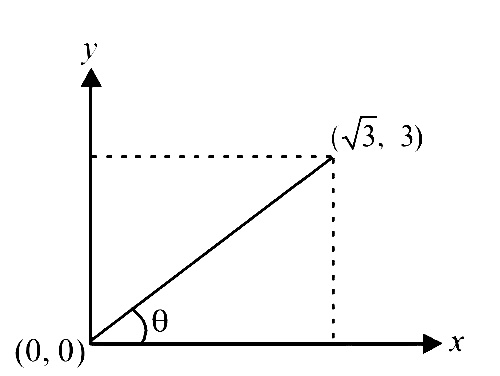
A particle starting from the origin (0, 0) moves in a straight line in the (x, y) planes. Its coordinates at a later time are . The path of the particle makes with the x-axes an angle of
(A)
45o
(B)
60o
(C)
0o
(D)
30o.
(B)

Solution

AIPMT 2007 Physics - Motion in a Plane Question 30 English Explanation Let be the angle which the particle makes with an x-axis.

From figure,


Q.6
and are two vectors and is the angle between them, if the value of is
(A)
45o
(B)
30o
(C)
90o
(D)
60o
(D)

Solution


or or ;
Q.7
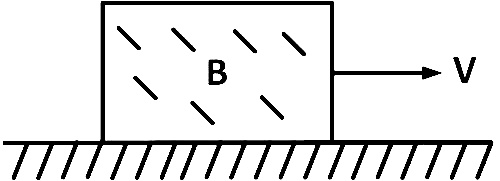
A block B is pushed momentarily along a horizontaly surface with an initial velocity V. If    is the coefficient of sliding friction between B and the surface, block B will come to rest after a time

AIPMT 2007 Physics - Laws of Motion Question 22 English
(A)
g/V
(B)
g/V
(C)
V/g
(D)
V/(g).
(D)

Solution

Given u = V, final velocity = 0.
Using v = u + at


f = R = mg (f is the force of friction)

Retardation, a =

So,
Q.8
A vertical spring with force constant k is fixed on a table. A ball of mass m at a height h above the free upper end of the spring falls vertically on the spring so that the spring is compressed by a distance d. The net work done in the process is
(A)
mg(h + d) kd2
(B)
mg(h d) kd2
(C)
mg(h d) + kd2
(D)
mg(h + d) + kd2
(A)

Solution

As seen, gravitational potential energy of the ball gets converted into elastic potential energy of the spring.


Wnet = work done by gravity + work done by spring

Wnet = mg(h + d) -
Q.9
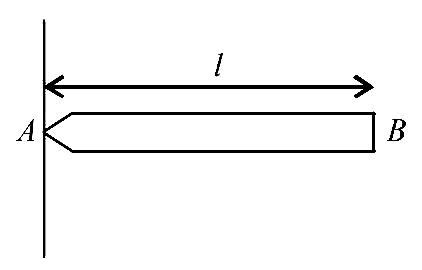
A uniform rod AB of length and mass m is free to rotate about point A. The rod is released from rest in the horizontal position. Given that the moment of inertia of the rod about A is ml2/3, the initial angular acceleration of the rod will be

AIPMT 2007 Physics - Rotational Motion Question 50 English
(A)
(B)
(C)
(D)
(C)

Solution

Torque about A,


Angular acceleration,
Q.10
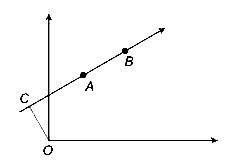
A particle of mass m moves in the XY plane with a velocity v along the straight line AB. If the angular momentum of the particle with respect to origin O is LA when it is at A and LB when it is at B, then AIPMT 2007 Physics - Rotational Motion Question 51 English
(A)
LA = LB
(B)
the relationship between LA and LB depends upon the slope of the line AB
(C)
LA < LB
(D)
LA > LB.
(A)

Solution

Angular momentum = Linear momentum × perpendicular distance between line of action of liner momentum from origin

Let d be the perpendicular distance.
pA and pB be the linear momentum at A and B

Angular momentum LA = pA × d
LB = pB × d

So, linear momentum will be equal, i.e., LA = LB.here, pA and pB are equal as have equal velocity.

LA = LB
Q.11
A wheel has angular acceleration of 3.0 rad/sec2 and an initial angular speed of 2.00 rad/sec. In a time of 2 sec it has rotated through an angle (in radian) of
(A)
10
(B)
12
(C)
4
(D)
6
(A)

Solution

Given: Angular acceleration, = 3 rad/sec2
Initial angular velocity = 2 rad/sec

Time t = 2 sec

Using,

radian.
Q.12
Two satellites of earth, S1 and S2 are moving in the same orbit. The mass of S1 is four times the mass of S2. Which one of the following statements is true ?
(A)
The potential energies of earth and satellite in the two cases are equal.
(B)
S1 and S2 are moving with the same speed.
(C)
The kinetic energies of the two satellites are equal.
(D)
The time period of S1 is four times that of S2.
(B)

Solution

Since orbital velocity of satellite is

it does not depend upon the mass of the satellite.

Therefore, both satellites will move with same speed.
Q.13
Assuming the sun to have a spherical outer surface of radius r, radiating like a black body at temperature toC, the power received by a unit surface, (normal to the incident rays) at a distance R from the centre of the sun is
where is the Stefan's constant.
(A)
(B)
(C)
(D)
(C)

Solution

Power radiated by the sun at t°C


Power received by a unit surface

Q.14
A black body is at 727oC. It emits energy at a rate which is proportional to
(A)
(1000)4
(B)
(1000)2
(C)
(727)4
(D)
(727)2
(A)

Solution

According to Stefan’s law, rate of energy radiated

where T is the absolute temperature of a black body.

Q.15
An engine has an efficiency of 1/6. When the temperature of sink is reduced by 62oC, its efficiency is doubled. Temperatures of the source is
(A)
37oC
(B)
62oC
(C)
99oC
(D)
124oC.
(C)

Solution

Since efficiency of engine is

According to problem,

   ...(i)

When the temperature of the sink is reduced by 62°C, its efficiency is doubled

   ...(ii)

Solving (i) and (ii)
T2 = 372 K

T1 = 99°C = Temperature of source.
Q.16
The particle executing simple harmonic motion has a kinetic energy K0cos2t. The maximum values of the potential energy and the total energy are respectively
(A)
K0/2 and K0
(B)
K0 and 2K0
(C)
K0 and K0
(D)
0 and 2k0
(C)

Solution

Kinetic energy + potential energy = total energy
When kinetic energy is maximum, potential energy is zero and vice versa.

Maximum potential energy = total energy.

0 + K0 = K0 (K.E. + P.E. = total energy).
Q.17
The phase difference between the instantaneous velocity and acceleration of a particle executing simple harmonic motion is
(A)
(B)
0.707
(C)
zero
(D)
0.5
(D)

Solution

Let y = Asint


Acceleration =

The phase difference between acceleration and velocity is .
Q.18
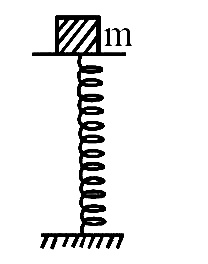
A mass of 2.0 kg is put on a flat pan attached to a vertical spring fixed on the ground as shown in the figure. The mass of the spring and the pan is negligible.

When pressed slightly and released the mass executes a simple harmonic motion. The spring constant is 200 N/m. What should be the minimum amplitude of the motion so that the mass gets detached from the pan (take g = 10 m/s2).

AIPMT 2007 Physics - Oscillations Question 41 English
(A)
10.0 cm
(B)
any value less than 12.0 cm
(C)
4.0 cm
(D)
8.0 cm
(A)

Solution

Mass gets detached at the upper extreme position when pan returns to its mean position. At that point, ,
i.e.


a = 1/10 m = 10 cm
Q.19
A particle executes simple harmonic oscillation with an amplitude . The period of oscillation is T. The minimum time taken by the particle to travel half of the amplitude from the equilibrium position is
(A)
T/8
(B)
T/12
(C)
T/2
(D)
T/4
(B)

Solution

Displacement from the mean position


According to problem y = a/2


This is the minimum time taken by the particle to travel half of the amplitude from the equilibrium position.
Q.20
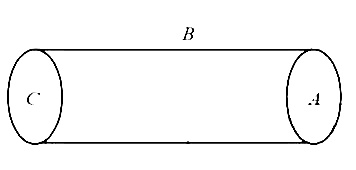
A hollow cylinder has a charge q coulomb within it. If is the electric flux in units of voltmeter associated with the curved surface B, the flux linked with the plane surface A in units of V-m will be

AIPMT 2007 Physics - Electrostatics Question 48 English
(A)
(B)
(C)
(D)
(D)

Solution

Let , and are the electric flux linked with A, B and C.

According to Gauss theorem,

=

Since =


Q.21
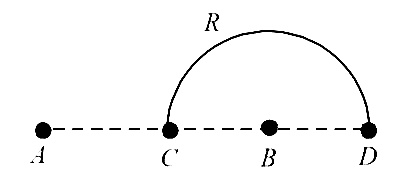
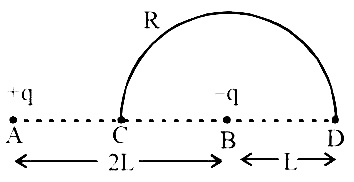
Charges +q and q are placed at points A and B respectively which are a distance 2L apart, C is the midnight between A and B. The work done in moving a charge + Q along the semicircle CRD is

AIPMT 2007 Physics - Electrostatics Question 47 English
(A)
(B)
(C)
(D)
(C)

Solution

AIPMT 2007 Physics - Electrostatics Question 47 English Explanation
Potential at C = VC = 0
Potential at D = VD


Potential difference
VD – VC

Work done = Q (VD – VC)

Q.22
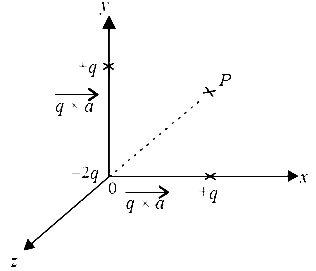
Three point charges +q, 2q and + q are placed at points (x = 0, y = a, z = 0), (x = 0, y = 0, z = 0) and (x = , y = 0, z = 0) respectively. The magnitude and direction of the electric dipole moment vector of this charge assembly are
(A)
along the line joining points (x = 0, y = 0, z = 0) and (x = , y = a, z = 0)
(B)
q along the line joining points (x = 0, y = 0, z = 0) and (x = , y = a, z = 0)
(C)
along +x direction
(D)
along +y direction.
(A)

Solution

This consists of two dipoles, –q and +q with dipole moment along with the +y-direction and –q and +q along the x-direction.

AIPMT 2007 Physics - Electrostatics Question 46 English Explanation
The resultant moment =

Along the direction 45° that is along OP where P is (+a, +a, 0).
Q.23
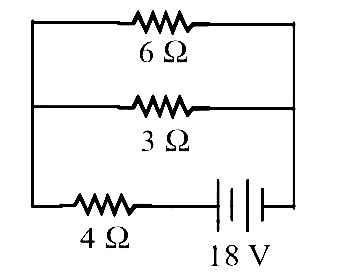
The total power dissipated in watt in the circuit shown here is

AIPMT 2007 Physics - Current Electricity Question 75 English
(A)
40
(B)
54
(C)
4
(D)
16
(B)

Solution

Power dissipiated = P

Q.24
Three resistances, P, Q, R each of 2 and an unknown resistance S from the four arms of a Wheatstone bridge circuit. When a resistance of 6 is connected in parallel to S the bridge gets balanced. What is the value of S?
(A)
3
(B)
6
(C)
1
(D)
2 .
(A)

Solution

A balanced wheatstone bridge simply requires


Therefore, S should be 2.
A resistance of 6 is connected in parallel.
In parallel combination,


Q.25
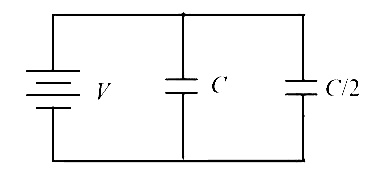
Two condensers, one of capacity C and other of capacity C/2 are connected to a V-volt battery, as shown in the figure. The work done in charging fully both the condensers is

AIPMT 2007 Physics - Capacitor Question 27 English
(A)
(B)
(C)
(D)
2CV2
(B)

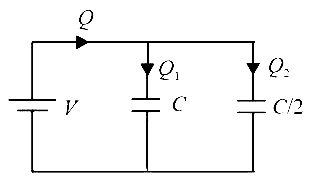
Solution

AIPMT 2007 Physics - Capacitor Question 27 English Explanation
As the capacitors are connected in parallel, therefore potential difference across both the condensors remains the same.


Aslo,


Work done in charging fully both the condensors is given by

Q.26
The resistance of an ammeter is 13 and its scale is graduated for a current upto 100 amps. After an additional shunt has been connected to this ammeter it becomes possible to measure currents upto 750 amperes by this meter. The value of shunt-resistance is
(A)
2
(B)
0.2
(C)
2 k
(D)
20
(A)

Solution

We know


Q.27
Under the influence of a uniform magnetic field, a charged particle moves with constant speed v in a circle of radius R. The time period of rotation of the particle
(A)
depends on R and not on v
(B)
is independent of both v and R
(C)
depends on both v and R
(D)
depends on v and not on R
(B)

Solution

For the circular motion in a cyclotron,


is independent of v and r.
Q.28
A charged particle (charge q) is moving in a circle of radius R with uniform speed v. The associated magnetic moment is given by
(A)
(B)
(C)
qvR
(D)
qvR/2
(D)

Solution

Magnetic moment = IA

T = and I =

= =
Q.29
Nickel shows ferromagnetic property at room temperature. If the temperature is increased beyond Curie temperature, then it will show
(A)
anti ferromagnetism
(B)
no magnetic property
(C)
diamagnetism
(D)
paramagnetism.
(D)

Solution

Above Curie temperature, ferromagnetic material become paramagnetic.
Q.30
A transformer is used to light a 100 W and 110 V lamp from a 220 V mains. If the main current is 0.5 amp, the efficiency of the transformer is approximately
(A)
50%
(B)
90%
(C)
10%
(D)
30%
(B)

Solution

Efficiency of the transformer

=

= = 90 %
Q.31
The primary and secondary coils of a transformer have 50 and 1500 turns respectively. If the magnetic flux linked with the primary coil is given by = 0 + 4t, where is webers, t is time in seconds and 0 is a constant, the output voltage across the secondary coil is
(A)
120 volt
(B)
220 volts
(C)
30 volts
(D)
90 volts.
(A)

Solution

Voltage across the primary,

Vp = 4 volt

Also

Where, Ns = No. of turns across primary coil = 50

Np = No. of turns across secondary coil = 1500

Vs = = 120 V
Q.32
What is the value of inductance L for which the current is maximum in a series LCR circuit with C = 10 F and = 1000 s1 ?
(A)
1 mH
(B)
cannot be calculated unless R is known
(C)
10 mH
(D)
100 mH
(D)

Solution

Condition for which current is maximum in a series LCR circuit is,


1000 =

L = 100 mH
Q.33
The electric and magnetic field of an electromagnetic wave are
(A)
in opposite phase and perpendicular to each other
(B)
in opposite phase and parallel to each other
(C)
in phase and perpendicular to each other
(D)
in phase and parallel to each other.
(C)

Solution

In electromagnetic waves, E and B are in same phase and perpendicular to each other.
Q.34
A small coin is resting on the bottom of a beaker filled with liquid . A ray of light from the coin travels upto the surface of the liquid and moves along its surface. How fast is the light travelling in the liquid ?

AIPMT 2007 Physics - Geometrical Optics Question 50 English
(A)
2.4 108 m/s
(B)
3.0 108 m/s
(C)
1.2 108 m/s
(D)
1.8 108 m/s
(D)

Solution

AIPMT 2007 Physics - Geometrical Optics Question 50 English Explanation

As

= =

Speed, v = = = 1.8 108 m/s
Q.35
The frequency of a light wave in a material is 2 1014 Hz and wavelength is 5000 . The refractive index of material will be
(A)
1.50
(B)
3.00
(C)
1.33
(D)
1.40
(B)

Solution

By using v = n

v = 2 1014 5000 10-10 = 108 m/s

Refractive index of the material,

= = = 3
Q.36
The total energy of electron in the ground state of hydrogen atom is 13.6 eV. The kinetic energy of an electron in the first excited state is
(A)
6.8 eV
(B)
13.6 eV
(C)
1.7 eV
(D)
3.4 eV.
(D)

Solution

En =

E1 = -13.6 eV

E2 = = -3.4 eV

Kinetic energy of an electron in the first excited state is

K = –E2 = 3.4 eV.
Q.37
If the nucleus has a nuclear radius of about 3.6 fm, them would have its radius approximately as
(A)
9.6 fm
(B)
12.0 fm
(C)
4.8 fm
(D)
6.0 fm
(D)

Solution

A nucleus of mass number A has radius

R = R0 A1/3,

where R0 = 1.2 × 10⁻¹⁵ m and A = mass number

For , R1 = R0 (27)1/3 = 3R0

For , R2 = R0 (125)1/3 = 5R0


= = 6.0 fm
Q.38
A nucleus has mass represented by M(A, Z). If Mp and Mn denote the mass of proton and neutron respectively and B.E. the binding energy in MeV, then
(A)
B.E. = [ZMp + (A Z)Mn M(A, Z)]c2
(B)
B.E. = [ZMp + AMp M(A, Z)]c2
(C)
B.E. = M(A, Z) ZMp (A Z)Mn
(D)
B.E. = [M(A, Z) ZMp (A Z)Mn]c2
(A)

Solution

The difference in mass of a nucleus and its constituents, M, is called the mass defect and is given by

M = [ZMp + (A Z)Mn] - M(A, Z)

binding energy = Mc2

= [ZMp + (A Z)Mn M(A, Z)]c2
Q.39
In a mass spectrometer used for measuring the masses of ions, the ions are initially accelerated by an electric potential and then made to describe semicircular paths of radius R using a magnetic field B. If V and B are kept constant, the ratio will be proportional to
(A)
1/R2
(B)
R2
(C)
R
(D)
1/R
(A)

Solution

In mass spectrometer, when ions are accelerated through potential V,

....(1)

As the magnetic field curves the path of the ions in a semicircular orbit.

Bqv =

v = .....(2)

Now by substituting (ii) in (i),


As V and B are constants,

Q.40
In a radioactive decay process, the negatively charged emitted -particles are
(A)
the electrons produced as a result of the decay of neutrons inside the nucleus
(B)
the electrons produced as a result of collisions between atoms
(C)
the electrons orbitting around the nucleus
(D)
the electrons present inside the nucleus
(A)

Solution

In beta minus decay (), a neutron is transformed into a proton, and an electron is emitted from the nucleus along with antineutrino.

n = p + e +
Q.41
Two radioactive substances A and B have decay constants 5 and respectively. At t = 0 they have the same number of nuclei. The ratio of number of nuclei of A to those of B will be (1/e)2 after a time interval
(A)
(B)
(C)
1/
(D)
1/
(C)

Solution

NA = N0e–5t
NB = N0et

Given =

=

e–4t = e-2

t =
Q.42
A 5 watt source emits monochromatic light of wavelength 5000 . When placed 0.5 m away, it liberates photoelectrons from a photosensitive metallic surface. When the source is moved to a distance of 1.0 m, the number of photoelectrons liberated will be reduced by a factor of
(A)
8
(B)
16
(C)
2
(D)
4
(D)

Solution

For a light source of power P watt, the intensity at a distance d is given by

I =

No. of photoelectrons or intensity
Q.43
A beam of electron passes undeflected through mutually perpendicular electric and magnetic fields. If the electric field is switched off, and the same magnetic field is maintained, the electrons move
(A)
in a circular orbit
(B)
along a parabolic path
(C)
along a straight line
(D)
in an elliptical orbit.
(A)

Solution

In magnetic field a charged particle moves in a circular orbit.
Q.44
Monochromatic light of frequency 6.0 1014 Hz is produced by a laser. The power emitted is 2 103 W. The number of photons emitted, on the average, by the source per second is
(A)
5
(B)
5
(C)
5
(D)
5
(D)

Solution

Since p = nh

n = =

= 5
Q.45
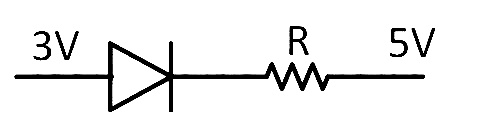
Which one of the following represents forward bias diode ?
(A)
AIPMT 2007 Physics - Semiconductor Electronics Question 116 English Option 1
(B)
AIPMT 2007 Physics - Semiconductor Electronics Question 116 English Option 2
(C)
AIPMT 2007 Physics - Semiconductor Electronics Question 116 English Option 3
(D)
AIPMT 2007 Physics - Semiconductor Electronics Question 116 English Option 4
(C)

Solution

A diode is said to be forward biased if p-side is at higher potential than n-side of p-n junction.
Q.46
For a cubic crystal structure which one of the following relations indicating the cell characteristics is correct ?
(A)
a b c  and   = = = 90o
(B)
a = b = c  and   = 90o
(C)
a = b = c  and   = = = 90o
(D)
a b c  and  ;   and   = 90o
(C)

Solution

In a cubic crystal structure
a = b = c  and   = = = 90o
Q.47
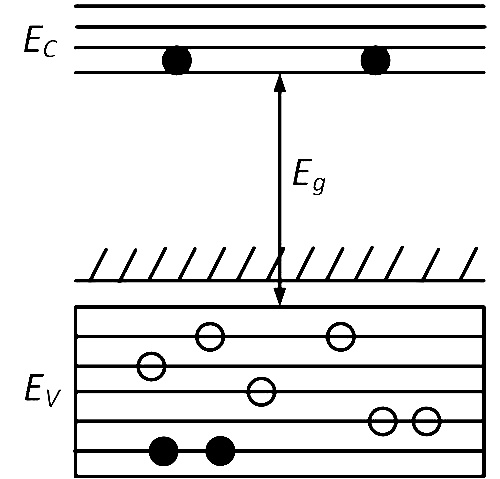
In the energy band diagram of a material shown below, the open circles and filled circles denote holes and electrons respectively. The material is

AIPMT 2007 Physics - Semiconductor Electronics Question 67 English
(A)
an insulator
(B)
a metal
(C)
an n-type semiconductor
(D)
a p-type semiconductor.
(D)

Solution

For a p-type semiconductor, the acceptor energy level, as shown in the diagram, is slightly above the top Ev of the valence band. With very small supply of energy an electron from the valence band can jump to the level EC and ionise acceptor negatively.
Q.48
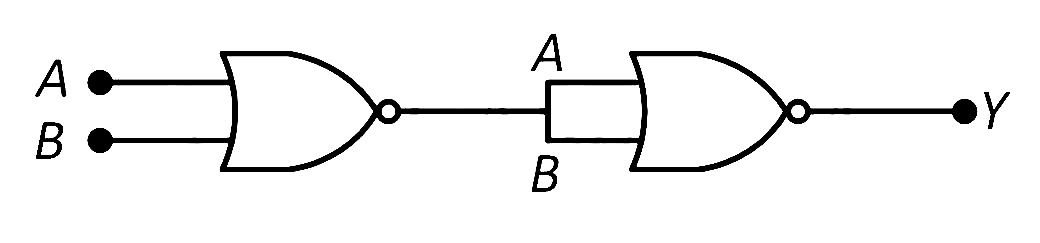
In the following circuit, the output Y for all possible inputs A and B is expressed by the truth table.

AIPMT 2007 Physics - Semiconductor Electronics Question 69 English
(A)
(B)
(C)
(D)
(C)

Solution

Y' =

Y =

Y =

Y = A + B which is OR-gate.
Chemistry (Maximum Marks: 196)
  • This section contains 49 questions.
  • Each question has FOUR options (A), (B), (C) and (D). ONLY ONE of these four options is the correct answer.
  • Full Marks : +4 If ONLY the correct option is chosen;
  • Zero Marks : 0 If none of the options is chosen (i.e. the question is unanswered);
  • Negative Marks : −1 In all other cases.
Q.1
An element, X has the following isotopic composition:
200X : 90%  199X : 8.0%  202X : 2.0%

The weighted average atomic mass of the naturally occuring element X is closest to
(A)
201 amu
(B)
202 amu
(C)
199 amu
(D)
200 amu
(D)

Solution

Average isotope mass of X

=

=

= 199.96 a.m.u 200 a.m.u
Q.2
Concentrated aqueous sulphuric acid is 98% H2SO4 by mass and has a density of 1.80 g mL1. Volume of acid required to make one litre of 0.1 M H2SO4 solution is
(A)
16.65 mL
(B)
22.20 mL
(C)
5.55 mL
(D)
11.10 mL
(C)

Solution

Normality = = 36 N

N2 = 0.1 2 = 0.2 N

N2V2 = N1V1

36 V = 0.2 1000

V = = 5.55 mL
Q.3
Consider the following sets of quantum numbers :

n l m s
(i) 3 0 0 +1/2
(ii) 2 2 1 +1/2
(iii) 4 3 -2 -1/2
(iv) 1 0 -1 -1/2
(v) 3 2 3 +1/2


Which of the following sets of quantum number is not possible ?
(A)
(i), (ii), (iii) and (iv)
(B)
(ii), (iv) and (v)
(C)
(i) and (iii)
(D)
(ii), (iii) and (iv)
(B)

Solution

(i) represents an electron in 3s orbital

(ii) is not possible as value of m varies from 0, 1, .... ( -1)

(iii) represents an electron in 4f orbital

(iv) is not possible as value of m varies from - ... +

(v) is not possible as value of m varies from - ... +, it can never be grater than
Q.4
The equilibrium constants of the following are

N2 + 3H2 2NH3;     K1

N2 + O2 2NO;     K2

H2 + O2 H2O;     K3

The equilibrium constant (K) of the reaction :

2NH3 + O2 2NO + 3H2O will be
(A)
K2K33/K1
(B)
K2K3/K1
(C)
K23K3/K1
(D)
K1K33/K2
(A)

Solution

2NH3 N2 + 3H2;     

N2 + O2 2NO;     K2

3H2 + O2 3H2O;     (K3)3

By adding all equations, we get

2NH3 + O2 2NO + 3H2O

K =
Q.5
A weak acid, HA, has a Ka of 1.00 105. If 0.100 mol of this acid is dissolved in one litre of water, the percentage of acid dissociated at equilibrium is closest to
(A)
1.00%
(B)
99.9%
(C)
0.100%
(D)
99.0%
(A)

Solution

For weak acid degree of dissociation,

=

= = 1.00 %
Q.6
Calculate the pOH of a solution at 25oC that contains 1 1010 M of hydronium ions, i.e. H3O+.
(A)
4.000
(B)
9.000
(C)
1.000
(D)
7.000
(A)

Solution

Given, [H3O+.] = 1 1010

pH = 10

Also we know, pH + pOH = 14

pOH = 14 - pH = 14 - 10 = 4
Q.7
0.5 molal aqueous solution of a weak acid (HX) is 20% ionised. If Kf for water is 1.86 K kg mol1, the lowering in freezing point of the solution is
(A)
0.56 K
(B)
1.12 K
(C)
0.56 K
(D)
1.12 K
(B)

Solution

HX H+ + X-
Initially 1 0 0
At equilibrium 1 -


Total moles = 1 – + + = 1 +

i =

Given, = 20% = 0.2

i = 1 + = 1 + 0.2 = 1.2

Tf = ikf m = 1.2 × 1.86 × 0.5 = 1.12 K
Q.8
Consider the following reactions :
(i) H+(aq) + OH(aq) = H2O(l),  H = X1 kJ mol1
(ii) H2(g) + 1/2O2(g) = H2O(l),   H = X2 kJ mol1
(iii) CO2(g) + H2(g) = CO(g) + H2O(l),  H = X3 kJ mol1
(iv) C2H2(g) + 5/2O2(g) = 2CO2(g) + H2O(l),    H = +X4 kJ mol1

Enthalpy of formation of H2O(l) is
(A)
+X3 kJ mol1
(B)
X4 kJ mol1
(C)
+X1 kJ mol1
(D)
X2 kJ mol1
(D)

Solution

Chemical equation for the formation of H2O(l) is

H2(g) + 1/2O2(g) = H2O(l)

Because enthalpy of formation of a compound is the heat absorbed or released when one mole of this substance is formed from its constituent elements.

Thus, enthalpy of formation of H2O is –X2 kJ mol–1 where negative sign shows that the reaction is exothermic.

Equation (i) represents nutralisation reaction.

Equation (iii) represents hydrogenation reaction.

Equation (iv) represents combustion reaction.
Q.9
Given that bond energies of H H and Cl Cl are 430 kJ mol1 and 240 kJ mol1 respectively and Hf for HCl is 90 kJ mol1, bond enthalpy of HCl is
(A)
380 kJ mol1
(B)
425 kJ mol1
(C)
245 kJ mol1
(D)
290 kJ mol1
(B)

Solution

H2 + Cl2 HCl

Hf = –90 kJ mol–1

Hf = [ (B.E)H2 + (B.E)Cl2] - (B.E)HCl

-90 = [ (430)H2 + (240)Cl2] - (B.E)HCl

-90 = [215 + 120] - (B.E)HCl

(B.E)HCl = 425 kJ mol–1
Q.10
The efficiency of a fuel cell is given by
(A)
G/S
(B)
G/H
(C)
S/G
(D)
H/G
(B)

Solution

Efficiency of a fuel cell () =

Generally, fuel cells are expected to have an efficiency of 100 percent.
Q.11
The equilibrium constant of the reaction:
Cu(s) + 2Ag+(aq) Cu2+(aq) + 2Ag(s);
Eo = 0.46 V at 298 K is
(A)
2.0 1010
(B)
4.0 1010
(C)
4.0 1015
(D)
2.4 1010
(C)

Solution

RT ln K = nFE°

ln K =

=

K = 4 1015
Q.12
The reaction of hydrogen and iodine monochloride is given as :
H2(g) + 2ICl(g) 2HCl(g) + I2(g)
This reaction is of first order with respect to H2(g) and ICl(g),
following mechanisms were proposed.

Mechanism A :
     H2(g) + 2ICl(g) 2HCl(g) + I2(g)
Mechanism B :
     H2(g) + ICl(g) HCl(g) + HI(g) ; slow
     HI(g) + ICl(g) HCl(g) + I2(g) ; fast

Which of the above mechanism(s) can be consistent with the given information about the reaction?
(A)
A and B both
(B)
Neither A nor B
(C)
A only
(D)
B only
(D)

Solution

The slow step is the rate determining step and it involves 1 molecule of H2(g) and 1 molecule of ICl(g) . Hence the rate will be,

r = k[H2(g)] [ICl(g)]

The reaction is 1st order with respect to H2(g) and ICl(g).
Q.13
In a first-order reaction A B, if k is rate constant and initial concentration of the reactant A is 0.5 M, then the half-life is
(A)
(B)
(C)
(D)
(C)

Solution

For first order reaction

k =

at , x =

=

=
Q.14
If 60% of a first order reaction was completed in 60 minutes, 50% of the same reaction would be completed in approximately
(log 4 = 0.60, log 5 = 0.69)
(A)
45 minutes
(B)
60 minutes
(C)
40 minutes
(D)
50 minutes
(A)

Solution

For a first order reaction,

k =

k =

=

= 0.0153

Also, =

=

= 45 min.
Q.15
If NaCl is doped with 104 mol% of SrCl2, the concentration of cation vacancies will be (NA = 6.02 1023 mol1)
(A)
6.02 1016 mol1
(B)
6.02 1017 mol1
(C)
6.02 1014 mol1
(D)
6.02 1015 mol1
(B)

Solution

As each Sr2+ ion introduces one cation vacancy, therefore concentration of cation vacancies = mole % of SrCl2 added.

Concentration of cation vacancies

= 10–4 mole %

=

= 10-6

=
Q.16
The fraction of total volume occupied by the atoms present in a simple cube is
(A)
(B)
(C)
(D)
(D)

Solution

The maximum properties of the available volume which may be filled by hard sphere in simple cubic arrangement is or 0.52.
Q.17
The Langmuir adsorption isotherm is deduced using the assumption
(A)
the adsorption sites are equivalent in their ability to adsorb the particles
(B)
the heat of adsorption varies with coverage
(C)
the adsorbed molecules interact with each other
(D)
the adsorption takes place in multilayers.
(A)

Solution

Langmuir adsorption isotherm is based on the assumption that every adsorption site is equivalent and that the ability of a particle to bind there is independent of whether nearby sites are occupied or not occupied.
Q.18
With which of the following electronic configuration an atom has the lowest ionisation enthalpy ?
(A)
1s2 2s2 2p3
(B)
1s2 2s2 2p5 3s1
(C)
1s2 2s2 2p6
(D)
1s2 2s2 2p5
(B)

Solution

The larger the atomic size, smaller is the value of the ionisation enthalpy. Again higher the screening effect, lesser is the value of ionisation potential, So option(b) has lowest ionisation enthalpy.
Q.19
Which one of the following ionic species has the greatest proton affinity to form stable compound ?
(A)
NH
(B)
F
(C)
I
(D)
HS
(A)

Solution

Going from left to right across a period in the periodic table, the basicity decreases as the electronegativity of the atom possessing the lone pair of electron increases. Hence basicity of is higher than F-. In moving down a group, as the atomic mass increases, basicity decreases. Hence F- is more basic than I- and HO- is more basic than HS-. Hence among the ionic species, has maximum proton affinity.
Q.20
Identify the correct order of the size of the following :
(A)
Ca2+ < K+ < Ar < Cl < S2
(B)
Ar < Ca2+ < K+ < Cl < S2
(C)
Ca2+ < Ar < K+ < Cl < S2
(D)
Ca2+ < K+ < Ar < S2 < Cl
(A)

Solution

Among isoelectronic ions, ionic radius of anions is more than that of cations. Further size of the anion increases with increase in negative charge and size of the cation decreases with increase in positive charge.
Q.21
The correct order of C O bond length among CO, CO, CO2 is
(A)
CO < CO < CO2
(B)
CO < CO2 < CO
(C)
CO < CO2 < CO
(D)
CO2 < CO < CO
(C)

Solution

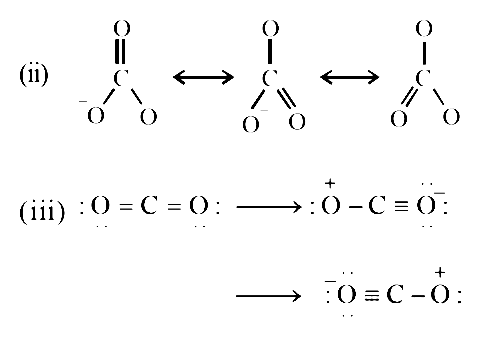
All these structures exhibits resonance and can be represented by the following resonating structures.
AIPMT 2007 Chemistry - Chemical Bonding and Molecular Structure Question 72 English Explanation
More single bond character in resonance hybrid, more is the bond length. Hence the increasing bond length is

CO CO2 CO
Q.22
In which of the following pairs, the two species are isostructural?
(A)
SO and NO
(B)
BF3 and NF3
(C)
BrO and XeO3
(D)
SF4 and XeF4
(C)

Solution

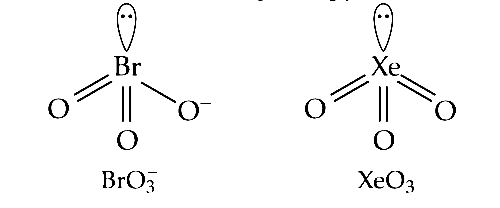
Hybridisation of Br in BrO3 :

= = 4

Four hybrid orbital means sp3 hybridisation.

Hybridisation of Xe in XeO3 :

= = 4

Four hybrid orbital means sp3 hybridisation.

Thus, both BrO3 and XeO3 are sp3 hybridised with three bond pairs of electrons and one lone pair of electrons and results in trigonal pyramidal shape.

AIPMT 2007 Chemistry - Chemical Bonding and Molecular Structure Question 73 English Explanation
Q.23
Which of the following statements, about the advantage of roasting of sulphide ore before reduction is not true?
(A)
The G of the sulphide is greater than those for CS2 and H2S.
(B)
The G is negative for roasting of sulphide ore to oxide.
(C)
Roasting of the sulphide to the oxide is thermodynamically feasible.
(D)
Carbon and hydrogen are suitable reducing agents for metal sulphides.
(D)

Solution

Carbon and hydrogen are not suitable reducing agents for metal sulphides.
Q.24
Sulphide ores of metals are usually concentrated by froth floatation process. Which one of the following sulphide ores offer an exception and is concentrated by chemical leaching?
(A)
Galena
(B)
Copper pyrite
(C)
Sphalerite
(D)
Argentite
(D)

Solution

Galena (PbS), copper pyrites (CuFeS2) and argentite (Ag2S) are concentrated by froth floatation process but sphalerite (ZnS) is concentrated by chemical leaching.
Q.25
The correct order of increasing thermal stability of K2CO3, MgCO3, CaCO3 and BeCO3 is
(A)
BeCO3 < MgCO3 < CaCO3 < K2CO3
(B)
MgCO3 < BeCO3 < CaCO3 < K2CO3
(C)
K2CO3 < MgCO3 < CaCO3 < BeCO3
(D)
BeCO3 < MgCO3 < K2CO3 < CaCO3
(A)

Solution

As the basicity of metal hydroxides increases down the group from Be to Ba, the thermal stability of their carbonates also increases in the same order. Further group 1 compounds are more thermally stable than group 2 because their hydroxide are much basic than group 2 hydroxides therefore, the order of thermal stability is

BeCO3 < MgCO3 < CaCO3 < K2CO3
Q.26
In which of the following the hydration energy is higher than the lattice energy?
(A)
MgSO4
(B)
RaSO4
(C)
SrSO4
(D)
BaSO4
(A)

Solution

Hydration energy of sulphate decreases on moving down the group-II. Mg2+ is smaller than other ions of group II, so Mg2+ is readily hydrated and hence MgSO4 has higher hydration energy than the lattice energy.
Q.27
Which of the following anions is present in the chain structure of silicates?
(A)
(Si2O)n
(B)
(SiO)n
(C)
SiO
(D)
Si2O
(B)

Solution

[SiO32–]n and [Si4O11]6– have chain structure of silicates.
Q.28
Which of the following oxidation states are the most characteristic for lead and tin respectively?
(A)
+2, +4
(B)
+4, +4
(C)
+2, +2
(D)
+4, +2
(A)

Solution

The tendency to from +2 ionic state increases on moving down the group due to inert pair effect. Most characteristic oxidation state for lead and tin are +2, +4 respectively.
Q.29
Which one of the following orders correctly represents the increasing acid strengths of the given acids?
(A)
HOClO < HOCl < HOClO3 < HOClO2
(B)
HOClO2 < HOClO3 < HOClO < HOCl
(C)
HOClO3 < HOClO2 < HOClO < HOCl
(D)
HOCl < HOClO < HOClO2 < HOClO3
(D)

Solution

AIPMT 2007 Chemistry - p-Block Elements Question 43 English Explanation

As the oxidation number of the central atom increases, strength of acid also increases.
Q.30
Identify the incorrect statement among the following:
(A)
Lanthanoid contraction is the accumulation of successive shrinkages.
(B)
As a result of lanthanoid contraction, the properties of 4d series of the transition elements have no similarities with the 5d series of elements.
(C)
Shielding power of 4 electrons is quite weak.
(D)
There is a decrease in the radii of the atoms or ions as one proceeds from La to Lu.
(B)

Solution

In each vertical column of transition elements, the elements of second and third transition series resemble each other more closely than the elements of first and second transition series on account of lanthanide contraction. Hence the properties of elements of 4d series of the transition elements resemble with the properties of the elements of 5d series of the transition elements.
Q.31
Which one of the following ions is the most stable in aqueous solution?
(At. No. Ti = 22, V = 23, Cr = 24, Mn = 25)
(A)
V3+
(B)
Ti3+
(C)
Mn3+
(D)
Cr3+
(C)

Solution

The exactly half-filled and completely filled d-orbital have extra stability and stability is directly proportional to number of unpaired electrons.

Mn+3 (22) = 3d44s0 (4 unpaired electrons)

So, Mn3+ ion is most stable in aqueous solution. Rest all have less number of unpaired electrons.
Q.32
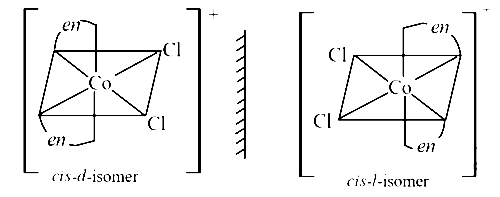
Which of the following will give a pair of enantiomorphs?
(en = NH2CH2CH2NH2)
(A)
[Cr(NH3)6][Co(CN)6]
(B)
[Co(en)2Cl2]Cl
(C)
[Pt(NH3)4][PtCl6]
(D)
[Co(NH3)4Cl2]NO2
(B)

Solution

Either a pair of crystals, molecules or compounds that are mirror images of each other but are not identical, and that rotate the plane of polarised light equally, but in opposite directions are called as enantiomorphs.

AIPMT 2007 Chemistry - Coordination Compounds Question 65 English Explanation
Q.33
The d electron configurations of Cr2+, Mn2+, Fe2+ and Ni2+ are 3d4, 3d5, 3d6 and 3d8 respectively. Which one of the following aqua complexes will exhibit the minimum paramagnetic behaviour?

(At. No. Cr = 24, Mn = 25, Fe = 26, Ni = 28)
(A)
[Fe(H2O)6]2+
(B)
[Ni(H2O)6]2+
(C)
[Cr(H2O)6]2+
(D)
[Mn(H2O)6]2+
(B)

Solution

Cr2+ = 3d4 (4 unpaired electrons)

Mn2+ = 3d5 (5 unpaired electrons)

Fe2+ = 3d6 (4 unpaired electrons)

Ni2+ = 3d8 (2 unpaired electrons)

Thus, [Ni(H2O)6]2+ exhibit minimum paramagnetic behaviour.

Greater the number of unpaired electrons, higher is the paramagnetism. Hence Ni2+ will exhibit the minimum paramagnetic behaviour.
Q.34
If there is no rotation of plane polarised light by a compound in a specific solvent, through to be chiral, it may mean than
(A)
the compound is certainly meso
(B)
there is no compound in the solvent
(C)
the compound may be a racemic mixture
(D)
the compound is certainly a chiral.
(A)

Solution

Compounds which do not show optical activity inspite of the presence of chiral carbon atoms are called meso-compounds. The absence of optical activity in these compound is due to the presence of a plane of symmetry in their molecules. e.g. meso-tartaric acid is optically inactive.
Q.35
The order of decreasing reactivity towards an electrophilic reagent, for the following would be
(i) benzene
(ii) toluene
(iii) chlorobenzene
(iv) phenol
(A)
(ii) > (iv) > (i) > (iii)
(B)
(iv) > (iii) > (ii) > (i)
(C)
(iv) > (ii) > (i) > (iii)
(D)
(i) > (ii) > (iii) > (iv)
(C)

Solution

Benzene having any activating group, i.e., OH, R etc. undergoes electrophilic substitution very easily as compared to benzene itself. Thus, toluene (C6H5CH3) and phenol (C6H5OH) undergo electrophilic substitution very readily than benzene. Chlorine with +E and +M effect deactivates the ring due to strong –I effect. So, it is difficult to carry out the substitution in chlorobenzene than in benzene, so correct order is

(iv) > (ii) > (i) > (iii)
Q.36
For (i) I, (ii) Cl, (iii) Br, the increasing order of nucleophilicity would be
(A)
Cl < Br < I
(B)
I < Cl < Br
(C)
Br < Cl < I
(D)
I < Br < Cl
(A)

Solution

Nucleophilicity increases down the periodic table :

I > Br > Cl > F
Q.37
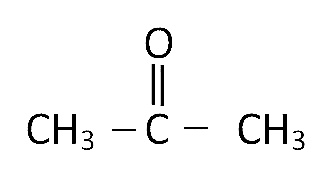
Which of the compound with molecular formula C5H10 yields acetone on ozonolysis?
(A)
3-Methyl- 1 -butene
(B)
Cyclopentane
(C)
2-Methyl-1-butene
(D)
2-Methyl-2-butene
(D)

Solution

AIPMT 2007 Chemistry - Hydrocarbons Question 35 English Explanation

So, 2-methyl-2-butene yields acetone on ozonolysis.
Q.38
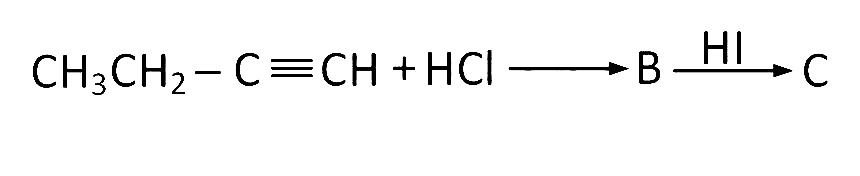
Predict the product C obtained in the following reaction of 1-butyne.
AIPMT 2007 Chemistry - Hydrocarbons Question 36 English
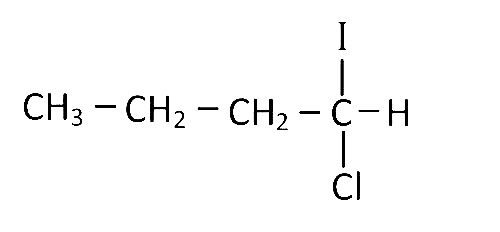
(A)
AIPMT 2007 Chemistry - Hydrocarbons Question 36 English Option 1
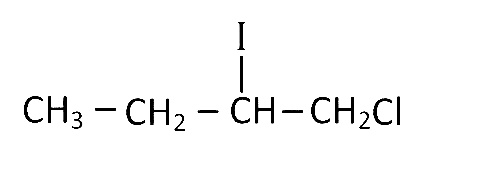
(B)
AIPMT 2007 Chemistry - Hydrocarbons Question 36 English Option 2
(C)
AIPMT 2007 Chemistry - Hydrocarbons Question 36 English Option 3
(D)
AIPMT 2007 Chemistry - Hydrocarbons Question 36 English Option 4
(C)

Solution

AIPMT 2007 Chemistry - Hydrocarbons Question 36 English Explanation
Q.39
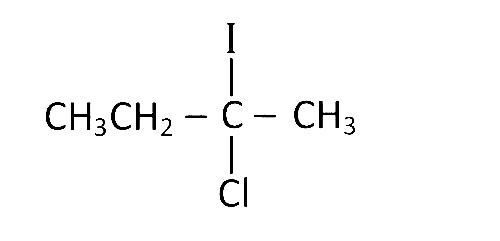
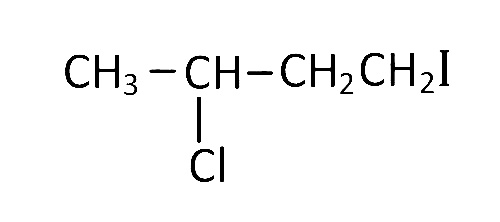
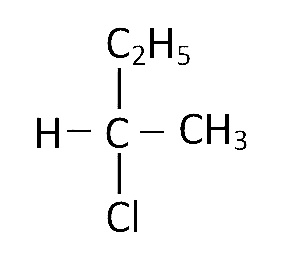
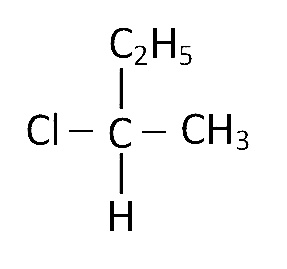
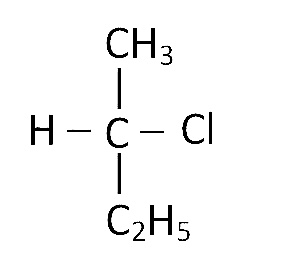
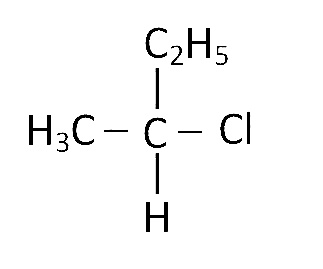
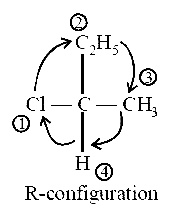
CH3 CHCl CH2 CH3 has a chiral centre. Which one of the following represents its R-configuration?
(A)
AIPMT 2007 Chemistry - Haloalkanes and Haloarenes Question 36 English Option 1
(B)
AIPMT 2007 Chemistry - Haloalkanes and Haloarenes Question 36 English Option 2
(C)
AIPMT 2007 Chemistry - Haloalkanes and Haloarenes Question 36 English Option 3
(D)
AIPMT 2007 Chemistry - Haloalkanes and Haloarenes Question 36 English Option 4
(B)

Solution

AIPMT 2007 Chemistry - Haloalkanes and Haloarenes Question 36 English Explanation
Q.40
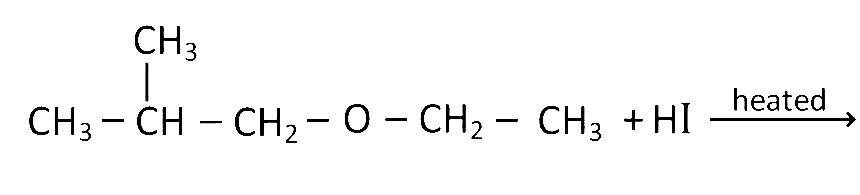
In the reaction :
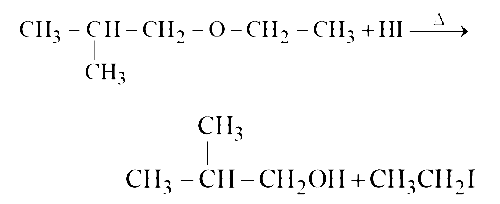
AIPMT 2007 Chemistry - Alcohol, Phenols and Ethers Question 33 English
Which of the following compounds will be formed?
(A)
AIPMT 2007 Chemistry - Alcohol, Phenols and Ethers Question 33 English Option 1
(B)
AIPMT 2007 Chemistry - Alcohol, Phenols and Ethers Question 33 English Option 2
(C)
AIPMT 2007 Chemistry - Alcohol, Phenols and Ethers Question 33 English Option 3
(D)
AIPMT 2007 Chemistry - Alcohol, Phenols and Ethers Question 33 English Option 4
(C)

Solution

In the cleavage of mixed ethers with two different alkyl groups, the alcohol and alkyl iodide that form depend on the nature of alkyl group. When primary or secondary alkyl groups are present, it is the lower alkyl group that forms alkyl iodide therefore AIPMT 2007 Chemistry - Alcohol, Phenols and Ethers Question 33 English Explanation
Q.41
The product formed in Aldol condensation is
(A)
a beta-hydroxy aldehyde or a beta-hydroxy ketone
(B)
an alpha-hydroxy aldehyde or ketone
(C)
an alpha, beta unsaturated ester
(D)
a beta-hydroxy acid.
(A)

Solution

The aldehydes or ketones containing -H atom in presence of dilute alkali undergo self condensation reaction to form -hydroxyaldehyde or -hydroxyketone. This reaction is known as Aldol condensation.
Q.42
Which of the following represents the correct order of the acidity in the given compounds ?
(A)
FCH2COOH > CH3COOH > BrCH2COOH > ClCH2COOH
(B)
BrCH2COOH > ClCH2COOH > FCH2COOH > CH3COOH
(C)
FCH2COOH > ClCH2COOH > BrCH2COOH > CH3COOH
(D)
CH3COOH > BrCH2COOH > ClCH2COOH > FCH2COOH
(C)

Solution

Acidity decreases as the –I effect of the group decreases, F is the most electronegative atom and hence it has highest –I effect among the halogens.

FCH2COOH > ClCH2COOH > BrCH2COOH > CH3COOH
Q.43
Consider the following compounds
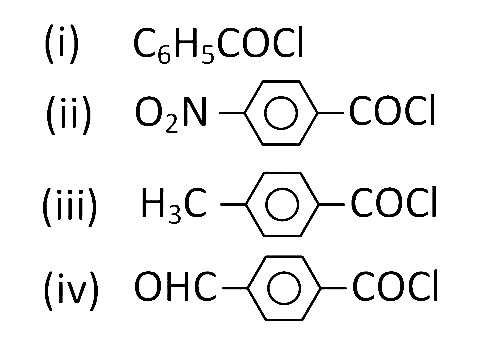
AIPMT 2007 Chemistry - Aldehydes, Ketones and Carboxylic Acids Question 58 English
The correct decreasing order of their reactivity towards hydrolysis is
(A)
(i) > (ii) > (iii) > (iv)
(B)
(iv) > (ii) > (i) > (iii)
(C)
(ii) > (iv) > (i) > (iii)
(D)
(ii) > (iv) > (iii) > (i)
(C)

Solution

The ease of hydrolysis depends upon the magnitude of the +ve charge on the carbonyl group. Electron-withdrawing groups increase the magnitude of positive charge and electron donating groups decrease the magnitude of positive charge. Hence, the decreasing order of reactivity towards hydrolysis is

(ii) > (iv) > (i) > (iii)
Q.44
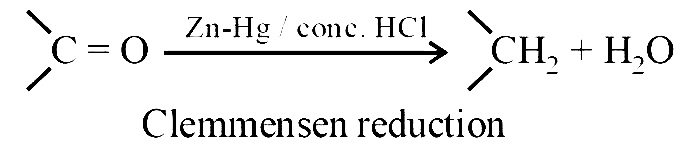
Reduction of aldehydes and ketones into hydrocarbons using zinc amalgam and conc. HCl is called
(A)
Cope reduction
(B)
Dow reduction
(C)
Wolf-Kishner reduction
(D)
Clemmensen reduction
(D)

Solution

Clemmensen reduction : Aldehydes and ketones are reduced to the corresponding alkanes by means of amalgamated Zinc and HCl. AIPMT 2007 Chemistry - Aldehydes, Ketones and Carboxylic Acids Question 80 English Explanation
Q.45
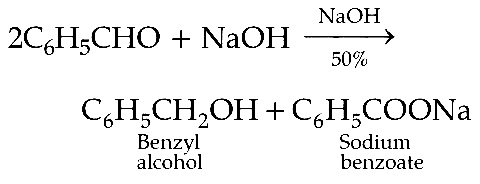
Which one of the following on treatment with 50% aqueous sodium hydroxide yields the corresponding alcohol and acid?
(A)
C6H5CHO
(B)
CH3CH2CH2CHO
(C)
AIPMT 2007 Chemistry - Aldehydes, Ketones and Carboxylic Acids Question 59 English Option 3
(D)
C6H5CH2CHO
(A)

Solution

AIPMT 2007 Chemistry - Aldehydes, Ketones and Carboxylic Acids Question 59 English Explanation
Q.46
Which one of the following on reduction with lithium aluminium hydride yields a secondary amine?
(A)
Methyl isocyanide
(B)
Acetamide
(C)
Methyl cyanide
(D)
Nitroethane
(A)

Solution

Reduction of alkyl isocyanides in presence of LiAlH4 yields secondary amines containing methyl as one of the alkyl group.

AIPMT 2007 Chemistry - Organic Compounds Containing Nitrogen Question 37 English Explanation
Q.47
Which one of the following polymers is prepared by condensation polymerisation?
(A)
Teflon
(B)
Natural rubber
(C)
Styrene
(D)
Nylon-6,6
(D)

Solution

Nylon-6,6 is a condensation polymer of adipic acid and hexamethylene diamine. AIPMT 2007 Chemistry - Polymers Question 26 English Explanation
Q.48
Which of the following vitamins is water-soluble?
(A)
Vitamin E
(B)
Vitamin K
(C)
Vitamin A
(D)
Vitamin B
(D)

Solution

Vitamin B is water soluble whereas all other are water insoluble.
Q.49
RNA and DNA are chiral molecules, their chirality is due to
(A)
chiral bases
(B)
chiral phosphate ester units
(C)
-sugar component
(D)
-sugar component
(C)

Solution

Each nucleic acid consists of a pentose sugar a heterocyclic base, and phosphoric acid. The sugar present in DNA is -D (–) -2-deoxy ribose and the sugar present in RNA is D (–)- ribose. The chirality of DNA and RNA molecules are due to the presence of sugar components.
Biology (Maximum Marks: 316)
  • This section contains 79 questions.
  • Each question has FOUR options (A), (B), (C) and (D). ONLY ONE of these four options is the correct answer.
  • Full Marks : +4 If ONLY the correct option is chosen;
  • Zero Marks : 0 If none of the options is chosen (i.e. the question is unanswered);
  • Negative Marks : −1 In all other cases.
Q.1
Which one of the following is not a constituent of cell membrane ?
(A)
Glycolipids
(B)
Proline
(C)
Phospholipids
(D)
Cholesterol
(B)

Solution

Chemically a biomembrane consists of lipids (20-70%), proteins (20-70%), carbohydrates (1-5%) and water (20%). The important lipids of the membrane are phospholipids (some hundred types), sterols, (e.g. cholesterol), glycolipids, sphingolipid (e.g., sphingomyelin, cerebrosides). Protein can be fibrous or globular structural carrier, receptor or enzymatic.
Q.2
Biological organization starts with:-
(A)
Cellular level
(B)
Atomic level
(C)
Organismic level
(D)
Submicroscopic molecular level
(D)

Solution

Biological organisms starts with submicroscopic moleculer level like viruses, bacteria etc.
These organisms are unable to be seen by naked eyes without the help of microscope or even electron microscope.
Q.3
Select the wrong statement from the following:
(A)
The chloroplasts are generally much larger than mitochondria
(B)
Both chloroplasts and mitochondria contain DNA
(C)
Both chloroplasts and mitochondria contain an inner and an outer membrane
(D)
Both chloroplasts and mitochondria have an internal compartment, the thylakoid space bounded by the thylakoid membrane
(D)

Solution

Both mitochondria and chloroplast are semiautonomous organelles. They have their own DNA which produces its own, mRNA, tRNA and rRNA. These organelles also possess their own ribosomes and hence are able to synthesise some of their proteins.
Q.4
About 98 percent of the mas of every living organism is composed of just six elements including carbon, hydrogen, nitrogen, oxygen and
(A)
sulphur and magnesium
(B)
magnesium and sodium
(C)
calcium and phosphorus
(D)
phosphorus and sulphur.
(D)

Solution

Living organisms requires 6 elements in relatively large amounts. C, H, O, N, P, S. These elements contribute to the structural organization of living organisms.
Q.5
Which one of the following is surrounded by a callose wall?
(A)
Male gamete
(B)
Egg
(C)
Pollen grain
(D)
Microspore mother cell
(D)

Solution

Anther consists of microsporangia or pollen sacs. The archesporium gives rise to parietal cells and primary sporogenous tissue. Sporogenous cells divide to form pollen grain or microspore mother cells. They are diploid and connected by plasmodesmata. The microspore, mother cells consists of a callose wall inner to the cell wall. The mother cell then undergoes meiosis and forms tetrads of microspores. Finally the wall of the mother cell degenerates and pollen grains are separated.
Q.6
Male gametes in angiosperms are formed by the division of
(A)
generative cell
(B)
vegetative cell
(C)
microspore mother cell
(D)
microspore.
(A)

Solution

Generative cell which is a cell of the male gametophyte or pollen grain in seed plants that divides to give rise directly or indirectly two sperms.
Q.7
Two plants can be conclusively said to belong to the same species if they
(A)
have more than 90 percent similar genes
(B)
look similar and possess identical secondary metabolites
(C)
have same number of chromosomes
(D)
can reproduce freely with each other and form seeds.
(D)

Solution

If two plants can reproduce freely with each other and form seeds, they are concluded to belong to same species. Plants belonging to same species have mostly every character common and will be able to reproduce freely with each other to produce new generations.
Q.8
Which one of the following pairs is wrongly matched ?
(A)
Methanogens – Gobar gas
(B)
Yeast – Ethanol
(C)
Streptomycetes – Antibiotic
(D)
Coliforms – Vinegar
(D)

Solution

Coliforms are a broad class of bacteria found in our environment, including the feces of man and other warm-blooded animals. The presence of coliform bacteria in drinking water may indicate a possible presence of harmful, disease-causing organisms.
Q.9
Probiotics are-
(A)
Cancer inducting microbes
(B)
New kind of food allergens
(C)
Live microbial food supplement
(D)
Safe antibiotics
(C)

Solution

Probiotics are defined as live microorganisms, including Lactobacillus species, Bifidobacterium species and yeasts, that may beneficially affect the host upon ingestion by improving the balance of the intestinal microflora. The dietary use of live microorganisms has a long history.
Q.10
For a critical study of secondary growth in plants, which one of the following pairs is suitable ?
(A)
Deodar and fern
(B)
Wheat and maiden hair fern
(C)
Sugarcane and sunflower
(D)
Teak and pine
(D)

Solution

Teak and pine are most suitable for the study of critical secondary growth because in secondary growth, secondary tissues are formed from lateral meristem which is well developed in these two cases and secondary growth occurs in gymnosperms and dicots.
Q.11
Passage cells are thin-walled cells found in:-
(A)
Endodermis of roots facilitating rapid transport of water from cortex to pericycle
(B)
Testa of seeds to enable emergence of growing embryonic axis during seed germination.
(C)
Phloem elements that serve as entry points for substances for transport to other plant parts
(D)
Central region of style through which the pollen tube grows towards the ovary.
(A)

Solution

Endodermis is a single layered structure which separates cortex from stele. There are both thick walled and thin walled cells in the endodermis. The thin walled cells are known as passage cells or transfusion cells which are opposite the protoxylem groups. These cells help in rapid transport of water from cortex to pericycle.
Q.12
Two cells A and B are contiguous. Cell A has osmotic pressure 10 atm, turgor pressure 7 atm and diffusion pressure deficit 3 atm. Cell B has osmotic pressure 8 atm, turgor pressure 3 atm and diffusion pressure deficit 5 atm. The result will be
(A)
no movement of water
(B)
equilibrium between the two
(C)
movement of water from cell A to B
(D)
movement of water from cell B to A.
(C)

Solution

Diffusion pressure deficit is the reduction in the diffusion pressure of water in a system over its pure state. It is given by DPD = O.P – W.P (T.P). DPD determines the direction of net movement of water. It is always from an area or cell of lower DPD to the area or cell of higher DPD. So, cell A having lower DPD, water will move from cell A to B.
Q.13
A plant requires magnesium for
(A)
protein synthesis
(B)
chlorophyll synthesis
(C)
cell wall development
(D)
holding cells together.
(B)

Solution

Magnesium is an important constituent of chlorophyll, found in all green plants and essential for photosynthesis. The chlorophyll molecule has a tetrapyrolic or porphyrin head and a phytol tail. Mg atom is present in the centre of porphyrin head. It is like tennis racket.
Q.14
Which one of the following elements is not an essential micronutrient for plant growth?
(A)
Zn
(B)
Cu
(C)
Ca
(D)
Mn
(C)

Solution

Essential micro elements are Fe, Mn, Zn, B, Cu, Mo and essential macronutrionts are C,H, N, P, S, Ca, K, Mg.
Q.15
All enzymes of TCA cycle are located in the mitochondrial matrix except one which is located in inner mitochondrial membranes in eukaryotes and in cytosol in prokaryotes. This enzyme is
(A)
isocitrate dehydrogenase
(B)
malate dehydrogenase
(C)
succinate dehydrogenase
(D)
lactate dehydrogenase.
(C)

Solution

Succinate: ubiquinone oxidoreductase, also known in mitochondria as complex II, provides a link between the citric acid cycle and the membrane-bound electron-transport system. The membrane extrinsic, water-soluble domain, known as succinate dehydrogenase (SDH), contains the fumarate/succinate active site with a covalently bound FAD group and three iron-sulfur clusters: [2Fe-2S]2 +/1+, [4Fe4S]2 +/1+, and [3Fe-4S]1 +/0 . The enzyme catalyzes the interconversion of fumarate and succinate, and is closely related to fumarate reductase.
Q.16
The overall goal of glycolysis, Krebs' cycle and the electron transport system is the formation of
(A)
ATP in one large oxidation reaction
(B)
sugars
(C)
nucleic acids
(D)
ATP in small stepwise units.
(D)

Solution

Respiration is an energy liberating enzymatically controlled multistep catabolic process of stepwise breakdown of organic substances (hexose sugar) inside the living cells. Aerobic respiration includes the 3 major process, glycolysis, Krebs’ cycle and electrons transport chain. The substrate is completely broken down to form CO2 and water. A large amount of energy is released stepwise in the form of ATP.
Q.17
Which one of the following pairs of organisms are exotic species introduced in India ?
(A)
Ficus religiosa, Lantana camara
(B)
Nile perch, Ficus religiosa
(C)
Water hyacinth, Prosopis cinereria
(D)
Lantana camara, Water hyacinth
(D)

Solution

Exotic Species - a species that has been introduced from another geographic region to an area outside its natural range. Examples are water hyacinth, Lantana camara.
Q.18
Identify the odd combination of the habitat and the particular animal concerned :
(A)
Sunderbans – Bengal Tiger
(B)
Periyar – Elephant
(C)
Rann of Kutch – Wild Ass
(D)
Dachigam National Park – Snow Leopard
(D)

Solution

Dachigam national park is for conservation of Hangul which is one of India's most scenically beautiful wildlife reserves. It is located only 22 kilometers from Srinagar, the capital city of the northern state of Jammu and Kashmir. It covers an area of 141 square kilometers.
Q.19
One of endangered species of Indian medicinal plants is that of:-
(A)
Podophyllum
(B)
Nepenthes
(C)
Garlic
(D)
Ocimum
(A)

Solution

An endangered species is a population of an organism which are at risk of becoming extinct because it is either a few in number or threatened by changing environmental or predation parameters. Podophyllum is such an endangered species of Indian medicinal plants. They contain, podophyllotoxin and podophyllin that is used as a purgative and as a cytostatic. They are also grown as ornamental plants for their attractive foliage and flowers. Extracts of plants are used for genital warts and some skin cancers.
Q.20
ICBN stands for
(A)
International Code of Botanical Nomenclature
(B)
International Congress of Biological Names
(C)
Indian Code of Botanical Nomenclature
(D)
Indian Congress of Biological Names.
(A)

Solution

The International Code of Botanical Nomenclature (ICBN) is a set of rules and recommendations dealing with the formal botanical names given to plant.
The foundations of ICBN are given in book written by C. Linnaeus named Philosophia Botanica. It is independent of zoological nomenclature.
The rank of species is basic and relative order of the ranks of taxa are as : species, genus, tribe, family, order, series, class, division and kingdom.
The different ranks or categories have following specific endings of their names as division – phyla, class-ae, family-aceae.
Q.21
The living organisms can be unexceptionally distinguished from the non-living things on the basis of their ability for
(A)
interaction with the environment and progressive evoluation
(B)
reproduction
(C)
growth and movement
(D)
responsiveness to touch.
(A)

Solution

All living organisms interact with their environment and shows progressive evolution. They can sense and respond to environmental uses. On the other hand reproduction, growth and movement cannot be all inclusive defining properties of living organisms.
Q.22
Which one of the following statements about mycoplasma is wrong?
(A)
They are pleomorphic?
(B)
They are sensitive to penicillin.
(C)
They cause diseases in plants.
(D)
They are also called PPLO.
(B)

Solution

Mycoplasma are small, unicellular, (nonmotile) prokaryotic organisms. They are pleomorphic. Therefore they are known as pleuro pneumonia like organisms (PPLO). They lack cell wall. It contains cytoplasm, ribosomes and DNA.

They are inhibited by tetracyclines but insensitive to penicillin. They cause various diseases.
Q.23
Which one of the following is a slime mould?
(A)
Physarum
(B)
Thiobacillus
(C)
Anabaena
(D)
Rhizopus
(A)

Solution

Physarum polycephalum belongs to phylum Amoebozoa, infraphylum Mycetozoa, and class Myxogastrea. P. polycephalum, often referred to as the “many-headed slime,” is a slime mold that inhabits shady, cool, moist areas, such as decaying leaves and logs.
Q.24
Which pair of the following belongs to basidiomycetes?
(A)
Puffballs and Claviceps
(B)
Peziza and stink horns
(C)
Morchella and mushrooms
(D)
Birds nest fungi and puffballs
(D)

Solution

The Cyathus is known as bird’s nest fungi, and Lycoperdon is called puff balls. Both these fungi belong to the group of club fungi or basidiomycetes. These fungi produce spores inside club shaped fruit bodies called basidium.

Typically basidium has 4 basidiospores produced exogenously. Peziza and Morchella, Claviceps belong to ascomycetes (produce ascospores in ascocarps). Mushroom are basidiomycetes fungi.
Q.25
Which of the following is a flowering plant with nodules containing filamentous nitrogen-fixing micro-organism?
(A)
Crotalaria juncea
(B)
Cycas revoluta
(C)
Cicer arietinum
(D)
Casuarina equisetifolia
(D)

Solution

Casuarinaceae is the family of dicotyledonous flowering plants placed in the order Fagales. Casuarina is a member of the family, characterised by drooping equisteoid twigs, are evergreen, and monoecious or dioecious. The roots have nitrogen fixing nodules that contain the soil actinomycetes called Frankia which is filamentous bacteria.
Q.26
In the leaves of C4 plants, malic acid formation during CO2 fixation occurs in the cells of
(A)
bundle sheath
(B)
phloem
(C)
epidermis
(D)
mesophyll.
(D)

Solution

In C4 plants, C4 cycle occurs in mesophyll cells and C3 - cycle occurs in bundle sheath cells.
Q.27
The first acceptor of electrons from an excited chlorophyll molecule of photosystem II is
(A)
iron-sulphur protein
(B)
ferredoxin
(C)
quinone
(D)
cytochrome.
(C)

Solution

Type I photosystem use ferredoxin like iron-sulphur cluster proteins as terminal electron acceptors, while type II photosystem ultimately shuttle electrons to a quinone terminal electron acceptor. One has to note that both reaction centres types are present in chloroplasts of plants and cyanobacteria, working together to form an unique photosynthetic chain able to extract electrons from water, evolving oxygen as a byproduct.
Q.28
Inheritance of skin colour in humans is an example of:-
(A)
Chromosomal aberration
(B)
Polygenic inheritance
(C)
Codominance
(D)
Point mutation
(B)

Solution

Inheritance of skin colour in human is controlled by three genes, A B and C which is polygenic inheritance.
Q.29
In the hexaploid wheat, the haploid(n) and basic(x) numbers of chromosomes are :
(A)
n = 21 and x = 14
(B)
n = 21 and x = 21
(C)
n = 7 and x = 21
(D)
n = 21 and x = 7
(D)

Solution

Hexaploid wheat has six sets of homologous chromosomes. In botanical nomenclature, the term "haploid" (n) refers to the number of unique chromosomes in a gamete, which in the case of hexaploid wheat is 21. The "basic" number (x) is the number of chromosomes in a single set within the organism, which in hexaploid wheat is 7, as there are six such sets (6x = 42 total chromosomes in a somatic cell).

Therefore, the correct answer is :

Option D : n = 21 and x = 7.

Q.30
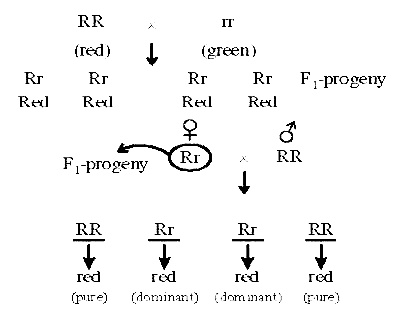
A common test to find the genotype of a hybrid is by:-
(A)
Crossing of one F1 progeny with male parent
(B)
Crossing of one F2 progeny with female parent
(C)
Crossing of one F2 progeny with male parent
(D)
Studying the sexual behaviour of F1 progenies
(A)

Solution

crossing of one F1 progeny with male parent. e.g
AIPMT 2007 Biology - Principles of Inheritance and Variation Question 120 English Explanation To find the genotype of hybrid test cross is done.
Q.31
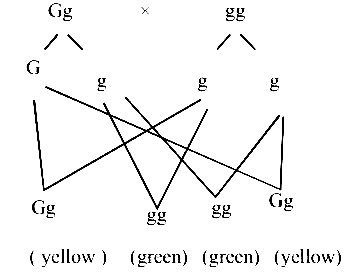
In pea plants, yellow seeds are dominant to green. If a heterozygous yellow seeded plant is crossed with a green seeded plant, what ratio of yellow and green seeded plants would you expect in F1 generation ?
(A)
9 : 1
(B)
3 : 1
(C)
50 : 50
(D)
1 : 3
(C)

Solution

Let GG ⇒ homozygous yellow seed plant.
Gg ⇒ heterozygous green
gg ⇒ homozygous green
According to the question : AIPMT 2007 Biology - Principles of Inheritance and Variation Question 123 English Explanation So, the ratio will be 50 : 50
Q.32
A human male produces sperms with the genotypes AB, Ab, AB, and ab pertaining to two diallelic characters in equal proportions. What is the corresponding genotype of this person ?
(A)
AaBb
(B)
AABB
(C)
AaBB
(D)
AABb
(A)

Solution

As sperms produced are with genotypes AB, Ab, aB, ab (two diallelic character) the person must be heterozygous for both genes. So his genotype will be AaBb.
Q.33
In cloning of cattle a fertilized egg is taken out of the mother's womb and:-
(A)
In the eight cell stage the individual cells are separated under electrical field for further development in culture media
(B)
The egg is divided into 4 pairs of cells which are implanted into the womb of other cows
(C)
In the eight cell stage, cells are separated and cultured until small embryos are formed which are implanted into the womb of other cows.
(D)
From this upto eight identical twins can be produced
(C)
Q.34
In maize, hybrid vigour is exploited by:-
(A)
Crossing of two inbred parental lines
(B)
Bombarding the seeds with DNA
(C)
Harvesting seeds from the most productive plants
(D)
Inducing mutations
(A)

Solution

Hybridisation or heterosis or hybrid vigour is defined as superiority of hybrid over parents. It has been commercially exploited in different commercial crops like maize, sorghum, bajra, etc. The main steps include: selection of parents, selfing of parents, emasculation, bagging, crossing of desired and selected parents and finally seed setting and harvesting.
Q.35
Compared to a bull a bullok is docile because of:-
(A)
Lower levels of adrenalin/noradrenalin in its blood
(B)
Lower levels of blood testosterone
(C)
Higher levels of thyroxin
(D)
Higher levels of cortisone
(B)

Solution

The bullock is castrated and therefore secretion of testosterone is not adequate.
Q.36
Which one of the following is a viral disease of poultry ?
(A)
Salmonellosis
(B)
New Castle disease
(C)
Pasteurellosis
(D)
Coryza
(B)

Solution

Newcastle disease (ND) is a highly contagious, generalised viral disease of domestic poultry and wild birds characterised by gastrointestinal, respiratory and nervous signs.
Q.37
A genetically engineered micro-organism used successfully in bioremediation of oil spills is a species of-
(A)
Trichoderma
(B)
Xanthomonas
(C)
Bacillus
(D)
Pseudomonas
(D)

Solution

Bioremediation is the process of using living micro-organisms to clean up a contaminated site. Micro-organisms do this by removing toxins from materials. They decompose these compounds by using enzymes, specific proteins that control reactions in living cells. Organisms that produce enzymes capable of degrading petroleum are useful in cleaning up oil spills. Some common ones that break down oil are genetically engineered species of Pseudomonas and Azotobacter. Bioremediation accounts for 5 to 10 percent of all pollution treatment and has been used successfully in cleaning up leaking underground gasoline storage tanks.

Bioremediation has many applications, from the ordinary garden compost to the removal of selenium and other toxic metals from waste. The best agents for bioremediation are the ones that can break down contaminants without becoming contaminated or harmful themselves.
Q.38
A high density of elephant population in an area can result in :-
(A)
Mutualism
(B)
Interspecific competition
(C)
Predation on one another
(D)
Intraspecific competition
(D)

Solution

It is competition between individuals of same species. The intraspecific competition may be very severe because all the members of a species have similar requirements of food, habitat mate, etc. and they also have similar adaptations to get their needs.
Q.39
If the mean and the median pertaining to a certain character of a population are of the same value, the following is most likely to occur:-
(A)
A normal distribution
(B)
a T-shaped curve
(C)
A skewed curve
(D)
A bi-modal distribution
(A)

Solution

If the mean and the median pertaining to a certain character of a population are of the same value, a normal distribution is most likely to occur.
Q.40
The population of an insect species shows an explosive increase in numbers during rainy season followed by its disappearance at the end of the season. What does this show ?
(A)
The food plants mature and die at the end of the rainy season
(B)
The population of its predators increases enormously
(C)
Its population growth curve is of J-type
(D)
S-shaped or sigmoid growth of this insect
(C)

Solution

If a population (e.g reindeer population) is allowed to grow in a predator free environment, the population grows beyond carrying capacity and there occurs population crash due to sudden shortage of food. Such growth curves also occur in insect populations during rainy season, and in algal blooms.
Q.41
Geometric representation of age structure is a characteristic of :-
(A)
Biotic community
(B)
Landscape
(C)
Ecosystem
(D)
Population
(D)

Solution

The correct answer is Option D - Population.

Age structure refers to the distribution of individuals of different ages within a population. It can be represented geometrically using age pyramids (also known as population pyramids), which are graphical illustrations that show the distribution of various age groups in a population, typically with males on one side and females on the other. This distribution can give insights into the reproductive status, growth potential, and social dynamics of the population.

A biotic community (Option A) consists of all the living organisms in an area, often including a diverse range of species, where the age structure of each species would be considered separately rather than in aggregate.

Landscape (Option B) refers to a larger area that includes one or more ecosystems, encompassing both biotic and abiotic components. While age structure is relevant to the populations within the landscape, it isn't a characteristic that describes the landscape itself.

An ecosystem (Option C) is a community of living organisms in conjunction with the nonliving components of their environment (like air, water, and mineral soil), interacting as a system. While populations within the ecosystem have age structures, the ecosystem as a whole is characterized by energy flows and material cycles rather than the age structure of its constituent populations.

Population (Option D), however, is a group of individuals of the same species that live in the same area and interbreed, producing fertile offspring. The term "population" directly refers to the individuals to which age structure can be applied, making it the characteristic feature of a population among the options given.
Q.42
Which one of the following is not a bioindicator of water pollution ?
(A)
Blood-worms
(B)
Stone flies
(C)
Sewage fungus
(D)
Sludge-worms
(B)

Solution

Stone flies are not bioindicators. Bioindicators provide a range of techniques to assess the impacts of air pollution from reactive nitrogen (N) compounds on statutory nature conservation sites. They complement physical monitoring of atmospheric concentrations and deposition and risk assessment based on the critical loads approach by providing site-based information on atmospheric N concentrations, N deposition and/or ecological impacts.
Q.43
Which one of the following statements is correct ?
(A)
Cyanobacteria such as Anabaena and nostoc are important mobilizers of phosphates and potassium for plant nutrition in soil
(B)
Both Azotobacter and Rhizobium fix atmospheric nitrogen in root nodules of plants
(C)
At present it is not possible to grow maize without chemical fertilizers
(D)
Extensive use of chemical fertilizers may lead to eutrophication of nearby water bodies
(D)

Solution

Extensive use of chemical fertilizers may lead to eutrophiction of nearby water bodies.
Q.44
In which one of the following the BOD (Biochemical Oxygen Demand) of sewage (S), distillery effluent (DE), paper mill effluent (PE) and sugar mill effluent (SE) have been arranged in ascending order ?
(A)
SE < PE < S < DE
(B)
SE < S < PE < DE
(C)
PE < S < SE < DE
(D)
S < DE < PE < SE
(C)

Solution

More value of BOD means the water sample is polluted by organic matter. BOD of distillary effluent is 40000 mg/L and that of paper mill effluent and sewage is 190 mg/L and 30 mg/L respectively.
Q.45
In a coal fired power plant electrostatic precipitators are installed to control emission of:-
(A)
SPM
(B)
SO2
(C)
CO
(D)
NOx
(A)

Solution

SPM is suspended particulate matter which is less than 10 mm remaining in air for more than one day to several weeks. It includes aerosol, dust, mist, smoke, soot etc.
Q.46
If you are asked to classify the various algae into distinct groups, which of the following characters you should choose?
(A)
Nature of stored food materials in the cell
(B)
Structural organization of thallus
(C)
Chemical composition of the cell wall
(D)
Types of pigments present in the cell
(D)

Solution

It will be types of pigment present in the cell, like Rhodophyceae shows presence of phycoerythrin, chlorophyceae shows presence of phycocyanin etc.
Q.47
Flagellated male gametes are present in all the three of which one of the following sets?
(A)
Zygnema, Saprolegnia and Hydrilla
(B)
Fucas, Marsilea and Calotropis
(C)
Riccia, Dryopteris and Cycas
(D)
Anthoceros, Funaria and Spirogyra
(C)

Solution

Gametophyte is not an independent free living generation in Pinus.
Q.48
Spore dissemination in some liverworts is added by
(A)
indusium
(B)
calyptra
(C)
peristome teeth
(D)
elaters.
(D)

Solution

An elater is a cell (or structure attached to a cell) that is hygroscopic and therefore will change shape in response to changes in moisture in the environment. Elaters come in a variety of forms, but are always associated with plant spores. In plants that do not have seeds, they function in dispersing the spores to a new location. In the liverworts, elaters are cells that develop in the sporophyte alongside the spores.

They are complete cells, usually with helcial thickenings at maturity that respond to moisture content. In most liverworts, the elaters are unattached, but in some leafy species (such as Frullania) a few elaters will remain attached to the inside of the sporangium (spore capsule). The elaters by hygroscopic movement help in spore dispersal.
Q.49
In gymnosperms, the pollen chamber represents
(A)
a cavity in the ovule in which pollen grains are stored after pollination
(B)
an opening in the megagametophyte through which the pollen tube approaches the egg
(C)
the microsporangium in which pollen grains develop
(D)
a cell in the pollen grain in which the sperms are formed.
(C)

Solution

The fertile region of microsporophyll bears a number of microsporangia or pollen sacs arranged in sori. The pollen chamber represents microsporangium, in which pollen grains develop.
Q.50
In the prothallus of a vascular cryptogam, the antherozoids and eggs mature at different times. As a result
(A)
there is high degree of sterility
(B)
one can conclude that the plants is apomictic
(C)
self fertilization is prevented
(D)
there is no change in success rate of fertilization.
(C)

Solution

In the prothallus of a vascular cryptogams the antherozoids and eggs mature at different times which result in failure of self-fertilization.
Q.51
The wavelength of light absorbed by Pr form of phytochrome is
(A)
680 nm
(B)
720 nm
(C)
620 nm
(D)
640 nm.
(A)

Solution

The Pr form absorbs light between 660 to 680 nm and absorbs at a peak of 666 nm. It is the form synthesized in dark-grown seedlings. When Pr absorbs red light, it is converted to the Pfr form.
Q.52
Opening of floral buds into flowers, is a type of
(A)
autonomic movement of variation
(B)
paratonic movement of growth
(C)
autonomic movement of growth
(D)
autonomic movement of locomotion.
(C)

Solution

Opening of floral buds into flowers, is a type of autonomic movement of water which is due to epinasty.
Q.53
Which one of the following pairs, is not correctly matched?
(A)
Gibberellic acid - Leaf fall
(B)
Cytokinin - Cell division
(C)
IAA - Cell wall elongation
(D)
Abscissic acid - Stomatal closure
(A)

Solution

Gibberllic acid stimulates cell growth of leaves and stem causing their expansion, elongation respectively and leaf fall is controlled by ABA.
Q.54
Which one of the following ecosystem types has the highest annual net primary productivity ?
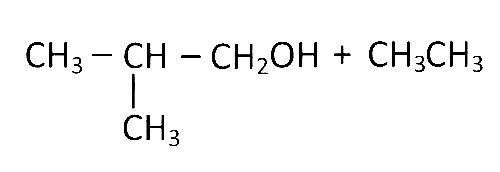
(A)
Temperate evergreen forest
(B)
Temperate deciduous forest
(C)
Tropical rain forest
(D)
Tropical deciduous forest
(C)

Solution

Net primary productivity is the total organic matter stored by producers per unit area per unit time. Gross primary productivity is the total organic matter synthesised by producers in the process of photosynthesis per unit area per unit time. So,
Net primary productivity = Gross productivity – Respiration and other losses
Tropical rainforests occur over equatorial/ subequatorial regions with abundant warmth and rainfall. Diversity and productivity are maximum as compared to other regions.
Q.55
If you suspect major deficiency of antibodies in a person, to which of the following would you look for confirmatory evidence?
(A)
Serum albumins
(B)
Fibrinogen in the plasma
(C)
Serum globulins
(D)
Haemocytes
(C)

Solution

Serum globulin are globulins occurring in blood serum and containing most of the antibodies of the blood. Serum globulin electrophoresis is a laboratory test that examines specific proteins in the blood called globulins. Globulins are roughly divided into alpha, beta, and gamma globulins. These can be separated and quantitated in the laboratory by electrophoresis and densitometry.
Q.56
Increased asthmatic attacks in certain seasons are related to:
(A)
Eating fruits preserved in tin containers
(B)
Inhalation of seasonal pollen
(C)
Low temperature
(D)
Hot and humid environmen
(B)

Solution

Increased asthmatic attacks in certain seasons are related to inhalation of seasonal pollen. Pollens are microscopic grains produced by plants in order to reproduce. Pollen allergy is a hypersensitive reaction to pollen. Pollen induced reactions include extrinsic asthma, rhinitis and bronchitis.
Q.57
Lysozyme that is present in perspiration, saliva and tears, destroys:
(A)
Certain types of bacteria
(B)
Most virus – infected cells
(C)
All viruses
(D)
Certain fungi
(A)

Solution

Lysozyme is an antibacterial agent which is secreted by the major salivary glands.
Q.58
A drop of each of the following, is placed separately on four slides. Which of them will not coagulate?
(A)
Blood serum
(B)
Sample from the thoracic duct of lymphatic system
(C)
Whole blood from pulmonary vein
(D)
Blood plasma
(A)

Solution

Blood serum is blood plasma from which the fibrin and clotting factors have been removed by centrifugation or vigorous stirring, so that it cannot clot. Serum containing a specific antibody or antitoxin may be used in the treatment or prevention of certain infections. Such serum is generally derived from a nonhuman mammal (e.g., a horse).
Q.59
Which one of the following items gives its correct total number?
(A)
Types of diabetes-3
(B)
Cervical vertebrae in humans-8
(C)
Floating ribs in humans-4
(D)
Amino acids found in proteins-16
(C)

Solution

There are twelve pairs of ribs which form the bony lateral walls of the thoracic cage. The first seven pairs are called true ribs; eighth, ninth and tenth pairs are called false ribs. The last two pairs of ribs are called floating ribs because their anterior ends are not attached either to the sternum or to the cartilage of another rib. The floating ribs protect the kidneys.
Q.60
In human body, which one of the following is anatomically correct?
(A)
Collar bones     -      3 pairs
(B)
Salivary glands     -      1 pairs
(C)
Cranial nerves     -      10 pairs
(D)
Floating ribs     -      2 pairs
(D)

Solution

Collar bones (Clavicle) – 2 pairs
Salivary glands – 3 pairs
Cranial nerves – 12 pairs
Q.61
Bowman's glands are located in the
(A)
Anterior pituitary
(B)
Female reproductive system of cockroach
(C)
Olfactory epithelium of our nose
(D)
Proximal end of uriniferous tubules.
(C)

Solution

Bowman’s gland, also called olfactory gland is any of the branched tubuloalveolar glands situated in the mucous membrane of the olfactory region of the nasal cavity that produce mucus to moisten the olfactory epithelium and dissolve odour-containing gases.
Q.62
During the transmission of nerve impulse through a nerve fibre, the potential on the inner side of the plasma membrane has which type of electric change?
(A)
First positive, then negative and continue to be negative
(B)
First negative, then positive and continue to be positive
(C)
First positive, then negative and again back to positive
(D)
First negative, then positive and again back to negative.
(D)

Solution

Once the events of depolarization have occurred, a nerve impulse or spike is initiated. Action potential is another name of nerve impulse. It lasts for about 1 msec (millisecond). The stimulalted, negatively charged point on the outside of the membrane sends out an electrical current to the positive point (still polarized adjacent to it). This local current causes the adjacent inner part of the membrane to reverse its potential from –70 mV to +30 mV. The reversal repeats itself over and over until the nerve impulse is conducted through the length of the neuron.
Q.63
In which one of the following preparations are you likely to come across cell junctions most frequently ?
(A)
Thrombocytes
(B)
Tendon
(C)
Hyaline cartilage
(D)
Ciliated epithelium
(D)

Solution

It is ciliated epithelium which bears numerous delicate hair like outgrowths, the cilia, arising from basal granules. The cilia remains in rhythmic motion and creates current to transport the materials which comes in contact with them.
Q.64
Which one of the following pairs of structures distinguishes a nerve cell from other types of cell ?
(A)
Perikaryon and dendrites
(B)
Nucleus and mitochondria
(C)
Flagellum and medullary sheath
(D)
Vacuoles and fibres
(A)

Solution

The cytoplasm immediately surrounding the nucleus is loaded with protein synthetic machinery and is called perikaryon, dendrites are usually shorter, tapering and much branched processes which may be one to several. These two are only present in nerve cells.
Q.65
Which one of the following is a fat-soluble vitamin and its related deficiency diseade?
(A)
Retinol     -     Xerophthalmia
(B)
Cobalamine     -     Beri-beri
(C)
Calciferol     -     Pellagra
(D)
Ascorbic acid     -     Scurvy
(A)

Solution

Fat soluble vitamins are - A, D, E and K and lack of vitamin A causes xerophthalmia.
Q.66
A person who is on a long hunger strike and is surviving only on water, will have
(A)
less amino acids in his urine
(B)
more glucose in his blood
(C)
less urea in his urine
(D)
more sodium in his urine.
(C)

Solution

Due to a long hunger strike and survival on water, a person will have less urea in his urine because urea is delivered to kidney as a waste product from liver which is formed after the breakdown of proteins fats, carbohydrates during hunger.
Q.67
A person is having problems with calcium and phosphorus metabolism in his body. Which one of the following glands may not be functioning properly?
(A)
Parotid
(B)
Pancreas
(C)
Thyroid
(D)
Parathyroid
(D)

Solution

Parathyroid disorders : It causes the lowering of blood calcium level. This increases the excitability of nerves and muscles causing cramps and convulsions.
Q.68
Feeling the tremors of an earthquake a scared resident of seventh floor of a multistoryed building starts climbing down the stairs rapidly. Which hormone initiated this action?
(A)
Adrenaline
(B)
Glucagon
(C)
Gastrian
(D)
Thyroxine
(A)

Solution

Adrenaline (epinephrine), also called emergency hormone, is a hormone, produced by the medulla of the adrenal glands, that increases heart activity, improves the power and prolongs the action of muscles and increases the rate and depth of breathing to prepare the body for ‘fright, flight or fight’. At the same time it inhibits digestion and excretion. Similar effects are produced by stimulation of the sympathetic nervous system.
Q.69
Which part of ovary in mammals acts as an endocrine gland after ovulation ?
(A)
Stroma
(B)
Vitelline membrane
(C)
Germinal epithelium
(D)
Graffian follicle
(D)

Solution

Graafian follicle – the ovarian medulla contains many rounded or oval bodies, called ovarian, or graafian follicles, at various stages of development. Each follicle contains a large ovum surrounded by many layers of follicle cells.
Q.70
In the human female, menstruation can be deferred by the administration of:-
(A)
LH only
(B)
Combination of estrogen and progesterone
(C)
FSH only
(D)
Combination of FSH and LH
(B)

Solution

The progesterone and estradiol continue the hypertrophy of endometrial lining in the uterus and fallopian tubes and maintain it throughout pregnancy. Progesterone is also necessary for the proper implantation of the foetus in the uterine wall. It stimulates the endometrial glands to secrete a nutrient fluid for the foetus, hence the term secretory phase. The progesterone inhibits the release of FSH so that it may not develop additional follicles and eggs.
Q.71
What is true about Nereis, scorpion, cockroach and silver fish?
(A)
They all possess dorsal heart.
(B)
None of them is aquatic.
(C)
They all belong to the same phylum.
(D)
They all have jointed paired appendages.
(A)

Solution

Nereis (belonging to class polychaeta of phylum Annelida), scorpion and cockroach (belonging to phylum arthropoda) and silver fish all have dorsal heart.
Q.72
Which of the following pairs are correctly matched?
Animals Morphological features
(i) Crocodile - 4-chambered heart
(ii) Sea urchin - Parapodia
(iii) Obelia - Metagenesis
(iv) Lemur - Thecodont
(A)
(ii), (iii) and (iv)
(B)
only (i) and (iv)
(C)
only (i) and (ii)
(D)
(i), (iii) and (iv)
(D)

Solution

Crocodile belongs to class reptilia which has four chambered heart. Lemur teeth are embedded in the sockets of two which is known as thecodont.
Q.73
Which one of the following is a matching pair of body feature and the animal possessing it?
(A)
Ventral central nervous system    -   Leech
(B)
Pharyngeal gill slits absent in embryo  -   Chamaeleon
(C)
Ventral heat  -   Scorpion
(D)
Post-anal tail       -   Octopus
(A)

Solution

Leech has ventral central nervous system which consists of nerve ring, and a solid, double, mid ventral nerve cord with ganglia.
Q.74
What is common between parrot, platypus and kangaroo?
(A)
Toothless Jaws
(B)
Functional post-anal tail
(C)
Ovoparity
(D)
Homoiothermy
(D)

Solution

Homoiothermy is the maintenance by an animal in which body temperature remains constant and does not change with the change of environmental temperature. Homoiothermy occurs in birds and mammals, which are described as endotherms.

The heat produced by their tissue metabolism and the heat lost to the environment are balanced by various means to keep body temperature constant: 36-38ºC in mammals and 38-40ºC in birds. The hypothalamus in the brain monitors blood temperature and controls thermoregulation by both nervous and hormonal means. Thus parrot (bird) and platypus and kangaroo (mammals) are homoiothermic animals.
Q.75
The concept of chemical evolution is based on-
(A)
Crystallization of chemicals
(B)
Effect of solar radiation on chemicals
(C)
Possible origin of life by combination of chemicals under suitable environmental conditions
(D)
Interaction of water, air and clay under intense heat
(C)

Solution

Chemical evolution has two meanings and uses. The first refers to the theories of evolution of the chemical elements in the universe through nucleosynthesis. The second use of chemical evolution or chemosynthesis is as a hypothesis to explain how life might possibly have developed or evolved from non-life.
Q.76
Which one of the following statements is correct?
(A)
Ontogeny repeats phylogeny.
(B)
There is no evidence of the existence of gills during embryogenesis of mammals.
(C)
Stem cells are specialized cells.
(D)
All plant and animal cells are totipotent.
(A)

Solution

Haeckel (1810) proposed that developing animal embryo passes through stages resembling adult forms of its ancestors. Ernst Haeckel (1868, 1874) formulated biogenetic law or racapitulation theory which states that ontogeny (developmental history of an individual) repeats phylogeny (development history of races).
Q.77
When two species of different genealogy come to resemble each other as a result of adaptation, the phenomenon is termed:-
(A)
Microevolution
(B)
Convergent evolution
(C)
Co-evolution
(D)
Divergent evolution
(B)

Solution

The analogous organs show convergent evolution due to similar adaptions which do not support organic evolution.
Q.78
The finches of Galapogas islands provide an evidence in favour of-
(A)
Special Creation
(B)
Biogeographical Evolution
(C)
Evolution due to Mutation
(D)
Retrogressive Evolution
(B)

Solution

The finches of Galapagos islands provides an evidence in favour of biogeographical evolution.
Q.79
Adaptive radiation refers to:-
(A)
Adaptations due to Geographical isolation
(B)
Migration of members of a species to different geographical areas
(C)
Evolution of different species from a common ancestor
(D)
Power of adaptation in an individual to a variety of environments
(C)

Solution

Adaptive radiation refers to evolution of different species from a common ancestor. The mammals are adapted for different mode of life i.e. they show adaptive radiation. They can be aerial (bat), aquatic (whale and dolphins), burrowing or fossorial (rat), cursorial (horse), scantorial (squarrel) or arboreal (monkey). The adaptive radiation, the term by osborn, is also known as Divergent evolution.