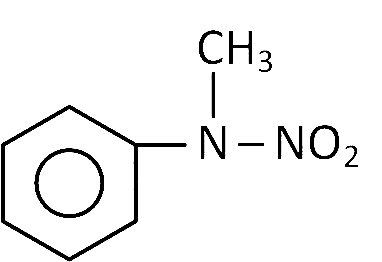
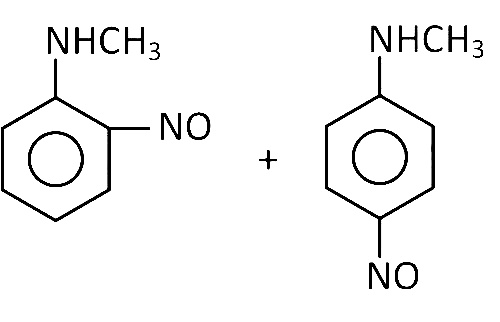
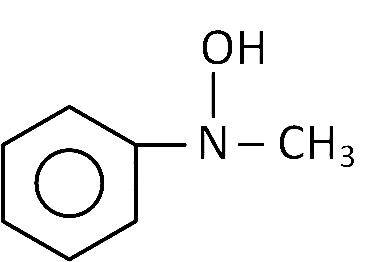
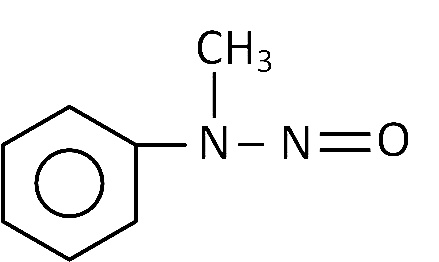
NEET-UG 2009

AIPMT 2009

Physics (Maximum Marks: 200)
  • This section contains 50 questions.
  • Each question has FOUR options (A), (B), (C) and (D). ONLY ONE of these four options is the correct answer.
  • Full Marks : +4 If ONLY the correct option is chosen;
  • Zero Marks : 0 If none of the options is chosen (i.e. the question is unanswered);
  • Negative Marks : −1 In all other cases.
Q.1
If the dimensions of a physical quantity are given by MaLbTc, then the physical quantity will be
(A)
velocity if   a = 1, b = 0, c = 1
(B)
acceleration if   a = 1, b = 1, c = 2
(C)
force if   a = 0, b = 1, c = 2
(D)
pressure if   a = 1, b = 1, c = 2
(D)

Solution

Velocity = [LT-1] so a = 0, b = 1, c = -1

Acceleration = [LT-2] so a = 0, b = 1, c = -2

Force = [MLT-2] so a = 1, b = 1, c = -2

Pressure = ,
so a = 1, b = - 1, c = - 2
Q.2
A bus is moving with a speed of 10 ms1 on a straight road. A scooterist wishes to overtake the bus in 100 s. If the bus is at a distance of 1 km from the scooterist, with what speed should the scooterist chase the bus ?
(A)
40 m s1
(B)
25 m s1
(C)
10 m s1
(D)
20 m s1
(D)

Solution

Relative velocity of the scooter with respect to the bus = (vs - 10)

= 100

vs = 20 m/s
Q.3
A particle starts its motion from rest under the action of a constant force. If the distance covered in first 10 seconds is S1 and that covered in the first 20 seconds is S2, then
(A)
S2 = 3S1
(B)
S2 = 4S1
(C)
S2 = S1
(D)
S2 = 2S1
(B)

Solution

Given u = 0.

S1 =

and S2 =

= =

S2 = 4S1
Q.4
A body, under the action of a force acquires an accelerations of 1 m/s2. The mass of this body must be
(A)
10 kg
(B)
20 kg
(C)
10 kg
(D)
2 kg
(C)

Solution


Acceleration, a = 1 m s–2

Q.5
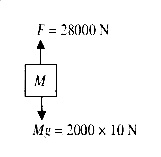
The mass of a lift is 2000 kg. When the tension in the supporting cable is 28000 N, then its acceleration is :
(A)
4 m s2 upwards
(B)
4 m s2 downwards
(C)
14 m s2 upwards
(D)
30 m s2 downwards
(A)

Solution

AIPMT 2009 Physics - Laws of Motion Question 42 English Explanation F – Mg = Ma

8000 = 2000a
Acceleration is 4 ms–2 upwards.
Q.6
A block of mass M is attached to the lower end of a vertical spring. The spring is hung from a ceiling and has force constant value k. The mass is released from rest with the spring initially unstretched. The maximum extension produced in the length of the spring will be
(A)
2Mg/k
(B)
4Mg/k
(C)
Mg/2k
(D)
Mg/k
(A)

Solution

When the mass attached to a spring fixed at the other end is allowed to fall suddenly, it extends the spring by x. Potential energy lost by the mass is gained by the spring.

Q.7
A body of mass 1 kg is thrown upwards with a velocity 20 m/s. It momentarily comes to rest after attaining a height of 18 m. How much energy is lost due to air friction? (g = 10 m/s2)
(A)
30 J
(B)
40 J
(C)
10 J
(D)
20 J
(D)

Solution

Initial velocity u = 20 m/s; m = 1 kg

Kinetic energy = maximum potential energy

Initial kinetic energy =

Mgh (max) = 200 J

h = 20 m

The height travelled by the body, h' = 18 m

Loss of energy due to air friction = mgh – mgh'

Energy lost = 200 J – 1 × 10 × 18 J = 20 J.
Q.8
An engine pumps water continuously through a hose. Water leaves the hose with a velocity v and m is the mass per unit length of the water jet. What is the rate at which kinetic energy is imparted to water?
(A)
mv3
(B)
(C)
(D)
(D)

Solution

Let m be the mass per unit length, so the rate of mass leaving the hose per sec = mv

Rate of kinetic energy K.E =
Q.9
Two bodies of mass 1 kg and 3 kg have position vectors and , respectively. The center of mass of this system has a position vector :
(A)
(B)
(C)
(D)
(A)

Solution

The position vector of the centre of mass of two particle system is given by


Q.10
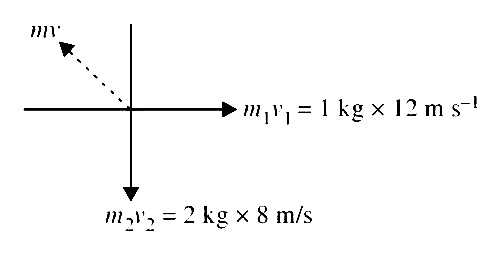
An explosion blows a rock into three parts. Two parts go off at right angles to each other. These two are, 1 kg first part moving with a velocity of 12 m s1 and 2 kg second part moving with a velocity 8 m s1. If the third part flies off with a velocity of 4 m s1, its mass would be :
(A)
7 kg
(B)
17 kg
(C)
3 kg
(D)
5 kg
(D)

Solution

When an explosion breaks a rock, by the law of conservation of momentum, initial momentum is zero and for the three pieces,

AIPMT 2009 Physics - Center of Mass and Collision Question 29 English Explanation
Total momentum of the two pieces 1 kg and 2 kg


The third piece has the same momentum and in the direction opposite to the resultant of these two momentum.

Momentum of the third piece = 20 kg ms–1
Velocity = 4 ms–1

Mass of the 3rd piece = = 5 kg
Q.11
A thin circular ring of mass M and radius R is rotating in a horizontal plane about an axis vertical to its plane with a constant angular velocity . If two objects each of mass m be attached gently to the opposite ends of a diameter of the ring, the ring will then rotate with an angular velocity
(A)
(B)
(C)
(D)
(A)

Solution

As the masses are added to the ring gently, there is no torque and angular momentum is conserved.


Q.12
If is the force acting on a particle having position vector and be the torque of this force about the origin, then
(A)
  and  
(B)
  and  
(C)
  and  
(D)
  and  
(B)

Solution

Torque is always perpendicular to as well as .

as well as
Q.13
Four identical thin rods each of mass M and length , form a square frame. Moment of inertia of this frame about an axis through the centre of the square and perpendicular to its plane is
(A)
(B)
(C)
(D)
(D)

Solution

As per theorem of parallel axes :

I = Icm + Ma2

where Icm = moment of inertia about an axis through centre of mass of rod
I = moment of inertia about parallel axis at distance ‘a’

Now moment of inertia of thin rod of mass M and length L about an axis through the midpoint of the rod and perpendicular to its length is ML2/12.
The moment of inertia of a rod about parallel axis at distance L/2 will be :

ML2/12 + M(L/2)2 = ML2/3

As there are 4 rods in square frame, so moment of inertia of entire frame is 4 times the moment of inertia of 1 rod, so it will be (4/3) ML2
Q.14
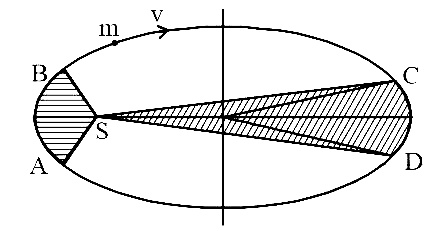
The figure shows elliptical orbit of a planet m about the sun S. The shaded area SCD is twice the shaded area SAB. If t1 is the time for the planet to move from C to D and t2 is the time to move from A to B then

AIPMT 2009 Physics - Gravitation Question 37 English
(A)
t1 = 4t2
(B)
t1 = 2t2
(C)
t1 = t2
(D)
t1 > t2
(B)

Solution

According to Kepler’s law, the areal velocity of a planet around the sun always remains constant.

SCD : A1– t1 (areal velocity constant)
SAB : A2 – t2


   (given A1 = 2A2)


Q.15
A black body at 227oC radiates heat at the rate of 7 cals/cm2s. At a temperature of 727oC, the rate of heat radiated in the same units will be
(A)
50
(B)
112
(C)
80
(D)
60
(B)

Solution

Rate of heat radiated at (227 + 273) K = 7 cals/(cm2s)

Let rate of heat radiated at (727 + 273) K = x cals/(cm2s)

By Stefan’s law, 7 (500)4 and x (1000)4

cals/(cm2s)
Q.16
The two ends of a rod of length L and a uniform cross-sectional area A are Kept at two temperatures T1 and T2 (T1 > T2). The rate of heat transfer, through the rod in a steady state is given by :
(A)
(B)
(C)
(D)
(C)

Solution

Similar to I = V/R


k = conductivity of the rod.
Q.17
In thermodynamic processes which of the following statements is not true ?
(A)
In an isochoric process pressure remains constant.
(B)
In an isothermal process the temperature remains constant.
(C)
In an adiabatic process PV = constant.
(D)
In an adiabatic process the system is insulated from the surroundings.
(A)

Solution

The only statement which is not true is statement (a). A process in which the pressure remains constant is called isobaric process and not isochoric as in isochoric process the volume remains constant.
Q.18
The internal energy change in a system that has absorbed 2 kcal of heat and done 500 J of work is
(A)
6400 J
(B)
5400 J
(C)
7900 J
(D)
8900 J
(C)

Solution

When a quantity Q of heat is supplied to a system it is used to do an amount of work W by the system and to increase the internal energy of the system by ∆U :

Q = ∆U + W

Here, Q given in kilo calories is converted into joule.
Therefore Q = 2×1000×4.2 J = 8400 J

The increase the internal energy

∆U = Q – W = 8400 – 500 = 7900 J
Q.19
Which one of the following equations of motion represents simple harmonic motion ?

where k, k0, k1 and a are all positive.
(A)
Acceleration = k (x + a)
(B)
Acceleration = k(x + a)
(C)
Acceleration = 2x
(D)
Acceleration = k0x + k1x2
(C)

Solution

Simple harmonic motion is defined as follows

Acceleration

The negative sign is very important in simple harmonic motion. Acceleration is independent of any initial displacement of equilibrium position.

Then acceleration = .
Q.20
A simple pendulum performs simple harmonic motion about x = 0 with an amplitude a and time period T. The speed of the pendulum at x = a/2 will be
(A)
(B)
(C)
(D)
(C)

Solution

Speed


Q.21
The driver of a car travelling with speed 30 m/s towards a hill sounds a horn of frequency 600 Hz. If the velocity of sound in air is 330 m/s, the frequency of reflected sound as heard by driver is
(A)
555.5 Hz
(B)
720 Hz
(C)
500 Hz
(D)
550 Hz
(B)

Solution

Car is the source and the hill is observer. Frequency heard at the hill,


Now for reflection, the hill is the source and the driver the observer.


Hz.
Q.22
Each of the two strings of length 51.6 cm and 49.1 cm are tensioned separately by 20 N force. Mass per unit length of both the strings is same and equal to 1 g/m. When both the strings vibrate simultaneously the number of beats is
(A)
7
(B)
8
(C)
3
(D)
5
(A)

Solution

= 0.516 m, = 0.491 m, T = 20 N.

Mass per unit length, = 0.001 kg/m.

Frequency,


Number of beats = .
Q.23
A wave in a string has an amplitude of 2 cm. The wave travels in the +ve direction of x axis with a speed of 128 m/s. and it is noted that 5 complete waves fit in 4m length of the string. The equation describing the wave is
(A)
y = (0.02) m sin (15.7 x 2010t)
(B)
y = (0.02) m sin (15.7 x + 2010t)
(C)
y = (0.02) m sin (7.85 x 1005t)
(D)
y = (0.02) m sin (7.85 x + 1005t)
(C)

Solution

As ,

,

y = A sin (kx – t)


= 128 × 7.85 = 1005

so y = 0.02 m sin (7.85x – 1005 t)
Q.24
Three concentric spherical shells have radii a, b and c (a < b < c) anf have surface charge densities , and respectively. If VA, VB and VC denote the potentials of the three shells, then, for c = a + b, we have
(A)
VC = VB VA
(B)
VC VB VA
(C)
VC = VB = VA
(D)
VC = VA VB
(D)

Solution


Given c = a + b.
If a = a, b = 2a and c = 3a for example, as c > b > a,


It can seen by taking out common factors that
VA = VC > VB i.e., VA = VC VB
Q.25
The electric potential at a point (x, y, z) is given by V = x2y xz3 + 4

The electric field at that point is
(A)
(B)
(C)
(D)
(D)

Solution

The electric potential at a point,
V = –x2y – xz3 + 4.

The field


Q.26
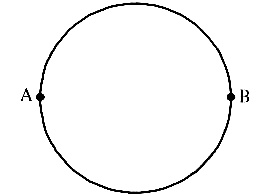
A wire of resistance 12 ohms per meter is bent to form a complete circle of radius 10 cm. The resistance between its two diametrically opposite points, A and B as shown in the figure is

AIPMT 2009 Physics - Current Electricity Question 84 English
(A)
(B)
(C)
(D)
(D)

Solution

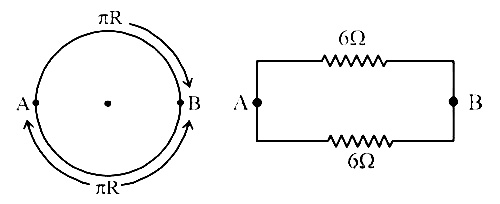
AIPMT 2009 Physics - Current Electricity Question 84 English Explanation
The resistance of length 2R is 12. Hence the resistance of length R is 6. Thus two resistances of 6 can be represented as shown in fig.

Equivalent resistance R =
Q.27
The mean free path of electrons in a metal is 4 108 m. The electric field which can give on an average 2 eV energy to an electron in the metal will be in units V/m
(A)
(B)
8 1011
(C)
5 107
(D)
8 107
(C)

Solution

Given, Energy = 2 eV = eE

E = V/m
Q.28
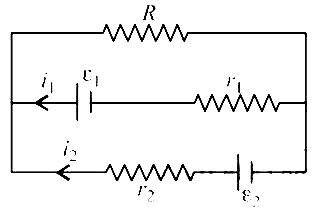
See the electrical circuit shown in this figure. Which of the following equations is a correct equation for it ?

AIPMT 2009 Physics - Current Electricity Question 85 English
(A)
(B)
(C)
(D)
(D)

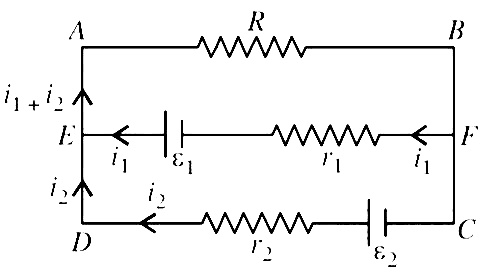
Solution

AIPMT 2009 Physics - Current Electricity Question 85 English Explanation
Applying Kirchhoff’s equation to the loop ABFE,

– (i1 + i2)R – i1r1 + = 0

– (i1 + i2)R – i1r1 = 0
Q.29
A student measures the terminal potential difference (V) of a cell (of emf and internal resistance r) as a function of the current (I) flowing through it. The slope, and intercept, of the graph between V and I, then respectively, equal
(A)
r and
(B)
r and
(C)
and r
(D)
and r
(A)

Solution

The terminal potential difference of a cell is given by V + Ir =

V = VA – VB

V = – Ir

, Also for, i = 0 then V =

slope = – r, intercept =
Q.30
Three capacitors each of capacitance C and of breakdown voltage V are joined in series. The capacitance and breakdown voltages of the combination will be
(A)
(B)
(C)
(D)
(B)

Solution

In series combination of capacitors
Veff = V + V + V = 3V


Thus, the capacitance and breakdown voltage of the combination will be and 3V.
Q.31
Under the influence of a uniform magnetic field, a charged particle moves with constant speed v in a circle of radius R. The time period of rotation of the particle
(A)
depends on R and not on v
(B)
is independent of both v and R
(C)
depends on both v and R
(D)
depends on v and not on R
(B)

Solution

For the circular motion in a cyclotron,


is independent of v and r.
Q.32
The magnetic force acting on a charged particle of charge 2 C in a magnetic frield of 2 T acting in y direction, when the particle velocity is
(A)
4 N in z direction
(B)
8 N in y direction
(C)
8 N in z direction
(D)
8 N in z direction
(D)

Solution

The magnetic force acting on the charged paraticle is given by


Force is of 8N along – z-axis.
Q.33
A galvanometer havings a coil resistance of 60 shows full scale deflection when a current of 1.0 amp passes through it. It can be converted into an ammeter to read currents upto 5.0 amp by
(A)
putting in series a resistance of 15
(B)
putting in series a resistance of 240
(C)
putting in parallel a resistance of 15
(D)
putting in parallel a resistance of 240
(C)

Solution

G = 60 , Ig = 1.0A, I = 5A.

Let S be the shunt resistance connected in parallel to galvanometer

Ig G = (I – Ig) S,


Thus by putting 15 in parallel, the galvanometer can be converted into an ammeter.
Q.34
If a diamagnetic substance is brought near the north or the south pole of a bar magnet, it is
(A)
repelled by the north pole and attracted by the south pole
(B)
attracted by the north pole and repelled by the south pole
(C)
attracted by both the poles
(D)
repelled by both the poles
(D)

Solution

Since, diamagnetic substance is weakly magnetised in a direction opposite to the applied magnetic field. So, they are repelled in an external magnetic field.
Q.35
A bar magnet having a magnetic moment of 2 104 J T1 is free to rotate in a horizontal plane. A horizontal magnetic field B = 6 104 T exists in the space. The work done in taking the magnet slowly from a direction parallel to the field to a direction 60o from the field is
(A)
12 J
(B)
6 J
(C)
2 J
(D)
0.6 J
(B)

Solution

Now work done = MB(cosθ1 – cosθ2)

= MB (1 – 1/2) = = 6 J
Q.36
A rectangular, a square, a circular and an elliptical loop, all in the (x-y) plane, are moving out of a uniform magnetic field with a constant velocity. . The magnetic field is directed along the negative z axis direction. The induced emf, during the passes of these loops, out of the field region, will not remain constant for
(A)
The circular and the elliptical loops
(B)
only the ellliptical loop
(C)
any of the four loops
(D)
the rectangular, circular and elliptical loops
(A)

Solution

Once a rectangular loop or a square loop is being drawn out of the field, the rate of cutting the lines of field will be a constant for a square and rectangle, but not for circular or elliptical areas.
Q.37
A conducting circular loop is placed in a uniform magnetic field 0.04 T with its plane perpendicular to the magnetic field. The radius of the loop starts shrinking at 2 mm/s. The induced emf in the loop when the radius is 2 cm is
(A)
4.8V
(B)
0.8V
(C)
1.6V
(D)
3.2V
(D)

Solution

Constant rate at which radius of the loop shrinks

m s-1

Magnetic flux linked with the loop is

= BAcos = B(r2)cos0o = Br2

The magnitude of the induced emf is

|e| =

= 0.04 2 2 10-2 2 10-3

= 3.2 10-6 V

= 3.2
Q.38
Power dissipated in an LCR series circuit connected to an A.C. source of emf is
(A)
(B)
(C)
(D)
(D)

Solution

Power dissipated, P = ErmsIrms cos

cos =

But Irms =

P =

Also we know, Z =

So, P =

=
Q.39
The electric field part of an electromagnetic wave in a medium is represented by Ex = 0;


Ez = 0.
(A)
moving along x direction with frequency 106 Hz and wavelength 100 m.
(B)
moving along x direction with frequency 106 Hz and wavelength 200 m.
(C)
moving along x direction with frequency 106 Hz and wavelength 200 m.
(D)
moving along y direction with frequency and wavelength 200 m.
(B)

Solution

Since coefficient of x is negative, but is moving along +ve x-axis,

so This is the form Ey = E0(t – kx)

=

f = = 106 Hz

k =

Also, = = 200 m
Q.40
The number of beta particles emitted by a radioactive substance is twice the number of alpha particles emitted by it. The resulting daughter is an
(A)
isomer of parent
(B)
isotone of parent
(C)
isotope of parent
(D)
isobar of parent
(C)

Solution

{}_Z^AX\buildrel {2{\beta ^ - }} \over \longrightarrow {}_{Z + 2}^A{Y_1}\buildrel \alpha \over \longrightarrow {}_Z^{A + 4}{Y_2}

The resultant daughter is an isotope of the original parent nucleus.
Q.41
The ionization energy of the electron in the hydrogen atom in its ground state is 13.6 eV. The atoms are excited to higher energy levels to emit radiations of 6 wavelengths, Maximum wavelength of emitted radiation corresponds to the transition between
(A)
n = 3 to n = 1 states
(B)
n = 2 to n = 1 states
(C)
n = 4 to n = 3 states
(D)
n = 3 to n = 2 states
(C)

Solution

n(n – 1)/2 = 6

n2 – n –12 = 0

(n – 4) (n + 3) = 0 or n = 4

So, n = 4 to n = 3 states.
Q.42
In a Rutherford scattering experiment when a projectile of charge z1 and mass M1 approaches a target nucleus of charge z2 and mass M2, the distance of closest approach is r0. The energy of the projectile is
(A)
directly proportional to z1z2
(B)
inversely proportional to z1
(C)
directly proportional to mass M1
(D)
directly proportional to M1 M2
(A)

Solution

Now energy of the projectile :

=

Therefore energy z1z2
Q.43
In the nuclear decay given below


the particles emitted in the sequence are
(A)
, ,
(B)
, ,
(C)
, ,
(D)
, ,
(D)

Solution

First X decays by . Y emits resulting in the excited level of B which in turn emits a ray.

, , is the answer.
Q.44
Monochromatic light of wavelength 667 nm is produced by a helium neon laser. The power emitted is 9 mW. The number of photons arriving per sec. on the average at a target irradiated by this beam is
(A)
3 1016
(B)
(C)
(D)
(A)

Solution

Number of photons =

=

= 3 1016
Q.45
The figure shows a plot of photo current versus anode potential for a photo sensitive surface for three different radiations. Which one of the following is a correct statement?

AIPMT 2009 Physics - Dual Nature of Radiation and Matter Question 53 English
(A)
Curves (a) and (b) represent incident radiations of same frequency but of different intensities.
(B)
Curves (b) and (c) represent incident radiations of different frquencies and different intensities.
(C)
Curves (b) and (C) represent incident radiations of same frequency having same intensity.
(D)
Curves (a) and (b) represent incident radiations of different frequencies and different intensities
(A)

Solution

Retarding potential depends on the frequency of incident radiation but is independent of intensity.
Q.46
The number of photo electrons emitted for light of a frequency (higher than the threshold frequency ) is proportional to
(A)
threshold frequency
(B)
intensity of light
(C)
frequency of light
(D)
(B)

Solution

The number of photoelectrons emitted is proportional to the intensity of incident light.

Saturation current intensity.
Q.47
Sodium has body centred packing. Distance between two nearest atoms is 3.7 . The lattice parameter is
(A)
4.3
(B)
3.0
(C)
8.6
(D)
6.8
(A)

Solution

Distance between nearest atoms in body centred cubic lattice (bcc),

d =

Given d = 3.7

= 4.3
Q.48
A p-n photodiode is fabricated from a semiconductor with a band gap of 2.5 eV. It can detect a signal of wavelength
(A)
4000 nm
(B)
6000 nm
(C)
4000
(D)
6000
(C)

Solution

max =

=

= 5000

Now the wavelength detected by photodiode be less than max, hence it can detect a signal of wave length 4000 .
Q.49
A transistor is operated in common-emitter configuration at VC = 2V such that a change in the base current from 100 A to 200 A produces a change in the collector current from 5 mA to 10 mA. The current gain is
(A)
100
(B)
150
(C)
50
(D)
75
(C)

Solution

Current gain, =

= = 50
Q.50
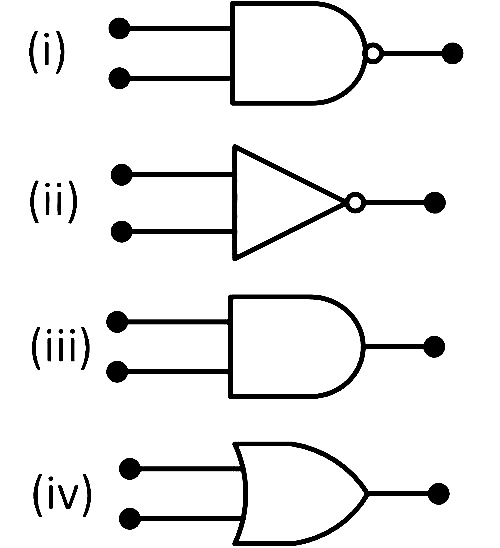
The symbolic representation of four logic gates are given below

AIPMT 2009 Physics - Semiconductor Electronics Question 75 English

The logic symbols for OR, NOT and NAND gates are respectively
(A)
(iv), (i), (iii)
(B)
(iv), (ii), (i)
(C)
(i), (iii), (iv)
(D)
(iii), (iv), (ii)
(B)

Solution

OR gate, NOT gate and NAND gates are (iv), (ii) and (i) respectively.
Chemistry (Maximum Marks: 200)
  • This section contains 50 questions.
  • Each question has FOUR options (A), (B), (C) and (D). ONLY ONE of these four options is the correct answer.
  • Full Marks : +4 If ONLY the correct option is chosen;
  • Zero Marks : 0 If none of the options is chosen (i.e. the question is unanswered);
  • Negative Marks : −1 In all other cases.
Q.1
10 g of hydrogen and 64 g of oxygen were filled in a steel vessel and exploded. Amount of water produced in this reaction will be
(A)
3 mol
(B)
4 mol
(C)
1 mol
(D)
2 mol
(B)

Solution

H2 + 1/2O2 H2O
2 g 16 g 18 g
1 mol 0.5 mol 1 mol
10 g of H2 = 5 mol and 64 g og O2 = 2 mol

In this reaction, oxygen is the limiting reagent so amount of H2O produced depends on that of O2

Since 0.5 mol of O2 gives 1 mol H2O

2 mol of O2 will give 4 mol H2O
Q.2
Which of the following is not permissible arrangement of electrons in an atom ?
(A)
n = 5, = 3, m = 0, s = +1/2
(B)
n = 3, = 2, m = 3, s = 1/2
(C)
n = 3, = 2, m = 2, s = 1/2
(D)
n = 4, = 0, m = 0, s = 1/2
(B)

Solution

In an atom for any value of n, the values of l = 0 to (n-1)

For a given value of l, the values of ml = - to 0 to +

and the value of s = +1/2 or -1/2

In option(b), l = 2 and ml = -3

This is not possible. as for l = 2 min value of ml = -2
Q.3
Maximum number of electrons in a subshell of an atom is determined by the following
(A)
2 + 1
(B)
4 2
(C)
2n2
(D)
4 + 2
(D)

Solution

Maximum number of electrons in a subshell = 2(2l+1) = 4l + 2
Q.4
Oxidation numbers of P in PO, of S in SO and that of Cr in Cr2O are respectively
(A)
+3, +6 and +5
(B)
+5, +3 and +6
(C)
3, +6 and + 6
(D)
+5, +6 and +6
(D)

Solution

Let oxidation number of P in PO4 3– be x.

x + 4(–2) = –3

x = +5

Let oxidation number of S in SO4 2– be y.

y + 4(–2) = –2

y = +6

Let oxidation number of Cr in Cr2O7 2– be z.

2z + 7(–2) = –2

z = +6
Q.5
The energy absorbed by each molecule (A2) of a substance is 4.4 1019 J and bond energy per molecule is 4.0 1019 J. The kinetic energy of the molecule per atom will be
(A)
2.2 1019 J
(B)
2.0 1019 J
(C)
4.0 1020 J
(D)
2.0 1020 J
(D)

Solution

Energy absorbed by each molecule = Bond energy per molecule + Kinetic energy per molecule

4.4 × 10⁻¹⁹ J = 4.0 × 10⁻¹⁹ J + Kinetic energy per molecule

0.4 × 10–19 = Kinetic energy per molecule

Kinetic energy per atom =
Kinetic energy per molecule
2


=
0.4 × 10⁻¹⁹
2
= 0.2 × 10⁻¹⁹ J

= 2 × 10–20 J
Q.6
The dissociation constants for acetic acid and HCN at 25oC are 1.5 105 and 4.5 1010 respectively. The equilibrium constant for the equilibrium
CN + CH3COOH HCN + CH3COO would be
(A)
3.0 105
(B)
3.0 104
(C)
3.0 104
(D)
3.0 105
(C)

Solution

CH3COOH CH3COO + H+,   K1 = 1.5 105

K1 = = 1.5 105

HCN CN + H+,     K2 = 4.5 × 10⁻¹⁰

K2 = = 4.5 × 10⁻¹⁰

CN + CH3COOH HCN + CH3COO

K =

K = =

= 3.33 × 10⁴

3.0 × 10⁴
Q.7
The ionization constant of ammonium hydroxide is 1.77 105 at 298 K. Hydrolysis constant of ammonium chloride is
(A)
6.50 1012
(B)
5.65 1013
(C)
5.65 1012
(D)
5.65 1010
(D)

Solution

Ammonium chloride is a salt of weak base and strong acid. In this case hydrolysis constant Kh can be calculated as

Kh = = = 5.65 1010
Q.8
What is the [OH] in the final solution prepared by mixing 20.0 mL of 0.050 M HCl with 30.0 mL of 0.10 M Ba(OH)2?
(A)
0.40 M
(B)
0.0050 M
(C)
0.12 M
(D)
0.10 M
(D)

Solution

Number of equivalents of H+ = 20.0 × 0.050 milliequivalents

= 1.0 milliequivalents

Number of equivalents of OH = 2 × 30.0 × 0.10

= 6.0 milliequivalents

Equivalents of OH- left after neutralization

= 6 – 1 = 5 milliequivalents

Total volume after neutralization

= 20.0 + 30.0 mL

= 50 mL

[OH-] = = 0.1 M
Q.9
Which of the following molecules acts as a Lewis acid?
(A)
(CH3)2O
(B)
(CH3)3P
(C)
(CH3)3N
(D)
(CH3)3B
(D)

Solution

CH3)3 B – is an electron deficient compound due to inclete octate of B, thus behave as a lewis acid.
Q.10
A 0.0020 m aqueous solution of an ionic compound [Co(NH3)5(NO2)]Cl freezes at 0.00732oC. Number of moles of ions which 1 mol of ionic compound produces on being dissolved in water will be (Kf = 1.86oC/m)
(A)
3
(B)
4
(C)
1
(D)
2
(D)

Solution

The number of moles of ions produced by 1 mol of ionic compound = i

Given, m = 0.0020 m

Tf = 0oC – 0.00732oC = – 0.00732oC

Kf = – 1.86 oC

Tf = ikfm

i = = 2
Q.11
From the following bond energies :
H H bond energy   : 431.37 kJ mol1
C C bond energy   : 606.10 kJ mol1
C C bond energy   : 336.49 kJ mol1
C H bond energy   : 410.50 kJ mol1
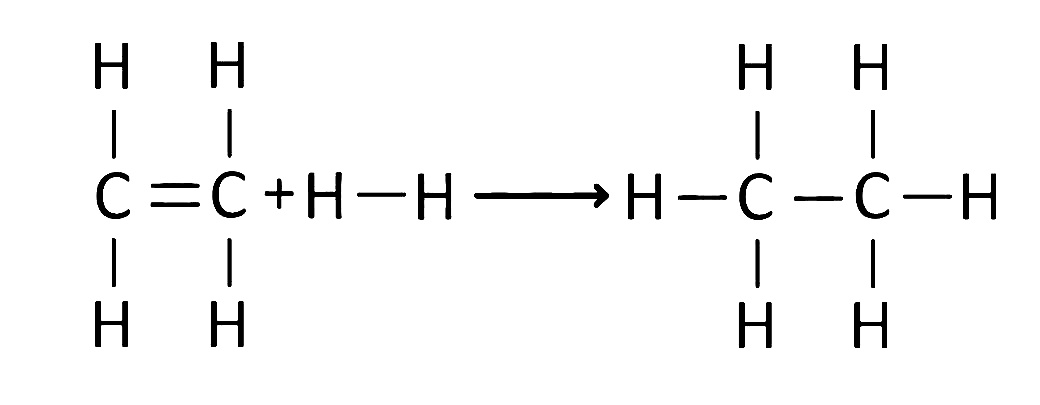
Enthalpy for the reaction,
AIPMT 2009 Chemistry - Thermodynamics Question 62 English
will be
(A)
243.6 kJ mol1
(B)
120.0 kJ mol1
(C)
553.0 kJ mol1
(D)
1523.6 kJ mol1
(B)

Solution

Hreaction = Σ(Bond enthalpy)reactants

– Σ(Bond enthalpy)products

= [B.E(C-C) + B.E(H-H) + 4B.E(C-H)]

- [B.E(C-C) + 6B.E(C-H)]

= [606.10 + 4(410.50) + 431.37]

– [336.49 + 6(410.50)]

= 2679.47 – 2799.49

= – 120.02 kJ mol–1
Q.12
The values of H and S for the reaction,

C(graphite) + CO2(g)   2CO(g)

are 170 kJ and 170 J K1, respectively. This reaction will be spontaneous at
(A)
910 K
(B)
1110 K
(C)
510 K
(D)
710 K
(B)

Solution

We know, G = H – TS

For reaction to be spontaneous, G < 0

H – TS < 0

170 103 - T(170) < 0

T > 1000 K

Among the given temperatures, only 1110 K is greater than 1000 K thus, at this temperate the reaction will be spontaneous.
Q.13
Al2O3 is reduced by electrolysis at low potentials and high currents. If 4.0 104 amperes of current is passed through molten Al2O3 for 6 hours, what mass of aluminium is product? (Assume 100% current efficiency, at mass of Al = 27 g mol1).
(A)
8.1 104 g
(B)
2.4 105 g
(C)
1.3 104 g
(D)
9.0 103 g
(A)

Solution

E = Z × 96500

= Z 96500

Z =

Now applying the formula, W = Z × I × t

W = 4 104 6 60 60

= 8.1 × 10⁴ g
Q.14
The equivalent conductance of M/32 solution of a weak monobasic acid is 8.0 mho cm2 and at infinite dilution is 400 mho cm2. The dissociation constant of this acid is
(A)
1.25 106
(B)
6.25 104
(C)
1.25 104
(D)
1.25 105
(D)

Solution

The degree of dissociation ()

= = 2 10-2

From Ostwald’s dilution law for weak monobasic acid, we have

kc = C2

=

= 1.25 10-5
Q.15
Given :
(i)   Cu2+ + 2e Cu,  Eo = 0.337 V
(ii)  Cu2+ + e Cu+,  Eo = 0.153 V
Electrode potential, Eo for the reaction,
Cu+ + e Cu,  will be
(A)
0.90 V
(B)
0.30 V
(C)
0.38 V
(D)
0.52 V
(D)

Solution

For the reaction,

Cu2+ + 2e Cu,  Eo = 0.337 V

Go = - nFEo

= – 2 × F × 0.337

= – 0.674 F ......(i)

For the reaction,

Cu2+ + e Cu+,  Eo = 0.153 V

Go = - nFEo

= – 1 × F × – 0.153

= 0.153 F

On adding eqn (i) & (ii)

Cu2+ + e Cu+

Go = –0.521 F = –nFE°

E° = 0.52 V
Q.16
For the reaction, N2 + 3H2 2NH3, if
= 2 104 mol L1 s1,
the value of would be
(A)
4 104 mol L1 s1
(B)
6 104 mol L1 s1
(C)
1 104 mol L1 s1
(D)
3 104 mol L1 s1
(D)

Solution

N2 + 3H2 2NH3


=

= mol L1 s1
Q.17
In the reaction,
BrO + 5Br + 6H+  3Br2(l) + 3H2O(l).
The rate of appearance of bromine (Br2) is related to rate of disappearance of bromide ions as
(A)
(B)
(C)
(D)
(D)

Solution

Rate =

Q.18
For the reaction A + B products, it is observed that

(i)  on doubling the initial concentration of A only, the rate of reaction is also doubled and
(ii)  on doubling the initial concentration of both A and B, there is a change by a factor of 8 in the rate of the reaction.

The rate of this reaction is given by
(A)
rate = k[A]2 [B]2
(B)
rate = k[A] [B]2
(C)
rate = k[A] [B]
(D)
rate = k[A]2 [B]
(B)

Solution

R = k[A]m[B]n ... (i)

2R = k[2A]m[B]n ... (ii)

8R = k[2A]m[2B]n ... (iii)

from (i), (ii) and (iii), m = 1, n = 2

So, rate = k[A][B]2
Q.19
Half-life period of a first order reaction is 1386 seconds. The specific rate constant of the reaction is
(A)
0.5 102 s1
(B)
0.5 103 s1
(C)
5.0 102 s1
(D)
5.0 103 s1.
(B)

Solution

Specific rate constant

k =

=

= 0.5 10-3 sec-1
Q.20
Lithium metal crystallises in a body-centred cubic crystal. If the length of the side of the unit cell of lithium is 351 pm, the atomic radius of lithium will be
(A)
151.8 pm
(B)
75.5 pm
(C)
300.5 pm
(D)
240.8 pm
(A)

Solution

Since Li crystallises in body-centred cubic

crystal, atomic radius, r = .

r = = 151.8 pm
Q.21
Copper crystallises in a face-centred cubic lattice with a unit cell length of 361 pm. What is the radius of copper atom in pm?
(A)
157
(B)
181
(C)
108
(D)
128
(D)

Solution

Since Cu crystallises in a face-centred cubic lattice,

Atomic radius, r =

r = = 128 pm
Q.22
Amongst the elements with following electronic configurations, which one of them may have the highest ionisation energy ?
(A)
Ne [3s2 3p2]
(B)
Ar [3d10 4s2 4p3]
(C)
Ne [3s2 3p1]
(D)
Ne [3s2 3p3]
(D)

Solution

Among the given options (a), (c) and (d), the option (d) has the highest ionisation energy because of extra stability associated with half-filled 3p-orbital. In option (b), the presence of 3d10 electrons offers shielding effect, as a result the 4p3 electrons do not experience much nuclear charge and hence the electrons can be removed easily.
Q.23
According to MO theory which of the lists ranks the nitrogen species in terms of increasing bond order ?
(A)
(B)
(C)
(D)
(A)

Solution

According to MOT, the molecular orbital electronic configuration of


B.O =


B.O =


B.O =

Hence the order : < <
Q.24
What is the dominant intermolecular force or bond that must be overcome in converting liquid CH3OH to a gas?
(A)
Dipole-dipole interaction
(B)
Covalent bonds
(C)
London dispersion force
(D)
Hydrogen bonding
(D)

Solution

Methanol can undergo intermolecular association through H-bonding as the - OH group in alcoholos is highly polarised.


As a result the order to convert liquid CH3OH to gaseous state, the strong hydrogen bonds must be broken.
Q.25
In which of the following molecules/ions BF3, NO, NH and H2O, the central atom is sp2 hybridised?
(A)
NH and H2O
(B)
NO and H2O
(C)
BF3 and NO
(D)
NO and NH
(C)

Solution

BF3 sp2

NO2- sp2

NH2- sp3

H2O sp3
Q.26
Which of the following oxides is not expected to react with sodium hydroxide?
(A)
CaO
(B)
SiO2
(C)
BeO
(D)
B2O3
(A)

Solution

NaOH is a strong alkali. It combines with acidic and amphoteric oxides to form salts. Since CaO is a basic oxide hence does not reacts with NaOH.
Q.27
In the case of alkali metals, the covalent character decreases in the order
(A)
MF > MCl > MBr > MI
(B)
MF > MCl > MI > MBr
(C)
MI > MBr > MCl > MF
(D)
MCl > MI > MBr > MF
(C)

Solution

According to Fajans’ rule,

Covalent character size of anion
1
size of cation
.

Now the order of size of anions in the given options is as follows

F < Cl < Br < I

Thus, the covalent character of the given compounds varies as

MI > MBr > MCl > MF
Q.28
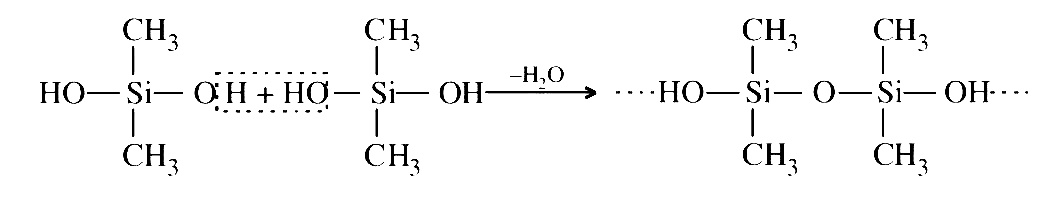
The straight chain polymer is formed by
(A)
hydrolysis of CH3SiCl3 followed by condensation polymerisation
(B)
hydrolysis of (CH3)4Si by addition polymerisation
(C)
hydrolysis of (CH3)2SiCl2 followed by condensation polymerisation
(D)
hydrolysis of (CH3)3SiCl followed by condensation polymerisation.
(C)

Solution

Hydrolysis of (CH3)2SiCl2 followed by condensation polymerization.

AIPMT 2009 Chemistry - p-Block Elements Question 77 English Explanation 1

AIPMT 2009 Chemistry - p-Block Elements Question 77 English Explanation 2
Q.29
The stability of +1 oxidation state among Al, Ga, In and Tl increases in the sequence
(A)
Al < Ga < In < Tl
(B)
Tl < In < Ga < Al
(C)
In < Tl < Ga < Al
(D)
Ga < In < Al < Tl
(A)

Solution

The given elements belong to 13th group. The elements mainly exhibit +3 and +1 oxidation states. As we know, the stability of lower oxidation state i.e., +1 state, increases on moving down the group due to inert pair effect. The, stability follows the order :

Al < Ga < In < Tl
Q.30
Among the following which is the strongest oxidising agent?
(A)
Br2
(B)
I2
(C)
Cl2
(D)
F2
(D)

Solution

Standard reduction potential of halogens are positive and decrease from fluorine to iodine. So, F2 is the strongest oxidizing agent.
Q.31
Which one of the elements with the following outer orbital configurations may exhibit the largest number of oxidation states?
(A)
3d54s1
(B)
3d54s2
(C)
3d24s2
(D)
3d34s2
(B)

Solution

All the given elements are d-block elements. For d-block element, it can lose its electrons from 3d and 4s subshell completely. Thus, the element which has higher number of electrons in 3d and 4s subshells exhibits largest number of oxidation states. Among the given options, 3d5 , 4s2 has maximum number of electrons that is, 5 + 2 = 7. Hence, it has largest number of oxidation states.
Q.32
Which of the following complex ions is expected to absorb visible light?
(At. nos. Zn = 30, Sc = 21, Ti = 22, Cr = 24)
(A)
[Ti(en)2(NH3)2]4+
(B)
[Cr(NH3)6]3+
(C)
[Zn(NH3)6]2+
(D)
[Sc(H2O)3(NH3)3]3+
(B)

Solution

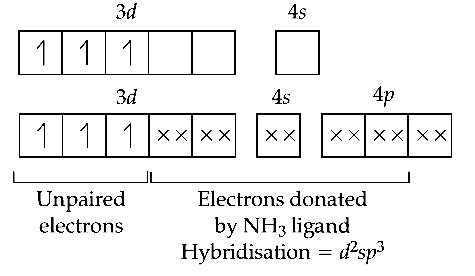
In [Cr(NH3)6]3+, Cr is present as Cr+3

Cr+3 = [Ar] 3d34s0 AIPMT 2009 Chemistry - Coordination Compounds Question 68 English Explanation
Due to presence of 3 unpaired electrons it absorbs light of visible region.
Q.33
Out of TiF62, CoF63, Cu2Cl2 and NiCl42 (Z of Ti = 22, Co = 27, Cu = 29, Ni = 28) the colourless species are
(A)
Cu2Cl2 and NiCl42
(B)
TiF62 and Cu2Cl2
(C)
CoF63 and NiCl42
(D)
TiF62 and CoF63
(B)

Solution

In TiF62–, Ti is present as Ti+4

Ti+4 = [Ar] 3d0 4s0

Hence, TiF62– is colourless due to empty d orbital.

In Cu2Cl2, Cu is present as Cu+

Cu+ = [Ar] 3d10 4s0

Due to absence of unpaired electrons, Cu2Cl2 is colourless.
Q.34
Which of the following does not show optical isomerism?

(en = ethylenediamine)
(A)
[Co(NH3)3Cl3]0
(B)
[Co(en)Cl2(NH3)2]+
(C)
[Co(en)3]3+
(D)
[Co(en)2Cl2]+
(A)

Solution

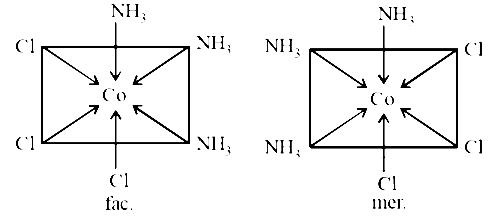
The octahedral coordination compounds of the type MA3B3 exhibit fac-mer isomerism.

AIPMT 2009 Chemistry - Coordination Compounds Question 69 English Explanation
Q.35
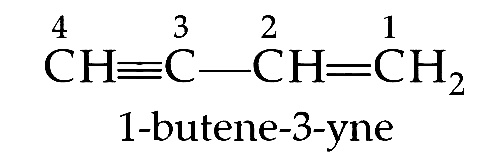
The IUPAC name of the compound having the formula
CHCCHCH2 is
(A)
1-butyne-3-ene
(B)
but-1-yne-3-ene
(C)
1-butene-3-yne
(D)
3-butene-1-yne.
(C)

Solution

AIPMT 2009 Chemistry - Some Basic Concepts of Organic Chemistry Question 73 English Explanation

Since the sum of numbers starting from either side of the carbon chain turns out to be the same, so lowest number is given to the C = C end.
Q.36
The state of hybridisation of C2, C3, C5 and C6 of the hydrocarbon,

AIPMT 2009 Chemistry - Hydrocarbons Question 41 English
is in the following sequence
(A)
sp3, sp2, sp2 and sp
(B)
sp, sp2, sp2 and sp3
(C)
sp, sp2, sp3 and sp2
(D)
sp, sp3, sp2 and sp3
(D)

Solution

AIPMT 2009 Chemistry - Hydrocarbons Question 41 English Explanation

C2 - sp, C3 - sp3, C5 - sp2 and C6 - sp3
Q.37
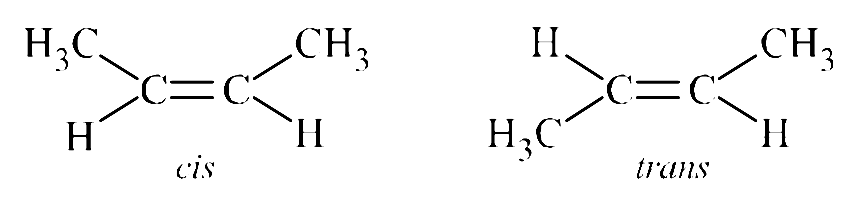
Which of the following compounds will exhibit cis-trans (geometrical) isomerism?
(A)
Butanol
(B)
2-Butyne
(C)
2-Butenol
(D)
2-Butene
(D)

Solution

Alkenes with double bonds cannot undergo free rotation and can have different geometrical shapes with two different groups on each end of the double bond. AIPMT 2009 Chemistry - Hydrocarbons Question 40 English Explanation
Q.38
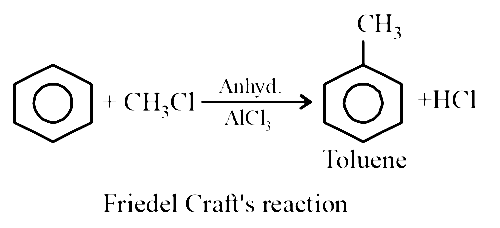
Benzene reacts with CH3Cl in the presence of anhydrons AlCl3 to form
(A)
chlorobenzene
(B)
benzyl chloride
(C)
xylene
(D)
toluene.
(D)

Solution

AIPMT 2009 Chemistry - Hydrocarbons Question 39 English Explanation
Q.39
Which of the following reactions is an example of nucleophilic substitution reaction?
(A)
2RX + 2Na R R + 2NaX
(B)
RX + H2 RH + HX
(C)
RX + Mg RMgX
(D)
RX + KOH ROH + KX
(D)

Solution

In nucleophilic substitution, a nucleophile provides an electron pair to the substrate and the leaving group departs with an electron pair.
Q.40
Consider the following reaction :

AIPMT 2009 Chemistry - Alcohol, Phenols and Ethers Question 30 English
the product Z is
(A)
CH3CH2 O CH2 CH3
(B)
CH3 CH2 O SO3H
(C)
CH3CH2OH
(D)
CH2CH2
(C)

Solution

AIPMT 2009 Chemistry - Alcohol, Phenols and Ethers Question 30 English Explanation
Q.41
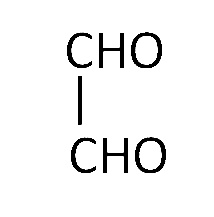
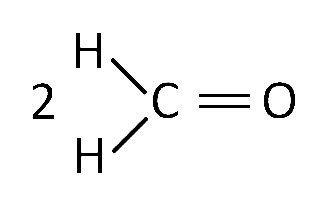
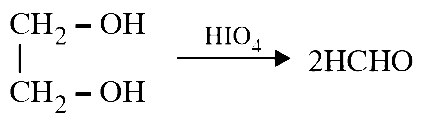
HOCH2CH2OH on heating with periodic acid gives
(A)
2HCOOH
(B)
AIPMT 2009 Chemistry - Alcohol, Phenols and Ethers Question 31 English Option 2
(C)
AIPMT 2009 Chemistry - Alcohol, Phenols and Ethers Question 31 English Option 3
(D)
2CO2
(C)

Solution

AIPMT 2009 Chemistry - Alcohol, Phenols and Ethers Question 31 English Explanation
Q.42
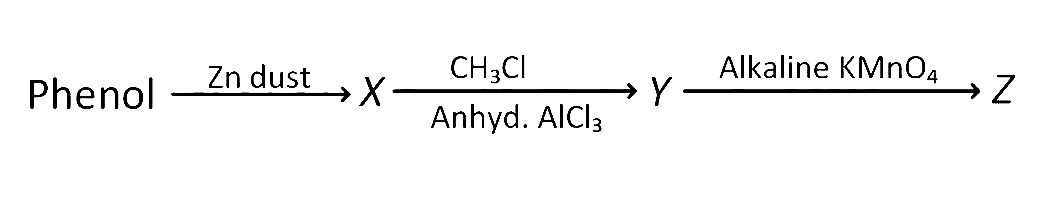
Consider the following reaction :

AIPMT 2009 Chemistry - Alcohol, Phenols and Ethers Question 32 English
the product Z is
(A)
benzaldehyde
(B)
benzoic acid
(C)
benzene
(D)
toluene
(B)

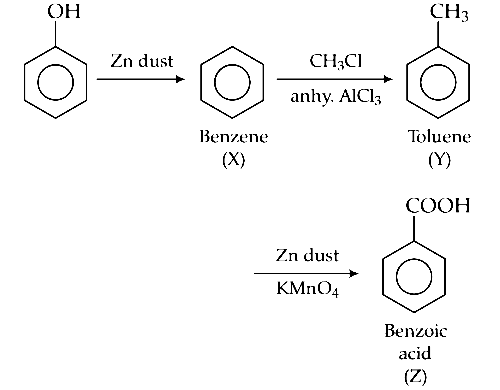
Solution

AIPMT 2009 Chemistry - Alcohol, Phenols and Ethers Question 32 English Explanation
Q.43
Propionic acid with Br2/P yields a dibromo product. Its structure would be
(A)
AIPMT 2009 Chemistry - Aldehydes, Ketones and Carboxylic Acids Question 61 English Option 1
(B)
CH2(Br) CH2 COBr
(C)
AIPMT 2009 Chemistry - Aldehydes, Ketones and Carboxylic Acids Question 61 English Option 3
(D)
CH2(Br) CH(Br) COOH
(C)

Solution

This is Hell–Volhard–Zelinsky reaction. AIPMT 2009 Chemistry - Aldehydes, Ketones and Carboxylic Acids Question 61 English Explanation
In this reaction, acids containing -H react with Br2 /red P giving product in which the -hydrogens are substituted by Br.
Q.44
Trichloroacetaldehyde, CCl3CHO reacts with chlorobenzene in presence of sulphuric acid and produces
(A)
AIPMT 2009 Chemistry - Aldehydes, Ketones and Carboxylic Acids Question 62 English Option 1
(B)
AIPMT 2009 Chemistry - Aldehydes, Ketones and Carboxylic Acids Question 62 English Option 2
(C)
AIPMT 2009 Chemistry - Aldehydes, Ketones and Carboxylic Acids Question 62 English Option 3
(D)
AIPMT 2009 Chemistry - Aldehydes, Ketones and Carboxylic Acids Question 62 English Option 4
(C)

Solution

AIPMT 2009 Chemistry - Aldehydes, Ketones and Carboxylic Acids Question 62 English Explanation
Q.45
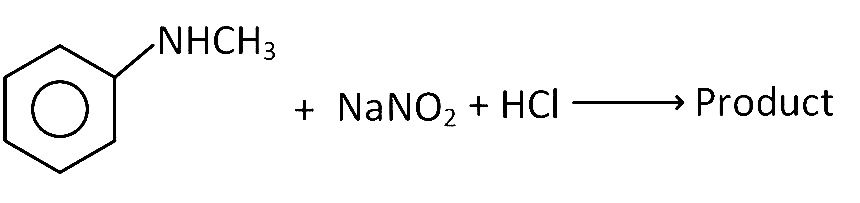
Predict the product.
AIPMT 2009 Chemistry - Organic Compounds Containing Nitrogen Question 30 English
(A)
AIPMT 2009 Chemistry - Organic Compounds Containing Nitrogen Question 30 English Option 1
(B)
AIPMT 2009 Chemistry - Organic Compounds Containing Nitrogen Question 30 English Option 2
(C)
AIPMT 2009 Chemistry - Organic Compounds Containing Nitrogen Question 30 English Option 3
(D)
AIPMT 2009 Chemistry - Organic Compounds Containing Nitrogen Question 30 English Option 4
(D)

Solution

AIPMT 2009 Chemistry - Organic Compounds Containing Nitrogen Question 30 English Explanation
Q.46
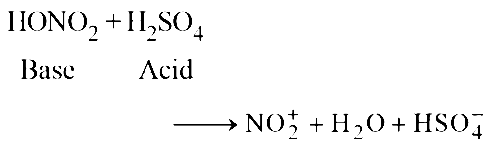
Nitrobenzene can be prepared from benzene by using a mixture of conc. HNO3 and conc. H2SO4. In the mixture, nitric acid acts as a/an
(A)
acid
(B)
base
(C)
catalyst
(D)
reducing agent
(B)

Solution

AIPMT 2009 Chemistry - Organic Compounds Containing Nitrogen Question 38 English Explanation
Nitric acid acts as a base by accepting a proton.
Q.47
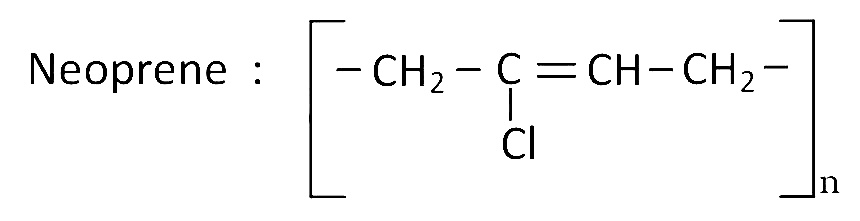
Structures of some common polymers are given. Which one is not correctly presented?
(A)
AIPMT 2009 Chemistry - Polymers Question 16 English Option 1
(B)
AIPMT 2009 Chemistry - Polymers Question 16 English Option 2
(C)
AIPMT 2009 Chemistry - Polymers Question 16 English Option 3
(D)
AIPMT 2009 Chemistry - Polymers Question 16 English Option 4
(A)

Solution

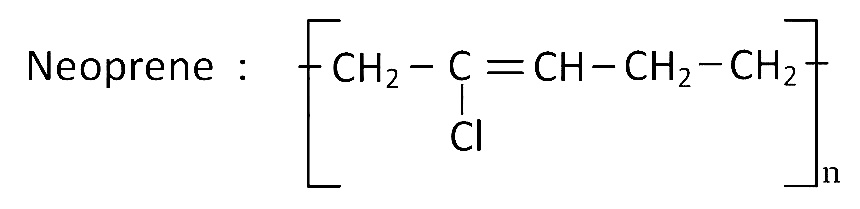
The structure of neoprene is
AIPMT 2009 Chemistry - Polymers Question 16 English Explanation
Q.48
The segment of DNA which acts as the instrumental manual for the synthesis of the protein is
(A)
ribose
(B)
gene
(C)
nucleoside
(D)
nucleotide
(B)

Solution

The DNA sequence that codes for a specific protein is called a Gene and thus every protein in a cell has a corrosponding gene.
Q.49
Which of the following hormones contains iodine?
(A)
Testosterone
(B)
Adrenaline
(C)
Thyroxine
(D)
Insulin
(C)

Solution

Thyroxine contains iodine
AIPMT 2009 Chemistry - Biomolecules Question 48 English Explanation
Q.50
Which one of the following is employed as a tranquilizer?
(A)
Naproxen
(B)
Tetracycline
(C)
Chlorpheninamine
(D)
Equanil
(D)

Solution

Equanil is an important medicine used in depression and hypertension.
Biology (Maximum Marks: 392)
  • This section contains 98 questions.
  • Each question has FOUR options (A), (B), (C) and (D). ONLY ONE of these four options is the correct answer.
  • Full Marks : +4 If ONLY the correct option is chosen;
  • Zero Marks : 0 If none of the options is chosen (i.e. the question is unanswered);
  • Negative Marks : −1 In all other cases.
Q.1
Plasmodesmata are :
(A)
Locomotory structures
(B)
Connection between adjacent cells
(C)
Membranes connecting the nucleus with plasmalemma
(D)
Lignified cemented layers between cells
(B)

Solution

Plasmodesmata are connections between adjacent cells. Plasmodesmata are narrow channels that act as intercellular cytoplasmic bridges to facilitate communication and transport of materials between plant cells. Plasmodesmata are formed during cell division, when traces of the endoplasmic reticulum become caught in the new wall that divides the parent cell.
Q.2
Middle lamella is composed mainly of :
(A)
Calcium pectate
(B)
Phosphoglycerides
(C)
Muramic acid
(D)
Hemicellulose
(A)

Solution

Middle lamella is mainly composed of calcium pectate. Calcium is deposited in plants cell walls during their formation - it is required for the stability and function of cell membranes and acts as a type of ‘cementing agent’ in the cell walls in the form of calcium pectate’. Calcium pectate is like a glue binding adjacent cells together so if inadequate calcium is not transported during cell formation, tissues become less stable and prone to disintegration.
Q.3
Cytoskeleton is made up of :
(A)
Cellulose microfibrils
(B)
Proteinaceous filaments
(C)
Calcium carbonate granules
(D)
Callose deposits
(B)

Solution

The ability of eukaryotic cells to adopt a variety of shapes and to carry out coordinated and directed movements depends on the cytoskeleton. The main proteins that are present in the cytoskeleton are tubulin (in the microtubules), actin, myosin, tropomyosin and other (in the microfilaments) and keratins, vimentin, desmin,lamin and other (in intermediate filaments).
Q.4
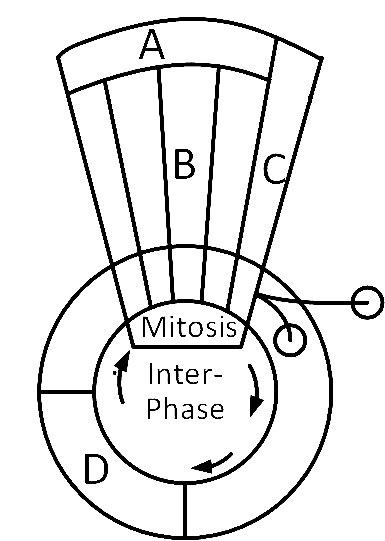
Given below is a schematic break-up of the phases/stages of cell cycle. Which one of the following is the correct indication of the stage/phase in the cell cycle?
AIPMT 2009 Biology - Cell Cycle and Cell Division Question 60 English
(A)
C - karyokinesis
(B)
D - synthetic phase
(C)
A - cytokinesis
(D)
B - metaphase
(B)

Solution

In cell cycle, there are two main phasesinterphase and mitotic phase. Interphase is divided into 3 stage G1 , S and G2. G1 is first growth phase. S is synthetic phase and G2 is second growth phase.
Q.5
Synapsis occurs between
(A)
mRNA and ribosomes
(B)
spindle fibres and centromere
(C)
two homologous chromosomes
(D)
a male and a female gamete.
(C)

Solution

Synapsis is the pairing of two homologous chromosomes that occurs during prophase I (zygotene stage) of meiosis. The two chromosome move together and pairly corresponding along their lengths as they lie side to side. The resulting structure is called a bivalent.
Q.6
Vegetative propagation in mint occurs by
(A)
offset
(B)
rhizome
(C)
sucker
(D)
runner.
(C)

Solution

Vegetative propagation in mint occurs through sucker. Vegetative reproduction is a type of asexual reproduction for plants, and is also called vegetative propagation, vegetative multiplication, or vegetative cloning. It is a process by which new plant “individuals” arise or are obtained without production of seeds or spores.

It is both natural process in many plant species (as well as non-plant organisms such as bacteria and fungi) and one used or encouraged by horticulturists to obtain quantities of economically valuable plants. A related technique used in cultivation is tissue culture, which involves vegetative reproduction under sterile conditions.
Q.7
Which of the following is not used as a biopesticide ?
(A)
Bacillus thringiensis
(B)
Trichoderma harzianum
(C)
Nuclear Polyhedral Virus (NPV)
(D)
Xanthomonas Campestris
(D)

Solution

Xanthomonas campestris is not used as a biopesticide. Xanthomonas campestris is a plant pathogen that causes black rot in cotton plants.
Q.8
Which one of the following pairs is wrongly matched ?
(A)
Detergents – lipase
(B)
Fruit juice – pectinase
(C)
Alcohol – nitrogenase
(D)
Textile – amylase
(C)

Solution

Alcohol and nitrogenase pair is wrongly matched. Ethanol produces alcohol.
Q.9
Anatomically fairly old dicotyledonous root is distinguished from the dicotyledonous stem by :
(A)
Absence of secondary phloem
(B)
Presence of cortex
(C)
Position of protoxylem
(D)
Absence of secondary xylem
(C)

Solution

Anatomically fairly old dicotyledonous root is distinguished from the dicotyledonous stem by position of protoxylem. In dicot root the protoxylem is located near the periphery of the vascular cylinder while in dicot stem the protoxylem is located near the centre of vascular bundle i.e. the xylem is endarch.
Q.10
The annular and spirally thickened conducting elements generally develop in the protoxylem when the root or stem is -
(A)
Maturing
(B)
Widening
(C)
Elongating
(D)
Differentiating
(D)

Solution

The annular and spirally thickened conducting elements generally develop in the protoxylem when the root or stem is maturing.
Q.11
In barley stem vascular bundles are -
(A)
Closed and scattered
(B)
Closed and radial
(C)
Open and in a ring
(D)
Open and scattered
(A)

Solution

In barley stem, vascular bundles are closed and scattered. They are open only for a hours in the day time and never open at night. e.g Cereals.
Q.12
Palisade parenchyma is absent in leaves of -
(A)
Mustard
(B)
Sorghum
(C)
Soybean
(D)
Gram
(B)

Solution

Palisade parenchyma is absent in leaves of Sorghum. It is a monocot plant where the parenchyma tissues of the leaves are not differentiated into palisade and spongy
Q.13
Guard cells help in
(A)
transpiration
(B)
guttation
(C)
fighting against infection
(D)
protection against grazing
(A)

Solution

Guard cells help in transpiration. Transpiration is the evaporation of water from the aerial parts of plants, especially leaves but also stems, flowers and roots. Stomatal opening allows the diffusion of carbon dioxide and oxygen during photosynthesis.
Q.14
Manganese is required in
(A)
plant cell wall formation
(B)
photolysis of water during photosynthesis
(C)
chlorophyll synthesis
(D)
nucleic acid synthesis.
(B)

Solution

Manganese (Mn2+) is used for photolysis of water to produce oxygen and electrons during light reaction of photosynthesis. It is the phenomenon of breaking up of water into hydrogen and oxygen in the illuminated chloroplast. It acts as an essential cofactor.
Q.15
Aerobic respiratory pathway is appropriately termed
(A)
parabolic
(B)
amphibolic
(C)
anabolic
(D)
etabolic.
(B)

Solution

All energy-releasing pathways whether aerobic (requiring oxygen) or anaerobic (not requiring oxygen) begin with a pathway called glycolysis, which occurs in the cytoplasm (cytosol). Aerobic respiratory pathway is thus appropriately termed amphibolic. Aerobic respiration is the main energy-releasing pathway leading to ATP formation. It occurs in the mitochondria. Aerobic respiration yields thirty-six ATP.
Q.16
Which one of the following is commonly used in transfer of foreign DNA into crop plants ?
(A)
Trichoderma harzianum
(B)
Meloidogyne incognita
(C)
Agrobacterium tumefaciens
(D)
Penicillium expansum
(C)

Solution

Agrobacterium tumefaciens is the causal agent of crown gall disease (the formation of tumours) in over 140 species of dicot. This disease caused by a DNA plasmid (Ti plasmid) carried by bacterium and transferred to the plant cells. Ti plasmid has widely used in plant engineering as a vector in order to inject gene in host plant to form transgenic plant.
Q.17
Which one of the following has maximum genetic diversity in India ?
(A)
Mango
(B)
Tea
(C)
Wheat
(D)
Teak
(A)

Solution

Wheat genetics is more complicated than that of most other domesticated species. Some wheat species are diploid, with two sets of chromosomes, but many are stable polyploids, with four sets of chromosomes (tetraploid) or six (hexaploid). India has more genetically diverse varieties of rice and than the varieties of mangoes.
Q.18
Tiger is not a resident in which one of the following National Park ?
(A)
Ranthambhor
(B)
Sunderbans
(C)
Jim Corbett
(D)
Gir
(D)

Solution

Tiger is not resident in Gir national park. Gir has a large population of marsh crocodile or mugger, which is among the 40 species of reptiles and amphibians recorded in the sanctuary. According to official census figures, Gir has about 300 lions and 300 leopards, making it one of the major big-cat concentrations in India. Sambar and spotted deer (chital), blue bull (nilgai), chousingha (the world’s only four-horned antelope), chinkara (Indian gazelle) and wild boar thrive in Gir. Jackal, striped hyena, jungle cat, rustyspotted cat, langur, porcupine, black-naped Indian hare are among the other mammals of Gir.
Q.19
Oxygenic photosynthesis occurs in
(A)
Oscillatoria
(B)
Rhodospirillium
(C)
Chlorobium
(D)
Chromatium
(A)

Solution

Oxygenic photosynthesis occurs in Oscillatoria. It is a genus of filamentous cyanobacteria which is named for the oscillation in its movement.
Q.20
Phylogenetic system of classification is based on
(A)
morphological features
(B)
chemical constituents
(C)
floral characters
(D)
evolutionary relationships.
(D)

Solution

Plylogenetic system or cladistics is based on evolutionary sequence as well as the genetic relationship among the living beings. Engler and Prantl’s System of Classification was jointly proposed in Die Naturlichen Pflanzenfamilien in 1892.

It is the first phylogenetic system of classification which includes all the plants from algae to angiosperms arranged in an evolutionary sequence from simplicity to complexity.
Q.21
T.O. Diener discovered a
(A)
free infectious DNA
(B)
infectious protein
(C)
bacteriophage
(D)
free infectious RNA.
(D)

Solution

Theodor O. Diener discovered the Potato Spindle Tuber Viroid (“PSTVd”), the first viroid ever identified, in 1971. PSTVd is a small, circular RNA molecule. Dr. Diener discovered that the pathogen causing potato spindle tuber disease is not a virus, as previously believed, but a much smaller, free RNA molecule.
Q.22
Which of the following is a symbiotic nitrogen fixer?
(A)
Azotobacter
(B)
Frankia
(C)
Azolla
(D)
Glomus
(B)

Solution

Frankia is a symbiotic nitrogen fixer in root nodules of several non-legume plants like Casurina and Alnus.
Q.23
Which one is the wrong pairing for the disease and its causal organism?
(A)
Black rust of wheat-Puccinia graminis
(B)
Loose smut of wheat-Ustilago nuda
(C)
Root knot of vegetables-Meloidogyne sp.
(D)
Late blight of potato- Alternaria solani
(D)

Solution

Late blight of potato disease is caused by Phytophthora infestans. It is a phycomycetes fungus. Alternaria solani is the causal organism of early blight of potato disease.
Q.24
Cotyledons and testa respectively are edible parts in
(A)
walnut and tamarind
(B)
french bean and coconut
(C)
cashew nut and litchi
(D)
groundnut and pomegranate.
(D)

Solution

Cotyledons and testa respectively are edible parts in groundnut and pomegranate. A cotyledon is a significant part of the embryo within the seed of a plant. Upon germination, the cotyledon may become the embryonic first leaves of a seedling. Testa is often thick or hard outer coat of a seed.
Q.25
An examples of a seed with endosperm, perisperm, and caruncle is
(A)
coffee
(B)
lily
(C)
castor
(D)
cotton.
(C)

Solution

In castor seed testa and tegmen are united together. Seed coat is tough and bright due to scleroprotein. Over narrower end a brownish pad is found which is called caruncle. Caruncle is carbohydrate in nature.

This protects micropyle and develops as an integumental outgrowth after fertilisation.Below seed coat a very thin membrane is found over kernel and called perisperm (the persistant nucellus).Below perisperm there is a large, white, swollen and oily mass called endsoperm.
Q.26
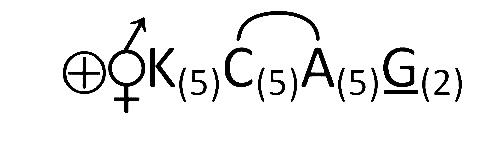
The floral formula
AIPMT 2009 Biology - Morphology of Flowering Plants Question 40 English
is that of
(A)
soybean
(B)
sunhemp
(C)
tobacco
(D)
tulip
(C)

Solution

The given floral formula is of tobacco. It belong to the family Solanaceae. The flower is actinomorphic, bisexual and has superior ovary. Soyabean and sunhemp have monocarpellary pistil and tulip has trimerous flower and perianth.
Q.27
A fruit developed from hypanthodium inflorescence is called
(A)
sorosis
(B)
syconus
(C)
caryopsis
(D)
hesperidium.
(B)

Solution

The fig (Syconus) is an aggregate fruit, consisting of numerous seed-like pericarps inclosed within a hollow, fleshy receptacle where the flowers were attached. This fruit developed from hypanthodium inflorescence.
Q.28
An example of axile placentation is
(A)
Dianthus
(B)
lemon
(C)
marigold
(D)
Argemone.
(B)

Solution

In flowering plants, placentation occurs where the ovules are attached inside the ovary. An example of axile placentation is citrus. In this type of placentation the ovary is sectioned by radial spokes with placentas in separate locules.
Q.29
Cyclic photophosphorylation results in the formation of
(A)
ATP and NADPH
(B)
ATP, NADPH and O2
(C)
ATP
(D)
NADPH.
(C)

Solution

Cyclic photophosphorylation results in the formation of ATP. This process is called photophosphorylation, which occurs in two different ways. Adenosine triphosphate (ATP) is considered by biologists to be the energy currency of life. It is the high-energy molecule that stores the energy we need to do just about everything we do. It is present in the cytoplasm and nucleoplasm of every cell, and essentially all the physiological mechanisms that require energy for operation obtain it directly from the stored ATP.
Q.30
Stroma in the chloroplasts of higher plant contains
(A)
light-dependent reaction enzymes
(B)
ribosomes
(C)
chlorophyll
(D)
light-independent reaction enzymes.
(D)

Solution

Stroma in the chloroplasts of higher plant contains light independent reaction enzymes. Within the stroma are stacks of thylakoids, the sub-organelles which are the site of photosynthesis.
Q.31
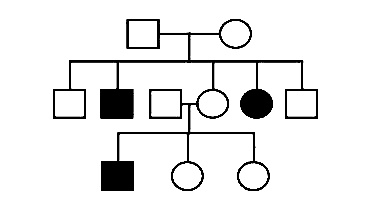
Study the pedigree chart given below : AIPMT 2009 Biology - Principles of Inheritance and Variation Question 126 English What does it show ?
(A)
Inheritance of a recessive sex-linked disease like haemophilia
(B)
Inheritance of a sex-linked inborn error of metabolism like phenylketonuria
(C)
The pedigree chart is wrong as this is not possible
(D)
Inheritance of a condition like phenylketonuria as an autosomal recessive trait
(D)

Solution

The chart shows the inheritance of a condition like phenylketonuria as an autosomal recessive trait. Parents’ needs to be heterozygous as two of their children are known to be sufferer of the disease. It cannot be recessive sex linked inheritance because then the male parent would also be sufferer.
Q.32
The most popularly known blood grouping is the ABO grouping. It is named ABO and not ABC, because "O" in it refers to having :
(A)
Other antigens besides A and B on RBCs
(B)
No antigens A and B on RBCs
(C)
Overdominance of this type on the genes for A and B types
(D)
One antibody only-either anti-A and anti-B on the RBCs
(B)

Solution

In ABO blood group O refers to O blood group. It has no antigen (A and B) on RBCs.
Q.33
The genetic defect-adenosine deaminase (ADA) deficiency may be cured permanently by
(A)
Introducing bone marrow cells producing ADA into cells at early embryonic stages
(B)
Periodic infusion of genetically engineered lymphocytes having functional ADA cDNA
(C)
Administering adenosine deaminase activators
(D)
Enzyme replacement therapy
(A)

Solution

ADA deficiency can be permanently cured if the isolated gene from bone marrow cells producing ADA is introduced into cells at early embryonic stages.
Q.34
Sickle-cell anemia is :
(A)
Caused by substitute of valine by glutamic acid in the beta globin chain of haemoglobin
(B)
An autosomal linked dominant trait
(C)
Caused by a change in a single base pair of DNA
(D)
Characterized by elongated sickle like RBCs with a nucleus
(C)

Solution

Sickle-cell anaemia is an autosomal hereditary disorder in which erythrocytes become sickle shaped. It is caused by the formation of abnormal haemoglobin called haemoglobin-S. Haemoglobin-S is formed when 6th amino acid of -chain, i.e., glutamic acid is replaced by valine due to substitution. It occurs due to a single nucleotide change (A T) in the -globin gene of coding strand. In the normal -globin gene the DNA sequence is CCTGAGGAG, while in sicklecell anaemia, the sequence is CCTGTGGAG.
Q.35
Select the incorrect statement from the following :
(A)
Baldness is a sex limited trait
(B)
Galactosemia is an inborn error of metabolism
(C)
Linkage is an exception to the principle of independent assortment in heredity.
(D)
Small population size results in random genetic drift in a population
(A)

Solution

Baldness is a sex influenced trait. The dominance of alleles may differ in heterozygotes of the two sexes.
Q.36
What is not true for genetic code?
(A)
It is nearly universal
(B)
A codon in mRNA is read in a noncontiguous fashion
(C)
It is degenerate
(D)
It is unambiguous
(B)

Solution

The genetic code consists of 64 triplets of nucleotides. These triplets are called codons. With three exceptions, each codon encodes for one of the 20 amino acids used in the synthesis of proteins. That produces some redundancy in the code. Most of the amino acids being encoded by more than one codon. The genetic code can be expressed as either RNA codons or DNA codons.
Q.37
Semi-conservative replication of DNA was first demonstrated in :
(A)
Drosophila melanogaster
(B)
Streptococcus pneumoniae
(C)
Salmonella typhimurium
(D)
Escherichia coli
(D)

Solution

Mathew Meselson and Franklin Stahl (1958) conducted various experiments using isotopically labelled DNA of Escherichia coli to provide evidence in favour of semi-conservative mode of DNA replication.
Q.38
Whose experiments cracked the DNA and discovered unequivocally that a genetic code is a "triplet" ?
(A)
Nirenberg and Mathaei
(B)
Morgan and Sturtevant
(C)
Hershey and Chase
(D)
Beadle and Tatum
(A)

Solution

Nirenberg and Mathaei (1961) experimentally proved that a single amino acid is determined by a sequence of three nitrogen bases. The sequence of three nitrogen bases determining a single amino acid is called a triplet code. Nirenberg and Mathaei experiments cracked the DNA and discovered unequivocally that a genetic code is a triplet.
Q.39
Removal of introns and joining the exons in a defined order in a transcription unit is called :
(A)
Transformation
(B)
Capping
(C)
Splicing
(D)
Tailing
(C)

Solution

Splicing is the removal of introns and joining the exons in a defined order in a transcription unit. In molecular biology, splicing is a modification of RNA after transcription, in which introns are removed and exons are joined.
Q.40
What is antisense technology?
(A)
RNA polymerase producing DNA
(B)
Production of somaclonal variants in tissue cultures
(C)
When a piece of RNA that is complementary in sequence is used to stop expression of a specific gene
(D)
A cell displaying a foreign antigen used for synthesis of antigens
(C)

Solution

An RNA molecule whose base sequence is complementary to that of the RNA transcript of a gene, i.e. the sense RNA, such as a messenger RNA (mRNA). Hence, an antisense RNA can undergo base pairing with its complementary mRNA sequence. This blocks gene expression, either by preventing access for ribosome to translate the mRNA or by triggering degradation of the double stranded RNA by ribonuclease enzymes. Antisense RNA and DNA both have therapeutic potential for modifying the activity of disease causing genes.
Q.41
What is true about Bt toxin ?
(A)
The activated toxin enters the ovaries of the pest to sterillise it and thus prevent its multiplication.
(B)
Bt protein exists as active toxin in the Bacillus
(C)
The concerned Bacillus has antitoxins
(D)
The inactive protoxin gets converted into active form in the insect gut
(D)

Solution

About Bt toxin, it is true, that the inactive protoxin gets converted into active form in the insect gut. There are several advantages in expressing Bt toxins in transgenic Bt crops. The level of toxin expression can be very high, thus delivering sufficient dosage to the pest.
The toxin expression is contained within the plant system and hence only those insects that feed on the crop perish. The toxin expression can be modulated by using tissue-specific promoters and replaces the use of synthetic pesticides in the environment.
Q.42
Transgenic plants are the ones -
(A)
Produced after protoplast fusion in artifical medium
(B)
Produced by a somatic embryo in artificial medium
(C)
Generated by introducing foreign DNA in to a cell and regenerating a plant from that cell
(D)
Grown in artificial medium after hybridization in the field
(C)

Solution

Transgenic plants are the ones generated by introducing foreign DNA into a cell and regenerating a plant from that cell.
Q.43
The bacterium Bacillus thuringiensis is widely used in contemporary biology as -
(A)
Indicator of water pollution
(B)
Agent for production of dairy products
(C)
Source of industrial enzyme
(D)
Insecticide
(D)

Solution

The bacterium Bacillus thuringiensis is widely used in contemporary biology as insecticide. Bacillus thuringiensis (also known as Bt) is a Gram-positive, soil dwelling bacterium of the genus Bacillus. Bacillus thuringiensis produces a parasporal insecticidal crystal protein.
Q.44
Somaclones are obtained by : -
(A)
Tissue culture
(B)
Plant breeding
(C)
Genetic engineering
(D)
Irradiation Genetic engineering
(A)

Solution

Genetic variation present among plant cells during tissue culture is called somaclonal variation. The term somaclonal variation is also used for the genetic variation present in plants regenerated from a single culture. This variation has been used to develop several useful varieties against resistance to diseases and pests, better yield, better quality etc.
Q.45
Polyethylene glycol method is used for :
(A)
Biodiesel production
(B)
Seedless fruit production
(C)
Energy production from sewage
(D)
Gene transfer without a vector
(D)

Solution

Direct gene transfer is the transfer of naked DNA into plant cells, but the presence of rigid plant cell wall acts as a barrier to uptake. Therefore, protoplasts are the favoured target for direct gene transfer. Polyethylene glycol mediated DNA uptake is a direct gene transfer method that utilizes the interaction between PEG, naked DNA, salts and the protoplast membrane to effect transport of the DNA into the cytoplasm.
Q.46
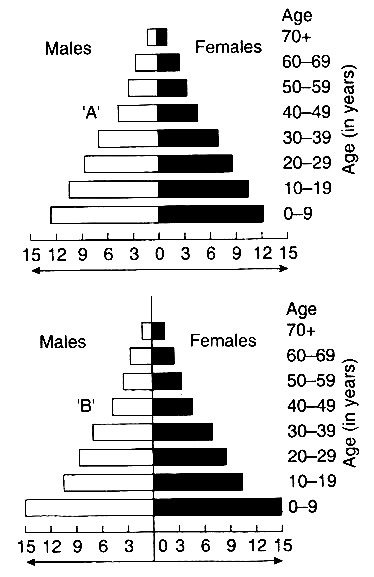
A country with a high rate of population growth took measures to reduce it. The figure below shows age-sex pyramids of populations A and B twenty years apart. Select the correct interpretation about them : –
AIPMT 2009 Biology - Organisms and Populations Question 61 English
(A)
"A" is more recent shows slight reduction in the growth rate
(B)
"B" is more recent showing that population is very young
(C)
"A" is the earlier pyramid and no change has occurred in the growth rate
(D)
"B" is earlier pyramid and shows stabilized growth rate
(A)

Solution

‘A’ is more recent and shows slight reduction in growth rate.
Q.47
Reduction in vascular tissue, mechanical tissue and cuticle is characteristic of :
(A)
Xerophytes
(B)
Epiphytes
(C)
Hydrophytes
(D)
Mesophytes
(C)

Solution

Reduction in vascular tissue, mechanical tissue and cuticle is characteristic of hydrophytes.
Q.48
Step taken by the Government of India to control air pollution include :
(A)
Permission to use only pure diesel with a maximum of 500 ppm sulphur as fuel for vehicles
(B)
Compulsary PUC (Pollution Under Control) certification of petrol driven vehicles which tests for carbon monoxide and hydrocarbons
(C)
Use of non-polluting Compressed Natural Gas (CNG) only as fuel by all buses and trucks
(D)
Compulsory mixing of 20% ethyl alcohol with petrol and 20% biodiesel with diesel
(B)

Solution

The step taken by Government of India to control air pollution include compulsory PUC (pollution under control) certification of petrol driven vehicles which tests for carbon monoxide and hydrocarbons.
Q.49
Montreal protocol aims at :
(A)
Control of water pollution
(B)
Biodiversity conservation
(C)
Control of CO2 emission
(D)
Reduction of ozone depleting substances
(D)

Solution

The aim of Montreal protocol was to protect the ozone layer in the stratosphere by decreasing and eventually eliminating the use of of ozone depleting substances like CFCs.
Q.50
Biochemical Oxygen Demand (BOD) in a river water :
(A)
Gives a measure of Salmonella in the water
(B)
has no relationship with concentration of oxygen in the water
(C)
Increases when sewage gets mixed with river water
(D)
Remains unchanged when algal bloom occurs
(C)

Solution

Biochemical Oxygen Demand (BOD) in a river water increases when sewage gets mixed with river water. Biochemical oxygen demand or biological oxygen demand (BOD) is a chemical procedure for determining how fast biological organisms use up oxygen in a body of water. It is used in water quality management and assessment, ecology and environmental science. BOD considered as an indication of the quality of a water source.
Q.51
Global agreement in specific control strategies to reduce the release of ozone depleting substances, was adopted by :
(A)
The Montreal Protocol
(B)
The Kyoto Protocol
(C)
The Vienna Convention
(D)
Rio de Janeiro Conference
(A)

Solution

Global agreement in specific control strategies to reduce the release of ozone depleting substances was adopted by the Montreal protocol. The treaty was originally signed in 1987 and substantially amended in 1990 and 1992. The Montreal protocol stipulates that the production and consumption of compounds that deplete ozone in the stratosphere-chlorofluorocarbons (CFCs), halogens, carbon tetrachloride, and methyl chloroform– are to be phased out by 2000 (2005 for methyl chloroform).
Q.52
DDT residues are rapidly passed through food chain causing biomagnification because DDT is :
(A)
Moderately toxic
(B)
Water soluble
(C)
Non-toxic to aquatic animals
(D)
Lipo soluble
(D)

Solution

DDT residues are rapidly passed through food chain causing biomagnification because DDT is lipo soluble. Biomagnification, also known as bioamplification or biological magnification, is the increase in concentration of a substance, such as the pesticide DDT, that occurs in a food chain as a consequence of:
• Persistence (slow to be broken down by environmental processes).
• Food chain energetics.
• Low (or non-existent) rate of internal degradation/excretion of the substance (often due to water-insolubility).
Q.53
Chipko movement was launched for the protection of -
(A)
Forests
(B)
Livestock
(C)
Wet lands
(D)
Grasslands
(A)

Solution

Chipko movement was launched for the protection of forests. The Chipko movement refers to the unique form of protest adopted by the rural people in the himalayan region of India in the 1970s and 80s, against the indiscriminate logging and felling of trees that spelt the destruction of their environment. The first Chipko action occurred in April 1973. Over the next five years, the movement spread to several hill districts in Uttar Pradesh. In 1980, Chipko activists won a fifteen-year ban on green felling in the himalayan forests.
Q.54
Which one of the following plants is monoecious?
(A)
Pinus
(B)
Cycas
(C)
Papaya
(D)
Marchantia
(A)

Solution

Pinus plant is monoecious i.e. both male and female cone are present in same plant but on different branches. Pinus, with over 100 species, is the largest genus of conifers and the most widespread genus of trees in the Northern Hemisphere. Pinus are also extensively planted in temperate regions of the Southern Hemisphere. Pines have a relatively rich fossil record.
Q.55
Which one of the following has haplontic life cycle?
(A)
Polytrichum
(B)
Ustilago
(C)
Wheat
(D)
Funaria
(D)

Solution

In the haplontic life cycle, the organism exists in a haploid state for the majority of its life cycle. This means that it has only one set of chromosomes in its cells. In the case of Funaria, the haploid gametophyte generation is the dominant generation, and it produces haploid gametes through mitosis. The gametes fuse to form a diploid zygote, which develops into the sporophyte generation. The sporophyte grows on the gametophyte and produces haploid spores by meiosis. These spores germinate to form new haploid gametophytes, and the cycle continues.
Q.56
Mannitol is the stored food in
(A)
Porphyra
(B)
Fucus
(C)
Gracillaria
(D)
Chara.
(B)

Solution

Mannitol is a food stored in Fucus. Fucus is a genus of brown alga in the class Phaeophyceae to be found in the intertidal zones of rocky seashores almost everywhere in the world. Primary chemical constituents of this plant include mucilage, algin, mannitol, beta-carotene, zeaxanthin, iodine, bromine, potassium, volatile oils, and many other minerals.
Q.57
Which one of the following is considered important in the development of seed habit?
(A)
Heterospory
(B)
Haplontic life cycle
(C)
Free-living gametophyte
(D)
Dependent sporophyte
(A)

Solution

The differentiation of spores into microspores and megaspores and their dependence on the parent sporophyte for the nutrition, are certain features in the life cycle of Selaginella, which have been considered as the essential pre-requisties for the formation of seeds, characteristic of spermatophytes. It is generally agreed, that the seed plants arose from the heterosporous vascular plants that instead of discharging the megaspore acquired the habit of retaining it within the megasporangium.
Q.58
Which one of the following is a vascular cryptogam?
(A)
Ginkgo
(B)
Marchantia
(C)
Cedrus
(D)
Equisetum
(D)

Solution

Pteridophytes are known as vascular cryptogams (Gk kryptos = hidden + gamos= wedded). They reproduce by spores rather than seeds. They are the first vascular land plant.

The pteridophyte Equisetum belongs to the Class Sphenophyta. All vegetative parts of it possess vascular tissues (i.e., hadrome equivalent to xylem and leptome equivalent to phloem) organised in definite groups of steles.
Q.59
Which one of the following acids is a derivative of carotenoids?
(A)
Indole-3-acetic acid
(B)
Gibberellic acid
(C)
Abscisic acid
(D)
Indole butyric acid
(C)

Solution

Biosynthesis of abscisic acid (ABA) in most plants occur indirectly by degradation of certain carotenoids present in chloroplasts or other plastids. The biosynthetic pathway follow mevalonic acid pathway for their synthesis. The sites of synthesis are fruits, tissues, leaves, roots and seeds.
Q.60
One of the synthetic auxin is
(A)
IAA
(B)
GA
(C)
IBA
(D)
NAA
(D)

Solution

The correct answer is Option D: NAA.

Here’s a brief explanation:

(indole-3-acetic acid) is the naturally occurring auxin in plants.

(gibberellin) is a class of plant hormones involved in growth but is not an auxin.

(indole-3-butyric acid) is an auxin-like compound, but it is mostly considered a naturally derived rooting hormone.

(naphthaleneacetic acid) is a synthetic auxin widely used in plant propagation and agriculture.

So, among the options given, is the synthetic auxin.

Q.61
Which one of the following types organisms occupy more than one trophic level in a pond ecosystem ?
(A)
Phytoplankton
(B)
Zooplankton
(C)
Frog
(D)
Fish
(D)

Solution

A pond ecosystem is a delicate balance of fish, plants and other animals. Fish occupy more than one tropic level in pond ecosystem. Small fishes act as secondary consumer. They feed on primary consumer. Large fishes act as tertiary consumer. They feed on smaller fish.
Q.62
The correct sequence of plants in hydrosere is :
(A)
Volvox → Hydrilla → Pistia → Scirpus → Lantana → Oak
(B)
Pistia → Volvox → Scirpus → Hydrilla → Oak → Lantana
(C)
Oak → Lantana → Volvox → Hydrilla → Pistia → Scirpus
(D)
Oak → Lantana → Scirpus → Pistia → Hydrilla → Volvox
(A)

Solution

Hydrosere,originating in water (pond, pools, lakes etc.) and starts with the colonization of some phytoplanktons which form the pioneer plant community, and finally terminates into a forest, which is a climax community together with their chief components of vegetation.

The various stages together with their components of plant species of a hydrosere are phytoplankton stage,rooted submerged stage,rooted floating stage, reed swamp stage, marsh or sedge meadow stage, woodland stage and climax forest stage. Volvox is phytoplankton, Hydrilla is rooted submerged plant,Pistia is rooted floating plant,Scirpus is reed swamp plant, Lantana is sedge meadow plant and oak is woody tree.
Q.63
Which of following is a pair of viral diseases ?
(A)
Ringworm, AIDS
(B)
Common Cold, AIDS
(C)
Typhoid, Tuberculosis
(D)
Dysentery, Common Cold
(B)

Solution

Common Cold, AIDS is a pair of viral diseases. Viruses are a very common type of infectious disease. Viruses are the smallest life-form existing, since they are not even a single cell. It is almost like they are not alive at all. They are small strands of DNA-like cell material. A virus consists mostly of RNA and cannot survive without host cells.
Q.64
Which one of the following statement is correct ?
(A)
Patients who have undergone surgery are given cannabinoids to relieve pain.
(B)
Heroin accelerates body functions.
(C)
Malignant tumours may exhibit metastasis
(D)
Benign tumours show the property of metastasis
(C)

Solution

Tumour is of two types : benign and malign. Malign or malignant tumour exhibit metastasis. It is the phenomenon in which cancer cells spread to distant sites through body fluids to develop secondary tumour.
Q.65
Globulins contained in human blood plasma are primarily involved in
(A)
osmotic balance of body fluids
(B)
oxygen transport in the blood
(C)
clotting of blood
(D)
defence mechanisms of body.
(D)

Solution

Globulins contained in human blood plasma are primarily involved in defence mechanism of body. Globulin is one of the two types of serum proteins, the other being albumin. Globulins can be divided into three fractions based on their electrophoretic mobility. Most of the alpha and beta globulins are synthesized by the liver, whereas gamma globulins are produced by lymphocytes and plasma cells in lymphoid tissue.
Q.66
Compared to blood our lymph has
(A)
plasma without proteins
(B)
more WBCs and no RBCs
(C)
more RBCs and less WBCs
(D)
no plasma.
(B)

Solution

Lymph is a mobile connective tissue comprising lymph plasma and lymph corpuscles. Its composition is just like blood plasma except that it lacks RBCs and large plasma proteins.
Q.67
In a standard ECG which one of the following alphabets is the correct representation of the respective activity of the human heart?
(A)
S - start of systole
(B)
T - end of diastole
(C)
P - depolarisation of the atria
(D)
R - repolarisation of ventricles
(C)

Solution

In a standard ECG, the P-wave is a small upward wave that indicates the depolarisation of the atria. This is caused by the activation of SA node.
Q.68
There is no DNA in
(A)
mature RBCs
(B)
a mature spermatozoan
(C)
hair root
(D)
an enucleated ovum.
(A)

Solution

Red blood cells are the most common type of blood cell and delivering oxygen to the body tissues via the blood. There is no DNA in mature RBC. The reticulocyte is the immediate precursor of the mature RBC and, within 24 hours of release into the peripheral circulation, evolves into mature RBC.
Q.69
Elbow joint is an example of
(A)
hinge joint
(B)
gliding joint
(C)
ball and socket joint
(D)
pivot joint.
(A)

Solution

Elbow joint is an example of hinge joint. The elbow is a hinge joint; it can open and close like a door. Hinge joint is a form of diarthrosis (freely movable joint) that allows angular movement in one plane only, increasing or decreasing the angle between the bones e.g. elbow joint, knee joint etc.
Q.70
Which one of the following is the correct matching of three items and their grouping category?
(A)
Items Group
Iliumm, ischium, pubis Coxal bones of pelvic girdle
(B)
Items Group
Actin, myosin, rhodopsin Muscle proteins        
(C)
Items Group
Cytosine, uracil, thiamine Pyrimidines          
(D)
Items Group
Malleus, incus, cochlea Ear ossicles            
(A)

Solution

The pelvic girdle is formed by two innominate bones (hip bones). Each innominate bones consists of three separate bones, ilium, ischium and the pubis.
Q.71
Which part of human brain is concerned with the regulation of body temperature?
(A)
Cerebellum
(B)
Cerebrum
(C)
Hypothalamus
(D)
Medulla oblongata
(C)

Solution

Hypothalamus part of human brain is concerned with the regulation of body temperature. The hypothalamus is a portion of the brain that contains a number of small nuclei with a variety of functions. The hypothalamus is small cone-shaped structure, projects downward, ending in the pituitary.
Q.72
Alzheimer's disease in humans is associated with the deficiency of
(A)
glutamic acid
(B)
acetylcholine
(C)
gamma aminobutyric acid (GABA)
(D)
dopamine.
(B)

Solution

Alzheimer disease in humans is associated with the deficiency of acetylcholine. Acetylcholine is the neurotransmitter produced by neurons referred to as cholinergic neurons. Acetylcholine plays a role in skeletal muscle movement, as well as in the regulation of smooth muscle and cardiac muscle. Acetylcholine is synthesized from choline and acetyl coenzyme-A through the action of the enzyme choline acetyltransferase and becomes packaged into membrane-bound vesicles.
Q.73
The epithelial tissue present on the inner surface of bronchioles and fallopian tubes is :
(A)
Cuboidal
(B)
Glandular
(C)
Ciliated
(D)
Squamous
(C)

Solution

Ciliated epithelium has simple columnar epithelial cells, but in addition, they posses fine hair-like outgrowths, cilia on their free surfaces. These cilia are capable of rapid, rhythmic, wavelike beatings in a certain direction. This movement of the cilia in a certain direction causes the mucus, which is secreted by the goblet cells, to move (flow or stream) in that direction. Ciliated epithelium is usually found in the air passages like the nose. It is also found in the uterus and fallopian tubes of females. The movement of the cilia propel the ovum to the uterus.
Q.74
The cell junctions called tight, adhering and gap junctions are found in :
(A)
Connective tissue
(B)
Neural tissue
(C)
Epithelial tissue
(D)
Muscular tissue
(C)

Solution

Epithelial tissues consist of variously shaped cells closely arranged in one or more layers. The cells are held together by intercellular junctions like tight, adhering and gap junctions.
Q.75
Which one of the following is correct pairing of a body part and like kind of muscle tissue that moves it ?
(A)
Biceps of upper arm – smooth muscle fibres
(B)
Iris – Involuntary smooth muscle
(C)
Abdominal wall – smooth muscle
(D)
Heart wall – Involuntary unstriated muscle
(B)

Solution

The structure of the abdominal wall is similar in principle to the thoracic wall. There are three layers, an external, internal and innermost layer. The vessels and nerves lie between the internal and innermost layers. The abdomen can be divided into quadrants or nine abdominal regions.
Q.76
The kind of tissue that forms the supportive structure in our pinna (external ears) is also found in -
(A)
vertebrae
(B)
tip of the nose
(C)
ear ossicles
(D)
nails
(B)

Solution

Yellow elastic fibrocartilage, a type of skeletal tissue, is found in the pinna, Eustachian tubes, epiglottis and tip of the nose. It is a type of cartilage and due to presence of yellow fibres, it becomes more flexible.
Q.77
Which one of the following correctly described the location of some body parts in the earthworm Pheretima ?
(A)
Two pairs of testes in 10th and 11th segments.
(B)
One pair of ovaries attached at intersegmental septum of 14th and 15th segments.
(C)
Two pairs of accessory glands in 16–18 segments
(D)
Four pairs of spermathecae in 4–7 segments
(A)

Solution

In Pheretima, two pairs of testis sac are situated in the tenth and eleventh segments. Each testis sac of the tenth segment encloses a testis and a seminal funnel. Each testis sac of the eleventh segment encloses a testis, a seminal vesicle and a seminal funnel.
Q.78
Which one of the following pairs of food components in humans reaches the stomach totally undigested?
(A)
Starch and fat
(B)
Fat and cellulose
(C)
Starch and cellulose
(D)
Protein and starch.
(B)

Solution

Fat and cellulose is the pair of food components in human that reaches the stomach totally undigested.
Q.79
Which one of the following statements is true regarding digestion and absorption of food in humans?
(A)
Fructose and amino acids are absorbed through intestinal mucosa with the help of carrier ions like Na+.
(B)
Chylomicrons are small lipoprotein particles that are transported from intestine into blood capillaries.
(C)
About 60% of starch is hydrolysed by salivary amylase in our mouth.
(D)
Oxyntic cells in our stomach secrete the proenzyme pepsinogen.
(A)

Solution

Glucose and galactose are absorbed by active transport. Sodium pump of the cell membrane helps in it active take up. Fructose is absorbed by facilitated diffusion that involves a specific transmembrane carrier. Amino acids are absorbed by active transport coupled with active sodium transport. They also enter the blood stream.
Q.80
A young infant may be feeding entirely on mother's milk which is white in colour but the stools which the infant passes out is quite yellowish. what is this yellow colour due to?
(A)
Bile pigments passed through bile juice
(B)
Undigested milk protein casein
(C)
Pancreatic juice poured into duodenum
(D)
Intestimal juice
(A)

Solution

Young infant may be feeding entirely on mother’s milk which is white in colour but the stools which the infant passes out is quite yellowish because of the bile pigments passed through bile juice. Bile pigments are any of several coloured compounds derived from porphyrin that are found in bile; principally bilirubin and biliverdin. Bile pigment is produced regularly when old red blood cells are broken down, mainly by the spleen. In some blood-disorders where the red cells are destroyed, more bile pigment is produced.
Q.81
When breast feeding is replaced by less nutritive food low in proteins and calories; the infants below the age of one year are likely to suffer from
(A)
rickets
(B)
kwashiorkor
(C)
pellagra
(D)
marasmus.
(D)

Solution

Marasmus is common in infants under one year of age. It develops due to deficiency of proteins and calories. It can be cured by providing adequate proteins, fats and carbohydrates.
Q.82
What will happen if the stretch receptors of the urinary bladder wall are totally removed?
(A)
Micturition will continue
(B)
Urine will continue to collect normally in the bladder
(C)
There will be no micturition
(D)
Urine will not collect in the bladder
(A)

Solution

Sensory stretch receptors are responsible for the stretch reflex. If these are removed then autonomic nervous system control will not be there and micturition will continue. Micturition is the expulsion of urine from the urinary bladder.
Q.83
Uric acid is the chief nitrogenous component of the excretory products of
(A)
earhworm
(B)
cockroach
(C)
frog
(D)
man.
(B)

Solution

Cockroach shows uricotelism. Excretion of uric acid is known as uricotelism and the animals which excrete uric acid are called uricotelic. Animals which live in dry conditions have to conserve water in their bodies. Therefore, they synthesize crystals of uric acid from ammonia. Uric acid crystals are non-toxic and almost insoluble in water. Hence, these can be retained in the body for a considerable time. Uricotelic animals include most insects, (e.g., cockroach), land reptiles (e.g., lizards and snakes) and birds.
Q.84
A health disorder that results from the deficiency of thyroxine in adults and characterised by (i) a low metabolic rate, (ii) increase in body weight and (iii) tendency to retain water in tissues is
(A)
simple goitre
(B)
myxoedema
(C)
cretinism
(D)
hypothyroidism.
(B)

Solution

Myxoedema is caused by deficiency of thyroid hormone or thyroxine in adults. It is characterised by increase in body weight, puffy appearance, low metabolic rate, and tendency to retain water in tissues.
Q.85
The correct sequence of spermatogenetic stages leading to the formation of sperms in a mature human testis is :
(A)
spermatocyte - spermatogonia - spermatid - sperms
(B)
spermatogonia - spermatid - spermatocyte - sperms
(C)
spermatid - spermatocyte - spermatogonia - sperms
(D)
spermatogonia - spermatocyte - spermatid - sperms
(D)

Solution

The formation of sperms in mature human testes completed in three important phases in gametogenesis- multiplication, growth and maturation phase. During these phases primarily germ cells change into spermatogonia then spermatocyte during growth phase which change into spermatoids and spermatids into sperms.
Q.86
Which one of the following is the most likely root cause why menstruation is not taking place in regularly cycling human female ?
(A)
Retention of well-developed corpus luteum
(B)
Maintenance of high concentration of sexhormones in the blood stream
(C)
Maintenance of the hypertrophical endometrial lining
(D)
Fertilization of the ovum
(B)

Solution

High concentration of sex steroids (estrogen) exerts negative feedback on anterior pituitary, decreasing LH secretion and release thus, lowering LH level in blood. Due to insufficient LH level no ovulation occurs which causes irregular menstruation.
Q.87
Which one of the following is the correct matching of the events occurring during menstrual cycle ?
(A)
Ovulation: LH and FSH attain peak level and sharp fall in the secretion of progesterone
(B)
Menstruation: Breakdown of myometrium and ovum not fertilized
(C)
Secretory phase : Development of increased secretion corpus luteum and of progesterone
(D)
Proliferative phase : Rapid regeneration of myometrium and maturation of Grafian follicle
(C)

Solution

The corpus luteum is essential for establishing and maintaining pregnancy in females. In the ovary, the corpus luteum secretes estrogens and progesterone, which are steroid hormones responsible for the thickening of the endometrium and its development and maintenance, respectively.
Q.88
A change in the amount of yolk and its distribution in the egg will effect :
(A)
Fertilization
(B)
Pattern of cleavage
(C)
Formation of zygote
(D)
Number of blastomeres produced
(B)

Solution

A change in the amount of yolk and its distribution in the egg will affect pattern of cleavage. The pattern of cleavage is influenced by the amount of yolk in the egg. In eggs with less yolk, cleavages are equal, and the resulting blastomeres are of similar size. If the yolk is localized, such as in frog eggs, then cleavages are unequal, the cells derived from the yolky region (the vegetal pole) are larger than those derived from the region without yolk (the animal pole).
Q.89
Foetal ejection reflex in human female is induced by
(A)
Pressure exerted by amniotic fluid
(B)
Differentiation of mammary glands
(C)
Release of oxytocin from pituitary
(D)
Fully developed foetus and placenta
(D)

Solution

Foetal ejection reflex in human female is induced by fully developed foetus and placenta. When a woman is in a lithotomy or semi-sitting position, the Foetal Ejection Reflex is impaired and the increased pain caused by the sacrum’s inability to move as the baby descends can be intolerable.
Q.90
Seminal plasma in humans is rich in :
(A)
Fructose, calcium and certain enzymes
(B)
Fructose and certain enzymes but poor calcium
(C)
Glucose and certain enzymes but has no calcium
(D)
Fructose and calcium but has no enzyme
(A)

Solution

Human seminal plasma is a complex mixture of proteins, glycoproteins, peptides, glycopeptides, and prostaglandins secreted by organs of the male reproductive tract. The components of this fluid have been implicated in the suppression of immune response, agonistic effects on sperm-egg binding, and promotion of successful implantation of the human embryo. Seminal plasma in humans is rich in fructose 1, calcium and certain enzymes.
Q.91
Given below is a diagrammatic sketch for a portion of human male reproductive system. Select the correct set of the names of the parts labelled A, B, C, D. AIPMT 2009 Biology - Human Reproduction Question 65 English
(A)
A - Ureter, B - Seminal vesicle , C - Prostate, D - Bulbourethral gland
(B)
A - Vas deferens, B - Seminal vesicle , C - Prostate, D - Bulbourethral gland
(C)
A - Vas deferens, B - Seminal vesicle , C - Bulbourethral gland , D - Prostate
(D)
A - Ureter, B - Prostate , C - Seminal vesicle, D - Bulbourethral gland
(B)

Solution

The human male reproductive system consists of a number of sex organs that are a part of the human reproductive process. In diagram of male reproductive system of human, the point indicated by A,B,C,D are vas deferens, seminal vesicle, prostate and bulbourethral gland.
Q.92
Which one of the following pairs of animals comprises 'jawless fishes'?
(A)
Mackerals and rohu
(B)
Lampreys and hag fishes
(C)
Guppies and hag fishes
(D)
Lampreys and eels
(B)

Solution

Lampreys and hagfishes are unusual, jawless fish that comprise the order Cyclostomata, so named because of the circular shape of the mouth. The brains of lampreys and hagfishes differ a lot, but they also show a large number of similarities, as do all craniate brains.
Q.93
Which one of the following groups of animals is bilaterally symmetrical and triploblastic?
(A)
Aschelminthes (round worms)
(B)
Ctenophores
(C)
Sponges
(D)
Coelenterates (cnidarians)
(A)

Solution

Aschelminthes is bilaterally symmetrical and triploblastic. These are mostly aquatic, free living or parasitic. Their body is three layered which is ectoderm, mesoderm and endoderm.
Q.94
If a live earthworm is pricked with a needle on its outer surface without damaging its gut, the fluid that comes out is
(A)
coelomic fluid
(B)
haemolymph
(C)
slimy mucus
(D)
excretory fluid.
(A)

Solution

Coelom or body cavity of earthworm is filled with coelomic fluid. It lies between body wall and alimentary canal. So if a live earthworm is pricked with a needle on its outer surface without damaging the gut then only coelomic fluid will come out.
Q.95
The haemoglobin of a human foetus
(A)
has only 2 protein subunits instead of 4
(B)
has a higher affinity for oxygen than that of an adult
(C)
has a lower affinity for oxygen than that of the adult
(D)
its affinity for oxygen is the same as that of an adult.
(B)

Solution

The haemoglobin of a human foetus has a higher affinity for oxygen than that of an adult. Haemoglobin is a group of globlar proteins occurring widely in animals as oxygen carriers in blood.
Q.96
What is vital capacity of our lungs?
(A)
Inspiratory reserve volume plus expiratory reserve volume
(B)
Total lung capacity minus residual volume
(C)
Inspiratory reserve volum plus tidal volume
(D)
Total lung capacity minus expiratory reserve volume
(B)

Solution

Vital capacity is the amount of air which one can inhale or exhale with maximum effort. It is the sum of tidal volume, inspiratory reserve volume and expiratory reserve volume, while total lung capacity is the total amount of air present in the lungs and the respiratory passage after a maximum inspiration. It is the sum of the vital capacity and the residual volume. TLC = VC + RV. So, vital capacity is also total lung capacity (TLC) – residual volume (RV).
Q.97
In the case of peppered moth (Biston betularia) the black-coloured from became dominant over the light-coloured form in England during industrial revolution. This is an example of -
(A)
Natural selection whereby the darker forms were selected.
(B)
Protective mimicry
(C)
Inheritance of darker colour character acquired due to the darker environment
(D)
Appearance of the darker coloured individuals due to very poor sunlight
(A)

Solution

In the case of peppered moth (Biston betularia) the black coloured form became dominant over the light coloured form in England during industrial revolution. This is an example of natural selection. This group is about species that gain protection from predators due to selection caused by nature.
Q.98
Peripatus is a connecting link between :
(A)
Ctenophora and Platyhelminthes
(B)
Mollusca and Echinodermata
(C)
Coelenterata and Porifera
(D)
Annelida and Arthropoda
(D)

Solution

Peripatus is a genus of Onychophora (Velvet worms). It is said to be a living fossil because it has been unchanged for approximately 570 million years. Peripatus is a nocturnal carnivore. Peripatus is a connecting link between Annelida and Arthropoda. It feeds by trapping its prey (mostly small insects) in a white, sticky fluid it ejects from two antennae near its head. The fluid hardens on contact with the air and then the prey becomes immoblized.