NEET-UG 2010

AIPMT 2010 Mains

Physics (Maximum Marks: 116)
  • This section contains 29 questions.
  • Each question has FOUR options (A), (B), (C) and (D). ONLY ONE of these four options is the correct answer.
  • Full Marks : +4 If ONLY the correct option is chosen;
  • Zero Marks : 0 If none of the options is chosen (i.e. the question is unanswered);
  • Negative Marks : −1 In all other cases.
Q.1
A student measures the distance traversed in free fall of a body, initially at rest, in a given time. He uses this data to estimate g, the acceleration due to gravity. If the maximum percentage errors in measurement of the distance and the time are e1 and e2 respectively, the percentage error in the estimation of g is
(A)
e2 e1
(B)
e1 + 2e2
(C)
e1 + e2
(D)
e1 2e2
(B)

Solution

Initially body is at rest.


Maximum percentage error,


Given that
= e1

and = e2

= e1 + 2e2
Q.2
A particle moves in x-y plane according to rule x = asint and y = acost. The particle follows
(A)
an elliptical path
(B)
a circular path
(C)
a parabolic path
(D)
a straight line path inclined equally to x and y-axes
(B)

Solution

or     ....(1)
or     ....(2)

Squaring and adding, we get
    ( )
or

This is the equation of a circle. Hence particle follows a circular path.
Q.3
The speed of a projectile at its maximum height is half of its initial speed. The angle of projection is
(A)
60o
(B)
15o
(C)
30o
(D)
45o
(A)

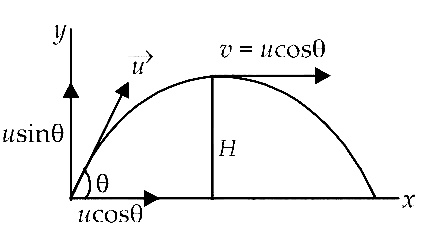
Solution

Let v be velocity of a projectile at maximum height H.

AIPMT 2010 Mains Physics - Motion in a Plane Question 33 English Explanation
v = ucos

According to given problem,

Q.4
A particle of mass M, starting from rest, undergoes uniform acceleration. If the speed acquired in time T is V, the power delivered to the particle is
(A)
(B)
(C)
(D)
(D)

Solution

Power delivered in time T is
P = F·V = MaV

or

or
Q.5
A solid cylinder and a hollow cylinder, both of the same mass and same external diameter are released from the same height at the same time on an inclined plane. Both roll down without slipping. Which one will reach the bottom first?
(A)
Both together only when angle of inclination of plane is 45o
(B)
Both together
(C)
Hollow cylinder
(D)
Solid cylinder
(D)

Solution

Time taken to reach the bottom of inclined plane.


Here, is length of incline plane

For solid cylinder

For hollow cylinder K2 = R2

Hence, solid cylinder will reach the bottom first.
Q.6
A thin circular ring of mass M and radius r is rotating about its axis with constant angular velocity . Two objects each of msass m are attached gently to the opposite ends of a diameter of the ring. The ring now rotates with angular velocity given by
(A)
(B)
(C)
(D)
(D)

Solution

As no external torque is acting about the axis, angular momentum of system remains conserved.

I1 = I2

Q.7
From a circular disc of radius R and mass 9M, a small disc of mass M and radius is removed concentrically. The moment of inertia of the remaining disc about an axis perpendicular to the plane of the disc and passing through its centre is
(A)
MR2
(B)
MR2
(C)
4MR2
(D)
MR2
(A)

Solution

Mass of the disc = 9M Mass of removed portion of disc = M The moment of inertia of the complete disc about an axis passing through its centre O and perpendicular to its plane is

Now, the moment of inertia of the disc with removed portion


Therefore, moment of inertia of the remaining portion of disc about O is

Q.8
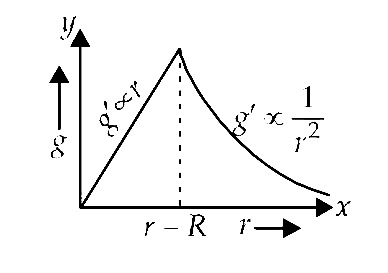
The dependence of acceleration due to gravity g on the distance r from the centre of the earth, assumed to be a sphere of radius R of uniform density is as shown in figures below

AIPMT 2010 Mains Physics - Gravitation Question 39 English

The correct figure is
(A)
(4)
(B)
(1)
(C)
(2)
(D)
(3)
(A)

Solution

The acceleration due to gravity at a depth d below surface of earth is


g' = 0 at d = R.

i.e., acceleration due to gravity is zero at the centre of earth.
Thus, the variation in value g with r is

For, r > R,


Here, R + h = r

For r < R,

Here,

Therefore, the variation of g with distance from centre of the earth will be as shown in the figure. AIPMT 2010 Mains Physics - Gravitation Question 39 English Explanation
Q.9
(1)   Centre of gravity (C.G) of a body is the point at which the weight of the body acts
(2)   Centre of mass coincides with the centre of gravity if the earth is assumed to have infinitely large radius.
(3)   To evaluate the gravitational field intensity due to any body at an external point, the entire mass of the body can be considered to be concentrated at its C.G.
(4)   The radius of gyration of any body rotating about an axis is the length of the perpendicular dropped from the C.G. of the body to the axis.

Which one of the following pairs of statements is correct ?
(A)
(4) and (1)
(B)
(1) and (2)
(C)
(2) and (3)
(D)
(3) and (4)
(A)

Solution

Centre of gravity of a body is the point at which the weight of the body acts and the radius of gyration of any body rotating about an axis is the length of the perpendicular dropped from the CG of the body to the axis.
Q.10
The additional kinetic energy to be provided to a satellite of mass m revolving around a planet of mass M, to transfer it from a circular orbit of radius R1 to another of radius R2(R2 > R1) is
(A)
GmM
(B)
GmM
(C)
2GmM
(D)
GmM
(D)

Solution

Total energy of the orbiting satellite of mass m having orbital radius r is


where M is the mass of the planet.

Additional kinetic energy required to transfer the satellite from a circular orbit of radius R1 to another radius R2 is E2−E1


Q.11
A monatomic gas at pressure P1 and volume V1 is compressed adiabatically to of its original volume. What is the final pressure of the gas?
(A)
64P1
(B)
P1
(C)
16P1
(D)
32P1
(D)

Solution

Ideal gas equation, for an adiabatic process is

constant

For monoatomic gas


P2 = P1 × (2)5 = 32 P1.
Q.12
If cp and cv denote the specific heats (per unit mass of an ideal gas of molecular weight M, then
(A)
cp cv = R/M2
(B)
cp cv = R
(C)
cp cv = R/M
(D)
cp cv = MR
(C)

Solution

Cv = molar specific heat of the ideal gas at constant volume

Cp = molar specific heat of the ideal gas at constant pressure,

Cp' = MCp and Cv’ = MCv

Also

MCp – MCv = R

Cp – Cv = R/M
Q.13
The electric field at a distance from the centre of a charged conducting spherical shell of radius R is E. The electric field at a distance from the centre of the sphere is
(A)
zero
(B)
E
(C)
(D)
(A)

Solution

Electric field inside a charged conductor is always zero.
Q.14
Two parallel metal plates having charges +Q and Q face each other at a certain distance between them. If the plates are now dipped in kerosene oil tank, the electric field between the plates will
(A)
become zero
(B)
increase
(C)
decrease
(D)
remain same
(C)

Solution

Electric field between two parallel plates placed in vacuum is given by


In a medium of dielectric constant K,

For kerosene oil K > 1 E' < E
Q.15
A closely wound solenoid of 2000 turns and area of cross-section 1.5 104 m2 carries a current of 2.0 A. It is suspended through its centre and perpendicular to its length, allowing it to turn in a horizontal plane in a uniform magnetic field 5 102 tesla making an angle of 30o with the axis of the solenoid. The torque on the solenoid will be
(A)
3 103 N m
(B)
1.5 103 N m
(C)
1.5 102 N m
(D)
3 102 N m
(C)

Solution

Magnetic moment of the loop.

M = NIA = 2000 × 2 × 1.5 × 10–4 = 0.6 J/T

Torque = MBsin30°

Q.16
A particle having a mass of 102 kg carries a charge of 5 108 C. The particle is given an initial horizontal velocity of 105 m s1 in the presence of electric field and magnetic field . To keep the particle moving in a horizontal direction, it is necessary that
(1)   should be perpendicular to the direction of velocity and should be along the direction of velocity

(2)  Both and should be along the direction of velocity

(3)  Both and are mutually perpendicular and perpendicular to the direction of velocity.

(4)   should be along the direction of velocity and should be perpendicular to the direction of velocity

Which one of the following pairs of statements is possible ?
(A)
(1) and (3)
(B)
(3) and (4)
(C)
(2) and (3)
(D)
(2) and (4)
(C)

Solution

Force due to electric field acts along the direction of the electric field but force due to the magnetic field acts along a direction perpendicular to both the velocity of the charged particle and the magnetic field. Hence both statements (2) and (3) are true. In statement (2), magnetic force is zero, so, electric force will keep the particle continue to move in horizontal direction. In statement (3), both electric and magnetic forces will be opposite to each other. If their magnitudes will be equal then the particle will continue horizontal motion.
Q.17
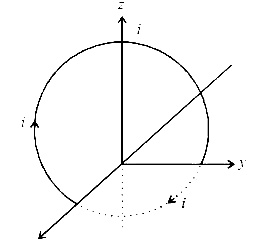
A current loop consists of two identical semicircular parts each of radius R, one lying in the x-y plane and the other in x-z plane. If the current in the loop is . The resultant magnetic field due to the two semicircular parts at their common centre is
(A)
(B)
(C)
(D)
(A)

Solution

Magnetic fields due to the two parts at their common centre are respectively,

and

AIPMT 2010 Mains Physics - Moving Charges and Magnetism Question 53 English Explanation
Resultant field =

=

Q.18
Two identical bar magnets are fixed with their centers at a distance d apart. A stationary charge Q is placed at P in between the gap of the two magnets at a distance D from the centre O as shown in the figure

AIPMT 2010 Mains Physics - Magnetism and Matter Question 31 English
The force on the charge Q is
(A)
zero
(B)
directed along OP
(C)
directed along PO
(D)
directed perpendicular to the plane of paper
(A)

Solution

Magnetic field due to bar magnets exerts force on moving charges only. Since the charge is at rest, zero force acts on it.
Q.19
The magnetic moment of a diamagnetic action is
(A)
much greater than one
(B)
1
(C)
between zero and one
(D)
equal to zero
(D)

Solution

The magnetic moment of a diamagnetic atom is equal to zero.
Q.20
A condenser of capacity C is charged to a potential difference of V1. The plates of th condenser are then connected to an ideal inductor of inductance L. The current through the inductor when the potential difference across the condenser reduces to V2 is
(A)
(B)
(C)
(D)
(D)

Solution

q = q0 cost

cost =

Current through the inductor

I = = - q0 sint

|I| =

=

=
Q.21
The electric field of an electromagnetic wave in free space is given by where t and x are in seconds and metres respectively. It can be inferred that
(1)  the wavelength is 188.4 m.
(2)  the wave number k is 0.33 rad/m.
(3)  the wave amplitude is 10 V/m.
(4)  the wave is propagating along +x direction.

Which one of the following pairs of statements is correct ?
(A)
(3)  and  (4)
(B)
(1)  and  (2)
(C)
(2)  and  (3)
(D)
(1)  and  (3)
(D)

Solution

As given,

here amplitude E0 = 10 V/m and = 107 rad/s

As c =

= = = 188.4 m

Also, c =

k = = 0.033

The wave is propagating along y direction.
Q.22
A rays of light is incident on a 60o prism at the minimum deviation position. The angle of refraction at the first face (i.e., incident face) of the prism is
(A)
zero
(B)
30o
(C)
45o
(D)
60o
(B)

Solution

Angle of prism, A = r1 + r2

For minimum deviation r1 = r2 = r

A = 2r

Given, A = 60°

Hence, r = = = 30o
Q.23
The speed of light in media M1 and M2 are 1.5 108 m/s and 2.0 108 m/s respectively. A ray of light enters from medium M1 to M2 at an incidence angle i. If the rays suffers total internal reflection, the value of i is
(A)
Equal to sin1
(B)
Equal to or less than sin1
(C)
Equal to or greater than sin1
(D)
Less than sin1
(C)

Solution

Refractive index for medium M1 is

1 = = 2

Refractive index for medium M2 is

2 = =

For total internal reflection, sini sinC

But sinC =

sini

i sin1
Q.24
The decay constant of a radio isotope is . If A1 and A2 are its activities at times t1 and t2 respectively, the number of nuclei which have decayed during the time (t1 t2)
(A)
A1t1 A2t2
(B)
A1 A2
(C)
(A1 A2)/
(D)
(C)

Solution

A1 = N1 at time t1

A2 = N2 at time t2

Therefore, number of nuclei decayed during time interval (t1 – t2 ) is

N1 - N2 =
Q.25
The binding energy per nucleon in deuterium and helium nuclei are 1.1 MeV and 7.0 MeV, respectively. When two deuterium nuclei fuse to form a helium nucleus the energy released in the fusion is
(A)
23.6 MeV
(B)
2.2 MeV
(C)
28.0 MeV
(D)
30.2 MeV
(A)

Solution

1H2 + 1H2 2He4 + E

The binding energy per nucleon of a deuteron = 1.1 MeV

Total binding energy = 2 × 1.1 = 2.2 MeV

The binding energy per nucleon of a helium nuclei = 7 MeV

Total binding energy = 4 × 7 = 28 MeV

Hence, energy released

E = (28 – 2 × 2.2) = 23.6 MeV
Q.26
When monochromatic radiation of intensity falls on a metal surface, the number of photoelectrons and their maximum kinetic energy are N and T respectively. If the intensity of radiation is 2, the number of emitted electrons and their maximum kinetic energy are respectively
(A)
N and 2T
(B)
2N and T
(C)
2N and 2T
(D)
N and T
(B)

Solution

The number of photoelectrons ejected is directly proportional to the intensity of incident light. Maximum kinetic energy is independent of intensity of incident light but depends upon the frequency of light.
Hence option (b) is correct
Q.27
The electron in the hydrogen atom jumps from excited state (n = 3) to its ground state (n = 1) and the photons thus emitted irradiate a photosensitive material. If the work function of the material is 5.1 eV, the stopping potential is estimated to be (the energy of the electron in nth state En = )
(A)
5.1 V
(B)
12.1 V
(C)
17.2 V
(D)
7 V
(D)

Solution

E = h = E3 - E1

=

= 12.1 eV

Therefore, stopping potential

eV0 = -

= (12.1 – 5.1) eV

V0 = 7 V
Q.28
For transistor action
(1)  Base, emitter and collector regions should have similar size and doping concentrations.
(2)  The base region must be vety thin and lightly doped.
(3)  The emitter-base junction is forward biased and base-collector junction is reverse biased.
(4)  Both the emitter-base junction as well as the base-collector junction are forward biased.

Which one of the following pairs of statements is correct?
(A)
(4) and (1)
(B)
(1) and (2)
(C)
(2) and (3)
(D)
(3) and (4)
(C)

Solution

For transistor action, the base region must be very thin and lightly doped. Also, the emitter-base junction is forward biased and base-collector junction is reverse biased.
Q.29
The following figure shows a logic gate circuit with two inputs A and B and the output Y. The voltage waveforms of A, B and Y are as given.

AIPMT 2010 Mains Physics - Semiconductor Electronics Question 78 English

The logic gate is
(A)
NOR gate
(B)
OR gate
(C)
AND gate
(D)
NAND gate
(D)

Solution

It is clear from given logic circuit, that out put Y is low when both the inputs are high, otherwise it is high. Thus logic circuit is NAND gate.
Chemistry (Maximum Marks: 112)
  • This section contains 28 questions.
  • Each question has FOUR options (A), (B), (C) and (D). ONLY ONE of these four options is the correct answer.
  • Full Marks : +4 If ONLY the correct option is chosen;
  • Zero Marks : 0 If none of the options is chosen (i.e. the question is unanswered);
  • Negative Marks : −1 In all other cases.
Q.1
A 0.66 kg ball is moving with a speed of 100 m/s. The associated wavelength will be

(h = 6.6 1034 J s)
(A)
6.6 1032 m
(B)
6.6 1034 m
(C)
1.0 1035 m
(D)
1.0 1032 m
(C)

Solution

According to the de-Broglie equation, =

=
Q.2
The pressure exerted by 6.0 g of methane gas in a 0.03 m3 vessel at 129oC is (Atomic masses : C = 12.01, H = 1.01 and R = 8.314 J K1 mol1 )
(A)
215216 Pa
(B)
13409 Pa
(C)
41648 Pa
(D)
31684 Pa
(C)

Solution

PV = nRT

=

=

= 41648 Pa
Q.3
The reaction,
2A(g) + B(g) 3C(g) + D(g)
is begun with the concentrations of A and B both at an initial value of 1.00 M. When equilibrium is reached, the concentration of D is measuread and found to be 0.25 M. The value for the equilibrium constant for this reaction is given by the expression
(A)
[(0.75)3 (0.25)] [(1.00)2 (1.00)]
(B)
[(0.75)3 (0.25)] [(0.50)2 (0.75)]
(C)
[(0.75)3 (0.25)] [(0.50)2 (0.25)]
(D)
[(0.75)3 (0.25)] [(0.75)2 (0.25)]
(B)

Solution

2A(g) + B(g) &#8652; 3C(g) + D(g)
Initial mole 1 1 0 0
At equilibrium 1 - (2 0.25)
= 0.5
1 - 0.25
= 0.75
3 0.25
= 0.75
0.25


Equilibrium constant, K =

K =
Q.4
The following two reactions are known

Fe2O3(s) + 3CO(g) 2Fe(s) + 3CO2(g); H = 26.8 kJ

FeO(s) + CO(g)   Fe(s) + CO2(g); H = 16.5 kJ

The value of H for the following reaction

Fe2O3(s) + CO(g)   2FeO(s) + CO2(g) is
(A)
+ 10.3 kJ
(B)
43.3 kJ
(C)
10.3 kJ
(D)
+ 6.2 kJ
(D)

Solution

Given

Fe2O3(s) + 3CO(g) 2Fe(s) + 3CO2(g); H = 26.8 kJ .....(1)

FeO(s) + CO(g)   Fe(s) + CO2(g); H = 16.5 kJ .....(2)

Fe2O3(s) + CO(g)   2FeO(s) + CO2(g), H = ? ....(3)

Equation (3) can be calculated as :

(1) - 2(2)

H = –26.8 + 33.0 = +6.2 kJ
Q.5
For vaporization of water at 1 atmospheric pressure, the values of H and S are 40.63 kJ mol1 and 108.8 J K1 mol1, respectively. The temperature when Gibb's energy change (G) for this transformation will be zero, is
(A)
273.4 K
(B)
393.4 K
(C)
373.4 K
(D)
293.4 K
(C)

Solution

We know, from Gibb's equation,

G = H – TS

When G = 0, H = TS

= = 373.4 K
Q.6
Three moles of an ideal gas expanded spontaneously into vacuum. The work done will be
(A)
infinite
(B)
3 Joules
(C)
9 Joules
(D)
zero
(D)

Solution

Since the ideal gas expands spontaneously into vacuum,, Pext = 0.

Work done is also zero.
Q.7
Match List I (Equations) with List II (Type of processes) and select the correct option.

List I List II
Equations Type of processes
A. Kp > Q (i) Non- spontaneous
B. Go < RT ln Q (ii) Equilibrium
C. Kp = Q (iii) Spontaneous and
endothermic
D. T > (iv) Spontaneous
(A)
A - (i), B - (ii), C - (iii), D - (iv)
(B)
A - (iii), B - (iv), C - (ii), D - (i)
(C)
A - (iv), B - (i), C - (ii), D - (iii)
(D)
A - (ii), B - (i), C - (iv), D - (iii)
(C)

Solution

When Kp > Q, rate of forward reaction > rate of backward reaction.

Reaction is spontaneous.

When Go < RT ln Q, Go is positive, reverse reaction is feasible, thus reaction is non spontaneous.

When Kp = Q, rate of forward reaction > rate of backward reaction.

Reaction is in equilibrium.

When TS > H, G will be negative only when H = +ve.

Reaction is spontaneous and endothermic.
Q.8
Consider the following relations for emf of an electrochemical cell
(i)   EMF of cell = (Oxidation potential of anode) (Reduction potential of cathode)
(ii)  EMF of cell = (Oxidation potential of anode) + (Reduction potential of cathode)
(iii) EMF of cell = (Reductional potential of anode) + (Reduction potential of cathode)
(iv) EMF of cell = (Oxidation potential of anode) (Oxidation potential of cathode)

Which of the above relations are correct?
(A)
(iii) and (i)
(B)
(i) and (ii)
(C)
(iii) and (iv)
(D)
(ii) and (iv)
(D)

Solution

EMF of a cell = Reduction potential of cathode – Reduction potential of anode

= Reduction potential of cathode + Oxidation potential of anode

= Oxidation potential of anode – Oxidation potential of cathode.
Q.9
Which of the following expressions correctly represents the equivalent conductance at infinite diluation of Al2(SO4)3. Given that Al3+ and so are the equivalent conductances at infinite dilution of the respective ions?
(A)
Al3+   +   so
(B)
Al3+   +   so
(C)
(Al3+   +   so) 6
(D)
Al3+   +   so
(B)

Solution

Equivalent conductance of an electrolyte at infinite dilution is given by the sum of equivalent conductances of the respective ions at infinite dilution.
Q.10
The rate of the reaction, 2NO + Cl2 2NOCl is given by the rate equation rate = k[NO]2[Cl2]. The value of the rate constant can be increased by
(A)
increasing the temperature
(B)
increasing the concentration of NO
(C)
increasing the concentration of the Cl2
(D)
doing all of these.
(A)

Solution

The value of rate constant can be increased by increasing the temperature and is independent of the initial concerntration of the reactants.
Q.11
Among the following which one has the highest cation to anion size ratio ?
(A)
CsI
(B)
CsF
(C)
LiF
(D)
NaF
(B)

Solution

The ratio in cation and anion size will be maximum when the cation is largest size and the anion is smallest size. So among the given species, Cs+ has maximum size among given cations and F- has smallest size among the given anions, So Cs/F has highest rc/ra
Q.12
Among the elements Ca, Mg, P and Cl, the order of increasing atomic radii is
(A)
Mg < Ca < Cl < P
(B)
Cl < P < Mg < Ca
(C)
P < Cl < Ca < Mg
(D)
Ca < Mg < P < Cl
(B)

Solution

Atomic radius decreases on moving from left to right in a period. so order of sizes for Cl, P and Mg is Cl < P < Mg. Down the group size increases. So overall order is : Cl < P < Mg < Ca.
Q.13
Some of the properties of the two species, and are described below. Which one of them is current?
(A)
Dissimilar in hybridization for the central atom with different structures.
(B)
Isostructural with same hybridization for the central atom.
(C)
Isostructural with different hybridization for the central atom
(D)
Similar in hybridization for the central atom with different structures.
(A)

Solution

No. of electron pairs = No. of atoms bonded to it + 1/2[Gp. no. of central atom - Valency of central atom No. of electrons]

For NO3- = 3 + 1/2[5 - 6 + 1] = 3 (sp2 hybridisation)

For H3O+ = 3 + 1/2[6 - 3 - 1] = 4 (sp3 hybridisation)
Q.14
In which of the following molecules the central atom does not have sp3 hybridization?
(A)
CH4
(B)
SF4
(C)
BF4
(D)
NH4+
(B)

Solution

For neutral molecules

No. of electron pairs = No. of atoms bonded to it + 1/2[Gp. no. of central atom - Valency of central atom]

For CH4, no. of e- pairs = 4 + 1/2[4 - 4] = 4 (sp3 hybridisation)

For SF4, no. of e- pairs = 4 + 1/2[6 - 4] = 5 (sp3d hybridisation)

and For ions,

No. of electron pairs = No. of atoms bonded to it + 1/2[Gp. no. of central atom - Valency of central atom No. of electrons]

For BF4-, no. of e- pairs = 4 + 1/2[3 - 4 + 1] = 4 (sp3 hybridisation)

For NH4+, no. of e- pairs = 4 + 1/2[5 - 4 - 1] = 4 (sp3 hybridisation)
Q.15
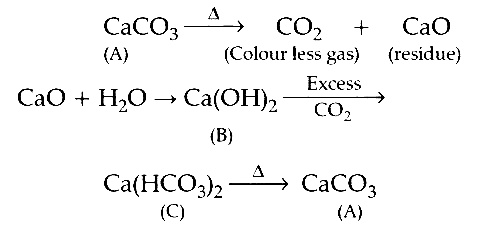
The compound A on heating gives a colourless gas and a residue that is dissolved in water to obtain B. Excess of CO2 is bubbled through aqueous solution of B, C is formed which is recovered in the solid form. Solid C on gentle heating gives back A. The compound is
(A)
CaCO3
(B)
Na2CO3
(C)
K2CO3
(D)
CaSO42H2O
(A)

Solution

A colourless gas + residue

Residue + H2O B C A

This is possible only when ‘A’ is CaCO3. The reactions are as follow :

AIPMT 2010 Mains Chemistry - s-Block Elements Question 29 English Explanation
Q.16
Some statements about heavy water are given below:
(i)  Heavy water is used as a moderator in nuclear reactors.
(ii)  Heavy water is more associated than ordinary water.
(iii)  Heavy water is more effective solvent than ordinary water.

Which of the above statements are correct?
(A)
(i) and (ii)
(B)
(i), (ii) and (iii)
(C)
(ii) and (iii)
(D)
(i) and (iii)
(A)

Solution

Heavy water is used for slowing down the speed of neutrons in nuclear reactors, hence used as moderator. Boiling point of heavy water is greater (374.42 K) than that of ordinary water (373 K), hence heavy water is more associated. Dielectric constant of ordinary water is greater than that of heavy water, hence ordinary water is a better solvent.
Q.17
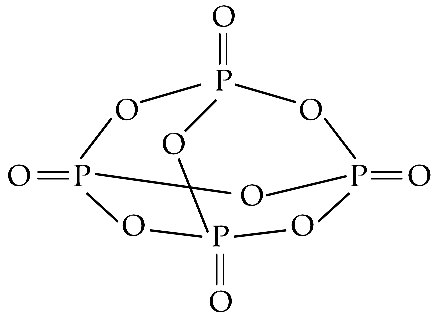
How many bridging oxygen atoms are present in P4O10?
(A)
6
(B)
4
(C)
2
(D)
5
(A)

Solution

AIPMT 2010 Mains Chemistry - p-Block Elements Question 46 English Explanation
Q.18
Which of the following oxidation states is the most common among the lanthanoids?
(A)
4
(B)
2
(C)
5
(D)
3
(D)

Solution

The common stable oxidation state of all the lanthanoids is +3. The oxidation state of +2 and +4 are also exhibited by some of the elements. These oxidation states are only stable in those cases where stable 4f0 , 4f7 or 4f14 configurations are achieved.
Q.19
Match List I (substances) with List II (processes) employed in the manufacture of the substances and select the correct option.
Column
(Substances)
Column
(Processes)
(A) Sulphuric acid (i) Haber's process
(B) Steel (ii) Bessemer's process
(C) Sodium hydroxide (iii) Leblanc process
(D) Ammonia (iv) Contact process
(A)
(A) (i);  (B) (iv);  (C) (ii);  (D) (iii)
(B)
(A) (i);  (B) (ii);  (C) (iii);  (D) (iv)
(C)
(A) (iv);  (B) (iii);  (C) (ii);  (D) (i)
(D)
(A) (iv);  (B) (ii);  (C) (iii);  (D) (i)
(D)

Solution

(1) Sulphuric acid     (iv) Contact process

(2) Steel                     (ii) Bessemer’s process

(3) Sodium hydroxide    (iii) Leblanc process

(4) Ammonia                 (i) Haber’s process
Q.20
Which of the following species is not electrophilic in nature?
(A)
(B)
BH3
(C)
H3
(D)
O2
(C)

Solution

H3 has a lone pair of electrons on oxygen atom, thus it is not an electrophile. Also the octet is complete
Q.21
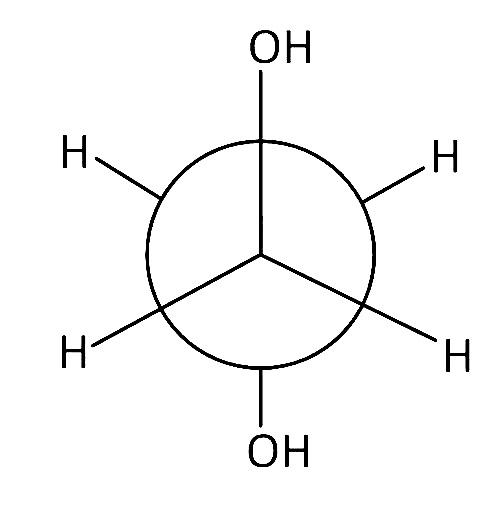
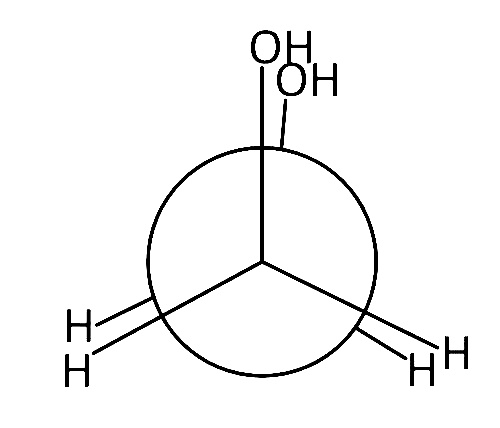
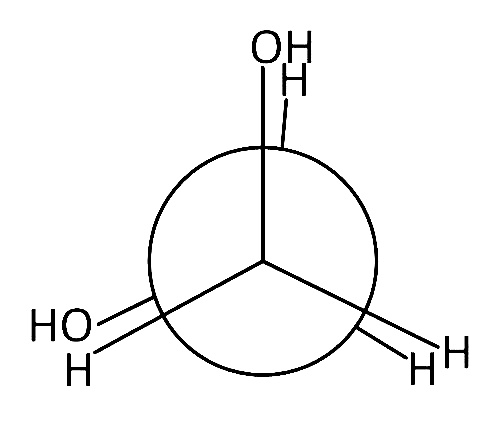
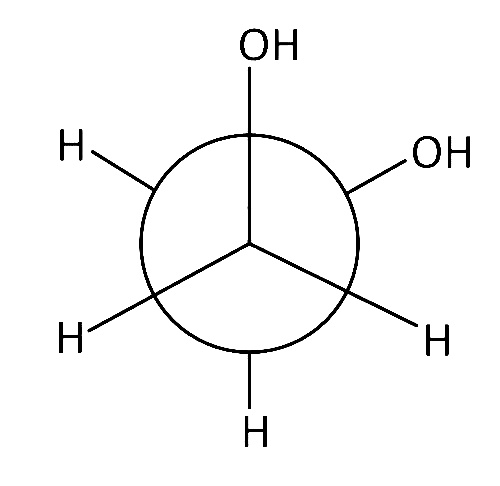
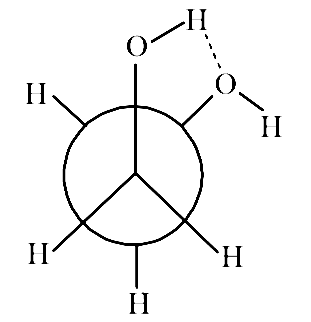
Which of the following conformers for ethylene glycol is most stable?
(A)
AIPMT 2010 Mains Chemistry - Some Basic Concepts of Organic Chemistry Question 50 English Option 1
(B)
AIPMT 2010 Mains Chemistry - Some Basic Concepts of Organic Chemistry Question 50 English Option 2
(C)
AIPMT 2010 Mains Chemistry - Some Basic Concepts of Organic Chemistry Question 50 English Option 3
(D)
AIPMT 2010 Mains Chemistry - Some Basic Concepts of Organic Chemistry Question 50 English Option 4
(D)

Solution

The conformation (d) is most stable because of intermolecular H-bonding. AIPMT 2010 Mains Chemistry - Some Basic Concepts of Organic Chemistry Question 50 English Explanation
Q.22
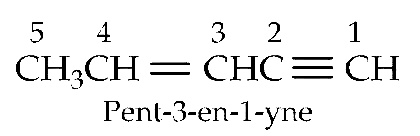
The IUPAC name of the compound
CH3CHCHCCH is
(A)
pent-4-yn-2-ene
(B)
pent-3-en-1-yne
(C)
pent-2-en-4-yne
(D)
pent-1-yn-3-ene
(B)

Solution

AIPMT 2010 Mains Chemistry - Some Basic Concepts of Organic Chemistry Question 74 English Explanation

If a molecule contains both carbon-carbon double or triple bonds, those two are treated as per in seeking the lowest number combination. However, if the sum of numbers turns out to be the same starting from either of the carbon chain, then lowest number is given to the C = C double bond.
Q.23
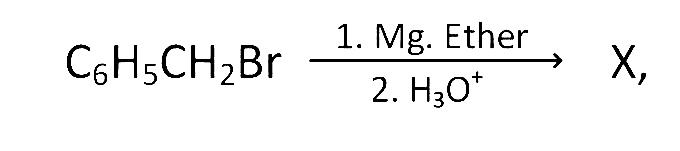
In the following reaction
AIPMT 2010 Mains Chemistry - Haloalkanes and Haloarenes Question 20 English
the product 'X' is
(A)
C6H5CH2OCH2C6H5
(B)
C6H5CH2OH
(C)
C6H5CH3
(D)
C6H5CH2CH2C6H5
(C)

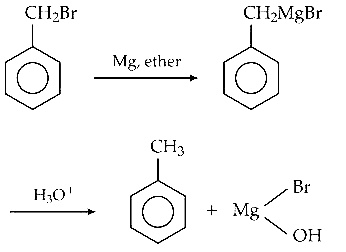
Solution

AIPMT 2010 Mains Chemistry - Haloalkanes and Haloarenes Question 20 English Explanation
Q.24
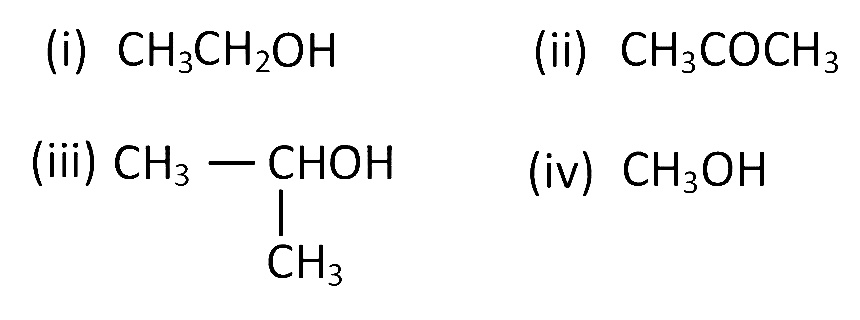
Following compounds are given
AIPMT 2010 Mains Chemistry - Alcohol, Phenols and Ethers Question 43 English

Which of the above compound(s), on being warmed with iodine solution and NaOH, will give iodoform?
(A)
(i), (iii) and (iv)
(B)
Only (ii)
(C)
(i), (ii) and (iii)
(D)
(i) and (ii)
(C)

Solution

The iodoform test is exhibited by ethyl alcohol, acetaldehyde, acetone, methyl ketones, those alcohols which possess
CH3CH(OH)— group, acetophenone, -hydroxypropionic acid, keto acid, 2-aminoalkanes, etc.
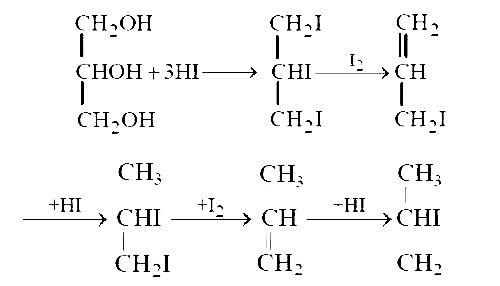
Q.25
When glycerol is treated with excess of HI, it produces
(A)
2-iodopropane
(B)
allyl iodide
(C)
propene
(D)
glycerol triiodide
(A)

Solution

Glycerol when treated with excess HI produces 2–iodopropane.

AIPMT 2010 Mains Chemistry - Alcohol, Phenols and Ethers Question 44 English Explanation
Q.26
Match the compounds given in List I with their characteristic reactions given in List II. Select the correct option.

List I
(Compounds)
List II
(Reactions)
A. CH3(CH2)3NH2 (i) Alkaline hydrolysis
B. CH3CCH (ii) With KOH (alcohol)
and CHCl3 produces
bad smell
C. CH3CH2COOCH3 (iii) Gives white ppt.
with ammoniacal
AgNO3
D. CH3CH(OH)CH3 (iv) With Lucas reagent
cloudiness appears
after 5 minutes
(A)
A-(ii),  B-(i),  C-(iv),  D-(iii)
(B)
A-(iii),  B-(ii),  C-(i),  D-(iv)
(C)
A-(ii),  B-(iii),  C-(i),  D-(iv)
(D)
A-(iv),  B-(ii),  C-(iii),  D-(i)
(C)

Solution

AIPMT 2010 Mains Chemistry - Alcohol, Phenols and Ethers Question 42 English Explanation
Q.27
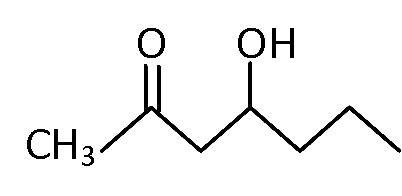
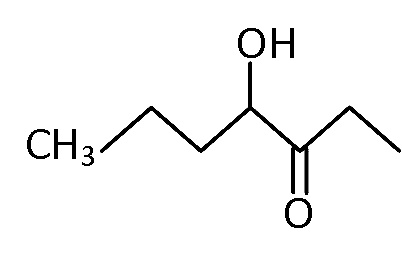
Which one of the following compounds will be most readily dehydrated?
(A)
AIPMT 2010 Mains Chemistry - Aldehydes, Ketones and Carboxylic Acids Question 63 English Option 1
(B)
AIPMT 2010 Mains Chemistry - Aldehydes, Ketones and Carboxylic Acids Question 63 English Option 2
(C)
AIPMT 2010 Mains Chemistry - Aldehydes, Ketones and Carboxylic Acids Question 63 English Option 3
(D)
AIPMT 2010 Mains Chemistry - Aldehydes, Ketones and Carboxylic Acids Question 63 English Option 4
(C)

Solution

The intermediate is carbocation which is destabilised by C = O group (present on - carbon to the –OH group) in the first three cases. In (c), –hydrogen is more acidic which can be removed as water. Moreover, the positive charge on the intermediate carbocation is relatively away from the C = O group.
Q.28
Fructose reduces Tollen's reagent due to
(A)
asymmetric carbons
(B)
primary alcoholic group
(C)
secondary alcoholic group
(D)
enolisation of fructose followed by conversion to aldehyde by base
(D)

Solution

Under alkaline conditions of the reagent, fructose gets converted into a mixture of glucose and mannose (Lobry de Bruyn van Ekenstein rearrangement) both of which contain the –CHO group and hence reduce Tollens’ reagent to give silver mirror test.
Biology (Maximum Marks: 220)
  • This section contains 55 questions.
  • Each question has FOUR options (A), (B), (C) and (D). ONLY ONE of these four options is the correct answer.
  • Full Marks : +4 If ONLY the correct option is chosen;
  • Zero Marks : 0 If none of the options is chosen (i.e. the question is unanswered);
  • Negative Marks : −1 In all other cases.
Q.1
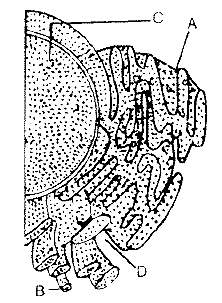
Identify the components labelled A, B, C and D in the diagram below from the list (i) to (viii) given along with – AIPMT 2010 Mains Biology - Cell - The Unit of Life Question 81 English Components :
(i) Cristae of mitochondria
(ii) Inner membrane of mitochondria
(iii) Cytoplasm
(iv) Smooth endoplasmic reticulum
(v) Rough endoplasmic reticulum
(vi) Mitochondrial matrix
(vii) Cell vacuole
(viii) Nucleus
The correct components are :
(A)
(A) (v), (B) (iv), (C) (viii), (D) (iii)
(B)
(A) (i), (B) (iv), (C) (viii), (D) (vi)
(C)
(A) (v), (B) (i), (C) (iii), (D) (ii)
(D)
(A) (vi), (B) (v), (C) (iv), (D) (vii)
(A)

Solution

A – Rough endoplasmic reticulum
B – Smooth endoplasmic reticulum
C – Nucleus
D – Cytoplasm
Q.2
An elaborate network of filamentous proteinaceous structures present in the cytoplasm which helps in the maintenance of cell shape is called -
(A)
Cytoskeleton
(B)
Endosplasmic Reticulum
(C)
Thylakoid
(D)
Plasmalemma
(A)
Q.3
Three of the following statements about enzymes are correct and one is wrong. Which one is wrong?
(A)
Enzymes require optimum pH for maximal activity.
(B)
Enzymes are denaturated at high temperature but in certain exceptional organisms they are effective even at temperatures 80o - 90oC.
(C)
Enzymes are highly specific.
(D)
Most enzymes are proteins but some are lipids.
(D)

Solution

Enzymes are mostly proteins but some are RNA (ribozymes). No lipid working as enzymes are known.
Q.4
The figure given below shows the conversion of a substate into product by an enzyme. In which one of the four options (a-d) the components of reaction labelled as A, B, C and D are identified correctly?

AIPMT 2010 Mains Biology - Biomolecules Question 77 English
(A)
A B C D
Potential
energy
Transition
state
Activation
energy
Activation energy
with out enzyme
(B)
A B C D
Transition
state
Potential
energy
Activation energy
without enzyme
Activation energy
with enzyme
(C)
A B C D
Potential
energy
Transition
state
Activation energy
with enzyme
Activation energy
without enzyme
(D)
A B C D
Activation energy
with enzyme
Transition
state
Activation energy
without enzyme
Potential
energy
(B)
Q.5
Vegetative propagation in Pistia occurs by
(A)
stolon
(B)
offset
(C)
runner
(D)
sucker.
(B)

Solution

In Pistia (water lettuce) vegetative propagation occurs by offset where one internode long runners grows horizontally along the soil surface and gives rise to new plants either from axillary or terminal buds.
Q.6
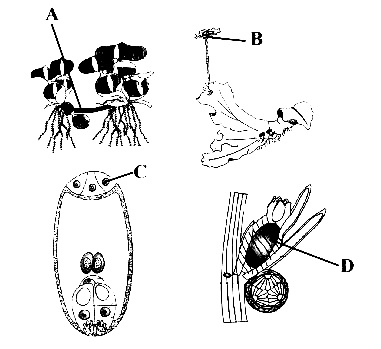
Examine the figures (A-D) given below and select the right option out of (a – d), in which all the four structures A, B, C and D are identified correctly. AIPMT 2010 Mains Biology - Sexual Reproduction in Flowering Plants Question 46 English
(A)
A offset, B Antheridiophore, C Antipodals, D Oogonium
(B)
A Rhizome, B Sporangiophore, C Polar cell, D Globule
(C)
A Sucker, B Seta, C Megaspore mother cell , D Gemma cup
(D)
A Runner, B Archegoniophore, C Synergidl, D Antheridium
(A)

Solution

A – offset of water hyacinth (Eichhornia)
B – Antheridiophore of Marchantia
C – Antipodals of the mature embryo sac
D – Oogonium of Chara
Q.7
An example of endomycorrhiza is -
(A)
Nostoc
(B)
Rhizobium
(C)
Glomus
(D)
Agaricus
(C)

Solution

The genus Glomus form endomycorrhiza, a symbiotic associations with plants. The fungal symbiont in these associations absorbs phosphorus from soil and passes it to the plant. Plants having such associations show other benefits also, such as resistance to root-borne pathogens, tolerance to salinity and drought, and an overall increase in plant growth and development.
Nostoc is a blue green algae, Agaricus is a basidiomycetes, Rhizobium is a eubacteria.
Q.8
Transport of food material in higher plants takes place through -
(A)
Sieve elements
(B)
Transfusion tissue
(C)
Companion cells
(D)
Tracheids
(A)
Q.9
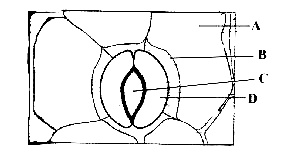
Given below is the diagram of a stomatal apparatus. In which of the following all the four parts labelled as A, B, C and D are correctly identified? AIPMT 2010 Mains Biology - Transport in Plants Question 15 English
(A)
A Epidermal Cell , B Subsidiary cell, C Stomatal aperture, D Guard cell
(B)
A Subsidiary cell, B Epidermal Cell , C Guard cell, D Stomatal aperture
(C)
A Guard cell, B Stomatal aperture, C Subsidiary cell, D Epidermal Cell
(D)
A Epidermal Cell , B Guard cell, C Stomatal aperture, D Subsidiary cell
(A)
Q.10
Leguminous plants are able to fix atmospheric nitrogen through the process of symbiotic nitrogen through the process of symbiotic nitrogen fixation. which one of the following statements is not correct during this process of nitrogen fixation?
(A)
Leghaemoglobin scavenges oxygen and is pinkish in colour.
(B)
Nodules act as sites for nitrogen fixation.
(C)
The enzyme nitrogenase catalyses the conversion of atmospheric N2 to NH3
(D)
Nitrogenase is insensitive to oxygen.
(D)
Q.11
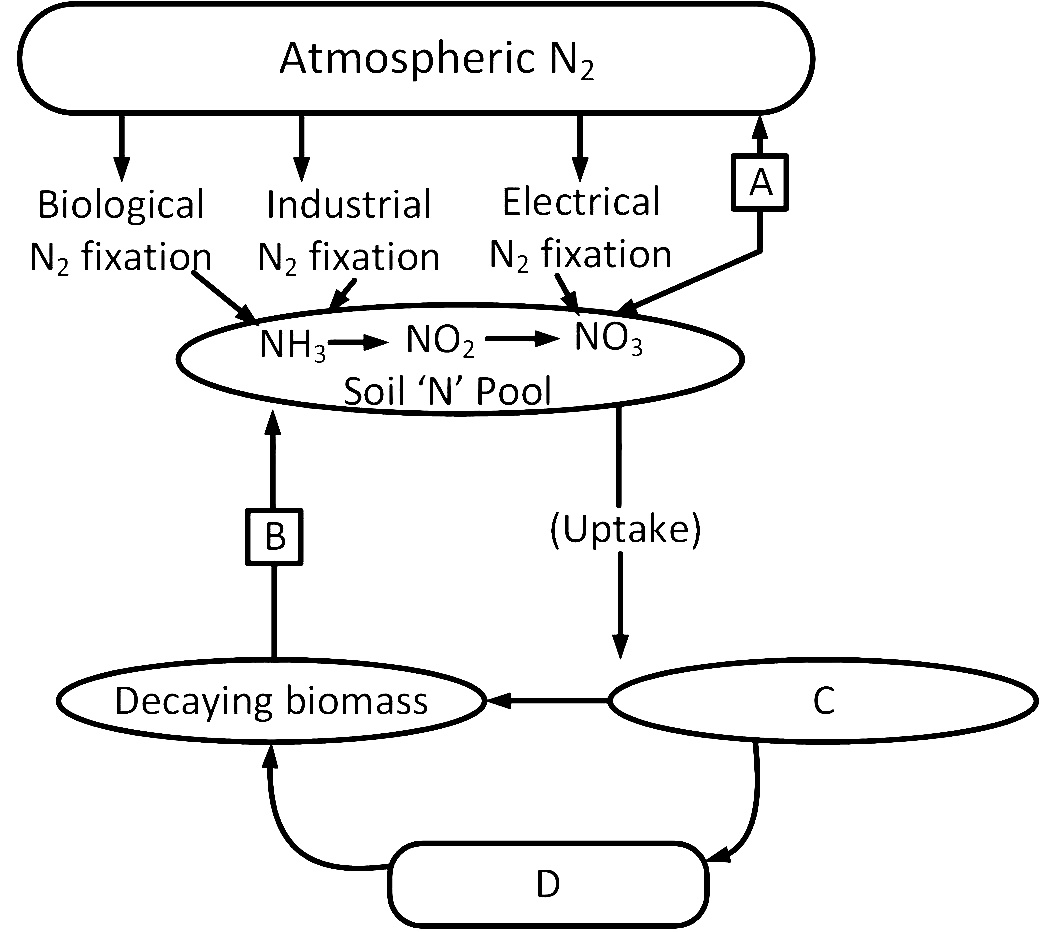
Study the cycle shown below and select the option which gives correct words for all the four blanks A, B, C and D.

AIPMT 2010 Mains Biology - Mineral Nutrition Question 27 English
(A)
A B C D
Nitrification Ammoni fication Animals Plants
(B)
A B C D
Denitrification Ammoni fication Plants Animals
(C)
A B C D
Nitrification Denitrification Animals Plants
(D)
A B C D
Denitrification Nitrification Plants Animals
(B)

Solution

A – Denitrification

B – Ammonification

C – Plants

D – Animals
Q.12
In genetic engineering, a DNA segment (gene) of interest,is transferred to the host cell through a vector. Consider the following four agents (A-D) in this regard and select the correct option about which one or more of these can be used as a vecotr / vectors –
(A) a bacterium
(B) plasmid
(C) plasmodium
(D) bacteriophage
(A)
(B) and (D) only
(B)
(A) and (C) only
(C)
(A), (B) and (D) only
(D)
(A) only
(A)

Solution

Plasmid and bacteriophage are used as vectors in genetic engineering. Plasmid is an autonomously replicating circular extra chromosomal DNA found in bacteria. They can be transferred from cell to cell in a bacterial colony. This characteristic is being used in biotechnology for transferring desirable gene into target gene of the host. Bacteriophage is a bacterial virus which can infect it, quickly multiply within and destroy (lyse) their host (virus) cells. During infection bacteriophages inject their DNA into these cells. The injected DNA selectively replicate and are expressed in the host that results in a multiplication of phages that ultimately burst out of the cell (by lysis). This ability of transferring DNA from the phage genome to specific host during infection process gave scientists the idea that specially designed phage vectors could be used for gene cloning.
Q.13
The Indian Rhinoceros is a natural inhabitant of which one of the Indian states ?
(A)
Uttarakhand
(B)
Assam
(C)
Uttar Pradesh
(D)
Himachal Pradesh
(B)

Solution

The Indian rhinoceros is a endemic of north-east region of India. Kaziranga National Park (Assam) is famous for rhinoceros.
Q.14
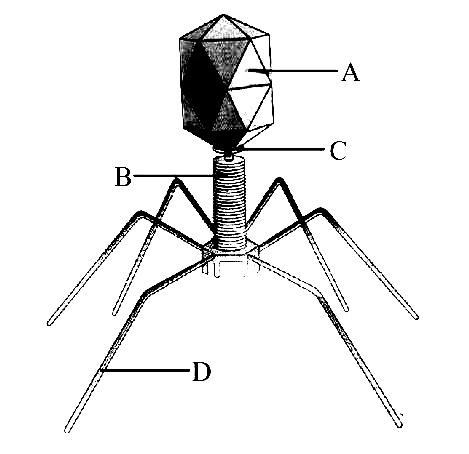
Given below is the diagram of a bacteriophage. In which one of the options all the four parts A, B, C and D are correct? AIPMT 2010 Mains Biology - Biological Classification Question 27 English
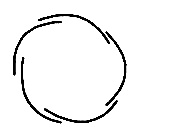
(A)
A Collar, B Tail fibres, C Head, D Sheath
(B)
A Tail fibres, B Head, C Sheath, D Collar
(C)
A Head , B Sheath, C Collar, D Tail fibres
(D)
A Sheath, B Collar, C Head, D Tail fibres
(C)
Q.15
Select the correct combination of the statements (i-iv) regarding the characteristics of certain organisms.
(i)  Methanogens are archaebacteria which produce methane in marshy areas.
(ii)  Nostoc is a filamentous blue-green alga which fixes atmospheric nitrogen.
(iii)  Chemosynthetic autotrophic bacteria synthesize cellulose from glucose.
(iv)  Mycoplasma lack a cell wall and can survive without oxygen.
The correct statements are
(A)
(ii) and (iii)
(B)
(i), (ii) and (iii)
(C)
(ii), (iii) and (iv)
(D)
(i), (ii) and (iv).
(D)

Solution

Chemosynthetic autotrophic bacteria oxidise various inorganic substances such as nitrates, nitrites and ammonia and use the released energy for their ATP production.

They play a great role in recycling nutrients like nitrogen, phosphorous, iron and sulphur.
Q.16
Black (stem) rust of wheat is caused by
(A)
Alternaria solani
(B)
Ustilago nuda
(C)
Puccinia graminis
(D)
Xanthomonas oryzae.
(C)

Solution

Black stem rust is caused by Puccinia graminis tritici. The genus Puccinia includes 700 species, which cause rust diseases of many economic plants such as wheat, barley, oats, etc. It is called a rust because of the reddish brown colour of the spores that are found chiefly upon the surface of the host leaves and stems. P. graminis is heteroecious, i.e., requiring two hosts, wheat and barberry for the completion of normal life cycle.

According to the nature of the spores, the life cycle of the P. graminis is divided into five stages. It is during, teleuto stage, the teliospore (or teleutospores) produce dark brown to black pustules on the surface of stems and leaves of the wheat that results into ‘black stem rust of wheat’.
Q.17
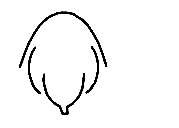
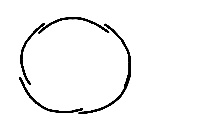
Aestivation of petals in the flower of cotton is correctly shown in
(A)
AIPMT 2010 Mains Biology - Morphology of Flowering Plants Question 38 English Option 1
(B)
AIPMT 2010 Mains Biology - Morphology of Flowering Plants Question 38 English Option 2
(C)
AIPMT 2010 Mains Biology - Morphology of Flowering Plants Question 38 English Option 3
(D)
AIPMT 2010 Mains Biology - Morphology of Flowering Plants Question 38 English Option 4
(B)

Solution

In cotton, china rose and lady’sfinger margins of sepals or petals overlap that of the next one this mode of arrangement (aestivation) is called twisted.
Q.18
Which one of the following is a xerophytic plant in which the stem is modified into the flat green and succulent structure?
(A)
Opuntia
(B)
Casuarina
(C)
Hydrilla
(D)
Acacia
(A)

Solution

Opuntia is a xerophytic plant which lives in dry habitat. The plant has fleshy organs where water and mucilage are stored. The stem is modified into flat green structure, therefore, Opuntia is also called as phylloclades.
Q.19
Consider the following four statements (i), (ii), (iii) and (iv) and select the right option for two correct statements.

Statements :
(i)  In vexillary aestivation, the large posterior petal is called-standard, two lateral ones are wings and two small anterior petals are termed keel.
(ii)  The floral formula for Liliaceae is
AIPMT 2010 Mains Biology - Morphology of Flowering Plants Question 41 English 1
(iii)  In pea flower the stamens are monadelphous.
(iv)  The floral formula for Solanaceae is
AIPMT 2010 Mains Biology - Morphology of Flowering Plants Question 41 English 2

The correct statements are
(A)
(i) and (iii)
(B)
(i) and (ii)
(C)
(ii) and (iii)
(D)
(iii) and (iv).
(B)

Solution

Flowers in pea have diadelphous stamens. The floral formula for Solanaceae is AIPMT 2010 Mains Biology - Morphology of Flowering Plants Question 41 English Explanation
Q.20
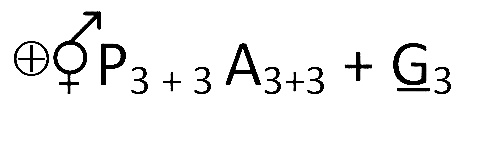
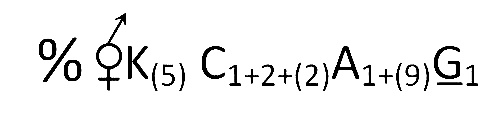
The correct floral formula of soyabean is
(A)
AIPMT 2010 Mains Biology - Morphology of Flowering Plants Question 42 English Option 1
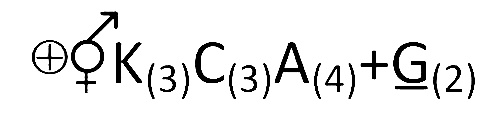
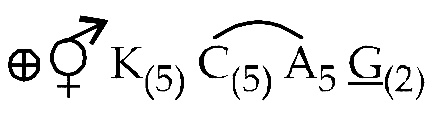
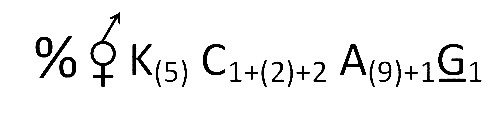
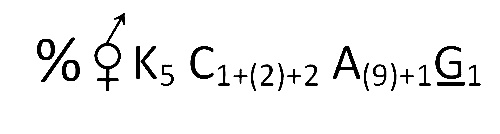
(B)
AIPMT 2010 Mains Biology - Morphology of Flowering Plants Question 42 English Option 2
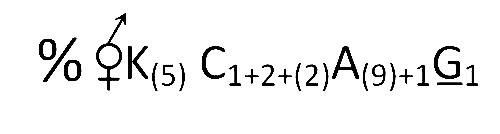
(C)
AIPMT 2010 Mains Biology - Morphology of Flowering Plants Question 42 English Option 3
(D)
AIPMT 2010 Mains Biology - Morphology of Flowering Plants Question 42 English Option 4
(C)

Solution

The plants belonging to the Family Fabaceae such as soybean, pea, sem, moong, gram, etc have the floral formula

AIPMT 2010 Mains Biology - Morphology of Flowering Plants Question 42 English Explanation
Q.21
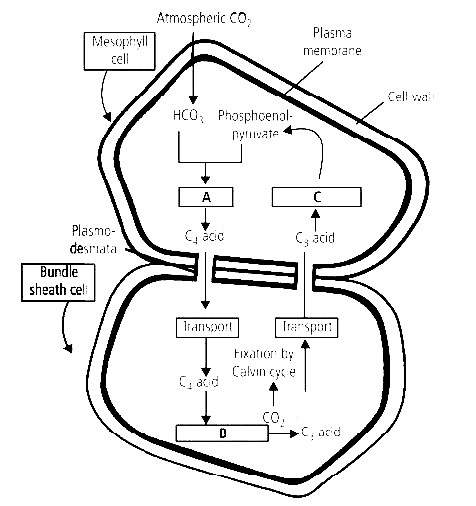
Study the pathway given below: AIPMT 2010 Mains Biology - Photosynthesis in Higher Plants Question 31 English In which of the following options correct words for all the three blanks A, B and C are indicated?
(A)
A Fixation, B Transamination, C Regeneration
(B)
A Decarboxylation, B Reduction, C Regeneration
(C)
A Carboxylation, B Decarboxylation, C Reduction
(D)
A Fixation, B Decarboxylation, C Regeneration
(D)

Solution

A – Fixation of CO2 by PEP carboxylase
B – Decarboxylation
C – Regeneration
Q.22
Read the following four statements, (i), (ii), (iii) and (iv) and select the right opening having both correct statement.
Statements :
(i)    Z scheme of light reaction takes place in presence of PSI only.
(ii)   Only PSI is functional in cyclic photophosphorylation.
(iii)  Cyclic photophosphorylation results into synthesis of ATP and NADPH2.
(iv)  Stroma lamellae lack PSII as well as NADP.
(A)
(ii) and (iv)
(B)
(i) and (ii)
(C)
(ii) and (iii)
(D)
(iii) and (iv).,
(A)

Solution

Z scheme involves both PSI and PSII to transfer electron excited by light starting from PSII uphill to the acceptor, down to the electron transport chain to PSI, which further comprise of excitation of electrons, transfer to another acceptor and finally down hill to NADP+ causing reduction of it to NADPH + H+. Stroma lamella contains PSI only.
Q.23
Kranz anatomy is one of the characteristics of the leaves of
(A)
potato
(B)
wheat
(C)
sugarcane
(D)
mustard.
(C)

Solution

In kranz anatomy, the mesophyll is undifferentiated and its cells occur in concentric layers around vascular bundles. Vascular bundles are surrounded by large sized bundle sheath cells which are arranged in a wreath-like manner in one to several layers. C4 plants, both monocots and dicots, such as sugarcane, maize, sorghum have kranz anatomy in leaf.
Q.24
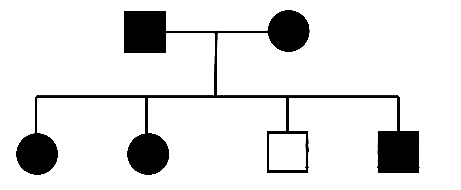
Study the pedigree chart of a certain family given below and select the correct conculusion which can be drawn for the character – AIPMT 2010 Mains Biology - Principles of Inheritance and Variation Question 133 English
(A)
The trait under study could not be colourblindness
(B)
The female parent is heterozygous
(C)
The parents could not have had a normal daughter for this character
(D)
The male parent is homozygous dominant
(B)

Solution

The given pedigree chart shows that both the daughters received the gene from the parents, while son may be normal or affected. It shows that the female parent is heterozygous.
Q.25
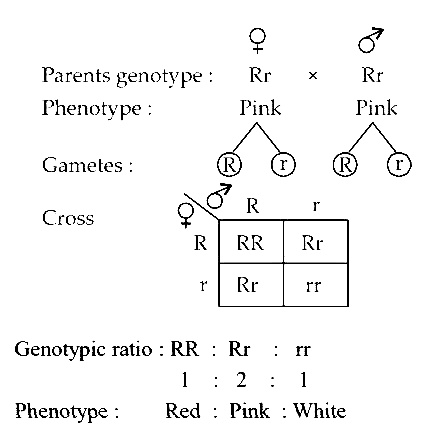
In antirrhinum two plants with pink flowers were hybridized. The F1 plants produced red, pink and white flowers in the proportion of 1 red, 2 pink and 1 white. What could be the genotype of the two plants used for hybridization ? Red flower colour is determined by RR, and White by rr genes -
(A)
rrrr
(B)
rr
(C)
Rr
(D)
RR
(C)

Solution

The given situation is an example of incomplete dominance where phenotype found in F1 generation do not resemble either of the two parents. The genotype of the two plants used for cross will be AIPMT 2010 Mains Biology - Principles of Inheritance and Variation Question 131 English Explanation The incomplete dominance of dominant allele (here ‘R’) over recessive allele (here ‘r’) could be due to mutations (insertion, deletion, substitution or inversion of nucleotides). The mutant allele generally produces a faulty or no product. This modification in the product may lead to incomplete dominance of the (unmodified) wild type dominant allele.
Q.26
A cross in which an organism showing a dominant phenotype in crossed with the recessive parent in order to know its genotype is called -
(A)
Dihybrid cross
(B)
Back cross
(C)
Monohybrid cross
(D)
Test cross
(D)

Solution

Test cross is performed to determine the genotype of F2 plant. In a typical test cross an organism showing dominant phenotype and whose genotype is to be determined is crossed with one that is homozygous recessive for the allele being investigated, instead of self-crossing. The progenies of such a cross can easily be analysed to predict the genotype of the test organism.
Q.27
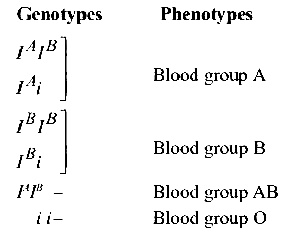
ABO blood grouping is controlled by gene I which has three alleles and show co-dominance. There are six genotypes. How many phenotypes in all are possible -
(A)
five
(B)
four
(C)
three
(D)
six
(B)

Solution

The three alleles IA, IB and i of gene I in ABO blood group system can produce six different genotypes and four different phenotypes as shown below : AIPMT 2010 Mains Biology - Principles of Inheritance and Variation Question 134 English Explanation
Q.28
Which one of the follwoing statements about the particular entity is true ?
(A)
Nucleosome is formed of nucleotides
(B)
Centromere is found in animals cells, which produces aster during cell division
(C)
The gene for producing insulin is present in every body cell
(D)
DNA consists of a core of eight histones
(C)

Solution

Insulin gene is found in every body cell but is not expressed in all cells. It is nucleosome which consists of a core of eight histones. DNA is composed of nucleotides. Centriole is found in animal cells, which produces aster during cell division.
Q.29
In eukaryotic cell transcription, RNA splicing and RNA capping take place inside the -
(A)
Dictyosomes
(B)
Ribosomes
(C)
Nucleus
(D)
ER
(C)

Solution

Unlike in prokaryotes where transcription and translation take place in the same compartment, in eukaryotes primary transcript is first processed in the nucleus and then transported outside of the nucleus. Since the primary transcripts of the eukaryotes contains both the expressing genes (exons) and nonexpressing genes (introns), it undergoes splicing of introns and later capping and tailing at 5'-end and 3'-end respectively.
Q.30
The lac Operon consists of -
(A)
Three regulatory genes and three structure genes
(B)
Four regulatory genes only
(C)
Two regulatory genes and two structural genes
(D)
One regulatory gene and three structural genes
(D)

Solution

Lac operon is the operon that regulates lactose metabolism in the bacterium Escherichia coli. Its form wast first postulated in 1961 by Francois Jacob and Jacques Monod to explain the control of β- galactosidase synthesis and for this work, they were awarded Nobel Prize. Lac operon system or inducible operon system consists of regulator gene (i) promoter gene (z, y and a), repressor protein and inducer.
Q.31
The 3'-5' phosphodiester linkages inside a polynucleotide chain serve to join -
(A)
One nucleotide with another nucleotide
(B)
One nitrogenous base with pentose sugar
(C)
One nucleoside with another nucleoside
(D)
One DNA strand with the other DNA strand
(A)

Solution

The phosphodiester bonds is formed between the phosphate group, which is connected to carbon 5' of the sugar residue of one nucleotide and carbon 3' of the sugar residue of the next nucleotide.
Q.32
Which one of the following is now being commercially produced by biotechnological procedures ?
(A)
Insulin
(B)
Morphine
(C)
Nicotine
(D)
Quinine
(A)

Solution

Insulin is now being commercially produced by genetic engineering. Insulin consists of two short polypeptide chains: chain A and chain B, that are linked together by disulphide bonds. Insulin, in mammal is synthesised as a prohormone which contains an extra stretch called the C-peptide. During maturation this
C-peptide is removed. The production of insulin could only have been commercially possible if somehow the maturation process of C-peptide been skipped.
This problem was solved in 1988 by Eli Lilly, an American company which prepared functionable insulin from two DNA sequences corresponding to A and B chains of human insulin and introduced them in plasmids of E.coli to produce insulin chains. In this way, chains A and B were produced separately which was extracted, combined by creating disulfide bonds to get human insulin.
Q.33
Which one of the following is most appropriately defined ?
(A)
Parasite is an organism which always lives inside the body of other organism and may kill it.
(B)
Host is an organism which provides food to another organism.
(C)
Amensalism is a relationship in which one species is benefited where as the other is unaffected
(D)
Predator is an organism that catches and kills other organism for food.
(D)

Solution

Predation is an interaction between members of two species in which members of one species capture, kill and eat up members of other species. Host is a term which is specifically related to parasitism. Amensalism is an interspecies interaction in which one species is harmed whereas the other one is unaffected. Parasitic organism can live both over the surface of their host or inside their body.
Q.34
When domestic sewage mixes with river water -
(A)
The river water is still suitable for drinking as impurities are only about 0.1%
(B)
Small animals like rats will die after drinking river water
(C)
The increased microbial activity releases micro-nutrients such as iron
(D)
The increased microbial activity uses up dissolved oxygen
(D)

Solution

When sewage mixes with water body, microorganisms present in it biodegrade organic matter of sewage using oxygen. This results into a sharp decline in dissolved oxygen which may cause mortality of aquatic creatures. Gradually, however, dissolved oxygen increases in concentration with the completion of biodegradation of sewage matter.
Q.35
Which one of the following is monoecious?
(A)
Marchantia
(B)
Cycas
(C)
Pinus
(D)
Date palm
(C)

Solution

Monoecious plants have separate male and female flowers on the same plant. Pinus have both the male and female cones or strobili on the same tree.
Q.36
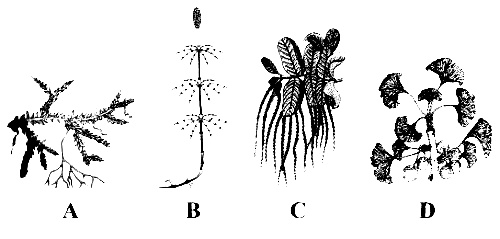
Examine the figures A, B, C and D. In which one of the four options all the items A, B, C and D are correct? AIPMT 2010 Mains Biology - Plant Kingdom Question 32 English
(A)
(A) Funaria, (B) Adiantum, (C) Salvinia, (D) Riccia
(B)
(A) Equisetum, (B) Ginkgo, (C) Selaginella, (D) Lycopodium
(C)
(A) Chara, (B) Marchantia, (C) Fucus, (D) Pinus
(D)
(A) Selaginella, (B) Equisetum, (C) Salvinia, (D) Ginkgo
(D)
Q.37
Root development is promoted by
(A)
abscisic acid
(B)
auxin
(C)
gibberellin
(D)
ethylene.
(D)

Solution

Ethylene promotes root growth and root hair formation. In low concentration ethylene is used for initiation of roots and also of lateral roots.
Q.38
One of the commonly used plant growth hormone in tea plantations is
(A)
ethylene
(B)
abscisic acid
(C)
Zeatin
(D)
indole-3-acetic acid.
(D)

Solution

Indole-3-acetic acid (also called auxin) is a phytohormone which is generally produced by the growing apices of the stems and roots, from where they migrate to the regions of their action. It is observed that the growing apical bud inhibits the growth of the lateral (axillary) bud (apical dominance).

Since apical meristem is the site of auxin synthesis, it is the physiological effect of the auxin which results in the phenomenon of apical dominance. When shoot tips is removed it usually results in the growth of lateral buds. This phenomenon is widely applied in tea plantations and hedge-making because as in tea plantation and industries, the apical bud is plucked for tea processing which results in more lateral buds thus enhancing plantation and further industrial purposes
Q.39
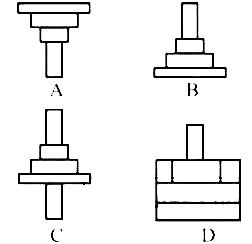
Which of the following representations shows the pyramid of numbers in a forest ecosystem ? AIPMT 2010 Mains Biology - Ecosystem Question 48 English
(1)
B
(2)
A
(3)
D
(4)
C
(1)

Solution

The representation of forest ecosystem in pyramid of numbers is always upright because higher trophic level comprising of tertiary consumers is generally smaller than that of the lower trophic levels (i.e., secondary consumer, than primary consumer and primary producer).
The pyramid of number is inverted in case of single tree producer which can provide nourishment to several herbivores such as birds which can further support larger population of ectoparasites.
Q.40
Which one of the following techniques is safest for the detection of cancers ?
(A)
Computed tomography (CT)
(B)
Magnetic resonance imaging (MRI)
(C)
Histopathological studies
(D)
Radiography (X-ray)
(B)

Solution

Histopathological study is the invasive technique. Radiography and CT involves X-rays which are harmful.
In MRI strong magnetic fields and non-ionising radiations are used to detect any physiological changes in the concerned tissue. Hence it is safe for detection of cancers.
Q.41
A person suffering from a disease caused by Plasmodium, experiences recurring chill and fever at the time when
(A)
the parasite after its rapid multiplication inside RBCs ruptures them, releasing the stage to enter fresh RBCs.
(B)
the trophozoites reach maximum growth and give out certain toxins
(C)
the sporozoites released from RBCs are being rapidily killed and broken down inside spleen
(D)
the microgametocytes and megagametocytes are being destroyed by the WBCs.
(A)

Solution

Plasmodium is a tiny protozoan which is responsible for malaria in the human. In malaria the patient experiences high fever which periodically rises and also experiences recurring chills with fever. Such symptoms are seen because when the RBCs carrying Plasmodium (one of the stage in the life cycle of the parasite) ruptures it releases a toxic substance called haemozoin which is chiefly responsible for the chill and high fever recurring every three to four days.
Q.42
The haemoglobin content per 100 ml of blood of a normal healthy human adult is
(A)
5 - 11 mg
(B)
25 - 30 mg
(C)
17 - 20 mg
(D)
12 - 16 mg.
(D)

Solution

The haemoglobin content per 100 ml of blood in a normal healthy human adult is actually found in the range of 12 - 16 grams. Therefore, the correct answer is Option D: 12 - 16 mg. However, it's important to note that there seems to be a mistake in the unit provided in the options. The correct unit should be grams (g) and not milligrams (mg), as haemoglobin content in blood is measured in grams per deciliter (g/dL). So, the correct expression reflecting normal haemoglobin levels should be 12 - 16 g/dL, not mg.

In general, average ranges for haemoglobin levels vary by age and sex, typically:

  • For men: 13.8 to 17.2 grams per deciliter

  • For women: 12.1 to 15.1 grams per deciliter

These levels can be affected by various factors including diet, physical activity, and medical conditions. It's essential for individuals to have their haemoglobin levels within the normal range as it's crucial for effectively transporting oxygen throughout the body. Deviations from the normal range can indicate different medical conditions that may require further investigation.

Q.43
Given below are four statements (i-iv) regarding human blood circulatory system.
(i)  Arteries are thick-walled and have narrow lumen as compared to veins.
(ii)  Angina is acute chest pain when the blood circulation to the brain is reduced.
(iii)  Persons with blood group AB can donate blood to any person with any blood group under ABO system.
(iv)  Calcium ions play a very important role in blood clotting.
Which two of the above statements are correct?
(A)
(i) and (iv)
(B)
(i) and (ii)
(C)
(ii) and (iii)
(D)
(iii) and (iv)
(A)

Solution

The term angina means chest pain. In this disease enough oxygen does not reach the heart muscles. The patient experiences heart pain usually in front of the chest.

AB blood group person have both antigens A and B, but do not have antibodies in the plasma. Due to the presence of both the antigens, AB blood group person cannot donate blood to anyone. However, the person can receive blood from any blood group as it has no antibodies. Thus, AB blood group is a universal recepient.
Q.44
Fastest distribution of some injectible material/medicine and with no risk of any kind can be achieved by injecting it into the
(A)
muscles
(B)
arteries
(C)
veins
(D)
lymph vessels.
(C)

Solution

The fastest distribution of an injectable material or medicine, with minimal risk, is achieved by injecting it into the veins, making Option C the correct answer. Here’s why:

  • Veins: When medicine is injected into the venous system (intravenously), it is quickly carried throughout the body by the bloodstream. The advantage of venous injection (IV injection) is the rapid onset of effects as the medicine is directly entered into the circulatory system, bypassing the need for absorption. This method also allows for precise control over the dosage and is used for substances that might be irritants or not effective if administered by other routes.
  • Arteries: Injecting a substance directly into an artery is far more dangerous and is rarely done outside of specialized medical procedures. The arterial system is under much higher pressure than the venous system, which increases the risk of complications, including arterial damage and the potential for creating embolisms that could cause strokes or other serious issues.
  • Muscles: Intramuscular injections are absorbed more slowly than intravenous injections because the blood flow to muscle tissues is less than to veins. This method is used for certain types of medication that need to be absorbed over a longer period. It's safer than arterial injection but slower in effect compared to venous injection.
  • Lymph Vessels: The lymphatic system is not designed for the fast distribution of substances throughout the body. It has a much slower flow than the circulatory system and is involved in managing the immune response and transporting waste and other materials out of the bodily tissues. Injection into the lymphatic system is not a common practice for administering medications for systemic effect.

In summary, intravenous injection (Option C) is the preferred route for the immediate and safest distribution of injectable substances throughout the body.

Q.45
Which one of the following pairs of structures is correctly matched with their corrected description ?
(A)
Structure Tibia and fibula, Description Both form parts of knee joint
(B)
Structure Shoulder joint and elbow joint, Description Ball and socket type of joint
(C)
Structure Cartilage and cornea, Description No blood supply but do require oxygen for respiratory need
(D)
Structure Premolars and molars, Description 20 in all and 3- rooted
(C)

Solution

Cartilage is avascular, as the blood vessels innervate only perichondrium through which nutrition diffuses into cartilage cells. Cornea is also avascular.
Q.46
Select the answer with correct matching of the structure, its location and function.
(A)
Structure Location Function
Eustachian tube Anteriror part of
internal ear
Equalizes air pressure
on either sides of tympanic
membrane
(B)
Structure Location Function
Cerebellum Mid Brain Controls respiration and
gastric secretions
(C)
Structure Location Function
Hypothalamus Fore Brain Controls body temperature,
urge for eating and drinking
(D)
Structure Location Function
Blind spot Near the place where
optic nerve leaves the eye
Rods and cones are
present but inactive here
(C)

Solution

Hypothalamus is the region of the forebrain in the floor of the third ventricle, linked with the thalamus above and the pituitary gland below. It contains several important centres controlling body temperature, thirst, hunger, and eating, water balance and sexual function. It is also closely connected with emotional activity and sleep and functions as a centre for the integration of hormonal and autonomic nervous activity through its control of the pituitary secretions.
Q.47
Jaundice is a disorder of
(A)
excretory system
(B)
skin and eyes
(C)
digestive system
(D)
circulatoy system.
(C)

Solution

Jaundice is a disorder in which skin and eyes turn yellow due to the deposition of bile pigment. This happens when bile made in the liver fails to reach the intestine due to obstruction of the bile duct. As a result, the bile is absorbed into the blood instead of going to the duodenum and cause yellowing of eyes and skin.
Q.48
If for some reason the parietal cells of the gut epithelium become partially non-functional, what is likely to happen?
(A)
The pancreatic enzymes and specially the trypsin and lipase will not work efficiently.
(B)
The pH of stomach will fall abruptly.
(C)
Steapsin will be more effective.
(D)
Proteins will not be adequately hydrolysed by pepsin into proteoses and peptones.
(D)

Solution

Parietal or oxyntic cells secrete HCl (due to which pH of stomach is highly acidic) and intrinsic factor. Parietal glands also secrete pepsinogen to which hydrochloric acid acts to convert it into pepsin. Pepsin in return causes digestion of proteins. If parietal cells become non-functional it will directly affect protein digestion.
Q.49
Signals from fully developed foetus and placenta ultimately lead to parturition which requires the releas of
(A)
Oxytocin from maternal pituitary
(B)
Oxytocin from foetal pituitary
(C)
Relaxin from placenta
(D)
Estrogen from placenta
(A)

Solution

Process of parturition is induced by both nervous system and hormones secreted by the endocrine glands of the mother. The signals for child birth (parturition) originate from the fully developed fetus and placenta which induce mild uterine contractions called fetal ejection reflex. This causes quick release of oxytocin from the maternal posterior lobe of pituitary gland which induces labour pains. Prostoglandins, progesterone and estrogen also play a role. Prolactin is the hormone which induces lactation and has no role in parturition.
Q.50
Secretions from which one of the following are rich in fructose, calcium and some enzymes?
(A)
Liver
(B)
Pancreas
(C)
Salivary glands
(D)
Male accessory glands
(D)

Solution

The male accessory glands include paired seminal vesicles, a prostate and paired bulbourethral glands. Secretions of these glands constitute the seminal plasma which is rich in fructose, calcium and certain enzymes. The secretions of bulbourethral glands also helps in the lubrication of the penis.
Q.51
In human female the blastocyst
(A)
gets implanted into uterus 3 days after ovulation
(B)
gets nutrition from uterine endometiral secretion only after implanation
(C)
gets implanted in endometrium by the trophoblast cells
(D)
forms placenta even before implantation
(C)

Solution

Implantation in endometrial uterine wall takes place at blastocyst stage of embryonic development. Before implantation, the blastomeres of early blastocyst get arranged into an outer layer called trophoblast and an inner group of cells attached to trophoblast called inner cell mass. It is the trophoblast layer through which blastocyst gets attached to the endometrium and the inner cell mass gets differentiated as the embryo.
Q.52
In which one of the following organisms its excretory organs are correctly stated?
(A)
Humans :-      Kidneys, Sebaceous glands and tear glands
(B)
Earthworm :-      Pharyngeal, integumentary and septal nephridia
(C)
Cockroach :-      Malpighian tubules and enteric caeca
(D)
Frog :-      Kidneys, skin and buccal epithelium
(B)

Solution

Nephridia is the excretory organ of the earthworm. Earthworms have three types of nephridial structures called as septal, integumentary and pharyngeal nephridia. These three nephridial structures are present on different positions in the body and also vary in structures.

Septal and pharyngeal nephridia are both enteronephric i.e., nitrogen products are expelled in gut. Integumentary nephridia is exonephric i.e., nitrogen waste products are directly discharged outside.
Q.53
Crocodile and penguin are similar to whale and dogfish in which one of the following features?
(A)
Possess a solid single stranded central nervous system
(B)
Lay eggs and guard them till they hatch
(C)
Possess bony skeleton
(D)
Have gill slits at some stage
(D)

Solution

Animals belonging to Phylum Chordata are fundamentally characterised by the presence of a notochord, a dorsal hollow nerve cord and paired pharyngeal gill slits. Crocodile, penguin, whale and dogfish are all chordates.

All of them have gill slits or have had it during embryonic development. Thus, paired gill slits are present in these animal at some stage of life.
Q.54
Given below are four statements (A-D) each with one or two blanks. Select the option which correctly fills up the blanks in two statements
Statements :
(A) Wings of butterfly and birds look alike and are the results of (i) , evolution
(B) Miller showed that CH4, H2, NH3 and (i), when exposed to electric discharge in a flask resulted in formation of (ii) .
(C) Vermiform appendix is a (i) organ and an (ii) evidence pf evolution.
(D) According to Darwin evolution took place due to (i) and (ii) of the fittest.
(A)
(C) - (i) vestigial, (ii) anatomical, (D) - (i) mutations, (ii) multiplication
(B)
(D) - (i) small variations, (ii) survival, (A) - (i) convergent
(C)
(A) - (i) convergent, (B) - (ii) oxygen, (ii) nucleosides
(D)
(B) - (i) water vapour, (ii) amino acids, (C) - (i) rudimentary (ii) anatomical
(B)
Q.55
The most apparent changes during the evolutionary history of Homo sapiens is traced in
(A)
Remarkable increase in the brain size
(B)
Walking upright
(C)
Loss of body hair
(D)
Shortening of the jaws
(A)

Solution

The brain capacity gradually increased from early human ancestors to modern man. Homo habilis had 650 - 800cc brain capacity which increased around 900cc in Homo erectus. The Neanderthal man (Homo neanderthalensis) had 1400cc brain capacity which evolved to around 1450cc in Homo sapiens.