NEET-UG 2014

AIPMT 2014

Physics (Maximum Marks: 180)
  • This section contains 45 questions.
  • Each question has FOUR options (A), (B), (C) and (D). ONLY ONE of these four options is the correct answer.
  • Full Marks : +4 If ONLY the correct option is chosen;
  • Zero Marks : 0 If none of the options is chosen (i.e. the question is unanswered);
  • Negative Marks : −1 In all other cases.
Q.1
If force (F), velocity (V) and time (T) are taken as fundamental units, then dimensions of mass are
(A)
(B)
(C)
(D)
(D)

Solution

Let mass

m =kFVbTc
where k is a dimensionless constant

Writing the dimensions on both sides, we get

=

=

Comparing both sides of the equation we get,

= 1                   ....(1)
2 + b = 0            ....(2)
-2 - b + c = 0            ....(3)

Solving equation (1), (2) and (3), we get

= 1, b = - 1, c = 1

Dimension of mass =
Q.2
A particle is moving such that is position coordinates (x, y) are (2 m, 3 m) at time t = 0, (6 m, 7 m)
at time t = 2 s and (13 m, 14 m) at time t = 5 s.

Average velocity vector from t = 0 to t = 5 s is
(A)
(B)
(C)
(D)
(D)

Solution


Q.3
A projectile is fired from the surface of the earth with a velocity of 5 m s1 and angle with the horizontal. Another projectile fired from another planet with a velocity of 3 m s1 at the same angle follows a trajectory which is identical with the trajectory of the projectile fired from the earth. The value of the acceleration due to gravity on the planet is (in m s2) is
(Given g = 9.8 m s2)
(A)
3.5
(B)
5.9
(C)
16.3
(D)
110.8
(A)

Solution

The equation of trajectory is


where is the angle of projection and u is the velocity with which projectile is projected. For equal trajectories and for same angles of projection,

= constant

According to the question,

where g' is acceleration due to gravity on the planet.

Q.4
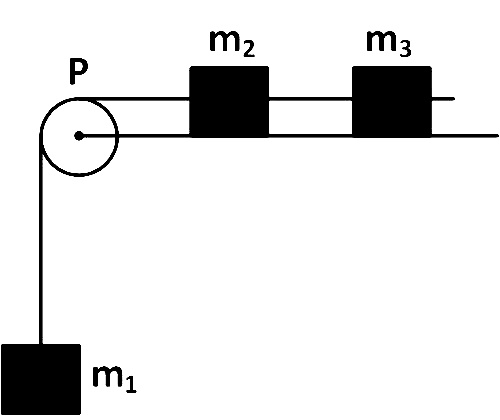
A system consists of three masses m1, m2 and m3 connected by a string passing over a pulley P. The mass m1 hangs freely and m2 and m3 are on a rough horizontal table (the coefficient of friction = ). The pulley is frictionless and of negligible mass. The downward acceleration of mass m1 is (Assume m1 = m2 = m3 = m)

AIPMT 2014 Physics - Laws of Motion Question 26 English
(A)
(B)
(C)
(D)
(C)

Solution

Force of friction on mass m2 = m2g

Force of friction on mass m3 = m3g

Let a be common acceleration of the system.


Here, m1 = m2 = m3 = m


Hence, the downward acceleration of mass m1 is
Q.5
A balloon with mass m is descending down with an acceleration a (where a < g). How much mass should be removed from it so that it starts moving up with an acceleration a ?
(A)
(B)
(C)
(D)
(A)

Solution

Let upthrust of air be Fa then

For downward motion of balloon

Fa = mg – ma

mg – Fa = ma

For upward motion


Q.6
A body of mass (4m) is lying in x-y plane at rest. It suddenly explodes into three pieces. Two pieces, each of mass (m) move perpendicular to each other with equal speeds (v). The total kinetic energy generated due to explosion is :
(A)
mv2
(B)
mv2
(C)
2mv2
(D)
4mv2
(B)

Solution

By conservation of linear momentum


AIPMT 2014 Physics - Center of Mass and Collision Question 31 English Explanation
As two masses of each of mass m move perpendicular to each other.
Total KE generated


Q.7
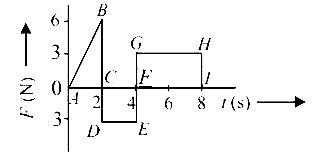
The force F acting on a particle of mass m is indicated by the force-time graph shown below. The change in momentum of the particle over the time interval from zero to 8 s is :

AIPMT 2014 Physics - Center of Mass and Collision Question 35 English
(A)
24 N s
(B)
20 N s
(C)
12 N s
(D)
6 N s
(C)

Solution

AIPMT 2014 Physics - Center of Mass and Collision Question 35 English Explanation Change in momentum = Area under F-t graph in that interval
= Area of ABC – Area of rectangle CDEF + Area of rectangle FGHI

= 2 6 - 3 2 + 4 3 = 12 N s
Q.8
A solid cylinder of mass 50 kg and radius 0.5 m is free to rotate about the horizontal axis. A massless string is wound round the cylinder with one end attached to it and other hanging freely. Tension in the string required to produce an angular acceleration of 2 revolutions s2 is
(A)
25 N
(B)
50 N
(C)
78.5 N
(D)
157 N
(D)

Solution

Here = 2 revolutions/s2 = 4 rad/s2 (given)


As so


= 50 N = 157 N
Q.9
The ratio of the accelerations for a solid sphere (mass m and radius R) rolling down an incline of angle without slipping and slipping down the incline without rolling is
(A)
5 : 7
(B)
2 : 3
(C)
2 : 5
(D)
7 : 5
(A)

Solution

Acceleration of the solid sphere slipping down the incline without rolling is

      ....(i)

Acceleration of the solid sphere rolling down the incline without slipping is


=    ... (ii)

Divide eqn. (ii) by eqn. (i), we get

Q.10
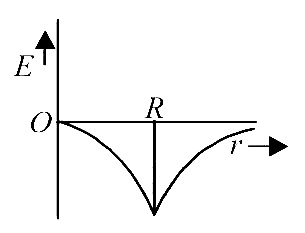
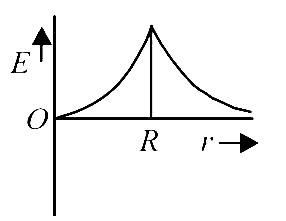
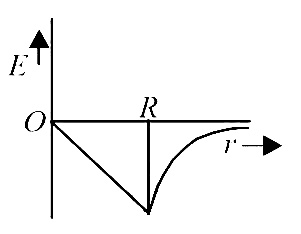
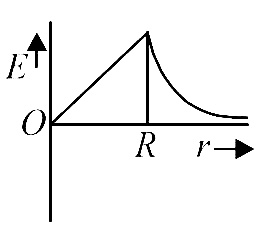
Dependence of intensity of gravitational field (E) of earth with distance (r) from centre of earth is correctly represented by
(A)
AIPMT 2014 Physics - Gravitation Question 56 English Option 1
(B)
AIPMT 2014 Physics - Gravitation Question 56 English Option 2
(C)
AIPMT 2014 Physics - Gravitation Question 56 English Option 3
(D)
AIPMT 2014 Physics - Gravitation Question 56 English Option 4
(A)

Solution

AIPMT 2014 Physics - Gravitation Question 56 English Explanation
For a point inside the earth i.e. r < R


where M and R be mass and radius of the earth respectively. At the centre, r = 0

E = 0

For a point outside the earth i.e. r > R,


On the surface of the earth i.e, r = R


The variation of E with distance r from the centre is as shown in the figure.
Q.11
A black hole is an object whose gravitational field is so strong that even light cannot escape from it. To what approximate radius would earth (mass = 5.98 1024 kg) have to be compressed to be a black hole?
(A)
109 m
(B)
106 m
(C)
102 m
(D)
100 m
(C)

Solution

From question, Escape velocity

= speed of light


= 10-2 m
Q.12
Steam at 100oC is passed into 20 g of water at 10oC. When water acquires a temperature of 80oC, the mass of water present will be
[Take specific heat of water = 1 cal g1 oC1 and latent heat of steam = 540 cal g1]
(A)
24 g
(B)
31.5 g
(C)
42.5 g
(D)
22.5 g
(D)

Solution

According to the principle of calorimetry.

Heat lost = Heat gained


m × 540 + m × 1 × (100 – 80)

= 20 × 1 × (80 – 10)

m = 2.5 g

Therefore total mass of water at 80°C

= (20 + 2.5) g = 22.5 g
Q.13
A certain number of spherical drops of a liquid of radius r coalesce to form a single drop of radius R and volume V. If T is the surface tension of the liquid, then
(A)
energy = 4VT is released.
(B)
energy = 3VT is absorbed.
(C)
energy = 3VT is released
(D)
energy is neither released nor absorbed.
(C)

Solution

As surface area decreases so energy is released.

Energy released =

where R = n1/3r

Q.14
Certain quantity of water cools from 70oC to 60oC in the first 5 minutes and to 54oC in the next 5 minutes. The temperature of the surroundings is
(A)
45oC
(B)
20oC
(C)
42oC
(D)
10oC
(A)

Solution

Let the temperature of surroundings be
By Newton's law of cooling


Similarly,


By dividing (i) by (ii) we have

Q.15
Copper of fixed volume V is drawn into wire of length . When this wire is subjected to a constant force F, the extension produced in the wire is . Which of the following graphs is a straight line ?
(A)
versus 1/
(B)
versus 2
(C)
versus 1/2
(D)
versus
(B)

Solution

From Young Modulus

Now

Also
Q.16
The mean free path of molecules of a gas, (radius r) is inversely proportional to
(A)
r3
(B)
r2
(C)
r
(D)
(B)

Solution

Mean free path

where d = diameter of molecule and d = 2r

Q.17
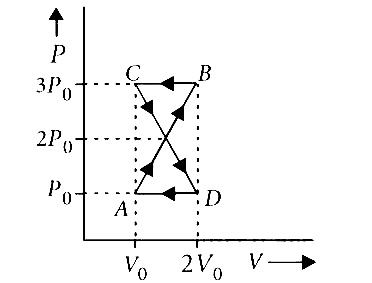
A thermodynamic system undergoes cyclic process ABCDA as shown in figure. The work done by the system in the cycle is

AIPMT 2014 Physics - Heat and Thermodynamics Question 73 English
(A)
P0V0
(B)
2P0V0
(C)
(D)
zero
(D)

Solution

AIPMT 2014 Physics - Heat and Thermodynamics Question 73 English Explanation In a cyclic process work done is equal to the area under the cycle and is positive if the cycle is clockwise and negative if anticlockwise. As is clear from figure,


The net work done by the system is


Q.18
A monatomic gas at a pressure P, having a volume V expands isothermally to a volume 2V and then adiabatically to a volume 16V. The final pressure of the gas is (Take = 5/3)
(A)
64P
(B)
32P
(C)
P/64
(D)
16P
(C)

Solution

First, isothermal expansion


Then, adiabatic expansion


(For adiabatic process, PV = constant)


Q.19
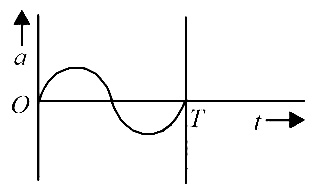
The oscillation of a body on a smooth horizontal surface is represented by the equation,
X = A cos
where X = displacement at time t
= frequency of oscillation
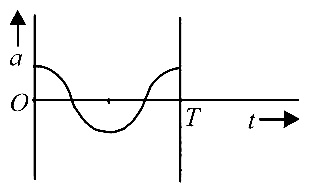
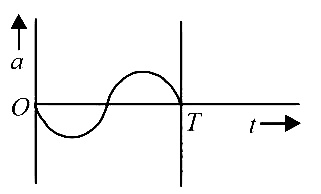
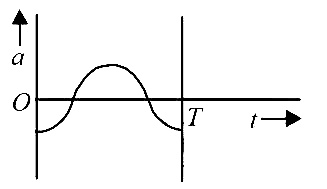
Which one of the following graphs shows correctly the variation a with t?
Here a = acceleration at time t
T = time period
(A)
AIPMT 2014 Physics - Oscillations Question 51 English Option 1
(B)
AIPMT 2014 Physics - Oscillations Question 51 English Option 2
(C)
AIPMT 2014 Physics - Oscillations Question 51 English Option 3
(D)
AIPMT 2014 Physics - Oscillations Question 51 English Option 4
(C)

Solution

Here, X = Acost

Velocity,


Acceleration,


Hence the variation of a with t is correctly shown by graph (c).
Q.20
The number of possible natural oscillations of air column in a pipe closed at one end length 85 cm whose frequencies lie below 1250 Hz are (Velocity of sound = 340 m s1)
(A)
4
(B)
5
(C)
7
(D)
6
(D)

Solution

Fundamental frequency of the closed organ pipe is


Here, v = 340 m s–1, L = 85 cm = 0.85 m


The natural frequencies of the closed organ pipe will be


= 100 Hz, 300 Hz, 500 Hz, 700 Hz, 900 Hz, 1100 Hz, 1300 Hz,... and so on

Thus, the natural frequencies lies below the 1250 Hz is 6.
Q.21
A speeding motorcyclist sees traffic jam ahead him. He slows down to 36 km hour1. He finds that traffic has eased and a car moving ahead of him at 18 km hour1 is honking at a frequency of 1392 Hz. If the speed of sound is 343 m s1, the frequency of the honk as heard by him will be
(A)
1332 Hz
(B)
1372 Hz
(C)
1412 Hz
(D)
1454 Hz
(C)

Solution

Here, speed of motorcyclist, vm = 36 km hour–1


Speed of car,


Frequency of source, = 1392 Hz

Speed of sound, v = 343 m s–1

The frequency of the honk heard by the motorcyclist is


Q.22
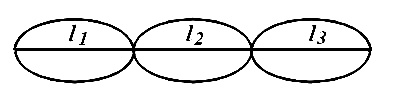
If n1, n2 and n3 are the fundamental frequencies of three segments into which a string is divided, then the original fundamental frequency n of the string is given by
(A)
(B)
(C)
(D)
n n1 + n2 + n3
(A)

Solution

AIPMT 2014 Physics - Waves Question 51 English Explanation


Also,


Q.23
A conducting sphere of radius R is given a charge Q. The electric potential and the electric field at the centre of the sphere rrespectively are
(A)
zero and
(B)
and zero
(C)
and
(D)
both are zero
(B)

Solution

For the conducting sphere,
Potential at the centre = Potential on the sphere


Electric field at the centre = 0
Q.24
In a region, the potential is represented by V(x, y, z) = 6x 8xy 8y + 6yz,   where is in volts and x, y, z are in metres. The electric force experienced by a charge of 2 coulomb situated at point (1, 1, 1) is
(A)
N
(B)
30 N
(C)
24 N
(D)
N
(D)

Solution


At (1, 1, 1),


Q.25
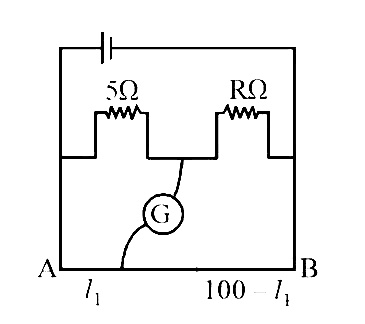
The resistances in the two arms of the meter bridge are 5 and R respectively. When the resistance R is shunted with an equal resistance, the new balance point is at 1.61. The resistance R is

AIPMT 2014 Physics - Current Electricity Question 104 English
(A)
10
(B)
15
(C)
20
(D)
25
(B)

Solution

This is a balanced wheatstone bridge condition,


and

Q.26
Two cities are 150 km apart. Electric power is sent from one city to another city through copper wires. The fall of potential per km is 8 volt and the average resistance per km is 0.5 . The power loss in the wire is
(A)
19.2 W
(B)
19.2 kW
(C)
19.2 J
(D)
12.2 kW
(B)

Solution

Total voltage drop across the wire : V = 150 × 8= 1200 volt

Total resistance of wire, (R) = 150 × 0.5 = 75

Hence, current through wire
I = V/R

I = 1200/75 =16 A

Finally the power loss will be,
P = I2R = (16)2 × 75

= 19200 W or 19.2 kW
Q.27
A potentiometer circuit has been set up for finding the internal resistance of a given cell. The main battery, used across the potentiometer wire, has an emf of 2.0 V and a negligible internal resistance. The potentiometer wire itself is 4 m long. When the resistance R, connected across the given cell, has values of (i) infinity,    (ii) 9.5
the balancing lengths on the potentiometer wire are found to be 3 m and 2.85 m, respectively. The value of internal resistance of the cell is
(A)
0.25
(B)
0.95
(C)
0.5
(D)
0.75
(C)

Solution

Internal resistance of the cell,


Q.28
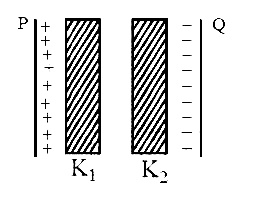
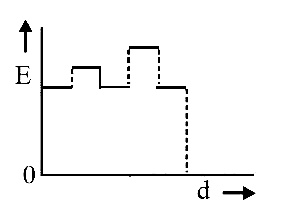
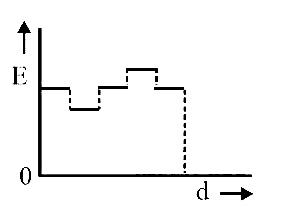
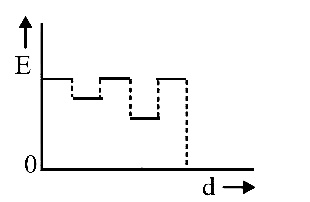
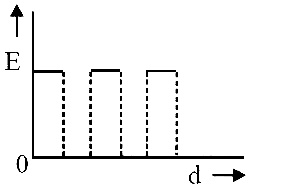
Two thin dielectric slabs of dielectric constants K1 and K2(K1 < K2) are inserted between plates of a parallel plate capacitor, as shown in the figure. The variation of electric field E between the plates with distance d as measured from plate P is correctly shown by
AIPMT 2014 Physics - Capacitor Question 34 English
(A)
AIPMT 2014 Physics - Capacitor Question 34 English Option 1
(B)
AIPMT 2014 Physics - Capacitor Question 34 English Option 2
(C)
AIPMT 2014 Physics - Capacitor Question 34 English Option 3
(D)
AIPMT 2014 Physics - Capacitor Question 34 English Option 4
(C)

Solution

Electric field,

As K1 < K2 so E1 > E2

Hence graph (c) correctly dipicts the variation of electric field E with distance d.
Q.29
In an ammeter 0.2% of main current passes through the galvanometer. If resistance of galvanometer is G, the resistance of ammeter will be
(A)
(B)
(C)
(D)
(C)

Solution

In parallel arrangement, I R

Now G/S = 99.8/0.2

S = G/499

Hence,
Q.30
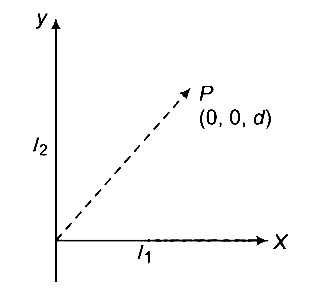
Two identical long conducting wires and are placed at right angle to each other, with one above other such that is their common point for the two. The wires carry 1 and 2 currents, respectively. Point is lying at distance f from along a direction perpendicular to the plane containing the wires. The magnetic field at the point will be
(A)
(B)
(C)
(D)
(D)

Solution

AIPMT 2014 Physics - Moving Charges and Magnetism Question 70 English Explanation


Q.31
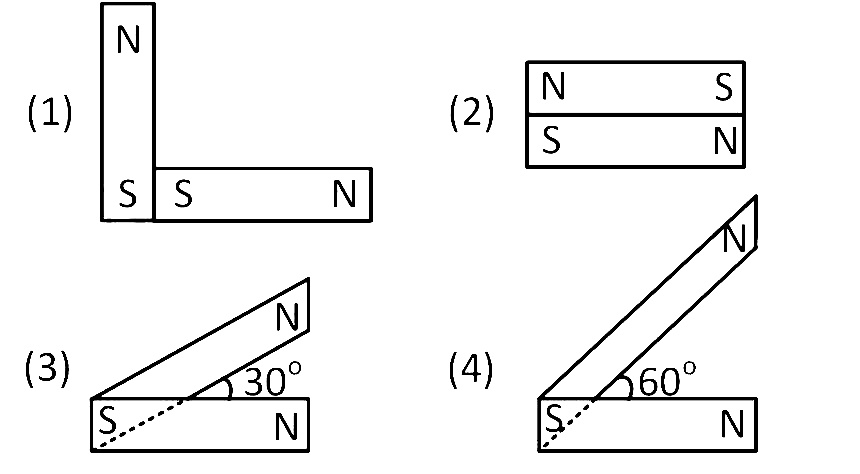
Following figures show the arrangement of bar magnets in different configurations. Each magnet has magnetic dipole moment Which configuration has highest net magnetic dipole moment ?

AIPMT 2014 Physics - Magnetism and Matter Question 42 English
(A)
(1)
(B)
(2)
(C)
(3)
(D)
(4)
(C)

Solution

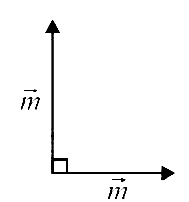
In configuration (1),

AIPMT 2014 Physics - Magnetism and Matter Question 42 English Explanation 1
mnet =

=

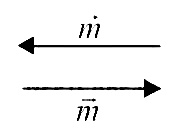
In configuration (2),

AIPMT 2014 Physics - Magnetism and Matter Question 42 English Explanation 2

mnet = m - m = 0

In configuration (3),

AIPMT 2014 Physics - Magnetism and Matter Question 42 English Explanation 3

mnet =

=

=

In configuration (4),

AIPMT 2014 Physics - Magnetism and Matter Question 42 English Explanation 4

mnet =

=
Q.32
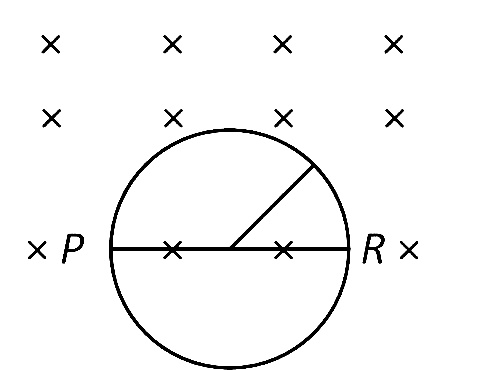
A thin semicircular conducting ring (PQR) of radius r is falling with its plane vertical in a horizontal magnetic field B, as shown in the figure.

AIPMT 2014 Physics - Electromagnetic Induction Question 28 English
The potential difference developed across the ring when its speed is , is
(A)
zero
(B)
and P is at higher potential
(C)
and R is at higher potential
(D)
2rBV and R is at higher potential
(D)

Solution

Potential difference that is developed across ring when its speed is v :

= B v (li – lf)

where, li – lf = displacement between end of semicircular ring = 2r

Hence, = Bv(2r) where R is at high potential.
Q.33
A transformer having efficiency of 90% is working on 200 V and 3 kW power supply. If the current in the secondary coil is 6 A, the voltage across the secondary coil and the current in the primary coil respectively are
(A)
300 V, 15 A
(B)
450 V, 15 A
(C)
450 V, 13.5 A
(D)
600 V, 15 A
(B)

Solution

Now Pp = VpIp or Ip = Pp/Vp

= 3000/200 = 15 A

Also, Vs = Ps/Is = 2700/6 = 450 V
Q.34
Light with an energy flux of 25 104 W m2 falls on a perfectly reflecting surface at normal incidence. If the surface area is 15 cm2, the average force exerted on the surface is
(A)
1.25 106 N
(B)
2.50 106 N
(C)
1.20 106 N
(D)
3.0 106 N
(B)

Solution

For a perfectly reflecting surface, the average force exerted on the surface is

F =

=

= 2.50 106 N
Q.35
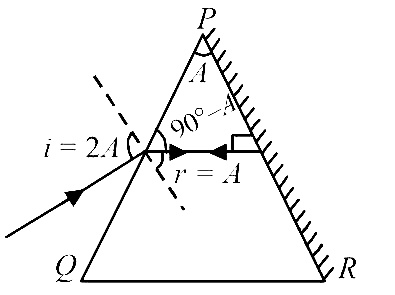
The angle of a prism is A. One of its refracting surfaces is silvered. Light rays falling at an angle of incidence 2 A on the first surface returns back through the same path after suffering reflection at the silvered surface.

The refractive index , of the prism is
(A)
2sinA
(B)
2cosA
(C)
cosA
(D)
tanA
(B)

Solution

AIPMT 2014 Physics - Geometrical Optics Question 70 English Explanation

Applying Snell’s law at surface PQ,

1sini = sinr

= = = 2cosA
Q.36
If the focal length of objective lens is increased then magnifying power of
(A)
microscope will increase but that of telescope decrease.
(B)
microscope and telescope both will increase.
(C)
microscope and telescope both will decrease.
(D)
microscope will decrease but that of telescope will increase.
(D)

Solution

Magnifying power of microscope

m =

So if fo increases, then m will decrease.

Magnifying power of telescope, m =

So if fo increases, then m will increase.
Q.37
In the Young's double slit experiment, the intensity of light at a point on the screen where the path difference is K, ( being the wavelength of light used). The intensity at a point where the path difference is /4 will be
(A)
K
(B)
K/4
(C)
K/2
(D)
zero
(C)

Solution

Phase difference, = Path difference

When path difference is , then

= = 2

I = 4I0 = 4I0cos2() = 4I0 = K ....(1)

When path difference is , then

= =

I = 4I0 = 2I0 =
Q.38
A beam of light of nm from a distant source falls on a single slit 1 mm wide and the resulting diffraction pattern is observed on a screen 2 m away. The distance between first dark fringes on either side of the central bright fringe is
(A)
1.2 cm
(B)
1.2 mm
(C)
2.4 cm
(D)
2.4 mm
(D)

Solution

Distance between the first dark fringes on either side of the central bright fringe is also the width of central maximum.

Width of central maximum =

=

= 24 × 10–4 m = 2.4 × 10⁻³ m = 2.4 mm
Q.39
Hydrogen atom in ground state is excited by a monochromatic radiation of = 975 . Number of spectral lines in the resulting spectrum emitted will be
(A)
3
(B)
2
(C)
6
(D)
0 10
(C)

Solution

Energy of radiation :

E = = 12.7 eV

After absorbing a photon of energy 12.75 eV, the electron will reach to third excited state of energy –0.85 eV, since energy difference corresponding to n = 1 and n = 4 is 12.75 eV.

Number of spectral lines emitted

= = 6
Q.40
The binding energy per nucleon of and nuclei are 5.60 MeV and 7.06 MeV respectively. In the nuclear reaction


the value of energy Q released is
(A)
19.6 MeV
(B)
2.4 MeV
(C)
8.4 MeV
(D)
17.3 MeV
(D)

Solution

Given:

Binding energy per nucleon of 3Li7 and 2He4 nuclei are 5.60 MeV and 7.06 MeV

Energy released = 7.06 × 8 – 5.60 × 7

= 17.3 MeV
Q.41
A radioactive X with a half life 1.4 109 years decays to Y which is stable. A sample of the rock from a cave was found to contain X and Y in the ratio 1 : 7. The age of the rock is
(A)
1.96 109 years
(B)
3.92 109 years
(C)
4.20 109 years
(D)
8.40 109 years
(C)

Solution

Using N = N0e–λt

Now 1 = 8e –λt

or, = e– (ln 2/T)t

or, = (2)–t/T

or, t/T = 3

Now time, t = 3 × 1.4 × 109 = 4.2 × 10⁹ years
Q.42
When the energy of the incident radiation is increased nby 20%, the kinetic energy of the photoelectrons emitted from a metal surface increased from 0.5 eV to 0.8 eV. The work function of the metal is
(A)
0.65 eV
(B)
1.0 eV
(C)
1.3 eV
(D)
1.5 eV
(B)

Solution

0.5 = E –

0.8 = 1.2 E –

From above expressions, work function = 1 eV
Q.43
If the kinetic energy of the particle is increased to 16 times its previous value, the percentage change in the de Broglie wavelength of the particle is
(A)
25
(B)
75
(C)
60
(D)
50
(B)

Solution

de-Broglie wavelength of particle,

= =


' =

So, % change in the de Broglie wavelength

= = 75%
Q.44
The barrier potential of a p-n junction depends on
(1)   type of semiconductor material
(2)   amount of doping

(3)   temperature

Which one of the following is correct ?
(A)
(1) and (2) only
(B)
(2) only
(C)
(2) and (3) only
(D)
(1), (2) and (3)
(D)

Solution

The barrier potential depends on type of semiconductor (For Si, Vb = 0.7 V and for Ge, Vb = 0.3 V), amount of doping and also on the temperature.
Q.45
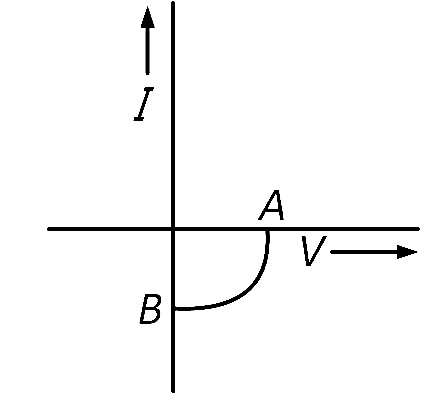
The given graph represents V-I characteristic for a semiconductor device.

AIPMT 2014 Physics - Semiconductor Electronics Question 105 English

Which of the following statement is correct ?
(A)
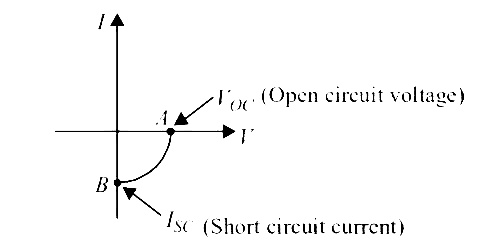
It is V-I characteristic for solar cell where, point A represents open circuit voltage and point B short circuit current.
(B)
It is for a solar cell and popints A and B represent open circuit voltage and current, respectively.
(C)
It is for a photodiode and points A and B represent open circuit voltage and current, respectively.
(D)
It is for a LED and points A and B represent open circuit voltage and short circuit current, respectively.
(A)

Solution

The V-I characteristic for a solar cell is as shown the figure. AIPMT 2014 Physics - Semiconductor Electronics Question 105 English Explanation
Chemistry (Maximum Marks: 180)
  • This section contains 45 questions.
  • Each question has FOUR options (A), (B), (C) and (D). ONLY ONE of these four options is the correct answer.
  • Full Marks : +4 If ONLY the correct option is chosen;
  • Zero Marks : 0 If none of the options is chosen (i.e. the question is unanswered);
  • Negative Marks : −1 In all other cases.
Q.1
Equal masses of H2, O2 and methane have been taken in a container of volume V at temperature 27oC in identical conditions. The ratio of the volumes of gases H2 : O2 : methane would be
(A)
8 : 16 : 1
(B)
16 : 8 : 1
(C)
16 : 1 : 2
(D)
8 : 1 : 2
(C)

Solution

According to Avogadro's hypothesis ratio of the volumes of gases will be equal to the ratio of their no. of moles.

So, no of moles =

nH2 = ; nO2 = ; nCH4 =

So, the ratio will be : : or 16 : 1 : 2
Q.2
1.0 g of magnesium is burnt with 0.56 g O2 in a closed vessel, Which reactant is left in excess and how much ? (At. wt. Mg = 24, O = 16)
(A)
Mg. 0.16 g
(B)
O2, 0.16 g
(C)
Mg, 0.44 g
(D)
O2 , 0.28 g
(A)

Solution

nMg = = 0.0416 moles

nO2 = = 0.0175 moles

Mg + MgO
Initial 0.0416 moles 0.0175 moles 0
Final ( 0.0416 - 2 x 0.0175)
= 0.0066 moles
0 2 x 0.0175

Mass of Mg left in excess = 0.0066 24 = 0.16 g
Q.3
When 22.4 liters of H2(g) is mixed with 11.2 litres of Cl2(g), each at S.T.P. the moles of HCl(g) formed is equal to
(A)
1 mol of HCl(g)
(B)
2 mol of HCl(g)
(C)
0.5 mol of HCl(g)
(D)
1.5 mol of HCl(g)
(A)

Solution

1 mole = 22.4 L at S.T.P

nH2 = = 1 mole

nCl2 = = 0.5 mole

H2 + Cl2 2HCl(g)
Initial 1 mol 0.5 mol 0
Final ( 1 - 0.5)
= 0.5 mol
(0.5 - 0.5)
= 0 mol
2 x 0.5
1 mol

Here Cl2 is limiting reagent. So 1 mole of HCl(g) is formed.
Q.4
What is the maximum number of orbitals that can be identified with the following quantum numbers ?
n = 3, l = 1, m1 = 0
(A)
1
(B)
2
(C)
3
(D)
4
(A)

Solution

Only one orbital 3p has following set of quantum numbers, n = 3, l = 1 and ml = 0
Q.5
Calculate the energy in joule corresponding to light of wavelength 45 nm. (Planck,s constant, h = 6.63 1034 J s, speed of light, c = 3 108 m s1)
(A)
6.67 1015
(B)
6.67 1011
(C)
4.42 1015
(D)
4.42 1018
(D)

Solution

E =

E =

= 4.42 10-18 J
Q.6
Be2+ is isoelectronic with which of the following ions ?
(A)
H+
(B)
Li+
(C)
Na+
(D)
Mg2+
(B)

Solution

Be2+ has 2 electrons and also Li+ has 2 electrons so Be2+ and Li+ are isoelectronic
Q.7
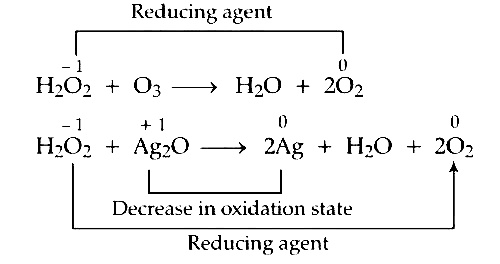
(I)   H2O2 + O3 H2O + 2O2
(II)   H2O2 + Ag2O 2Ag + H2O + O2
Role of Hydrogen peroxide in the above reactions is respectvely
(A)
oxidizing in (I) and reducing in (II)
(B)
reducing in (I) and oxidizing (II)
(C)
reducing in (I) and (II)
(D)
oxidizing in (I) and (II)
(C)

Solution

AIPMT 2014 Chemistry - Redox Reactions Question 20 English Explanation

So, H2O2 acts as reducing agent in all those reactions in which O2 is evolved.
Q.8
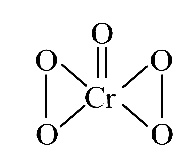
In acidic medium, H2O2 changes Cr2O72- to CrO5 which has two

(OO) bonds. Oxidation state of Cr in CrO5 is
(A)
+5
(B)
+3
(C)
+6
(D)
10
(C)

Solution

CrO5 has butterfly structure having two peroxo bonds.

AIPMT 2014 Chemistry - Redox Reactions Question 19 English Explanation

Peroxo oxygen has –1 oxidation state.

Let oxidation state of Cr be ‘x’

CrO5 : x + 4(–1) + 1 (–2) = 0

x = +6
Q.9
The pair of compounds that can exist together is
(A)
FeCl3, SnCl2
(B)
HgCl2, SnCl2
(C)
FeCl2, SnCl2
(D)
FeCl3, KI
(C)

Solution

Both FeCl2 and SnCl2 are reducing agents with low oxidation numbers.
Q.10
For the reversible reaction,
N2(g) + 3H2(g) 2NH3(g) + heat

The equilibrium shifts in forward direction
(A)
by increasing the concentration of NH3(g)
(B)
by decreasing the pressure
(C)
by decreasing the concentrations of N2(g) and H2(g)
(D)
by increasing pressure and decreasiing temperature.
(D)

Solution

According to Le-Chatelier’s principle, the equilibrium shifts in that direction so as to oppose the applied change.

Given reaction is exothermic reaction. Hence according to Le-Chatelier's principle low temperature favours the forward reaction and on increasing pressure equilibrium will shift, towards lesser number of moles i.e. forward direction.
Q.11
For a given exothermic reaction, Kp and K'p are the equilibrium constants at temperatures T1 and T2, respectively. Assuming that heat of reaction is constant in temperature range between T1 and T2, it is readily observed that
(A)
Kp > K'p
(B)
Kp < K'p
(C)
Kp = K'p
(D)
Kp =
(A)

Solution

log
K'p
Kp
=

For exothermic reaction, H = -ve means the temperature T2 is higher than T1.

is negative.

So log K'p - log Kp = -ve

log Kp > log K'p

Kp > K'p
Q.12
Using the Gibb's energy change, Go = +63.3 kJ, for the following reaction,

Ag2CO3(s) 2 Ag+(aq) + CO32 (aq)
the Ksp of Ag2CO3(s) in water at 25oC is
(R = 8.314 J K1 mol1)
(A)
3.2 1026
(B)
8.0 1012
(C)
2.9 103
(D)
7.9 102
(B)

Solution

We know, Go = – 2.303 RT log Ksp

63300 = – 2.303 × 8.314 × 298 log Ksp

log Ksp = -11.09

Ksp = 10-11.09

= 8.0 × 10⁻¹²
Q.13
Which of the following salts will give highest pH in water?
(A)
KCl
(B)
NaCl
(C)
Na2CO3
(D)
CuSO4
(C)

Solution

Na2CO3 is salt of strong base, NaOH and weak acid, H2CO3 hence the pH value of the solution will be high.
Q.14
Of the following 0.10 m aqueous solutions, which one will exhibit the largest freezing point depression?
(A)
KCl
(B)
C6H12O6
(C)
Al2(SO4)3
(D)
K2SO4
(C)

Solution

We know that depression in freezing point (Tf ) is given as

Tf = iKfm

So, Tf i

Thus, more value of i (Van’t Hoff factor), more will be depression in freezing point.

Al2(SO4)3 ⇌ 2Al+3 + 3SO42–

i is maximum i.e., 5 for Al2(SO4)3. .
Q.15
For the reaction,

U = 2.1 kcal, S = 20 cal K1 at 300 K

Hence, G is
(A)
2.7 kcal
(B)
2.7 kcal
(C)
9.3 kcal
(D)
9.3 kcal
(B)

Solution


Given


Again,

Given S = 20 10-3 kcal K-1

On putting the values of H and S in the equation, we get


Q.16
Which of the following statements is correct for the spontaneous adsorption of a gas?
(A)
S is negative and, therefore H should be highly positive.
(B)
S is negative and therefore, H should be highly negative.
(C)
S is positive and therefore, H should be negative .
(D)
S is positive and therefore, H should also be highly positive.
(B)

Solution

Using Gibb's-Helmholtz equation,


During adsorption of a gas, entropy decreases i.e, S < 0

For spontaneous adsorption, G should be negative, which is possible when H is highly negative.
Q.17
The weight of silver (at. wt. = 108) displaced by a quantity of electricity which displaces 5600 mL of O2 at STP will be
(A)
5.4 g
(B)
10.8 g
(C)
54.0 g
(D)
108.0 g
(D)

Solution

We know, from Faraday’s second law


g
Q.18
When 0.1 mol MnO is oxidised the quantity of electricity required to completely oxidise MnO to MnO is
(A)
96500 C
(B)
2 96500 C
(C)
9650 C
(D)
96.50 C
(C)

Solution

+ e-

Quantity of electricity required = 0.1F

= 0.1 × 96500 = 9650 C
Q.19
If is the length of the side of a cube, the distance between the body centered atom and one corner atom in the cube will be
(A)
(B)
(C)
(D)
(D)

Solution

The distance between the body centered atom and one corner atom is .
Q.20
Which property of colloids is not dependent on the charge on colloidal particles?
(A)
Coagulation
(B)
Electrophoresis
(C)
Electro-osmosis
(D)
Tyndall effect
(D)

Solution

Tyndall effect is due to the scattering of light by colloidal particles and not due to the charge.
Q.21
Which of the following orders of ionic radii is correctly represented ?
(A)
H > H > H+
(B)
Na+ > F > O2
(C)
F > O2 > Na+
(D)
A3+ > Mg2+ > N3
(A)

Solution

Cation loose electrons are smaller in size than the parent atom, where anions gain electrons are larger in size than the parent atom.

Hence the order is H- > H > H+
Q.22
Which one of the following species has plane triangular shape ?
(A)
N3
(B)
NO3
(C)
NO2
(D)
CO2
(B)

Solution

Hybridisation of N3 is sp, so it is linear in shape.

Hybridisation of NO3 is sp2, so it is plane triangular in shape.

Hybridisation of NO2 is sp, so it is linear in shape.

Hybridisation of CO2 is sp, so it is linear in shape.
Q.23
Which of the following molecules has the maximum dipole moment ?
(A)
CO2
(B)
CH4
(C)
NH3
(D)
NF3
(C)

Solution

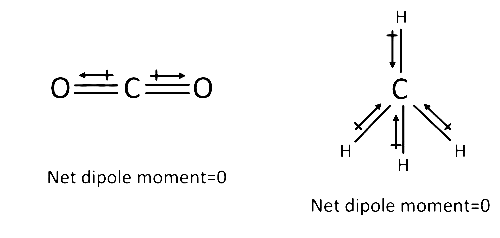
AIPMT 2014 Chemistry - Chemical Bonding and Molecular Structure Question 104 English Explanation 1

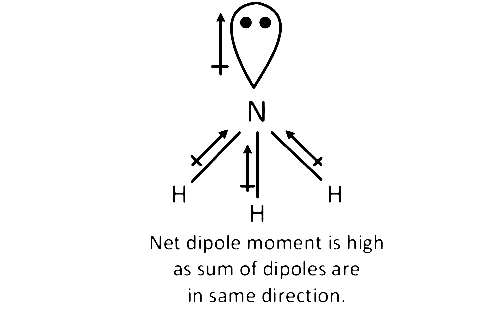
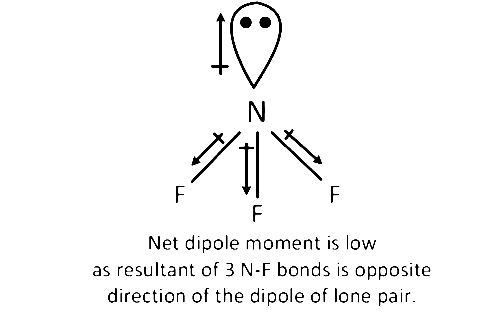
Even though for CO2 and CH4 the C - O and C - H bonds are polar but due to their symmetrical structure they have zero dipole moment. AIPMT 2014 Chemistry - Chemical Bonding and Molecular Structure Question 104 English Explanation 2 AIPMT 2014 Chemistry - Chemical Bonding and Molecular Structure Question 104 English Explanation 3
In NH3, H is less electronegative than N and hence the dipole moment of each N-H bond is towards N which is in the similar direction of lone pair but for NF3 the dipole moment of N-F bond is in opposite direction of lone pair which reduce the value of net dipole moment.
Q.24
Acidity of diprotic acids in aqueous solutions increases in the order
(A)
H2S < H2Se < H2Te
(B)
H2Se < H2S < H2Te
(C)
H2Te < H2S < H2Se
(D)
H2Se < H2Te < H2S
(A)

Solution

As the atomic size increases down the group the bond length increases and the bond strength decreases and the cleavage of E - H bond become easier thus, more will be the acidity. Thus, order of acidity will be

H2S H2Se H2Te
Q.25
Reason of lanthanoid contraction is
(A)
negligible screening effect of 'f'- orbitals
(B)
increasing nuclear charge
(C)
decreasing nuclear charge
(D)
decreasing screening effect.
(A)

Solution

The shape of f-orbitals is very much diffused and they have poor shielding effect. The effective nuclear charge increases which causes the contraction in the size of electron charge cloud. This contraction in size is quite regular and known as lanthanoid contraction.
Q.26
The reaction of aqueous KMnO4 with H2O2 in acidic conditions gives
(A)
Mn4+ and O2
(B)
Mn2+ and O2
(C)
Mn2+ and O3
(D)
Mn4+ and MnO2
(B)

Solution

Hydrogen peroxide is oxidised to H2O and O2.

2KMnO4 + 3H2SO4 + 5H2O2

            K2SO4 + 2MnSO4 + 8H2O + 5O2

Thus, Mn2+ and O2 are produced.
Q.27
Magnetic moment 2.83 BM is given by which of the following ions?
(At. nos. Ti = 22, Cr = 24, Mn = 25, Ni = 28)
(A)
Ti3+
(B)
Ni2+
(C)
Cr3+
(D)
Mn2+
(B)

Solution

Magnetic moment () =

For = 2.84

2.84 =

n = 2

Cr2+ – [Ar]3d44s0 , 4 unpaired electrons

Co2+ – [Ar]3d74s0 , 3 unpaired electrons

Ni2+ – [Ar]3d8 4s0 , 2 unpaired electrons

Ti3+ – [Ar]3d14s0 , 1 unpaired electron
Q.28
Which of the following complexes is used to be as an anticancer agent?
(A)
mer-[Co(NH3)3Cl3]
(B)
cis-PtCl2(NH3)2]
(C)
cis-K2[PtCl2Br2
(D)
Na2CoCl4
(B)

Solution

Among the options listed, Option B, cis-PtCl2(NH3)2], is the one used as an anticancer agent. This compound is commonly known as Cisplatin. It's a platinum-based drug used in chemotherapy and is effective in treating various types of cancers, including testicular, ovarian, and bladder cancer.

The effectiveness of Cisplatin in cancer treatment lies in its ability to form platinum-DNA adducts, which interfere with DNA repair mechanisms, leading to cell apoptosis (programmed cell death) in rapidly dividing cells, such as cancer cells.

Q.29
Among the following complexes the one which shows zero crystal field stabilization energy (CFSE) is
(A)
[Mn(H2O)6]3+
(B)
[Fe(H2O)6]3+
(C)
[Co(H2O)6]2+
(D)
[Co(H2O)6]3+
(B)

Solution

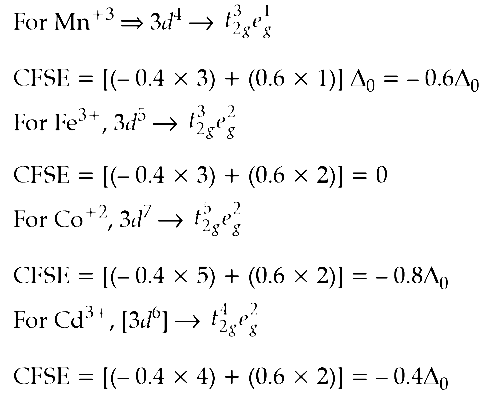
CFSE for octahedral complex

= [– 0.4 (t2g electrons) + 0.6 (eg electrons)] 0

AIPMT 2014 Chemistry - Coordination Compounds Question 92 English Explanation
Q.30
Which one of the following is not a common component of Photochemical smog?
(A)
Ozone
(B)
Acrolein
(C)
Peroxyacetyl nitrate
(D)
Chlorofluorocarbons
(D)

Solution

CFC (Chlorofluoro carbons) is not the component of photochemical smog.
Q.31
In the Kjeldahl's method for estimation of nitrogen present in a soil sample, ammonia evolved from 0.75 g of sample neutralized 10 mL of 1 M H2SO4. The percentage of nitrogen in the soil is
(A)
37.33
(B)
45.33
(C)
35.33
(D)
43.33
(A)

Solution

10 ml, 1 M H2SO4 = 20 ml, 1 M NH3

wt of N in one mole NH3 = 14

20 × 10–3 mol NH3 20 × 10–3 × 14 nitrogen

0.75 g of sample contains =

= 37.33%
Q.32
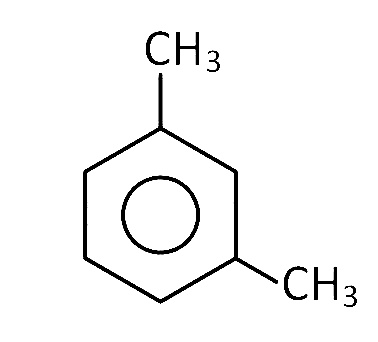
What products are formed when the following compound is treated with Br2 in the presence of FeBr3?

AIPMT 2014 Chemistry - Hydrocarbons Question 51 English
(A)
AIPMT 2014 Chemistry - Hydrocarbons Question 51 English Option 1
(B)
AIPMT 2014 Chemistry - Hydrocarbons Question 51 English Option 2
(C)
AIPMT 2014 Chemistry - Hydrocarbons Question 51 English Option 3
(D)
AIPMT 2014 Chemistry - Hydrocarbons Question 51 English Option 4
(C)

Solution

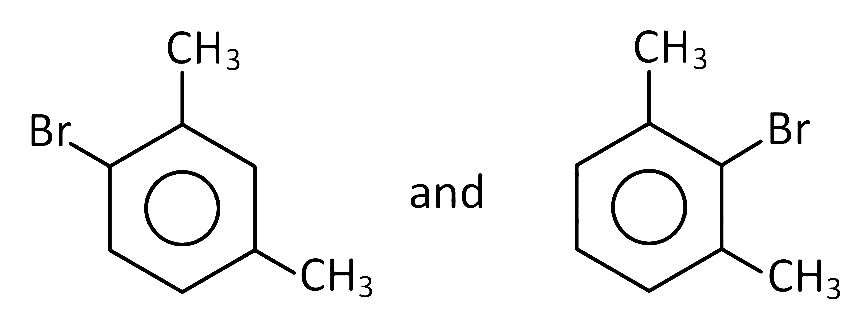
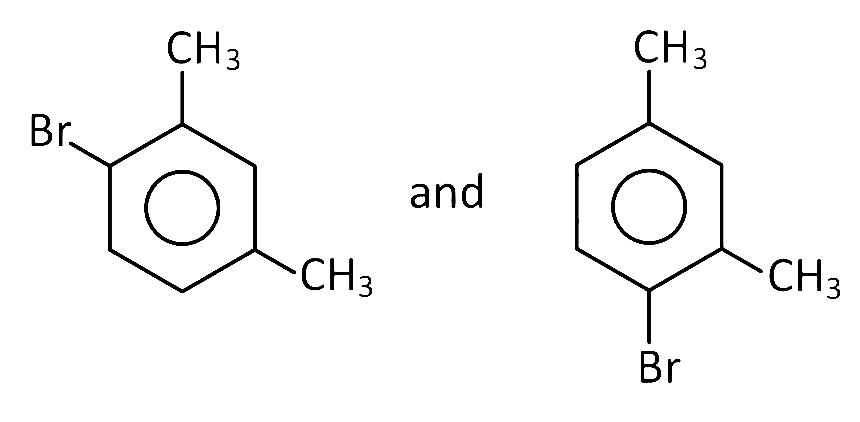
Methyl group is ortho para directing but due to steric hindrance effect, generated by two -CH3 groups substitution will not take place on position (I). Hence only two products are possible. AIPMT 2014 Chemistry - Hydrocarbons Question 51 English Explanation 1 AIPMT 2014 Chemistry - Hydrocarbons Question 51 English Explanation 2
Q.33
Which of the following organic compounds has same hybridization as its combustion product (CO2)?
(A)
Ethane
(B)
Ethyne
(C)
Ethene
(D)
Ethanol
(B)

Solution

The combustion reaction of ethylene is

C2O2 + O2 2CO2 + H2O

Both ethyne and CO2 have sp-hybridisation.
Q.34
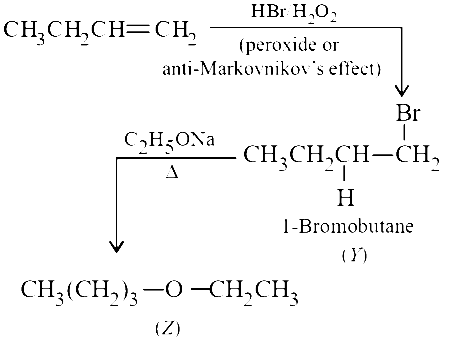
Identify Z in the sequence of reactions :
AIPMT 2014 Chemistry - Hydrocarbons Question 50 English
(A)
CH3 (CH2)3 O CH2CH3
(B)
(CH3)2CH O CH2CH3
(C)
CH3(CH2)4 O CH3
(D)
CH3CH2 CH(CH3) O CH2CH3
(A)

Solution

AIPMT 2014 Chemistry - Hydrocarbons Question 50 English Explanation
Q.35
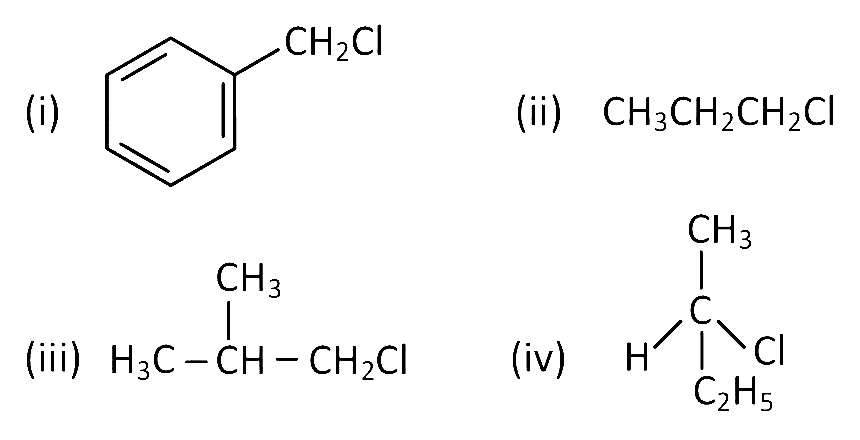
Which of the following compounds will undergo racemisation when solution of KOH hydrolyses?
AIPMT 2014 Chemistry - Haloalkanes and Haloarenes Question 24 English
(A)
(i) and (ii)
(B)
(ii) and (iv)
(C)
(iv)
(D)
(i) and (iv)
(C)

Solution

Out of the given four compounds only (iv) compound is chiral and hence only this compound will undergo racemisation.
Q.36
Which of the following will not be soluble in sodium hydrogen carbonate?
(A)
2, 4, 6 - Trinitrophenol
(B)
Benzoic acid
(C)
o-Nitrophenol
(D)
Benzenesulphonic acid
(C)

Solution

Acid reacts with sodium hydrogen carbonate as follows :

AIPMT 2014 Chemistry - Alcohol, Phenols and Ethers Question 49 English Explanation Among all the given options ortho-nitrophenol is weaker acid than HCO3 hence, it does not react with NaHCO3.
Q.37
Among the following sets of reactants which one produces anisole?
(A)
CH3CHO ; RMgX
(B)
C6H5OH ; NaOH ; CH3I
(C)
C6H5OH ; neutral FeCl3
(D)
C6H5CH3 ; CH3COCl ; AlCl3
(B)

Solution

Phenols react with alkyl halides in alkaline medium to form ethers. Therefore, AIPMT 2014 Chemistry - Alcohol, Phenols and Ethers Question 50 English Explanation
Q.38
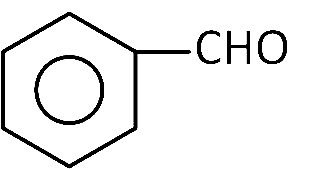
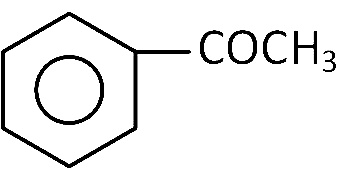
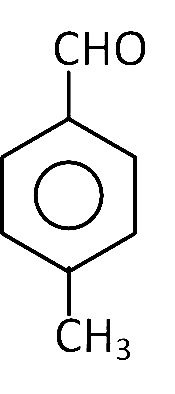
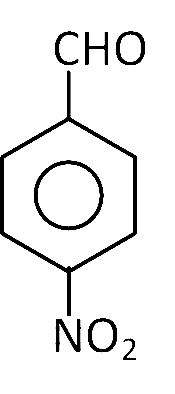
Which one is most reactive towards nucleophilic addition reaction?
(A)
AIPMT 2014 Chemistry - Aldehydes, Ketones and Carboxylic Acids Question 72 English Option 1
(B)
AIPMT 2014 Chemistry - Aldehydes, Ketones and Carboxylic Acids Question 72 English Option 2
(C)
AIPMT 2014 Chemistry - Aldehydes, Ketones and Carboxylic Acids Question 72 English Option 3
(D)
AIPMT 2014 Chemistry - Aldehydes, Ketones and Carboxylic Acids Question 72 English Option 4
(D)

Solution

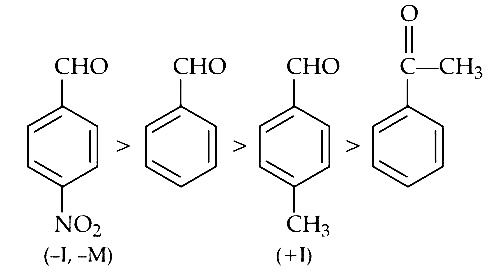
Electron withdrawing (–I, –M) groups are more reactive towards nucleophilic addition reactions. Thus, correct order is :
AIPMT 2014 Chemistry - Aldehydes, Ketones and Carboxylic Acids Question 72 English Explanation
Q.39
Which of the following will be most stable diazonium salt RN2+X?
(A)
CH3N2+X
(B)
C6H5N2+X
(C)
CH3CH2N2+X
(D)
C6H5CH2N2+X
(B)

Solution

Diazonium salt containing aryl group directly linked to the nitrogen atom is most stable due to resonance stabilization. AIPMT 2014 Chemistry - Organic Compounds Containing Nitrogen Question 45 English Explanation
Q.40
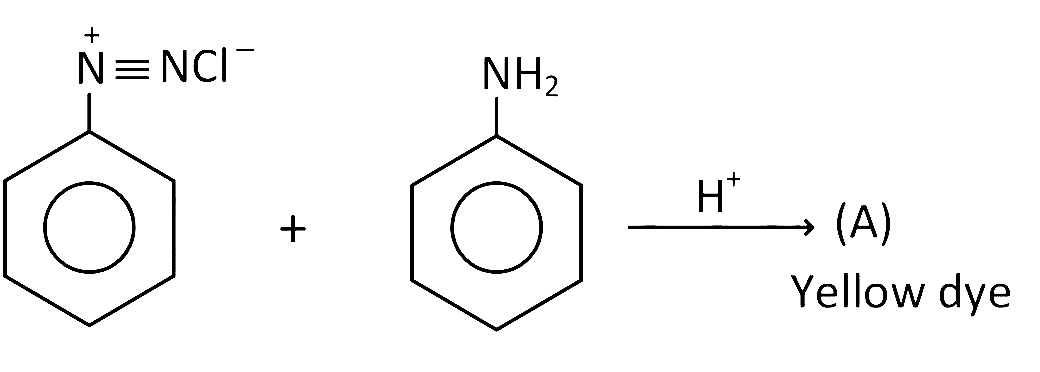
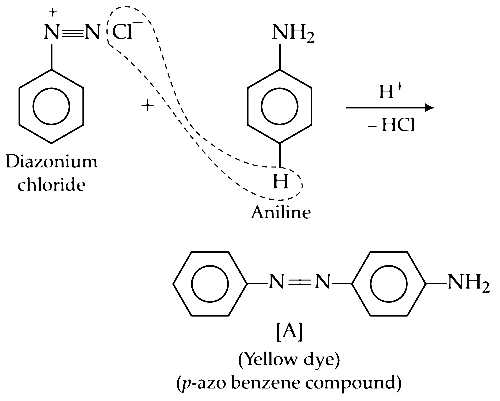
In the following reaction, the product (A) is
AIPMT 2014 Chemistry - Organic Compounds Containing Nitrogen Question 46 English
(A)
AIPMT 2014 Chemistry - Organic Compounds Containing Nitrogen Question 46 English Option 1
(B)
AIPMT 2014 Chemistry - Organic Compounds Containing Nitrogen Question 46 English Option 2
(C)
AIPMT 2014 Chemistry - Organic Compounds Containing Nitrogen Question 46 English Option 3
(D)
AIPMT 2014 Chemistry - Organic Compounds Containing Nitrogen Question 46 English Option 4
(D)

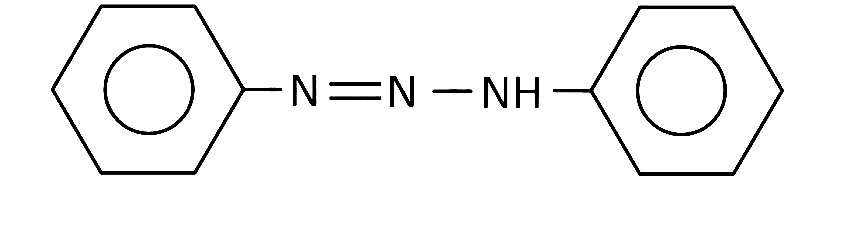
Solution

AIPMT 2014 Chemistry - Organic Compounds Containing Nitrogen Question 46 English Explanation
Q.41
Which of the following organic compounds polymerizes to form the polyester dacron?
(A)
Propylene and para HO(C6H4)OH
(B)
Benzoic acid and ethanol
(C)
Terephthalic acid and ethylene glycol
(D)
Benzoic acid and para HO(C6H4)OH
(C)

Solution

AIPMT 2014 Chemistry - Polymers Question 32 English Explanation
Q.42
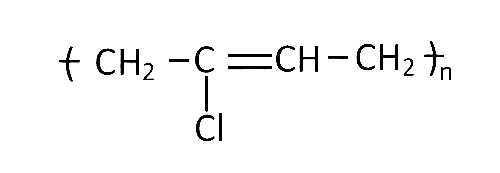
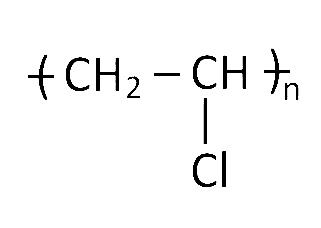
Which one of the following is an example of thermosetting polymer?
(A)
AIPMT 2014 Chemistry - Polymers Question 11 English Option 1
(B)
AIPMT 2014 Chemistry - Polymers Question 11 English Option 2
(C)
AIPMT 2014 Chemistry - Polymers Question 11 English Option 3
(D)
AIPMT 2014 Chemistry - Polymers Question 11 English Option 4
(D)

Solution

Thermosetting polymers undergo chemical changes when heated and set to hard mass when cooled e.g. Bakelite.
Q.43
Which of the following hormones is produced under the condition of stress which simulate glycogenlysis in the liver of human beings?
(A)
Thyroxin
(B)
Insulin
(C)
Adrenaline
(D)
Estradiol
(C)

Solution

Adrenaline is a hormone produced by adrenal glands during high stress or exciting situations. This powerful hormone is part of the human body’s acute stress response system, also called the fight or flight response
Q.44
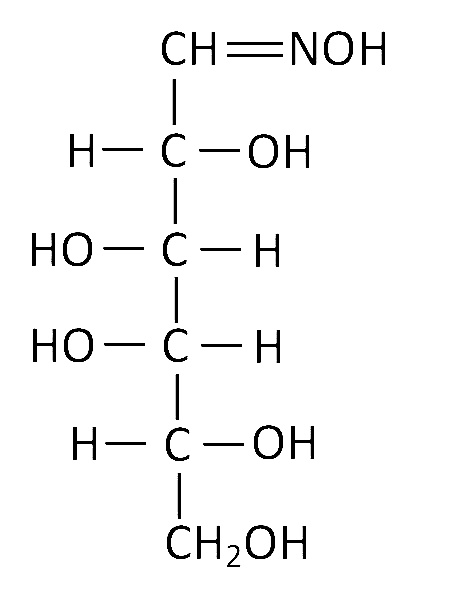
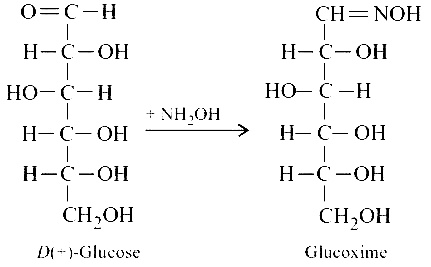
D(+)-glucose reacts with hydroxyl amine and yields an oxime. The structure of the oxime would be
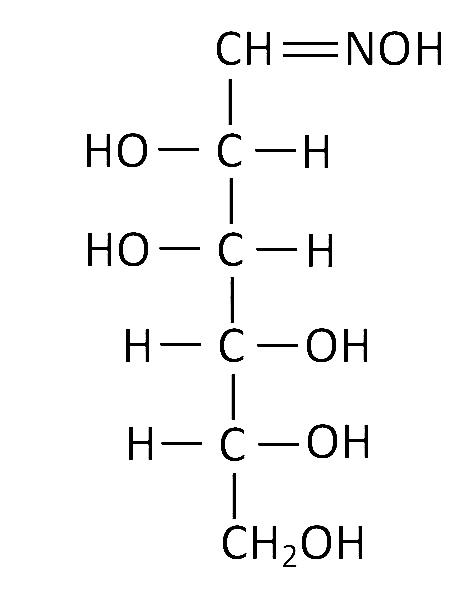
(A)
AIPMT 2014 Chemistry - Biomolecules Question 18 English Option 1
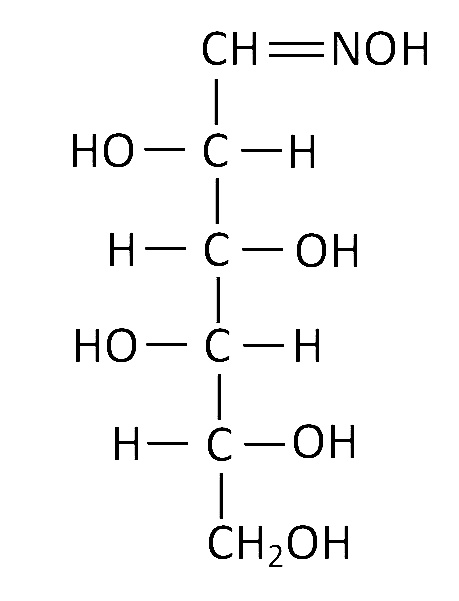
(B)
AIPMT 2014 Chemistry - Biomolecules Question 18 English Option 2
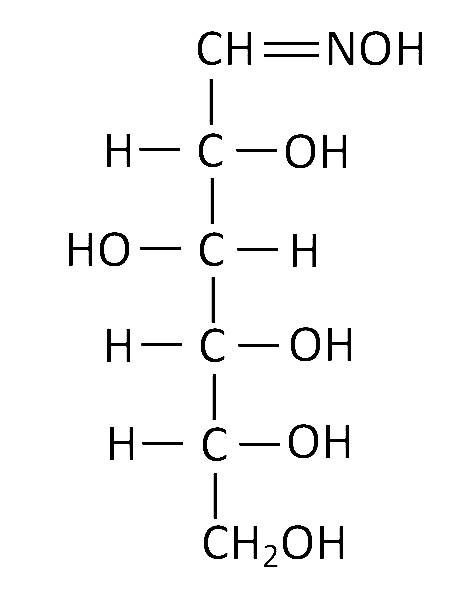
(C)
AIPMT 2014 Chemistry - Biomolecules Question 18 English Option 3
(D)
AIPMT 2014 Chemistry - Biomolecules Question 18 English Option 4
(D)

Solution

AIPMT 2014 Chemistry - Biomolecules Question 18 English Explanation
Q.45
Artificial sweetner which is stable under cold conditions only is
(A)
saccharine
(B)
sucralose
(C)
aspartame
(D)
alitame
(C)

Solution

Aspartame is stable under cold conditions.
Biology (Maximum Marks: 340)
  • This section contains 85 questions.
  • Each question has FOUR options (A), (B), (C) and (D). ONLY ONE of these four options is the correct answer.
  • Full Marks : +4 If ONLY the correct option is chosen;
  • Zero Marks : 0 If none of the options is chosen (i.e. the question is unanswered);
  • Negative Marks : −1 In all other cases.
Q.1
Match the following and select the correct answer :
(a) Centriole (i) Infoldings in mitochondria
(b) Chlorophyll (ii) Thylakoids
(c) Cristae (iii) Nucleic acid
(d) Ribozymes (iv) Basal body cilia or flagella
(A)
(a) (iv), (b) (iii), (c) (i), (d) (ii)
(B)
(a) (i), (b) (iii), (c) (ii), (d) (iv)
(C)
(a) (iv), (b) (ii), (c) (i), (d) (iii)
(D)
(a) (i), (b) (ii), (c) (iv), (d) (iii)
(C)

Solution

Centrosome is an organelle usually containing two cylindrical structures called centrioles. The centrioles form the basal body of cilia or flagella. In chloroplast a number of organised flattened membranous sacs called the thylakoids are present in the stroma. Chlorophyll pigments are present in the thylakoids. Each mitochondrion is a double membrane bound structure. The inner membrane forms a number of infoldings called the cristae towards the matrix. The cristae increase the surface area.
Q.2
The osmotic expansion of a cell kept in water is chiefly regulated by:
(A)
Vacuoles
(B)
Plastids
(C)
Mitochondria
(D)
Ribosomes
(A)

Solution

The vacuole is bound by a single membrane called tonoplast. It also functions as semipermeable membrane. It segregates vacuolar contents from cytoplasm, allows osmotic entry or exit of water, concentration and storage of nutrients as well as wastes.
Q.3
The solid linear cytoskeletal elements having a diameter of 6 nm and made up of a single type of monomer are known as:
(A)
Microfilaments
(B)
Lamins
(C)
Microtubules
(D)
Intermediate filaments
(A)

Solution

Microtubules are hollow microscopic tubular structures with an external diameter of 24 nm and of variable length. They are composed of tubulin. Intermediate filaments are the numerous microscopic protein fibres of about 10 nm thickness that form part of the cytoskeleton. They are made up of a variety of proteins e.g. keratin in nails.
Q.4
Which one of the following is a non - reducing carbohydrate?
(A)
Maltose
(B)
Sucrose
(C)
Lactose
(D)
Ribose 5-phosphate
(B)

Solution

Sucrose is classified under non reducing sugars because it does not have any free aldehyde or keto group.
Q.5
Select the option which is not correct with respect to enzyme action.
(A)
Substrate binds with enzyme at its active site.
(B)
Addition of lot of succinate does not reverse the inhibition of succinic dehydrogenase by malonate.
(C)
A non-competitive inhibitor binds the enzyme at a site distinct from that which binds the substrate.
(D)
Malonate is a competitive inhibitor of succinic dehydrogenase.
(B)

Solution

Inhibitions of succinic dehydrogenase by malonate is an example of competitive inhibition. Thus it is a reversible reaction. On increasing the substrate (succinate) concentration the effect of inhibitor is removed and Vmax remains same.
Q.6
In 'S' phase of the cell cycle
(A)
amount of DNA doubles in each cell
(B)
amount of DNA remains same in each cell
(C)
chromosomes number is increased
(D)
amount of DNA is reduced to half in each cell.
(A)

Solution

During S or synthesis phase, replication or duplication of chromosomal DNA and synthesis of histone proteins takes place. During this time the amount of DNA per cell doubles.
Q.7
The enzyme recombinase is required at which stage of meiosis?
(A)
Pachytene
(B)
Zygotene
(C)
Diplotene
(D)
Diakinesis
(A)

Solution

Pachytene is characterized by the appearance of recombination nodules, the sites at which crossing over occurs between non-sister chromatids of the homologous chromosomes. Nodules contain multienzyme complex called recombinase. Recombinase is made of endonuclease, exonuclease, unwindase, R-protein, etc.
Q.8
During which phase(s) of cell cycle, amount of DNA in a cell remains at 4C level if the initial amount is denoted as 2C?
(A)
G0 and G1
(B)
G1 and S
(C)
Only G2
(D)
G2 and M
(C)

Solution

In M-phase both 4C and 2C of DNA are present in different stages.
Q.9
An aggregate fruit is one which develops from
(A)
multicarpellary syncarpous gynoecium
(B)
multicarpellary apocarpus gynoecium
(C)
complete inflorescence
(D)
multicarpellary superior ovary.
(B)

Solution

Aggregate fruits (etaerio) develop from the multicarpellary apocarpous ovary. They are of following types; Etaerio of follicles, etaerio of achenes, etaerio of berries, etaerio of drupes.
Q.10
Which one of the following shows isogamy with non-flagellated gametes?
(A)
Sargassum
(B)
Ectocarpus
(C)
Ulothrix
(D)
Spirogyra
(D)

Solution

In Spirogyra, sexual reproduction occurs through conjugation. Gametes are non-flagellated, morphologically similar. But physiologically different (isogamy with physiological anisogamy).
Q.11
Geitonogamy involves
(A)
fertilization of a flower by the pollen from another flower of the same plant
(B)
fertilization of a flower by the pollen from the same flower
(C)
fertilization of a flower by the pollen from a flower of another plant in the same population
(D)
fertilization of a flower by the pollen from a flower of another plant belonging to a distant population.
(A)

Solution

Geitonogamy is the pollination taking place between the two flowers of the same plant or genetically similar plant. Hence, genetically it is self pollination but since the agency is involved, it is ecologically, cross pollination.
Q.12
Function of filiform apparatus is to
(A)
recognize the suitable pollen at stigma
(B)
stimulate division of generative cell
(C)
produce nectar
(D)
guide the entry of pollen tube.
(D)

Solution

In the ovule, the pollen tube is attracted by secretions of synergids. Usually the pollen tube enters the embryo sac by passing into one of the two synergids and is guided by the filiform apparatus of the synergids in their movement. Pollen tube then breaks open and releases its contents in the embryo sac. Antipodals and synergids later degenerate.
Q.13
Non-albuminous seed is produced in
(A)
maize
(B)
castor
(C)
wheat
(D)
pea.
(D)

Solution

Exalbuminous (non-endospermic) seeds usually store reserve food material in cotyledons. In these seeds, the endosperm is used up and not present in mature seeds, e.g., bean, gram and pea.
Q.14
Pollen tablets are available in the market for
(A)
in vitro fertilization
(B)
breeding programmes
(C)
supplementing food
(D)
ex situ conservation.
(C)

Solution

Pollen grains are rich in nutrients therefore used as food supplements. Athletes and race horses use these as tablets to enhance performance.
Q.15
An alga which can be employed as food for human being is :
(A)
Polysiphonia
(B)
Chlorella
(C)
Ulothrix
(D)
Spirogyra
(B)

Solution

Chlorella is a single celled chlorophycean alga with rich protein content. It is considered as a source of SCP (single cell protein) and also as food source during long space travels.
Q.16
Which one of the following fungi contains hallucinogens?
(A)
Morechella esculenta
(B)
Neurospora sp.
(C)
Amanita muscaria
(D)
Ustilago sp.
(C)

Solution

Several mushrooms such as Amanita muscaria, Psilocybe mexicana and Panaeolus spp. secrete hallucinogenic substances like psilocybin and psilocin. These substances may destroy brain cells and power of perception in human beings.
Q.17
What gases are produced in anaerobic sludge digesters ?
(A)
Methane and CO2 only
(B)
Methane, Hydrogen Sulphide and O2
(C)
Methane, Hydrogen Sulphide and CO2
(D)
Hydrogen Sulphide and CO2
(C)

Solution

Anaerobic digestion is a series of processes in which microorganisms break down biodegradable material in the absence of oxygen, used for industrial or domestic purposes to manage waste and/or to release energy. The process of anaerobic digestion produces a biogas, consisting of methane (it will burn), carbon dioxide (it does not burn) and traces of other contaminant gases.
Q.18
Tracheids differ from other tracheary elements in :
(A)
being imperforate
(B)
having casparian strips
(C)
lacking nucleus
(D)
being lignified
(A)

Solution

The walls of vessels (tracheary elements) are lignified and less thicker than tracheids. The lumen is wider. Vessels differ from tracheids in having cell fusions arising through the dissolution of end walls.
Q.19
You are given a fairly old piece of dicot stem and a dicot root. Which of the following anatomical structures will you use to distinguish between the two?
(A)
Secondary xylem
(B)
Protoxylem
(C)
Secondary phloem
(D)
Cortical cells
(B)

Solution

Anatomically fairly old dicotyledonous root is distinguished from the dicotyledonous stem by position of the protoxylem. In dicot root, the protoxylem is located near the periphery of the vascular cylinder while in dicot stem the protoxylem is located near the centre of vascular bundle i.e., the xylem is endarch.
Q.20
Deficiency symptoms of nitrogen and potassium are visible first in
(A)
senescent leaves
(B)
young leaves
(C)
roots
(D)
buds.
(A)

Solution

The parts of the plants that show the deficiency symptoms also depend on the mobility of the element in the plant. For element that are actively mobilised within the plants and exported to young developing tissues, the deficiency symptoms tend to appear first in the older tissues. For example, nitrogen, potassium and magnesium are visible first in the senescent leaves.
Q.21
In which one of the following processes CO2 is not released?
(A)
Aerobic respiration in plants
(B)
Areobic respiration in animals
(C)
Alcoholic fermentation
(D)
Lactic fermentation
(D)

Solution

Lactic acid fermentation : It occurs in lactic acid bacteria (Lactobacillus) and muscles (Human). Pyruvic acid produced in glycolysis is reduced by NADH2 to form lactic acid without producing carbon dioxide.
Q.22
Which vector can clone only a small fragment of DNA ?
(A)
Cosmid
(B)
Bacterial artificial chromosome
(C)
Yeast artificial chromosome
(D)
Plasmid
(D)

Solution

Plasmids are small extranuclear circular DNAs which carry extrachromosomal genes in bacteria and some fungi. They replicate independently. The best known vectors which are also available commerciallly are pBR322 and pUC-18.
Q.23
Commonly used vectors for human genome sequencing are :
(A)
BAC and YAC
(B)
T/A Cloning Vectors
(C)
T− DNA
(D)
Expression Vectors
(A)

Solution

Bacterial artificial chromosome (BAC) vectors are based on natural, extra-chromosomal plasmid of E. coli. BAC vector contains genes for replication and maintenance of the F-factor, a selectable marker and cloning site. These vectors can accommodate upto 300-350 kb of foreign DNA and are also being used in genome sequencing project. Yeast artificial chromosome (YAC) vectors are used to clone DNA fragments of more than 1Mb in size. Therefore, they have been exploited extensively in mapping the large genomes, e.g., in the Human Genome Project. These vectors contain the telomeric sequence, the centromere and the autonomously replicating sequence from yeast chromosomes.
Q.24
An analysis of chromosomal DNA using the Southern hybridization technique does not use:
(A)
Blotting
(B)
PCR
(C)
Electrophoresis
(D)
Autoradiography
(B)

Solution

PCR is used only for amplification of DNA. It is not directly involved in Southern hybridisation technique.
Q.25
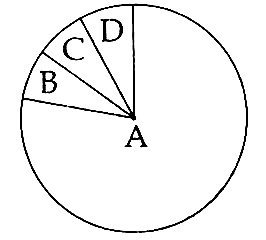
Given below is the representation of the extent of global diversity of invertebrates. What groups the four portions (A-D) represent respectively? AIPMT 2014 Biology - Biodiversity and Conservation Question 75 English
(A)
A Insects , B Crustaceans, C Other animal groups , D Molluscs
(B)
A Molluscs, B Other animal groups , C Crustaceans, D Insects
(C)
A Crustaceans, B Insects, C Molluscs, D Other animal groups
(D)
A Insects, B Molluscs, C Crustaceans, D Other animal groups
(D)

Solution

Arthropoda is the largest phylum of Animalia which includes insects. Over twothirds of all named species on earth are arthropods. They have organ system level of organisation. Mollusca is the second largest animal phylum. They are terrestrial or aquatic (marine or fresh).
Q.26
A species facing extremely high risk of extinction in the immediate future is called :
(A)
Vulnerable
(B)
Critically Endangered
(C)
Endemic
(D)
Extinct
(B)

Solution

The taxon under critically endangered category are facing very high risk of extinction in the wild and can become extinct at any moment in the immediate future.
Q.27
The organization which publishes the Red List of species is :
(A)
ICFRE
(B)
IUCN
(C)
UNEP
(D)
WWF
(B)

Solution

IUCN or WCN maintains a red data book which is a catalogue of threatened plants and animals facing risk of extinction. The IUCN red list (2004) documents the extinction of 784 species (including 338 vertebrates, 359 invertebrates and 87 plants) in the last 500 years.
Q.28
An example of ex situ conservation is :
(A)
National Park
(B)
Wildlife Sanctuary
(C)
Seed Bank
(D)
Sacred Grove
(C)

Solution

In Ex-situ conservation the threatened animals and plants are taken out of their natural habitat and are protected in special parks or areas like, Zoological parks, Wild life safari parks and Botanical gardens etc. The ex situ conservation also includes cryopreservation, fertilization of eggs in vitro and propagation of plants through ‘Tissue culture methods’, preservation of seeds through Seed banks.
Q.29
Viruses have
(A)
DNA enclosed in a protein coat
(B)
prokaryotic nucleus
(C)
single chromosome
(D)
both DNA and RNA.
(A)

Solution

All viruses are nucleoproteins (Nucleic acid + Protein) in the structure. The nucleic acid (DNA and RNA) is the genetic material. In a particular virus either DNA or RNA is the genetic material. Both are never present in a virus.

Single stranded RNA or ss RNA - Tobacco mosaic virus (TMV)

Virus envelope is known as capsid. The capsid is composed of protein subunits called capsomere.
Q.30
Which structures perform the function of mitochondria in bacteria?
(A)
Nucleoid
(B)
Ribosomes
(C)
Cell wall
(D)
Mesosomes
(D)

Solution

In some bacteria (e.g., Bacillus subtilis) the plasma membrane form certain invaginations or infoldings called mesosomes in the cytoplasm. The mesosomes have various functions, viz., respiratory, secretory etc.
Q.31
Five kingdom system of classification suggested by R.H. Whittaker is not based on
(A)
presence or absence of a well defined nucleus
(B)
mode of reproduction
(C)
mode of nutrition
(D)
complexity of body organisation.
(A)

Solution

The correct answer is Option A: presence or absence of a well defined nucleus.

Whittaker’s five kingdom classification was based mainly on the following criteria:

  • Cell structure

  • Complexity of body organisation

  • Mode of nutrition

  • Mode of reproduction

  • Phylogenetic relationships

So, although cell structure was considered, the specific criterion “presence or absence of a well-defined nucleus” is mainly used in the two broad groups: prokaryotes and eukaryotes, and is not listed as the main basis in the way the other options are.

Hence, the system is not based on Option A.

Final answer: A

Q.32
Which of the following shows coiled RNA strand and capsomeres?
(A)
Polio virus
(B)
Tobaco mosaic virus
(C)
Measles virus
(D)
Retrovirus
(B)

Solution

Tobacco mosaic virus is a RNA virus that causes tobacco mosaic disease. It has single stranded coiled RNA molecule as its genetic material a part of which hangs outside the protein coat. Protein coat consists of approximately 2130 capsomeres which are helically arranged to form a hollow cylinder of about 4 nm diameter.
Q.33
Anoxygenic photosynthesis is characteristic of
(A)
Rhodospirillum
(B)
Spirogyra
(C)
Chlamydomonas
(D)
Ulva.
(A)

Solution

In Rhodospirillum, electron donor is organic compound during photosynthesis.
Q.34
Archaebacteria differ from eubacteria in
(A)
cell membrane structure
(B)
mode of nutrition
(C)
cell shape
(D)
mode of reproduction.
(A)

Solution

Archaebacteria differ from other bacteria in having a different cell wall structure. They lack peptidoglyan in cell wall and possess a monolayer of branched fatty acids attached to glycerol by ether bonds in their cell membranes.
Q.35
The motile bacteria are able to move by
(A)
fimbriae
(B)
flagella
(C)
cilia
(D)
pili.
(B)

Solution

Flagellum is the organ of motility in bacteria. Bacterial flagella are unistranded, equivalent to a single microtubular fibre and formed of protein called flagellin. They perform rotatory movements.
Q.36
Placenta and pericarp are both edible portions in
(A)
apple
(B)
banana
(C)
tomato
(D)
potato
(C)

Solution

A true fruit consists of a pericarp (fruit wall) formed from ovary wall and seeds formed from ovules. Pericarp is divisible into epicarp, mesocarp and endocarp. Tomato is a berry fruit derived from bicarpellary, syncarpous, bi-to tetralocular ovary with swollen placentae. Berry consists of a membranous skin represented by epicarp. Mesocarp is the middle fleshy part. Endocarp, septa and placentae are pulpy and edible. All parts of the fruit, except the small seeds, are edible.
Q.37
When the margins of sepals or petals overlap one another without any particular direction, the condition is termed as
(A)
vexillary
(B)
imbricate
(C)
twisted
(D)
valvate.
(B)

Solution

If the margins of sepals or petals overlap one another but not in any particular direction as in Cassia and gulmohur, the aestivation is called imbricate.
Q.38
An example of edible underground steam is
(A)
carrot
(B)
groundnut
(C)
sweet potato
(D)
potato.
(D)

Solution

Carrot and sweet potato are root modifications while edible part of groundnut is seeds. Potato is an edible underground stem.
Q.39
Which one of the following statements is correct?
(A)
They seed in grasses is not endospermic.
(B)
Mango is a parthenocarpic fruit.
(C)
A proteinaceous aleurone layer is present in maize grain.
(D)
A sterile pistil is called a staminode.
(C)

Solution

Generally, monocotyledonous seeds (e.g., grasses) are endospermic but some as in orchids are non-endospermic. Mango is a drupe fruit that develops from multicarpellary, syncarpous, superior ovary having one or many seeds. A sterile stamen is called a staminode. In monocots, outer covering of endosperm separates the embryo by a proteinous layer called aleurone layer.
Q.40
Select the correct option ;
(A)
Direction of RNA synthesis 3’−5’, Direction of reading of the template DNA strand 5’−3’
(B)
Direction of RNA synthesis 5’−3’, Direction of reading of the template DNA strand 5’−3’
(C)
Direction of RNA synthesis 5’−3’, Direction of reading of the template DNA strand 3’−5’
(D)
Direction of RNA synthesis 3’−5’, Direction of reading of the template DNA strand 3’−5’
(C)

Solution

RNA polymerase initiates and extends the RNA (chain elongation) and functions always in 5' to 3' direction. The structural component of DNA has 3' to 5' polarity. It is also called template DNA strand or antisense (–) strand.
Q.41
Transformation was discovered by :
(A)
Griffith
(B)
Watson and Crick
(C)
Hershey and Chase
(D)
Meselson and Stahl
(A)

Solution

Frederick Griffith (in 1928), a British Medical officer described the phenomenon of bacterial transformation. He carried out experiment with Streptococcus pneumoniae (bacterium causing pneumonia) which is used to infect mice. By using S Strain (heat killed) and R strain (live) it was concluded that R strain has been transformed by some material of S strain which makes R strain virulent and enable to synthesize smooth polysachharide.
Q.42
Which one of the following is wrongly matched?
(A)
Transcription − Writing information from DNA to t−RNA
(B)
Operon − Structural genes, operator and promoter
(C)
Repressor protein − Binds to operator to stop enzyme synthesis
(D)
Translation − Using information in m−RNA to make protein.
(A, B)

Solution

Process of copying genetic information from DNA to RNA is called transcription. At a time only one DNA strand is being transcribed into RNA. The strand of DNA with polarity 3’ → 5’ act as template strand and the DNA strand with polarity 5’ → 3’ act as coding strand.
Q.43
In vitro clonal propagation in plants is characterized by :
(A)
Microscopy
(B)
Northern blotting
(C)
Electrophoresis and HPLC
(D)
PCR and RAPD
(D)

Solution

Clonal propagation can be characterized by PCR and RAPD. The polymerase chain reaction (PCR) technique, generates microgram (g) quantities of DNA copies (upto billion copies) of the desired DNA (or RNA) segment, present even as a single copy in the initial preparation, in a matter of few hours. RAPD stands for Random Amplification of Polymorphic DNA. It is a type of PCR, but the segments of DNA that are amplified are random. No knowledge of the DNA sequence for the targeted gene is required, as the primers will bind somewhere in the sequence, but it is not certain exactly where. Its resolving power is much lower than targeted, species specific DNA comparison methods, such as short tandem repeats.
Q.44
The first human hormone produced by recombinant DNA technology is :
(A)
Estrogen
(B)
Insulin
(C)
Thyroxin
(D)
Progesterone
(B)

Solution

Mammalian hormones were among the first products prepared in bacteria by r-DNA technology. Human insulin and human growth hormone are earliest examples.
Q.45
To obtain virus−free healthy plants from a diseased one by tissue culture technique, which part/parts of the diseased plant will be taken ?
(A)
Epidermis only
(B)
Palisade parenchyma
(C)
Both apical and axillary meristems
(D)
Apical meristem only
(C)

Solution

To obtain virus - free healthy plants from a diseased one by tissue culture technique, both apical and axillary meristems of the diseased plant will be taken. Plant tissue culture is used to maintain or grow plant cells, tissues or organs under sterile conditions on a nutrient culture medium of known composition. Plant tissue culture is widely used to produce clones of a plant in a method known as micro propagation.
Q.46
Just as a person moving from Delhi to Shimla to escape the heat for the duration of hot summer, thousands of migratory birds from Siberia and other extremely cold northern regions move to:
(A)
Keolado National Park
(B)
Meghalaya
(C)
Corbett National Park
(D)
Western Ghat
(A)

Solution

The Keoladeo National Park is a famous avifauna sanctuary in India that plays host to thousands of birds especially during the summer season. It is formerly known as the Bharatpur Bird Sanctuary in Bharatpur, Rajasthan. October to February is the best time, for the migratory birds are there as well as the residents. In August local birds start their nest building and rear their young for the next few months. October/November is when the migrants arrive. Most stay till March including the Siberian Crane.
Q.47
The zone of atmosphere in which the ozone layer is present is called :
(A)
Mesosphere
(B)
Stratosphere
(C)
Ionosphere
(D)
Troposphere
(B)

Solution

The ozone (O3) found in upper part of the atmosphere, i.e., Stratosphere, is Good ozone, since, it acts as a shield for absorbing UV-radiations from sun.
Q.48
A location with luxuriant growth of lichens on the trees indicates that the :
(A)
trees are very healthy
(B)
trees are heavily infested
(C)
location is highly polluted
(D)
location is not polluted
(D)

Solution

Lichens are very good pollution indicators, they do not grow in pollutted areas. They are sensitive to sulphur dioxide pollution.
Q.49
A scrubber in the exhaust of a chemical industrial plant removes :
(A)
particulate matter of the size 5 micrometer or above
(B)
particulate matter of the size 2.5 micrometer or less
(C)
gases like ozone and methane
(D)
gases like sulphur dioxide
(D)

Solution

Dust separation is carried out by scrubbers. They are of two types, dry and wet. Both can be used to separate particulate matter by passing through dry or wet packing material but more commonly they are employed in removing gaseous pollutants like SO2.
Q.50
Which of the following is responsible for peat formation?
(A)
Marchanita
(B)
Riccia
(C)
Funaria
(D)
Sphagnum
(D)

Solution

Among the bryophytes Sphagnum accounts by far the most important place economically. It is popularly called bog moss or peat moss. It is perennial and its growth continues year after year. Older portions undergo death but do not decompose due to secretion of acid that accounts for the antibacterial and antifungal actions.

The increasing mass of dead remains accumulate year after year and form a compact dark coloured mass rich in carbon which is called peat. Peat is used as fuels. Paraffin, acetic acid, peat tar and ammonia are formed as by-products of peat obtained for industrial uses.
Q.51
Which one of the following is wrong about Chara?
(A)
Upper oogonium and lower round antheridium
(B)
Globule and nucule present on the same plant
(C)
Upper antheridium and lower oogonium
(D)
Globule is male reproductive structure
(C)

Solution

Chara is a green alga found attached to bottoms of shallow water of ponds, pools and lakes. Male sex organ is called antheridium. Female sex organ is called oogonium. Oogonium is borne at the top of the four celled filament.
Q.52
Male gametophyte with least number of cells is present in
(A)
Pteris
(B)
Funaria
(C)
Lilium
(D)
Pinus.
(C)

Solution

Pteris has a multicellular gametophytic prothallus which has both antheridia and archegonia. Funaria has a bisexual leafy gametophyte which is the dominant phase of life.

In both Lilium (an angiosperm) and Pinus (a gymnosperm) male gametophyte is highly reduced and is 2 celled and 3 celled respectively. Thus male gametophyte with least number of cells is present in Lilium.
Q.53
A few normal seedlings of tomato were kept in a dark room. After a few days they were found to have become white -coloured like albinos. Which of the following terms will you use to describe them?
(A)
Mutated
(B)
Embolised
(C)
Etiolated
(D)
Defoliated
(C)

Solution

Etiolation is the abnormal form of growth observed when plants grow in darkness or severely reduced light. Such plant characteristically have branched leaves and shoots, excessively long shoots and reduced leaves and root systems.
Q.54
Which one of the following growth regulators is known as 'stress hormone'?
(A)
Abscisic acid
(B)
Ethylene
(C)
GA3
(D)
Indole acetic acid
(A)

Solution

Abscisic Acid (ABA) is called stress hormone which works in adverse environmental condition when there is low water content in atmosphere or in drought conditions. ABA causes the stomatal closure of leaves due to which the water loss by the plant is minimized.
Q.55
Dr. F. went noted that if coleoptile tips were removed and placed on agar for one hour, the agar would produce a bending when placed on one side of freshly-cut coleoptile stumps. Of what significance is this experiment?
(A)
It made possible the isolation and exact identification of auxin.
(B)
It is the basis for quantitative determination of small amounts of growth-promoting substances.
(C)
It supports the hypothesis that 1AA is auxin.
(D)
It demonstrated polar movement of auxins.
(A)

Solution

Charles Darwin and his son Francis Darwin observed that the coleoptiles of Oat (Avena sativa) and canary grass (Phalaris canariensis) responded to unilateral illumination by growing towards the light source (phototropic curvature or phototropism). After a series of experiments, it was concluded that the tip of the coleoptile was the site of production of a substance, that caused the bending of coleoptile.
Q.56
Match the following and select the correct option:
(a) Earthworm (i) Pioneer species
(b) Succession (ii) Detritivore
(c) Ecosystem service (iii) Natality
(d) Population growth (iv) Pollination
(A)
(a) (i), (b) (ii), (c) (iii), (d) (iv)
(B)
(a) (iii), (b) (ii), (c) (iv), (d) (i)
(C)
(a) (iv), (b) (i), (c) (iii), (d) (ii)
(D)
(a) (ii), (b) (i), (c) (iv), (d) (iii)
(D)

Solution

Detrivores, (e.g. earthworm) break down detritus into smaller particles. The species that invade a bare area in succession is called pioneer species. The products of ecosystem processes are termed as ecosystem services, e.g., healthy forest ecosystems purify air and water, mitigate droughts and floods etc. Natality refers to number of births during a given period in the population.
Q.57
Given below is a simplified model of phosphorus cycling in a terrestrial ecosystem with four blanks (A-D). Identify the blanks. AIPMT 2014 Biology - Ecosystem Question 72 English
(A)
A Detritus , B Rock minerals, C Producer , D Litter fall
(B)
A Litter fall , B Producers , C Rock minerals , D Detritus
(C)
A Rock Minerals, B Detritus, C Litter fall , D Producers
(D)
A Producers , B Litter fall , C Rock minerals , D Detritus
(A)

Solution

Phosphorus is an important element for living beings. Consumers obtain phosphorus directly or indirectly from plants. Phosphorus is also present in phosphatic rocks. It is released during the decomposition of plant and animal remains. The released phosphorus may reach the deeper layers of soil and gets deposited as phosphate rocks. All plants and animals eventually die and in due time, their organic remains or debris decay through the action of micro-organism and the phosphates are released into the water for recycling.
Q.58
If 20 J of energy is trapped at producer level, then how much energy will be available to peacock as food in the following chain?
Plant → mice → snake → peacock
(A)
0.0002 J
(B)
0.002 J
(C)
0.2 J
(D)
0.02 J
(D)

Solution

Herbivores are eaten by primary carnivores. Only 10% of the herbivores productivity is utilized for raising productivity of primary carnivores. The rest is consumed in ingestion, respiration, maintenance of body heat and other activities. Higher carnivores similarly are able to retain only 10% of energy present in primary carnivores. It is called 10% law which was proposed by Lindemann. Accordingly, if plant trapped 20 J of energy, mice will have 2 J, snake will have 0.2 J and hence, peacock will have 0.02 J of energy.
Q.59
Which is the particular type of drug that is obtained from the plant whose one flowering branch is shown below? AIPMT 2014 Biology - Human Health and Diseases Question 104 English
(A)
Hallucinogen
(B)
Stimulant
(C)
Depressant
(D)
Pain−killer
(A)

Solution

The plant illustrated in diagram is Datura which has hallucinogenic properties. Hallucinogen is a substance that produces psychological effects normally associated only with dreams, schizophrenia, or religious visions. It produces changes in perception (ranging from distortions in what is sensed to perceptions of objects where there are none), thought, and feeling.
Q.60
At which stage of HIV infection does one usually show symptoms of AIDS ?
(A)
Within 15 days of sexual contact with an infected person.
(B)
When the infected retro virus enters host cells.
(C)
When HIV damages large number of helper T−Lymphocytes.
(D)
When the viral DNA is produced by reverse transcriptase.
(C)

Solution

AIDS is a disorder of cell-mediated immune system of the body. Virus responsible for AIDS is HIV (Human immunodeficiency virus). There is a reduction in the number of helper T-cells which stimulate antibody production by B-cells. This results in the loss of natural defence against viral infection.
Q.61
How do parasympathetic neutral signals affect the working of the heart?
(A)
Reduce both heart rate and cardiac output.
(B)
Heart rate is increased without affecting the cardiac output.
(C)
Both heart rate and cardiac output increase.
(D)
Heart rate decreases but cardiac output increases.
(A)

Solution

Control of Heart Beat by Nervous System: Medulla oblongata has two regulatory centre:
(i) Accelerator centre - It functions through sympathetic nervous system (SNS) and increases heart beat by the secretion of epinephrine or adrenaline.
(ii) Depressor centre - It functions through parasympathetic nervous system (PSNS) by the secretion of acetylcholine. It decreases heart beat, speed of conduction of action potential and thereby the cardiac output.
Q.62
Person with blood group AB is considered as universal recipient because he has
(A)
both A and B antigens on RBC but no antibodies in the plasma
(B)
both A and B antibodies in the plasma
(C)
no antigen on RBC and no antibody in the plasma
(D)
both A and B antigens in the plasma but no antibodies.
(A)

Solution

Individuals with AB blood group have both antigen A and B on their RBCs, and no antibodies for either of the antigen in their plasma. Type O individuals are without A and B antigens on their RBCs, but have antibodies for both these antigens in their plasma. Individuals with blood group AB can receive blood of A, B or O group, while those with blood group O can donate blood to anyone.
Q.63
Select the correct matching of the type of the joint with the example in human skeletal system.
(A)
Type of joint Example
Cartilaginous - Between frontal and parietal
(B)
Type of joint Example
Pivot joint - Between third and fourth cervical
(C)
Type of joint Example
Hinge joint - Between humerus and pectoral girdle
(D)
Type of joint Example
Gliding joint - Between carpals
(D)

Solution

A gliding joint is a common type of synovial joint formed between bones that meet at flat or nearly flat articular surfaces. Gliding joints allow the bones to glide past one another in any direction along the plane of the joint - up and down, left and right, and diagonally. Many gliding joints are formed in the appendicular skeleton between the carpal bones of the wrist; between the carpals and the metacarpals of the palm; between the tarsal bones of the ankle; and between the tarsals and the metatarsals of the foot.
Q.64
Stimulation of a muscle fiber by a motor neuron occurs at
(A)
the neuromuscular junction
(B)
the transverse tubules
(C)
the myofibril
(D)
the sacroplasmic reticulum.
(A)

Solution

A neuron that transmits a stimulus to muscle tissue is called motor neuron. A motor unit consists of a single motor neuron (nerve cell) and the muscle fibres innervates it. The portion of the muscle plasma membrane (sarcolemma) that lies beneath the nerve endings (axon terminals) is called the motor end plate. The axon terminals and the motor end plate together constitute the neuro-muscular junction or neuromotor junction.
Q.65
Which one of the following statements is not correct?
(A)
Retinal is the light absorbing portion of visual photo pigments.
(B)
In retina the rods have the photopigment rhodopsin while cones have three different photopigments.
(C)
Retinal is a derivative of vitamin C.
(D)
Rhodopsin is the purplish red protein present in rods only.
(C)

Solution

Retinal is a derivative of vitamin A. Retinal is a polyene chromophore, and bound to proteins called opsins, is the chemical basis of animal vision. Bound to proteins called type 1 rhodopsins, retinal allows certain microorganisms to convert light into metabolic energy.
Q.66
Injury localized to the hypothalamus would most likely disrupt
(A)
short - term memory
(B)
co-ordination during locomotion
(C)
executive functions, such as decision making
(D)
regulation of body temperature.
(D)

Solution

The hypothalamus is a highly complex structure in the brain that regulates many important brain chemicals. The hypothalamus is responsible for hormone production. The hormones produced by this area govern body temperature, thirst, hunger, sleep, circadian rhythm, moods, sex drive, and the release of other hormones in the body. This area of the brain controls the pituitary gland and other glands in the body.
Q.67
Assisted reproductive technology, IVF involves transfer of :
(A)
Zygote into the fallopian tube.
(B)
Ovum into the fallopian tube.
(C)
Embryo with 16 blastomeres into the fallopian tube
(D)
Zygote into the uterus
(A)

Solution

GIFT (Gamete Intra Fallopian Transfer) is a technique helping to have a child.
Q.68
Which of the following is a hormone releasing Intra Uterine Device (IUD)?
(A)
Vault
(B)
Cervical cap
(C)
LNG − 20
(D)
Multiload 375
(C)

Solution

At present the most widely accepted method of contraception in India is IUDs. Intra uterine devices (IUDs) are plastic or metal objects which are inserted by doctors in the uterus through vagina. These are available as non-medicated IUDs (i.e., Lippes loop), copper releasing IUDs (CuT, Cu7, Multiload 375) and hormone releasing IUDs (progestasert, LNG-20). Vault cap is hemispheric dome like rubber or plastic cap with a thick rim which is meant for fitting over the vaginal vault over the cervix.
Q.69
Tubectomy is a method of sterilization in which :
(A)
uterus is removed surgically
(B)
small part of the fallopian tube is removed or tied up
(C)
small part of vas deferens is removed or tied up.
(D)
ovaries are removed surgically.
(B)

Solution

Sterilization provides a permanent and sure birth control. In females, it is called tubectomy. Tubectomy involves the blocking of the Fallopian tubes. A small part of the Fallopian tube is removed or tied up through a small incision in the abdomen or through vagina.
Q.70
Choose the correctly matched pair :
(A)
Adipose Tissue – Dense connective tissue
(B)
Areolar tissue – Loose connective tissue
(C)
Tendon – Specialized connective tissue
(D)
Cartilage – Loose connective tissue
(B)

Solution

Tendon is dense regular connective tissue. Adipose tissue is a type of loose connective tissue located mainly beneath the cells. Cartilage is a type of specialised connetive tissue.
Q.71
Choose the correctly matched pair:
(A)
Inner surface of bronchioles - squamous epithelium
(B)
Moist surface of buccal cavity - Glandular epithelium
(C)
Inner lining of salivary ducts - Ciliated epithelium
(D)
Tubular parts of nephrons - Cuboidal epithelium
(D)

Solution

(i) Inner lining of salivary ducts - Compound epithelum
(ii) Moist surface of buccal cavity - Compound epithelium
(iii) Tubular parts of nephorns - Cuboidal epithelium.
(iv) Inner surface of bronchioles – Ciliated epithelium.
Q.72
Fructose is absorbed into the blood through mucosa cells of intesine by the process called
(A)
active transport
(B)
facilitated transport
(C)
simple diffusion
(D)
co-transport mechanism.
(B)

Solution

Facilitated transport is a form of passive transport in which materials are moved across the plasma membrane by a transport protein down their concentration gradient; hence, it does not require energy.
Q.73
The initial step in the digestion of milk in humans is carried out by
(A)
lipase
(B)
trypsin
(C)
rennin
(D)
pepsin.
(C)

Solution

Rennin (also called chymosin) is an enzyme that occurs in gastric juice and is a constituent of rennet. It coagulates milk by converting caseinogen to casein. The initial step in the digestion of milk in humans is carried out by rennin.
Q.74
Which of the following causes an increase in sodium reabsorption in the distal convoluted tubule?
(A)
increase in aldosterone levels
(B)
Increase in antidiuretic hormone levels
(C)
Decrease in aldosterone levels
(D)
Decrease in antidiuretic hormone levels
(A)

Solution

Aldosterone hormone, released by the adrenal glands, helps the body regulate blood pressure. Aldosterone causes the tubules of the kidneys to increase the reabsorption of sodium and water into the blood. This increases the volume of fluid in the body, which also increases blood pressure.
Q.75
Flight-or-flight reactions cause activation of
(A)
the parathyroid glands, leading to increased metabolic rate
(B)
the kidney, leading to suppression of renin-angiotensin-aldosterone pathway
(C)
the adrenal medulla, leading to increased secretion of epinephrine and norepinephrine
(D)
the pancreas leading to a reduction in the blood sugar levels.
(C)

Solution

Adrenal Medulla is called emergency gland and secretes adrenaline (Epinephrine) and nor-adrenaline (nor-epinephrine) hormones.
Adrenaline (epinephrine) is commonly called as ‘emergency hormone’ or 3F – hormone (For fear, fight & flight). It stimulates sweating, heart beat and breathing rate. It causes the dilation of coronary artery (supplying blood to the heart muscles), bronchioles (for increasing inspiratory volume) and pupil (for better vision).
Q.76
Identify the hormone with its correct matching of source and function.
(A)
Oxytocin - posterior pituitary, growth and maintenance of mammary glands.
(B)
Melatonin - pineal gland, regulates the normal rhythm of sleepwake cycle.
(C)
Progesterone - corpus luteum, stimulation of growth and activities of femal secondary esx organs.
(D)
Atrial natriuretic factor - ventricular wall, increases the blood pressure.
(B)

Solution

Oxytocin is produced by hypothalamus and generally secreted by posterior pituitary. It stimulates secretion of milk from mammary glands; causes contraction of uterus at the time of child birth.
Progesterone is secreted by corpus luteum. It stimulates uterus for pregnancy, implantation, formation of placenta and development of mammary glands.
Atrial natriuretic factor is secreted by atrial wall in response to an increased return of the venous blood. This hormone regulates the blood volume through increased excretion of ions and water.
Q.77
The main function of mammalian corpus luteum is to produce
(A)
estrogen only
(B)
progesterone
(C)
human chorionic gonadotropin
(D)
relaxin only
(B)

Solution

Corpus luteum secretes steroid hormones progesterone and estrogen, to make uterus suitable for implantation (in case fertilisation occurs) and it’s maintenance (mainly endometrium).
Q.78
The shared terminal duct of the repoductive and urinary system in the human male is
(A)
urethra
(B)
ureter
(C)
vas deferens
(D)
vasa efferentia
(A)

Solution

Urethra is a tube that connects the urinary bladder to the genitals for the removal of fluids from the body. The urethra travels through the penis, and carries semen as well as urine.
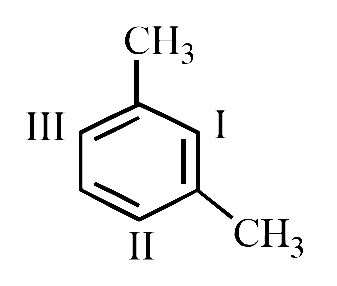
Q.79
Select the correct option describing gonadotropin activity in a normal pregnant female.
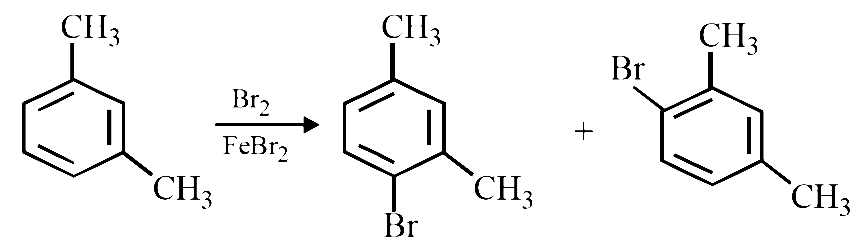
(A)
Hign level of FSH and SH stimulates the thickening of endometrium.
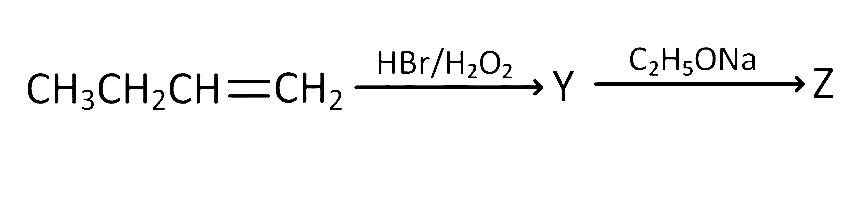
(B)
Hign level of FSH and SH facilitates implantation of the embryo.
(C)
High level of hCG stimulates the synthesis of estrogen and progesterone.
(D)
High level of hCG stimulates the thickening of endometrium.
(C)

Solution

Synthesis of estrogen and progesterone due to high level of hCG is a normal gonadotropic activity in a normal pregnant female.
Q.80
Select the taxon mentioned that represents both marine and fresh water species.
(A)
Echinoderms
(B)
Ctenophora
(C)
Cephalochordata
(D)
Cnidaria
(D)

Solution

Cnidarians are the sac-like animals which are aquatic, mostly marine except a few like Hydra, are fresh water. They are the simplest organisms that have attained a tissue level of organization. Members of Ctenophora, Cephalochordata and Echinodermata are exclusively marine.
Q.81
Planaria possesses high capacity of
(A)
alternation of generation
(B)
regeneration
(C)
bioluminescence.
(D)
metamorphosis
(B)

Solution

All arthropods possess a stiff exoskeleton (external skeleton) composed primarily of chitin. Arthropod bodies are divided into segments. Parapodia are paired, lateral appendages extending from the body segments. Arthropod appendages may be either biramous (branched) or uniramous (unbranched). They do not possess jointed appendages.
Q.82
Which one of the following living organisms completely lacks a cell wall?
(A)
Cyanobacteria
(B)
Sea - fan (Gorgonia)
(C)
Saccharomyces
(D)
Blue - green algae
(B)

Solution

Gorgonia (sea fan) is an animal belonging to Phylum Coelenterata. All animals lack cell wall.
Q.83
A marine cartilaginous fish that can produce electric current is
(A)
Pristis
(B)
Torpedo
(C)
Trygon
(D)
Scoliodon.
(B)

Solution

Torpedo is a bottom-living marine fish, discharging electricity which is sufficient to stun preys such as small fishes, etc. A pair of electric organs are situated on the dorsal side of the trunk region. Infact the electric organs are the modified lateral muscleplates innervated by the cranial nerves.
Q.84
Planaria possesses high capacity of
(A)
metamorphosis
(B)
regeneration
(C)
alternation of generation
(D)
bioluminescence.
(B)
Q.85
Approximately seventy percent of carbon-dioxide absorbed by the blood will be transported to the lungs
(A)
as bicarbonate ions
(B)
in the from of dissolved gas molecules
(C)
by binding to R.B.C.
(D)
as carbamino - haemoglobin.
(A)

Solution

About 70% of CO2 (about 2.5ml per 100 ml. of blood), received by blood from the tissues, enters the RBCs where it reacts with water to form carbonic acid (H2CO3).

Carbonic anhydrase, exclusively found in RBCs, speeds up the formation of H2CO3 and rapidly converts it back to carbon dioxide and water when blood reaches the lungs. Almost as rapidly as formed, all carbonic acid of RBCs dissociates into hydrogen (H+) and bicarbonate ions ().