NEET-UG 2013

NEET 2013

Physics (Maximum Marks: 180)
  • This section contains 45 questions.
  • Each question has FOUR options (A), (B), (C) and (D). ONLY ONE of these four options is the correct answer.
  • Full Marks : +4 If ONLY the correct option is chosen;
  • Zero Marks : 0 If none of the options is chosen (i.e. the question is unanswered);
  • Negative Marks : −1 In all other cases.
Q.1
If an experiment four quantities a, b, c and d are measured with percentage error 1%, 2%, 3% and 4% respectively.

Quantity P is calculated as follows P % error in P is
(A)
7%
(B)
4%
(C)
14%
(D)
10%
(C)

Solution

Given P

% error in P :

=

                  = 3 1% + 2 2% + 3% + 4% = 14%
Q.2
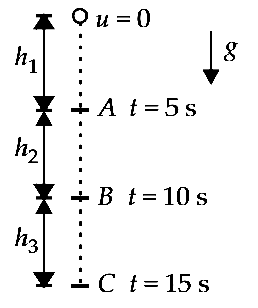
A stone falls freely under gravity. It covers distances h1, h2 and h3 in the first 5 seconds, the next 5 seconds and the next 5 seconds respectively. The relation between h1, h2 and h3 is
(A)
h2 = 3h1 and h3 = 3h2
(B)
h1 = h2 = h3
(C)
h1 = 2h2 = 3h3
(D)
= =
(D)

Solution

NEET 2013 Physics - Motion in a Straight Line Question 38 English Explanation

Here h =

h1 = = 125

h1 + h2 = = 500

h2 = 375

h1 + h2 + h3 = = 1125

h3 = 625

h2 = 3h1 and h3 = 5h1

or = =
Q.3
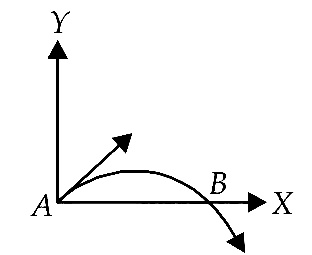
The velocity of a projectile at the initial point A is m/s. It's velocity (in m/s) at point B is NEET 2013 Physics - Motion in a Plane Question 42 English
(A)
(B)
(C)
(D)
(A)

Solution

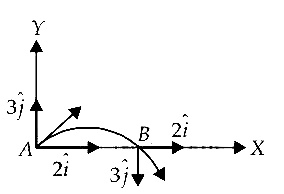
NEET 2013 Physics - Motion in a Plane Question 42 English Explanation At point B X component of velocity remains unchanged while Y component reverses its direction.
The velocity of the projectile at point B is m/s.
Q.4
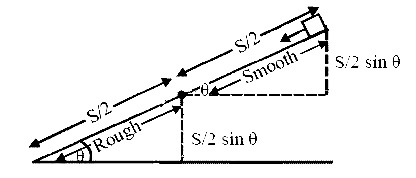
The upper half of an inclined plane of inclination is perfectly smooth while lower half is rough. A block starting from rest at the top of the plane will again come to rest at the bottom, if the coefficient of friction between the block and lower half of the plane is given by
(A)
= 2 tan
(B)
= tan
(C)
=
(D)
(A)

Solution

NEET 2013 Physics - Laws of Motion Question 48 English Explanation
For upper half of inclined plane

v2 = u2 + 2a S/2 = 2 (g sin ) S/2 = gS sin

For lower half of inclined plane

0 = u2 + 2 g (sin cos ) S/2


Q.5
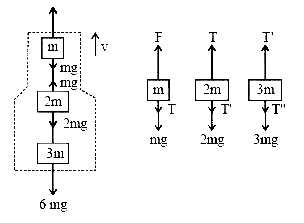
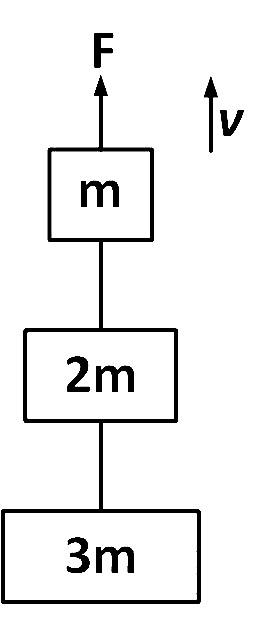
Three blocks with masses m, 2m and 3m are connected by strings, as shown in the figure. After an upward force F is applied on block m, the masses move upwards at constant speed v. What is the net force on the block of mass 2m ? (g is the acceleration due to gravity)
NEET 2013 Physics - Laws of Motion Question 25 English
(A)
3mg
(B)
6mg
(C)
zero
(D)
2mg
(C)

Solution

NEET 2013 Physics - Laws of Motion Question 25 English Explanation

From figure

F = 6 mg,

As speed is constant, acceleration a = 0

6 mg = 6ma = 0, F = 6 mg

T = 5 mg , T' = 3 mg

T'' = 0 Fnet on block of mass 2 m

= T – T' – 2 mg = 0

ALTERNATE :
v = constant so, a = 0, Hence, Fnet = ma = 0
Q.6
A uniform force of newton acts on a particle of mass 2 kg. Hence the particle is displaced from position metre to position metre. The work done by the force on the particle is
(A)
13 J
(B)
15 J
(C)
9 J
(D)
6 J
(C)

Solution

Here,

Initial position,

Final position,

Displacement,


Work done,
Q.7
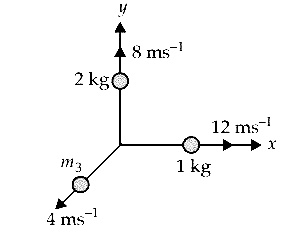
An explosion breaks a rock into three parts in a horizontal plane. Two of them go off at right angles to each other. The first part of mass 1 kg moves with a speed of 12 m s1 and the second part of mass 2 kg moves with 8 m s1 speed. If the third part files off with 4 m s1 speed, then its mass is :
(A)
7 kg
(B)
17 kg
(C)
3 kg
(D)
5 kg
(D)

Solution

The situation is as shown in the figure.

NEET 2013 Physics - Center of Mass and Collision Question 39 English Explanation
According to law of conservation of linear momentum


Here,


The magnitude of p3 is


Q.8
A small object of uniform density rolls up a curved surface with an initial velocity 'v'. It reaches upto a maximum height of with respect to the initial position. The object is
(A)
hollow sphere
(B)
disc
(C)
ring
(D)
solid sphere
(B)

Solution

The kinetic energy of the rolling object is converted into potential energy at height


So by the law of conservation of mechanical energy, we have


Hence, the object is disc.
Q.9
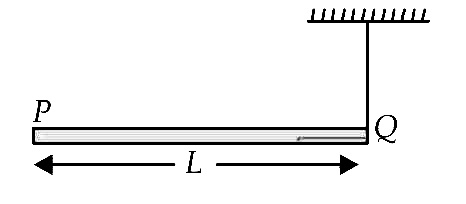
A rod PQ of mass M and length L is hinged at end P. The rod is kept horizontal by a massless string tied to point Q as shown in figure. When string is cut, the initial angular acceleration of the rod is

NEET 2013 Physics - Rotational Motion Question 74 English
(A)
(B)
(C)
(D)
(C)

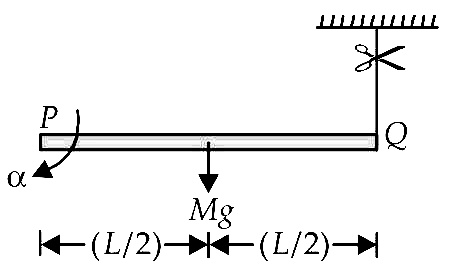
Solution

NEET 2013 Physics - Rotational Motion Question 74 English Explanation
When the string is cut, the rod will rotate about P. Let be initial angular acceleration of the rod.Then

Torque,      ...(i)

(Moment of inertia of the rod about one end = )

Also, ...(ii)

Equating (i) and (ii), we get

Q.10
Infinite number of bodies, each of mass 2 kg are situated on x-axis at distance 1 m, 2 m, 4 m, 8 m, . . . , respectively, from the origin. The resulting gravitational potential due to this system at the origin will be
(A)
G
(B)
4G
(C)
G
(D)
G
(B)

Solution

Gravitational potential V =


=


Q.11
A body of mass 'm' is taken from the earth's surface to the height equal to twice the radius (R) of the earth. The change in potential energy of body will be
(A)
3mgR
(B)
mgR
(C)
mg2R
(D)
mgR
(D)

Solution

Gravitational potential energy at any point at a distance r from the centre of the earth is


where M and m be masses of the earth and the body respectively.

At the surface of the earth, r = R


At a height h from the surface,

r = R + h = R + 2R = 3R    ( h = 2R (Given))


Change in potential energy,


Q.12
The wettability of a surface by a liquid depends primarily on
(A)
density
(B)
angle of contact between the surface and the liquid
(C)
viscosity
(D)
surface tension
(B)

Solution

The wettability of a surface by a liquid depends primarily on angle of contact between the surface and the liquid.
Q.13
The molar specific heats of an ideal gas at constant pressure and volume are denoted by Cp and Cv, respectively. If   = and R is the universal gas constant, then Cv is equal to
(A)
(B)
(C)
(D)
(D)

Solution

In case of ideal gas

Cp – Cv = R

but = Cp/Cv

So,
Q.14
The following four wires are made of the same material. Which of these will have the largest extension when the same tension is applied?
(A)
length = 200 cm, diameter = 2 mm
(B)
length = 300 cm, diameter = 3 mm
(C)
length = 50 cm, diameter = 0.5 mm
(D)
length = 100 cm, diameter = 1 mm
(C)

Solution


So, extension,
[ F and Y are constant]

and

and

The ratio of is maximum for case (length = 50 cm, diameter = 0.5 mm)
Q.15
A piece of iron is heated in a flame. It first becomes dull red then becomes reddish yellow and finally turns to white hot. The correct explanation for the above observation is possible by using
(A)
Kirchhoff's Law
(B)
Newton's Law of cooling
(C)
Stefan's Law
(D)
Wien's displacement Law
(D)

Solution

According to Wien’s displacement law

= constant


So when a piece of iron is heated, decreases i.e. with rise in temperature the maximum intensity of radiation emitted gets shifted towards the shorter wavelengths. So the colour of the heated object will change that of longer wavelength (red) to that of shorter (reddish yellow) and when the temperature is sufficiently high and all wavelengths are emitted, the colour will become white.
Q.16
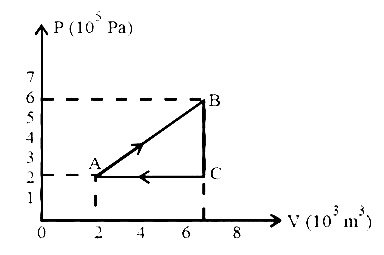
A gas is taken through the cycle
A B C A, as shown. what is the net work done by the gas?

NEET 2013 Physics - Heat and Thermodynamics Question 70 English
(A)
Zero
(B)
2000 J
(C)
2000 J
(D)
1000 J
(D)

Solution

Wnet = Area of triangle ABC


Q.17
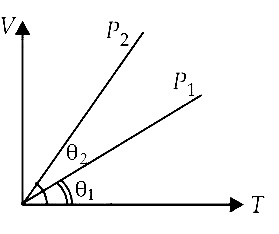
In the given (V T) diagram, what is the relation between pressure P1 and P2?

NEET 2013 Physics - Heat and Thermodynamics Question 71 English
(A)
P2 < P1
(B)
Carnot be predicted
(C)
P2 = P1
(D)
P2 > P1
(A)

Solution

NEET 2013 Physics - Heat and Thermodynamics Question 71 English Explanation
According to ideal gas equation PV = nRT


For an isobaric process, P = constant and V T
Therefore, V – T graph is a straight line passing through origin. Slope of this line is inversely proportional to P.
In the given figure,

(Slope)2 > (Slope)1    P2 < P1
Q.18
During an adiabatic process, the pressure of a gas is found to be proportional to the cube of its temperature. The ratio of for the gas is
(A)
(B)
(C)
(D)
2
(B)

Solution

According to question

But as we know for an adiabatic process the pressure

So,

Q.19
The amount of heat energy required to raise the temperature of 1 g of Helium at NTP, from T1K to T2K is
(A)
(B)
(C)
(D)
(C)

Solution

From first law of thermodynamics


Q.20
A source of unknown frequency gives 4 beats/s when sounded with a source of known frquency 250 Hz. The second harmonic of the source of unknown frequency gives five beats per second, when sounded with a source of frequency 513 Hz. The unknown frequency is
(A)
240 Hz
(B)
260 Hz
(C)
254 Hz
(D)
246 Hz
(C)

Solution

Let be frequency of the unknown source. As it gives 4 beats per second when sounded with a source of frequency 250 Hz,


Second harmonic of this unknown source = 492 Hz or 508 Hz which gives 5 beats per second, when sounded with a source of frequency 513 Hz.

Therefore unknown frequency, = 254 Hz.
Q.21
If we study the vibration of a pipe open at both ends. then the following statement is not true.
(A)
All harmonics of the fundamental frequency will be generated.
(B)
Pressure change will be maximum at both ends.
(C)
Open end will be antinode.
(D)
Odd harmonics of the fundamental frequency will be generated.
(B)

Solution

Pressure change will be minimum at both ends.
Q.22
A wave travelling in the + ve x-direction having displacement along y-direction as 1 m, wavelength 2 m and frequency of Hz is represented by
(A)
y = sin(10x 20t)
(B)
y = sin(2x + 2t)
(C)
y = sin(x 2t)
(D)
y sin(2x 2t)
(C)

Solution

The standard equation of a wave travelling along +ve x-direction is given by


where A = Amplitude of the wave
k = angular wave number
= angular frequency of the wave

Given: A = 1 m,

As


The equation of the given wave is

y = 1 sin (1x – 2t) = sin(x – 2t)
Q.23
A, B and C are three points in a uniform electric field. The electric potential is

NEET 2013 Physics - Electrostatics Question 67 English
(A)
maximum at C
(B)
same at all the three points A, B and C
(C)
maximum at A
(D)
maximum at B
(D)

Solution

In the direction of electric field, electric potential decreases.

VB > VC > VA
Q.24
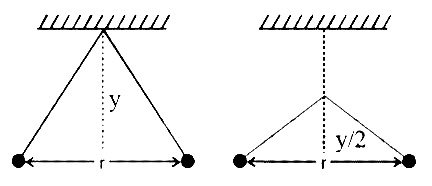
Two pith balls carrying equal charges are suspended from a common point by strings of equal length, the equilibrium separation between them is r. Now the strings are rigidly clamped at half the height. The equilibrium separation between the balls now become

NEET 2013 Physics - Electrostatics Question 66 English
(A)
(B)
(C)
(D)
(D)

Solution

NEET 2013 Physics - Electrostatics Question 66 English Explanation From figure,


Q.25
The resistances of the four arms P, Q, R and S in a Wheatstone's bridge are 10 ohm, 30 ohm, 30 ohm and 90 ohm, respectively. The e.m.f. and internal resistance of the cell are 7 volt and 5 ohm respectively. If the galvanometer resistance is 50 ohm, the current drawn from the celll will be
(A)
0.1 A
(B)
2.0 A
(C)
1.0 A
(D)
0.2 A
(D)

Solution

From the question, total resistance of Wheatstone bridge is:
(40) × (120)/(40 + 120) = 30

Now the current through the cell is:
= 7V/(5+30) = (1/5)A = 0.2A
Q.26
A wire of resistance 4 is stretched to twice its original length. The resistance of stretched wire would be
(A)
8
(B)
16
(C)
2
(D)
4
(B)

Solution

Resistance of a wire,
   ...(i)

When wire is stretched twice, its new length be . Then


On stretching volume of the wire remains constant.

where A' is the new cross-sectional area


Resistance of the stretched wire is


Q.27
The internal resistance of a 2.1 V cell which gives a current of 0.2 A through a resistance of 10 is
(A)
0.8
(B)
1.0
(C)
0.2
(D)
0.5
(D)

Solution

NEET 2013 Physics - Current Electricity Question 100 English Explanation


Here,


0.2 × 10 + 0.2 × r = 2.1

2 + 0.2r = 2.1

0.2r = 0.1 r = = 0.5
Q.28
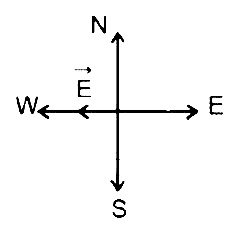
When a proton is released from rest in a room, it starts with an initial acceleration 0 towards west. When it is projected towards north with a speed 0 it moves with an initial acceleration 30 towards west. The an initial accelearation 3a0 towards west. The an initial acceleration 30 toward west. The electric and magnetic fields in the room are
(A)
east,   up
(B)
east,   down
(C)
west,   up
(D)
west,   down
(D)

Solution

NEET 2013 Physics - Moving Charges and Magnetism Question 69 English Explanation
When moves with an acceleration a0 towards west, electric field


When moves with an acceleration 3a0 towards east, magnetic field

Q.29
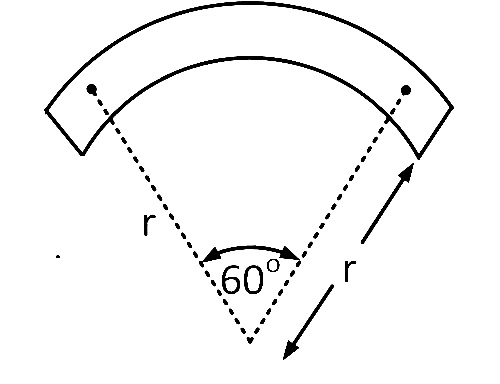
A bar magnet of length and magnetic dipole moment 'M' is bent in the form of an arc as shown in figure. The new magnetic dipole moment will be

NEET 2013 Physics - Magnetism and Matter Question 40 English
(A)
(B)
(C)
M
(D)
(D)

Solution

If the magnetic pole has a strength ‘m’ then,

M = m

When the bar magnet is bent in the form of an arc as shown in figure then

l =

r =

New magnetic dipole moment

M' = m 2rsin 30o

= m 2 =
Q.30
A current loop in a magnetic field
(A)
can be in equilibrium in two orientations, both the equilibrium states are unstable.
(B)
can be in equilibrium in two orientations, one stable while the other is unstable.
(C)
experiences a torque whether the field is uniform or non uniform in all orientations.
(D)
can be in equilibrium in one orientation.
(B)

Solution

A current loop in a magnetic field is in equilibrium in two orientations one is stable and another unstable.

When a current loop is placed in a magnetic field it experiences a torque. It is given by

= MB sin

where, is the magnetic moment of the loop and is the magnetic field.

If = 0o = 0 (stable equilibrium)

If = 180o = 0 (unstable equilibrium)
Q.31
A wire loop is rotated in a magnetic field. The frequency of change of direction of the induced e.m.f. is
(A)
four times per revoluation
(B)
six times per revolution
(C)
once per revolution
(D)
twice per revolution
(D)

Solution

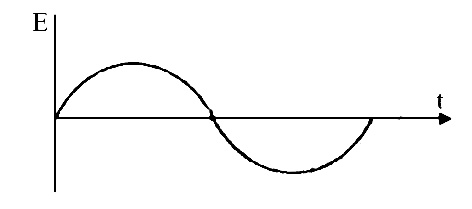
This is the case of periodic EMI

NEET 2013 Physics - Electromagnetic Induction Question 27 English Explanation

From graph, it is clear that direction is changing twice in 1 cycle.
Q.32
A coil of self-inductance L is connected in series with a bulb B and an AC source. Brightness of the bulb decreases when
(A)
a capacitance of reactance XC = XL is included in the same citcuit.
(B)
an iron rod is inserted in the coil.
(C)
frequency of the AC source is decreased.
(D)
number of turns in the coil is reduced.
(B)

Solution

If a bulb B and AC source are connected in series with self-inductance coil, then in such case the brightness of the bulb decreases when an iron rod is inserted in the coil which further increases impedance of the circuit.
Q.33
The condition under which a microwave oven heats up a food item containing water molecules most efficiently is
(A)
Microwaves are heat waves, so always produce heating.
(B)
Infra-red waves produce heating in a microwave oven.
(C)
The frequency of the microwaves must match the resonant frequency of the water molecules.
(D)
The frequency of the microwaves has no relation with natural frequency of water molecules.
(C)

Solution

The natural frequency of vibration of the water molecules in the food item should be same as that of the frequency of microwaves.
Q.34
A plano convex lens fits exactly into a plano concave lens. Their plane surfaces are parallel to each other. If lenses are made of different materials of refractive indices 1 and 2 and R is the radius of curvature of the curved surface of the lenses, then the focal length of the combination is
(A)
(B)
(C)
(D)
(A)

Solution

NEET 2013 Physics - Geometrical Optics Question 69 English Explanation

Equivalent focal length is

= +

feq =
Q.35
For a normal eye, the cornea of eye provides a converging power of 40 D and the least converging power of the eye lens behinf the cornea is 20 D. Using this information, the distance between the retina and the cornea-eye lens can be estimated to be
(A)
1.67 cm
(B)
1.5 cm
(C)
5 cm
(D)
2.5 cm
(A)

Solution

Pcornea = + 40 D

Pe = + 20 D

Total power of combination = 40 + 20 = 60 D

Focal length of combination = cm = cm

For minimum converging state of eye lens,

u = - v = ? f =

From lens formula,


v = cm

Distance between retina and cornea-eye lens

= cm = 1.67 cm
Q.36
In Young's double slit experiment, the slits are 2 mm apart and are illuminated by photons of two wavelengths = 12000 and = 10000 . At what minimum distance from the common central bright fringe on the screen 2 m from the slit will a bright fringe from one interference pattern coincide with a bright fringe from the other ?
(A)
4 mm
(B)
3 m
(C)
8 mm
(D)
6 mm
(D)

Solution

From the question, n11 = n22

So, =

Hence, minima n1 and n2 are 5 and 6.

Xmin =

= 6 × 10⁻³ m = 6 mm
Q.37
Ratio of longest wave lengths corresponding to Lyman and Balmer series in hydrogen spectrum is
(A)
(B)
(C)
(D)
(C)

Solution

We see that wavelength of Lyman series,

nf = 3, ni = 4

=

We see that wavelength of Balmer series :

nf = 2, ni = 3

=

Now ratio of longest wavelengths corresponds to Lyman and Balmer series:

=
Q.38
A certain mass of Hydrogen is changed to Helium by the process of fusion. The mass defect in fusion reaction is 0.02866 u. The energy liberated per u is (given 1 u = 931 MeV)
(A)
6.675 MeV
(B)
13.35 MeV
(C)
2.67 MeV
(D)
26.7 MeV
(A)

Solution

Mass defect m = 0.02866 a.m.u.

Energy = 0.02866 × 931 = 26.7 MeV

As 1H2 + 1H2 2He4

Energy liberated per a.m.u = MeV = 6.675 MeV
Q.39
The half life of a radioactive isotope 'X' is 20 years. It decays to another element 'Y' which is stable. The two elements 'X' and 'Y' were found to be in the ratio 1 : 7 in a sample of a given rock. The age of the rock is estimated to be
(A)
80 years
(B)
100 years
(C)
40 years
(D)
60 years
(D)

Solution

Initial number of atoms of X is N0

and Initial number of atoms of Y is 0

Number of atoms after time t, for X is N and for Y is N0 - N

According to the question,

=


As where n is the no. of half lives


n = 3

t = nT1/2 = 3 × 20 = 60 years

Hence, the age of rock is 60 years.
Q.40
A parallel beam of fast moving electrons is incident normally on a narrow slit. A fluorescent screen is placed at a large distance from the slit. If the speed of the electrons is increased, which of the following statements is correct ?
(A)
The angular width of the central maximum will decrease.
(B)
The angular wifth of the central maximum will be unaffected.
(C)
Diffraction pattern is not observed on the screen in the case of electrons.
(D)
The angular width of the central maximum of the diffraction pattern will increase.
(A)

Solution

As speed of an electron increases.

Its de-Broglie wavelength decreases


and angular width for central maxima is =

Q.41
The wavelength e of an electron and p of a photon of same energy E are related by
(A)
(B)
(C)
(D)
(C)

Solution

Wavelength of an electron of energy E is


.....(1)

Wavelength of a photon of same energy E is


.....(2)

Equating (1) and (2), we get


Q.42
For photoelectric emission from certain metal the cutoff frequency is . If radiation of frequency 2 impinges on the metal plate, the maximum possible velocity of the emitted electron will be (m is the electron mass)
(A)
(B)
(C)
(D)
(A)

Solution

Work function, = h

According to Einstein’s photoelectric equation

= h(2) - h


vmax =
Q.43
The output (X) of the logic circuit shown ion figure will be

NEET 2013 Physics - Semiconductor Electronics Question 101 English
(A)
X = A . B
(B)
X =
(C)
X =
(D)
X =
(A)

Solution

The output of the given logic circuit is

X = = A.B
Q.44
In a n-type semiconductor, which of the following statement is true.
(A)
Holes are minority carries and pentavalent atoms are dopants.
(B)
Holes are majority carries and trivalent atoms are dopants.
(C)
Electrons are majority carries and trivalent atoms are dopants.
(D)
Electrons are minority carriers and pentavalent atoms are dopants.
(A)

Solution

In n-type semiconductor, electrons are majority charge carriers and holes are minority charge carriers and pentavalent atoms are dopants.
Q.45
In a common emitter (CE) amplifier having a voltage gain G, the transistor used has transconductance 0.03 mho and current gain 25. If the above transistor is replaced with another one with transconductance 0.02 mho and current gain 20, the voltage gain will be
(A)
(B)
(C)
(D)
1.5G
(C)

Solution

Formula for trans conductance m is

m =

Formula for voltage gain A,

A =

A = mRL

Given A = G

G = mRL

G m


G2 = G =
Chemistry (Maximum Marks: 180)
  • This section contains 45 questions.
  • Each question has FOUR options (A), (B), (C) and (D). ONLY ONE of these four options is the correct answer.
  • Full Marks : +4 If ONLY the correct option is chosen;
  • Zero Marks : 0 If none of the options is chosen (i.e. the question is unanswered);
  • Negative Marks : −1 In all other cases.
Q.1
How many grams of concentrated nitric acid solution should be used to prepare 250 mL of 2.0 M HNO3? The concentrated acid is 70% HNO3.
(A)
70.0 g conc. HNO3
(B)
54.0 g conc. HNO3
(C)
45.0 g conc. HNO3
(D)
90.0 g conc. HNO3
(C)

Solution


m = 2 × 63 × 0.25 = 31.5 g

Now, if concentrated HNO3 is 100% then it requires 31.5 g. But the original solution of HNO3 is 70% concentrated.

Hence, the mass of HNO3 required to produce 2.0 M solution

=

= 45 g of HNO3
Q.2
6.02 1020 molecules of urea present in 100 mL of its solution. The concentration of solution is
(A)
0.001 M
(B)
0.1 M
(C)
0.02 M
(D)
0.01 M
(D)

Solution

Moles of urea =

Concentration of solution = = 0.01 M
Q.3
What is the maximum numbers of electrons that can be associated with the following set of quantum numbers ?
n = 3, = 1 and m = 1
(A)
4
(B)
2
(C)
10
(D)
6
(B)

Solution

The orbitals associated with n = 3, l = 1 is 3p. One orbital (with m = -1) of 3p-subshell can only accomodate maximum 2 electrons.
Q.4
Based on equation E = 2.178 1018 J , certain conclusions are written. Which of them is not correct ?
(A)
Equation can be used to calculate the change in energy when the electron changes orbit.
(B)
For n = 1, the electron has a more negative energy than it does for n = 6 which means that the electron is more loosely bound in the smallest allowed orbit.
(C)
The negative sign in equation simply means that the energy of electron bound to the nucleus is lower than it would be if the electrons were at the infinite distance from the nucleus.
(D)
Larger the value of n, the larger is the orbit radius.
(B)

Solution

The electron is more tightly bound in the smallest allowed orbit.
Q.5
The value of Planck's constant is 6.63 1034 J s. The speed of light is 3 1017 mm s1. Which value is closest to the wavelength in nanometer of a quantum of light with frequency of 6 1015 s1 ?
(A)
50
(B)
75
(C)
10
(D)
25
(A)

Solution

c =

=

= = 50 nm
Q.6
Maximum deviation from ideal gas is expected from
(A)
CH4(g)
(B)
NH3(g)
(C)
H2(g)
(D)
N2(g)
(B)

Solution

The compressibility factor is the term which is measured for a gas to study its deviation from the ideal behaviour. Compressibility factor,


Greater is the difference in the value of Z from 1, greater is the deviation of the gas from ideal behaviour.

Among the given molecules, NH3 is easily liquefiable gas which deviates from ideal behaviour to the maximum extent.
Q.7
KMnO4 can be prepared from K2MnO4 as per the reaction,

3MnO42 + 2H2O 2MnO4 + MnO2 + 4OH

The reaction can go to completion by removing OH ions by adding
(A)
CO2
(B)
SO2
(C)
HCl
(D)
KOH
(A)

Solution

KOH is the base thus, it gives OH ions thus it cannot remove OH ions from reaction mixture but it adds on the concentration of OH ions.

So, an acid must be added but if a strong acid is added to the reaction mixture then in acidic condition the MnO4 formed reduces to give Mn2+ thus, HCl which is a strong acid and SO2 which on treating with water forms a strong H2SO4 cannot be used for this purpose.

Thus, CO2 which forms H2CO3 a weak acid reacts to remove OH but not that much acidic that MnO4 undergo reduction. Thus, CO2 is used for this reaction for completion.
Q.8
Which of these is least likely to act as a lewis base ?
(A)
BF3
(B)
PF3
(C)
CO
(D)
F
(A)

Solution

BF3 acts as Lewis acid. It is electron pair acceptor.
Q.9
A reaction having equal energies of activation for forward and reverse reactions has
(A)
H = 0
(B)
H = G = S = 0
(C)
S = 0
(D)
G = 0
(A)

Solution

For a general reaction,

ΔH = Activation energy of forward reaction – Activation energy of backward reaction.

As, both the energies of activation have same value thus, ΔH = 0.

G is not equal to zero because if it is so the reaction must be in equilibrium which is not in this case
Q.10
A button cell used in watches function as following.
Zn(s) + Ag2O(s) + H2O(l) 2Ag(s) + Zn2+(aq) + 2OH(aq)

If half cell potentials are
Zn2+(aq) + 2e Zn(s);  Eo = 0.76 V
Ag2O(s) + H2O(l) + 2e 2Ag(s) + 2OH(aq), Eo = 0.34 V

The cell potential will be
(A)
0.84 V
(B)
1.34 V
(C)
1.10 V
(D)
0.42 V
(C)

Solution

At anode :Zn2+(aq) + 2e Zn(s);  Eo = 0.76 V

At cathode : Ag2O(s) + H2O(l) + 2e 2Ag(s) + 2OH(aq), Eo = 0.34 V

cell = E°cathode – E°anode

= 0.34 – (–0.76) = 1.10 V
Q.11
A hydrogen gas electrode is made by dipping platinum wire in a solution of HCl of pH = 10 and by passing hydrogen gas around the platinum wire at one atm pressure. The oxidation potential of electrode would be
(A)
0.118 V
(B)
1.18 V
(C)
0.059 V
(D)
0.59 V
(D)

Solution

Oxidation half reaction is

H2 2H+ + 2e

If pH = 10, [H+] = 10–10

We know, Nernst Equation

Ecell = E°cell -

For hydrogen electrode E°cell = 0

Ecell = -

= 0.0591log1010

Ecell = 0.591 V
Q.12
At 25oC molar conductance of 0.1 molar aqueous solution of ammonium hydroxide is 9.54 ohm1 cm2 mol1 and at infinite dilution its molar conductance is 238 ohm1 cm2 mol1. The degree of ionisation of ammonium hydroxide at the same concentration and temperature is
(A)
4.008%
(B)
40.800%
(C)
2.080%
(D)
20.800%
(A)

Solution

Degree of dissociation() = = 0.04008 = 4.008%
Q.13
What is the activation energy for a reaction if its rate doubles when the temperature is raised from 20oC to 35oC?
(R = 8.314 J mol1 K1)
(A)
34.7 kJ mol1
(B)
15.1 kJ mol1
(C)
342 kJ mol1
(D)
269 kJ mol1
(A)

Solution


Initial temperature, T1 = 20 + 273 = 293 K

Final temperature, T2 = 35 + 273 = 308 K

R = 8.314 JK–1 mol–1

As rate becomes double on raising temperature

r2 = 2r1

As rate constant, k r

k2 = 2k1


E = 34673 J mol–1 = 34.7 kJ mol–1
Q.14
A metal has a fcc lattice. The edge length of the unit cell is 404 pm. The density of the metal is 2.72 g cm3. The molar mass of the metal is
(NA Avogadro's constant = 6.02 1023 mol1)
(A)
27 g mol1
(B)
20 g mol1
(C)
40 g mol1
(D)
30 g mol1
(A)

Solution

for fcc Z = 4.

d =

M =

=

= 27 g mol–1
Q.15
The number of carbon atoms per unit cell of diamond unit cell is
(A)
6
(B)
1
(C)
4
(D)
8
(D)

Solution

Total number of carbon atoms per unit cell

= = 8
Q.16
Which of the following is a polar molecule?
(A)
SiF4
(B)
XeF4
(C)
BF3
(D)
SF4
(D)

Solution

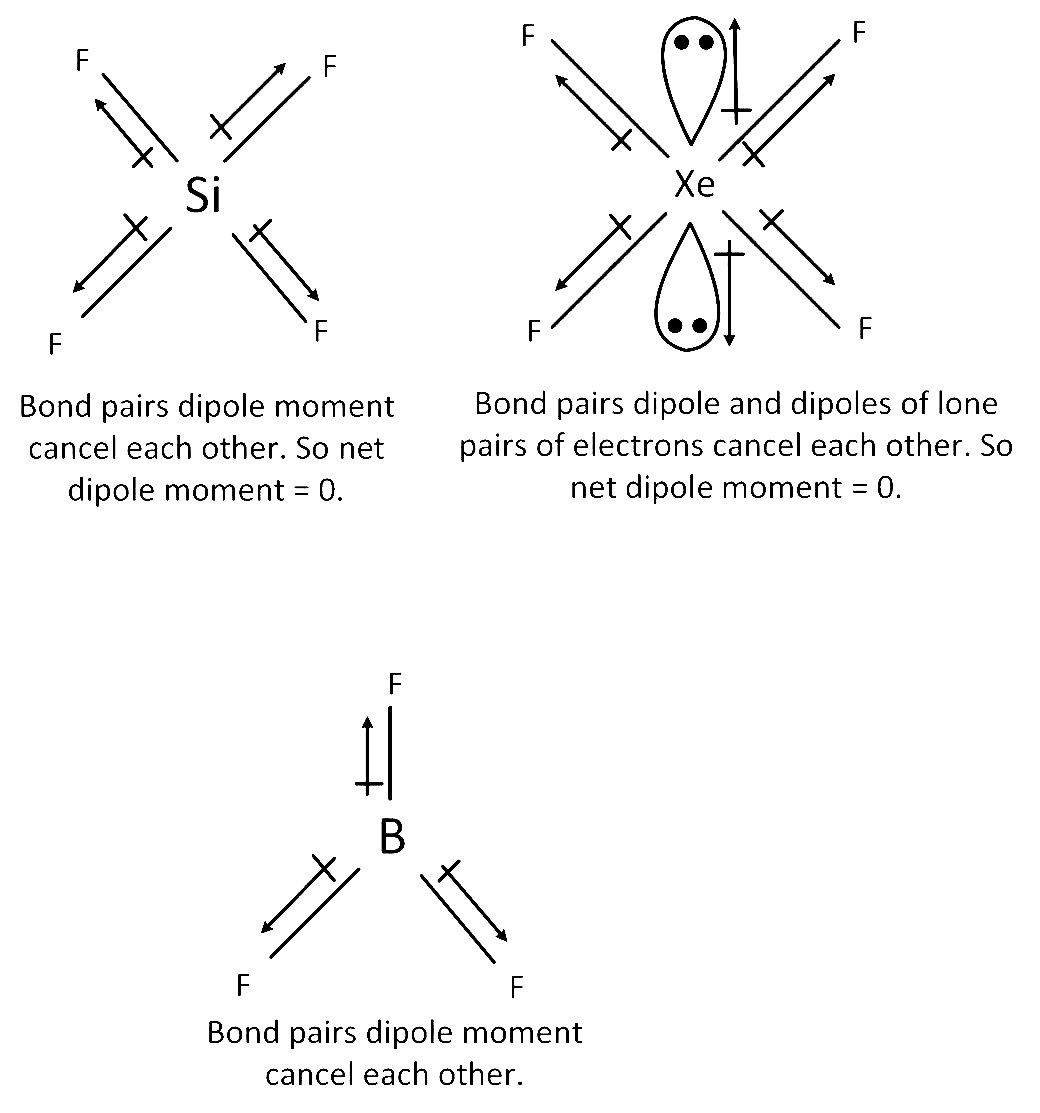
NEET 2013 Chemistry - Chemical Bonding and Molecular Structure Question 100 English Explanation 1

The given molecules SiF4, XeF4, and BF3 are symmetric molecules that is why due to cancellation of bond dipoles they are non-polar even though they contain polar bonds. NEET 2013 Chemistry - Chemical Bonding and Molecular Structure Question 100 English Explanation 2

But in SiF4 there are four Si—F bonds and one lone pair due to which its structure is unsymmetrical. Hence, it is a polar molecule.
Q.17
Dipole-induced dipole interactions are present in which of the following pairs
(A)
HCl and He atoms
(B)
SiF4 and He atoms
(C)
H2O and alcohol
(D)
Cl2 and CCl4
(A)

Solution

HCl is polar ( 0) and He is non-polar ( = 0) gives dipole-induced dipole interaction.
Q.18
Identify the correct order of solubility in aqueous medium.
(A)
Na2S > CuS > ZnS
(B)
Na2S > ZnS > CuS
(C)
Cus > ZnS > Na2S
(D)
ZnS > Na2S > CuS
(B)

Solution

Water is a polar compound so the salt which is more polar or having more ionic character will be more soluble in it. According to Fajan's rule, ionic character of compound increases with increase in the size of cation. Now, among the given compounds, the size of cations are in the order as follows :

Na+ > Zn2+ > Cu2+

Thus, the order of ionic character and the solubility order in aqueous medium is as follows :

Na2S > ZnS > CuS
Q.19
Which of the following is paramagnetic?
(A)
CN
(B)
NO+
(C)
CO
(D)
O2
(D)

Solution

superoxide has one unpaired electron.
Q.20
XeF2 is isostructural with
(A)
SbCl3
(B)
BaCl2
(C)
TeF2
(D)
ICl2
(D)

Solution

NEET 2013 Chemistry - Chemical Bonding and Molecular Structure Question 101 English Explanation
Q.21
Which of the following is electron-deficient ?
(A)
(BH3)2
(B)
PH3
(C)
(CH3)2
(D)
(SiH3)2
(A)

Solution

Boron hydrides are electron deficient compound because boron atom has three half-filled orbitals in excited state.
Q.22
Roasting of sulphides gives the gas X as a byproduct. This is a colourless gas with choking smell of burnt sulphur and causes great damage to respiratory organs as a result of acid rain. Its aqueous solution is acidic, acts as a reducing agent and its acid has never been isolated. The gas X is
(A)
CO2
(B)
SO3
(C)
H2S
(D)
SO2
(D)

Solution

SO2 gas is liberated when any sulphide ore is roasted.

2M2S + 3O2 2M2O + 2SO2

SO2 is a colourless gas with chocking smell of burnt sulphur.
Q.23
Which is the strongest acid in the following?
(A)
HClO4
(B)
H2SO3
(C)
H2SO4
(D)
HClO3
(A)

Solution

HClO4 with highest oxidation number and its conjugate base is resonance stabilised, hence it is most acidic.
Q.24
Which of the following structure is similar to graphite?
(A)
B4C
(B)
B2H6
(C)
BN
(D)
B
(C)

Solution

Boron nitride (BN) is known as inorganic graphite. The most stable form is hexagonal one. It has layered structure similar to graphite.
Q.25
Which of the following does not give oxygen on heating?
(A)
K2Cr2O7
(B)
(NH4)2Cr2O7
(C)
KClO3
(D)
Zn(ClO3)2
(B)

Solution

(NH4)2Cr2O7 N2 + Cr2O3 + 4H2O

Zn(ClO3)2 ZnCl2 + 3O2

KClO3 KCl + O2

2K2Cr2O7 2K2CrO4 + Cr2O3 + O2
Q.26
Which one of the following molecules contains no bond?
(A)
SO2
(B)
NO2
(C)
CO2
(D)
H2O
(D)

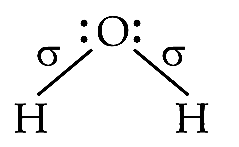
Solution

H2O does not contain any -bond. NEET 2013 Chemistry - p-Block Elements Question 55 English Explanation
Q.27
The basic structural unit of silicates is
(A)
SiO32
(B)
SiO
(C)
SiO
(D)
SiO
(D)

Solution

SiO orthosilicate is basic unit of silicates.
Q.28
Which of these is not a monomer for a high molecular mass silicone polymer?
(A)
Me3SiCl
(B)
PhSiCl3
(C)
MeSiCl3
(D)
Me2SiCl2
(A)

Solution

Since Me3SiCl contains only one Cl, therefore it can’t form high molecular mass silicon polymer. It can form only dimer.
Q.29
Which of the following lanthanoid ions is diamagnetic?
(At. nos. Ce = 58, Sm = 62, Eu = 63, Yb = 70)
(A)
Eu2+
(B)
Yb2+
(C)
Ce2+
(D)
Sm2+
(B)

Solution

Ion with no unpaired electron is diamagnetic in nature.

Ce2+ = [Xe] 4f2 → 2 unpaired electrons

Sm2+ = [Xe] 4f6 → 6 unpaired electrons

Eu2+ = [Xe] 4f7 → 7 unpaired electrons

Yb2+ = [Xe] 4f14 → No unpaired electron
Q.30
Which of the following statements about the interstitial compounds is incorrect?
(A)
They are much harder than the pure metal.
(B)
They have higher melting points than the pure metal.
(C)
The retain metallic conductivity.
(D)
They are chemically reactive.
(D)

Solution

Interstitial compounds are generally chemically inert.
Q.31
A magnetic moment at 1.73 BM will be shown by one among of the following
(A)
TiCl4
(B)
[CoCl6]4
(C)
[Cu(NH3)4]2+
(D)
[Ni(CN)4]2
(C)

Solution

For = 1.73 B.M. n will be :

1.73 =

n = 1

In [Cu(NH3)4]2+. Cu+2 = [Ar]3d9 NEET 2013 Chemistry - Coordination Compounds Question 90 English Explanation

NH3 = Strong field ligand

Here, unpaired electron gets excited to higher energy level but it still remains unpaired.
Q.32
An excess of AgNO3 is added to 100 mL of a 0.01 M solution of dichlorotetraaquachromium (III) chloride. The number of moles of AgCl precipitated would be
(A)
0.003
(B)
0.01
(C)
0.001
(D)
0.002
(C)

Solution

AgNO3 + [Cr(H2O)4Cl2]Cl AgCl

Excess mole = MV

= 0.01

= 0.001
Q.33
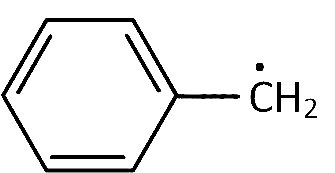
The radical,
NEET 2013 Chemistry - Some Basic Concepts of Organic Chemistry Question 88 English
is aromatic because it has
(A)
7 p-orbitals and 7 unpaired electrons
(B)
6 p-orbitals and 7 unpaired electrons
(C)
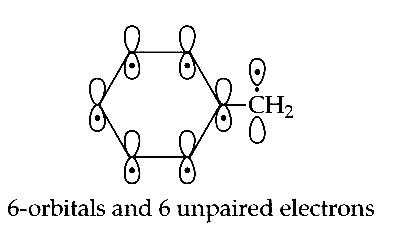
6 p-orbitals and 6 unpaired electrons
(D)
7 p-orbitals and 6 unpaired electrons.
(C)

Solution

In benzyl free radical it has 6 p orbitals, each containing one unpaired electron, in a six membered cyclic structure is in accordance with Huckel rule of aromaticity.

NEET 2013 Chemistry - Some Basic Concepts of Organic Chemistry Question 88 English Explanation
Q.34
Structure of the compound whose IUPAC name is 3-Ethyl-2-hydroxy-4-methylhex-3-en-5-ynoic acid is
(A)
NEET 2013 Chemistry - Some Basic Concepts of Organic Chemistry Question 86 English Option 1
(B)
NEET 2013 Chemistry - Some Basic Concepts of Organic Chemistry Question 86 English Option 2
(C)
NEET 2013 Chemistry - Some Basic Concepts of Organic Chemistry Question 86 English Option 3
(D)
NEET 2013 Chemistry - Some Basic Concepts of Organic Chemistry Question 86 English Option 4
(D)

Solution

NEET 2013 Chemistry - Some Basic Concepts of Organic Chemistry Question 86 English Explanation

IUPAC name of the structure is

3-Ethyl-2-hydroxy-4-methylhex-3-en-5-ynoic acid
Q.35
Some meta-directing substituents in aromatic substitution are given. Which one is most deactivating ?
(A)
COOH
(B)
NO2
(C)
C N
(D)
SO3H
(B)

Solution

NO2 is most deactivating due to -I ans -M effect.
Q.36
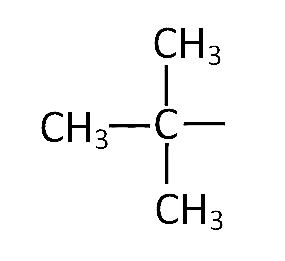
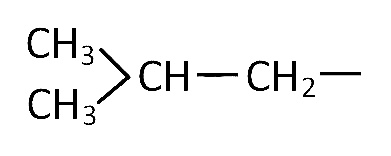
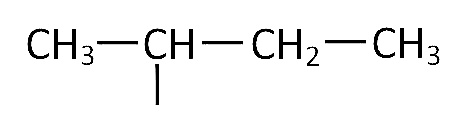
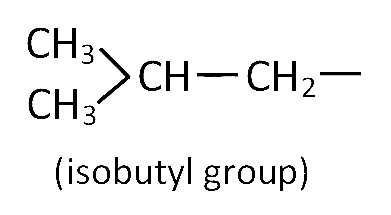
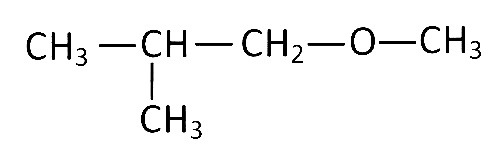
The structure of isobutyl group in an organic compound is
(A)
NEET 2013 Chemistry - Some Basic Concepts of Organic Chemistry Question 87 English Option 1
(B)
NEET 2013 Chemistry - Some Basic Concepts of Organic Chemistry Question 87 English Option 2
(C)
NEET 2013 Chemistry - Some Basic Concepts of Organic Chemistry Question 87 English Option 3
(D)
NEET 2013 Chemistry - Some Basic Concepts of Organic Chemistry Question 87 English Option 4
(C)

Solution

NEET 2013 Chemistry - Some Basic Concepts of Organic Chemistry Question 87 English Explanation
Q.37
Which of the following compounds will not undergo Friedal-Craft's reaction easily?
(A)
Nitrobenzene
(B)
Toluene
(C)
Cumene
(D)
Xylene
(A)

Solution

Nitrobenzene is strongly deactivated, hence will not undergo Friedel-Crafts reaction.
Q.38
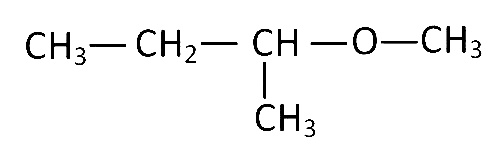
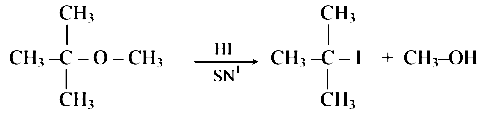
Among the following ethers, which one will produce methyl alcohol on treatment with hot concentrated HI?
(A)
NEET 2013 Chemistry - Alcohol, Phenols and Ethers Question 26 English Option 1
(B)
NEET 2013 Chemistry - Alcohol, Phenols and Ethers Question 26 English Option 2
(C)
NEET 2013 Chemistry - Alcohol, Phenols and Ethers Question 26 English Option 3
(D)
NEET 2013 Chemistry - Alcohol, Phenols and Ethers Question 26 English Option 4
(A)

Solution

NEET 2013 Chemistry - Alcohol, Phenols and Ethers Question 26 English Explanation
Q.39
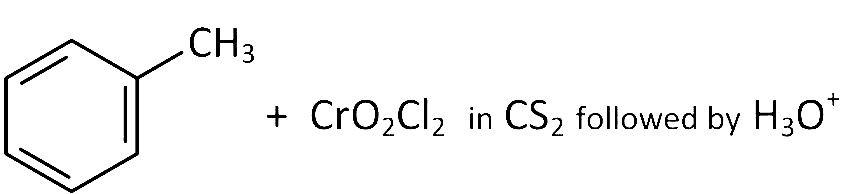
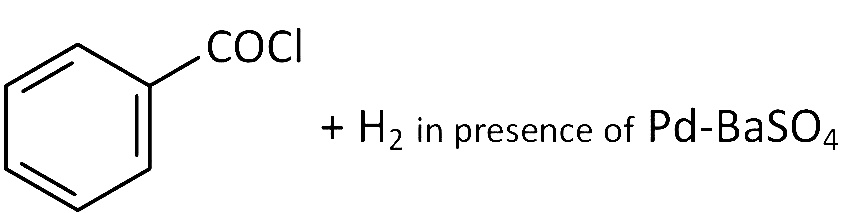
Reaction by which benzaldehyde cannot be prepared
(A)
NEET 2013 Chemistry - Aldehydes, Ketones and Carboxylic Acids Question 71 English Option 1
(B)
NEET 2013 Chemistry - Aldehydes, Ketones and Carboxylic Acids Question 71 English Option 2
(C)
NEET 2013 Chemistry - Aldehydes, Ketones and Carboxylic Acids Question 71 English Option 3
(D)
NEET 2013 Chemistry - Aldehydes, Ketones and Carboxylic Acids Question 71 English Option 4
(B)

Solution

NEET 2013 Chemistry - Aldehydes, Ketones and Carboxylic Acids Question 71 English Explanation
Q.40
The order of stability of the following tautomeric compounds is

NEET 2013 Chemistry - Aldehydes, Ketones and Carboxylic Acids Question 69 English
(A)
II > I > III
(B)
II > III > I
(C)
I > II > III
(D)
III > II > I
(D)

Solution

Enolic form predominates in compounds containing two carbonyl groups separated by a –CH2 group. This is due to following two factors.

(i) Presence of conjugation which increases stability.

(ii) Formation of intramolecular hydrogen bond between enolic hydroxyl group and second carbonyl group which leads to stablisation of the molecule.

Hence the correct answer is III > II > I
Q.41
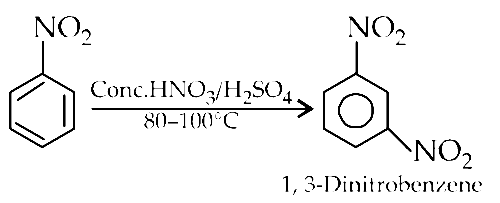
Nitrobenzene on reaction with conc. HNO3/H2SO4 at 80100oC forms which one of the following products?
(A)
1, 4-Dinitrobenzene
(B)
1, 2, 4 - Trinitrobenzene
(C)
1, 2-Dinitrobenzene
(D)
1, 3-Dinitrobenzene
(D)

Solution

NEET 2013 Chemistry - Organic Compounds Containing Nitrogen Question 44 English Explanation
Q.42
In the reaction
NEET 2013 Chemistry - Organic Compounds Containing Nitrogen Question 43 English
A is
(A)
H3PO2 and H2O
(B)
H+/H2O
(C)
HgSO4/H2SO4
(D)
Cu2Cl2
(A)

Solution

H3PO2 and H2O works as a reducing agent.
Q.43
Nylon is an example of
(A)
polyamide
(B)
polythene
(C)
polyester
(D)
polysaccharide.
(A)

Solution

Nylon is a polyamide.
Q.44
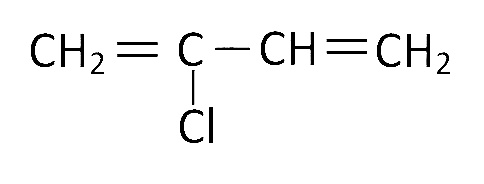
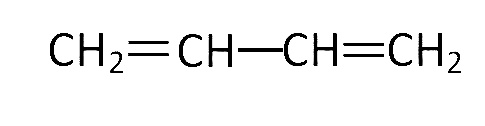
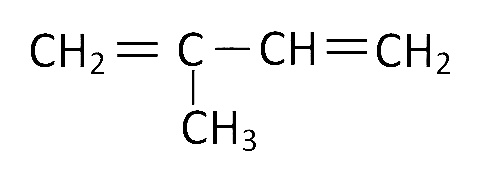
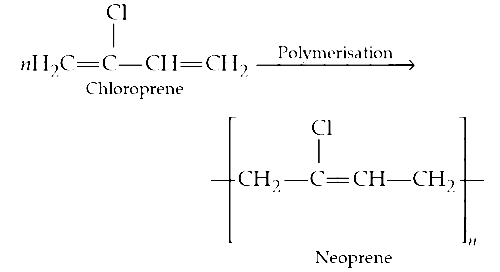
Which is the monomer of neoprene in the following?
(A)
NEET 2013 Chemistry - Polymers Question 13 English Option 1
(B)
NEET 2013 Chemistry - Polymers Question 13 English Option 2
(C)
NEET 2013 Chemistry - Polymers Question 13 English Option 3
(D)
NEET 2013 Chemistry - Polymers Question 13 English Option 4
(A)

Solution

Chloroprene is the monomer of neoprene.

NEET 2013 Chemistry - Polymers Question 13 English Explanation
Q.45
Antiseptics and disinfectants either kill or prevent growth of microgaisms. Identify which of the following statements is not true.
(A)
Dilute solutions of boric acid and hydrogen peroxide are strong antiseptics.
(B)
Disinfectants harm the living tissues.
(C)
A 0.2% solution of phenol is an antiseptic while 1% solution acts as a disinfectant.
(D)
Chlorine and iodine are used as strong disinfectants.
(A)

Solution

Dilute solutions of boric acid and hydrogen peroxide are weak antiseptics.
Biology (Maximum Marks: 356)
  • This section contains 89 questions.
  • Each question has FOUR options (A), (B), (C) and (D). ONLY ONE of these four options is the correct answer.
  • Full Marks : +4 If ONLY the correct option is chosen;
  • Zero Marks : 0 If none of the options is chosen (i.e. the question is unanswered);
  • Negative Marks : −1 In all other cases.
Q.1
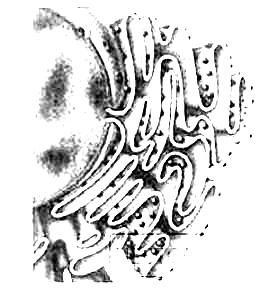
Which one of the following organelle in the figure correctly matches with its function ? NEET 2013 Biology - Cell - The Unit of Life Question 101 English
(A)
Golgi apparatus, formation of glycolipids
(B)
Rough endoplasmic reticulum, formation of glycoproteins
(C)
Rough endoplasmic reticulum, protein synthesis
(D)
Golgi apparatus, protein synthesis
(C)

Solution

The given figure shows endoplasmic reticulum bearing ribosomes on their surface. It is called rough endoplasmic reticulum or RER. RER is actively involved in protein synthesis and secretion.
Q.2
A major site for synthesis of lipids is :
(A)
RER
(B)
Nucleoplasm
(C)
SER
(D)
Symplast
(C)

Solution

The smooth endoplasmic reticulum is the major site for synthesis of lipid. In animal cells lipid like steroidal hormones are synthesised in SER.
Q.3
The Golgi complex plays a major role :
(A)
as energy transferring organelles
(B)
in post translational modification of proteins and glycosidation of lipids
(C)
in trapping the light and transforming it into chemical energy
(D)
in digensting proteins and carbohydrates
(B)

Solution

Post translational modification (PTM) is a step in protein biosynthesis. Proteins are created on ribosomes translating mRNA into polypeptide chains. These polypeptide chains undergo PTM, such as folding, cutting and other processes, before becoming the mature protein product. Proteins synthesized by the rough endoplasmic reticulum and lipids synthesized by smooth endoplasmic reticulum reach the cisternae of the Golgi apparatus. Here, they combine with carbohydrates to form glycoproteins and glycolipids. This process is called glycosylation.
Q.4
Macromolecule chitin is
(A)
sulphur containing polysaccharide
(B)
simple polysaccharide
(C)
nitrogen containing polysaccharide
(D)
phosphorous containing polysaccharide.
(C)

Solution

Chitin is a structural polysaccharide that constitutes the exoskeleton of arthropods. It is a complex carbohydrate in which N-acetyl glucosamine monomers are joined together by (1, 4) -linkages. Chitinous exoskeleton provides strength and elasticity to arthropods.
Q.5
A phosphoglyceride is always made up of
(A)
a saturated or unsaturated fatty acid esterified to glycerol molecule to which a phosphate group is also attached.
(B)
a saturated or unsaturated fatty acid esterified to a phosphate group which is also attached to a glycerol molecule.
(C)
only a saturated fatty acid esterified to a glycerol molecule to which a phosphate group is also attached.
(D)
only an unsaturated fatty acid esterified to a glycerol molecule to which a phosphate group is also attached.
(A)

Solution

Phosphoglycerides are the triesters of fatty acids (either saturated or unsaturated) and glycerol to which a phosphate group is also attached.
Q.6
The essential chemical components of many coenzymes are
(A)
carbohydrates
(B)
vitamins
(C)
proteins
(D)
nucleic acids.
(B)

Solution

The essential chemical components of many enzymes are vitamins, e.g., coenzyme nicotinamide adenine dinucleotide (NAD) and NADP contain vitamin niacin.
Q.7
Transition state structure of the substrate formed during an enzymatic reaction is
(A)
transient and unstable
(B)
permanent and stable
(C)
transient but stable
(D)
permanent but unstable.
(A)

Solution

Transition state structure formed during an enzymatic reaction is transient and unstable.
Q.8
A stage in cell division is shown in the figure. Select the answer which gives correct identification of the stage with its characteristics. NEET 2013 Biology - Cell Cycle and Cell Division Question 49 English
(A)
Telophase         Endoplasmic reticulum and nucleolus not reformed yet.
(B)
Telophase         Nuclear envelope reforms,Golgi complex reforms.
(C)
Late anaphase         Chromosomes move away from equatorial plate, Golgi complex not present.
(D)
Cytokinesis         Cell plate formed, mitochondria distributed between two daughter cells.
(B)

Solution

Telophase is the stage of reconstitution of nuclei. The chromosomes that have reached their respective poles decondense and lose their individuality and collect in a mass in the two poles. Nuclear envelope assemble around chromatin mass. Nucleolus, Golgi complex and ER reform.
Q.9
The complex formed by a pair of synapsed homologous chromosomes is called
(A)
bivalent
(B)
axoneme
(C)
equatorial plate
(D)
kinetochore.
(A)

Solution

During zygotene, second stage of meiosis I, homologous chromosomes start pairing together forming a complex structure called synaptonemal complex. The complex formed by a pair of synapsed homologous chromosome is called a bivalent or a tetrad. Crossing over occurs between non sister chromatids of bivalent in the next stage.
Q.10
Product of sexual reproduction generally generates
(A)
new genetic combination leading to variation
(B)
large biomass
(C)
longer viability of seeds
(D)
prolonged dormancy.
(A)

Solution

Sexual reproduction leads to formation of new progeny with appearance of variations by Genetic recombination, of two different organisms interaction etc. During sexual reproduction provides vigour and vitality to the offsprings. They better adapt themselves to changing environmental conditions and also plays an important role in evolution.
Q.11
Seed coat is not thin, membranous in
(A)
groundnut
(B)
gram
(C)
maize
(D)
coconut.
(D)

Solution

The seed coat develops from integuments originally surrounding the ovule. It is thick and hard in coconut which protect the embryo from mechanical injury and from drying out.
Q.12
Meiosis takes place in
(A)
gemmule
(B)
megaspore
(C)
meiocyte
(D)
conidia.
(C)

Solution

Meiosis takes place in meiocyte while Conidia and Gemmule are asexual structures and megaspore is haploid.
Q.13
Perisperm differs from endosperm in
(A)
being a diploid tissue
(B)
its formation by fusion of secondary nucleus with several sperms
(C)
being a haploid tissue
(D)
having no reserve food.
(A)

Solution

Perisperm is remnants of nucellus which is diploid (2n) but endosperm is triploid (3n). Perisperm occurs in the seeds of Black pepper, coffee, castor, cardamum, Nymphaea. Endosperm is the food laden tissue which is meant for nourishing the embryo in seed plants. In angiosperms the endosperm is formed as a result of vegetative fertilization, triple fusion or fusion of a male gamete with diploid secondary nucleus of the central cell.
Q.14
Advantage of cleistogamy is
(A)
no dependence on pollinators
(B)
vivipary
(C)
higher genetic variability
(D)
more vigorous offsprins.
(A)

Solution

Cleistogamy is the process of pollination and fertilization before the flower has opened. In such flowers, the anther and stigma lie close to each other. When anthers dehisce in the flower buds, pollen grains come in contact with the stigma to effect pollination. Thus, cleistogamous flowers are invariably autogamous as there is no chance of cross-pollen landing on the stigma. Cleistogamous flowers produce assured seed-set even in the absence of pollinators.
Q.15
Megasporangium is equivalent to
(A)
nucellus
(B)
ovule
(C)
embryo sac
(D)
fruit.
(B)

Solution

Megasporangium is equivalent to an ovule.

The ovule is the structure in seed plants that contains the female gametophyte and the megasporangium, which is the structure that produces megaspores. Megaspores are the precursor cells that develop into female gametophytes, which produce the egg cells that are fertilized by sperm cells to form the zygote and ultimately the embryo.

The nucellus is the central part of the ovule that surrounds the megasporangium and the female gametophyte. The embryo sac is the female gametophyte itself, and the fruit is the mature ovary of a flowering plant that contains seeds.

So, option B, "ovule," is the correct answer.
Q.16
Which one of the following statements is correct?
(A)
Endothecium produces the microspores.
(B)
Tapetum nourishes the developing pollen.
(C)
Hard outer layer of pollen is called intine.
(D)
Sporogenous tissue is haploid.
(B)

Solution

Sporogenous tissue is always diploid, endothecium is second layer of anther wall and perform the function of protection and help in dehiscence of anther to release the pollen. Hard outer layer of pollen is called exine but tapetum always nourishes the developing pollen.
Cells of the tapetum possess dense cytoplasm and generally have more than one nucleus (polypoid).
Q.17
A good producer of citric acid is
(A)
Clostridium
(B)
Saccharomyces
(C)
Aspergillus
(D)
Pseudomonas
(C)

Solution

A good source of citric acid is Aspergillus niger (a fungus). Apart from citric acid, oxalic acid, gallic acid, gluconic acid are extracted from fungus.
Q.18
Age of a tree can be estimated by :
(A)
Diameter of its heartwood
(B)
Number of annual rings
(C)
Its height and girth
(D)
Biomass
(B)

Solution

Age of a tree can be estimated by number of annual rings. Annual ring constitute alternate concentric rings of spring wood and autumn wood.
Q.19
Interfascicular cambium develops from the cells of :
(A)
Endodermis
(B)
Pericycle
(C)
Medullary rays
(D)
Xylem parenchyma
(C)

Solution

At the time of secondary growth interfascicular cambium is formed by parenchymatous medullary rays. Interfascicular cambium along with intrafascicular cambium (formed from cambium cells present between xylem and phloem) constitute continuous cambium ring. If new cells are cut off in both directions it causes secondary growth in most dicotyledonous plants.
Q.20
Lenticels are involved in
(A)
Food transport
(B)
Photosynthesis
(C)
Transpiration
(D)
Gaseous exchange
(D)

Solution

Lenticels are lens shaped openings formed in bark due to secondary growth. They permit gaseous exchange in woody trees. They also contribute to transpiration but in minute amounts because the suberised complementary cells present beneath the pore prevent excessive water loss.
Q.21
Which of the following criteria does not pertain to facilitated transport?
(A)
Transport saturation
(B)
Uphill transport
(C)
Requirement of special membrane proteins
(D)
High selectivity
(B)

Solution

Facilitated transport or facilitated division is the spontaneous passage of molecules or ions across a biological membrane passing through specific transmembrane integral proteins. Facilitated diffusion is mediated by protein channels and carrier proteins. Most transport proteins that mediate facilitated diffusion are very selective and only transport certain molecules.

The major classes of proteins involved in facilitated diffusion are aquaporins, ion channels and carrier proteins. Importantly, neither channels nor carrier proteins require energy to facilitate the transport of molecules; they enable molecules to move down their concentration gradients (downhill transport).
Q.22
The first stable product of fixaation of atmospheric nitrogen in leguminous plants is
(A)
NO
(B)
glutamate
(C)
NO
(D)
ammonia.
(D)

Solution

The enzyme nitrogenase is a Mo- Fe protein and catalyses the conversion of atmospheric nitrogen to ammonia, the first stable product of nitrogen fixation. Nitrogen fixation is the conversion of inert atmospheric nitrogen or dinitrogen (N2 ) into utilisable compounds of nitrogen like nitrate, ammonia, amino acids, etc.

There are two methods of nitrogen fixation - abiological and biological. Biological nitrogen fixation is performed by both free living and symbiotic forms. Symbiotic nitrogen fixing organisms hand over a part of their nitrogen to the host in return for shelter and food. The nodule of leguminous plants contains all the necessary biochemical components, such as the enzyme nitrogenase and leghaemoglobin, for nitrogen fixation.
Q.23
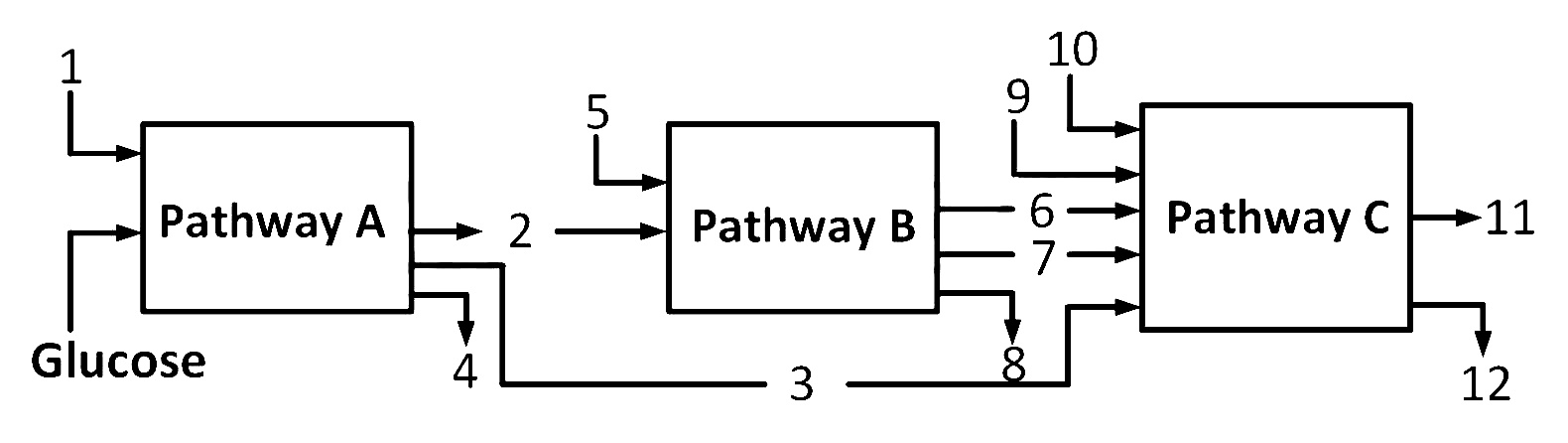
The three boxes in this diagram represent the three major biosynthetic pathway in aerobic respiration. Arrows represent net reactants or products.

NEET 2013 Biology - Respiration in Plants Question 25 English
Arrows numbered 4, 8 and 12 can all be
(A)
H2O
(B)
FAD+ or FADH2
(C)
NADH
(D)
ATP.
(D)

Solution

In the given diagram, pathway A represents glycolysis, pathway B represents Krebs’ cycle and pathway C represents oxidative phosphorylation. Arrows numbered 4, 8 and 12 can all be ATP.
Q.24
Which of the metabolites is common to respiration-mediated breakdown of fats, carbohydrates and proteins?
(A)
Pyruvic acid
(B)
Acetyl CoA
(C)
Glucose- 6 - phosphate
(D)
Fructose 1, 6 - bisphosphate
(B)

Solution

Acetyl CoA is common to respiration mediated breakdown of fats, carbohydrates and proteins. Fats are broken down to fatty acid and glycerol and finally are degraded to acetyl Co - A. Protein first degraded by proteases to indiviual amino acids which are deaminated to pyruric acid and further decarboxylised to acetyl Co- A.
Q.25
DNA fragments generated by the restriction endonucleases in a chemical reaction can be separated by :
(A)
Polymerase chain reaction
(B)
Restriction mapping
(C)
Electrophoresis
(D)
Centrifugation
(C)

Solution

DNA fragments generated by restriction endonucleases in a chemical reaction can be separated by gel electrophoresis. Since DNA fragments are negatively charged molecules they can be separated by forcing them to move towards the anode under an electric field through a medium/matrix. The DNA fragments separate according to their size through sieving effect provided by matrix.
Q.26
Which of the following is not corretly matched for the organism and its cell wall degrading enzyme ?
(A)
Plant cells- Cellulase
(B)
Algae-Methylase
(C)
Fungi - Chitinase
(D)
Bacteria-Lysozyme
(B)

Solution

Algae is a plant and so its cell wall is made up of cellulose. Cellulase enzyme is needed for degradation of its cell wall.
Q.27
The colonies of recombinat bacteria appear white in contrast to blue colonies of non-recombinant bacteria because of :
(A)
Insertional inactivation of alphagalactosidase in recombinant bacteria
(B)
Inactivation of glycosidase enzyme in recombinant bacteria
(C)
Insertional inactivation of alphagalactosidase in non-recombinant bacteria
(D)
Non-recombinant bacteria containing betagalactosidase
(D)

Solution

Alternative selectable markers have been developed which differentiate recombinant from non-recombinants on the basis of their ability to produce colour in the presence of chromogenic substrate. In this , a recombinant DNA is inserted within the coding sequence of an enzyme β-galactosidase. This results into inactivation of the enzyme, which is referred to as insertional inactivation. The presence of chromogenic substrate give blue coloured colonies of the plasmid in the bacteria does not have an insert. Presence of insert results into insertional inactivation of the galactosidase and the colonies do not produce any colour, these are identified as recombinant colonies.
Q.28
Which of the following represent maximum number of species among global biodiversity ?
(A)
Fungi
(B)
Algae
(C)
Mosses and Ferns
(D)
Lichens
(A)

Solution

Fungi is a large kingdom of over 72,000 species. They are achlorophyllous, heterotrophic, spore forming, non-vascular, eukaryotic organisms which contain chitin or fungal cellulose in their walls and possess glycogen as food reserve. They are major decomposers of many ecosystems and are associate of many organisms.
Q.29
Which of the following represent maximum number of species among global biodiversity ?
(A)
Fungi
(B)
Algae
(C)
Mosses and Ferns
(D)
Lichens
(A)

Solution

Fungi is a large kingdom of over 72,000 species. They are achlorophyllous, heterotrophic, spore forming, non-vascular, eukaryotic organisms which contain chitin or fungal cellulose in their walls and possess glycogen as food reserve. They are major decomposers of many ecosystems and are associate of many organisms.
Q.30
Which one of the following is not used for ex situ plant conservation?
(A)
Shifting cultivation
(B)
Field gene banks
(C)
Botanical Gardens
(D)
Seed banks
(A)

Solution

Shifting or Jhum cultivation contributes to deforestation. Ex-situ conservation is a biodiversity conservation method in which threatened animals and plants are taken out of their natural habitat and placed in protected environments as zoological parks, botanical gardens, wildlife safari parks, seed banks and gene banks.
Q.31
Which one of the following is not a correct statement?
(A)
A museum has collection of photographs of plants and animals.
(B)
Key is taxonomic aid for identification of specimens.
(C)
Herbarium houses dried, pressed and preserved plant specimens.
(D)
Botanical gardens have collection of living plants for reference.
(A)

Solution

Museum – Biological museums are generally set up in educational institutes such as schools and colleges. Museums have collections of preserved plant and animal specimens for study and reference. Specimens are preserved in the containers or jars in preservative solutions. Plant and animal specimens may also be preserved as dry specimens. Insects are preserved in insect boxes after collections, killing and pinning. Larger animals like birds and mammals are usually stuffed and preserved. Museums often have collections of skeletons of animals too.
Q.32
Which of the following are likely to be present in deep sea water?
(A)
Blue-green algae
(B)
Saprophytic fungi
(C)
Archaebacteria
(D)
Eubacteria
(C)

Solution

Archaebactera live in some of the most harsh habitats such as extreme salty areas (halophiles), hot springs (thermoacidophiles) and marshy areas (methanogens) and in deep sea water.
Q.33
Pigment containing membranous extensions in some cyanobacteria are
(A)
pneumatophores
(B)
chromatophores
(C)
heterocysts
(D)
basal bodies.
(B)

Solution

Chromatophore is a pigmented lamellar or vesicular structure that can be isolated from disrupted photosynthetic bacteria or cyanobacteria.

Their plasma membrane may be projected in folds into the cytoplasm forming lamellae that have, therefore, double unit-membrane structure. The pigments and most of the enzymes required for the light-induced electron transport and phosphorylation processes of photosynthesis, are located in the plasma membrane and lamellae.
Q.34
Among bitter gourd, mustard, brinjal, pumpkin, china rose, lupin, cucumber, sunhemp, gram, guava, beam, chilli, plum, petunia, tomato, rose, Withania, potato, onion, aloe and tulip how many plants have hypogynous flower?
(A)
Fifteen
(B)
Eighteen
(C)
Six
(D)
Ten
(A)

Solution

Mustard (cruciferae) , brinjal (solanaceae) china rose (malvaceae), lupin (leguminosae), gram (leguminosae), bean (leguminosae), chilli, Petunia, potato, tomato, Withania (solanaceae), onion, Aloe, tulip (liliaceae) have hypogynous flower while bittergourd, cucumber (cucurbitaceae), guava (myrtaceae) have epigynous flower and rose has perigynous flower.
Q.35
In China rose the flowers are
(A)
zygomorphic, hypogynous with imbricate aestivation
(B)
zygomorphic, epigynous with twisted aestivation
(C)
actinomorphic, hypogynous with twisted aestivation
(D)
actinomorphic, epigynous with valvate aestivation
(C)

Solution

In china rose (Hibiscus rosa-sinensis) flowers are actinomorphic , hypogynous with twisted aestivation in corolla.
Q.36
If two persons with 'AB' blood group marry and have sufficiently large number of children, these children could be classified as 'A' blood group : 'AB' blood group : 'B' blood group in 1 : 2 : 1 ratio. Modern technique of protein electrophoresis reveals presence of both 'A' and 'B' type proteins in 'AB' blood group individuals. This is an example of :
(A)
Codominance
(B)
Partial dominance
(C)
Incomplete dominance
(D)
Complete dominance
(A)

Solution

ABO blood group system in human beings is an example of codominant, dominant recessive and multiple alletes. Blood groups are controlled by the gene I located on 9th chromosome that has 3 multiple alleles, out of which any two are found in a person. In codominance both gene express it self completely
Q.37
Select the incorrect statement with regard to Haemophilia is :
(A)
It is a dominant disease
(B)
A single protein involved in the clotting of blood is affected
(C)
It is a recessive disease
(D)
It is a sex-linked disease
(A)

Solution

Haemophilia is sex-linked disease which is also known as bleeder’s disease as the patient will continue to bleed even from a minor cut since he or she does not possess the natural phenomenon of blood clotting due to absence of antihaemophiliac globulin or factor VIII (haemophilia – A) and plasma thromboplastin factor IX (haemophilia–B, Christmas disease) essential for it. As a result of continuous bleeding the patient may die of blood loss. It is genetically due to the presence of a recessive sex linked gene h, carried by X-chromosome. A female becomes haemophiliac only when both of her X-chromosomes carry the gene (XhXh).

However, such females generally die before birth because the combination of these two recessive alleles is lethal. A female having only one allele for haemophilia (XXh) appears normal because the allele for normal blood clotting present on the other X-chromosome is dominant. Such females are known as carriers. In case of males, a single gene for the defect is able to express itself as the Y-chromosome is devoid of any corresponding allele (XhY).
Q.38
Which idea is depicted by a cross in which the F1 generation resembles both the parents?
(A)
law of dominance
(B)
co-dominance
(C)
incomplete dominance
(D)
inheritance of one gene
(B)

Solution

In codominance, both the alleles are able to express themselves independently when present together resulting in a phenotype that is intermediate between both the parental homozygous phenotypes, thereby resembling both of them. E.g., roan coat colour in cattle is a result of co-dominance of alleles for white and red coat colour.
Q.39
Which of the following cannot be detected in a developing foetus by amniocentesis ?
(A)
Sex of the foetus
(B)
jaundice
(C)
Klinefelter syndrome
(D)
Down syndrome
(B)

Solution

Amniocentesis is a fetal sex determination test in which amniotic fluid containing fetal cells which surrounds the developing embryo is extracted and cells are tested for chromosomal pattern to identify genetic disorders, if any. Jaundice is not a chromosomal disorder thus cannot be tested by amniocentesis.
Q.40
If both parents are carriers for thalessemia, which is an autosomal recessive disorder, what are the chances of pregnancy resulting in an affected child ?
(A)
100%
(B)
25%
(C)
no chance
(D)
50%
(B)

Solution

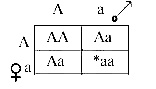
Genotype of carrier parents is – Aa (male parent) × Aa (female parent) NEET 2013 Biology - Principles of Inheritance and Variation Question 152 English Explanation AA → normal child (25%)
Aa → carriers child (50%)
aa → affected child (25%)
Q.41
Which of the following statements is not true of two genes that show 50% recombination frequency ?
(A)
The genes are tightly linked
(B)
The genes show independent assortment
(C)
If the genes are present on the same chromosome, they undergo more than one crossovers in every meiosis.
(D)
The genes may be on different chromosomes
(A)

Solution

Tightly linked genes show more linkage then crossing over.
Q.42
The diagram shows an important concept in the genetic implication of DNA. Fill in the blanks A to C. NEET 2013 Biology - Molecular Basis of Inheritance Question 158 English
(A)
A-translation B-extension C-Rosalind Franklin
(B)
A-translation B-transcription C-Erevin Chargaff
(C)
A-transcription B-translation C-Francis Crick
(D)
A-transcription B-replication C-James Watson
(C)

Solution

The expression of the genetic material occurs normally through the production of proteins. This involves two consecutive steps. These are transcription and translation. The DNA codes for the production of messenger RNA (mRNA) during transcription. Messenger RNA carries coded information to ribosomes. The ribosomes read this information and use it for protein synthesis. This process is called translation. F.H.C. Crick described this undirectional flow of information in 1958 as the ‘central dogma of molecular biology’.
Q.43
Which enzyme will be produced in a cell in which there is a non-sense mutation in the lac Y gene ?
(A)
Transacetylase
(B)
Lactose permease and transacetylase
(C)
Lactose permease
(D)
-galactosidase
(D)

Solution

A nonsense mutation is the one which stops polypeptide synthesis due to the formation of termination or non-sense codon. In lac operon, sequence of structural genes is Z, Y and A, which respectively code for -galactosidase, lactose permease and transacetylase. If the gene Y has nonsense mutation, gene expression will stop at it, resulting in non-expression of both gene Y and successive gene A. Thus, only -galactosidase enzyme will be produced.
Q.44
In plant breeding programmes, the entire collection (of plants/seeds) having all the diverse alleles for all genes in a given crop is called :
(A)
germplasm collection
(B)
evaluation and selection of parents
(C)
selection of superior recombinants
(D)
cross-hybridisation among the selected parents
(A)

Solution

Germplasm collection is the first step of plant breeding programmes. As genetic variability is the root of any breeding programme. In many crops pre-existing genetic variability is available from wild relatives of the crop. Collection and preservation of all the different wild varieties, species and relatives of the cultivated species (followed by their characteristics) is a prerequisite for effective exploitation of natural genes available in the population.
Q.45
Which of the following Bt crops is being grown in India by the farmers ?
(A)
Soybean
(B)
Cotton
(C)
Brinjal
(D)
Maize
(B)

Solution

Bt toxin genes were isolated from Bacillus thuringiensis and incorporated into the several crop plants such as cotton. The choice of genes depends upon the crop and targeted pest, as most Bt toxins are insect-group specific. The toxin is coded by a gene named cry. These are numerous genes. Two cry genes cry I Ac and cry II Ab have been incorporated in cotton. The genetically modified crop is called Bt cotton as it contains Bt toxin genes against cotton bollworms.
Q.46
Besides paddy fields, cyanobacteria are also found inside vegetative part of :
(A)
Cycus
(B)
Psilotum
(C)
Pinus
(D)
Equisetum
(A)

Solution

Coralloid roots of Cycas have symbiotic association with blue-green algae like Nostoc and Anabaena. Coralloid roots are irregular, negatively geotropic, dichotomously branched coral like roots which do not possess root hairs and root caps.
Q.47
A biologist studied the population of rats in a barn, He found that the average natality was 250, average mortality 240, immigration 20 and emigration 30. The net increase in population is :
(A)
15
(B)
05
(C)
10
(D)
zero
(D)

Solution

Net increase in population :
(Natality + Immigration) – (Mortality + Emigration)
(250 + 20) – (240 + 30) = 270 – 270 = 0
Q.48
A sedentary sea anemone gets attached to the shell lining of hermit crab. The association is :
(A)
Commensalism
(B)
Commensalism
(C)
Ectoparasitism
(D)
Symbiosis
(D)

Solution

Sea anemone gets associated to the shell of hermit crab. It provides camouflage and protection to the crab due to presence of stinging cells in sea anemone. In turn, sea anemone is transported to new places reaching new food sources. This is symbiosis as both the organisms are benefitted.
Q.49
Kyoto-Protocol was endorsed at :
(A)
CoP-6
(B)
CoP-4
(C)
CoP-3
(D)
CoP-5
(C)

Solution

In year 1997, at the conference of parties III (CoP - 3) , Kyoto, Japan the Kyoto conference on climate change took place. In that conference developed countries agreed to specific targets for cutting their emissions of green house gases. A general framework has defined for this with specifics to be detailed in next few years. This become known as the kyoto protocol.
Q.50
Global warming can be controlled by :
(A)
Increasing deforestation, slowing down the growth of human population
(B)
Reducing deforestation, cutting down use of fossil fuel
(C)
Increasing deforestation, reducing efficiency of energy usage
(D)
Reducing reforestation, increasing the use of fossil fuel
(B)

Solution

In first three options CO2 concentration increases but it decreases in option (d). Global warming is increase of earth’s average temperature. Global warming is due to green house effect which is naturally occurring phenomenon that is responsible for heating of Earth’s surface and atmosphere. The main green house gas is carbon-dioxide (contribute 60%).
Q.51
The Air Prevention and control of pollution Act came into force in :
(A)
1985
(B)
1981
(C)
1990
(D)
1975
(B)

Solution

In India, the Air (Prevention and control of pollution) Act came into force in 1981 but was amended in 1987 to include noise as an air pollutant.
Q.52
Monoecious plant of Chara shows occurrence of
(A)
upper antheridium and lower oogonium on the same plant
(B)
upper oogonium and lower antheridium on the same plant
(C)
antheridiophore and archegoniophore on the same plant
(D)
stamen and carpel on the same plant.
(B)

Solution

Male sex organ is called antheridium or globule while female sex organ is called oogonium. They develop on the same branchlet in the same plant in Chara.
Q.53
Isogamous condition with non-flagellated gametes is found in
(A)
Volvox
(B)
Fucus
(C)
Chlamydomonas
(D)
Spirogyra.
(D)

Solution

In Spirogyra, sexual reproduction occurs through conjugation. Gametes are non-flagellated, morphologically similar. But physiologically different (isogamy with physiological anisogamy). Volvox and Fucus are examples of oogamous and Chlamydomonas contains isogamous flagellated gametes.
Q.54
Read the following statements (A - E) and answer the question which follows them.

(A)   In liverworts, mosses and ferns gametophytes are free-living.
(B)   Gymnosperms and some ferns are heterosporous.
(C)   Sexual reproduction in Fucus, Volvox and Albugo is oogamous.
(D)   The sporophyte in liverworts is more elaborate than that in mosses.
(E)   Both, Pinus and Marchantia are dioecious.

How many of the above statements are correct?
(A)
Three
(B)
Four
(C)
One
(D)
Two
(A)

Solution

In liverworts and ferns gametophytes are free living while in fern, sporophytes are free living. Gymnosperms and genera like Selaginella and Salvinia are heterosporous. The sporophyte in mosses are more elaborate than that of liverworts, Pinus is monoecious and heterosporous. Marchantia is dioecious.
Q.55
Select the wrong statement
(A)
In Oomycetes, female gamete is smaller and motile, while male gamete is larger and non-motile.
(B)
Chlamydomonas exhibits both isogamy and amisogamy and Fucas shows oogamy.
(C)
Isogametes are similar in structure, function and behaviour.
(D)
Anisogametes differ either in structure, function or behaviour.
(A)

Solution

In oomycetes, like other oogamous organisms female gamete is large and non- motile, while male gamete is small and motile.
Q.56
During seed germination its stored food is mobilized by
(A)
ABA
(B)
gibberellin
(C)
ethylene
(D)
cytokinin.
(B)

Solution

Gibberellins are plant growth substances chemically related to terpenes and occurring naturally in plants and fungi. They promote elongation of stems, e.g., bolting in cabbage plants and the mobilization of food reserves in germinating seeds and are influential in inducing flowering and fruit development.
Q.57
Which one of the following processes during decomposition is correctly described ?
(A)
Catabolism – Last step in the decomposition under fully anaerobic condition
(B)
Leaching – Water soluble inorganic nutrients rise to the top layers of soil
(C)
Fragmentation –Carried out by organisms such as earthworm
(D)
Humification – Leads to the accumulation of a dark coloured substance humus which undergoes microbial action at a very fast rate
(C)

Solution

Humification, catabolism, leaching and fragmentation are the steps of decomposition which operate simultaneously on the detritus. Fragmentation is breaking down detritus into smaller particles by detritivores like earthworm. By the process of leaching, water soluble inorganic nutrients go down into soil horizon and get precipitated as unavailable salts. Humification occurs at a very slow rate.
Q.58
Natural reservoir of phosphorus is :
(A)
Fossils
(B)
Rock
(C)
Sea water
(D)
Animal bones
(B)

Solution

The natural reservoir of phosphate is rock which contains phosphorus in the form of phosphates when rocks are weathered, minute amounts of these phosphate dissolve in soil solution and are absorbed by the roots of the plants . Herbivores and other animals obtain this element from plants.
Q.59
Secondary productivity is rate of formation of new organic matter by :
(A)
Parasite
(B)
Decomposer
(C)
Producer
(D)
Consumers
(D)

Solution

The rate of resynthesis of organic matter by the consumers is known as secondary productivity . It depends upon the loss while transferring energy containing organic matter from the previous trophic level plus the consumption due to respiration and predation. Respiration loss is about 20% for autotrophs, 30% for herbivores and upto 60% in case of carnivores. Therefore net productivity decreases with each trophic level.
Q.60
Infection of Ascaris usually occurs by :
(A)
Tse-tse fly
(B)
mosquito bite
(C)
drinking water containing eggs of Ascaris
(D)
eating imperfectly cooked pork
(C)

Solution

Ascaris, an intestinal parasite causes ascariasis. Symptoms of these disease include internal bleeding, muscular pain, fever, anaemia and blockage of the intestinal passage. The eggs of the parasite are excreted along with the faeces of infected persons which contaminate soil, water, plants, etc. A healthy person acquires this infection through contaminated water vegetables, fruits, etc.
Q.61
The given figure shows schematic plan of blood circulation in humans with labels A to D. Identify the label and give its functions? NEET 2013 Biology - Body Fluids and Its Circulation Question 30 English
(A)
A - Pulmonary vein - takes impure blood from body parts, pO2 = 60 mm Hg
(B)
B - Pulmonary artery - takes blood from heart to lungs, pO2 = 90 mm Hg
(C)
C - Vena cava - takes blood from body parts to right auricle, pCO2 = 45 mm Hg
(D)
D - Dorsal aorta - takes blood from heart to body parts, pO2 = 95 mm Hg
(C)

Solution

In the given figure: A is pulmonary vein which brings pure blood from lungs to left atrium, B is dorsal aorta which carries blood from heart to body parts, C is vena cava which carries impure blood from body parts to right auricle, and D is pulmonary artery which takes impure blood from heart to lungs.
Q.62
The diagram given here is the standard ECG of a normal person. The P-wave represents the
NEET 2013 Biology - Body Fluids and Its Circulation Question 59 English
(A)
beginning of the systole
(B)
end of systole
(C)
contraction of both the atria
(D)
initiation of the ventricular contraction.
(C)

Solution

NEET 2013 Biology - Body Fluids and Its Circulation Question 59 English Explanation The P-wave represents the electrical excitation (or depolarisation) of the atria, which leads to the contraction of both the atria. The QRS complex represents the depolarisation of the ventricles, which initiates the ventricular contraction. The contraction starts shortly after Q and marks the beginning of the systole.
Q.63
The characteristic and an example of a synovial joint in humans is
(A)
Characteristics Examples
Fluid filled synovial cavity
between two bones
Joint between atlas
and axis
(B)
Characteristics Examples
Lymph filled between two
bones, limited movement
Gliding joint between
carpals
(C)
Characteristics Examples
Fluid cartilage between two
bones, limited movements
Knee joint                
(D)
Characteristics Examples
Fluid filled between two
joints, provides cushion
Skull bones    
(A)

Solution

Synovial joints are characterised by the presence of a fluid filled synovial cavity between the articulating surfaces of the two bones. Such an arrangement allows considerable movement. These joints help in locomotion and many other movements. Ball and socket joint (between humerus and pectoral girdle), Hinge joint (knee joint), Pivot joint (between atlas and axis), Gliding joint (between the carpals) and Saddle joint (between carpal and metacarpal of thumb) are some examples.
Q.64
The H-zone in the skeletal muscle fibre is due to
(A)
the central gap between actin filaments extending through myosin filaments in the A-bond
(B)
extension of myosin filaments in the central portion of the A-band
(C)
the absence of myofibrils in the central portion of A-band
(D)
the central gap between myosin filaments in the A-band.
(A)

Solution

Central part of thick filament, not overlapped by thin filaments is called the ‘H’ zone. ‘H’ zone is also called Hensen’s Line.
Q.65
Select the correct statement with respect to locomotion in humans.
(A)
The vertebral column has 10 thoracic vertebrae.
(B)
The joint between adjacent vertebrae is a fibres joint.
(C)
A decreased level of progesterone causes osteoporosis in old people.
(D)
Accumulation of uric acid crystals in joints causes their inflammation.
(D)

Solution

Vertebral column has 12 thoracic vertebrate. The joints between adjacent vertebrae is cartilaginous joint which permits limited movements. Progesterone is secreted by corpus luteum which supports in pregnancy in females. Deposition of uric acid in form of urate crystal in the joints are responsible for the inflammation and painful symptoms of gout.
Q.66
A diagram showing axon terminal and synapse is given. Identify correctly at least two of A - D. NEET 2013 Biology - Neural Control and Coordination Question 21 English
(A)
A - Receptor, C - Synaptic vesicles
(B)
A - Neurotransmitter, B - Synaptic cleft
(C)
C - Neurotransmitter, D - Ca++
(D)
B - Synaptic connection, D - K+
(A)

Solution

A-Receptor, C-Synaptic vesicles B is synaptic cleft. A synapse is formed by the membranes of a synaptic neuron and post synaptic neuron, which may or may not separated by a gap called synaptic cleft. It is filled by fluid called neurotransmitter which are involved in transmission of impulse at these synapses.
Q.67
Parts A, B, C and D of the human eye are shown in the diagram. Select the option which gives correct identification along with its functions/ characteristics. NEET 2013 Biology - Neural Control and Coordination Question 22 English
(A)
B - Blind spot-Has only a few rods and cones.
(B)
A - Retina - Contains photoreceptors, i.e., rods and cones.
(C)
C-Aqueous chamber-Reflects the light which does not pass through the lens.
(D)
D - Choroid - Its anterior part forms ciliary body.
(B)

Solution

In the given figure, A is retina which is the innermost layer, containing photoreceptors rods and cones. B is blind spot. Optic nerves pierce through retina at blind spot. It has no visual cells. C is aqueous humor. It nourishes cornea and lens both of which are avascular. D is sclera. It is the outermost covering and maintains shape of eyeball. It also protects inner layers of the eye.
Q.68
The most abundant intracellular cation is
(A)
H+
(B)
K+
(C)
Na+
(D)
Ca++.
(B)

Solution

K+ ions predominate in the intracellular fluid whereas Na+ ions predominate in extracellular fluid.
Q.69
Artificial insemination means :
(A)
transfer of sperms of husband to a test tube containing ova
(B)
artificial introduction of sperms of a healthy donor into the vagina
(C)
transfer of sperms of a healthy donor to a test tube containing ova
(D)
introduction of sperms of a healthy donor directly into the ovary
(B)

Solution

In artificial insemination technique, the semen of a healthy donor male is collected and is introduced artificially through a flexible polyethylene catheter into the vagina or into uterus called intrauterine insemination (IUI). Best results are obtained when the motile sperm count is more than 10 million. The fertilizing capacity of spermatozoa (sperms) is for 24 - 48 hours. The procedure may be repeated 2-3 times over a period of 2 – 3 days.
Q.70
One of the legal methods of birth control is :
(A)
abortion by taking an appropriate medicine
(B)
by a premature ejaculation during coitus
(C)
by abstaining from coitus from day 10 to 17 of the menstrual cycle
(D)
by having coitus at the time of day break
(A)

Solution

Medical termination of pregnancy (MTP) or induced abortion become legal in India from 1971 with some strict conditions to avoid its misuse. Such restrictions are important to check indiscriminate and illegal female foeticides which are reported to be high in India. All the other options are of natural methods of contraception.
Q.71
What external changes are visible after the last moult of a cockroach nymph ?
(A)
Both fore wings and hind wings develop
(B)
Mandibles become harder
(C)
Labium develops
(D)
Anal cerci develop
(A)

Solution

The development of cockroach is paurometabolous meaning that their development is through nymphal stage. The nymphs look very much like adults. The nymph grows by moulting about 13 times to reach adult form. The last nymphal stage has wingpads while adult cockroaches have wings.
Q.72
Select the correct match of the digested products in humans given in column with their absorption site and mechanism in column .
(A)
Column Column
Glycerol, fatty acids Duodenum, move as
chylomicrons
(B)
Column Column
Cholesterol, maltose Large intestine, active
absorption
(C)
Column Column
Glycine, glucose Small intestine, active
absorption
(D)
Column Column
Fructose, Na+ Small intestine, passive
absorption
(C)

Solution

Small intestine is major area of absorbtion of nutrients. Approximately 80% of absorbtion take place here. Glucose, fructose, fatty acids, amino acids (Glycine etc.) are absorbed through mucosa into blood and lymph by active absorbtion.
Q.73
A pregnant female delivers a baby who suffers from stunted growth, mental retardation, low intelligence quotient and abnormal skin. This is the result of
(A)
cancer of the thyroid gland
(B)
oversecretion of pars distalis
(C)
deficiency of iodine in diet
(D)
low secretionn of growth hormone.
(C)

Solution

Iodine is essential for the normal rate of hormone synthesis in the thyroid. Deficiency of iodine in our diet results in hypothyroidism and enlargement of the thyroid gland, commonly called goitre. Hypothyroidism during pregnancy causes defective development and maturation of the growing baby leading to stunted growth (cretinism), mental retardation, low intelligence quotient, abnormal skin, deaf-mutism, etc.
Q.74
Figure shows human urinary system with structures labelled A to D. Select option which correctly identifies them and gives their characteristic and/or functions. NEET 2013 Biology - Chemical Coordination and Integration Question 29 English
(A)
A - Adrenal gland - located at the anterior part of kidney. Secrete catecholamines which stimulate glycogen breakdown.
(B)
C - Medulla - inner zone of kidney and contains complete nephrons.
(C)
B - Pelvis - broad funnel shaped space inner to hilum, directly connected to loops of Henle.
(D)
D - Cortex - outer part of kidney and do not contain any part of nephrons.
(A)

Solution

In the given figure, A is adrenal gland which secretes two catecholamines; adrenaline (epinephrine) and noradrenaline (norepinephrine). Adrenaline increases the conversion of glycogen to glucose providing quick energy for “fight or flight” response. B is renal pelvis which is a sac like cavity of the kidney leading to ureters, is not directly connected to loop of Henle. C is medulla, the inner region of kidney containing loop of Henle, collecting ducts and ducts of Bellini. D is cortex which has proximal and distal convoluted tubules and contains Malpighian corpuscles.
Q.75
Which of the following statements is correct in relation to the endocrine system?
(A)
Non-nutrient chemicals produced by the body in trace amounts that act as intercellular messenger are known as hormones.
(B)
Releasing and inhibitory hormones are produced by the pituitary gland.
(C)
Adenohypophysis is under direct neural regulation of the hypothalamus.
(D)
Organs in the body like gastrointestinal tract, heart, kidney and liver do not produce any hormones.
(A)

Solution

Hormones are non-nutrient chemicals which act as intercellular messengers and are produced in trace amounts.
Gastrointestinal tracts secretes four major peptide hormones – gastrin, secretin, cholecystokinin (CCK) and gastric inhibitory peptide (GIP) while juxtaglomerular cells of kidney secretes erythropoietin, a peptide hormone. Releasing and inhibitory hormones are produced by hypothalamus. Neurohypophysis or posterior pituitary is under direct neural regulation of the hypothalamus.
Q.76
Select the answer which correctly matches the endocrine gland with the hormone it secretes and its function/deficiency symptom.
(A)
Endocrine
gland
Hormone Function/
Deficiency
symptoms
Thyroid
gland
Thyroxine Lack of iodine
in diet results
in goitre
(B)
Endocrine
gland
Hormone Function/
Deficiency
symptoms
Corpus
luteum
Testos-
terone
Stimulates
spermatogenesis
(C)
Endocrine
gland
Hormone Function/
Deficiency
symptoms
Corpus
luteum
Testos-
terone
Stimulates
spermatogenesis
(D)
Endocrine
gland
Hormone Function/
Deficiency
symptoms
Posterior
pituitary
Growth
hormone
(GH)
Oversecretion
stimulates ab-
normal growth
(A)

Solution

Iodine is required for production of thyroxine, thus lack of iodine results in hyposecretion of thyroxine. To compensate, thyroid gland enlarges and the condition is known as goitre. Corpus luteum secretes progesterone which maintains uterine endothelium and mucus secretion in uterus, Fallopian tubes and vagina. Oxytocin stimulates uterine contractions but is secreted by posterior pituitary. Anterior pituitary secretes GH, whose oversecretion causes abnormal growth.
Q.77
Which of the following is not the function of placenta?
(A)
Facilitates supply of oxygen and nutrients to embryo
(B)
Secretes estrogen
(C)
Facilitates removal of carbon dioxide and waste material from embryo
(D)
Secretes oxytocin during parturition
(D)

Solution

Parturition is induced by a complex neuroendocrine mechanism. The signals for parturition originate from the fully developed fetus and the placenta which induce mild uterine contractions called fetal ejection reflex. This triggers release of oxytocin from the maternal pituitary. Oxytocin acts on the uterine muscle and causes stronger uterine contractions, which in turn stimulates further secretion of oxytocin. The stimulatory reflex between the uterine contraction and oxytocin secretion continues resulting in stronger and stronger contractions. This lead to expulsion of the baby out of the uterus through the birth canal.
Q.78
Menstrual flow occurs due to lack of :
(A)
Progesterone
(B)
FSH
(C)
Oxytocin
(D)
Vasopressin
(A)

Solution

The corpus luteum secretes large amounts of progesterone which is essential for maintenance of the endometrium necessary for implantation of the fertilized ovum and other events of pregnancy. In the absence of fertilization, the corpus luteum degenerates. This causes disintegration of the endometrium leading to menstruation. The menstrual flow results due to breakdown of endometrial lining of the uterus and its blood vessels which forms liquid that comes out through vagina.
Q.79
What is the correct sequence of sperm formation?
(A)
Spermatogonia, spermatozoa, spermatocytes, spermatids
(B)
Spermatogonia, spermatocytes, spermatids, spermatozoa
(C)
Spermatids, spermatocytes, spermatogonia, spermatozoa
(D)
Spermatogonia, spermatocytes, spermatozoa, spermatids
(B)

Solution

In testis, the immature male germ cells or spermatogonia (2n) multiply by mitotic division and increase in number. Some spermatogonia (2n) known as primary spermatocytes divide by meiotic division to form secondary spermatocytes (n). The secondary spermatocytes undergo second meiotic division to produce spermatid which are transformed into spermatozoa (sperms) by the process called spermiogenesis.
Q.80
One of the representatives of Phylum Arthropoda is
(A)
puffer fish
(B)
flying fish
(C)
cuttle fish
(D)
silver fish.
(D)

Solution

Representive of Phylum Arthropoda is silverfish. Arthropoda is the largest phylum of Animalia, which covers two-thirds of all named species.
Q.81
Which of the following are correctly matched with respect to their taxonomic classification?
(A)
House fly, butterfly, tse tse fly, silverfish-Insecta
(B)
Spiny anteater, sea urchin, sea cucumber - Echinodermata
(C)
Flying fish, cuttlefish, silverfish-Pisces
(D)
Centipede, millipede, spider, scorpion-Insecta
(A)

Solution

House fly, butterfly, tse tse fly, silverfish all belongs to insecta
Q.82
Match the name of the animal (column I), with one characteristic (column II), and the phylum/class (column III) to which it belongs.
(A)
Column Column Column
Limulus Body covered by chitinous
exoskeleton
Pisces
(B)
Column Column Column
Adamsia Radially symmetrical
Porifera
(C)
Column Column Column
Petronmyzon Ectoparasite
Cyclostomata
(D)
Column Column Column
Ichthyophis Terrestrial
Reptilia
(C)

Solution

Ichthyophis – Amphibian
Limulus – Arthropoda
Adamsia – Cnidaria
Petramyzon – Jawless vertebrate & ectoparasite, cyclostomate
Q.83
Which group of animals belong to the same phylum?
(A)
Prawn, Scorpion, Locusta
(B)
Sponge, Sea anemone, Starfish
(C)
Malarial parasite, Amoeba, Mosquito
(D)
Earthworm, Pinworm, Tapeworm
(A)

Solution

Animals belonging to option (d) have earthworm an Annelida and Tapeworm a platyhelminth. Option (b) have sponge of Phylum Porifera and Starfish of Phylum Echinodermata. Option (c) have malarial parasite a protozoan and Mosquito of phylum Arthropoda.
Q.84
The figure shows a diagrammatic view of human respiratory system with labels A, B, C and D. Select the option which gives correct identification and main function and / or characteristic. NEET 2013 Biology - Breathing and Exchange of Gases Question 28 English
(A)
A - Trachea - Long tube supported by complete cartilaginous rings for conducting inspired air.
(B)
C - Alveoli - Thin walled vascular bag like structures for exchange of gases.
(C)
B - Pleural membrane - Surround ribs on both sides to provide cushion against rubbing.
(D)
D - Lower end of lungs - Diaphragm pulls it down during inspiration.
(B)

Solution

In the given figure A is trachea. It is supported by incomplete cartilaginous rings which prevent its collapse during inspiration. B is pleural membrane. It encloses lungs. C is alveoli. They are thin walled sacs having extensive network of capillaries for gaseous exchange. D is diaphragm.
Q.85
The process by which organisms with different evolutionary history evolve similar phenotypic adaptations in response to a common environmental challenge is called :
(A)
Convergent evolution
(B)
Adaptive radiation
(C)
Natural selection
(D)
Non-random evolution
(A)

Solution

The wings is a classic example of convergent evolution. Flying insects, birds and bats same all evolved the capacity of flight independently. All four serve the same function and are similar in structure but anatomically different.
Q.86
Variation in gene frequencies within populations can occur by chance rather than by natural selection. This is referred to as :
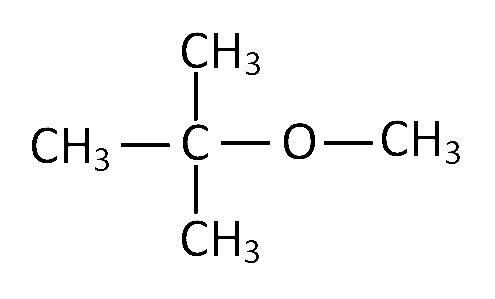
(A)
Genetic drift
(B)
Genetic load
(C)
Genetic flow
(D)
Random mating
(A)

Solution

Genetic drift is variation in gene frequencies within populations can occur by chance rather than by natural selection, sometimes the change in allele frequency is so different in the new sample of population that they become a different species. The original drifted population becomes founders and the effect is called founder effect.
Q.87
The tendency of population to remain in genetic equilibrium may be disturbed by :
(A)
lack of random mating
(B)
random mating
(C)
lack of migration
(D)
lack of mutations
(A)

Solution

Hardy-Weinberg law states that allele frequencies in a population are stable and remain constant from generation to generation when there is random and non-selective mating. In case of lack of random mating, genetic equilibrium may be disturbed.
Q.88
The eye of octopus and eye of cat show different patterns of structure, yet they perform similar function, This is an example of :
(A)
Homologous organs that have evolved due to divergent evolution
(B)
Analogous organs that have evolved due to convergent evolution
(C)
Homologous organs that have evolved due to convergent evolution
(D)
Analogous organs that have evolved due to divergent evolution
(B)

Solution

The eye of octopus and eye of cat show different patterns of structure, yet they perform similar functions. This is an example of analogous organs.
Analogous organs have evolved due to convergent evolution. Analogous organs have developed in the evolutionary process through adaptation of quite different organisms to similar mode of life.
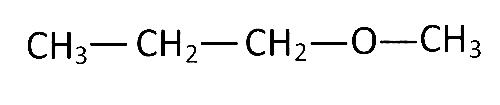
Q.89
According to Darwin, the organic evolution is due to -
(A)
Reduced feeding efficiency in one species due to the presence of interfering species
(B)
Competition within closely related species
(C)
Intraspecific competition
(D)
Interspecific competition
(C)

Solution

Intraspecific competition leads to evolution. Variations arise naturally in a growing population due to crossing over etc. Organisms with variations better suited to their environment are favoured by natural selection, while less fitted ones are eliminated. Gradually this continued process of natural selection leads to evolution. Interspecfic struggle also plays a role in evolution but intraspecific struggle is more intense and prominent one.