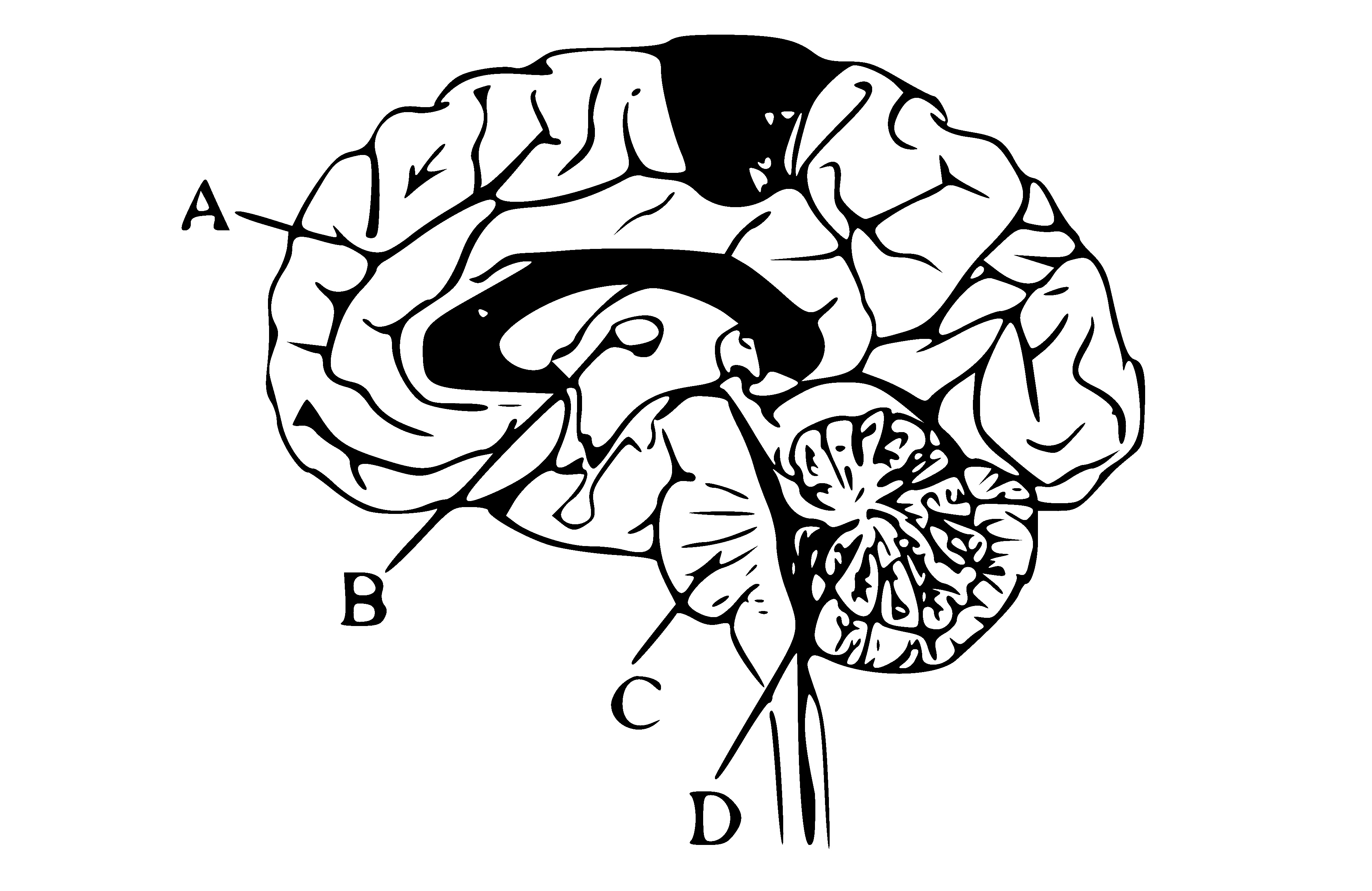
NEET-UG 2013

NEET 2013 (Karnataka)

Physics (Maximum Marks: 180)
  • This section contains 45 questions.
  • Each question has FOUR options (A), (B), (C) and (D). ONLY ONE of these four options is the correct answer.
  • Full Marks : +4 If ONLY the correct option is chosen;
  • Zero Marks : 0 If none of the options is chosen (i.e. the question is unanswered);
  • Negative Marks : −1 In all other cases.
Q.1
The pair of quantities having same dimensions is
(A)
Impulse and Surface Tension
(B)
Angular momentum and Work
(C)
Work and Torque
(D)
Young's modulus and Energy
(C)

Solution

Work = Force distance = [MLT-2][L] = [ML2T-2]

Torque = Force Force arm = [MLT-2][L] = [ML2T-2]
Q.2
The displacement 'x' (in meter) of a particle of mass 'm' (in kg) moving in one dimension under the action of a force, is related to time 't' (in sec) by t = . The displacement of the particle when its velocity is zero, will be
(A)
4 m
(B)
0 m (zero)
(C)
6 m
(D)
2 m
(B)

Solution

As t =


Velocity, v = = 2()

Velocity of the particle becomes zero, when

2() = 0 t = 3 s

At t = 3 s,

= 0 m
Q.3
Vectors and are such that and . Then the vector parallel to is
(A)
(B)
(C)
(D)
and
(C)

Solution

Vector triple product of three vectors , and is


Given:


Thus the vector is parallel to vector .
Q.4
A car is moving in a circular horizontal track of radius 10 m with a constant speed of 10 m/s. A bob is suspended from the roof of the car by a light wire of length 1.0 m. The angle made by the wire with the vertical is
(A)
(B)
(C)
(D)
0o
(C)

Solution

Let is the angle made by the wire with the vertical.


Here, v = 10 m/s, r = 10 m, g = 10 m/s2


Q.5
A particle with total energy E is moving in a potential energy region U(x). Motion of the particle is restricted to the region when
(A)
U(x) < E
(B)
U(x) = 0
(C)
U(x) E
(D)
U(x) > E
(C)

Solution

As the particle is moving in a potential energy region.

Kinetic energy 0

And, total energy E = K.E. + P.E.

U(x) E
Q.6
One coolie takes 1 minute to raise a suitcase through a height of 2 m but the second coolie takes 30 s to raise the same suitcase to the same height. The powers of two coolies are in the ratio
(A)
1 : 3
(B)
2 : 1
(C)
3 : 1
(D)
1 : 2
(D)

Solution

Power,

Here work done (= mgh) is same in both cases.

Q.7
A person holding a rifle (mass of person and rifle together is 100 kg) stands on a smooth surface and fires 10 shots horizontally, in 5 s. Each bullet has a mass of 10 g with a muzzle velocity of 800 m s1. The final velocity acquired by the person and the average force exerted on the person are :
(A)
0.08 ms1, 16 N
(B)
0.8 ms1, 8 N
(C)
1.6 ms1, 16 N
(D)
1.6 ms1, 8 N
(B)

Solution

According to law of conservation of momentum

MV + mnv = 0


According to work energy theorem,

Average work done = Change in average kinetic energy

i.e,


Q.8
Two discs are rotating about their axes, normal to the discs and passing through the centres of the discs. Disc D1 has 2 kg mass and 0.2 m radius and initial angular velocity of 50 rad s1. Disc D2 has 4 kg mass, 0.1 m radius and initial angular velocity of 200 rad s1. The two discs are brought in contact face to face, with their axes of rotation coincident. The final angular velocity (in rad s1) of the system is
(A)
60
(B)
100
(C)
120
(D)
40
(B)

Solution

Given:m1 = 2 kg m2 = 4 kg
r1 = 0.2 m r2 = 0.1 m
w1 = 50 rad s–1 w2 = 200 rad s–1

As, angular momentum, I1W1 = I2W2 = Constant


By putting the value of m1, m2, r1, r2 and solving we get = 100 rad s–1
Q.9
The ratio of radii of gyration of a circular ring and a circular disc, of the same mass and radius, about an axis passing through their centres and perpendicular to their planes are
(A)
(B)
3 : 2
(C)
2 : 1
(D)
(D)

Solution


Iring = MR2 and Idisc = MR2

Q.10
The radius of a planet is twice the radius of earth. Both have almost equal average mass densities. VP and VE are escape velocities of the planet and the earth, respectively, then
(A)
VP = 1.5 VE
(B)
VP = 2 VE
(C)
VE = 3 VP
(D)
VE = 1.5 VP
(B)

Solution

Here, RP = 2RE ,

Escape velocity of the earth,


   ...(i)

Escape velocity of the planet


   ...(ii)

Divide (i) by (ii), we get


Q.11
A particle of mass 'm' is kept at rest at a height 3R from the surface of earth, where 'R' is radius of earth and 'M' is mass of earth. The minimum speed with which it should be projected , so that it does not return back, is
(g is acceleration due to gravity on the surface of earth)
(A)
(B)
(C)
(D)
(A)

Solution

The minimum speed with which the particle should be projected from the surface of the earth so that it does not return back is known as escape speed and it is given by


Here, h = 3R


Q.12
The density of water at 20oC is 998 kg/m3 and at 40oC is 992 kg/m3. The coefficient of volume expansion of water is
(A)
3 104/oC
(B)
2 104/oC
(C)
6 104/oC
(D)
10 104/oC
(A)

Solution

From question,

= (998 – 992) kg/m3 = 6 kg/m3


Coefficient of volume expansion of water,

Q.13
A fluid is in streamline flow across a horizontal pipe of variable area of cross section. For this which of the following statements is correct?
(A)
The velocity is maximum at the narrowest part of the pipe and pressure is maximum at the widest part of the pipe.
(B)
Velocity and pressure both are maximum at the narrowest part of the pipe.
(C)
velocity and pressure both are maximum at the widest part of the pipe.
(D)
The velocity is minimum at the narrowest part of the pipe and the pressure is minimum at the widest part of the pipe.
(A)

Solution

According to Bernoulli’s theorem,

= constant and Av = constant

If A is minimum, v is maximum, P is minimum.
Q.14
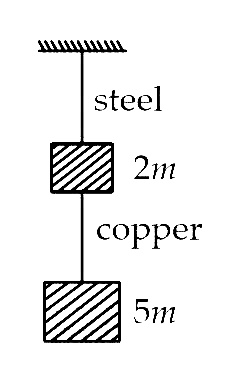
If the ratio of diameters, lengths and Young's modulus of steel and copper wires shown in the figure are p, q and s respectively, then the corresponding ratio of increase in their lengths would be

NEET 2013 (Karnataka) Physics - Properties of Matter Question 57 English
(A)
(B)
(C)
(D)
(B)

Solution

From formula,

Increase in length


Q.15
Two metal rods 1 and 2 of same lengths have same temperature difference between their ends. Their thermal conductivities are K1 and K2 and cross sectional areas A1 and A2, respectively. If the rate of heat conduction in 1 is four times that in 2, then
(A)
K1A1 = 4K2A2
(B)
K1A1 = 2K2A2
(C)
4K1A1 = K2A2
(D)
K1A1 = K2A2
(A)

Solution

Let L be length of each rod. Rate of heat flow in rod 1 for the temperature difference is


Rate of heat flow in rod 2 for the same difference is


As per question, H1 = 4H2


Q.16
In a vessel, the gas is at pressure P. If the mass of all the molecules is halved and their speed is doubled, then the resultant pressure will be
(A)
2P
(B)
P
(C)
P/2
(D)
4P
(A)

Solution

As    ...(i)

where m is the mass of each molecule, N is the total number of molecules, V is the volume of the gas. When mass of all the molecules is halved and their speed is doubled, then the pressure will be


   (Using (i))
Q.17
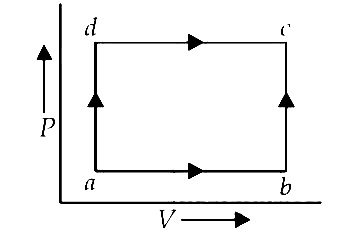
A system is taken from state a to state c by two paths adc and abc as shown in the figure. The internal energy at a is . Along the path adc the amount of heat absorbed dQ1 50 J and the work obtained dW1 20 J whereas along the path abc the heat absorbed dQ2 = 36 J. The amount of work allong the path abc is

NEET 2013 (Karnataka) Physics - Heat and Thermodynamics Question 67 English
(A)
10 J
(B)
12 J
(C)
36 J
(D)
6 J
(D)

Solution

From first law of thermodynamics


Again


Q.18
Which of the following relations does not give the equation of an adiabatic process, where terms have their usual meaning?
(A)
P1 T  =  constant
(B)
PV   =  constant
(C)
TV1  =  constant
(D)
P  T1  =  constant
(D)

Solution

For an adiabatic process,

= constant …(i)

According to ideal gas equation


Putting value of P in (i), we get

= constant; = constant

Again from the ideal gas equation


Putting value of V in (i), we get

= constant; = constant
Q.19
Two Carnot engines A and B are operated in series. The engine A receives heat from the source at temperature T1 and rejects the heat to the sink at temperature T. The second engine B receives the heat at temperature T and rejects to its sink at temperature T2. For what values of T the efficiencies of the two engines are equal
(A)
(B)
(C)
(D)
(C)

Solution

Efficiency of engine A,

Efficiency of engine B,

Here,

Q.20
A particle of mass m oscillates along x-axis according to equation x = asint. The nature of the graph between momentum and displacement of the particle is
(A)
Circle
(B)
Hyperbola
(C)
Ellipse
(D)
Straight line passing through origin
(C)

Solution

As , This is the equation of ellipse. Hence the graph is an ellipse. P versus x graph is similar to V versus x graph.
Q.21
The length of the wire between two ends of a sonometer is 100 cm. What should be the positions of two bridges below the wire so that the three segments of the wire have their fundamental frequencies in the ratio 1 : 3 : 5.
(A)
(B)
(C)
(D)
(D)

Solution

From formula,


= f2f3 : f1f3 : f1f2
[Given: f1 : f2 : f3 = 1 : 3 : 5]

= 15 : 5 : 3

Therefore the positions of two bridges below the wire are

and

Q.22
Two sources P and Q produce notes of frequency 660 Hz. each. A listener moves from P to Q with a speed of 1 ms1. If the speed of sound is 330 m/s, then the number of beats heard by the listener per second will be
(A)
4
(B)
8
(C)
2
(D)
zero
(A)

Solution


Q.23
An electric dipole of dipole moment p is aligned parallel to a uniform electric field E. The energy required to rotate the dipole by 90o is
(A)
p2 E
(B)
pE
(C)
infinity
(D)
pE2
(B)

Solution

Potential energy of dipole,


Here,

U = – pE(cos90° – cos0°) = – pE(0 – 1) = pE
Q.24
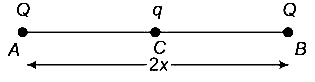
A charge q is placed at the centre of the line joining two equal charges Q. The system of the three charges will be in equilibrium if q is equal to
(A)
Q/4
(B)
Q/4
(C)
Q/2
(D)
Q/2
(A)

Solution

Let the distance between given changes be 2x

NEET 2013 (Karnataka) Physics - Electrostatics Question 64 English Explanation
In equilibrium,

So,


Q.25
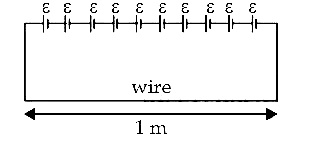
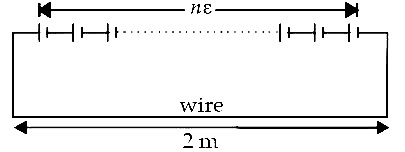
Ten identical cells connected in series are needed to heat a wire of length one meter and radius 'r' by 10oC in time 't'. How many cells will be required to heat the wire of length two meter of the same radius by the same temperature in time 't' ?
(A)
20
(B)
30
(C)
40
(D)
10
(A)

Solution

Let be resistivity of the material of the wire and r be radius of the wire.

Therefore, resistance of 1 m wire is


Let be emf of each cell. In first case,

NEET 2013 (Karnataka) Physics - Current Electricity Question 96 English Explanation 1
10 cells each of emf are connected in series to heat the wire of length 1 m by T(= 10°C) in time t.

   ...(i)

In second case,
Resistance of same wire of length 2 m is


NEET 2013 (Karnataka) Physics - Current Electricity Question 96 English Explanation 2
Let n cells each of emf are connected in series to heat the same wire of length 2 m, by the same temperature T (= 10°C) in the same time t.

   ...(ii)

Divide (ii) by (i), we get


n = 20
Q.26
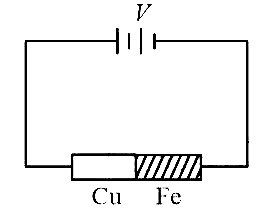
Two rods are joined end to end, as shown. Both have a cross-sectional area of 0.01 cm2. Each is 1 meter long. One rod is of copper with a resistivity of 1.7 106 ohm-centimeter, the other is of iron with a resistivity of 105 ohm-centimeter.
NEET 2013 (Karnataka) Physics - Current Electricity Question 98 English
How much voltage is required to produce a current of 1 ampere in the rods?
(A)
0.00145 V
(B)
0.0145 V
(C)
1.7 106 V
(D)
0.117 V
(D)

Solution

Copper rod and iron rod are joined in series.


From ohm’s law
V = RI = (1.7 × 10–6 × 10–2 + 10–5 × 10⁻²)
0.01 × 10⁻⁴ volt

= 0.117 volt   ( I = 1A)
Q.27
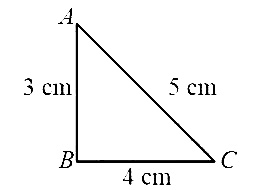
A 12 cm wire is given a shape of a right angled triangle ABC having sides 3 cm, 4 cm and 5 cm as shown in the figure. The resistance between two ends (AB, BC, CA) of the respective sides are measuread one by one ratio
NEET 2013 (Karnataka) Physics - Current Electricity Question 97 English
(A)
9 : 16 : 25
(B)
27 : 32 : 35
(C)
21 : 24 : 25
(D)
3 : 4 : 5
(B)

Solution

Resistance is directly proportional to length


Similarly,


RAB : RBC : RAC = 27 : 32 : 35
Q.28
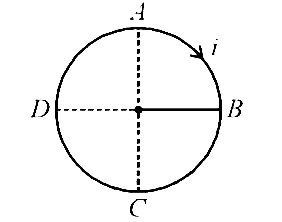
A circular coil ABCD carrying a current 'i' is placed in a uniform magnetic field. If the magnetic force on the segment AB is , the force on the remaining segment BCDA is

NEET 2013 (Karnataka) Physics - Moving Charges and Magnetism Question 67 English
(A)
(B)
(C)
(D)
(A)

Solution

Here,


   ( FAB = )
Q.29
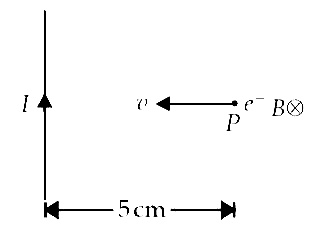
A long straight wire carries a certain current and produces a magnetic field 2 104 Wb m2 at a perpendicular distance of 5 cm from the wire. An electron situated at 5 cm from the wire moves with a velocity 107 m/s towards the wire along perpendicular to it. The force experienced by the electron will be (charge on electron 1.6 1019 C)
(A)
3.2 N
(B)
3.2 1016 N
(C)
1.6 1016 N
(D)
zero
(B)

Solution

The situation is as shown in the figure.

NEET 2013 (Karnataka) Physics - Moving Charges and Magnetism Question 68 English Explanation
Here, v = 107 m/s, B = 2 × 10⁻⁴ Wb/m2

The magnitude of the force experienced by the electron is

F = evBsin

   ( perpendicular to each other)

= evBsin90° = 1.6 × 10–19 × 107 × 2 × 10–4 × 1

= 3.2 × 10⁻¹⁶ N
Q.30
A bar magnet of magnetic moment M is placed at right angles to a magnetic induction B. If a force F is experienced by each pole of the magnet, the length of the magnet will be
(A)
MB/F
(B)
BF/M
(C)
MF/B
(D)
F/MB
(A)

Solution

ength of the magnet = MB/F.
Q.31
A current of 2.5 A flows through a coil of inductance 5 H. The magnetic flux linked with the coil is
(A)
0.5 Wb
(B)
12.5 Wb
(C)
zero
(D)
2 Wb
(B)

Solution

Here, I = 2.5 A, L = 5 H

Magnetic flux linked with the coil is

B = LI = (5 H)(2.5 A) = 12.5 Wb
Q.32
The primary of a transformer when connected to a dc battery of 10 Volt draws a current of 1 mA. The number of turns of the primary and secondary windings are 50 and 100 respectively. The voltage in the secondary and the current drawn by the circuit in the secondary are respectively
(A)
20 V and 2.0 mA
(B)
10 V and 0.5 mA
(C)
Zero volt and therefore no current
(D)
20 V and 0.5 mA
(C)

Solution

Transformer cannot work on dc.

Vs = 0 and Is = 0
Q.33
An electromagnetic wave of frequency MHz passes from vaccum into a dielectric medium with relative permittivity = 4.0. Then
(A)
Wavelength is doubled and frequency becomes half.
(B)
Wavelength is halved and frequency remains unchanged.
(C)
Wavelength and frequency both remain unchanged.
(D)
Wavelength is doubled and frequency unchanged.
(B)

Solution

Velocity of electromagnetic wave in vacuum

c = = vacuum .....(1)

Velocity of electromagnetic wave in the medium

vmedium = =

For dielectric medium, r = 1

vmedium = = ........(2)

Wavelength of the wave in medium

medium = = =
Q.34
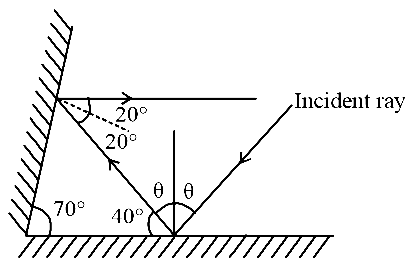
Two plane mirrors are inclined at 70o. A ray incident on one mirror at angle, after reflection falls on second mirror and is reflected from there parallel to first mirror. The value of is
(A)
45o
(B)
30o
(C)
55o
(D)
50o
(D)

Solution

NEET 2013 (Karnataka) Physics - Geometrical Optics Question 67 English Explanation

+ 40° = 90°

= 90° – 40° = 50°
Q.35
The reddish appearance of the sun at sunrise and sunset is due to
(A)
the scattering of light
(B)
the polarisation of light
(C)
the colour of the sun
(D)
the colour of the sky
(A)

Solution

The reddish appearance of the sun at sunrise and sunset is due to the scattering of light.
Q.36
A parallel beam of light of wavelength is incident normally on a narrow slit. A diffraction pattern formed on a screen placed perpenficular to the direction of the incident beam. At the second minimum of the diffraction pattern, the phase difference between the rays coming from the two edges of slit is
(A)
2
(B)
3
(C)
4
(D)
(C)

Solution

= Path Difference

= = 4
Q.37
In Young's double slit experiment the distance between the slits and the screen is doubled. The separation between the slits is reduced to half. As a result the fringe width
(A)
is halved
(B)
becomes four times
(C)
remains unchanged
(D)
is doubled
(B)

Solution

Fringe width, =

From question D' = 2D and d' =

' = = 4
Q.38
-particles, -particles and -rays are all having same energy. Their penetrating power in a given medium in increasing order will be
(A)
, ,
(B)
, ,
(C)
, ,
(D)
, ,
(B)

Solution

For a given energy, -rays has highest penetrating power and -particles has least penetrating power.
Q.39
An electron in hydrogen atom makes a transition n1 n2 where n1 and n2 are principal quantum numbers of the two states . Assuming Bohr's model to be valid, the time period of the electron in the initial state is eight times that in the final state. The possible values of n1 and n2 are
(A)
n1 = 6 and n2 = 2
(B)
n1 = 8 and n2 = 1
(C)
n1 = 8 and n2 = 2
(D)
n1 = 4 and n2 = 2
(D)

Solution

As T n3

=

Hence, n1 = 2n2
Q.40
How does the Binding Energy per nucleon vary with the increase in the number of nucleons ?
(A)
Decrease continuously with mass number.
(B)
First decreases and then increases with increase in mass number.
(C)
First increases and then decreases with increase in mass number.
(D)
increases continuously with mass number.
(C)
Q.41
The de-broglie wavelength of neutrons in thermal equilibrium at temperature T is
(A)
(B)
(C)
(D)
(D)

Solution

de Broglie wavelength of neutrons in thermal equilibrium at temperature T is


=

=
Q.42
A source of light is placed at a distance of 50 cm from a photo cell and the stopping potential is found to be V0. If the distance between the light source and photo cell is made 25 cm, the new stopping potential will be :
(A)
V0/2
(B)
V0
(C)
4V0
(D)
2V0
(B)

Solution

Since, stopping potential is independent of distance hence new stopping potential will remain unchanged i.e., new stopping potential = V0.
Q.43
One way in which the operation of a n-p-n transistor differs from that of a p-n-p
(A)
The emitter junction injects minority carries into the base region of the p-n-p
(B)
The emitter injects holes into the base of the p-n-p and electrons into the base region of n-p-n
(C)
The emitter injects holes into the base of n-p-n
(D)
The emitter junction is reversed biased in n-p-n
(B)

Solution

In p-n-p transistor holes are injected into the base while electrons are injected into the base of n-p-n transistor. Emitter-base junction is forward biased.
Q.44
In an unbiased p-n junction, holes diffuse from the p-region to n-region because of
(A)
The attraction of free electrons of n-region.
(B)
The higher hole concentration in p-region than that in n-region.
(C)
The higher concentration of electrons in the n-region than that in the p-region.
(D)
The potential difference across the p-n junction.
(B)

Solution

The higher hole concentration is in p-region than that in n-region.
Q.45
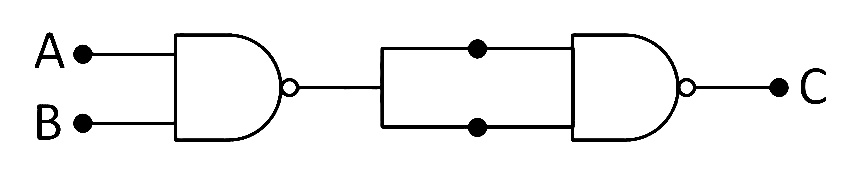
The output from a NAND gate is divided into two in parallel and fed to another NAND gate. The resulting gate is a

NEET 2013 (Karnataka) Physics - Semiconductor Electronics Question 100 English
(A)
AND gate
(B)
NOR gate
(C)
OR gate
(D)
NOT gate
(A)

Solution

C' =

C = = A.B

Hence the resultant gate is AND gate.
Chemistry (Maximum Marks: 176)
  • This section contains 44 questions.
  • Each question has FOUR options (A), (B), (C) and (D). ONLY ONE of these four options is the correct answer.
  • Full Marks : +4 If ONLY the correct option is chosen;
  • Zero Marks : 0 If none of the options is chosen (i.e. the question is unanswered);
  • Negative Marks : −1 In all other cases.
Q.1
In an experiment it showed that 10 mL of 0.05 M solution of chloride required 10 mL of 0.1 M solution of AgNO3, which of the following will be the formula of the chloriode (X stands for the symbol of the element other than chlorine)
(A)
X2Cl2
(B)
XCl2
(C)
XCl4
(D)
X2Cl
(B)

Solution

Milimoles of solution of chloride = 0.05 10 = 0.5

Millimoles of AgNO3 solution = 10 0.1 = 1

So, the millimoles of AgNO3 are double than the chloride solution.

XCl2 + 2AgNO3 2AgCl + X(NO3)2
Q.2
The outer electronic configuration of Gd (At. No. 64) is
(A)
4f5 5d4 6s1
(B)
4f7 5d1 6s2
(C)
4f3 5d5 6s2
(D)
4f4 5d5 6s1
(B)

Solution

Gd[64] = [Xe]4f7 5d1 6s2
Q.3
According to law of photochemical equivalence the energy absorbed (in ergs/mole) is given as (h = 6.62 1027 ergs, c = 3 1010 cm s1, NA = 6.02 1023 mol1)
(A)
(B)
(C)
(D)
(A)

Solution

E =

=

= = ergs mol-1
Q.4
What is the density of N2 gas 227oC and 5.00 atm. pressure? (R = 0.082 L atm K1 mol1)
(A)
1.40 g/mL
(B)
2.81 g/mL
(C)
3.41 g/mL
(D)
0.29 g/mL
(C)

Solution

PV = nRT

PV =


   [Density = ]

Q.5
The dissociation constant of weak acid is 1 104. In order to prepare a buffer solution with a pH = 5, the [Salt]/[Acid] ratio should be
(A)
4 : 5
(B)
10 : 1
(C)
5 : 4
(D)
1 : 10
(B)

Solution

Given, Ka = 1 × 10⁻⁴

pKa = – log (1× 10⁻⁴) = 4

pH = pKa + log

5 = 4 + log

log = 1

= 10 = 10 : 1
Q.6
The values of Ksp of CaCO3 and CaC2O4 are 4.7 109 and 1.3 9 respectively at 25oC. If the mixture of these two is washed with water, what is the concentration of Ca2+ ions in water ?
(A)
5.831 105 M
(B)
6.856 105 M
(C)
3.606 105 M
(D)
7.746 105 M
(D)

Solution

CaCO3 Ca2+ + CO32-
x x

CaC2O4 Ca2+ + C2O42-
y y


[Ca2+] = x + y

Now, Ksp (CaCO3) = [Ca2+] [CO3 2-]

or 4.7 × 10–9 = (x + y)x .......(1)

similarly, Ksp (CaC2O4) = [Ca2+] [C2O42–]

or 1.3 × 10–9 = (x + y)y .......(2)

Dividing equation (1) and (2), we get


x = 3.6y

Putting in equation (2) we get

y(3.6y + y) = 1.3 × 10⁻⁹

y = 1.68 10-5

and x = 3.6 1.68 10-5 = 6.048 10-5

[Ca2+] = (x + y) = (6.048 10-5) + (1.68 10-5)

[Ca2+] = 7.746 × 10⁻⁵ M
Q.7
At 100oC the Kw of water is 55 times its value at 25oC. What will be the pH of neutral solution? (log 55 = 1.74)
(A)
7.00
(B)
7.87
(C)
5.13
(D)
6.13
(D)

Solution

Kw at 25oC = 1 × 10–14

At 25ºC

Kw = [H+] [OH] = 10–14

At 100°C (given)

Kw = [H+] [OH] = 55 × 10–14

for a neutral solution

[H+] = [OH]

[H+]2 = 55 × 10–14

or [H+] = (55 × 10–14)1/2

pH = – log [H+]

On taking log on both side

– log [H+] = –log (55 × 10–14)1/2

pH = - log55 - 14log10

pH = 6.13
Q.8
Accumulation of lactic acid (HC3H5O3), a monobasic acid in tissues leads to pain and a feeling of fatigue. In a 0.10 M aqueous solution, lactic acid is 3.7% dissociates. The value of dissociation constant, Ka, for this acid will be
(A)
1.4 105
(B)
1.4 104
(C)
3.7 104
(D)
2.8 104
(B)

Solution


0.037 =

Ka = (0.037)2 0.10

= 1.37 ×10⁻⁴

1.4 104
Q.9
Which condition is not satisfied by an ideal solution?
(A)
(B)
(C)
Obeyance to Raoult's Law
(D)
(B)

Solution

An ideal solution is follow:

1. Volume change (V) of mixing should be zero

2. Heat change (H) on mixing should be zero.

3. Obey Raoult’s law at every range of concentration.
Q.10
When 5 litres of a gas mixture of methane and propane is perfectly combusted at 0oC and 1 atmosphere, 16 litres of oxygen at the same temperature and pressure is consumed, The amount of heat released from this combustion in kJ (Hcomb. (CH4) = 890 kJ mol1, Hcomb. (C3H8) = 2220 kJ mol1) is
(A)
38
(B)
317
(C)
477
(D)
32
(B)

Solution

CH4 + 2O2 CO2 + 2H2O

C3H8 + 5O2 3CO2 + 4H2O

CH4 + C3H8 = moles.

moles


x = 0.13

Heat liberated = 0.13 890 + 0.09 2220 = 316 kJ
Q.11
Three thermochemical equations are given below
(i)  C(graphite) + O2(g)  CO2(g)rHo = x kJ mol1
(ii)  C(graphite) + O2(g) CO(g)rHo = y kJ mol1
(iii)  CO(g) + O2(g) CO2(g); rHo = z kJ mol1
Based on the above equations, find out which of the relationship given below is correct.
(A)
z = x + y
(B)
x = y + z
(C)
y = 2z x
(D)
x = y z
(B)

Solution

According to Hess's law, equation (i) is equal to equations (ii) + (iii)
Q.12
How many gram of cobalt metal will be deposited when a solution of cobalt (II) chloride is electrolyzed with a current of 10 amperes for 109 minutes (1 Faraday = 96,500 C; Atomic mass of Co = 59 u)
(A)
4.0
(B)
20.0
(C)
40.0
(D)
0.66
(B)

Solution

W =

=

= 20
Q.13
Consider the half-cell reduction reaction
Mn2+ + 2e Mn, Eo = 1.18 V
Mn2+ Mn3+ + e, Eo = 1.51 V
The o for the reaction 3 Mn2+ Mno + 2Mn3+, and possibility of the forward reaction are respectively
(A)
4.18 V and yes
(B)
+ 0.33 V and yes
(C)
+ 2.69 V and no
(D)
2.69 V and no
(D)

Solution

Mn2+ + 2e Mn, Eo = 1.18 V

Mn2+ Mn3+ + e, Eo = 1.51 V

3Mn2+ Mno + 2Mn3+, Eo = - 1.81 - 1.51 = 2.69 V

Since E° is negative,

G = –nFE°, G will have positive value so, forward reaction is not possible.
Q.14
A reaction is 50% complete in 2 hours and 75% complete in 4 hours. The order of reaction is
(A)
1
(B)
2
(C)
3
(D)
0
(A)

Solution

For a first order reaction,

t75% = 2 t50%
Q.15
For a reaction between A and B the order with respect to A is 2 and the other with respect to B is 3. The concentrations of both A and B are doubled, the rate will increase by a factor of
(A)
12
(B)
16
(C)
32
(D)
10
(C)

Solution

Rate1 = k[A]2[B]3

when concentrations of both A and B are doubled then

Rate2 = k[2A]2[2B]3 = 32 k[A]2[B]3

Rate will increase by a factor of 32.
Q.16
Which one of the following arrangements represents the correct order of least negative to most negative electron gain enthalpy for C, Ca, Al, F and O?
(A)
A < Ca < O < C < F
(B)
A < O < C < Ca < F
(C)
C < F < O < A < Ca
(D)
Ca < A < C < O < F
(D)

Solution

Electron gain enthalpy becomes less negative from top to bottom in a group while it becomes more negative from left to right within a period.
Q.17
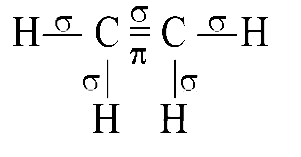
The outer orbitals of C in ethane molecule can be considered to be hybridized to give three equivalent sp2 orbitals. The total number of sigma and pi bonds in ethane molecule is
(A)
3 sigma and 2 pi bonds
(B)
4 sigma and 1 pi bonds
(C)
5 sigma and 1 pi bonds
(D)
1 sigma and 2 pi bonds
(C)

Solution

NEET 2013 (Karnataka) Chemistry - Chemical Bonding and Molecular Structure Question 96 English Explanation
Q.18
The pair of species that has the same bond order in the following is
(A)
CO, NO+
(B)
NO, CN
(C)
O2, N2
(D)
O2, B2
(A)

Solution

CO = + 8 = 14 electrons
NO+ = 7 + 8 - 1 = 14 electrons
Both have electronic configuration:

Bond order = = 3
Q.19
In which of the following ionization processes the bond energy increases and the magnetic behaviour changes from paramagnetic to diamagnetic.
(A)
O2 O2+
(B)
C2 C2+
(C)
NO NO+
(D)
N2 N2+
(C)

Solution

Molecular orbital configuration of

O2+ Paramagnetic

Bond order =

C2 Diamagnetic

Bond order =

C2+ Paramagnetic

Bond order =

NO Paramagnetic

Bond order =

NO+ Diamagnetic

Bond order =

N2 Paramagnetic

Bond order =

N2+ Paramagnetic

Bond order =
Q.20
In which of the following pair both the species have sp3 hybridization ?
(A)
SiF4, BeH2
(B)
NF3, H2O
(C)
NF3, BF3
(D)
H2S, BF3
(B)

Solution

NF3 and H2O are sp3-hybridisation
Q.21
The metal oxide which cannot be reduced to metal by carbon is
(A)
Al2O3
(B)
PbO
(C)
ZnO
(D)
Fe2O3
(A)

Solution

Al2O3 cannot be reduced by carbon.
Q.22
In Castner-Kellner cell for production of sodium hydroxide
(A)
brine is electrolyzed using graphite electrodes
(B)
molten sodium chloride is electrolysed
(C)
sodium amalgam is formed at mercury cathode
(D)
brine is electrolyzed with Pt electrodes
(C)

Solution

In Castner-Kellner cell, sodium amalgam is formed at mercury cathode.
Q.23
Which statement is wrong?
(A)
Beryl is an example of cyclic silicate.
(B)
Mg2SiO4 is orthosilicate.
(C)
Basic structural unit in silicates is the SiO4 tetrahedron.
(D)
Feldspars are not aluminosilicates.
(D)

Solution

Feldspars are three dimensional aluminosilicates.
Q.24
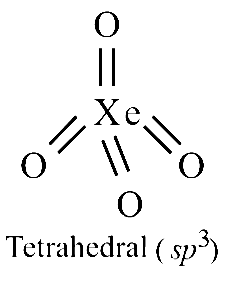
Identify the incorrect statement, regarding the molecule XeO4 :
(A)
XeO4 molecule is square planar.
(B)
There are four p - d bonds.
(C)
There are four sp3 - p, bonds.
(D)
XeO4 molecule is tetrahedral.
(A)

Solution

NEET 2013 (Karnataka) Chemistry - p-Block Elements Question 53 English Explanation
Q.25
Sc (Z = 21) is a transition element but Zn (Z = 30) is not because
(A)
both Sc3+ and Zn2+ ions are colourless and form white compounds.
(B)
in case of Sc, 3d orbitals are partially filled but in Zn these are filled.
(C)
last electron is assumed to be added to 4s level in case of Zn.
(D)
both Sc and Zn do not exhibit variable oxidation states.
(B)

Solution

A transition element must have incomplete d-subshell. Zinc have completely filled d subshell having 3d10 configuration. Hence do not show properties of transition elements to any appreciable extent except for their ability to form complexes.
Q.26
Nitrogen detection in an organic compound is carried out by Lassaigne's test. The blue colour formed corresponds to which of the following formulae?
(A)
Fe3[Fe(CN)6]2
(B)
Fe4[Fe(CN)6]3
(C)
Fe4[Fe(CN)6]2
(D)
Fe3[Fe(CN)6]3
(B)

Solution

The prussian blue colour is of Fe4 [Fe(CN)6]3 ferric ferrocyanide.
Q.27
Which among the following is a paramagnetic complex?
(A)
[Co(NH3)6]3+
(B)
[Pt(en)Cl2]
(C)
[CoBr4]
(D)
Mo(CO)6
(C)

Solution

Co2+ : [Ar]3d74s0, here, Br is a weak field ligand so will not cause pairing of d-electrons in Co2+.

[CoBr4]2– will exhibit paramagnetic behaviour due to unpaired electrons.
Q.28
The correct IUPAC name for [CrF2(en)2]Cl is
(A)
chloro difluorido ethylene diaminechromium (III) chloride
(B)
difluoridobis (ethylene diamine) chromium (III) chloride
(C)
difluorobis-(ethylene diamine) chromium (III) chloride
(D)
chloro difluoridobis (ethylene diamine) chromium (III)
(B)

Solution

IUPAC name of [CrF2(en)2]Cl is
Difluoridobis(ethylenediamine) chromium (III) chloride.
Q.29
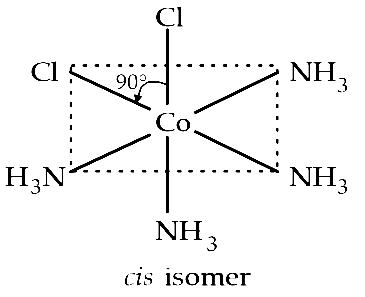
In a particular isomer of [Co(NH3)4Cl2]o, the ClCoCl angle is 90o, this isomer is known as
(A)
optical isomer
(B)
cis-isomer
(C)
position isomer
(D)
linkage isomer.
(B)

Solution

NEET 2013 (Karnataka) Chemistry - Coordination Compounds Question 87 English Explanation
Q.30
The anion of acetylacetone (acac) forms Co (acac)3 chelate with Co3+. The rings of the chelate are
(A)
five membered
(B)
four membered
(C)
six membered
(D)
three membered.
(C)

Solution

Chelating ligands having conjugated double bonds form more stable six membered rings.
Q.31
Which is diamagnetic?
(A)
[Co(F)6]3
(B)
[Ni(CN)4]2
(C)
[NiCl4]2
(D)
[Fe(CN)6]3
(B)

Solution

Ni+2 = 3d8

CN is a strong ligand and causes pairing of 3d electrons of Ni2+.


NEET 2013 (Karnataka) Chemistry - Coordination Compounds Question 83 English Explanation

As no unpaired electrons presents so it is diamagnetic.
Q.32
Crystal field splitting energy for high spin d4 octahedral complex is
(A)
1.2 o
(B)
0.6 0
(C)
0.8 o
(D)
1.6 o
(B)

Solution

High spin d4 = t2g3 eg1

CFSE for octahedral complex

= [– 0.4 (t2g electrons) + 0.6 (eg electrons)] 0

= (– 0.4 3 + 0.6 1) 0

= (-1.2 + 0.6) 0 = -0.60
Q.33
Which one of the following statements is not true?
(A)
Clean water would have a BOD value of 5 ppm.
(B)
Fluoride deficiency in drinking water is harmful. Soluble fluoride is often used to bring its concentration upto 1 ppm.
(C)
When the pH of rain water is higher than 6.5, it is called acid rain.
(D)
Dissolved Oxygen (DO) in cold water can reach a concentration upto 10 ppm.
(C)

Solution

Acid rain is the rain water containing sulphuric acid and nitric acid which are formed from the oxides of sulphur and nitrogen present in the air as pollutants and rain water has a pH range of 4-5.
Q.34
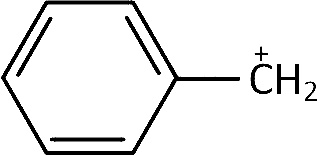
What is the hybridisation state of benzyl carbonium ion?

NEET 2013 (Karnataka) Chemistry - Some Basic Concepts of Organic Chemistry Question 83 English
(A)
sp2
(B)
spd2
(C)
sp2d
(D)
sp3
(A)
Q.35
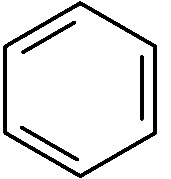
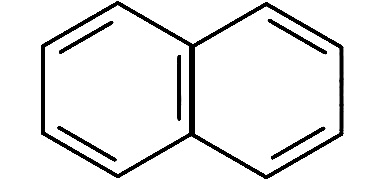
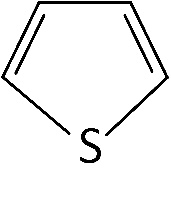
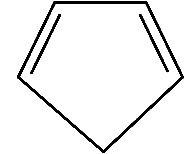
Which of the following chemical system is non aromatic ?
(A)
NEET 2013 (Karnataka) Chemistry - Some Basic Concepts of Organic Chemistry Question 53 English Option 1
(B)
NEET 2013 (Karnataka) Chemistry - Some Basic Concepts of Organic Chemistry Question 53 English Option 2
(C)
NEET 2013 (Karnataka) Chemistry - Some Basic Concepts of Organic Chemistry Question 53 English Option 3
(D)
NEET 2013 (Karnataka) Chemistry - Some Basic Concepts of Organic Chemistry Question 53 English Option 4
(D)

Solution

The molecules which do not satisfy Huckel rule or (4n + 2)-electron rule are said to be non-aromatic.

The compound (d) has four electrons. It does not follow (4n + 2) rule. So it is non-aromatic compound.
Q.36
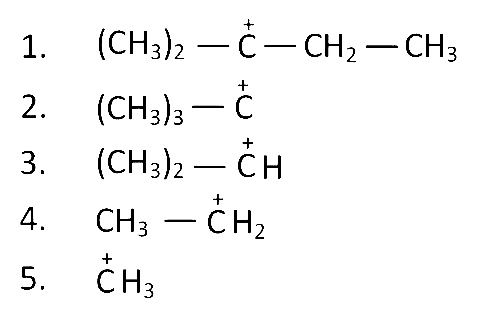
Arrange the following in increasing order of stability
NEET 2013 (Karnataka) Chemistry - Some Basic Concepts of Organic Chemistry Question 84 English
(A)
5 < 4 < 3 < 1< 2
(B)
4 < 5 < 3 < 1 < 2
(C)
1 < 5 < 4 < 3 < 2
(D)
5 < 4 < 3 < 2 < 1
(A)

Solution

Greater the number of e donating alkyl groups (+I effect), greater will be the stability of carbocations.
Q.37
Homolytic fission of the following alkanes forms free radicals CH3 CH3, CH3 CH2 CH3, (CH3)2CH CH3, CH3 CH2 CH(CH3)2.
Increasing order of stability of the radicals is
(A)
(B)
(C)
(D)
(B)

Solution

Stability depends on number of hyperconjugative structure. More the number of hyperconjugative structure, the greater is the stability.
Q.38
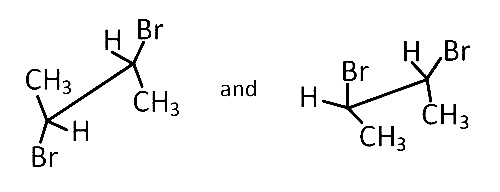
Given :
NEET 2013 (Karnataka) Chemistry - Some Basic Concepts of Organic Chemistry Question 45 English
I and II are
(A)
identical
(B)
a pair of conformers
(C)
a pair of geometrical isomers
(D)
a pair of optical isomers
(B)

Solution

Conformers are form of stereoisomers in which isomers can be interconverted by rotation about single bonds. I and II are staggered and eclipsed conformers respectively.
Q.39
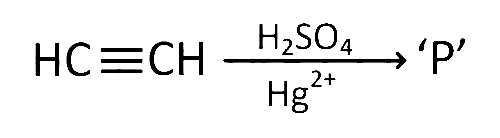
In the following reaction :
NEET 2013 (Karnataka) Chemistry - Hydrocarbons Question 47 English
Product 'P' will not give
(A)
Tollen's reagent test
(B)
Brady's reagent test
(C)
Victor Meyer test
(D)
Iodoform test
(C)

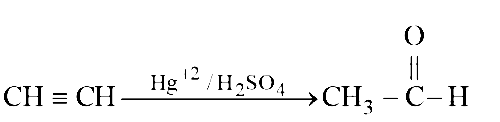
Solution

NEET 2013 (Karnataka) Chemistry - Hydrocarbons Question 47 English Explanation
CH3CHO does not give Victor Meyer test.
Q.40
Number of isomeric alcohols of molecular formula C6H14O which give positive iodoform test is
(A)
three
(B)
four
(C)
five
(D)
two
(B)

Solution

The iodoform test is positive for alcohols
with formula R — CHOH — CH3 .

Among C6H14O isomers, the ones with positive iodoform test are: NEET 2013 (Karnataka) Chemistry - Alcohol, Phenols and Ethers Question 48 English Explanation
Q.41
Some reactions of amines are given. Which one is not correct?
(A)
NEET 2013 (Karnataka) Chemistry - Organic Compounds Containing Nitrogen Question 41 English Option 1
(B)
CH3CH2NH2 + HNO2 CH3CH2OH + N2
(C)
CH3NH2 + C6H5SO2Cl  CH3NHSO2C6H5
(D)
(CH3)2NH + NaNO2 + HCl   (CH3)2N N O
(A)

Solution

Secondary amine react with nitrous acid to give N-Nitrosoamines. NEET 2013 (Karnataka) Chemistry - Organic Compounds Containing Nitrogen Question 41 English Explanation
Q.42
On hydrolysis of a ''compound'', two compounds are obtained. One of which one treatment with sodium nitrite and hydrochloric acid gives a product which does not respond to iodoform test. The second one reduces Tollens reagent and Fehling's solution. The ''compound'' is
(A)
CH3CH2CH2NC
(B)
CH3CH2CH2CN
(C)
CH3CH2CH2ON O
(D)
CH3CH2CH2CON(CH3)2
(A)

Solution

Hydrolysis of propyl isocyanide (CH3CH2CH2NC) gives CH3CH2CH2NH2 + HCOOH.

On treatment with NaNO2 and HCl I(CH3CH2CH2NH2) gives CH3CH2CH2OH which does not give iodoform test. II (HCOOH) reduces Tollen’s reagent and Fehling’s solution.
NEET 2013 (Karnataka) Chemistry - Organic Compounds Containing Nitrogen Question 42 English Explanation
Q.43
In DNA, the linkages between different nitrogenous bases are
(A)
phosphate linkage
(B)
H-bonding
(C)
glycosidic linkage
(D)
peptide linkage
(B)

Solution

Nitrogeneous bases are linked together by hydrogen bonds.
Q.44
Dettol is the mixture of
(A)
chloroxylenol and bithional
(B)
chloroxylenol and terpineol
(C)
phenol and iodine
(D)
terpineol and bithionol
(B)

Solution

Dettol is the mixture of chloroxylenol and -terpineol.
Biology (Maximum Marks: 364)
  • This section contains 91 questions.
  • Each question has FOUR options (A), (B), (C) and (D). ONLY ONE of these four options is the correct answer.
  • Full Marks : +4 If ONLY the correct option is chosen;
  • Zero Marks : 0 If none of the options is chosen (i.e. the question is unanswered);
  • Negative Marks : −1 In all other cases.
Q.1
Which of the following types of plastids does not contain stored food material ?
(A)
Eleioplasts
(B)
Chromoplasts
(C)
Amyloplasts
(D)
Aleuroplasts
(B)

Solution

Chromoplasts are yellow or reddish in colour because of the presence of carotenoid pigments. They do not contain stored food material. Chromoplasts are formed either from leucoplasts or chloroplasts. Chromoplasts provide colour to many flowers for attracting pollinating insects. They provide bright red or orange colour to fruits for attracting animals for dispersal.
Q.2
The term 'glycocalyx' is used for :
(A)
bacterial cell glyco-engineered to possess N-glycosylated proteins
(B)
a layer present between cell wall and membrane of bacteria
(C)
a layer surrounding the cell wall of bacteria
(D)
cell wall of bacteria
(C)

Solution

Glycocalyx is a sticky, gelatinous material that collects outside the cell wall of bacteria to form an additional surface layer. When this layer is firmly attached to the surface of the cell, it is called a capsule. If it is loosely distributed around the cell, the glycocalyx is called a slime layer.
Q.3
Which of the following best illustrates "FEEDBACK" in development ?
(A)
As tissue (X) develops, it secretes something that induces tissue (Y) to develop
(B)
As tissues (X) develops, it secretes something that shows down the growth of tissue (Y)
(C)
Tissue (X) secretes RNA which changes the development of tissue (Y)
(D)
As tissue (X) develops, it secretes enzymes that inhibit the development of tissue (Y)
(A)

Solution

During embryonic development, the primary organiser signals the development of another organ or tissue by secreting chemical factors.
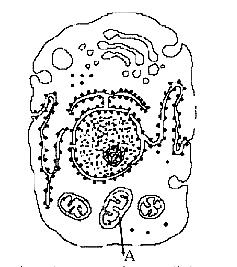
Q.4
Select the alternative giving correct identification and function of the organelle 'A' in the diagram NEET 2013 (Karnataka) Biology - Cell - The Unit of Life Question 96 English
(A)
Golgi body - provides packaging material
(B)
Mitochondria - produce cellular energy in the form of ATP
(C)
Endoplasmic reticulum - synthesis of lipids
(D)
Lysosomes - secrete hydrolytic enzymes
(B)

Solution

Fig., (A) shows the cell organelle mitochondria. The mitochondria are bounded by two membranes, i.e., outer membrane and inner membrane. Mitochondria are referred as “powerhouse” of the cell as they produce 95% of ATP. This energy is produced during the break down of food molecules which involve glycolysis, oxidative decarboxylation and oxidative phosphorylation (Kreb’s cycle and respiratory chain).
Q.5
Which of the following statements about enzymes is wrong?
(A)
Enzymes are denaturated at high temperatures.
(B)
Enzymes are mostly proteins but some are lipids also.
(C)
Enzymes are highly specific.
(D)
Enzymes require optimum pH and temperature for maximum activity.
(B)

Solution

Almost all enzymes are proteins. There are some nucleic acids that behave like enzymes. There are called ribozyme (also called RNA enzyme or catalytic RNA).
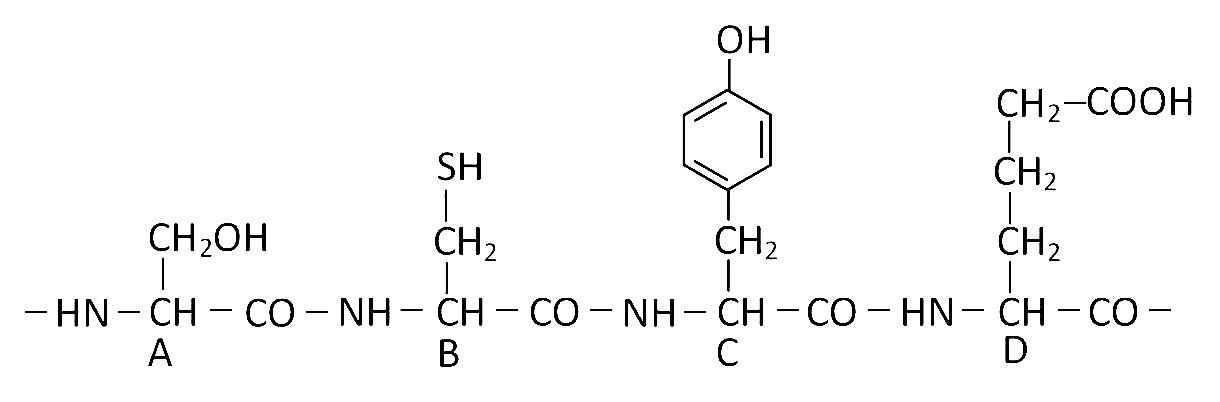
Q.6
The figure shows a hypothetical tetrapeptide portion of a protein with parts labelled A - D. Which one of the following options is correct?
NEET 2013 (Karnataka) Biology - Biomolecules Question 86 English
(A)
D is not acidic amino acid-glutamic acid.
(B)
C is an aromatic amino acid-tryptophan.
(C)
A is the C-terminal amino acid and D is N-terminal amino acid.
(D)
A is a sulpur containing amino acid methionine.
(A)

Solution

Glutamic acid and aspartic acid are acidic amino acids with two carboxylic groups and one amino group.
Q.7
Uridine, present only in RNA is a
(A)
nucleoside
(B)
nucleotide
(C)
purine
(D)
pyrimidine.
(A)

Solution

A nucleoside is pentose sugar and base together, without the phosphate group. Uracil is present as uridine in RNA only.

Uracil + Ribose Uridine
Q.8
During meiosis I, the chromosomes start pairing at
(A)
zygotene
(B)
pachytene
(C)
diplotene
(D)
leptotene.
(A)

Solution

During zygotene, a substage of Prophase I of meiosis I, chromosomes start pairing together by a process called synapsis. Such paired chromosomes are called as homologous chromosomes. A complex structure i.e., synaptonemal complex is formed by a pair of synapsed homologous chromosomes called a bivalent or a tetrad.
Q.9
During the metaphase stage of mitosis, spindle fibres attach to chromosomes at
(A)
kinetochore
(B)
both centromere and kinetochore
(C)
centromere, kinetochore and areas adjoining centromere
(D)
centromere.
(A)

Solution

Kinetochores are small disc-shaped structures at the surface of the centromeres which serve as the sites of attachment of spindle fibres to the chromosomes that are moved into position at the centre of the cell. Hence, the metaphase is characterised by all the chromosomes that proceed to lie at the equator.
Q.10
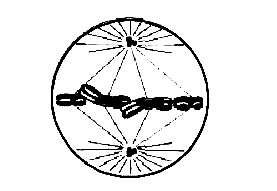
A stage of mitosis is shown in the diagram.
Which stage is it and what are its characteristics? NEET 2013 (Karnataka) Biology - Cell Cycle and Cell Division Question 48 English
(A)
Anaphase - Centromeres split and chromatids separate and start moving away.
(B)
Late prophase - Chromosomes move to spindle equator.
(C)
Metaphase - Spindle fibers attached to kinetochores, centromeres split and chromatids separate.
(D)
Metaphase - Chromosomes moved to spindle equator, chromosomes made up of two sister chromatids.
(D)

Solution

Metaphase chromosome is made up of two sister chromatides which are held together by the centromere. Chromosomes are moved to spindle equator and get aligned along metaphase plate through spindle fibres to both poles.
Q.11
Animal vectors are required for pollination in
(A)
Vallisneria
(B)
mulberry
(C)
cucumber
(D)
maize.
(C)

Solution

In Vallisneria, water pollination occurs while mulberry and maize undergo wind pollination. In cucumber, animal pollination is observed.
Q.12
Albuminous seeds store their reserve food mainly in
(A)
endosperm
(B)
cotyledons
(C)
hypocotyl
(D)
perisperm.
(A)

Solution

Endosperm is the nutritive tissue which provides nourishment to the embryo in seed plant. Albuminous seeds retain a part of endosperm as it is not completely used up during embryo development (e.g., wheat, maize, barley, castor, sunflower).
Q.13
Which one of the following statements is correct?
(A)
Cleistogamous flowers are always autogamous.
(B)
Xenogamy occurs only by wind pollination.
(C)
Chasmogamous flowers do not open at all.
(D)
Geiotonogamy involves the pollen and stigma of flowers of different plants.
(A)

Solution

Cleistogamous flowers do not expose their reproductive parts. Anthers and stigma lie close to each other. Pure autogamy occurs since there is no chance of cross-pollination. Cleistogamy is the most efficient floral adaptation for promoting self-pollination. E.g., Viola mirabilis and Oxalis autosella.
Q.14
Megaspores are produced from the megaspore mother cells after
(A)
mitotic division
(B)
formation of thick wall
(C)
differentiation
(D)
meiotic division.
(D)

Solution

Single Megaspore Mother Cell (MMC) with dense cytoplasm and a prominent nucleus gets differentiated from nucellus near the micropylar region. This Megaspore Mother Cell (MMC) undergoes meiosis to form ‘4’ haploid cells called megaspores and the process of formation is known as megasporogenesis.
Q.15
Which of the following statements is correct?
(A)
Sporopollenin can be degraded by enzymes.
(B)
Sporopollenin is made up of inorganic materials.
(C)
Sporopollenin can withstand high temperatures as well as strong acids and alkalis.
(D)
Sporopollenin can withstand high temperatures but not strong acids.
(C)

Solution

Pollen grains are generally spherical and a prominent two-layered wall. The hard outer layer called the exine is made up of sporopollenin which is one of the most resistant organic material known. It can withstand high temperatures and strong acids and alkali.
Q.16
Microbe used for biocontrol of pest butterfly caterpillars is :
(A)
Streptococcus sp
(B)
Trichoderma sp.
(C)
Saccharomyces cerevisiae
(D)
Bacillus thuringiensis
(D)

Solution

Microbial biocontrol agent that can be introduced in order to control butterfly caterpillars is the bacteria Bacillus thuringiensis (Bt). They sprayed onto vulnerable plants, where they eaten by the insect larvae. In the gut of the larvae, the toxin is released and the larvae get killed. The bacterial disease will kill the caterpillars, but leave other insects unharmed.
Q.17
Bundle sheath cells :
(A)
lack both RuBisCo and PEP carboxylase
(B)
are rich in PEP carboxylase
(C)
are rich in RuBisCo
(D)
lack RuBisCo
(C)

Solution

C4 plants show kranz type of anatomy. In kranz anatomy, the mesophyll is undifferentiated and its cells occur in concentric layers around vascular bundles. The vascular bundles are surrounded by large sized bundle sheath cells which are arranged in wreath like manner in one to several layers. In C4 plants there are two carboxylation reactions, first in mesophyll chloroplast and second in bundle sheath chloroplast. RuBP is present in bundle sheath chloroplasts where C3 cycle takes place.
Q.18
Which of the following statements is not true for stomatal apparatus ?
(A)
Stomata are involved in gaseous exchange
(B)
Inner walls of guard cells are thick
(C)
Guard cells invariably posses chloroplasts and mitochondria
(D)
Guard cells are always surrounded by subsidiary cells
(D)

Solution

Sometimes, a few epidermal cells in the vicinity of the guard cells become specialised in their shape and size and are known as subsidiary cells or accessory cells.
Q.19
Meristematic tissue responsible for increase in girth of tree trunk is :
(A)
Phellogen
(B)
Intercalary meristem
(C)
Apical meristem
(D)
Lateral meristem
(D)

Solution

Lateral meristems are meristems which occur parallel to the circumference of the organs in which they develop. They undergo periclinal divisions producing secondary tissues on the outer and inner sides and increase the girth of the plant organs. Examples are vascular cambium and corkcambium.
Q.20
Specialized cells for fixing atmospheric nitrogen in Nostoc are
(A)
heterocysts
(B)
hormogonia
(C)
modules
(D)
akinetes.
(A)

Solution

Certain species of cyanobacteria (Nostoc) possess some special cells called heterocysts which occur in terminal, basal and intercalary positions. Heterocysts are yellowish in colour and contents are homogenous. Heterocysts are now known as sites of nitrogen fixation. Atmospheric nitrogen is made available in the form of ammonia by cyanobacteria.
Q.21
Which of the following elements is a constituent of biotin?
(A)
Magnesium
(B)
Calcium
(C)
Phosphorus
(D)
Sulphur
(D)

Solution

Biotin, also known as vitamin H, is a water-soluble B-vitamin. It is a coenzyme for carboxylase enzymes, involved in the synthesis of fatty acids, isoleucine, valine and in gluconeogenesis. Sulphur is a constituent of biotin.
Q.22
Which two distinct microbial processes are responsible for the release of fixed nitrogen as dinitrogen gas (N2) to the atmosphere?
(A)
Aerobic nitrate oxidation and nitrate reduction
(B)
Decomposition of organic nitrogen and conversion of dinitrogen to ammonium compounds
(C)
Enteric fermentation in cattle and nitrogen fixation by Rhizobium in root nodules of legumes
(D)
Anaerobic ammonium oxidation and denitrification
(D)

Solution

In the global nitrogen cycle, bacterial denitrification is recognised as important process that converts fixed nitrogen to atmospheric nitrogen gas, N2. In marine nitrogen cycle, anaerobic oxidation of ammonium coupled to nitrate reduction, contributes substantially to N2–production in marine sediments.
Q.23
During the process of isolation of DNA, chilled ethanol is added to :
(A)
Break open the cell to release DNA
(B)
Remove proteins such as histones
(C)
Facilitate action of restriction enzymes
(D)
Precipitate DNA
(D)

Solution

Ethanol is much less polar than water. Adding it to the solution disrupts the screening charges exerted by water. The electrical attraction between phosphate and any positive ions (Na+) present in solution becomes strong enough to form a stable ionic bond and DNA precipitates. Ethanol precipitation is a widely used technique to purify, or concentrate nucleic acid.
Q.24
The largest tiger reserve in India is :-
(A)
Nagarjunsagar - Srisailam
(B)
Nagarhole
(C)
Valmiki
(D)
Periyar
(A)

Solution

Nagarjunsagar-Srisailam Tiger Reserve is the largest Tiger reserve in India and the only Tiger Reserve in Andhra Pradesh state.
Q.25
Which of the following has maximum genetic diversity in India?
(A)
Wheat
(B)
Rice
(C)
Mango
(D)
Groundnut
(B)

Solution

During the period 1960 to 2000 rice production went up from 35 million tonnes to 89.5 million tonnes. This was due to the development of semi-dwarf varieties of rice. There are 2,00,000 varieties of rice in India.
Q.26
Which organization publishes the 'Red Data Book' ?
(A)
WWF
(B)
GEF
(C)
IUCN
(D)
UNEP
(C)

Solution

IUCN or WCN maintains a red data book which is a catalogue of threatened plants and animals facing risk of extinction. The IUCN red list (2004) documents the extinction of 784 species (including 338 vertebrates, 359 invertebrates and 87 plants) in the last 500 years.
Q.27
The common characteristics between tomato and potato will be maximum at the level of their
(A)
family
(B)
order
(C)
division
(D)
genus.
(A)

Solution

Potato (Solanum tuberosum) and tomato (Lycopersicum esculentum) both belong to family Solanaceae, which is commonly called as the “potato family”. Many plants belonging to this family are sources of vegetables, fruits etc.
Q.28
Which one of the following is true for fungi?
(A)
They lack a rigid cell wall.
(B)
They are heterotrophs.
(C)
They lack nuclear membrane.
(D)
They are phagotrophs.
(B)

Solution

Fungi are achlorophyllous, heterotrophic, spore forming, non-vascular, eukaryotic organisms which often contain chitin or fungal cellulose in their walls. Hence, their cell wall is rigid.
Q.29
Why is a capsule advantageous to a bacterium?
(A)
It protects the bacterium from desiccation.
(B)
It provides means of locomotion
(C)
It allows bacterium to ''hide'' from host's immune system.
(D)
It allows the bacterium to attach to the surface.
(C)

Solution

Capsule is a layer that lies outside the cell wall of bacteria. The capsule can protect cells from engulfment by eukaryotic cells, such as macrophages. They also exclude bacterial viruses and most hydrophobic toxic materials such as detergents.
Q.30
Inflorescence is racemose in
(A)
brinjal
(B)
tulip
(C)
aloe
(D)
soybean.
(D)

Solution

Racemose inflorescence is also called indefinite and indeterminate type. Growth of the peduncle is indefinite. Here the terminal bud will not modify into a flower. Flowers develop in acropetal succession i.e., mature flowers are towards the base and the younger ones towards the tip of the peduncle.

Flowers open in centripetal succession i.e., opening of flowers proceeds from the periphery to the centre of the inflorescence. Peduncle may be unbranched or branched. Soybean belongs to Family Fabaceae which has racemose inflorescence.
Q.31
Among flowers of Calotropis, tulip, Sesbania, Asparagus, Colchicum, sweet pea, Petunia, Indigofera, mustard, soybean, tobaco and groundnut, how many plants have corolla with valvate aestivation?
(A)
Six
(B)
Seven
(C)
Eight
(D)
Five
(B)

Solution

Calotropis, tulip, Asparagus, colchicine, Petunia, mustard, tobacco have valvate aestivation while sweet pea, groundnut, soyabean, Indigofera, Sesbania have vexillary aestivation.
Q.32
In a cymose inflorescence the main axis
(A)
has unlimited growth
(B)
bears a solitary flower
(C)
has unlimited growth but lateral branches end in flowers
(D)
terminates in a flower.
(D)

Solution

In cymose inflorescence, the growth of the main axis is definite because the growing point of peduncle is used up in the formation of a flower. Further growth of flowering axis is continued by one or more lateral branches which also end in flower.
Q.33
How many plants among China rose, Ocimum, sunflower, mustard, Alstonia, guava, Calotropis and Nerium (oleander) have opposite phyllotaxy?
(A)
Three
(B)
Four
(C)
Five
(D)
Two
(A)

Solution

In opposite phyllotaxy, two leaves are borne on the opposite sides of a single node. It is of two types; (a) opposite and superposed, (b) opposite and decussate. Ocimum, guava and Calotropis have opposite decussate phyllotaxy.
Q.34
Down's syndrome in humans is due to :
(A)
Three 'X' chromosomes
(B)
Monosomy
(C)
Three copies of chromosome 21
(D)
Two 'Y' chromosomes
(C)

Solution

Down’s syndrome is the chromosomal disorders due to the presence of an additional copy of the chromosome number 21 (trisomy of 21). The affected individual is short statured with small round head, furrowed tongue and partially open mouth and mental development is retarted.
Q.35
Which one is the incorrect statement with regards to the importance of pedigree analysis?
(A)
It confirms that DNA is the carrier of genetic information
(B)
It helps to trace the inheritance of a specific trait
(C)
It confirms that the trait is linked to one of the autosome
(D)
It helps to understand whether the trait in question is dominant or recessive
(A)

Solution

Pedigree analysis is a system of analysis by following the movement and distribution of certain genetic traits in many generations of a family. Pedigree analysis cannot confirm that DNA is the carrier of genetic information because it is an analysis system. For DNA based experiments, molecular biology techniques are used.
Q.36
NEET 2013 (Karnataka) Biology - Molecular Basis of Inheritance Question 156 English The figure gives an important concept in the genetic implication of DNA . Fill the blanks A, B and C.
(A)
A - Erwin Chargaff
B - translation
C - replication
(B)
A - Maurice Wilkins
B - transcription
C - translation
(C)
A - Francis Crick
B - translation
C - transcription
(D)
A - James Watson
B - replication
C - extension
(C)

Solution

In this question A is Franis Crick, B is translation and C is transcription. It is unidirectional flow of information DNA to mRNA (transcription) and then decoding the information present in mRNA in the formation of polypeptide chain or protein (translation).
Q.37
Which of the following is not a property of the genetic code ?
(A)
Ambiguous
(B)
Universal
(C)
Degeneracy
(D)
Non-overlapping
(A)

Solution

Genetic code is the relationship of amino acid sequence in a polypeptide and nucleotide/base sequence in mRNA/ antisense strand of DNA.
It is universal, i.e., a codon specifies the same amino acid in all organisms, non-overlapping, i.e., adjacent codons are independent with no base being member of two codons, degeneracy, i.e., some amino acids are coded by more than one codon, hence the code is degenerate, unambiguous, i.e., one codon codes for only one amino acid.
Q.38
Satellite RNA are present in some :
(A)
Prions
(B)
Bacteriophages
(C)
Plant viruses
(D)
Viroids
(C)

Solution

Plant viruses often contain parasites of their own, referred to as satellites. Satellite RNAs are highly dependent on their helper virus for both replication and encapsidation. Their size vary from 194 to 1500 nucleotides (approximately) The larger satellites contain open reading frame and express proteins, whereas smaller satellites do not produce functional proteins.
Q.39
Genes of interest can be selected from a genomic library by using :
(A)
Restriction enzymes
(B)
Gene targets
(C)
Cloning vectors
(D)
DNA probes
(D)

Solution

Gene bank or genomic library is a complete collection of cloned DNA fragments which comprises the entire genome of an organism. Molecular probes are small DNA segments that are used to detect the presence of complementary sequences in nucleic acid samples in genomic library. These are usually formed of 200-500 nucleotide sequences. These segments or probes are labelled either with radioactive or with nonradioactive compound. Probes with DNA sequence complementary to the gene to be isolated are used. They bind with the desired gene, making it visible and help in isolating it from the library.
Q.40
In an inducible operon, the genes are :
(A)
usually expressed unless a signal turns them "off"
(B)
always expressed
(C)
never expressed
(D)
usually not expressed unless a signal turns them "on"
(D)

Solution

Inducible operons are usually switched off. This is a type of operon which is switched on when a chemical called inducer is present. The inducer is almost always a substrate.
Q.41
One of the most frequently used techniques in DNA fingerprinting is :-
(A)
SSCP
(B)
SCAR
(C)
VNTR
(D)
AFLP
(C)

Solution

The technique of DNA fingerprinting was developed by Dr. Alec Jeffrey in 1984. It is a technique generally using repeated sequences (repetitive DNA) in the human genome that produces a pattern of band that is unique for every individuals. These short nucleotide repeats vary in number from person to person and are called variable number of tandem repeat (VNTR). VNTR belongs to class of satellite DNA referred to as minisatellite.
Q.42
The viability of seeds is tested by :
(A)
2, 3, 5 triphenyl tetrazolium chloride
(B)
Safranine
(C)
2, 6 dichlorophenol indophenols
(D)
DMSO
(A)

Solution

Dehydrogenase enzymes present in living tissue reduce the tetrazolium chloride to formazan, a reddish, water insoluble compound. This reaction occurs in or near living cells which are releasing hydrogen in respiration processes. Viable tissues produce a normal red-colour, weak living tissue produce an abnormal colour. Dead tissues do not stain, remaining usually white.
Q.43
Tissue culture technique can produce infinite number of new plants from a small parental tissue. The economic importance of the technique is in raising:
(A)
development of new species
(B)
genetically uniform population identical to the original parent
(C)
variants through picking up somaclonal variations
(D)
homozygous diploid plants
(B)

Solution

Plant tissue culture, also called micropropagation, is the growth of plant cells outside the plant body in a suitable culture medium which contains mixture of nutrients in solid or liquid form, under controlled environmental condition. Tissue culture technique is based on totipotent nature of plant cell or phenomenon of totipotency i.e., each and every plant cell has inherent capacity to develop into complete plant. The entirely vegetatively produced descendents of somatic cells are collectively called clone. They are genetically identical to parents.
Q.44
RNA interference involves :-
(A)
Interference of RNA in synthesis of DNA
(B)
Synthesis of cDNA from RNA using reverse transcriptase
(C)
Synthesis of mRNA from DNA
(D)
Silencing of specific mRNA due to complementary RNA
(D)

Solution

RNAi is a method of cellular defense in all eukaryotes. It is a system within living cells that helps to control the activity of specific genes. This method involves silencing of mRNA due to complementary double stranded RNA that prevents translation of target gene or mRNA [silencing]. Source of ds RNA is retrovirus (having RNA genome) or transposons (mobile genetic material).
Q.45
Which one of the following vectors is used to replace the defective gene in gene therapy ?
(A)
Ti plasmid
(B)
Cosmid
(C)
Ri plasmid
(D)
Adenovirus
(D)

Solution

Gene therapy is a corrective therapy that is given to patients of diseases caused by some gene defects. Here, genes are inserted into a person’s cells and tissues to treat disease by replacing the defective gene. The normal gene delivered into the individual or embryo takes over the function and compensate for the normal gene. Viral vectors like adenovirus are generally used to deliver the normal gene.
Q.46
Which of the following statements is not true about somatic embryogenesis ?
(A)
Somatic embryos can develop from microspores
(B)
Somatic embryo is induced usually by an auxin such as 2, 4–D
(C)
The pattern of development of a somatic embryo is comparable to that of a zygotic embryo
(D)
A somatic embryo develops from a somatic cell
(A)

Solution

Somatic embryos develop from somatic cells.Their development is comparable to that of a zygotic embryo. They are just like a normal embryo except that their development is induced from a diploid somatic cell. Somatic embryo culture is induced by a high concentration of an auxin. Microspores are haploid cells which do not give rise to somatic embryo.
Q.47
Benthic organisms are affected most by :
(A)
Surface turbulence of water
(B)
Water-holding capacity of soil
(C)
Light reaching the forest floor
(D)
Sediment characteristics of aquatic ecosystems
(D)

Solution

The sediment characteristics often determine the type of benthic animals that can thrive there.
Q.48
Which one of the following is not a parasitic adaptation ?
(A)
Loss of digestive organs
(B)
Loss of unnecessary sense organs
(C)
Development of adhesive organs
(D)
Loss of reproductive capacity
(D)

Solution

In Parasitism, one species (parasite) is benefitted and the other (host) is harmed. Parasites have very high reproduction capacity. The life cycles of parasites are often complex, involving one or two intermediate hosts or vectors to facilitate parasitisation of its primary host.
Q.49
The age pyramid with broad base indicates :
(A)
high percentage of young individuals
(B)
high percentage of old individuals
(C)
a stable population
(D)
low percentage of young individuals
(A)

Solution

Age pyramid is a graphic representation of abundance of individuals of different age groups with pre-reproductive individuals at the base, reproductive individuals in the middle and postreproductive individuals at the top. Triangular age pyramid has high proportion of pre-reproductive individuals, moderate number of reproductive individuals and fewer post-reproductive individuals. It represents young or rapidly growing population. In bell-shaped age pyramid, the number of prereproductive and reproductive individuals is almost equal. Post -reproductive individuals are comparatively fewer. It represents stable or stationary population where growth rate is nearly zero. In urn-shaped age pyramid, the number of reproductive individuals is higher than the number of pre-reproductive individuals. It represents declining or diminishing population.
Q.50
Which one of the following is not correct as regards the harmful effects of particulate matter of the size 2.5 micro meters or less ?
(A)
It can directly enter into our circulatory system
(B)
It can be inhaled into the lungs
(C)
It can cause respiratory problems
(D)
It can cause inflammation and damage to the lungs
(A)

Solution

Particulate matter consists of soot, flyash, dust, spores, pollen grains etc. Particulate matter is differentiated into settleable (larger than 10 mm and remaining in air for less than one day) and suspended (less than 10 mm and remaining in air for more than one day to several weeks). Particles of 2.5 µm and lesser diameter (PM 2.5) are the most harmful to human health (as per Central Pollution Control Board or CPCB). They pass deep into the lungs causing breathing and respiratory problems, irritation, inflammation and damage to lungs resulting in premature death. It cannot directly enter circulatory system but indirectly through respiratory system.
Q.51
The second commitment period for Kyoto Protocol was decided at :
(A)
Doha
(B)
Cancun
(C)
Durban
(D)
Bali
(A)

Solution

International conference held in Kyoto, Japan obtained commitments from different countries for reducing overall green house gas emissions at a level 5% below than that in 1990 by 2008-2012. In Doha, Qatar on 8th December 2012, the “Doha amendment to the Kyoto Protocol” was adopted. The second commitment period is from 1st January 2013 to 31st December 2020.
Q.52
Climate of the world is threatened by :
(A)
Decreasing amount of atmospheric carbon dioxide
(B)
Increasing concentration of atmospheric oxygen
(C)
Decreasing amount of atmospheric oxygen
(D)
Increasing amount of atmospheric carbon dioxide
(D)

Solution

Carbon dioxide is a greenhouse gas with warming effect of 60%. Greenhouse gases are essential for keeping the earth warm and hospitable. They prevent a substantial part of long wave radiations emitted by earth to escape into space and radiate a part of this energy back to the earth. The phenomenon is called greenhouse flux. Because of greenhouse flux, the mean annual temperature of earth is 15°C. Recently the concentration of greenhouse gases has started rising that is resulting in increasing the mean global temperature. It is called global warming. Deforestation has reduced carbon dioxide assimilation. The excess remains in the air. Excessive use of fossil fuel is adding more CO2 to atmosphere. This causes greenhouse effect.
Q.53
Syngamy can occur outside the body of the organism in
(A)
mosses
(B)
algae
(C)
ferns
(D)
Fungi
(B)

Solution

Syngamy is the complete and permanent fusion of male and female gametes to form the zygote. When fertilization occurs outside the body of the organism, this type of gametic fusion is called external fertilization or external syngamy. In majority of algae, external fertilization occurs.
Q.54
The plant body is thalloid in
(A)
Sphagnum
(B)
Salvinia
(C)
Marchantia
(D)
Funaria.
(C)

Solution

The plant body of a liverwort is haploid (n), gametophytic, small, dorsoventrally flattened, thallose, dichotomously branched fixed by unicellular and unbranched rhizoids, e.g., Marchantia.
Q.55
What is common in all the three, Funaria, Dryopteris and Ginkgo?
(A)
Presence of archegonia
(B)
Well developed vascular tissues
(C)
Independent gametophyte
(D)
Independent sporophyte
(A)

Solution

The female sex organ archegonium is formed in bryophytes (Funaria), pteridophytes (Dryopteris) and gymnosperms (Ginkgo).
Q.56
Which one of the following is wrongly matched?
(A)
Spirogyra - Motile gametes
(B)
Sargassum - Chlorophyll
(C)
Basidiomycetes - Puffballs
(D)
Nostoc - Water blooms
(A)

Solution

In Spirogyra, gametes are non-motile and sexual reproduction takes place by conjugation. Sargassum belongs to Phaeophyceae group of algae. They are commonly called as ‘brown algae’ and contain photosynthetic pigments chlorophyll a and c.

Puffballs are Basidomycetes with a stalked rounded structure that sends out puffs of spores, e.g., Lycoperdon oblongisporum. Nostoc is a colonial cyanobacterium. It enriches its habitat with nitrogen by fixing atmospheric nitrogen and also causes water bloom.
Q.57
The pineapple which under natural condition is difficult to blossom has been made to produce fruits throughout the year by application of
(A)
NAA, 2, 4-D
(B)
Phenyl acetic acid
(C)
Cytokinin
(D)
IAA, IBA.
(A)

Solution

Plants which are difficult to flower can be made to do so by spraying them with 2, 4, –D (2, 4 – dichlorophenoxy acetic acid) and NAA (napthalene acetic acid) which are synthetic auxins, e.g., litchi, pineapple.
Q.58
Which two distinct microbial processes are responsible for the release of fixed nitrogen as dinitrogen gas (N2) to the atmosphere ?
(A)
Anaerobic ammonium oxidation, and denitrificatrion
(B)
Aerobic nitrate oxidation, and nitrite reduction
(C)
Enteric fermentation in cattle, and nitrogen fixation by Rhizobium in root nodules of legumes
(D)
Decomposition of organic nitrogen, and conversion of dinitrogen to ammonium compounds
(A)

Solution

In the global nitrogen cycle, bacterial denitrification is recognised as important process that converts fixed nitrogen to atmospheric nitrogen gas, N2. In marine nitrogen cycle, anaerobic oxidation of ammonium coupled to nitrate reduction, contributes substantially to N2–production in marine sediments.
Q.59
Which one of the following is a primary consumer in maize field ecosystem ?
(A)
Phytoplankton
(B)
Lion
(C)
Grasshopper
(D)
Wolf
(C)

Solution

Primary consumers are herbivorous organisms that feed on producers. Carnivores are termed secondary, tertiary etc., consumers depending upon their position in food chain. In food chain on land, grasshopper is a herbivore (primary consumer) while wolf and lion are carnivores. Phytoplanktons are producers in aquatic food chains.
Q.60
When man eats fish which feeds on zooplankton which have eaten small plants, the producer in the chain is :
(A)
Zooplankton
(B)
Fish
(C)
Small plants
(D)
Man
(C)

Solution

Plants are producers which can prepare their food by the process of photosynthesis. Zooplanktons, fish and man are primary, secondary and tertiary carnivores respectively.
Q.61
Which one of the following is a hallucinogenic drug?
(A)
Morphine
(B)
Opium
(C)
Caffeine
(D)
Lysergic acid diethylamide
(D)

Solution

LSD is a psychedelic drug since it causes optical and auditory hallucinations and induces behavioural abnormalities. Opium and morphine are opiate narcotics that suppress brain activity and relieve pain. Caffeine is a stimulant that temporarily stimulates the nervous system.
Q.62
Identify the site where Wuchereria bancrofti is normally found on human body :
(A)
Blood vessels of the thigh region
(B)
Lymphatic vessels of the lower limbs
(C)
Muscles of the legs
(D)
Skin between the fingers
(B)

Solution

Wuchereria (W. bancrofti and W. malayi), filarial worms causing chronic inflammation of the organs in which they live for many years, usually the lymphatic vessels of the lower limbs and the disease caused by them known as elephantiasis or filariasis. The genital organs are mainly affected, resulting in gross deformities. The pathogens are transmitted to a healthy person through the bite by the female mosquito vectors.
Q.63
Which one of the following statements is correct regarding Sexually Transmitted Diseases (STD) ?
(A)
Haemophilia is one of the STD
(B)
The chances of a 5 year boy contacting a STD are very little
(C)
A person many contact syphilis by sharing milk with one already suffering from the disease
(D)
Genital herpes and sickle - cell anaemia are both STD
(B)

Solution

Syphilis is caused by bacterium Treponema pallidum. It is a sexually transmitted disease (STD) which is transferred through sexual intercourse with infected person. Haemophilia is a X-linked genetic disorder of blood. It is not transmitted via any sexual practice. Genital herpes is an STD while sickle-cell anaemia is an autosomal hereditary disorder.
The chances of a 5 year boy contracting an STD are very little since he is unlikely to have sex at this age.
Q.64
The figure shows a human blood cell. Identify it and give its characteristics. NEET 2013 (Karnataka) Biology - Body Fluids and Its Circulation Question 28 English
(A)
Blood cell Monocyte, Characteristics Life span of 3 days, produces antibodies
(B)
Blood cell B-lymphocyte, Characteristics Forms about 20% of blood cells involved in immune response
(C)
Blood cell Basophil, Characteristics Secretes serotonin, inflammatory response
(D)
Blood cell Neutrophil, Characteristics Most abundant blood cells, phagocytic
(C)

Solution

Basophils have nucleus which is three-lobed and have less number of coarse granules. Their granules take basic stain and release heparin, histamine and serotonin.
Q.65
The figure shows blood circulation in humans with labels A to D. Select the option which gives correct identification of label and functions of the part. NEET 2013 (Karnataka) Biology - Body Fluids and Its Circulation Question 29 English
(A)
A - Artery-Thick walled and blood flows evenly
(B)
C - Vein-Thin walled and blood flows in jerks/spurts
(C)
D - Pulmonary vein-Takes oxygenated blood to heart, pO2 = 95 mmHg
(D)
B - Capillary-Thin without muscle layer and wall two cell layers thick
(C)

Solution

A- Artery : Carries blood from heart to different body parts. It is thick-walled and elastic. The flow of blood in it is intermittent.
B - Capillary : Nutrients, hormones, gases etc. can diffuse into tissue cells through capillaries and vice versa. It is thin-walled, and only one layer thick resting on basement membrane.
C - Vein : Brings blood from different body parts to the heart. It is thin-walled and acts as low-resistance conduct for blood flow.
D - Pulmonary vein : Two pulmonary veins from each lung transport the oxygenated blood to the left atrium.
Q.66
Select the correct statement with respect to disorders of muscles in humans.
(A)
Failure of neuromuscular transmission in myasthenia gravis can prevent normal swallowing.
(B)
Accumulation of urea and creatine in the joints causes their inflammation.
(C)
An overdose of vitamin D causes osteoporosis.
(D)
Rapid contractions of skeletal muscles cause muscle dystrophy.
(A)

Solution

Myasthenia gravis is a chronic autoimmune muscular disease. It causes breakdown of neuromuscular junction due to which the brain loses control over muscles. The symptoms may include drooping eyelids, difficulty in swallowing muscle fatigue, difficult breathing and inability to control facial expressions.
Q.67
During muscle contraction in humans, the
(A)
sarcomere does not shorten
(B)
A band remains same
(C)
A, H and I bands shorten
(D)
actin filaments shorten.
(B)

Solution

According to sliding-filament theory of muscle contraction, the actin and myosin filaments slide past each other with the help of cross-bridge to reduce the length of the sarcomeres. The smallest unit of muscle contraction is a sarcomere (which is delineated by Z-lines). As a muscle contracts, the Z lines come closer together (shortening sarcomere), the width of the I bands decreases, the width of the H zones decreases, but there is no change in the width of the A band. During relaxation, cross-bridges disappear and actin filaments slide back from A-bands, the width of the I bands and H zones increases, but there is still no change in the width of the A band.
Q.68
The figure shows an axon terminal and synapse. Select the option giving correct identification of labels A-D. NEET 2013 (Karnataka) Biology - Neural Control and Coordination Question 20 English
(A)
C-Receptor, D-Synaptic vesicles
(B)
A-Axon terminal, B- Serotonin complex
(C)
A-Action potential, C-Neurotransmitter
(D)
B-Neurotransmitter, D- Receptor capsules
(A)

Solution

In the given figure, A, B, C and D are axon, neurotransmitters, receptors and synaptic vesicles respectively.
Q.69
A sagittal section of human brain is shown here. Identify at least two labels from A-D. NEET 2013 (Karnataka) Biology - Neural Control and Coordination Question 19 English
(A)
A-Cerebral hemispheres, B-Cerebellum
(B)
B-Corpus callosum, D-Medulla
(C)
C-Mid brain, D-Cerebellum
(D)
A-Cerebrum, C-Pons
(D)

Solution

A - Cerebral hemisphere
B - Thalamus
C - Pons varolii
D - Cerebellum
Q.70
The stage transferred into the uterus after induced fertilization of ovum in the laboratory is
(A)
morula
(B)
embryo at 2 blastomeres stage
(C)
zygote
(D)
embryo at 4 blastomeres stage
(A)

Solution

In Intra-Uterine Transfer (IUT) embryo with more than 8-blastomeres stage (morula) is used for transfer into the uterus.
Q.71
One of the following is not a method of contraception. Which one?
(A)
Pills of a combination of oxytocin and vasopressin
(B)
Lippes loop
(C)
Condoms
(D)
Tubectomy
(A)

Solution

Oxytocin is a birth hormone and vasopressin (anti-diuretic hormone) reabsorbs water from the renal tubules to conserve water in the body. They have no role in contraception.
Q.72
Identify the tissue shown in the diagram and match with its characteristics and its location :- NEET 2013 (Karnataka) Biology - Structural Organisation in Animals Question 71 English
(A)
Smooth muscles, show branching, found in the walls of the heart.
(B)
Striated muscles, tapering at both-ends, attached with the bones of the ribs
(C)
Skeletal muscle, shows striations and closely attached with the bones of the limbs
(D)
Cardiac muscles, unbranched muscles, found in the walls of the heart
(C)

Solution

Locomotion (performed by limbs) in humans depends on the movements of muscle fibres. Skeletal muscles are attached to the bones by tendons and help in the movement of the parts of skeleton. These muscles are under the control of conscious mind and are called voluntary muscles. Under the microscope, these muscles show transverse stripes and hence are designated as striated muscles.
Q.73
Select the correct option with respect to Cockroaches :-
(A)
Nervous system comprises of a dorsal nerve cord and ten pairs of ganglion
(B)
The fore wings are tegmina which are used in flight
(C)
Malpighian tubules convert nitrogenous wastes into urea
(D)
Males bear short and styles not present in females
(D)

Solution

Malpighian tubules are the main excretory structures in cockroach. They extract nitrogenous wastes and water from haemolymph and reabsorb certain salts resulting in precipitation of uric acid. So, cockroach is uricotelic. Males have paired anal styles on 9th abdominal sternite which are absent in females.
Q.74
Which enzymes are likely to act on the backed potatoes eaten by a man, starting from the mouth and as it moves down the alimentary canal?
(A)
Pancreatic amylase Salivary amylase Lipases
(B)
Disaccharidase like maltase Lipases Nucleases
(C)
Salivary amylase Pancreatic amylase Disaccharidases
(D)
Salivary maltase Carboxy peptidase Trypsinogen
(C)

Solution

Chemical process of digestion starts in the oral cavity by the hydrolytic action of the carbohydrate splitting enzyme, the salivary amylase. Carbohydrates in the chyme are hydrolysed by pancreatic amylase into disaccharides
Q.75
A healthy person eats the following diet-5 gm raw sugar, 4 gm albumin, 10 gm pure buffalo ghee adultrated with 2 gm vegetable ghee (hydrogenated vegetable oil) and 5 gm lignin. How many calories he is likely to get?
(A)
126
(B)
164
(C)
112
(D)
144
(D)

Solution

Physiological value is the energy produced by 1 gm of food on oxidation in the body. For carbohydrates it is 4.0 Kcal/g, for proteins it is 4.0 Kcal/g and it is 9.0 Kcal/g for fats. Lignin is a fibre that is present in plant cells but it does not produce energy. Hence,
5 g raw sugar will yield 5 × 4.0 = 20.0 Kcal
4 g albumin will yield 4 × 4.0 = 16.0 Kcal
(10 + 2) g of fat will yield 12 × 9.0 = 108.0 Kcal
Total yield = 144 Kcal.
Q.76
Select the option which shows correct matching of animal with its excretory organ and excretory product.
(A)
Animal Excretory organ Excretory product
Labeo (Rohu) Nephridial tubes Ammonia
(B)
Animal Excretory organ Excretory product
Salamander Kidneys Urea
(C)
Animal Excretory organ Excretory product
Peacock Kidneys Urea
(D)
Animal Excretory organ Excretory product
Housefly Renal tubules Uric acid
(B)

Solution

Salamander (Amphibia; Caudata) excrete urea through kidneys (mesonephric).
Q.77
Select the option which correctly matches the endocrine gland with its hormone and its function.
(A)
Endocrine
gland
Hormone Function
Placenta Estrogen Initiates secretion
of the milk
(B)
Endocrine
gland
Hormone Function
Corpus
luteum
Estrogen Essential for
maintenance of
endometerium
(C)
Endocrine
gland
Hormone Function
Leydig's
cells
Androgen Initiates the
production of
sperms
(D)
Endocrine
gland
Hormone Function
Ovary FSH Stimulates follicular
development and
the secretion of estr-
ogens
(C)

Solution

Interstitial cells (or Leydig ‘s cells) are the cells interspersed between the seminiferous tubules of the testis. They secrete androgens including testosterone in response to stimulation by luteinizing hormone from the anterior pitutary gland. Androgens produce and maintain male characteristics and stimulate germinal epithelium to undergo spermatogenesis.
Q.78
Norepinephrine
(i)  is released by sympathetic fibres
(ii)  is released by parasympathetic fibers
(iii) increases the heart rate
(iv) decreases blood pressure.

Which of the above statements are correct?
(A)
(i) and (iii)
(B)
(ii) and (iii)
(C)
(ii) and (iv)
(D)
(i) and (iv)
(A)

Solution

Norepinephrine is released by sympathetic fibres i.e, rapidly secreted in response to stress of any kind and during emergency situations. It increases the heart beat, the strength of heart contraction and the rate of respiration.
Q.79
Which of the following represents the action of insulin?
(A)
Increases blood glucose level by stimulating glucagon production.
(B)
Decreases blood glucose levels by forming glycogen.
(C)
Increases blood glucose levels by promoting cellular uptake of glucose.
(D)
Increases blood glucose levels by hydrolysis of glycogen.
(B)

Solution

Insulin is a peptide hormone, which plays a major role in the regulation of glucose homeostasis. Insulin acts mainly on hepatocytes and adipocytes (cells of adipose tissue), and enhances cellular glucose uptake and utilization. Insulin also stimulates conversion of glucose to glycogen (glycogenesis) in the target cells.
Q.80
The figure shows a section of human ovary. Select the option which gives the correct identification of either A or B with function/ characteristic. NEET 2013 (Karnataka) Biology - Human Reproduction Question 44 English
(A)
A- Tertiary follicle - Forms Graafian follicle
(B)
B- Corpus luteum - Secretes progesterone
(C)
A- Primary oocyte - It is in the prophase I of the meiotic division
(D)
B- Corpus luteum - Secretes estrogen
(B)

Solution

The corpus luteum is a temporary endocrine structure in female mammals that is involved in the production of relatively high levels of progesterone. A marked in the figure shows primary follicle, a layer of granulosa cells, surrounds each primary oocyte. A large number of these follicles degenerate during the phase from birth to puberty.
Q.81
In our society women are blamed for producing female children. Choose the correct answer for the sex-determination in humans.
(A)
Due to some defect like aspermia in man
(B)
Due to the genetic make up of the perticular sperm which fertilizes the egg
(C)
Due to the genetic make up of the egg
(D)
Due to some defect in the women
(B)

Solution

In case of humans, the sex determining mechanism is XY type. Out of 23 pairs of chromosomes, 22 pairs are exactly same in both males and females called autosomes. A pair of X-chromosomes present in the female, whereas the presence of an X and Y chromosome are determinant of male characteristic. In case the ovum fertilises with a sperm carrying X-chromosome the zygote develops into a female (XX) and the fertilisation of ovum with Y-chromosome carrying sperm results into a male offspring
Q.82
The foetal ejection reflex in humans triggers the release of
(A)
oxytocin from foetal pituitary
(B)
human chorionic gonadotropin (hCG) from placenta
(C)
oxytocin from meternal pituitary
(D)
human placental lactogen (hPL) from placenta
(C)

Solution

Parturition is induced by a complex neuroendocrine mechanism. The signals for parturition originate from the fully developed foetus and the placenta which induce mild uterine contractions called foetal ejection reflex. This triggers release of oxytocin from the maternal pituitary
Q.83
Which one of the following groups of animals reproduces only by sexual means?
(A)
Cnidaria
(B)
Porifera
(C)
Protozoa
(D)
Ctenophora
(D)

Solution

In ctenophores, asexual reproduction is absent. They are monoecious and fertilization is generally external. In cnidaria, asexual reproduction (budding) is found in the polyps and sexual reproduction is found in the medusa form. Both asexual and sexual reproduction occur in porifera (sponges). Asexual reproduction occurs by budding and gemmules. In protozoa, asexual reproduction takes place by binary fission, budding, etc., and sexual reproduction takes place by syngamy and conjugation.
Q.84
The characteristics of Class Reptilia are
(A)
body covered with moist skin which is devoid of scales, the ear is represented by a tympanum, alimentary canal, urinary and reproductive tracts open into a common cloaca
(B)
fresh water animals with bony endoskeleton, air-bladder to regulate buoyancy
(C)
marine animals with cartilaginous endoskeleton, body covered with placoid scales
(D)
body covered with dry and cornified skin, scales over the body are epidermal, they do not have external ears.
(D)

Solution

In option (d), all the characteristics belong to class Reptilia. In options (a), (b) and (c) the characteristics belong to the classes Amphibia, Osteichthyes and Chondrichthyes respectively
Q.85
Which one of the following is one of the paths followed by air or O2 during respiration in the adult male Periplaneta americana it enters the animal body?
(A)
Spiracle in metathorax, trachea, tracheloes, oxygen diffuses into cells
(B)
Mouth, bronchial tube, trachea, oxygen enters cells
(C)
Spiracles in prothorax, tracheoles, trachea, oxygen diffuses into cells.
(D)
Hypopharynx, mouth, pharynx, trachea, tissues
(A)

Solution

The respiratory system is well developed in a cockroach in order to compensate the poorly developed circulatory system. It consists of tracheae, tracheoles and spiracles. The main tracheal trunks open to the exterior on body surface through 10 pairs of segmentally arranged apertures termed spiracles or stigmata.

Two pairs of spiracles are thoracic, one between pro and mesothorax and the other between meso and metathorax. Haemocoel contains a network of elastic, closed and branching air tubes or tracheae.

The ultimate finer branches of tracheae are called tracheoles which come in contact with the individual body cells. The elaborate tracheal system carries oxygen directly to all the body cells.
Q.86
Sharks and dogfishes differ from skates and rays because
(A)
gill slits are ventrally placed
(B)
head and turnk are widened considerably
(C)
distinct demarcation between body and tail
(D)
their pectoral fins distinctly marked off from cylindrical bodies.
(D)

Solution

Sharks and dogfishes have cylindrical body while skates and rays have both of their pectoral fins fused. It gives a wing-like appearance and are not distinct from body.
Q.87
Which one of the following animals is correctly matched with its one characteristic and the taxon?
(A)
Animal Characteristic Taxon
Millipede Ventral nerve
Arachnida
(B)
Animal Characteristic Taxon
Sea anemone Triploblastic
Cnidaria
(C)
Animal Characteristic Taxon
Silverfish Pectoral and
pelvic fins
Chordata
(D)
Animal Characteristic Taxon
Duckbilled
platypus
Oviparous
Mammalia
(D)

Solution

Duckbilled platypus is oviparous and comes under phylum mammalia. Millipede belongs to the phylum arthropoda. Seaanemone is diploblastic and belongs to phylum cnidaria. Silver-fish is an insect belonging to phylum arthropoda, having long antennae, no wings and move in a wiggling motion that resembles the movement of a fish.
Q.88
The finch species of Galapagos Islands are grouped according to their food sources. Which of the following is not a finch food ?
(A)
Insects
(B)
Carrion
(C)
Tree buds
(D)
Seeds
(B)

Solution

Darwin observed an amazing diversity of creatures on galapagos islands. He realised that there were many varieties of finches in the same island like seed-eating, with altered beaks insectivorous and vegetarian finches. Carrion are dead bodies. No finches feed on carrion.
Q.89
Random undirectional change in allele frequencies that occur by chance in all populations and especially in small populations is known as :-
(A)
Genetic drift
(B)
Migration
(C)
Mutation
(D)
Natural selection
(A)

Solution

Genetic drift is random change in allele number and frequency in a gene pool due to chance (e.g., small size of population). It is caused by sampling error or error in gene pool sample that is to form the next generation. The sampling gene pool is generally small in size. Variability is also limited.
Q.90
Dinosaurs dominated the World in which of the following geological era ?
(A)
Jurassic
(B)
Devonion
(C)
Coenozoic
(D)
Mesozoic
(D)

Solution

Dinosaurs dominated in Jurassic period of mesozoic era and were extinct by cretaceous period.
Q.91
Genetic variation in a population arises due to :
(A)
Reproductive isolation and selection
(B)
Mutations only
(C)
Mutations as well as recombination
(D)
Recombination only
(C)

Solution

The genetic variations exist due to reshuffling of genes caused by recombinations or by mutations. The recombinations are produced by the routine reshuffling of genes during independent assortment of chromosomes, reciprocal crossing of genes during crossing over and random fertilization of gametes. Mutation is the sudden inheritable discontinuous variation which appears in an organism due to permanent changes in its genotype. Mutation can occur at any stage during the development. Mutations are heritable changes, that is, if they appear in somatic cells they are inherited to daughter cells by mitosis but if they appear in gamete cells they are inherited to the offsprings. The former are known as somatic mutations and latter as germ mutations. They bring about a change in the genetic message and cause variation