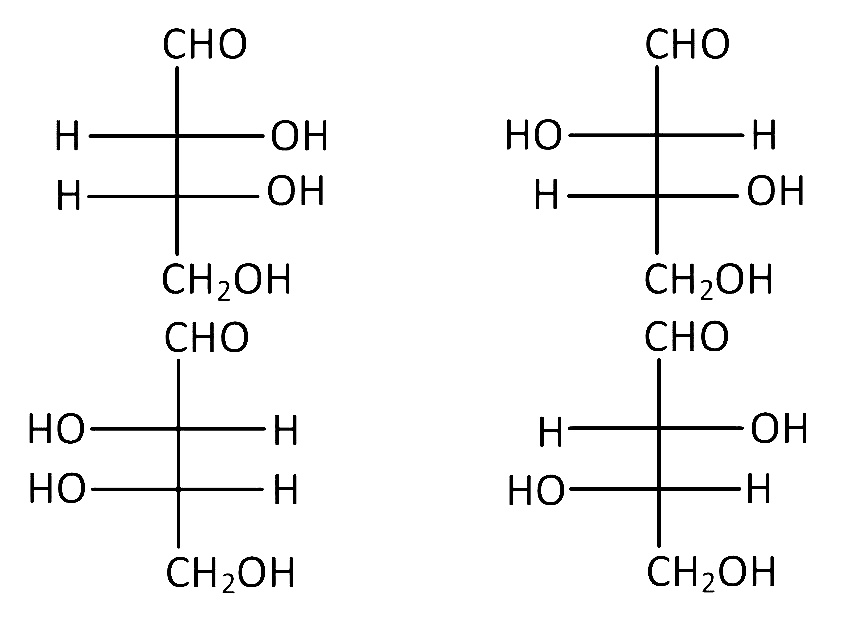
NEET-UG 2016

NEET 2016 Phase 2

Physics (Maximum Marks: 180)
  • This section contains 45 questions.
  • Each question has FOUR options (A), (B), (C) and (D). ONLY ONE of these four options is the correct answer.
  • Full Marks : +4 If ONLY the correct option is chosen;
  • Zero Marks : 0 If none of the options is chosen (i.e. the question is unanswered);
  • Negative Marks : −1 In all other cases.
Q.1
Planck's constant (h), speed of light in vacuum (c) and Newton's gravitional constant (G) are three fundamental constants. Which of the following combinations of these has the dimension of length ?
(A)
(B)
(C)
(D)
(A)

Solution

According to question,

L hp cq Gr

[M0LT0] = [ML2T-1]p [LT-1]q [M-1L3T-2]r

Equating power both sides, we get

p - r = 0        ......(1)

2p + q + 3r = 1        ......(2)

- p - q - 2r = 0        ......(3)

Solving equation (1), (2), (3), we get

p = r = , q =

L =
Q.2
Two cars P and Q start from a point at the same time in a straight line and their positions are represented by
xP(t) = (at + bt2) and xQ(t) = (ft t2).

At what time do the cars have the same velocity ?
(A)
(B)
(C)
(D)
(D)

Solution

For car P,

xP(t) = (at + bt2)

vP(t) = = a + 2bt

Similarly for car Q,

xQ(t) = (ft - t2)

vQ(t) = = f - 2t

When they have same velocity then, vP(t) = vQ(t)

a + 2bt = f - 2t

2t(b + 1) = f - a

t =
Q.3
In the given figure, a = 15 m s2 represents the total acceleration of particle moving in the clockwise direction in a circle of radius R = 2.5 m at a given instant of time. The speed of the particle is

NEET 2016 Phase 2 Physics - Motion in a Plane Question 15 English
(A)
4.5 m s1
(B)
5.0 m s1
(C)
5.7 m s1
(D)
6.2 m s1
(C)

Solution

NEET 2016 Phase 2 Physics - Motion in a Plane Question 15 English Explanation

Here = 15 m/s2

We know,

= = 5.7 m/s
Q.4
A particle moves from a point to when a force of N is applied. How much work has been done by the force ?
(A)
8 J
(B)
11 J
(C)
5 J
(D)
2 J
(C)

Solution

Here


Work done by force F in moving from and


Q.5
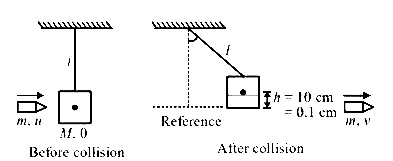
A bullet of mass 10 g moving horizontally with a velocity of 400 m s1 strikes a wood block of mass 2 kg which is suspended by light inextensible string of length 5 m. As a result, the centre of gravity of the block found to rise a vertical distance of 10 cm. The speed of the bullet after it emerges out horizontally from the block will be
(A)
100 m s1
(B)
80 m s1
(C)
120 m s1
(D)
160 m s1
(C)

Solution

Mass of bullet, m = 10 g = 0.01 kg
Initial speed of bullet, u = 400 m s–1
Mass of block, M = 2 kg
Length of string, l = 5 m
Speed of the block after collision = v1
Speed of the bullet on emerging from block, v = ?
NEET 2016 Phase 2 Physics - Center of Mass and Collision Question 34 English Explanation
Using energy conservation principle for the block,
(KE + PE)Reference = (KE + PE)h


Using momentum conservation principle for block and bullet system,
(M × 0 + mu)Before collision = (M × v1 + mv)After collision


Q.6
Two identical balls A and B having velocities of 0.5 m s1 and 0.3 m s1 respectively collide elastically in one dimension. The velocities of B and A after the collision respectively will be :
(A)
0.5 m s1 and 0.3 m s1
(B)
0.5 m s1 and 0.3 m s1
(C)
0.3 m s1 and 0.5 m s1
(D)
0.3 m s1 and 0.5 m s1
(B)

Solution

Masses of the balls are same and collision is elastic, so their velocity will be interchanged after collision.
Q.7
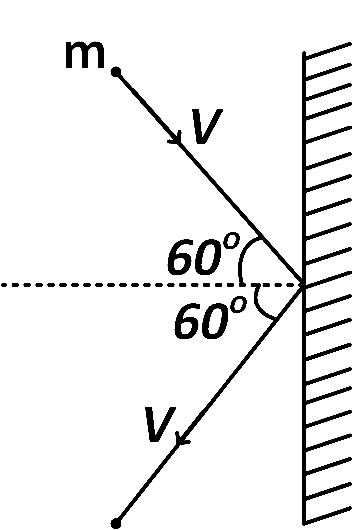
A rigid ball of mass m strikes a rigid wall at 60o and gets reflected without loss of speed as shown in the figure. The value of impulse imparted by the wall on the ball will be :
NEET 2016 Phase 2 Physics - Center of Mass and Collision Question 36 English
(A)
(B)
2
(C)
(D)
(A)

Solution

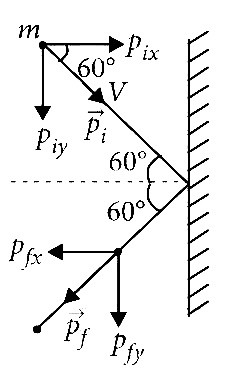
NEET 2016 Phase 2 Physics - Center of Mass and Collision Question 36 English Explanation
Given, pi = pf = mV
Change in momentum of the ball


Here, pix = pfx = picos 60° =

Impulse imparted by the wall = change in the momentum of the ball = mV.
Q.8
A light rod of length has two masses m1 and m2 attached to its two ends. The moment of inertia of the system about an axis perpendicular to the rod and passing through the centre of mass is
(A)
(B)
(C)
(D)
(A)

Solution

Here,

Centre of mass of the system,


Required moment of inertia of the system,


Q.9
A solid sphere of mass m and radius R is rotating about its diameter. A solid cylinder of same mass and same radius is also rotating about its geometrical axis with an angular speed twice that of the sphere. The ratio of their kinetic energies of rotation (Esphere / Ecylinder) will be
(A)
2 : 3
(B)
1 : 5
(C)
1 : 4
(D)
3 : 1
(B)

Solution


Here, ,   


Q.10
Two rotating bodies A and B of masses m and 2m with moments of inertia and ( > ) have equal kinetic energy of rotation. If LA and LB be their angular momenta respectively, then
(A)
(B)
(C)
(D)
(C)

Solution

It is known that rotational kinetic energy is given as :

=

Hence, L2 I

Further, EA = EB

Also,


Q.11
A satellite of mass m is orbiting the earth (of radius R) at a height h from its surface. The total energy of the satellite in terms of g0, the value of acceleration due to gravity at the earth's surface, is
(A)
(B)
(C)
(D)
(B)

Solution

Total mechanical energy of satellite is given by

E = – GMm/2r

Here, r = R + h

And, GM = goR2

So, E = – mgoR2/2(R+h)
Q.12
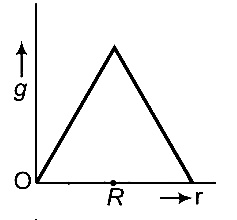
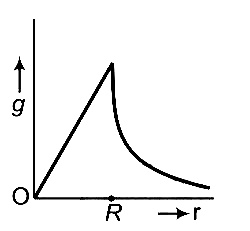
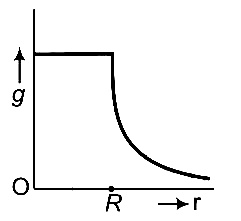
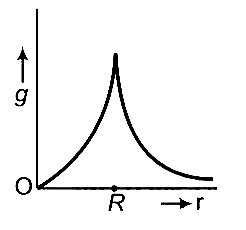
Starting from the centre of the earth having radius R, the variation of g (acceleration due to gravity) is shown by
(A)
NEET 2016 Phase 2 Physics - Gravitation Question 64 English Option 1
(B)
NEET 2016 Phase 2 Physics - Gravitation Question 64 English Option 2
(C)
NEET 2016 Phase 2 Physics - Gravitation Question 64 English Option 3
(D)
NEET 2016 Phase 2 Physics - Gravitation Question 64 English Option 4
(B)

Solution

Since, acceleration due to gravity is given as

Q.13
Three liquids of densities 1, 2  and 3 (with 1 > 2 > 3), having the same value of surface tension T, rise to the same height in three identical capillaries. The angles of contact 1, 2 and 3 obey
(A)
(B)
0 1 < 2 < 3 <
(C)
(D)
(B)

Solution

Capillary rise,

For given value of T and

Also,

or

Since, , so

For

Hence,
Q.14
A rectangular film of liquid is extended from (4 cm 2 cm) to (5 cm 4 cm). If the work done is 3 104 J, the value of the surface tension of the liquid is
(A)
0.250 N m1
(B)
0.125 N m1
(C)
0.2 N m1
(D)
8.0 N m1
(B)

Solution

We have d = 2700 m, ρ = 103 kg/m3, compressibility = 45.4 × 10⁻¹¹ /pascal

Now the pressure at bottom of ocean is

p = ρgd

= 103 × 10 × 2700

= 27 × 106 Pa

Hence, fractional compression

= 45.4 × 10−11 × 27 × 106

= 1.2 × 10−2 = 0.125 N m1
Q.15
A body cools from a temperature 3T to 2T in 10 minutes. The room temperature is T. Assume that Newton's law of cooling is applicable. The temperature of the body at the end of next 10 minutes will be
(A)
T
(B)
T
(C)
T
(D)
T
(B)

Solution

According to Newton’s law of cooling,


For two cases,


and

Here,

and

and

So    ...(i)

   ...(ii)

Dividing eqn. (i) by eqn. (ii), we get


Q.16
Two identical bodies are made of a material for which the heat capacity increases with temperature. One of these is at 100oC, while the other one is at 0oC. If the two bodies are brought into contact, then, assuming no heat loss, the final common temperature is
(A)
50 oC
(B)
more than 50 oC
(C)
less than 50 oC but greater than 0 oC
(D)
0 oC
(B)

Solution

If the final common temperature is Tc, Cc and Ch average heat capacities of cold and hot bodies then as per principle of calorimetry,

heat lost = heat gained

Ch (100°C – Tc) = Cc × Tc

Now Tc = Ch/(Ch + Cc) × 100°C

= 100/[1 + (Cc/Ch)],     where Cc/Ch < 1

It is seen that 1 + Cc/Ch < 2

Hence, Tc > (100/2)°C or Tc > 50°C
Q.17
A given sample of an ideal gas occupies a volume V at a pressure P and absolute temperature T. The mass of each molecule of the gas is m. Which of the following gives the density of the gas ?
(A)
P/(kT)
(B)
Pm/(kT)
(C)
P/(KTV)
(D)
mkT
(B)

Solution

As PV = nRT

   ...(i)

Density, =
   [From eqn. (i)]

   
Q.18
The temperature inside a refrigerator is t2 oC. The amount of heat delivered to the room for each joule of electrical energy consumed ideally will be
(A)
(B)
(C)
(D)
(B)

Solution

Temperature inside refrigerator = t2 °C

Room temperature = t1 °C

For refrigerator,


The amount of heat delivered to the room for each joule of electrical energy (W = 1 J)

Q.19
One mole of an ideal monatomic gas undergoes a process described by the equation PV3 = constant. The heat capacity of the gas during this process is
(A)
R
(B)
R
(C)
2R
(D)
R
(D)

Solution

Process described by the equation,

PV3 = constant

For a polytropic process, PV = constant

Q.20
A body of mass m is attached to the lower end of a spring whose upper end is fixed. The spring has negligible mass. When the mass m is slightly pulled down and released, it oscillates with a time period of 3s. When the mass m is increased by 1 kg, the time period of oscillations becomes 5 s. The value of m in kg is
(A)
(B)
(C)
(D)
(D)

Solution

The time period of oscillation is given by


On dividing :


Q.21
Three sound waves of equal amplitudes have frequencies (n 1), n, (n + 1). They superimpose to give beats. The number of beats produced per second will be
(A)
1
(B)
4
(C)
3
(D)
2
(D)

Solution

(n – 1) and (n + 1) suppose to form frequency n

n and n will be at resonance

n – 1 and n produce 1 beat

n + 1 and n produce 1 beat

Number of beats formed are ‘2’
Q.22
The second overtone of an open organ pipe has the same frquency as the first overtone of a closed pipe L metre long. The length of the open pipe will be
(A)
L
(B)
2L
(C)
(D)
4L
(B)

Solution

Second overtone of an open organ pipe

(Third harmonic)

First overtone of a closed organ pipe

(Third harmonic)

According to question,


L' = 2L
Q.23
An electric dipole is placed at an angle of 30o with an electric field intensity 2 105 N C1. It experiences a torque equal to 4 N m. The charge on the dipole, if the dipole length is 2 cm, is
(A)
8 mC
(B)
2 mC
(C)
5 mC
(D)
7 C
(B)

Solution

Torque is given by τ = pE sin θ

τ = pE sin θ = qE sinθ

q = τ /E sinθ

= 4/(2 × 10-2 × 0.5 × 2 × 105) = 2 mC
Q.24
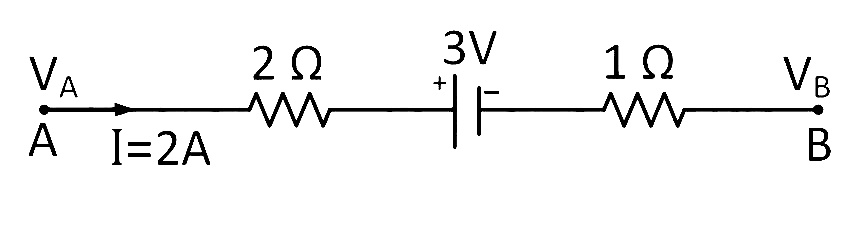
The potential difference (VA VB) between the points A and B in the given figure is

NEET 2016 Phase 2 Physics - Current Electricity Question 114 English
(A)
3V
(B)
+3 V
(C)
+6 V
(D)
+9 V
(D)

Solution

On applying KVL in the circuit, the potential difference between the two points can be obtained.

VA – VB = (2W × 2A) + 3V + (2A × 1W) = 4V + 3V + 2V = 9 V
Q.25
A filament bulb (500 W, 100 V) is to be used in a 230 V main supply. When a resistance R is connected in series, it works perfectly and the bulb consumes 500 W. The value of R is
(A)
230
(B)
46
(C)
26
(D)
13
(C)

Solution

Resistance of bulb,


Power of the bulb in the circuit,
P = VI


VR = IR (230 – 100) = 5 × R

R = 26
Q.26
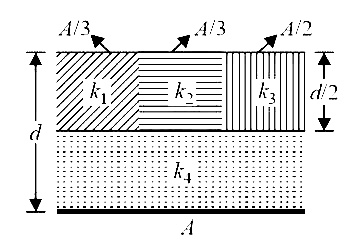
A parallel-plate capacitor of area a, plate separation d and capacitance C is filled with four dielectric materials having dielectric constants k1, k2, k3 and k4 as shown in the figure. If a single dielectric material is to be used to have the same capacitance C in this capacitor, then its dielectric constant k is given by
NEET 2016 Phase 2 Physics - Capacitor Question 38 English
(A)
k = k1 + k2 + k3 + 3k4
(B)
k = (k1 + k2 + k3) + 2k4
(C)
=
(D)
=
(C)

Solution

Here,


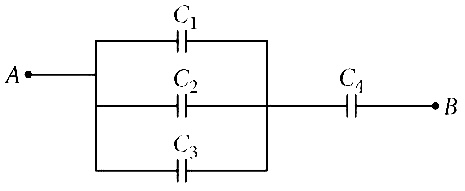
Given system of C1, C2, C3 and C4 can be simplified as

NEET 2016 Phase 2 Physics - Capacitor Question 38 English Explanation


Suppose,


Q.27
An electron is moving in a circular path under the influence of a transverse magnetic field of 3.57 10-2 T. If the value of e/m is 1.76 1011 C kg1, the frequency of revoluation of the electron is
(A)
1 GHz
(B)
100 MHz
(C)
62.8 MHz
(D)
6.28 MHz
(A)

Solution

Frequency of revolution of charge in magnetic field is given as

F =

=

= 109 Hz

= 1 GHz
Q.28
A long wire carrying a steady current is bent into a circular loop of one turn. The magnetic field at the centre of the loop is B. It is then bent into a circular coil of n turns. The magnetic field at the centre of this coil of n turns will be
(A)
nB
(B)
n2B
(C)
2nB
(D)
2n2B
(B)

Solution

For One turn loop :

B =

For n turn loop :

r =

B' =

=

= n2B
Q.29
A bar magnet is hung by a thin cotton thread in a uniform horizontal magnetic field and is in equilibrium state. The energy required to rotate it by 60o is W. Now the torque required to keep the magnet in this new position is
(A)
(B)
(C)
(D)
(B)

Solution

W = MB (cos 0° – cos 60°)

W = MB ....(1)

Required torque for this position

= MB sin

= MB sin 60°

= = [From (1)]
Q.30
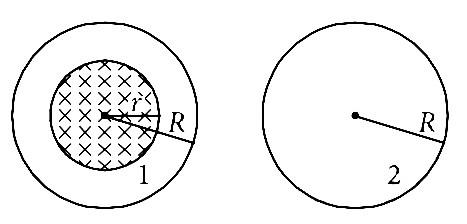
A uniform magnetic field is restricted within a region of rafius r. The magnetic field changes with time at a rate . Loop 1 of radius R > r encloses the region r and loop 2 of radius R is outside the region of magnetic field as shown in the figure. Then the e.m.f. generated is

NEET 2016 Phase 2 Physics - Electromagnetic Induction Question 31 English
(A)
zero in loop 1 and zero in loop 2
(B)
in loop 1 and in loop 2
(C)
in loop 1 and zero in loop 2
(D)
in loop 1 and zero in loop 2
(D)

Solution

Emf generated in loop 1,


Emf generated in loop 2,

= 0
Q.31
A 100 resistance and a capacitor of 100 reactance are connected in series across a 220 V source. When the capacitor is 50% charged, the peak value of the displacement current is
(A)
2.2 A
(B)
11 A
(C)
4.4 A
(D)
11
(A)

Solution

Net impedance, Z = =

Peak value of displacement current = Maximum conduction current in the circuit

= = = 2.2 A
Q.32
The potential differences across the resistance, capacitance and inductance are 80 V, 40 V and 100 V respectively in an L-C-R circuit. The power factor of this circuit is
(A)
0.4
(B)
0.5
(C)
0.8
(D)
1.0
(C)

Solution

Power factor, cos =

=

=

=

= 0.8
Q.33
Which of the following combinations should be selected for better tuning of an L-C-R circuit used for combination ?
(A)
R = 20 , L = 1.5 H, C = 35 F
(B)
R = 25 , L = 2.5 H, C = 45 F
(C)
R = 15 , L = 3.5 H, C = 30 F
(D)
R = 25 , L = 1.5 H, C = 45 F
(C)

Solution

Quality factor of an L-C-R circuit is given by,

Q =

So, Q1 = = 10.35

Q2 = = 9.43

Q3 = = 22.77

Q4 = = 7.30

As Q3 is maximum of Q1, Q2, Q3, and Q4. Hence, option (c) should be selected for better tuning of an L-C-R circuit.
Q.34
An air bubble in a glass slab with refractive index 1.5 (near normal incidence) is 5 cm deep when viewed from one surface and 3 cm deep when viewed from the opposite face. The thickness (in cm) of the slab is
(A)
8
(B)
10
(C)
12
(D)
16
(C)

Solution

Seeing from one end, h1 = × (h – b) = 3/2 × 5 = 15/2 cm

From other end of the slab, h2 = × h = 3/2 × 3 = 9/2 cm

Now total height, (15/2 + 9/2) = 24/2 = 12 cm
Q.35
A person can see clearly objects only when they lie between 50 cm and 400 cm from his eyes . In order to increase the maximum distance of distinct vision to infinity, the type and power of the correcting lens, the person has to use. will be
(A)
convex, + 2.25 diopter
(B)
concave, 0.25 diopter
(C)
concave, 0.2 diopter
(D)
convex, + 0.15 diopter
(B)

Solution

Given u = 400 cm = 4 m

v = and f = ?

Since,

=

so, f = – 4 m

Hence, lens will be concave.

Now P = = = - 0.25 D
Q.36
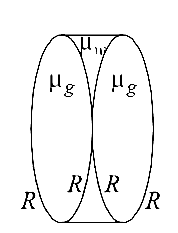
Two identical glass (g = 3/2) equiconvex lenses of focal length each are kept in contact. The space between the two lenses is filled with water . The focal length of the combination is
(A)
(B)
(C)
(D)
(D)

Solution

NEET 2016 Phase 2 Physics - Geometrical Optics Question 81 English Explanation

Focal length (f) of glass convex lens is given by


f = R

Focal length (f1) of water filled concave lens is given by


= =

Equivalent focal length (feq) of lens system

=

feq =
Q.37
A linear aperture whose width is 0.02 cm is placed immediately in front of a lens of focal length 60 cm. The aparture is illuminated normally by a parallel beam of wavelength 5 105 cm. The distance of the first dark band of the diffraction pattern from the centre of the screen is
(A)
0.10 cm
(B)
0.25 cm
(C)
0.20 cm
(D)
0.15 cm
(D)

Solution

Here, a = 0.02 cm = 2 × 10⁻⁴ m

= 5 × 10⁻⁵ cm = 5 × 10⁻⁷ m

D = 60 cm = 0.6 m

Position of first minima on the diffraction pattern,

y1 =

= = 15 10-4 m = 0.15 cm
Q.38
The interference pattern is obtained with two coherent light sources of intensity ratio n. In the interference pattern, the ratio will be
(A)
(B)
(C)
(D)
(B)

Solution

Maximum Intensity is given as Imax =

Minimum intensity is given as Imin =

Given = n


= =


=

=

= =
Q.39
The half-life of a radioactive substance is 30 minutes. The time (in minutes) taken between 40% decay and 85% decay of the same radioactive substance is
(A)
15
(B)
30
(C)
45
(D)
60
(D)

Solution

N0 = Nuclei at time t = 0

N1 = Remaining nuclei after 40% decay

= (1 – 0.4) N0 = 0.6 N0

N2 = Remaining nuclei after 85% decay

= (1 – 0.85) N0 = 0.15 N0

= =

Hence number of half-lives is 2, so the time needed is :

t = 2 × 30 = 60 mints
Q.40
If an electron in a hydrogen atom jumps from the 3rd orbit to the 2nd orbit, it emits a photon of wavelength . When it jumps from the 4th orbit to the 3rd orbit, the corresponding wavelength of the photon will be
(A)
(B)
(C)
(D)
(C)

Solution

When electron jumps from higher orbit to lower orbit then, wavelength of emitted photon is given by,


On jumping from 3rd orbit to 2nd orbit,

=

On jumping from 4th orbit to 3rd orbit,

=

' = =
Q.41
Electrons of mass m with de-Broglie wavelength fall on the target in an X-ray tube. The cutoff wavelength (0) of the emitted X-ray is
(A)
0 =
(B)
(C)
(D)
(A)

Solution

Kinetic energy of electrons

K = = =

For certain frequency, maximum wavelength that can be emitted is 0 which is cut off wavelength obtained at cut off frequency,

E0 =

Since, E = E0


0 =
Q.42
Photons with energy 5 eV are incifent on a cathode C in a photoelectric cell. The maximum energy of emitted photoelectrons is 2 eV. When photons of energy 6 eV are incident on C, no photoelectrons will reach the anode A, if the stopping potential of A relative to C is
(A)
+ 3 V
(B)
+4 V
(C)
1 V
(D)
3 V
(D)

Solution

Stopping potential is the voltage which is needed to stop energetic photo electron for reaching towards cathode.

Stopping potential, = E – Kmax

2 eV = 5 eV – or = 3 eV

Now eV0 = E' – = 6 eV – 3 eV = 3 eV

Hence stopping potential is –3V
Q.43
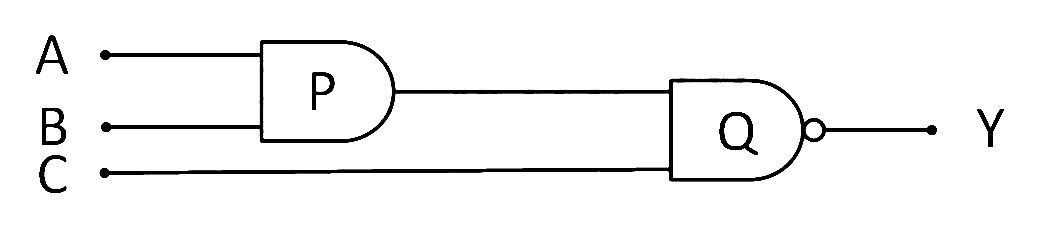
What is the output Y in the following circuit, when all the three inputs A, B, C are first 0 and then 1 ?

NEET 2016 Phase 2 Physics - Semiconductor Electronics Question 113 English
(A)
0, 1
(B)
0, 0
(C)
1, 0
(D)
1, 1
(C)

Solution

Applying De Morgan’s law:

Output Y = [(A ⋅ B) ⋅ C]' = A' + B' + C'

When A, B, C are 0 Y = 1

When A, B, C are 1 Y = 0
Q.44
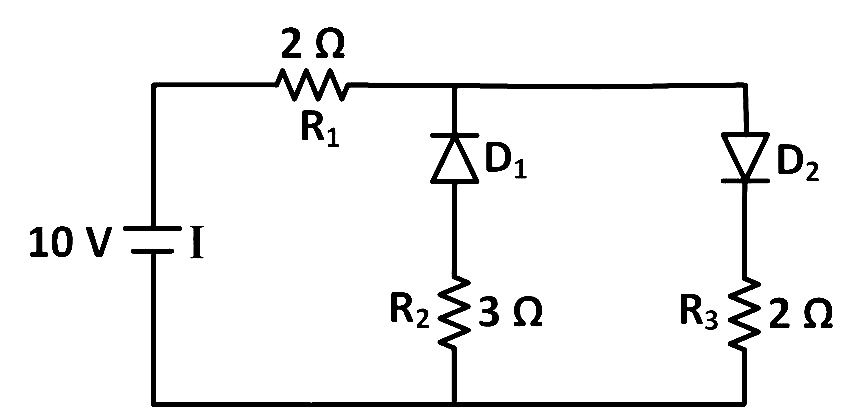
The given circuit has two ideal diodes connected as shown in the figure. The current flowing through the resistance R1 will be

NEET 2016 Phase 2 Physics - Semiconductor Electronics Question 114 English
(A)
2.5 A
(B)
10.0 A
(C)
1.43 A
(D)
3.13 A
(A)

Solution

Current will not flow through D1 as it is reversed biased.

Current will flow through resistor R1, diode D2 and resistor R3

Now current i = 10/(2 + 2) = 2.5 A
Q.45
For CE transistor amplifier, the aufio signal voltage across the collector resistance of 2 k is 4 V. If the current amplification factor of the transistor is 100 and the base resistance is 1 k, then the input signal voltage is
(A)
10 mV
(B)
20 mV
(C)
30 mV
(D)
15 mV
(B)

Solution

Voltage gain, A = = = 200

Also, A =

= = 20 mA
Chemistry (Maximum Marks: 180)
  • This section contains 45 questions.
  • Each question has FOUR options (A), (B), (C) and (D). ONLY ONE of these four options is the correct answer.
  • Full Marks : +4 If ONLY the correct option is chosen;
  • Zero Marks : 0 If none of the options is chosen (i.e. the question is unanswered);
  • Negative Marks : −1 In all other cases.
Q.1
Suppose the elements X and Y combine to form two compounds XY2 and X3Y2. When 0.1 mole of XY2 weights 10 g and 0.05 mole of X3Y2 weighs 9 g, the atomic weights of X and Y are
(A)
40, 30
(B)
60, 40
(C)
20, 30
(D)
30, 20
(A)

Solution

Assume the atomic weight of element X is x and element Y is y.

For XY2,


    ...(i)

For X3Y2,


   ...(ii)

On solving equations (i) and (ii),

we get y = 30 g mol-1

Put the value of y in equation. (i)

x + 2(30) = 100

x = 100 - 60 = 40 g mol-1
Q.2
Which of the following pairs of d-orbitals will have electron density along the axes ?
(A)
(B)
dxz,  
(C)
(D)
(C)

Solution

dx2 - y2 and dz2 orbitals have electron density along the axes.
Q.3
How many electrons can fit in the orbital for which n = 3 and = 1?
(A)
2
(B)
6
(C)
10
(D)
14
(B)

Solution

For and :

  • means the electron is in the third shell

  • means it is a -subshell

Now, for a -subshell:

  • the possible values of are

  • so, number of orbitals

Each orbital can hold a maximum of electrons.

So total electrons in the subshell:

Therefore, the correct answer is Option B: 6.

Q.4
Hot concentrated sulphate acid is a moderately strong oxidizing agent. Which of the following reactions does not show oxidizing behaviour?
(A)
Cu + 2H2SO4 CuSO4 + SO2 + 2H2O
(B)
S + 2H2SO4 3SO2 + 2H2O
(C)
C + 2H2SO4 CO2 + 2SO2 + 2H2O
(D)
CaF2 + H2SO4 CaSO4 + 2HF
(D)

Solution

CaF2 + H2SO4 CaSO4 + 2HF

Here, the oxidation state of every atom remains the same so, it is not a redox reaction.
Q.5
The percentage of pyridine (C5H5N) that forms pyridinium ion (C5H5N+H) ina 0.10 M aqueous pyridine solution (Kb for C5H5N = 1.7 109) is
(A)
0.0060%
(B)
0.013%
(C)
0.77%
(D)
1.6%
(B)

Solution

C5H5N + H2O → C5H5N+H + OH

So, the amount of pyridine that forms pyridinium ion is .

Now, =

=

= 1.30 10-4

So, percentage of pyridine that forms pyridinium ion

= 1.30 × 10–4 × 100

= 1.30 × 10–2 = 0.013%
Q.6
The solubility of AgCl(s) with solubility product 1.6 1010 in 0.1 M NaCl solution would be
(A)
1.26 105 M
(B)
1.6 109 M
(C)
1.6 1011 M
(D)
zero
(B)

Solution

AgCl ⇌ Ag+ + Cl
   s           s     s + 0.1

Concentration of Cl is (s + 0.1) mol L–1 because s mol L–1 from ionization of AgCl and 0.1 mol L–1 from ionization of 0.1 M NaCl.

Now, Ksp = [Ag+][Cl ]

1.6 × 10–10 = s (s + 0.1)

1.6 × 10–10 = s (0.1) { s << 0.1}

s = 1.6 × 10⁻⁹ M
Q.7
Which of the following fluro-compounds is most likely to behave as a Lewis base ?
(A)
BF3
(B)
PF3
(C)
CF4
(D)
SiF4
(B)

Solution

PF3 is lewis base because on P atom there is lone pair.
Q.8
The van't Hoff factor (i) for a dilute aqueous solution of the strong electrolyte barium hydroxide is
(A)
0
(B)
1
(C)
2
(D)
3
(D)

Solution

Ba(OH)2 is a strong electrolyte and undergoes cent percent dissociation in a dilute aqueous solution.

Ba(OH)2(aq) Ba2+(aq) + 2OH(aq)

Thus, van’t Hoff factor i = 3.
Q.9
Which one of the following is incorrect for ideal solution?
(A)
(B)
(C)
calculated by Raoult's law
(D)
(D)

Solution

For ideal solution, we have

Hmix = 0, Vmix = 0

Now Umix = ∆Hmix – PVmix

Umix = 0

Also, for an ideal solution,

pA = xApAo, pB = xBpBo

p = pobserved – pcalculated = 0

Gmix = Hmix – TSmix

For an ideal solution, Smix 0

Gmix 0
Q.10
For a sample of perfect gas when its pressure is changed isothermally from pi to pf, the entropy change is given by
(A)
(B)
(C)
(D)
(B)

Solution

For an ideal gas undergoing reversible expansion, when temperature changes from Ti to Tf and pressure changes from Pi to Pf.

S = nCp ln + nR ln

For an isothermal process, Ti = Tf so, ln 1 = 0

S = nR ln
Q.11
If the Eocell for a given reaction has a negative value, which of the following gives the correct relationships for the values of Go and Keq ?
(A)
Go > 0;   Keq < 1
(B)
Go > 0;   Keq > 1
(C)
Go < 0;   Keq > 1
(D)
Go < 0;   Keq < 1
(A)

Solution

We know that

Go = –nFEocell

Eocell = -ve then Go = +ve or Go > 0

Go = -nRTlog Keq

For Go = +ve, Keq = -ve or Keq < 1.
Q.12
The number of electrons delivered at the cathode during electrolysis by a current of 1 ampere in 60 seconds is (charge on electron = 1.60 1019C)
(A)
6 1023
(B)
6 1020
(C)
3.75 1020
(D)
7.48 1023
(C)

Solution

Q = I × t

Q = 1 × 60 = 60 C

Now, 1.60 × 10⁻¹⁹ C 1 electron

60 C

= 3.75 1020 electrons
Q.13
Zinc can be coated on iron to produce galvanized iron but the reverse is not possible. It is because
(A)
zinc is lighter than iron
(B)
zinc has lower melting point than iron
(C)
zinc has lower negative electrode potential than iron
(D)
zinc has higher negative electrode potential than iron
(D)

Solution

The reduction potential values are

Zn2+/Zn = – 0.76 V

Fe2+/Fe = – 0.44 V

Thus, due to higher negative electro potential value of zinc than iron, iron cannot be coated on zinc.
Q.14
The molar conductivity of a 0.5 mol/dm3 solution of AgNO3 with electrolytic conductivity of 5.76 103 S cm1 at 298 K is
(A)
2.88 S cm2/mol
(B)
11.52 S cm2/mol
(C)
0.086 S cm2/mol
(D)
28.8 S cm2/mol
(B)

Solution


=

= 11.52 S cm2/mol
Q.15
During the electrolysis of molten sodium chloride, the time required to produce 0.10 mol of chlorine gas using a current of 3 amperes is
(A)
55 minutes
(B)
110 minutes
(C)
220 minutes
(D)
330 minutes
(B)

Solution

At cathode : 2Na+ + 2e 2Na

At anode : 2Cl Cl2 + 2e
----------------------------------------------

Net reaction: 2Na+ + 2Cl 2Na + Cl2

From Faraday’s first law of electrolysis,

w = ZIt

= It

No. of moles of Cl2 gas × Mol. wt. of Cl2 gas

=

0.10 71 =

t =

= 6433.33 sec

= 107.22 min 110 min
Q.16
The decomposition of phosphine (PH3) on tungsten at low pressure is a first-order reaction. It is because the
(A)
rate is proportional to the surface coverage
(B)
rate is inversely proportional to the surface coverage
(C)
rate is independent of the surface coverage
(D)
rate of decomposition is very slow.
(A)

Solution

At low pressure, rate is proportional to the surface coverage and is of first order while at high pressure it follows zero order kinetic due to complete coverage of surface area.
Q.17
In calcium fluoride, having the fluorite structure, the coordination numbers for calcium ion (Ca2+) and fluoride ion (F) are
(A)
4 and 2
(B)
6 and 6
(C)
8 and 4
(D)
4 and 8
(C)

Solution

In fluorite (CaF2) structure,

C.N. of Ca+2 = 8

C.N. of F = 4.
Q.18
The coagulation values in millimoles per litre of the electrolytes used for the coagulation of As2S3 are given below :
I.  (NaCl) = 52,
II. (BaCl2) = 0.69,
III. (MgSO4) = 0.22
The correct order of their coagulating power is
(A)
I > II > III
(B)
II > I > III
(C)
III > II > I
(D)
III > I > II
(C)

Solution

As,

Coagulating power
1
Coagulation value


Lower the coagulation value, higher is the coagulating power so, the correct order is :

III > II > I
Q.19
Among the following, which one is a wrong statement ?
(A)
PH5 and BiCl5 do not exist.
(B)
p-d bonds are present in SO2.
(C)
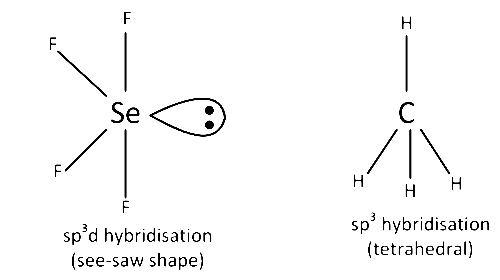
SeF4 and CH4 have same shape.
(D)
I3+ has bent geometry.
(C)

Solution

NEET 2016 Phase 2 Chemistry - Chemical Bonding and Molecular Structure Question 113 English Explanation
Q.20
The hybridizations of atomic orbitals of nitrogen in NO, NO  and  NH  respectively are
(A)
sp, sp3 and sp2
(B)
sp2, sp3 and sp3
(C)
sp, sp2 and sp3
(D)
sp2, sp and sp3
(C)

Solution

X = (VE + MA - c + a)

For , X = (5 + 0 - 1) = 2, so sp hybridisation

For , X = (5 + 0 + 1) = 3, so sp2 hybridisation

For , X = (5 + 4 - 1) = 4, so sp3 hybridisation

Q.21
Which one of the following compounds shows the presence of intramolecular hydrogen bond?
(A)
H2O2
(B)
HCN
(C)
Cellulose
(D)
Concentrated acetic acid
(C)

Solution

H2O2, HCN and conc. CH3COOH form intermolecular hydrogen bonding while cellulose has intramolecular hydrogen bonding.
Q.22
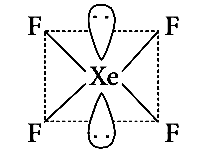
The correct geometry and hybridization for XeF4 are
(A)
octahedral, sp3d2
(B)
trigonal bipyramidal, sp3d
(C)
planar triangle, sp3d3
(D)
square planar, sp3d2
(A)

Solution

NEET 2016 Phase 2 Chemistry - Chemical Bonding and Molecular Structure Question 114 English Explanation

sp3d2 hybridisation (octahedral geometry, square planar shape)
Q.23
Which of the following pairs of ions is isoelectronic and isostructural ?
(A)
(B)
(C)
(D)
(A)

Solution

; 6 + 24 + 2 = 32; sp2; trigonal planar

: 7 + 24 + 1 = 32; sp2, trigonal planar

So, these are isoelectronic as well as isostructural.
Q.24
The suspension of slaked lime in water is known as
(A)
lime water
(B)
quick lime
(C)
milk of lime
(D)
aqueous solution of slaked lime.
(C)

Solution

NEET 2016 Phase 2 Chemistry - s-Block Elements Question 46 English Explanation

This process is known as slaking of lime.

The paste of lime in water (suspension) is called milk of lime while the filtered and clear solution is known as lime water.
Q.25
In context with beryllium, which one of the following statements is incorrect?
(A)
It is rendered passive by nitric acid.
(B)
It forms Be2C
(C)
Its salts rarely hydrolyze.
(D)
Its hydride is electron-deficient and polymeric.
(C)

Solution

Beryllium salts are readily hydrolysed.
Q.26
AlF3 is soluble in HF only in presence of KF. It is due to the formation of
(A)
K3[AlF3H3]
(B)
K3[AlF6]
(C)
AlH3
(D)
K[AlF3H]
(B)

Solution

AlF3 is insoluble in anhydrous HF because the F ions are not available in hydrogen bonded HF but, it becomes soluble in presence of little amount of KF due to formation of complex, K3[AIF6].

AIF3 + 3KF K3[AIF6].
Q.27
Boric acid is an acid because its molecule
(A)
contains replaceable H+ ion
(B)
gives up a proton
(C)
accepts OH from water releasing proton
(D)
combines with proton from water molecule.
(C)

Solution

Boric acid behaves as a Lewis acid, by accepting a pair of electrons from OH ion of water thereby releasing a proton.

H-OH+B(OH)3 [B(OH)4] + H+
Q.28
Which one of the following statements related to lanthanoids is incorrect?
(A)
Europium shows + 2 oxidation state.
(B)
The basicity decreases as the ionic radius decreases from Pr to Lu.
(C)
All the lanthanons are much more reactive than aluminium.
(D)
Ce(+4) solutions are widely used as oxidizing agent in volumetric analysis.
(C)

Solution

The first few members of the lanthanoid series are quite reactive, almost like calcium. However, with increasing atomic number, their behavior becomes similar to that of aluminium.
Q.29
The correct increasing order of trans-effect of the following species is
(A)
NH3 > CN > Br > C6H5
(B)
CN > C6H5 > Br > NH3
(C)
Br > CN > NH3 > C6H5
(D)
CN > Br > C6H5 > NH3
(B)

Solution

The intensity of the trans-effect as measured by the increase in rate of substitution of the trans ligand) follows the sequence :

CN > C6H5 > Br > NH3
Q.30
Jahn-Teller effect is not observed in high spin complexes of
(A)
d7
(B)
d8
(C)
d4
(D)
d9
(B)

Solution

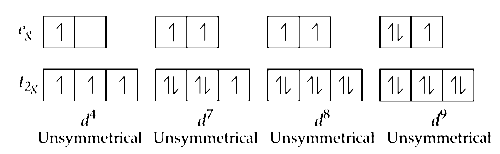
Jahn-Teller distortion is generally significant for asymmetrically occupied eg orbitals as they are directed towards the ligands and the energy gain is more.

On the other hand in unevenly occupied t2g orbitals, the John-Teller distortion is very weak. Since the t2g orbitals does not point directly at the ligand and thus energy gain is less. NEET 2016 Phase 2 Chemistry - Coordination Compounds Question 100 English Explanation
Q.31
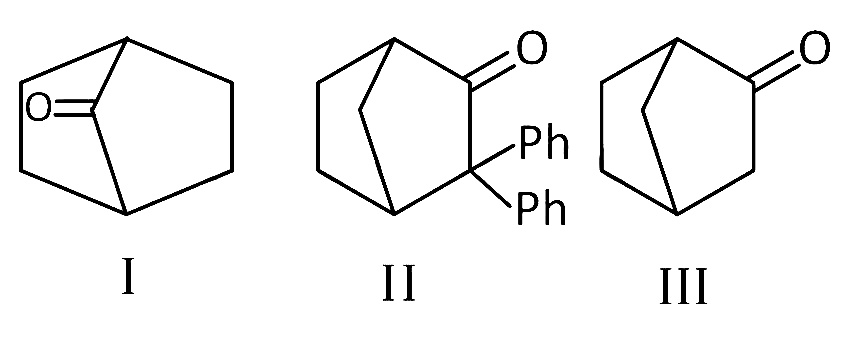
Which among the given molecules can exhibit tautomerism?
NEET 2016 Phase 2 Chemistry - Some Basic Concepts of Organic Chemistry Question 98 English
(A)
III only
(B)
Both I and III
(C)
Both I and II
(D)
Both II and III
(A)

Solution

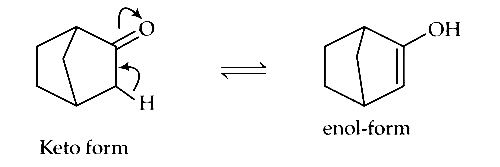
-hydrogen at bridge carbon never participates in tautomerism. Thus, only (III) exhibits tautomerism. NEET 2016 Phase 2 Chemistry - Some Basic Concepts of Organic Chemistry Question 98 English Explanation
Q.32
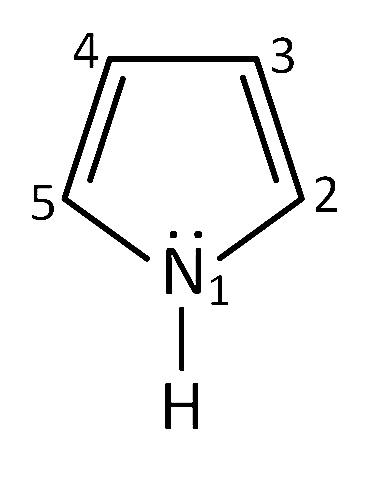
In pyrrole the electron density is maximum on
NEET 2016 Phase 2 Chemistry - Hydrocarbons Question 62 English
(A)
2 and 3
(B)
3 and 4
(C)
2 and 4
(D)
2 and 5
(D)

Solution

Pyrrole has maximum electron density on 2 and 5. It generally reacts with electrophiles at the C-2 or C-5 due to the highest degree of stability of the protonated intermediate. NEET 2016 Phase 2 Chemistry - Hydrocarbons Question 62 English Explanation

Attack at position 3 or 4 yields a carbocation that is a hybrid of structures (I) and (II). Attack at position 2 or 5 yields a carbocation that is a hybrid not only of structures (III) and (IV) (analogous to I and II) but also of structure (V). The extra stabilization conferred by (V) makes this ion the more stable one.

Also, attack at position 2 or 5 is faster because the developing positive charge is accommodated by three atoms of the ring instead of by only two.
Q.33
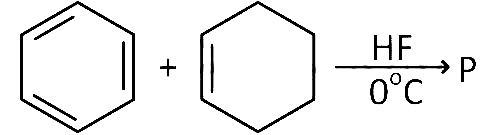
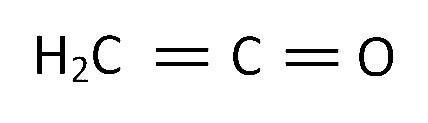
In the given reaction,

NEET 2016 Phase 2 Chemistry - Hydrocarbons Question 60 English
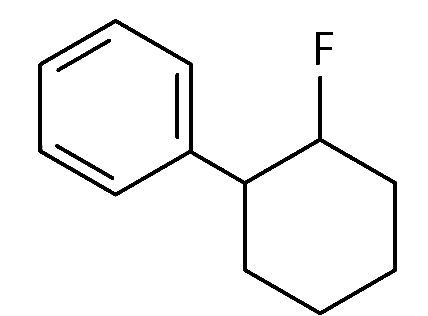
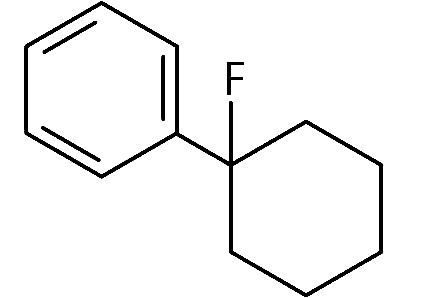
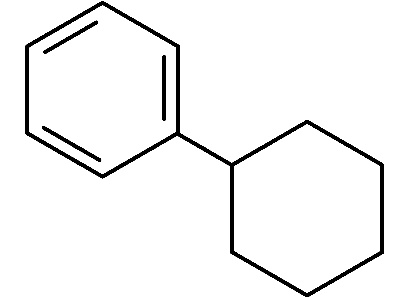
the product P is
(A)
NEET 2016 Phase 2 Chemistry - Hydrocarbons Question 60 English Option 1
(B)
NEET 2016 Phase 2 Chemistry - Hydrocarbons Question 60 English Option 2
(C)
NEET 2016 Phase 2 Chemistry - Hydrocarbons Question 60 English Option 3
(D)
NEET 2016 Phase 2 Chemistry - Hydrocarbons Question 60 English Option 4
(C)

Solution

NEET 2016 Phase 2 Chemistry - Hydrocarbons Question 60 English Explanation
Q.34
Which of the following can be used as the halide component for Friedel-Crafts reaction?
(A)
Chlorobenzene
(B)
Bromobenzene
(C)
Chloroethene
(D)
Isopropyl chloride
(D)

Solution

Friedel–Crafts reaction :
NEET 2016 Phase 2 Chemistry - Hydrocarbons Question 64 English Explanation
Chlorobenzene, bromobenzene and chloroethene are not suitable halide components as lone pair of electrons of halogen are delocalized with -bonds to attain double bond (C = X) character.
Q.35
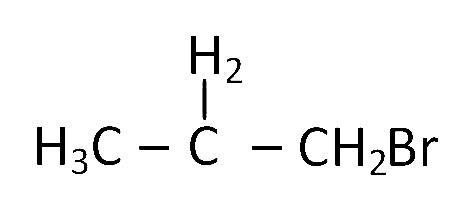
Which of the following compounds shall not produce propene by reaction with HBr followed by elimination or direct only elimination reaction ?
(A)
NEET 2016 Phase 2 Chemistry - Hydrocarbons Question 61 English Option 1
(B)
NEET 2016 Phase 2 Chemistry - Hydrocarbons Question 61 English Option 2
(C)
NEET 2016 Phase 2 Chemistry - Hydrocarbons Question 61 English Option 3
(D)
NEET 2016 Phase 2 Chemistry - Hydrocarbons Question 61 English Option 4
(C)

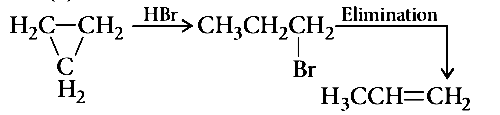
Solution

NEET 2016 Phase 2 Chemistry - Hydrocarbons Question 61 English Explanation 1 NEET 2016 Phase 2 Chemistry - Hydrocarbons Question 61 English Explanation 2
Q.36
The compound that will react most readily with gaseous bromine has the formula
(A)
C3H6
(B)
C2H2
(C)
C4H10
(D)
C2H4
(A)

Solution

Propene is most reactive towards Br2 (gaseous) than CH2 = CH2, HC CH and butane due to most electron density.
Q.37
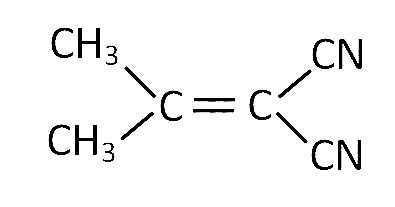
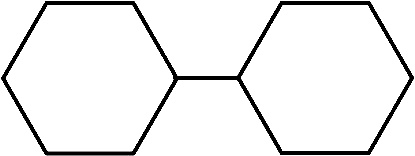
In which of the following molecules, all atoms are coplanar?
(A)
NEET 2016 Phase 2 Chemistry - Hydrocarbons Question 63 English Option 1
(B)
NEET 2016 Phase 2 Chemistry - Hydrocarbons Question 63 English Option 2
(C)
NEET 2016 Phase 2 Chemistry - Hydrocarbons Question 63 English Option 3
(D)
NEET 2016 Phase 2 Chemistry - Hydrocarbons Question 63 English Option 4
(A)

Solution

Biphenyl is coplanar as all carbon atoms are sp2 hybridised.
Q.38
Consider the reaction,
CH3CH2CH2Br + NaCN CH3CH2CH2CN + NaBr

This reaction will be the fastest in
(A)
ethanol
(B)
methanol
(C)
N, N' -dimethylformamide (DMF)
(D)
Water
(C)

Solution

The reaction,
CH3CH2CH2Br + NaCN CH3CH2CH2CN + NaBr

follows SN2 mechanism which is favoured by polar aprotic solvent i.e., N, N'–dimethylformamide (DMF).
Q.39
The correct structure of the product 'A' formed in the reaction
NEET 2016 Phase 2 Chemistry - Aldehydes, Ketones and Carboxylic Acids Question 74 English
(A)
NEET 2016 Phase 2 Chemistry - Aldehydes, Ketones and Carboxylic Acids Question 74 English Option 1
(B)
NEET 2016 Phase 2 Chemistry - Aldehydes, Ketones and Carboxylic Acids Question 74 English Option 2
(C)
NEET 2016 Phase 2 Chemistry - Aldehydes, Ketones and Carboxylic Acids Question 74 English Option 3
(D)
NEET 2016 Phase 2 Chemistry - Aldehydes, Ketones and Carboxylic Acids Question 74 English Option 4
(B)

Solution

NEET 2016 Phase 2 Chemistry - Aldehydes, Ketones and Carboxylic Acids Question 74 English Explanation

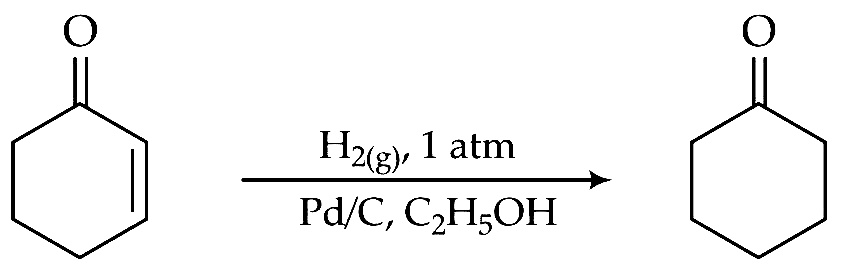
When H2, Pb/C catalyst is used then C=C is reduced at faster rate than C=O bond.
Q.40
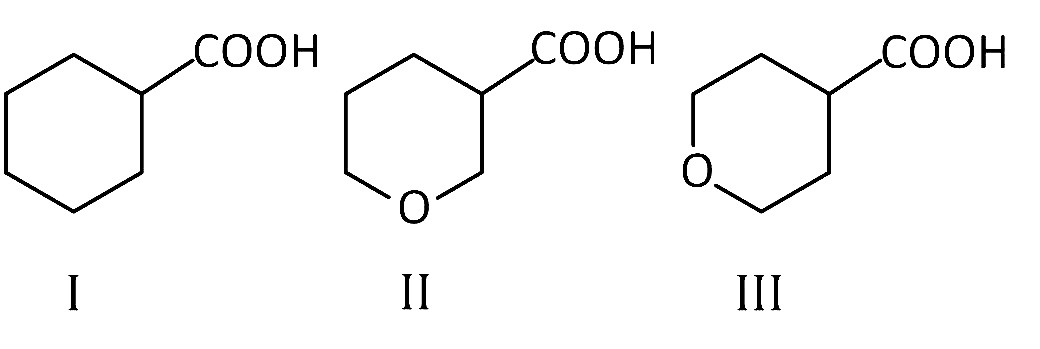
The correct order of strengths of the carboxylic acids
NEET 2016 Phase 2 Chemistry - Aldehydes, Ketones and Carboxylic Acids Question 75 English
is
(A)
I > II > III
(B)
II > III > I
(C)
III > II > I
(D)
II > I > III
(B)

Solution

We know, Acidic strength – I effect

As oxygen is more electron withdrawing (II) and (III) show greater – I effect than (I). Thus, (I) is least acidic. Out of (II) and (III), (II) is more acidic than (III) as distance of O increases from —COOH group and acidic strength decreases.
Q.41
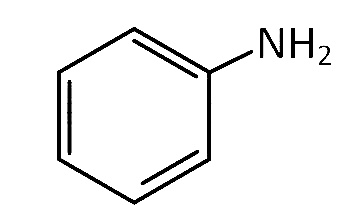
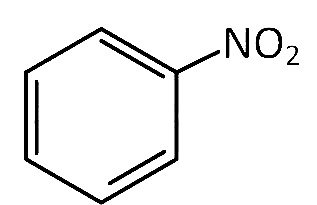
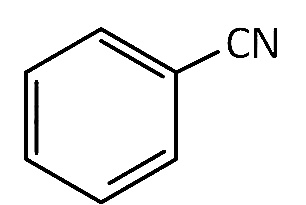
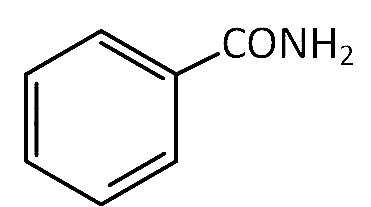
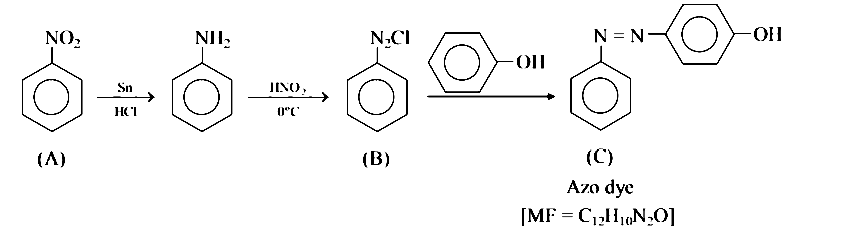
A given nitrogen-containing aromatic compound 'A' reacts with Sn/HCl, followed by HNO2 to give instable compound 'B'. 'B', on treatment with phenol, forms a beautiful coloured compound 'C' with the molecular formula C12H10N2O. The structure of compound 'A' is
(A)
NEET 2016 Phase 2 Chemistry - Organic Compounds Containing Nitrogen Question 53 English Option 1
(B)
NEET 2016 Phase 2 Chemistry - Organic Compounds Containing Nitrogen Question 53 English Option 2
(C)
NEET 2016 Phase 2 Chemistry - Organic Compounds Containing Nitrogen Question 53 English Option 3
(D)
NEET 2016 Phase 2 Chemistry - Organic Compounds Containing Nitrogen Question 53 English Option 4
(B)

Solution

NEET 2016 Phase 2 Chemistry - Organic Compounds Containing Nitrogen Question 53 English Explanation
Q.42
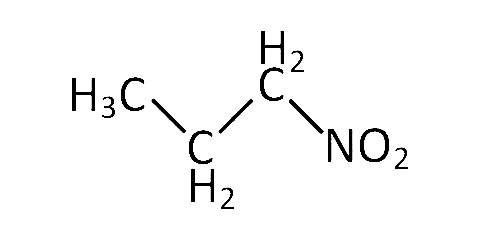
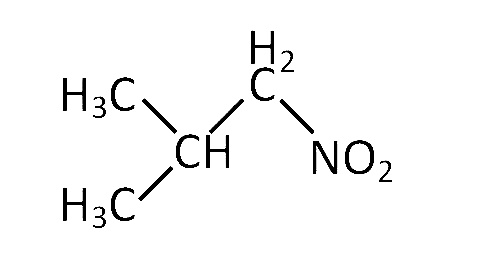
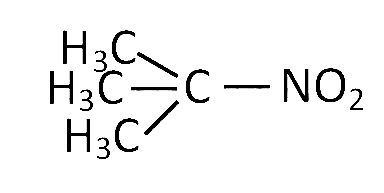
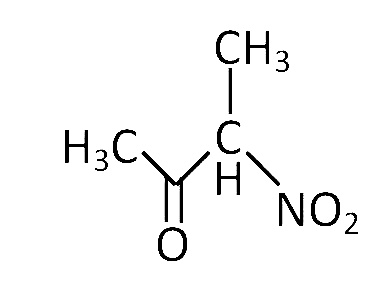
Which one of the following nitro-compounds does not react with nitrous acid?
(A)
NEET 2016 Phase 2 Chemistry - Organic Compounds Containing Nitrogen Question 54 English Option 1
(B)
NEET 2016 Phase 2 Chemistry - Organic Compounds Containing Nitrogen Question 54 English Option 2
(C)
NEET 2016 Phase 2 Chemistry - Organic Compounds Containing Nitrogen Question 54 English Option 3
(D)
NEET 2016 Phase 2 Chemistry - Organic Compounds Containing Nitrogen Question 54 English Option 4
(C)

Solution

Tertiary nitroalkanes do not react with nitrous acid as they do not contain -hydrogen atom.
Q.43
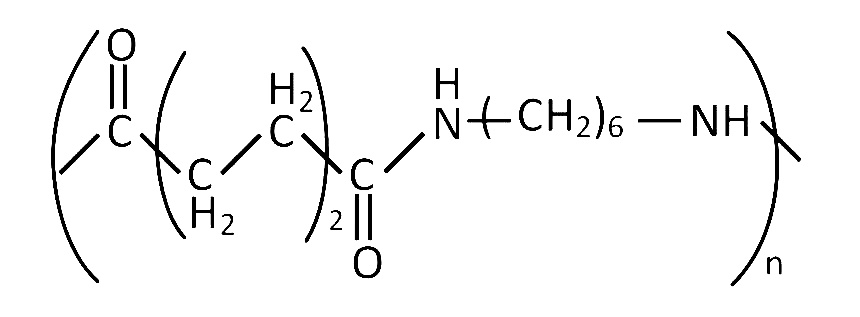
Which one of the following structures represents nylon 6, 6 polymer?
(A)
NEET 2016 Phase 2 Chemistry - Polymers Question 12 English Option 1
(B)
NEET 2016 Phase 2 Chemistry - Polymers Question 12 English Option 2
(C)
NEET 2016 Phase 2 Chemistry - Polymers Question 12 English Option 3
(D)
NEET 2016 Phase 2 Chemistry - Polymers Question 12 English Option 4
(D)

Solution

NEET 2016 Phase 2 Chemistry - Polymers Question 12 English Explanation
Q.44
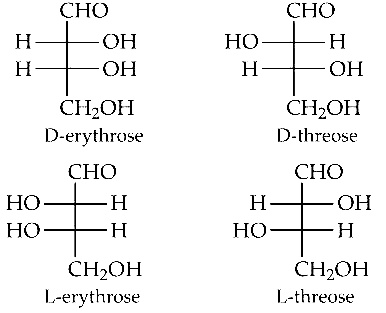
The correct corresponding order of names of four aldoses with configuration given below
NEET 2016 Phase 2 Chemistry - Biomolecules Question 19 English
respectively, is
(A)
L-erythrose, L-threose, L-erythrose, D-threose
(B)
D-threose, D-erythrose, L-threose, L-erythrose
(C)
L-erythrose, L-threose, D-erythrose, D-threose
(D)
D-erythrose, D-threose. L-erythrose, L-threose
(D)

Solution

NEET 2016 Phase 2 Chemistry - Biomolecules Question 19 English Explanation
Q.45
The central dogma of molecular genetics states that the genetic information flows from
(A)
Amino acids Proteins DNA
(B)
DNA Carbohydrates Proteins
(C)
DNA RNA Proteins
(D)
DNA RNA Carbohydrates
(C)

Solution

The central dogma of molecular genetics is

DNA RNA Proteins
Biology (Maximum Marks: 360)
  • This section contains 90 questions.
  • Each question has FOUR options (A), (B), (C) and (D). ONLY ONE of these four options is the correct answer.
  • Full Marks : +4 If ONLY the correct option is chosen;
  • Zero Marks : 0 If none of the options is chosen (i.e. the question is unanswered);
  • Negative Marks : −1 In all other cases.
Q.1
Select the wrong statement-
(A)
Pili and fimbriae are mainly involved in motility of bacterial cells
(B)
Mycoplasma is a wall-less microorganism
(C)
Bacterial cell wall is made up of peptidoglycan
(D)
Cyanobacteria lack flagellated cells.
(A)

Solution

Pili and fimbriae are bacterial appendages which are not involved in locomotion. Actually, pili are long fewer and thicker tubular outgrowths which develop in response to F+ or fertility factor in Gram negative bacteria. Being long they are helpful in attaching to recipient cell and forming conjugation tube. Fimbriae are small bristle-like fibres sprouting from cell surface in large number. There are 300-400 of them per cell. They are involved in attaching bacteria to solid surfaces.
Q.2
A cell organelle containing hydrolytic enzymes is
(A)
Ribosome
(B)
Mesosome
(C)
Lysosome
(D)
Microsome
(C)

Solution

Lysosomes are small vesicles which are bounded by a single membrane and contain hydrolytic enzymes in the form of minute crystalline or semicrystalline granules of 5-8 nm. About 50 enzymes have been recorded to occur in them. All the enzymes do not occur in the same lysosome but there are different sets of enzymes in different types of lysosomes. The important enzymes are acid phosphatases, sulphatases, proteases, peptidases, nucleases, lipases and carbohydrases. They are also called acid hydrolases because these digestive enzymes usually function in acidic medium or pH of 4-5.
Q.3
Select the mismatch.
(A)
Large central vacuoles – Animal cells
(B)
Methanogens –Prokaryotes
(C)
Gas vacuoles – Green bacteria
(D)
Protists – Eukaryotes
(A)

Solution

Large central vacuole is the characteristic of plant cell, not animal cell which may have many small scattered vacuoles.
Q.4
A non-proteinaceous enzyme is
(A)
Iysozyme
(B)
ribozyme
(C)
ligase
(D)
deoxyribonuclease.
(B)

Solution

A ribozyme is a ribonucleic acid (RNA) enzyme that catalyses a chemical reaction in a similar way to that of a protein enzyme. These are found in ribosomes and are also called catalytic RNAs.
Q.5
Which of the following describes the given graph correctly?

NEET 2016 Phase 2 Biology - Biomolecules Question 100 English
(A)
Endothermic reaction with energy A in presence of enzyme and B in absence of enzyme.
(B)
Exothermic reaction with energy A in presence of enzyme and B in absence of enzyme.
(C)
Endothermic reaction with energy A in absence of enzyme and B in presence of enzyme.
(D)
Exothermic reaction with energy A in absence of enzyme and B in presence of enzyme.
(B)

Solution

The graph shows the activation energies of catalyzed and uncatalyzed reations. A transition state is observed when the reactants are at the crest of the hump. At this state, they are ready to be converted to products. If the products are at a lower level than the reactants, the reaction is exothermic.
Q.6
Which of the following is the least likely to be involved in stablishing the three-dimensional folding of most proteins?
(A)
Hydrogen bonds
(B)
Electrostatic interaction
(C)
Hydrophobic interaction
(D)
Ester bonds
(D)

Solution

Tertiary structure or three dimensional structure of protein is stabilised by several types of bonds—hydrogen bonds, ionic bonds, van der Waal’s interactions, covalent bonds and hydrophobic bonds.
Q.7
When cell has stalled DNA replication fork, which checkpoint should be predominantly activated?
(A)
G1/S
(B)
G2/M
(C)
M
(D)
Both G2/M and M
(B)

Solution

If cell has stalled DNA replication fork, it implies that it has crossed CG1 or G1 cyclin cell cycle check point and has entered S-phase of cell cycle, where it is preparing for chromosome replication. Afterwards it will enter G2 phase and will soon approach second check point called mitotic cyclin (CM) which lies between G2 and M-phase).
Q.8
Match the stages of meiosis in column I to their characteristic features in column II and select the correct option using the codes given below.

Column Column
A. Pachytene (i) Pairing of homologous
chromosomes
B. Metaphase (ii) Terminalisation of
chiasmata
C. Diakinesis (iii) Crossing-over takes
place
D. Zygotene (iv) Chromosomes align
at equatorial plate
(A)
(A) - (iii);  (B) - (iv);  (C) - (ii);  (D) - (i)
(B)
(A) - (i);  (B) - (iv);  (C) - (ii);  (D) - (iii)
(C)
(A) - (ii);  (B) - (iv);  (C) - (iii);  (D) - (i)
(D)
(A) - (iv);  (B) - (iii);  (C) - (ii);  (D) - (i)
(A)

Solution

To match the stages of meiosis in Column I with their characteristic features in Column II, we need to understand each stage and its key features :

  1. Pachytene (A): This is a stage in Prophase I of meiosis where crossing-over takes place. Homologous chromosomes are already paired, and genetic recombination occurs.


  2. Metaphase I (B): At this stage, chromosomes align at the equatorial plate. This is a characteristic feature of metaphase in both mitosis and meiosis.


  3. Diakinesis (C): This is the final stage of Prophase I in meiosis. During diakinesis, terminalisation of chiasmata occurs, which means that the chiasmata move to the ends of the chromatids.


  4. Zygotene (D): This stage is characterized by the pairing (synapsis) of homologous chromosomes. It's one of the early stages of Prophase I in meiosis.

Based on this understanding, the matches would be:

  • A (Pachytene) with (iii) Crossing-over takes place.

  • B (Metaphase I) with (iv) Chromosomes align at the equatorial plate.

  • C (Diakinesis) with (ii) Terminalisation of chiasmata.

  • D (Zygotene) with (i) Pairing of homologous chromosomes.
Q.9
During cell growth, DNA synthesis takes place on
(A)
S-phase
(B)
G1-phase
(C)
G2-phase
(D)
M phase
(A)

Solution

In S-phase (synthetic phase) of cell cycle, the chromosomes replicate. For this their DNA molecules function as templates and form carbon copies. The DNA content doubles i.e., 1C to 2C for haploid cells and 2C to 4C for diploid cells. As a result duplicate sets of genes are formed. Along with replication of DNA new chromatin fibres are formed which, however, remain attached in pairs and the number of chromosomes does not increase.

As chromatin fibres are elongated chromosomes, each chromosome comes to have two chromatin threads or sister chromatids which remain attached at a common point called centromere.
Q.10
The ovule of an angiosperm is technically equivalent to
(A)
megasporangium
(B)
megasporophyll
(C)
megaspore mother cell
(D)
megaspore.
(A)

Solution

The ovule of an angiosperm is equivalent to integumented megasporangium.
Q.11
Pollination in water hyacinth and water lily is brought about by the agency of
(A)
water
(B)
insects or wind
(C)
birds
(D)
bats.
(B)

Solution

In aquatic plants with emergent flowers e.g., water lily, water hyacinth pollination takes place by wind or insects.
Q.12
In majority of angiosperms
(A)
egg has a filiform apparatus
(B)
there are numerous antipodal cells
(C)
reduction division occurs in the megaspore mother cells
(D)
a small central cell is present in that embryo sac.
(C)
Q.13
Match Column-I with Column-II and select the correct option using the codes given below –
Column I Column II
(a) Pistils fused together (i) Gametogenesis
(b) Formation of gametes (ii) Pistillate
(c) Hyphae of higher Ascomycetes (iii) Syncarpous
(d) Unisexual female flower (iv) Dikaryotic
(A)
(a) - (iii), (b) - (i), (c) - (ii), (d) - (iv)
(B)
(a) - (iii), (b) - (iv), (c) - (i), (d) - (ii)
(C)
(a) - (iii), (b) - (i), (c) - (iv), (d) - (ii)
(D)
(a) - (i), (b) - (iv), (c) - (ii), (d) - (iii)
(C)

Solution

Let's match the terms in Column I with the appropriate terms in Column II :

  1. (a) Pistils fused together : This refers to a condition in flowers where multiple pistils are united. The correct term for this is (iii) Syncarpous.


  2. (b) Formation of gametes : This is the process of forming gametes (sex cells) in organisms. The correct term for this is (i) Gametogenesis.


  3. (c) Hyphae of higher Ascomycetes : In higher Ascomycetes (a group of fungi), the hyphae are often dikaryotic, meaning they have two distinct nuclei in each cell. The correct term for this is (iv) Dikaryotic.


  4. (d) Unisexual female flower : This describes a flower that has only female reproductive organs. The correct term for this is (ii) Pistillate.

Based on this analysis, the correct matching is :

  • (a) - (iii)
  • (b) - (i)
  • (c) - (iv)
  • (d) - (ii)

Therefore, the correct option is :

Option C : (a) - (iii), (b) - (i), (c) - (iv), (d) - (ii)

Q.14
Cortex is the region found between -
(A)
endodermis and pith
(B)
endodermis and vascular bundle
(C)
epidermis and stele
(D)
pericycle and endodermis
(C)

Solution

In botanical terms, the cortex of a plant is the region found between the epidermis and the stele. Therefore, the correct answer is:

Option C: Epidermis and stele.

To clarify:

  • Epidermis: This is the outermost layer of cells in the plant stem and root. It serves as a protective barrier against the external environment.


  • Stele: This is the central part of the root or stem, containing the vascular tissue (xylem and phloem), pith, and often a pericycle. The stele is located inside the endodermis.

The cortex lies between these two layers, functioning mainly in storage and transport of nutrients and water. It is composed primarily of parenchyma cells and is a significant part of the root and stem where it often stores starch.

The other options refer to different parts of the plant anatomy:

  • Option A: "Endodermis and pith" - The pith is located in the center of the stem, surrounded by the vascular tissue, which is inside the endodermis. The cortex is not between these two.


  • Option B: "Endodermis and vascular bundle" - The endodermis is a single layer of cells forming a boundary between the cortex and the stele; it doesn't define the boundaries of the cortex.


  • Option D: "Pericycle and endodermis" - The pericycle is a layer of cells found just inside the endodermis, and it is part of the stele. This option does not correctly describe the position of the cortex.

Thus, Option C is the most accurate in describing the location of the cortex in a plant.

Q.15
The balloon-shaped structures called tyloses
(A)
are extensions of xylem parenchyma cells into vessels
(B)
originate in the lumen of vessels
(C)
are linked to the ascent of sap through xylem vessels
(D)
characterize the sapwood
(A)

Solution

Tyloses are balloon-like extensions of parenchyma cells that protrudes into the lumen of a neighbouring xylem vessel or tracheid through a pit in the cell wall. Tyloses form most commonly in older woody tissue, possibly in response to injury, they may eventually block the vessels and thus prevent the spread of fungi and other pathogens within the plant. Tyloses may become filled with tannins, gums, pigments, etc., giving heartwood its dark colour, and their walls can remain thin or become lignified.
Q.16
A few drops of sap were collected by cutting across a plant stem by a suitable method. The sap was tested chemically. Which one of the following test results indicates that it is phloem sap?
(A)
Acidic
(B)
Alkaline
(C)
Low refractive index
(D)
Absence of sugar
(B)
Q.17
Which is essential for the growth of root tip?
(A)
Zn
(B)
Fe
(C)
Ca
(D)
Mn
(C)

Solution

Calcium (Ca) is necessary for the proper growth and functioning of root tips and meristems.
Q.18
Oxidative phosphorylation is
(A)
formation of ATP by transfer of phosphate group from a substrate to ADP
(B)
oxidation of phosphate group in ATP
(C)
addition of phosphate group to ATP
(D)
formation of ATP by energy released from electrons removed during substrate oxidation.
(D)

Solution

Oxidative phosphorylation is the synthesis of energy rich ATP molecules with the help of energy liberated during oxidation of reduced co-enzymes (NADH, FADH2) produced in respiration. The enzyme required for this synthesis is called ATP synthase. It is located in F1 or head piece of F0 – F1 or elementary particles present in the inner mitochondrial membrane.

F1 particle is capable of ATP synthesis. ATP synthase becomes active in ATP formation only when there is a proton gradient having higher concentration of H+ or protons on the F0 side as compared to F1 side. This higher concentration creates an electric potential across the mitochondrial membrane. The proton gradient and membrane electric potential together form proton motive force (PMF). The flow of protons through the F0 channel which induces F1 particle to function as ATP synthase. The energy of the proton gradient is used in attaching a phosphate radicle to ADP by high-energy bond. This produces ATP.
Q.19
Which of the following biomolecules is common to respiration-mediated breakdown of fats, carbohydrates and proteins?
(A)
Glucose-6-phosphate
(B)
Fructose 1, 6-bisphosphate
(C)
Pyruvic acid
(D)
Acetyl CoA
(D)

Solution

Carbohydrates are usually first converted into glucose before they are used for respiration. Fats are broken down into glycerol and fatty acids first. If fatty acids were to be respired they would first be degraded to acetyl CoA and enter the pathway. Glycerol would enter the pathway after being converted to 3-phosphoglyceraldehyde (PGAL). The proteins are degraded by proteases to individual amino acids (after deamination) and depending on their structure enter the pathway within the Krebs’ cycle or as pyruvate or acetyl CoA. Thus, acetyl CoA is the common metabolite of all the three (carbohydrates, proteins and fats).
Q.20
Which of the following restriction enzymes produces blunt ends ?
(A)
Eco RV
(B)
Hind III
(C)
Xho I
(D)
Sal I
(A)

Solution

EcoRV is a type II restriction endonuclease isolated from certain strains of E.coli. It creates blunt ends. It recognises the palindromic sequence of 6 bases. SalI, XhoI and HindIII restriction enzymes produce sticky ends.
Q.21
Stirred-tank bioreactors have been designed for -
(A)
ensuring anaerobic conditions in the culture vessel
(B)
addition of preservatives to the product
(C)
purification of product
(D)
availability of oxygen throughout the process
(D)

Solution

A stirred-tank reactor is usually cylindrical or with a curved base to facilitate the mixing of the reactor contents. The stirrer facilitates, even mixing and oxygen availability throughout the bioreactor.
Q.22
Which of the following is not a component of downstream processing ?
(A)
Purification
(B)
Expression
(C)
Preservation
(D)
Separation
(B)

Solution

After the formation of the product in bioreactor, it undergoes some processes before a finished product to be ready for marketing. Downstream processing includes separation and purification process. The product obtained is subjected to quality control, testing and kept in suitable preservatives.
Q.23
A foreign DNA and plasmid cut by the same restriction endonuclease can be joined to form a recombinant plasmid using
(A)
Eco RI
(B)
Polymerase III
(C)
Ligase
(D)
Taq polymerase
(C)

Solution

Ligase is a class of enzymes that catalyse the formation of covalent bonds using the energy released by the cleavage of ATP. Ligases are important in the synthesis and repair of many biological molecules, including DNA ligase and used in genetic engineering to insert foreign DNA into cloning vectors.
Q.24
How many hot spots of biodiversity in the world have been identified till date by Norman Myers ?
(A)
34
(B)
17
(C)
43
(D)
25
(A)

Solution

Biodiversity hotspots are a method to identify those regions of the world where attention is needed to address biodiversity loss and to guide investments in conservation. The idea was first developed by Norman Myers in 1988 to identify tropical forests hotspots characterised both by exceptional levels of plant endemism and serious habitat loss which he then expanded to a more global scope. Currently 34 biodiversity hotspots have been identified most of which occur in tropical forests.
Q.25
Which of the following is correctly matched ?
(A)
Stratification-Population
(B)
Parthenium hysterophorus-Threat to biodiversity
(C)
Aerenchyma-Opuntia
(D)
Age pyramid-Biome
(B)

Solution

Parthenium hysterophorus is commonly known as congress grass or carrot weed. It is herbaceous annual plant of Family Asteraceae. It is a deadly invasive, noxious weed infesting cropped and non-cropped areas. It rapidly colonises area replacing the native vegetation and causes a number of human health related problems such as skin allergy, rhinitis and eye irritations. Also, being toxic and unpalatable it causes fodder scarcity. Hence, it is considered a threat to the biodiversity
Q.26
Red List contains data or information on
(A)
threatened species
(B)
marine vertebrates only
(C)
all economically important plants
(D)
plants whose products are in international trade
(A)

Solution

A red data book or red list is a catalogue of taxa facing risk of extinction. Red data book or red list was initiated in 1963.
Q.27
Which of the following National Parks is home to the famous musk deer or hangul ?
(A)
Eaglenest Wildlife Sanctuary, Arunachal Pradesh
(B)
Dachigam National Park, Jammu & Kashmir
(C)
Keibul Lamjao National Park, Manipur
(D)
Bandhavgarh National Park, Madhya Pradesh
(B)

Solution

The Dachigam National Park, located in Jammu & Kashmir, is well-known for being the home to the famous musk deer, also known as hangul. This park is particularly important for the conservation of this endangered species.

Therefore, the correct answer is :

Option B : Dachigam National Park, Jammu & Kashmir

Dachigam National Park has been a significant protected area for the conservation of the musk deer, which is a species of high conservation value due to its limited distribution and threatened status.

Q.28
Study the four statements (A-D) given below and select the two correct ones out of them.
A.  Definition of biological species was given by Ernst Mayr.
B.  Photoperiod does not affect reproduction in plants.
C.  Binomial nomenclature system was given by R.H. Whittaker.
D.  In unicellular organisms, reproduction is synonymous with growth.

The two correct statements are
(A)
B and C
(B)
C and D
(C)
A and D
(D)
A and B
(C)

Solution

Photoperiod affects flowering and reproduction in plants. Binomial nomenclature system was given by Carolus Linnaeus.
Q.29
The label of a herbarium sheet does not carry information on
(A)
date of collection
(B)
name of collector
(C)
locals names
(D)
height of the plant.
(D)

Solution

A herbarium is a collection of plants, which have been dried, pressed, mounted on herbarium sheets, identified and classified according to some approved system of classification. The storage of herbarium sheets forms a repository for future use. A printed label (7 x 12 cm) giving the following information is fixed on the lower, right corner of herbarium sheet:

(i) Scientific name of plant (ii) Common/vernacular name (iii) Family (iv) Locality (v) Date of collection (vi) Collection number (vii) Name of collector (viii) Plant characteristics (optional) (ix) Name of institution (optional).
Q.30
Which one of the following is wrong for fungi?
(A)
They are eukaryotic.
(B)
All fungi possess a purely cellulosic cell wall.
(C)
They are hetertrophic.
(D)
They are both unicellular and multicellular.
(B)

Solution

Cell wall in fungi is composed of chitin, a polysaccharide comprising N-acetyl-Dglucosamine (a derivative of glucose).
Q.31
Select the wrong statement.
(A)
The walls of diatoms are easily destructible.
(B)
'Diatomaceous earth's is formed by the cell walls of diatoms.
(C)
Diatoms are cheif producers in the oceans.
(D)
Diatoms are microscopic and float passively in water.
(A)

Solution

Diatoms are marine or freshwater unicellular organisms which have cell walls (frustules) composed of pectin impregnated with silica and consisting of two halves, one overlapping the other. The siliceous frustules of diatoms do not decay easily.
Q.32
Methanogens belong to
(A)
eubacteria
(B)
archaebacteria
(C)
dinoflagellates
(D)
slime moulds.
(B)

Solution

Methanogens belong to archaebacteria. They include methane producing genera such as Methanobacillus and Methanothrix.

Methanogens are obligate anaerobes found in oxygen-deficient environments, such as marshes, swamps, sludge (formed during sewage treatment) and the digestive systems of ruminants. Mostly they obtain their energy by reducing carbon dioxide and oxidising hydrogen, with the production of methane
Q.33
How many plants among Indigofera., Sesbania, Salvia, Allium, Aloe, mustard, groundnut, radish, gram and turnip have stamens with different lengths in their flowers?
(A)
Three
(B)
Four
(C)
Five
(D)
Six
(B)

Solution

The question about plants with flowers having stamens of different lengths refers to a condition called "heterostyly" or "didynamous" and "tetradynamous" stamens in some cases. This is a characteristic feature in some flowering plants where the stamens (the male reproductive parts) are of unequal length.

Let's evaluate the plants listed :

  1. Indigofera - Members of the Fabaceae family, like Indigofera, typically have uniform stamen lengths.

  2. Sesbania - Also a member of the Fabaceae family, similar to Indigofera, likely has uniform stamen lengths.

  3. Salvia - Belonging to the Lamiaceae family, Salvia exhibits didynamous stamens (four stamens with two different lengths).

  4. Allium - A member of the Amaryllidaceae family, Allium species generally have stamens of equal length.

  5. Aloe - A member of the Asphodelaceae family, Aloe species usually have stamens of equal length.

  6. Mustard - Belonging to the Brassicaceae family, mustard plants exhibit tetradynamous stamens (six stamens with four of one length and two of another).

  7. Groundnut - A member of the Fabaceae family, groundnut likely has uniform stamen lengths.

  8. Radish - Part of the Brassicaceae family, radish plants also exhibit tetradynamous stamens.

  9. Gram (Chickpea) - Belonging to the Fabaceae family, gram typically has uniform stamen lengths.

  10. Turnip - As a member of the Brassicaceae family, turnip plants have tetradynamous stamens.

Based on this evaluation, the plants among the list that have stamens of different lengths in their flowers are Salvia, Mustard, Radish, and Turnip. Therefore, the correct answer is Option B : Four.

Q.34
Radial symmetry is found in the flowers of
(A)
Brassica
(B)
Trifolium
(C)
Pisum
(D)
Cassia.
(A)

Solution

The flowers of Brassica are radially symmetrical whereas flowers of Trifolium, Pisum and Cassia are zygomorphic.
Q.35
Free-central placentation is found in
(A)
Dianthus
(B)
Argemone
(C)
Brassica
(D)
Citrus.
(A)

Solution

Free central placentation is found in Dianthus. Parietal placentation is present in Argemone and Brassica whereas Citrus has axile placentation in ovary.
Q.36
The term 'polyadelphous' is related to
(A)
gynoecium
(B)
androecium
(C)
corolla
(D)
calyx.
(B)

Solution

Polyadelphous condition represents cohesion of stamens. In this condition stamens of a flower are fused by their filaments only to form many groups, e.g., Citrus.
Q.37
The process which makes major difference between C3 and C4 plants is
(A)
glycolysis
(B)
Calvin cycle
(C)
photorespiration
(D)
respiration.
(C)

Solution

Photorespiration is the light dependent process of oxygenation of ribulose biphosphate (RuBP) and release of carbon dioxide by the photosynthetic organs of a plant. It leads to oxidation of considerable amount of photosynthetic products to CO2 and H2O without the production of useful energy. Photorespiration occurs only in C3 plants because at high temperature and high oxygen concentration RuBP carboxylase changes to RuBP oxygenase. Photorespiration is absent in C4 plants. Peroxisome and mitochondria are required for completing the process.
Q.38
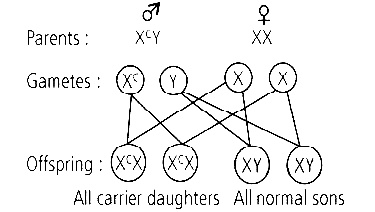
If a colour-blind man marries a woman who is homozygous for normal colour vision, the probability of their son being colour-blind is
(A)
0.75
(B)
0.5
(C)
0
(D)
1
(C)

Solution

Genotype of colour blind man – Xc Y Genotype of women homozygous – XX for normal woman

NEET 2016 Phase 2 Biology - Principles of Inheritance and Variation Question 170 English Explanation
Hence, there is zero (0) probability of their son to be colour-blind.
Q.39
The mechanism that causes a gene to move from one linkage group to another is called
(A)
crossing-over
(B)
translocation
(C)
duplication
(D)
inversion
(B)

Solution

Translocation i s a chromosomal abnormality caused by rearrangement of parts between non-homologous chromosomes. It may cause a gene to move from one linkage group to another.
Q.40
DNA-dependent RNA polymerase catalyzes transcription on one strand of the DNA which is called the
(A)
coding strand
(B)
antistrand
(C)
template strand
(D)
alpha strand
(C)

Solution

The strand of DNA on which RNA polymerase binds to catalyse transcription is called template strand. It is also known as master or antisense strand. It has the polarity of 3' 5'.
Q.41
A molecule that can act as a genetic material must fulfill the traits given below, except
(A)
it should be able to express itself in the form of ‘Mendelian characters’
(B)
it should be unstable structurally and chemically
(C)
it should provide the scope for slow changes that are required for evolution
(D)
it should be able to generate its replica
(B)

Solution

Genetic material should be structurally and chemically stable otherwise its expression will change and lead to loss of several metabolic functions, etc.
Q.42
Which of the following rRNAs acts as structural RNA as well as ribozyme in bacteria ?
(A)
5.8 S rRNA
(B)
23 S rRNA
(C)
18 S rRNA
(D)
5 S rRNA
(B)

Solution

23S rRNA acts as structural RNA as well as ribozyme in bacteria.
Q.43
The equivalent of a structural gene is -
(A)
cistron
(B)
recon
(C)
muton
(D)
operon
(A)

Solution

Cistron (or gene) is a length of DNA that contains the information for coding a specific polypeptide chain or a functional RNA molecule (i.e., transfer RNA or ribosomal RNA). Hence, cistron is a unit of function. Currently such a gene is called structural gene.
Q.44
Taylor conducted the experiments to prove semiconservative mode of chromosome replication on
(A)
Vicia faba
(B)
Drosophila melanogaster
(C)
Vinca rosea
(D)
E. coli
(A)

Solution

Taylor et al. (1957) conducted experiment on Vicia faba (broad bean) to prove semi-conservative replication of DNA. He fed dividing cells of root tips of Vicia faba with radioactive 3H containing thymine instead of normal thymine and found that all the chromosomes became radioactive. Labelled thymine was then replaced with normal one. Next generation came to have radioactivity in one of the two chromatids of each chromosome while in subsequent generation radioactivity was present in 50% of the chromosomes. This is possible only if out of the two strands of a chromosome, one is formed afresh while the other is conserved at each replication.
Q.45
Interspecific hybridisation is the mating of
(A)
animals within same breed without having common ancestors
(B)
superior males and females of different breeds
(C)
more closely related individuals within same breed for 4-6 generations =
(D)
two different related species
(D)

Solution

In interspecific hybridisation, a species is mated with a different related species of the same genus. Interspecific hybrids are generally difficult to produce, but they are important in plant breeding, particularly in breeding for disease resistance. This is also called intrageneric hybridisation.
Q.46
Among the following edible fishes, which one is a marine fish having rich source of omeg-3 fatty acids ?
(A)
Mangur
(B)
Mystus
(C)
Mackerel
(D)
Mrigala
(C)

Solution

Mackerel is a marine fish, rich in omega-3- fatty acids. Mystus, Mangur and Mrigala are freshwater fishes.
Q.47
A true breeding plant is -
(A)
produced due to cross-pollination among unrelated plants
(B)
one that is able to breed on its own
(C)
near homozygous and produces offspring of its own kind
(D)
always homozygous recessive in its genetic constitution
(C)
Q.48
Which kind of therapy was given in 1990 to a four-year-old girl with adenosine deaminase [ADA] deficiency ?
(A)
Radiation therapy
(B)
Immunotherapy
(C)
Gene therapy
(D)
Chemotherapy
(C)

Solution

Gene therapy is a technique of genetic engineering which involves replacement of a faulty/ disease causing gene by a normal healthy functional gene. The first clinical gene therapy was given in 1990 to a 4-year old girl with adenosine deaminase (ADA) deficiency. This enzyme is very important for the immune system to function. The deficiency of this enzyme can lead to severe combined immune deficiency (SCID).
Q.49
The principle of competitive exclusion was stated by
(A)
MacArthur
(B)
G. F. Gause
(C)
Verhulst & Pearl
(D)
C. Darwin
(B)

Solution

Two or more species with closely similar niche requirements cannot exist indefinitely in the same area as sooner or later they come into competition for possession of it. This is called as Gause’s competitive exclusion principle, which states that an ecological niche cannot be simultaneously and completely occupied by established populations of more than one species. Two species can live in same habitat but not in the same niche. More similar the two niches are, severe the competition is.
Q.50
If '+' sign is assigned to beneficial interaction, '–' sign to detrimental and '0' sign to neutral interaction, then the population interaction represented by '+' '–' refers to
(A)
parasitism
(B)
commensalism
(C)
mutualism
(D)
amensalism
(A)

Solution

Parasitism is an association in which one organism (the parasite) lives on (ectoparasitism) or in (endoparasitism) the body of another organism (host), from which it obtains its nutrients. This association is beneficial for the parasites as they get continuous supply of nutrients from their host and are able to rapidly multiply their numbers. But it is detrimental for the host organism as parasitic infection leads to various complications and diseases in the host body may also be fatal to the host under certain circumstances.
Q.51
Which of the following is correct for r-selected species ?
(A)
Small number of progeny with small size
(B)
Small number of progeny with large size
(C)
Large number of progeny with small size
(D)
Large number of progeny with large size
(C)

Solution

Organisms that are r-selected (rstrategists) able to colonise a habitat rapidly, utilising the food and other resources before other organisms are established and begin to compete. The r-strategists tend to be relatively small organisms with short life spans (e.g., bacteria) and often live in temporary or unstable environments; characteristically their survival depends on their ability to produce large numbers of offspring rather than on their ability to compete.
Q.52
A lake which is rich in organic waste may result in
(A)
mortality of fish due to lack of oxygen
(B)
increased population of fish due to lots of nutrients
(C)
increased population of aquatic organisms due to minerals
(D)
drying of the lake due to algal bloom
(A)

Solution

High amount of organic waste in a lake will trigger and activate decomposer microbes which will decompose organic waste. Biochemical Oxygen Demand (BOD) of this lake will shoot up and decomposers will utilise most of the dissolved oxygen present in lake. Consequently the level of dissolved oxygen will go down to alarming extent. Aquatic animals like fish which totally depend on the oxygen dissolved in water will ultimately die.
Q.53
The highest DDT concentration in aquatic food chain shall occur in
(A)
crab
(B)
Phytoplankton
(C)
eel
(D)
seagull
(D)

Solution

DDT is non-biodegradable and is not metabolised within the body of an organism rather it accumulates in the fat tissues therefore its concentration goes on increasing from one trophic level to another of a food chain, highest amount being present in top consumer i.e., it shows biomagnification. In an aquatic food chain sea gull is the top carnivore therefore will possess highest concentration of DDT.
Q.54
Biochemical Oxygen Demand (BOD) may not be a good index for pollution for water bodies receiving effluents from
(A)
petroleum industry
(B)
sugar industry
(C)
domestic sewage
(D)
dairy industry
(A)

Solution

Biochemical oxygen demand (BOD) is the measure of oxygen required by aerobic decomposers for biochemical degradation of the biodegradable organic materials. BOD indicates the degree of organic pollution in water. Petroleum is not degraded by decomposer microbes.
Q.55
Conifers are adapted to tolerate extreme environmental conditions because of
(A)
broad hardy leaves
(B)
superficial stomata
(C)
thick cuticle
(D)
presence of vessels.
(C)

Solution

Needle like leaves with thick cuticle and sunken stomata are xerophytic adaptations of conifers for tolerating extreme environmental conditions.
Q.56
Which one of the following statements is wrong?
(A)
Algae increase the level of dissolved oxygen in the immediate environment.
(B)
Algin is obtained from red algae, and carrageenan from brown algae.
(C)
Agar-agar is obtained from Gelidium and Gracilaria.
(D)
Laminaria and Sargassum are used as food.
(B)

Solution

Alginic acid is obtained from brown algae whereas carrageenan is obtained from red algae.
Q.57
You are given a tissue with its potential for differentiation in an artificial culture. Which of the following pairs of hormones would you add to the medium to secure shoots as well as roots?
(A)
IAA and gibberellin
(B)
Auxin and cytokinin
(C)
Auxin and abscisic acid
(D)
Gibberellin and abscisic acid
(B)

Solution

Cytokinin and auxin are two plant hormones that are supplied to the tissue culture medium in definite proportions. They bring about cell division and differentiation of callus. A low auxin to cytokinin ratio promotes shoot formation whereas a high auxin to cytokinin ratio promotes rooting of callus.
Q.58
Phytochrome is a
(A)
flavoprotein
(B)
glycoprotein
(C)
lipoprotein
(D)
chromoprotein
(D)

Solution

Phytochrome is a chromoprotein, plant pigment that can detect the presence or absence of light and is involved in regulating many processes that are linked to day length (photoperiod), such as seed germination and initiation of flowering. It consists of a light detecting portion, called a chromophore, linked to a small protein and exists in two inter-convertible forms with different physical properties.
Q.59
The primary producers of the deep-sea hydrothermal vent ecosystem are
(A)
chemosynthetic bacteria
(B)
coral reefs
(C)
green algae
(D)
blue-green algae
(A)

Solution

Hydrothermal vents are cracks in the ocean floor that emit jets of hot water loaded with minerals and chemosynthetic bacteria. These bacteria are autotrophs that oxidise hydrogen sulphide in vent water to obtain energy which is used to produce organic material. These chemosynthetic bacteria are the primary producers and form the base of vent food webs. All vent animals ultimately depend on bacteria for food.
Q.60
Which of the following is correct regarding AIDS causative agent HIV ?
(A)
HIV is unenveloped retrovirus
(B)
HIV is enveloped virus containing one molecule of single-stranded RNA and one molecule of reverse transcriptase.
(C)
HIV does not escape but attacks the acquired immune response
(D)
HIV is enveloped virus that containing two identical molecule of single-stranded RNA and two molecule of reverse transcriptase
(D)

Solution

The correct answer regarding the AIDS causative agent HIV (Human Immunodeficiency Virus) is:

Option D: HIV is an enveloped virus that contains two identical molecules of single-stranded RNA and two molecules of reverse transcriptase.

Explanation:

HIV is indeed an enveloped virus, which means it has a lipid membrane surrounding its capsid. This envelope is derived from the host cell's membrane and contains proteins necessary for the virus to attach and enter new host cells. Inside the envelope, HIV has a core structure that carries its genetic material and enzymes essential for its replication. The genetic material of HIV is composed of two identical molecules of single-stranded RNA. This characteristic is crucial for its replication process and is a hallmark of retroviruses, the family to which HIV belongs.

The presence of reverse transcriptase, an enzyme carried by HIV, is also a defining feature of retroviruses. This enzyme allows the virus to reverse transcribe its RNA genome into DNA once it has entered a host cell. The newly formed viral DNA can then integrate into the host cell's genome, where it can lie dormant or be used to produce new viral particles. HIV carries two molecules of reverse transcriptase, which is consistent with its need to reverse transcribe both of its RNA strands into DNA.

Therefore, options A, B, and C do not accurately describe HIV:

Option A incorrectly states that HIV is an unenveloped retrovirus, while it is, in fact, enveloped.

Option B is close but misses the detail that HIV contains two, not one, molecules of single-stranded RNA, and similarly, contains two molecules of reverse transcriptase, not just one.

Option C incorrectly suggests that HIV does not evade the immune system. In reality, HIV has evolved multiple strategies to avoid and undermine the host's immune response, contributing to its ability to cause long-term infections.
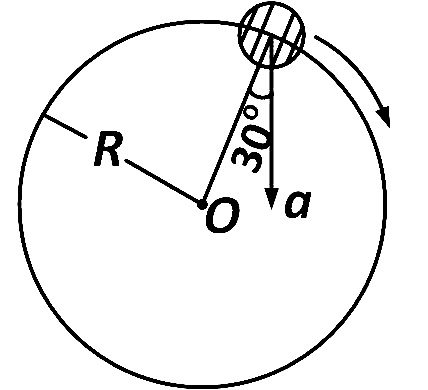
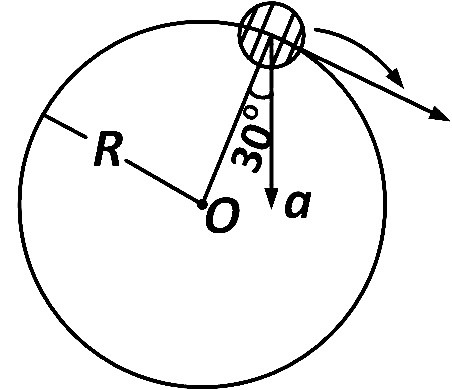
Q.61
Which of the following sets of diseases is caused by bacteria ?
(A)
Herpes and influenza
(B)
Cholera and tetanus
(C)
Tetanus and mumps
(D)
Typhoid and smallpox
(B)

Solution

Cholera is caused by bacterium Vibrio cholerae, tetanus is caused by bacterium Clostridium tetani, typhoid is caused by bacterium Salmonella typhi, small pox is caused by Variola virus, mumps is caused by Paramyxo virus, Herpes is caused by Herpis simplex virus and influenza is caused by Orthomyxovirus.
Q.62
Serum differs from blood in
(A)
lacking globulins
(B)
lacking albumins
(C)
lacking clothing factors
(D)
lacking antibodies.
(C)

Solution

Serum is the fluid that separates from blood plasma on centrifugation. Serum is essentially similar in composition to plasma but lacks fibrinogen and other substances that are used in the coagulation process.
Q.63
Name the blood cells, whose reduction in number can cause clotting disorder, leading to excessive loss of blood from the body.
(A)
Erythrocytes
(B)
Leucocytes
(C)
Neutrophils
(D)
Thrombocytes
(D)

Solution

Thrombocytes are called blood platelets. They are minute disc-shaped cell fragments in mammalian blood. They are formed as fragments of larger cells found in red bone marrow; they have no nucleus. They play an important role in blood clotting and release thromboxane A2 , serotonin and other chemicals, which cause a chain of events leading to the formation of a plug at the site of the damage, thus preventing further blood loss. A reduction in their number can lead to clotting factors which will lead to excessive loss of blood from the body.
Q.64
Osteoporosis, an age-related disease of skeletal system, may occur due to
(A)
immune disorder affecting neuromuscular junction leading to fatigue
(B)
high concentration of Ca++ and Na+
(C)
decreased level of estrogen
(D)
accumulation of uric acid leading to inflammation of joints.
(C)

Solution

Osteoporosis is reduction in bone mineral density, resulting in bones that are brittle and liable to fracture. Infection, injury and synovitis can cause localised osteoporosis of adjacent bone. Generalised osteoporosis is common in the elderly and in women after menopause. After menopause the estrogen levels in blood plasma are much reduced. Estrogen helps to regulate bone cells called osteoclasts which are responsible for building new bone. When estrogen levels drop fewer osteoclasts are produced resulting in osteoporosis.
Q.65
Name the ion responsible for unmasking of active sites for myosin for cross-bridge activity during muscle contraction.
(A)
Calcium
(B)
Magnesium
(C)
Sodium
(D)
Potassium
(A)

Solution

Calcium ion plays an important role in muscle contraction. Calcium ions bind to troponin causing a change in its shape and position. Thus, in turn alters shape and position of tropomyosin to which troponin binds. This shift exposes the active sites on F-actin molecules. Myosin cross-bridge are then able to bind to these active sites.
Q.66
Choose the correct statement.
(A)
Nociceptors respond to changes in pressure.
(B)
Meissner's corpuscles are thermoreceptors.
(C)
Photoreceptors in the human eye are depolarised during darkness and become hyperpolaized in response to the light stimulus.
(D)
Receptors do not produce graded potentials.
(C)

Solution

Photoreceptors in human eye are unique because they are only type of sensory cells that are relatively depolarised (about –35mV) when it is at rest (i.e., in the dark), and hyperpolarised (to about – 70mV) in response to adequate light stimulus. Nociceptors respond to potentially damaging stimuli that result in pain. Meissner’s corpuscles are a type of mechanoreceptor, responsible for touch sensitivity. Receptors generally produce graded potentials called receptor potentials.
Q.67
Which one of the following statements is not correct?
(A)
Offspring produced by the asexual reproduction are called clone.
(B)
Microscopic, motile, asexual reproductive structures are called zoospores.
(C)
in potato, banana and ginger, the plantlets arise from the internodes present in the modified stem.
(D)
Water hyacinth, growing in the standing water, drains oxygen from water that leads to the death of fishes.
(C)

Solution

Potato, banana and ginger propagate vegetatively by their modified stems. Potato propagates by tuber which has buds over its eyes or nodes. These buds produce new plantlets. Banana and ginger propagate with the help of rhizomes which also have buds on nodes for the formation of new plantlets.
Q.68
Which one of the following generates new genetic combinations leading to variation?
(A)
Vegetative reproduction
(B)
Parthenogenesis
(C)
Sexual reproduction
(D)
Nucellar polymbryony
(C)

Solution

Sexual reproduction involves formation and fusion of male and female gametes. Gamete formation is accomplished through meiotic cell division which involves crossing over between non-sister chromatids of homologous chromosomes leading to new genetic recombination in gametes. Random fusion of these male and female gametes lead to the genetic variability in the offspring which although resemble their parents but also exhibit new traits of their own.
Q.69
Match column I with column II and select the correct option using the codes given below.

Column I Column II
(A) Pistils fused together (i) Gametogenesis
(B) Formation of gametes (ii) Pistillate
(C) Hyphae of higher
Ascomycetes
(iii) Syncarpous
(D) Unisexual female flower (iv) Dikaryotic
(A)
(A) - (iv);  (B) - (iii);  (C) - (i);  (D) - (ii)
(B)
(A) - (ii);  (B) - (i);  (C) - (iv);  (D) - (iii)
(C)
(A) - (i);  (B) - (ii);  (C) - (iv);  (D) - (iii)
(D)
(A) - (iii);  (B) - (i);  (C) - (iv);  (D) - (ii)
(D)
Q.70
Which of the following is hormone releasing IUD ?
(A)
Lippes loop
(B)
LNG-20
(C)
Cu7
(D)
Multiload 375
(B)

Solution

LNG-20 is the hormone releasing IUD, multiload 375 and Cu7 are copper releasing IUDs and Lippes loop is a non-medicated IUD.
Q.71
Embryo with more than 16 blastgomeres formed due to in vitro fertilization is transferred into
(A)
fimbriae
(B)
cervix
(C)
uterus
(D)
fallopian tube
(C)

Solution

Embryo with more than 16 blastomeres formed due to in vitro fertilisation is transferred into uterus (intra-uterine transfer, IUT).
Q.72
Which of the following is incorrect regarding vasectomy ?
(A)
No sperm occurs in epididymis
(B)
No sperm occurs in seminal fluid
(C)
Irreversible sterility
(D)
Vasa deferentia is cut and tied
(A)

Solution

Vasectomy is a surgical contraception method performed in males. In vasectomy, a small part of the vas deferens is removed or tied up through a small cut on the scrotum. This prevents sperm transport. Vasectomy has a poor reversibility. There is no effect on libido and erectile functioning. Seminal vesicles are one pair of sac like structures which join vasa deferentia to form ejaculatory duct. They secrete seminal fluid which contains fructose, prostaglandins and clotting protein, but no sperms. In a male who has undergone vasectomy, the ejaculatory duct will receive seminal fluid but due to cut in vasa deferentia sperms will not be transported from epididymis hence the semen will lack sperms.
Q.73
Smooth muscles are
(A)
involuntary, cylindrical, striated
(B)
involuntary, fusiform, non-striated
(C)
voluntary, spindle-shaped, uninucleate
(D)
voluntary, multinucleate, cylindrical
(B)

Solution

Smooth muscle fibres are elongated and spindle shaped (fusiform). Each fibre contains a single oval nucleus surrounded by cytoplasm (sarcoplasm). In cytoplasm, myofibrils are arranged longitudinally. These fibres lack striations and sarcolemma, however are enclosed by plasma membrane.
Q.74
In male cockroaches, sperms are stored in which part of the reproductive system ?
(A)
Vas deferens
(B)
Seminal vesicles
(C)
Tester
(D)
Mushroom glands
(B)

Solution

Seminal vesicles are numerous small sacs present on ventral surface of anterior part of the ejaculatory duct which store sperms.
Q.75
Which hormones do stimulate the production of pancreatic juice and bicarbonate?
(A)
Angiotensin and epinephrine
(B)
Gastrin and insulin
(C)
Cholecystokinin and secretin
(D)
Insulin and glucagon
(C)

Solution

Cholecystokinin pancreozymin (CCK-PZ) is a hormone secreted from small intestine. It stimulates the gall bladder to release bile and pancreas to secrete and release digestive enzymes in the pancreatic juice. Hormone secretin is secreted from duodenum and releases bicarbonates in the pancreatic juice. It also increases secretion of bile and decreases gastric secretion and motility.
Q.76
The part of nephron involved in active reabsorption of sodium is
(A)
distal convoluted tubule
(B)
proximal convoluted tubule
(C)
Bowman's capsule
(D)
descending limb of Henle's loop
(B)

Solution

From the Bowman’s capsule, a glomerular filtrate enters the proximal convoluted tubule. Absorption of selected materials takes place from the filtrate into the blood of the peritubular capillaries or vasa recta. It is termed the tubular reabsorption. Reabsorption involves both passive and active transport across the tubular epithelium.

About 65 per cent of the glomerular filtrate is normally reabsorbed in the proximal convoluted tubule before reaching the loop of Henle. Glucose, amino acids, vitamins, hormones, sodium, potassium, chlorides, phosphates, bicarbonates, much of water and some urea from the filtrate are absorbed. Sodium and potassium are reabsorbed by primary active transport.
Q.77
The posterior pituitary gland is not a 'true' endocrine gland because
(A)
it is provided with a duct
(B)
it only stores and releases hormones
(C)
it is under the regulation of hypothalamus
(D)
it secretes enzymes.
(B)

Solution

Posterior lobe of pituitary gland does not secrete any hormone. Its hormones are synthesised by the hypothalamus. It only stores and releases these hormones. Hence, it cannot be considered as true gland.
Q.78
Name a peptide hormone which acts mainly on hepatocytes, adipocytes and enhances cellular glucose uptake and utilisation.
(A)
Insulin
(B)
Glucagon
(C)
Secretin
(D)
Gastrin
(A)

Solution

Insulin is a peptide hormone, secreted by the cells of the islets of Langerhans in the pancreas, that promotes the uptake of glucose by body cells, particularly in the liver (hepatocytes) and muscles (adipocytes) and thereby controls its concentration in the blood.
Q.79
Graves' disease is caused due to
(A)
hyposecretion of thyroid gland
(B)
hypersecretion of thyroid gland
(C)
hyposecretion of adrenal gland
(D)
hypersecretion of adrenal gland.
(B)

Solution

Exophthalmic goitre or Graves’ disease is a thyroid enlargement (goitre) in which the thyroid secretes excessive amount of thyroid hormone. It is characterised by exophthalmia (protrusion of eye balls because of fluid accumulation behind them), loss of weight, slightly rise in the body temperature, excitability, rapid heart beat, nervousness and restlessness.
Q.80
Which of the following depicts the correct pathway of transport of sperms?
(A)
Rete testis    Efferent ductules    Epididymis    Vas deferens
(B)
Rete testis    Epididymis    Efferent ductules    Vas deferens
(C)
Rete testis    Vas deferens    Efferent ductules    Epididymis
(D)
Efferent ductules    Rete testis    Vas deferens    Epididymis
(A)
Q.81
Several hormones like hCG, hPL, estrogen, progesterone are produced by
(A)
ovary
(B)
placenta
(C)
Fallopian tube
(D)
pituitary.
(B)

Solution

Placenta is temporary organ that helps in exchange of gases, nutrients and waste materials between mother and fetus. During pregnancy, placenta acts as an endocrine gland and secretes some hormones such as estrogen, progesterone, human chorionic gonadotropin (hCG), human placental lactogen (hPL), chorionic thyrotropin, chorionic corticotropin and relaxin.
Q.82
Match column I with column II and select the correct option using the codes given below.

Column I Column II
(A) Mons pubis (i) Embryo formation
(B) Antrum (ii) Sperm
(C) Trophectoderm (iii) Female external genitalia
(D) Nebenkern (iv) Graafian follicle
(A)
(A)-(iii),  (B)-(iv),  (C)-(ii),  (D)-(i)
(B)
(A)-(iii),  (B)-(iv),  (C)-(i),  (D)-(ii)
(C)
(A)-(iii),  (B)-(i),  (C)-(iv),  (D)-(ii)
(D)
(A)-(i),  (B)-(iv),  (C)-(iii),  (D)-(ii)
(B)
Q.83
Match column I with column II for housefly classification and select the correct option using the codes given below.

Column Column
(A) Family (i) Diptera
(B) Order (ii) Arthropoda
(C) Class (iii) Muscidae
(D) Phylum (iv) Insecta
(A)
(A)-(iii),  (B)-(i),  (C)-(iv),  (D)-(ii)
(B)
(A)-(iii),  (B)-(ii),  (C)-(iv),  (D)-(i)
(C)
(A)-(iv),  (B)-(iii),  (C)-(ii),  (D)-(i)
(D)
(A)-(iv),  (B)-(ii),  (C)-(i),  (D)-(iii)
(A)

Solution

Classification of housefly

A. Family – Muscidae

B. Order – Diptera

C. Class – Insecta

D. Phylum – Arthropoda
Q.84
Choose the correct statement
(A)
All mammals are viviparous.
(B)
All cyclostomes do not posses jaws and paired fins.
(C)
All reptiles have a three-chambered heart.
(D)
All pisces have gills covered by an operculum.
(B)

Solution

Ornithorhynchus and Tachyglossus are oviparous mammals. Crocodile is a reptile which possesses four chambered heart. In cartilaginous fish (except Chimaera) gills are not covered by an operculum.
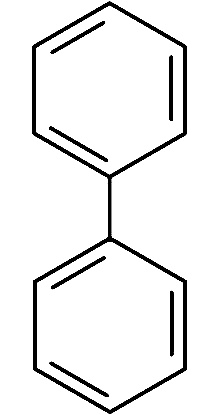
Q.85
Lungs do not collapse between breaths and some air always remains in the lungs which can never be expelled because
(A)
three is a negative pressure in the lungs
(B)
there is a negative intrapleural pressure pulling at the lung walls
(C)
there is a positive intrapleural pressure
(D)
pressure in the lungs is higher than the atmospheric pressure.
(B)

Solution

Intrapleural pressure is the pressure of air within the pleural cavity. Intrapleural pressure is always negative, which acts like a suction to keep the lungs inflated and prevent them from collapsing. The negative intrapleural pressure is due to three main factors: surface tension of the alveolar fluid; elasticity of lungs; elasticity of thoracic wall. Normally, there is a difference between intrapleural and intrapulmonary pressure, which is called transpulmonary pressure. This transpulmonary pressure creates the suction to keep the lungs inflated. If there is no pressure difference, there is no suction and lungs will collapse.
Q.86
The partial pressure of oxygen in the alveoli of the lungs is
(A)
equal to that in the blood
(B)
more than that in the blood
(C)
less than that in the blood
(D)
less than that of carbon dioxide.
(B)

Solution

The partial pressure of oxygen in alveolar air is 104mmHg whereas it is 40mmHg in deoxygenated blood and 95mmHg in oxygenated blood.
Q.87
The chronological order of human evolution from early to the recent is
(A)
Ramapithecus Homo habilis Australopithecus Homo erectus
(B)
Australopithecus Ramapithecus Homo habilis Homo erectus
(C)
Ramapithecus Australopithecus Homo habilis Homo erectus
(D)
Australopithecus Homo habilis Ramapithecus Homo erectus
(C)
Q.88
Genetic drift operates in
(A)
slow reproductive population
(B)
large isolated population
(C)
non-reproductive population
(D)
small isolated population
(D)

Solution

Genetic drift (Sewall Wright effect) is the random change in the frequency of alleles in a population over successive generations in the gametes. Each new generation differs from its parental generation with regard to allele frequencies simply because of random variation in the distribution of gametes. This process is more rapid in smaller populations, or when the alleles concerned confer no apparent benefit compared to their counterparts.
Q.89
In Hardy-Weinberg equation, the frequency of heterozygous individual is represented by
(A)
pq
(B)
p2
(C)
2pq
(D)
q2
(C)

Solution

In a stable population, for a gene with two alleles, ‘A’ (dominant) and ‘a’ (recessive), if the frequency of ‘A’ is p and the frequency of ‘a’ is q, then the frequencies of the three possible genotypes (AA, Aa and aa) can be expressed by the HardyWeinberg equation:
p2 + 2pq + q2 = 1
where p2 = Frequency of AA (homozygous dominant) individuals
q2 = Frequency of aa (homozygous recessive) individuals
2pq = Frequency of Aa (heterozygous) individuals
Q.90
Which of the following is the correct sequence of events in the origin of life ?
I. Formation of protobionts
II. Synthesis of organic monomers
III. Synthesis of organic polymers
IV. Formation of DNA-based genetic systems
(A)
II, III, I, IV
(B)
II, III, IV, I
(C)
I, II, III, IV
(D)
I, III, II, IV
(A)