NEET-UG 2019

NEET 2019

Physics (Maximum Marks: 180)
  • This section contains 45 questions.
  • Each question has FOUR options (A), (B), (C) and (D). ONLY ONE of these four options is the correct answer.
  • Full Marks : +4 If ONLY the correct option is chosen;
  • Zero Marks : 0 If none of the options is chosen (i.e. the question is unanswered);
  • Negative Marks : −1 In all other cases.
Q.1
In an experiment, the percentage of error occurred in the measurement of physical quantities A, B, C and D are 1%, 2 %, 3 %and 4 % respectively. Then the maximum percentage of error in the measurement X, where
X = , will be :
(A)
16%
(B)
-10%
(C)
10%
(D)
%
(A)

Solution

Given,

X =


= 16 %
Q.2
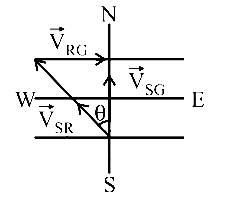
The speed of a swimmer in still water is 20 m/s. The speed of river water is 10 m/s and is flowing due east. If he is standing on the south bank and wishes to cross the river along the shortest path, the angle at which he should make his strokes w.r.t. north is given by :
(A)
0o
(B)
60
(C)
45o west
(D)
30o west
(D)

Solution

NEET 2019 Physics - Motion in a Straight Line Question 15 English Explanation

VSR = 20 m/s

VRG = 10 m/s


sin = = =

θ = 30° west-side
Q.3
When an object is shot from the bottom of a long smooth inclined plane kept at an angle 60o with horizontal, it can travel a distance x1 along the plane. But when the inclination is decreased to 30o and the same object is shot with the same velocity, it can travel x2 distance. Then x1 : x2 will be :
(A)
1 :
(B)
: 1
(C)
1 :
(D)
1 : 2
(C)

Solution

Assume initial velocity = u
NEET 2019 Physics - Motion in a Plane Question 12 English Explanation 1 NEET 2019 Physics - Motion in a Plane Question 12 English Explanation 2

In first case, Moved distance, (x1) =

In second case, Moved distance, (x2) =

= =
Q.4
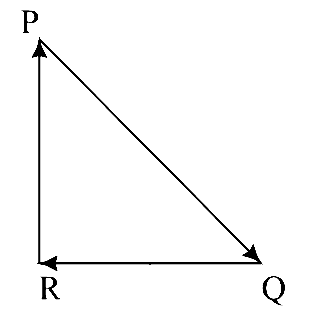
A particle moving with velocity is acted by three forces shown by the vector triangle PQR. The velocity of the particle will : NEET 2019 Physics - Motion in a Plane Question 11 English
(A)
remain constant
(B)
increase
(C)
decrease
(D)
change according to the smallest force
(A)

Solution

From the given diagram, the forces are forming closed loop in same order.

Fnet =

=

= constant.
Q.5
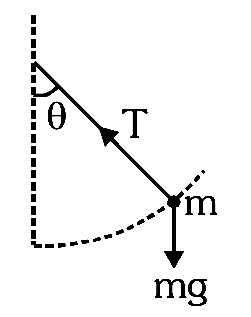
A mass m is attached to a thin wire and whirled in a vertical circle. The wire is most likely to break when :
(A)
the wire is horizontal
(B)
inclined at an angle of 60o from vertical
(C)
the mass is at the lowest point
(D)
the mass is at the highest point
(C)

Solution

Apply Newtons's 2nd law for equation of motion

T - mg cos = NEET 2019 Physics - Laws of Motion Question 17 English Explanation

T will be maximum when = 0°,

When mass is at lowest point the chance of breaking is maximum.
Q.6
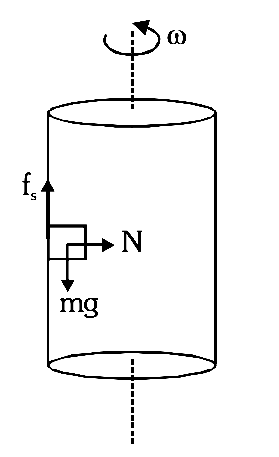
A block of mass 10 kg is in contact against the inner wall of a hollow cylindrical drum of radius 1 m. The coefficient of friction between the block and the inner wall of the cylinder is 0.1. The minimum angular velocity needed for the cylinder to keep the block stationary when the cylinder is vertical and rotating about its axis, will be : (g = 10 m/s2)
(A)
rad/s
(B)
10 rad/s
(C)
10 rad/s
(D)
rad/s
(B)

Solution

NEET 2019 Physics - Laws of Motion Question 18 English Explanation
fL = N = mr

fs = mg

As, fs fL

mg mr


= 10
Q.7
A force F = 20 + 10y acts on a particle in y-direction where F is in newton and y in meter. Work done by this force to move the particle from y = 0 to y = 1 m is :
(A)
5 J
(B)
25 J
(C)
20 J
(D)
30 J
(B)

Solution

Work done under the given variable force is :

W =

Here, y1 = 0, y2 = 1 m

W =

= = 25 J
Q.8
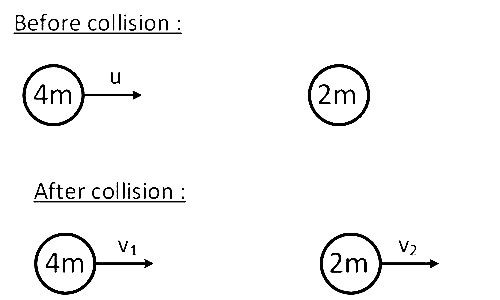
Body A of mass 4m moving with speed u collides with another body B of mass 2 m, at rest. The collision is head on and elastic in nature. After the collision the fraction of energy lost by the colliding body A is :
(A)
(B)
(C)
(D)
(C)

Solution

NEET 2019 Physics - Center of Mass and Collision Question 15 English Explanation

As linear momentum is conserved before and after the collision,

4m u = 4m v1 + 2m v2

2u = 2v1 + v2 ......(1)

As collision is elastic so e = 1

We know, e =

1 =

u = v2 - v1 ....(2)

Subtractiong (2) from (1), we get

u = 3v1

v1 =

After the collision the fraction of energy lost by the colliding body A is

=

= =
Q.9
Two particles A and B are moving in uniform circular motion in concentric circles of radii rA and rB with speed vA and vB respecitively. Their time period of rotation is the same. The ratio of angular speed of A to that of B will be :
(A)
vA : vB
(B)
1 : 1
(C)
rB : rA
(D)
rA : rB
(B)

Solution

Since, the time period for both the particle in same So, TA = TB = T

Angular velocity for A, () =

Angular velocity for B, () =

Now, the required ratio is

Q.10
A disc of radius 2 m and mass 100 kg rolls on a horizontal floor. Its centre of mass has speed of 20 cm/s. How much work is needed to stop it?
(A)
1 J
(B)
2 J
(C)
3 J
(D)
30 kJ
(C)

Solution

0.1 rad/sec

Apply the law of conservation of energy,

Work required = change in kinetic energy

Since, final KE = 0

And, initial KE =

=

=

= 1 + = 3 J
Q.11
A solid cylinder of mass 2 kg and radius 4 cm is rotating about its axis at the rate of 3 rpm. The torque required to stop after 2 revolutions is :
(A)
2 × 10⁻³ N m
(B)
2 × 10⁻⁶ N m
(C)
2 × 10⁶ N m
(D)
12 × 10–4 N m
(B)

Solution

Acccording to work energy theorem,

W =

Given that,

= 2 revolution/minute

= 2 2 = 42 rad

rad/s

rad/s

By putting the value of and , we get

- =

=

= 2 10-6 Nm
Q.12
The work done to raise a mass m from the surface of the earth to a height h, which is equal to the radius of the earth, is :
(A)
mgR
(B)
2mgR
(C)
mgR
(D)
mgR
(C)

Solution

Initial potential energy at Earths surface is

Ui =

Final potential energy at height h = R :

Uf =

work done = change in PE

w = Uf - Ui

=

=

= mgR
Q.13
A body weight 200 N on the surface of earth. How much will it weight half way down to the centre of the earth?
(A)
200 N
(B)
250 N
(C)
100 N
(D)
150 N
(C)

Solution

Accelerattion due to gravity at a depth d from surface of Earth

' = ....(1)

Multiplying by mass 'm' on both sides of equation (1)

m' = m

=    ( )

= N
Q.14
A copper rod of 88 cm and an aluminium rod of unknown length have their increase in length independent of increase in tmperature. The length of aluminium rod is : (Cu = 1.7 × 10⁻⁵ K–1 and Al = 2.2 × 10⁻⁵ K–1)
(A)
119.9 cm
(B)
88 cm
(C)
68 cm
(D)
6.8 cm
(C)

Solution

At any temperature


88 1.7 10-5 = 2.2 × 10–5

= 68 cm
Q.15
A soap bubble, having radius of 1 mm, is blown from a detergent solution having a surface tension of 2.5 10–2 N/m. The pressure inside the bubble equals at a point Z0 below the free surface of water in a container. Taking g = 10 m/s2, density of water = 103 kg/m3, the value of Z0 is :
(A)
1 cm
(B)
10 cm
(C)
100 cm
(D)
0.5 cm
(A)

Solution

P = P0 + gZ0 .........(i)

Also, P = P0 + .....(ii)

From (i) and (ii),

gZ0 =

Z0 =

=

= 10-2 m = 1 cm
Q.16
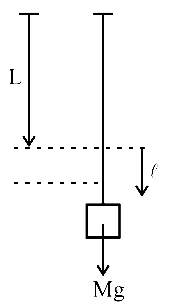
When a block of mass M is suspended by a long wire of length L, the length of the wire becomes (L + ). The elastic potential energy stored in the extended wire is :
(A)
Mgl
(B)
mgL
(C)
Mgl
(D)
MgL
(C)

Solution

NEET 2019 Physics - Properties of Matter Question 30 English Explanation

Elastic potential energy

U = (work done due to gravity)

= Mgl
Q.17
A small hole of area of cross-section 2 mm2 present near the bottom of a fully filled open tank of height 2 m. Taking g = 10 m/s2, the rate of flow of water through the open hole would be nearly :
(A)
8.9 × 10⁻⁶ m3/s
(B)
2.23 × 10⁻⁶ m3/s
(C)
6.4 × 10⁻⁶ m3/s
(D)
12.6 × 10⁻⁶ m3/s
(D)

Solution

volume flow rate = Av = A

= 2 10-6

= 2 2 3.14 10-6 m3/s

= 12.56 10-6 m3/s

= 12.6 10-6 m3/s
Q.18
The unit of thermal conductivity is :
(A)
J m–1 K–1
(B)
W m K–1
(C)
J m K–1
(D)
W m–1 K–1
(D)

Solution

We know,

Heat transfer (Q) = KAt

Here, K is the coefficient of thermal conductivity

J = (K)m2 s

Unit of K = Wm–1 K–1
Q.19
In which of the following processes, heat is neither absorbed nor released by a system?
(A)
adiabatic
(B)
isobaric
(C)
isochoric
(D)
isothermal
(A)

Solution

From the characteristic property of adiabatic process, there is no exchange in heat.
Q.20
Increase in tempertaure of a gas filled in a container would lead to :
(A)
increase in its kinetic energy
(B)
decrease in intermolecular distance
(C)
decrease in its pressure
(D)
increase in its mass
(A)

Solution

Since, the increase of temperature will increase the kinetic energy for the given gas.

For the given ideal gas,

U =
Q.21
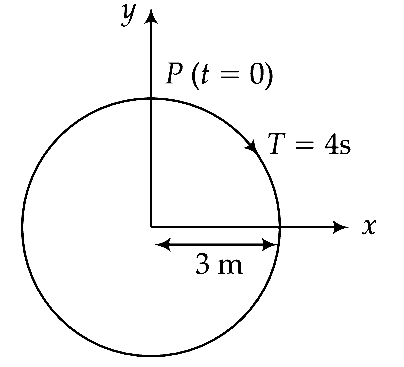
The radius of circle, the period of revolution, initial position and sense of revolution are indicated is the figure. NEET 2019 Physics - Oscillations Question 23 English

y- projection of the radius vector of rotating particle P is :
(A)
y(t) = 4sin, where y in m
(B)
y(t) = 3cos, where y in m
(C)
y(t) = 3cos, where y in m
(D)
y(t) = -3cos2t, where y in m
(C)

Solution

Angular velocity, () = rad/s

Since, at t = 0, displacement (y) is maximum, so equation will be cosine function.

y = a cos t

y = 3 cos
Q.22
Average velocity of a particle executing SHM in one complete vibration is :
(A)
A
(B)
(C)
(D)
zero
(D)

Solution

Since, net displacement in complete cycle ∆y = 0

So, Average velocity

=
Displacement
Time travel


= =
Q.23
The displacement of a particle executing simple harmonic motion is given by

y = A0 + A sint + B cost.

Then the amplitude of its oscillation is given by :
(A)
(B)
A + B
(C)
A +
(D)
(A)

Solution

From the given displacement

y = A0 + A sint + B cost.

Let assume, y - A0 =

= A sint + B cost

=

which is S.H.M

Resultant amplitude of the particle,

=
Q.24
A hollow metal sphere of radius R is uniformly charged. The electric field due to the sphere at a distance r from the centre :
(A)
zero as r increases for r < R, decreases as r increases for r > R
(B)
zero as r increases for r < R, increases as r increases for r > R.
(C)
decreases as r increases for r < R and for r > R.
(D)
increases as r increases for r < R and for r > R.
(A)

Solution

For inside (r R)

Apply, Gauss law,

=

Ein = 0 [ As qen = 0 ]

For outside (r R)


Here, qen = Q

So, Eout.4r2 =

Eout
Q.25
Two parallel infinite line charges with linear charge densities + C/m and - C/m are placed at a distance of 2R in free space. What is the electric field mid-way between the two line charges?
(A)
N/C
(B)
zero
(C)
N/C
(D)
N/C
(C)

Solution


= +

= N/C
Q.26
Two point charges A and B, having charges +Q and – Q respectively, are placed at certain distance apart and force acting between them is F. If 25% charge of A is transferred to B, then force between the charges becomes :
(A)
F
(B)
(C)
(D)
(C)

Solution

Initially F =

If 25% of charge of A transferred to B then after the transformation of charge.

qA = =

and qb = -Q + =

New force, F1 =


=
Q.27
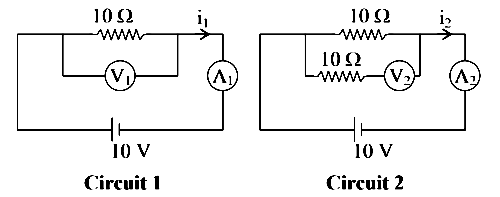
In the circuits shown below, the readings of voltmeters and the ammeters will be : NEET 2019 Physics - Current Electricity Question 46 English
(A)
V1 = V2 and i1 = i2
(B)
V1 > V2 and i1 > i2
(C)
V1 > V2 and i1 = i2
(D)
V1 = V2 and i1 > i2
(A)

Solution

Resistance for ideal voltmeter =

Resistance for ideal ammeter = 0

For 1st circuit,

V1 = i1 10 = = 10 volt

For 2nd circuit,

10 is in series with ideal voltmeter. Therefore it will not affect the circuit.

So, V2 = i2 10 = = 10 volt

V1 = V2

Hence, i1 = i2 = = 1 A
Q.28
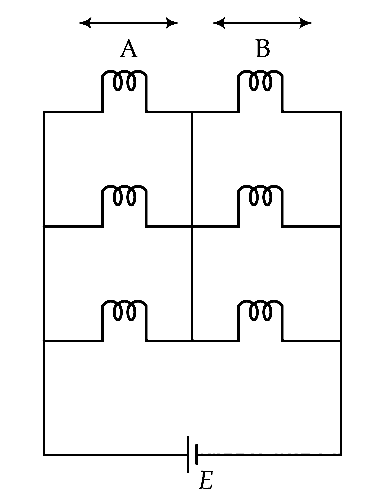
Six similar bulbs are connected as shown in the figure with a DC source of emf E, and zero internal resistance.

The ratio of power consumption by the bulbs when (i) all are glowing and (ii) in the situation when two from section A and one from section B are glowing, will be : NEET 2019 Physics - Current Electricity Question 47 English
(A)
4 : 9
(B)
9 : 4
(C)
1 : 2
(D)
2 : 1
(B)

Solution

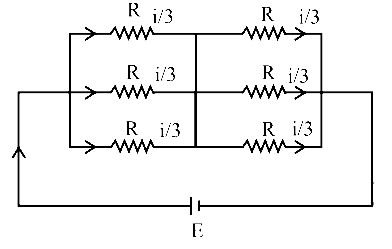
(i) When all bulbs are glowing, from the given figure. NEET 2019 Physics - Current Electricity Question 47 English Explanation 1
Equivalent resistance, Req =

Initial Power, (Pi) = ......(1)

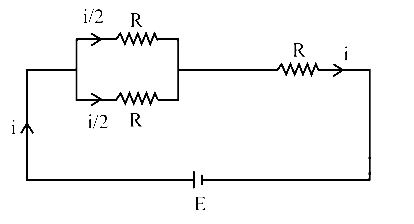
(ii) When two section A and one from section B are glowing. NEET 2019 Physics - Current Electricity Question 47 English Explanation 2

Req = =

Final Power, (Pf) =

= 9 : 4
Q.29
Which of the following acts as a circuit protection device?
(A)
inductor
(B)
conductor
(C)
switch
(D)
fuse
(D)

Solution

Fuse is the protective device because of low melting point of the wire that can save other device on heating.
Q.30
A parallel plate capacitor of capacitance 20 F is being charged by a voltage source whose potential is changing at the rate of 3V/s. The conduction current through the connecting wires, and the displacement current through the plates of the capacitor, would be, respectively :
(A)
zero, zero
(B)
zero, 60 A
(C)
60 A, 60 A
(D)
60 A, zero
(C)

Solution

As, q = CV

Differentiating above equation w.r.t. t, we get


ic = [As i = ]

= 20 10-6 3

= 60 10-6 A = 60A

Also, conduction current in wires is equal to displacement current between the plates of capacitor.

id = ic = 60 A
Q.31
Ionized hydrogen atoms and -particles with same momenta enters perpendicular to a constant magnetic field, B. The ratio of their radii of their paths rH : r will be :
(A)
1 : 2
(B)
4 : 1
(C)
1 : 4
(D)
2 : 1
(D)

Solution

Radius of the path (r) = =

So, the radius for H-atom rH =

The radius for particle r =

=
Q.32
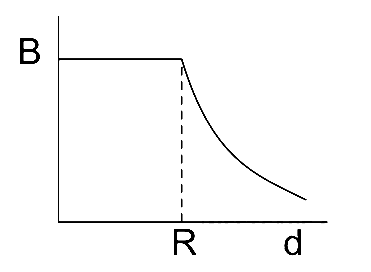
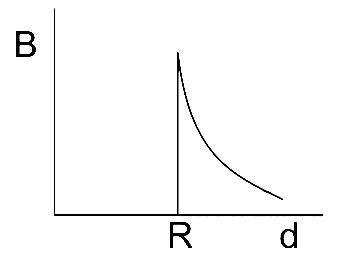
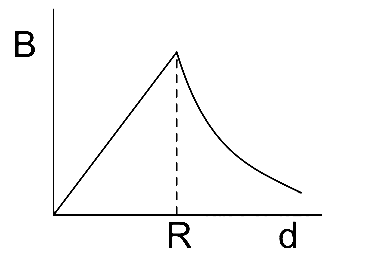
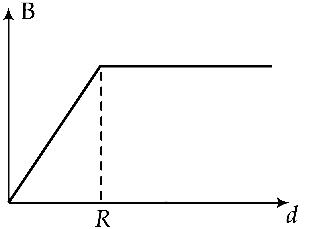
A cylinderical conductor of radius R is carrying a constant current. The plot of the magnitude of the magnetic field. B with the distane d from the centre of the conductor, is correctly represented by the figure :
(A)
NEET 2019 Physics - Moving Charges and Magnetism Question 28 English Option 1
(B)
NEET 2019 Physics - Moving Charges and Magnetism Question 28 English Option 2
(C)
NEET 2019 Physics - Moving Charges and Magnetism Question 28 English Option 3
(D)
NEET 2019 Physics - Moving Charges and Magnetism Question 28 English Option 4
(C)

Solution

The magnetic field inside conductor is given as

B =

B d

If, straight line passing through origin, at surface (d = R)

B =

For the maximum B at outside surface (d > R)

B =

B
Q.33
At a point A on the earth’s surface the angle of dip, = + 25o. At a point B on the earth's surface the angle of dip, = – 25o. We can interpret that :
(A)
A is located in the southern hemisphere and B is located in the northern hemisphere.
(B)
A is located in the northern hemisphere and B is located in the southern hemisphere.
(C)
A and B are both located in the southern hemisphere.
(D)
A and B are both located in the northerm hemisphere.
(B)

Solution

In northern hemisphere dip is +ve and in southern hemisphere dip is –ve. Angle of dip is zero at equator.
Q.34
A 800 turn coil of effective area 0.05 m2 is kept. perpendicular to a magnetic filed 5 × 10⁻⁵ T. When the plane of the coil is rotated by 90o around any of its coplanar axis in 0.1 s, the emf induced in the coil will be :
(A)
0.2 V
(B)
0.02 V
(C)
2 V
(D)
2 10-3 V
(B)

Solution

Given N = 800, A = 0.05 m2 , B = 5 × 10⁻⁵ T

t = 0.15 s

We know, e =

=

=

= 0.02 V
Q.35
In which of the following devices, the eddy current effect is not used?
(A)
magnetic braking in train
(B)
electromagnet
(C)
electric heater
(D)
induction furnace
(C)

Solution

Eddy current effect is not used in case of electric heater because it works on Joule's heating effect.
Q.36
Which colour of the light has the longest wavelength?
(A)
blue
(B)
violet
(C)
red
(D)
green
(C)

Solution

Since, Red colour has least frequency. So, red has the longest wavelength among the given colour.

As,
Q.37
Pick the wrong answer in the context with rainbow.
(A)
An observer can see a rainbow when his front is towards the sun.
(B)
Rainbow is a combined effect of dispersion refraction and reflection of sunlight.
(C)
When the light rays undergo two internal reflections in a water drop, a secondary rainbow is formed.
(D)
The order of colours is reversed in the secondary rainbow.
(A)

Solution

When observer faces infront of Sun. He will not observe rainbow.
Q.38
In total internal reflection when the angle of incidence is equal to the critical angle for the pair of media in contact, what will be angle of refraction?
(A)
equal to angle of incidence
(B)
90o
(C)
180o
(D)
0o
(B)

Solution

Let ic be the critical angle.

Hence, at i = ic, refracted ray grazes with the surface.

So, angle of refraction is 90°.
Q.39
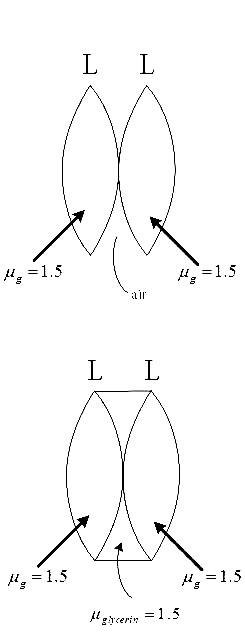
Two similar thin equi-convex lenses, of focal length f each, are kept coaxially in contact with each other such that the focal length of the combination is F1. When the space between the two lenses is filled with glycerin (which has the same refractive index (m = 1.5) as that of glass) then the equivalent focal length is F2. The ratio F1 : F2 will be :
(A)
1 : 2
(B)
2 : 3
(C)
3 : 4
(D)
2 : 1
(A)

Solution

NEET 2019 Physics - Geometrical Optics Question 32 English Explanation

Equivalent focal length (in air)

When glycerin is filled inside, glycerin lens behaves like a diverging lens of focal length (–f)


Q.40
In a double slit experiment, when light of wavelength 400 nm was used, the angular width of the first minima formed on a screen placed 1m away, was found to be 0.2o. What will be the angular width of the first minima, (water = 4/3) if the entire experimental apparatus is immersed in water?
(A)
0.15o
(B)
0.05o
(C)
0.1o
(D)
0.266o
(A)

Solution

Angular fringe width (in air) air =

Angular Fringe width (in water)

w =

= = 0.15o
Q.41
-particale consists of :
(A)
2 electrons, 2 protons and 2 neutrons
(B)
2 electrons and 4 protons only
(C)
2 protons only
(D)
2 protons and 2 neutrons only
(D)

Solution

Since, -particle is equivalent to He-atom nucleus, hence it has two protons and two neutrons only.
Q.42
The total energy of an electron in an atom in an orbit is –3.4 eV. Its kinetic and potential energies are, respectively.
(A)
3.4 eV, – 6.8 eV
(B)
3.4 eV, 3.4 eV
(C)
– 3.4 eV, – 3.4 eV
(D)
– 3.4 eV, – 6.8 eV
(A)

Solution

Apply Bohr's Atomic model for H-atom

KE = –T.E and PE = 2T.E

Given, T.E = –3.4 eV

KE = +3.4 eV and PE = -6.8 eV
Q.43
An electron is accelerated through a potential difference of 10,000 V. Its de Broglie wavelength is (nearly) : (me = 9 10–31 kg)
(A)
12.2 × 10⁻¹² m
(B)
12.2 × 10⁻¹³ m
(C)
12.2 × 10⁻¹⁴ m
(D)
12.2 nm
(A)

Solution

Expression for an electron accelerated through a potential V is given as

=

=

= 12.2 × 10⁻¹² m
Q.44
For a p-type semiconductor, which of the following statements is true?
(A)
Holes are the majority carriers and trivalent atoms are the dopants.
(B)
Holes are the majority carriers and pentavalent atoms are the dopants.
(C)
Electrons are the majority carriers and pentavalent atoms are the dopants
(D)
Electrons are the majority carriers and trivalent atoms are the dopants.
(A)

Solution

In p-type semiconductor, an intrinsic semiconductor is doped with trivalent impurities, that creates deficiencies of valence electrons called holes which are majority charge carriers.
Q.45
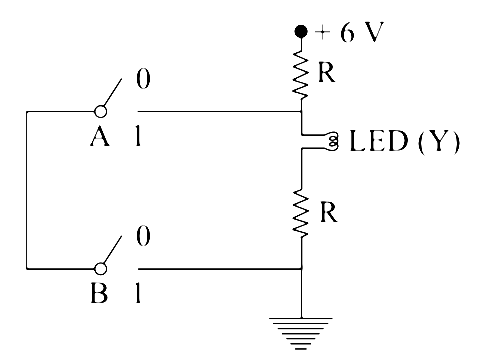
The correct Boolean operation represented by the circuit diagram drawn is : NEET 2019 Physics - Semiconductor Electronics Question 38 English
(A)
OR
(B)
NAND
(C)
NOR
(D)
AND
(B)

Solution

From the given logic circuit LED will glow, when voltage across LED in high.

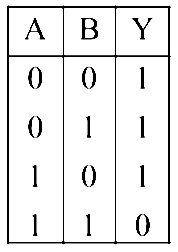
This can be verified by the given truth table. NEET 2019 Physics - Semiconductor Electronics Question 38 English Explanation
Boolean expression Y =

This is output of NAND gate.
Chemistry (Maximum Marks: 180)
  • This section contains 45 questions.
  • Each question has FOUR options (A), (B), (C) and (D). ONLY ONE of these four options is the correct answer.
  • Full Marks : +4 If ONLY the correct option is chosen;
  • Zero Marks : 0 If none of the options is chosen (i.e. the question is unanswered);
  • Negative Marks : −1 In all other cases.
Q.1
The number of moles of hydrogen molecules required to produce 20 moles of ammonia through Haber’s process is :
(A)
10
(B)
20
(C)
30
(D)
40
(C)

Solution

According to Haber's process,

N2(g) + 3H2(g) ⇌ 2NH3(g)

2 moles of NH3 uses 3 moles of H2

So, 20 moles of NH3 will use 20 moles of H2

= 30 moles of H2
Q.2
Which of the following series of transitions in the spectrum of hydrogen atom falls in visible region?
(A)
Paschen series
(B)
Brackett series
(C)
Lyman series
(D)
Balmer series
(D)

Solution

Balmer series lies in visible region.
Paschen series lies in infra red region.
Brackett series lies in infra red region.
Lyman series lies in ultraviolet region.
Q.3
4d, 5p, 5f and 6p orbitals are arranged in the order of decreasing energy. The correct option is :
(A)
6p > 5f > 4d > 5p
(B)
5f > 6p > 4d > 5p
(C)
5f > 6p > 5p > 4d
(D)
6p > 5f > 5p > 4d
(C)

Solution

As per Aufbau principle (n + l rule), higher is the value of (n + l), greater will be the energy. When (n + l) values are same then which orbital have higher value of n will have more energy.
4d = 4 + 2 = 6
5p = 5 + 1 = 6
5f = 5 + 3 = 8
6p = 6 + 1 = 7
Hence, the correct order of decreasing energy will
be : 5f > 6p > 5p > 4d.
Q.4
Which of the following reactions are disproportionation reaction?

(a) 2Cu+ Cu2+ + Cu0
(b) 3MnO42- + 4H+ 2MnO4- + MnO2 + 2H2O
(c) 2KMnO4 K2MnO4 + MnO2 + O2
(d) 2MnO4- + 3Mn2+ + 2H2O 5MnO2 + 4

Select the correct option from the following :
(A)
(a), (c) and (d)
(B)
(a) and (b) only
(C)
(a) and (d) only
(D)
(a), (b) and (c)
(B)

Solution

In a disproportionation reaction, same substance undergoes oxidation (increase in oxidation number) and reduction (decrease in oxidation number forming two different products. NEET 2019 Chemistry - Redox Reactions Question 12 English Explanation
Q.5
A gas at 350 K and 15 bar has molar volume 20 percent smaller than that for an ideal gas under the same conditions. The correct option about the gas and its compressibility factor (Z) is -
(A)
Z < 1 and attractive forces are dominant
(B)
Z < 1 and repulsive forces are dominant
(C)
Z > 1 and attractive forces are dominant
(D)
Z > 1 and repulsive forces are dominant
(A)

Solution

Compressibility factor (Z ) =

Here, Vreal < Videal. Therefore, Z < 1.

In gaseous molecules attractive forces are dominant.
Q.6
Conjugate base for Bronsted acids H2O and HF are :
(A)
OH and F , respectively
(B)
H3O+ and H2F+ , respectively
(C)
OH and H2F+ , respectively
(D)
H3O+ and F , respectively
(A)

Solution

Conjugate base of H2O is OH

Conjugate base of HF is F
Q.7
pH of a saturated solution of Ca(OH)2 is 9. The solubility product (Ksp) of Ca(OH)2 is :
(A)
0.125 × 10⁻¹⁵
(B)
0.5 × 10⁻¹⁰
(C)
0.5 × 10⁻¹⁵
(D)
0.25 × 10⁻¹⁰
(C)

Solution

Ca(OH)2 Ca+2(aq) + 2OH-(aq)
S 2S
pH = 9 ; pOH = 5 ; [OH] = 10–5 = 2S

S =

Ksp = [Ca+2] [OH]2

Ksp = S × (2S)2

Ksp = 4S3

Ksp = = 0.5 × 10⁻¹⁵
Q.8
Which will make basic buffer?
(A)
100 mL of 0.1 M HCl + 200 mL of 0.1 M NH4OH
(B)
100 mL of 0.1 M HCl + 100 mL of 0.1 M NHOH
(C)
50 mL of 0.1 M NaOH + 25 mL of 0.1 M CH3COOH
(D)
100 mL of 0.1 M CH3COOH + 100 mL of 0.1 M NaOH
(A)

Solution

Basic buffer is mixture of weak base and salt of weak base with strong acid.

milli mole of HCl = 100 × 0.1 = 10 milli mole

milli mole of NH4OH = 200 × 0.1 = 20 milli mole
HCl + NH4OH NH4Cl + H2O
10 20 0
0 20 - 10 = 10 10


Here in the final solution 10 milli mole weak base NH4OH and 10 milli mole salt of weak base and strong acid NH4Cl present. So it is a basic buffer.
Q.9
For an ideal solution, the correct option is :
(A)
mixH = 0 at constant T and P
(B)
mixG = 0 at constant T and P
(C)
mixS = 0 at constant T and P
(D)
mixV 0 at constant T and P
(A)

Solution

For an ideal solution at constant T and P,

mixH = 0, mixS > 0, mixG < 0 and mixV = 0.
Q.10
The mixture that forms maximum boiling azeotrope is :
(A)
Ethanol + Water
(B)
Acetone + Carbon disulphide
(C)
Heptane + Octane
(D)
Water + Nitric acid
(D)

Solution

Maximum boiling azeotrope is shown by solution which shows negative deviation from Raoult's law. Except water + Nitric acid, all other mixtures show negative deviation.
Q.11
In which case change in entropy is negative?
(A)
Sublimation of solid to gas
(B)
2H(g) H2(g)
(C)
Evaporation of water
(D)
Expansion of a gas at temperature
(B)

Solution

2H(g) H2(g)

Due to bond formation, entropy decreases.
Q.12
Under isothermal condition, a gas at 300 K expands from 0.1 L to 0.25 L against a constant external pressure of 2 bar. The work done by the gas is [Given that 1 L bar = 100 J]
(A)
25 J
(B)
30 J
(C)
-30 J
(D)
5 kJ
(C)

Solution

W = –Pext (V2–V1)

Pext = 2 bar

V1 = 0.1 L

V2 = 0.25 L

W = –2 bar[0.25 – 0.1] L

W = –2 × 0.15 bar L

W = –0.30 bar L

W = (–0.30) × 100 = –30 J
Q.13
For the cell reaction
2Fe3+(aq) + 2I (aq) 2Fe2+(aq) + I2(aq)
= 0.24 V at 298 K. The standard Gibbs energy (rGo) of the cell reaction is :
[Given that Faraday constant F = 96500 C mol–1]
(A)
46.32 kJ mol–1
(B)
23.16 kJ mol–1
(C)
–46.32 kJ mol–1
(D)
–23.16 kJ mol–1
(C)

Solution

Here, n = 2

Go = -nFEo

= – 2 × 96500 × 0.24

= – 46320 J mol–1

= – 46.32 KJ mol–1
Q.14
For a cell involving one electron = 0.59 V at 298 K, the equilibrium constant for the cell reaction is :

[Given that = 0.059 V at T = 298 K ]
(A)
1.0 1030
(B)
1.0 1010
(C)
1.0 102
(D)
1.0 105
(B)

Solution

We know,

Ecell = -

Ecell = -

(At equilibrium, Ecell = 0 and Q = Keq)

0 = -

= = 10

Keq = 1010
Q.15
For the chemical reaction
N2(g) + 3H2(g) ⇌ 2NH3(g)
the correct option is :
(A)
(B)
(C)
(D)
(B)

Solution

N2(g) + 3H2(g) ⇌ 2NH3(g

Rate of the reaction can be written as :

Q.16
If the rate constant for a first order reaction is k, the time (t) required for the completion of 99 % of the reaction is given by :

(A)
(B)
(C)
(D)
(A)

Solution

For a first order reaction,

t =

for 99% completion of the reaction,



Q.17
A compound is formed by cation C and anion A. The anions form hexagonal close packed (hcp) lattice and the cations occupy 75% of octahedral voids. The formula of the compound is :
(A)
C3A4
(B)
C4A3
(C)
C2A3
(D)
C3A
(A)

Solution

As anions are in hcp, the number of anions A = 6

Number of cations = 6

= 6 =

So, formula of compound is .

C9A12

C3A4
Q.18
Which mixture of the solution will lead to the formation of negatively charged colloidal [AgI] I sol. ?
(A)
50 mL of 2 M AgNO3 + 50 mL of 1.5 M KI
(B)
50 mL of 0.1 M AgNO3 + 50 mL of 0.1 M KI
(C)
50 mL of 1 M AgNO3 + 50 mL of 1.5 M KI
(D)
50 mL of 1 M AgNO3 + 50 mL of 2 M KI
(C, D)

Solution

AgNO3 + KI AgI + KNO3

If KI is in excess then negatively charged colloid, [AgI]I is formed. Whereas, if AgNO3 is in excess positively charged colloid AgI/Ag+ will form.
Q.19
For the second period elements the correct increasing order of first ionization enthalpy is :
(A)
Li < B < Be < C < N < O < F < Ne
(B)
Li < Be < B < C < O < N < F < Ne
(C)
Li < B < Be < C < O < N < F < Ne
(D)
Li < Be < B < C < N < O < F < Ne
(C)

Solution

Ionisation enthalpy increases in a period from left to right, because of increased nuclear charge and decrease in atomic radii. But because of half filled orbitals of Be, N and fully filled orbitals of Ne, stability of those atoms inceases.

So, the correct increasing order of first ionisation enthalpy will be :
Li < B < Be < C < O < N < F < Ne
Q.20
Which of the following diatomic molecular species has only bonds according to Molecular Orbital Theory?
(A)
C2
(B)
Be2
(C)
O2
(D)
N2
(A)

Solution

has 12 electrons.

Moleculer orbital configuration of

=

Here no unpaired electron present, so it is diamagnetic.

Here, Bond order = = 2. So here two bonds are present. For this two bond formation 4 electrons are required which is present in and

So, in C2 molecule, only electron occupied the bonding molecular orbital.
Q.21
The number of sigma () and pi () bonds in pent-2-en-4-yne is -
(A)
11 bonds and 2 bonds
(B)
13 bonds and no bonds
(C)
10 bonds and 3 bonds
(D)
8 bonds and 5 bonds
(C)

Solution

H–C C – CH = CH – CH3

Here, 10 bonds and 3 bonds are presents.
Q.22
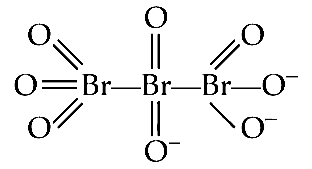
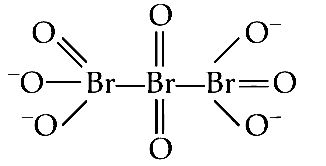
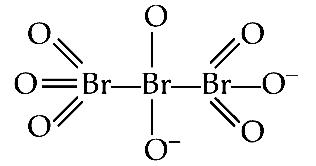
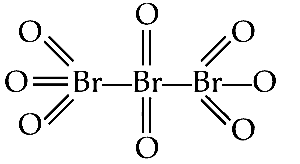
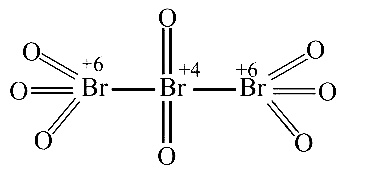
The correct structure of tribromooctaoxide is :
(A)
NEET 2019 Chemistry - Chemical Bonding and Molecular Structure Question 42 English Option 1
(B)
NEET 2019 Chemistry - Chemical Bonding and Molecular Structure Question 42 English Option 2
(C)
NEET 2019 Chemistry - Chemical Bonding and Molecular Structure Question 42 English Option 3
(D)
NEET 2019 Chemistry - Chemical Bonding and Molecular Structure Question 42 English Option 4
(D)

Solution

Br3O8 NEET 2019 Chemistry - Chemical Bonding and Molecular Structure Question 42 English Explanation
Q.23
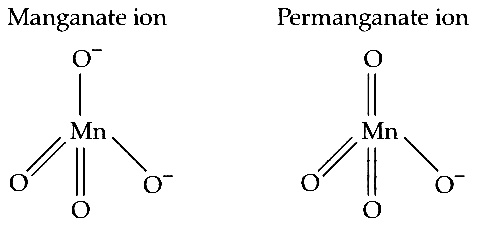
The manganate and permanganate ions are tetrahedral due to :
(A)
The -bonding involves overlap of p-orbitals of oxygen with p-orbtials of manganese
(B)
The -bonding involves overlap of d-orbitals of oxygen with d-orbitals of manganese
(C)
The -bonding involves overlap of p-orbitals of oxygen with d-orbitals of manganese
(D)
There is no -bonding
(C)

Solution

NEET 2019 Chemistry - Chemical Bonding and Molecular Structure Question 41 English Explanation
Q.24
Which one is malachite from the following?
(A)
Fe3O4
(B)
CuCO3.Cu(OH)2
(C)
CuFeS2
(D)
Cu(OH)2
(B)

Solution

Malachite = CuCO3.Cu(OH)2
Q.25
Which of the following is an amphoteric hydroxide?
(A)
Mg(OH)2
(B)
Be(OH)2
(C)
Sr(OH)2
(D)
Ca(OH)2
(B)

Solution

Be(OH)2 is an amphoteric hydroxide as it reacts with acid as well as base while others are basic hydroxide.

Be(OH)2 + 2HCl BeCl2 + 2H2O

Be(OH)2 + 2NaOH Na2[Be(OH)4]
Q.26
Enzymes that utilize ATP is phosphate transfer require an alkaline earth metal (M) as the cofactor. M is
(A)
Ca
(B)
Sr
(C)
Be
(D)
Mg
(D)

Solution

Mg is acts as a cofactor for all the enzymes involved in ATP phosphate transfer.
Q.27
The method used to remove temporary hardness of water is :
(A)
Ion-exchange method
(B)
Synthetic resins method
(C)
Calgon’s method
(D)
Clark’s method
(D)

Solution

Clark's method used to remove temporary hardness of water

Ca(HCO3)2 + Ca(OH)2 2CaCO3 + 2H2O
Q.28
Which is the correct thermal stability order for H2E (E = O, S, Se, Te and Po)?
(A)
H2Po < H2Te < H2Se < H2S < H2O
(B)
H2Se < H2Te < H2Po < H2O < H2S
(C)
H2S < H2O < H2Se < H2Te < H2Po
(D)
H2O < H2S < H2Se < H2Te < H2Po
(A)

Solution

The thermal stability of hydrides decreases down the group due to decrease in bond dissociation energy down the group.

Therefore, thermal stability order will be :

H2Po < H2Te < H2Se < H2S < H2O
Q.29
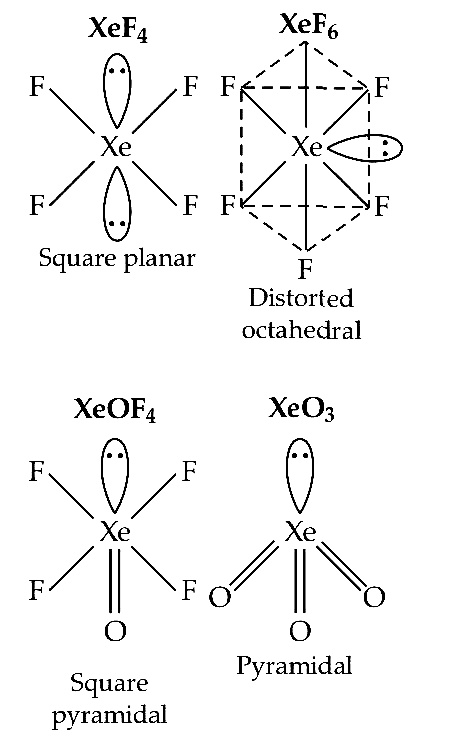
Match the Xenon compounds in Column-I with its structure in Column-II and assign the correct code : NEET 2019 Chemistry - p-Block Elements Question 31 English
(A)
(a) (b) (c) (d)
(ii) (iii) (i) (iv)
(B)
(a) (b) (c) (d)
(iii) (iv) (i) (ii)
(C)
(a) (b) (c) (d)
(i) (ii) (iii) (iv)
(D)
(a) (b) (c) (d)
(ii) (iii) (iv) (i)
(D)

Solution

NEET 2019 Chemistry - p-Block Elements Question 31 English Explanation
Q.30
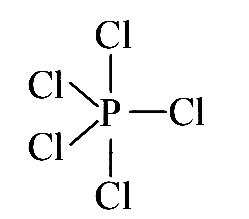
Identify the incorrect statement related to PCl5 from the following :
(A)
Axial P–Cl bonds are longer than equatorial P–Cl bonds
(B)
PCl5 molecule is non-reactive
(C)
Three equatorial P–Cl bonds make an angle of 120º with each other
(D)
Two axial P–Cl bonds make an angle of 180º with each other
(B)

Solution

NEET 2019 Chemistry - p-Block Elements Question 32 English Explanation

Three equatorial bonds and two axial bonds.
Due to unsymmetry PCl5 is reactive.
Q.31
Match the following :

(a) Pure nitrogen (i) Chlorine
(b) Haber process (ii) Sulphuric acid
(c) Contact process (iii) Ammonia
(d) Deacon’s process (iv) Sodium azide or Barium azide


Which of the following is the correct option?
(A)
(a) (b) (c) (d)
(iii) (iv) (ii) (i)
(B)
(a) (b) (c) (d)
(iv) (iii) (ii) (i)
(C)
(a) (b) (c) (d)
(i) (ii) (iii) (iv)
(D)
(a) (b) (c) (d)
(ii) (iv) (i) (iii)
(B)

Solution

Pure N2 : BaN3 Ba + N2

Haber process : N2 + 3H2 2NH3

Contact process : 2SO2 + O2 2SO3

Deacon’s process : HCl + O2 H2O + Cl2
Q.32
Which of the following is incorrect statement?
(A)
GeX4(X = F, Cl, Br, I) is more stable than GeX2
(B)
SnF4 is ionic in nature
(C)
PbF4 is covalent in nature
(D)
SiCl4 is easily hydrolysed
(C)

Solution

PbF4 is an ionic compound.
Q.33
Which of the following species is not stable?
(A)
[Sn(OH)6]2-
(B)
[SiCl6]2–
(C)
[SiF6]2–
(D)
[GeCl6]2–
(B)

Solution

[SiCl6]2– does not exist because six large chloride ions cannot be accommodated around Si+4 due to its small size.
Q.34
What is the correct electronic configuration of the central atom in K4[Fe(CN)6] based on crystal field theory?
(A)
(B)
(C)
(D)
(B)

Solution

Fe : [Ar]3d64s2

Fe2+ : 3d6 NEET 2019 Chemistry - Coordination Compounds Question 38 English Explanation
Q.35
Among the following, the one that is not a green house gas is :
(A)
ozone
(B)
sulphur dioxide
(C)
nitrous oxide
(D)
methane
(B)

Solution

Sulphurdioxide (SO2) is not a green house gas.
Q.36
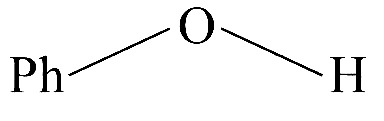
The compound that is most difficult to protonate is :
(A)
NEET 2019 Chemistry - Some Basic Concepts of Organic Chemistry Question 42 English Option 1
(B)
NEET 2019 Chemistry - Some Basic Concepts of Organic Chemistry Question 42 English Option 2
(C)
NEET 2019 Chemistry - Some Basic Concepts of Organic Chemistry Question 42 English Option 3
(D)
NEET 2019 Chemistry - Some Basic Concepts of Organic Chemistry Question 42 English Option 4
(D)

Solution

In Ph - OH, the lone pair of electrons on O atom causes delocalization which makes it difficult to protonate due to less availability of electrons.
Q.37
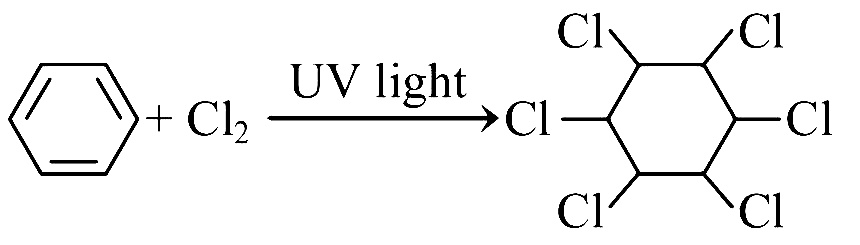
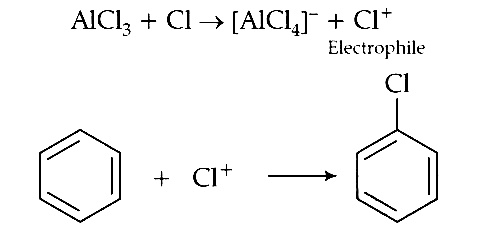
Among the following, the reaction that proceeds through an electrophilic substitution, is :
(A)
NEET 2019 Chemistry - Hydrocarbons Question 19 English Option 1
(B)
NEET 2019 Chemistry - Hydrocarbons Question 19 English Option 2
(C)
NEET 2019 Chemistry - Hydrocarbons Question 19 English Option 3
(D)
NEET 2019 Chemistry - Hydrocarbons Question 19 English Option 4
(D)

Solution

NEET 2019 Chemistry - Hydrocarbons Question 19 English Explanation
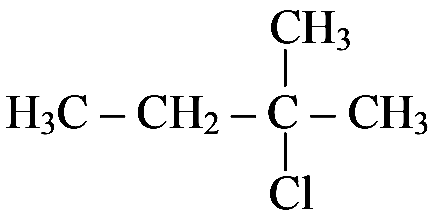
Q.38
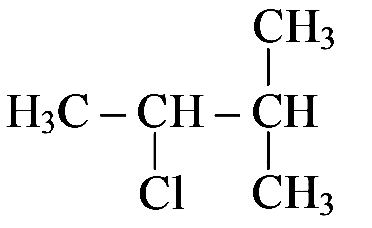
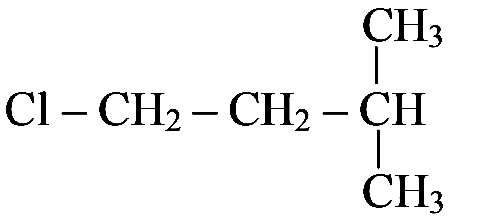
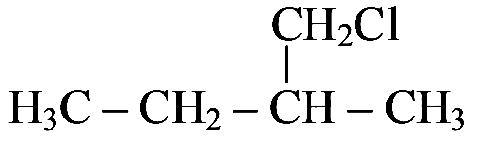
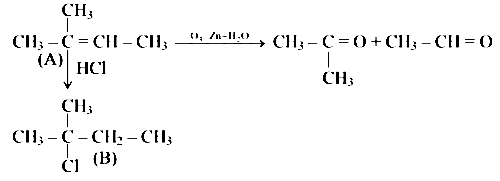
An alkene “A” on reaction with O3 and Zn + H2O gives propanone and ethanal in equimolar ratio. Addition of HCl to alkene “A” gives “B” as the major product. The structure of product “B” is :
(A)
NEET 2019 Chemistry - Hydrocarbons Question 17 English Option 1
(B)
NEET 2019 Chemistry - Hydrocarbons Question 17 English Option 2
(C)
NEET 2019 Chemistry - Hydrocarbons Question 17 English Option 3
(D)
NEET 2019 Chemistry - Hydrocarbons Question 17 English Option 4
(A)

Solution

NEET 2019 Chemistry - Hydrocarbons Question 17 English Explanation
Q.39
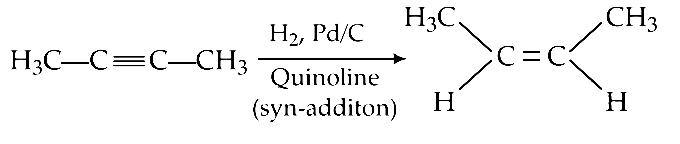
The most suitable reagent for the following conversion, is : NEET 2019 Chemistry - Hydrocarbons Question 18 English
(A)
Zn / HCl
(B)
Hg2+ / H+ , H2O
(C)
Na / liquid NH3
(D)
H2, Pd/C, quinoline
(D)

Solution

NEET 2019 Chemistry - Hydrocarbons Question 18 English Explanation
Q.40
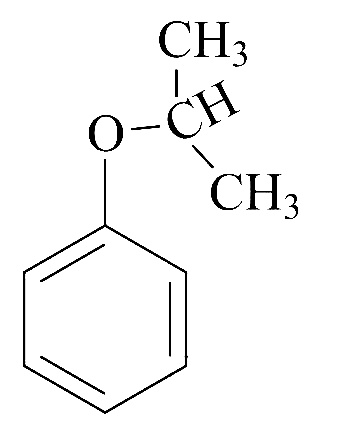
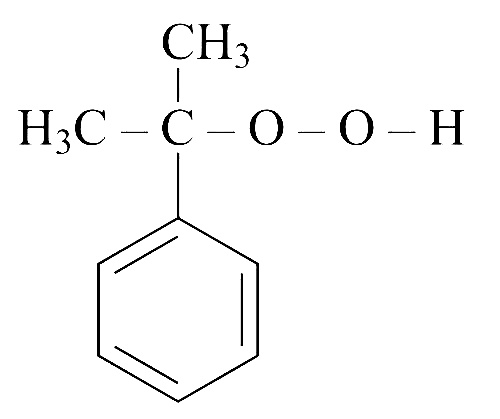
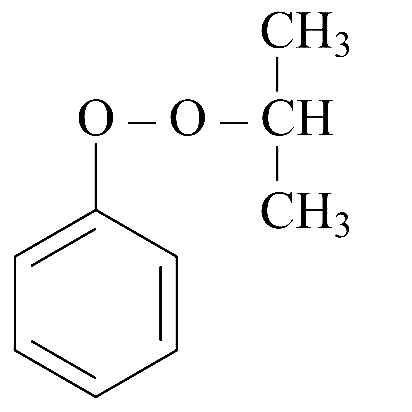
The structure of intermediate A in the following reaction, is : NEET 2019 Chemistry - Alcohol, Phenols and Ethers Question 22 English
(A)
NEET 2019 Chemistry - Alcohol, Phenols and Ethers Question 22 English Option 1
(B)
NEET 2019 Chemistry - Alcohol, Phenols and Ethers Question 22 English Option 2
(C)
NEET 2019 Chemistry - Alcohol, Phenols and Ethers Question 22 English Option 3
(D)
NEET 2019 Chemistry - Alcohol, Phenols and Ethers Question 22 English Option 4
(B)

Solution

NEET 2019 Chemistry - Alcohol, Phenols and Ethers Question 22 English Explanation
Q.41
The correct order of the basic strength of methyl substituted amines in aqueous solution is :
(A)
(CH3)3N > (CH3)2NH > CH3NH2
(B)
CH3NH2 > (CH3)2NH > (CH3)3N
(C)
(CH3)2NH > CH3NH2 > (CH3)3N
(D)
(CH3)3N > CH3NH2 > (CH3)2NH
(C)

Solution

The basic strength of methyl substituted amines in aqueous form is together affected by inductive effect, solvation effect and steric hindrance. So, the correct order of basic strength will be :

(CH3)2NH > CH3NH2 > (CH3)3N
Q.42
The major product of the following reaction is : NEET 2019 Chemistry - Organic Compounds Containing Nitrogen Question 22 English
(A)
NEET 2019 Chemistry - Organic Compounds Containing Nitrogen Question 22 English Option 1
(B)
NEET 2019 Chemistry - Organic Compounds Containing Nitrogen Question 22 English Option 2
(C)
NEET 2019 Chemistry - Organic Compounds Containing Nitrogen Question 22 English Option 3
(D)
NEET 2019 Chemistry - Organic Compounds Containing Nitrogen Question 22 English Option 4
(D)

Solution

NEET 2019 Chemistry - Organic Compounds Containing Nitrogen Question 22 English Explanation
Q.43
The biodegradable polymer is :
(A)
nylon-6
(B)
Buna-S
(C)
nylon-6, 6
(D)
nylon-2-nylon 6
(D)

Solution

Biodegradable polymer is Nylon-2-Nylon-6.
Q.44
The non-essential amino acid among the following is :
(A)
alanine
(B)
lysine
(C)
valine
(D)
leucine
(A)

Solution

Non Essential amino acid is Alanine.
Q.45
Among the following, the narrow spectrum antibiotic is :
(A)
amoxycillin
(B)
chloramphenicol
(C)
penicillin G
(D)
ampicillin
(C)

Solution

Penicillin – G is Narrow Spectrum antibiotics.
Biology (Maximum Marks: 360)
  • This section contains 90 questions.
  • Each question has FOUR options (A), (B), (C) and (D). ONLY ONE of these four options is the correct answer.
  • Full Marks : +4 If ONLY the correct option is chosen;
  • Zero Marks : 0 If none of the options is chosen (i.e. the question is unanswered);
  • Negative Marks : −1 In all other cases.
Q.1
Which of the following pair of organelles does not contains DNA?
(A)
Lysosomes and Vacuoles
(B)
Nuclear envelope and Mitochondria
(C)
Mitochodria and Lysosomes
(D)
Chloroplast and Vacuoles
(A)

Solution

Lysosome and vacuoles do not contain DNA.
Q.2
Which of the following statements regarding mitochondria is incorrect?
(A)
Inner membrane is convoluted with infoldings
(B)
Mitochondrial matrix contains single circular DNA molecule and ribosomes
(C)
Outer membrane is permeable to monomers of carbohydrates, fats and proteins
(D)
Enzymes of electron transport are embedded in outer membrane
(D)

Solution

The enzymes required for the ETS are present in the inner matrix only as the elementary particles are embedded in the inner membrane of the mitochondrial matrix.
Q.3
Which of the following statements is not correct?
(A)
Lysosomes are membrane bound structures.
(B)
Lysosomes are formed by the process of packaging in the endoplasmic reticulum.
(C)
Lysosomes have numerous hydrolytic enzymes.
(D)
The hydrolytic enzymes of lysosomes are active under acidic pH.
(B)

Solution

The statement that is not correct is:

Option B: Lysosomes are formed by the process of packaging in the endoplasmic reticulum.

Lysosomes are indeed membrane-bound structures (Option A) that contain numerous hydrolytic enzymes (Option C) which are active under acidic conditions (Option D). However, lysosomes are not formed by the endoplasmic reticulum. Instead, they are formed from vesicles that bud off from the Golgi apparatus. The endoplasmic reticulum is involved in the synthesis of proteins, some of which are destined for lysosomes, but the actual formation and packaging of lysosomes occur at the Golgi apparatus.

Q.4
The concept of ''Omnis cellula-e cellula'' regarding cell division was first proposed by :
(A)
Schleiden
(B)
Aristotle
(C)
Rudolf Virchow
(D)
Theodore Schwann
(C)

Solution

Rudolf Carl Virchow in 1858, gave the concept of ''Omnis cellula-e cellula'' regarding cell division. This means that all cells arise from pre-existing cells by cell-division.
Q.5
Consider the following statements :

(A) Coenzyme of metal ion that is tightly bound to enzyme protein is called prosthetic group.
(B) A complete catalytic active enzyme with its bound prosthetic group is called apoenzyme

Select the correct option
(A)
Both (A) and (B) are false
(B)
(A) is false but (B) is true
(C)
Both (A) and (B) are true
(D)
(A) is true but (B) is false
(D)

Solution

Coenzyme or metal ion that is tightly bound to enzyme protein is called prosthetic group while a complete catalytic active enzyme with its bound prosthetic group is called holoenzyme.
Q.6
Concanavalin A is :
(A)
a lectin
(B)
a pigment
(C)
an alkaloid
(D)
an essential oil
(A)

Solution

Concanavalin A is an example of lection.
Q.7
Cells in G0 phase :
(A)
suspend the cell cycle
(B)
terminate the cell cycle
(C)
exit the cell cycle
(D)
enter the cell cycle
(C)

Solution

G0 or quiescent phase is the stage wherein cells remain metabolically active, but do not proliferate unless called to do so. These cells that do not divide further exit G1 phase to enter an inactive stage. Such cells are used for replacing the cells lost during injury.
Q.8
The correct sequence of phases of cell cycle is :
(A)
S G1 G2 M
(B)
G1 S G2 M
(C)
M G1 G2 S
(D)
G1 G2 S M
(B)

Solution

The correct sequence of phases of cell cycle is:
G1 S G2 M

G1 (Gap 1) phase : It is the first phase of the growth. It is the stage during which the cell grows and prepares its DNA for replication.

S phase (Synthetic phase) : It is the stage during which DNA synthesis occurs.

G2 phase : In this phase, the cell continues to grow and prepares itself for division.

M Phase : A cell reproduces during the mitotic phase. The mitotic phase has two stages : Karyokinesis and Cytokinesis.
Q.9
Which one of the following statements regarding post-fertilization development in flowering plants is incorrect?
(A)
Central cell develop into endosperm
(B)
Ovules develop into embryo sac
(C)
Ovary develops into fruit
(D)
Zygote develops into embryo
(B)

Solution

Central cell develops into Endopserm. Endosperm developes from the fusion of secondary diploid nucleus with one male nucleus formina primary endopsermm nucleus (PEN).
Q.10
In some plants, the female gamete develops into embryo without fertilization. This phenomenon is known as :
(A)
Syngamy
(B)
Parthenocarpy
(C)
Parthenogenesis
(D)
Autogamy
(C)

Solution

Parthenogenesis is the process, whereby the female gamete develops into new organism without fertilisation. Seedless fruits are formed by parthenogenesis.
Q.11
Pinus seed cannot germinate and establish without fungal association. This is because :
(A)
it has very hard seed coat
(B)
Its seed contain inhibitors that prevent germination
(C)
its embryo is immature
(D)
it has obligate association with mycorrhizae
(D)

Solution

The pinus seeds have a very hard seed coat so without fungal association the seed cannot absorb water. The mycorrhizae penetrate deep inside the seeds to moisten them.
Q.12
Placentation, in which ovules develop on the inner wall of the ovary or in peripheral part, is :
(A)
Parietal
(B)
Free central
(C)
Basal
(D)
Axile
(A)

Solution

In parietal placentation the ovules develop on the inner wall of ovary or in peripheral part. E.g. Mustard, Argemone, etc.
Q.13
Persistent nucellus in the seed is known as
(A)
Hilum
(B)
Tegmen
(C)
Chalaza
(D)
Perisperm
(D)

Solution

Perisperm is persistent in some seeds like castor, black pepper and beetroot.
Q.14
What is the fate of the male gametes discharged in the synergid?
(A)
One fuses with the egg, other (s) fuse (s) with synergid nucleus.
(B)
One fuses with the egg and other fuses with central cell nuclei.
(C)
One fuses with the egg, other (s) degenerate (s) in the synergid.
(D)
All fuse with the egg.
(B)

Solution

In flowering plants,

Out of the two male gametes, one gametes fuses with the nucleus of the nucleus of the egg cell and forms the zygote. The process is known as syngamy.

The other male gamete fuses with the two polar nuclei located in the central cell to form a triploid primary endosperm nucleus (PEN). Since, the process involves the fusion of three haploid nuclei, it is known as triple fusion.

Since two kinds of fusions (syngamy and triple fusion) take place in an embryo sac it is known as double fertilisation
Q.15
Select the correct group of biocontrol agents.
(A)
Oscillatoria, Rhizobium, Trichoderma
(B)
Nostoc, Azospirillium, Nucleopolyhedrovirus
(C)
Bacillus thuringiensis, Tobacco mosaic virus, Aphids
(D)
Trichoderma, Baculovirus, Bacillus thuringiensis
(D)

Solution

Biocontrol refers to the use of biological methods for controlling plant diseases and pests. Bacillus thuriengiensis (Bt), Trichoderma sps and Baculoviruses are used as biocontrol agents.

Rhizobium, Nostoc, Azospirillum and Oscillatoria are used as biofertilisers, which increases the fertility of soil while Tobacco Mosaic virus is a pathogen that infects wide range of plants and aphids are pest that harms crop plants.
Q.16
What triggers activation of protoxin to active Bt toxin of Bacillus thuringiensis in boll worm?
(A)
Acidic pH of stomach
(B)
Body temperature
(C)
Alkaline pH of gut
(D)
Moist surface of midgut
(C)

Solution

Protoxin are converted into active toxins in the alkaline pH of gut.
Q.17
Match the following organisms with the products they produce :
(a) Lactobacillus (i) Cheese
(b) Saccharomyces cerevisiae (ii) Curd
(c) Aspergillus nige (iii) Citric Acid
(d) Acetobacter aceti (iv) Bread
(v) Acetic Acid

Select the correct option.
(A)
(a) (b) (c) (d)
(iii) (iv) (v) (i)
(B)
(a) (b) (c) (d)
(ii) (i) (iii) (v)
(C)
(a) (b) (c) (d)
(ii) (iv) (v) (iii)
(D)
(a) (b) (c) (d)
(ii) (iv) (iii) (v)
(D)

Solution

Lactobacillus is used for production of curd, Saccharomyces cerevisiae is used for making bread, Aspergillus niger is used in citric acid production while Acetobacter aceti is used in acetic acid production.
Q.18
Which of the following can be used as a biocontrol agent in the treatment of plant disease?
(A)
Anabaena
(B)
Lactobacillus
(C)
Trichoderma
(D)
Chlorella
(C)

Solution

A biological control being developed for use in the treatment of plant disease is the fungus is trichoderma trichoderma species are free living fungi that are very common in the root ecosystems. They are effective biocontrol agents of several plant pathogens.
Q.19
Which of the following is a commercial blood cholesterol lowering agent?
(A)
Streptokinase
(B)
Lipases
(C)
Cyclosporin A
(D)
Statin
(D)

Solution

Streptokinase is used as a ‘clot buster’ to remove clots from the blood vessels of patients who have myocardial infarction.

Lipases are used in detergent formulations. It helps to remove oily stains from the laundry.

Cyclosporin A is produced by Trichoderma polysporum (fungus) and used as an immunosuppressive agent in organ transplant patients.

Statins are produced by Monascus purpureus yeast. It is used as blood-cholesterol lowering agents. It inhibits the enzymes responsible for synthesis of cholesterol.
Q.20
Thiobacillus is a group of bacteria helpful in carrying out :
(A)
Nitrification
(B)
Denitrification
(C)
Nitrogen fixation
(D)
Chemoautotrophic fixation
(B)

Solution

Thiobacillus denitrificans cause denitrification. Denitrification is the process of conversion of oxides of nitrogen to free nitrogen by bacteria present in the soil.
Q.21
Phloem in gymnosperms lacks :
(A)
Companion cells only
(B)
Both sieve tubes and companion cells
(C)
Albuminous cells and sieve cells
(D)
Sieve tubes only
(B)

Solution

In gymnosperms only sieve cells and albuminous cells are present but they lack sieve tubes and companion cells.
Q.22
What is the direction of movement of sugars in phloem?
(A)
Downward
(B)
Bi-directional
(C)
Non-multidirectional
(D)
Upward
(B)

Solution

The direction of movement of sugars in phloem is Bi-directional.
Q.23
Which of the statements given below is not true about formation of Annual Rings in trees?
(A)
Activity of cambium depends upon variation in climate.
(B)
Annula ring are not prominent in trees of temperate region.
(C)
Annula ring is a combination of spring wood and autumn wood produced in a year.
(D)
Differential activity of cambium causes light and dark bands of tissue-early and late wood respectively
(B)

Solution

Annual rings are prominent only in tress of temperate region. In temperate regions climatic conditions are not uniform throughout the year. So, there is no differential activity of cambium. However in tropics climatic conditions are uniform throughout the year.
Q.24
Xylem translocates:
(A)
Water, mineral salts and some organic nitrogen only
(B)
Water, mineral salts, some organic nitrogen and hormones
(C)
Water only
(D)
Water and mineral salts only
(B)

Solution

Xylem translocates mainly water and minerals but additional xylem also translocates the organic nitrogenous compounds like amides (Glucosamine and Asparagine) and plant hormones too.
Q.25
Conversion of glucose to glucose-6 phosphate, the first irreversible reaction of glycolysis, is catalyzed by
(A)
Enolase
(B)
Phosphofructokinase
(C)
Aldolase
(D)
Hexokinase
(D)

Solution

Hexokinase catalyse the conversion of Glucose to Glucose-6 phosphate. It is the first step of activation phase of glycolysis.
Q.26
Respiratory Quotient (RQ) value of tripalmitin is :
(A)
0.07
(B)
0.09
(C)
0.9
(D)
0.7
(D)

Solution

The respiratory quotient (RQ) is the ratio of CO2 produced to O2 consumed while food is being metabolized.

RQ =
CO2 eliminated
O2 consumed


Respiratory quotient of tripalmitin is :

2(C51H98O6) + 145O2 102CO2 + 98H2O + Energy

RQ =
Q.27
DNA precipitation out of a mixture of bimolecules can be achieved by treatment with :
(A)
Methanol at room temperature
(B)
Chilled chloroform
(C)
Isopropanol
(D)
Chilled ethanol
(D)

Solution

Chilled ethanol is used for DNA precipitation out of a mixture of biomolecules. Process is called spooling.
Q.28
Following statements describe the characteristics of the enzyme Restriction Endonuclease. Identify the incorrect statement.
(A)
The enzyme cuts the sugar-phosphate backbone at specific sites on each strand
(B)
The enzyme recognizes a specific palindromic nucleotide sequence in the DNA
(C)
The enzyme cuts DNA molecule at identified position within the DNA
(D)
The enzyme binds DNA at specific sites and cuts only one of the two strands
(D)

Solution

Enzyme binds DNA at specific sitcs and cut both the strands by breaking phosphodiester linkage.
Q.29
Which one of the following is not a method of in situ conservation of biodiversity?
(A)
Botanical Garden
(B)
Sacred Grove
(C)
Biosphere Reserve
(D)
Wildife Sanctuary
(A)

Solution

Botanical garden is a method of ex situ conservation of biodiversity. Ex situ conservation (off site) is the conservation of organisms outside their habitats. E.g. genetic resource centres, zoological parks, botanical gardens, gene banks, etc.
Q.30
Which of the following statements is incorrect?
(A)
Infective constituent in viruses is the protein coat
(B)
Prions consist of abnormally folded proteins
(C)
Viroids lack a protein coat
(D)
Viruses are obligate parasites
(A)

Solution

Virus : Viruses are obligate parasites. In addition to proteins, viruses also contain genetic material that could be either RNA or DNA. No virus contains both RNA and DNA. A virus is a nucleoprotein and the genetic material is infectious.

Viroids: It lacks the protein coat that is found in viruses and hence, the name viroid.

Prions: In modern medicine, certain infectious neurological diseases were found to be transmitted by an agent consisted of abnormally folded protein.
Q.31
Which of the following statement is incorrect?
(A)
Conidia are produced exogenously and ascospores endogenously.
(B)
Yeasts have filamentous bodies with long thread-like hyphae.
(C)
Morels and truffles are edible delicacies.
(D)
Clauiceps is a source of many alkaloids and LSD.
(B)

Solution

Yeasts are not filamentous, they are usually oval in shape. They are not having hyphal structure.
Q.32
Select the correctly written scientific name of Mango which was first described by Carolus Linnaeus :
(A)
Mangifera indica
(B)
Mangifera Indica
(C)
Mangifera indica Car. Linn.
(D)
Mangifera indica Linn
(D)

Solution

According to rules of binomial nomenclature, the correct scientific name of mango is Mangifera indica Linn.
Q.33
Grass leaves curl inward during very dry weather. Select the most appropriate reason from the following :
(A)
Shrinkage of air spaces in spongy mesophyll
(B)
Tyloses in vessels
(C)
Closure of stomata
(D)
Flaccidity of bulliform cells
(D)

Solution

Flaccidity of bulliform cells grass leaves curl in words during dry weather due to the loss of water or flaccidity of bulliform cells.
Q.34
What map unit (Centimorgan) is adopted in the construction of genetic maps?
(A)
A unit of distance between genes on chromosomes, representing 1% cross over.
(B)
A unit of distance between genes on chromosomes, representing 50% cross over.
(C)
A unit of distance between two expressed genes, representing 10% cross over.
(D)
A unit of distance between two expressed genes, representing 100% cross over.
(A)

Solution

A centimorgan or map unit is a unit for measuring genetic linkage. It is defined as the distance between chromosome positions (also termed loci or markers) for which the expected average number of intervening chromosomal crossovers in a single generation is 1 percent.
Q.35
A gene locus has two alleles A, a. If the frequency of dominant allele A is 0.4, then what will be the frequency of homozygous dominant, heterozygous and homozygous recessive individuals in the population?
(A)
0.16(AA); 0.48 (Aa); 0.36(aa)
(B)
0.16 (AA); 0.36(Aa); 0.48(aa)
(C)
0.36 (AA); 0.48 (Aa); 0.16 (aa)
(D)
0.16 (AA); 0.24 (Aa); 0.36 (aa)
(A)

Solution

Frequency of dominant allele (say p) = 0.4

Frequency of recessive allele (say q) = 1 – 0.4 = 0.6

Frequency of homozygous dominant dividuals (AA) = p2 = (0.4)2 = 0.16

Frequency of heterozygous individuals (Aa) = 2pq = 2(0.4) (0.6) = 0.48

Frequency of homozygous recessive individuals (aa) = q2 = (0.6)2 = 0.36
Q.36
Select the incorrect statement.
(A)
In domesticated fowls, sex of progeny depends on the type of sperm rather than egg.
(B)
Human males have one of their sex-chromosome much shorter than the other.
(C)
Male fruit fly is heterogametic
(D)
In male grasshoppers, 50% of sperms have no sex-chromosome.
(A)

Solution

The type of sex determination in birds is called female heterogamety and male homogamety. Thus, the sex of the progeny depends on the type of egg rather than the type of sperm. The female birds have two different sex chromosomes designated as Z and W while male birds have two similar sex chromosomes and called ZZ.
Q.37
The frequency of recombination between gene pairs on the same chromosome as a measure of the distance between genes was explained by :
(A)
Alfred Sturtevant
(B)
Gregor J. Mendel
(C)
Sutton Boveri
(D)
T.H. Morgan
(A)

Solution

Alfred Sturtevant explained chromosomal mapping on the basis of recombination frequency which is directly proportional to distance between two genes on same chromosome.
Q.38
In Antirrhinum (Snapdragon), a red flower was crossed with a white flower and in F1 generation, pink flowers were obtained. When pink flowers were selfed, the F2 generation showed white, red and pink flowers. Choose the incorrect statement from the following :
(A)
Ratio of F2 is (Red) : (Pink) : (White)
(B)
Law of Segregation does not apply in this experiment
(C)
This experiment does not follow the Principle of Dominance
(D)
Pink colour in F1 is due to incomplete dominance
(B)

Solution

Inheritance of flower colour in Snapdragon is a classic example for incomplete dominance.

In a cross between true breeding red flower (RR) and true breeding white flower (rr) produced a pink flower (Rr).

When the pink coloured flower of F1 generation was selfed, F2 generation produced plants with red flowers, pink flowers and white flowers in the ratio of 1 : 2 : 1. Here, both red and white flowers were not dominant over each other. Both tried to express their traits and hence an intermediate colour of both red and white resulting in pink colour flowers. Thus, genes for flower colour in snapdragon is an exception of Mendel's first principle i.e. Law of dominance. Law of segregation is universally applicable.
Q.39
What is the genetic disorder in which an individual has an overall masculine development, gynaecomastia, and is sterile?
(A)
Edward syndrome
(B)
Down’s syndrome
(C)
Turner’s syndrome
(D)
Klinefelter’s syndrome
(D)

Solution

Klinefelter’s Syndrome has an additional copy of X-chromosome in male. They have trisomy of sex chromosome as 44 + XXY (47). They show overall masculine development, gynaecomastia and are sterile.
Q.40
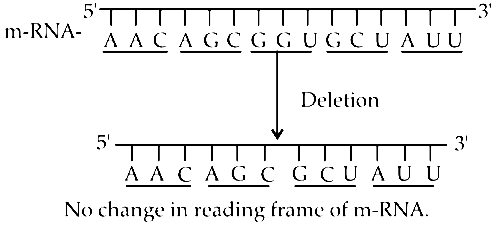
Under which of the following conditions will there be no change in the reading frame of following mRNA?

5' AACAGCGGUGCUAUU 3'
(A)
Insertion of A and G at 4th and 5th positions respectively
(B)
Deletion of GGU from 7th, 8th and 9th positions
(C)
Insertion of G at 5th positions
(D)
Deletion of G from 5th positions
(B)

Solution

In case of deletion of GGU from 7th, 8th and 9th position, there will be no change in reading frame of mRNA. NEET 2019 Biology - Molecular Basis of Inheritance Question 81 English Explanation
Q.41
Which of the following features of genetic code does allow bacteria to produce human insulin by recombinant DNA technology?
(A)
Genetic code is nearly universal
(B)
Genetic code is specific
(C)
Genetic code is not ambiguous
(D)
Genetic code is redundant
(A)

Solution

In recombinant DNA technology, a bacterium is able to produce human insulin because genetic code is nearly universal. Human insulin is used to treat diabetes.
Q.42
Purines found both in DNA and RNA are:
(A)
Guanine and cytosine
(B)
Cytosine and thymine
(C)
Adenine and thymine
(D)
Adenine and guanine
(D)

Solution

Adenine and guanine are purines which are common to both DNA and RNA.
Q.43
The shorter and longer arms of a submetacentric chromosome are referred to as:
(A)
q-arm and p-arm respectively
(B)
m-arm and n-arm respectively
(C)
s-arm and l-arm respectively
(D)
p-arm and q-arm respectively
(D)

Solution

The shorter arm of a sub-metacentric chromosome is called as the 'p' - arm and the longer arm is called as a 'q' - arm.
Q.44
Match the following genes of the Lac operon with their respective produces :

(a) i gene (i) -galactosidase
(b) z gene (ii) Permease
(c) a gene (iii) Repressor
(d) y gene (iv) Transacetylase

Select the correct option.
(A)
(a) (b) (c) (d)
(iii) (i) (iv) (ii)
(B)
(a) (b) (c) (d)
(iii) (iv) (i) (ii)
(C)
(a) (b) (c) (d)
(i) (iii) (ii) (iv)
(D)
(a) (b) (c) (d)
(iii) (i) (ii) (iv)
(A)

Solution

The lac operon consists of :

One regulatory gene (i-gene), which codes for repressor.

Three structural genes (z, y and a).

1. z gene : Codes for β-galactosidase, which hydrolyze lactose to galactose and glucose.

2. y gene : Codes for Permease, which increases the permeability of the cell to lactose.

3. a-gene : Codes for a transacetylase.
Q.45
Expressed Sequence Tags (ESTs) refers to :
(A)
DNA polymorphism
(B)
Novel DNA sequences
(C)
Genes expressed as RNA
(D)
Polypeptide expression
(C)

Solution

Expressed sequence tags (ESTs) refers to genes expressed as RNA.
Q.46
Select the incorrect statement.
(A)
Inbreeding selects harmful recessive genes that reduce fertility and productivity.
(B)
Inbreeding helps in accumulation of superior genes and elimination of undesirable genes.
(C)
Inbreeding increases homozygosity.
(D)
Inbreeding is essential to evolve purelines in any animal.
(A)

Solution

Inbreeding selects superior traits leading to higher fertility and productivity but due to continuous inbreeding can lead to inbreeding depression
Q.47
Which of the following is true for Golden rice?
(A)
It is drought tolerant, developed using Agrobacterium vector.
(B)
It has yellow grains, because of a gene introduced from a primitive variety of rice.
(C)
It is Vitamin A enriched, with a gene from daffodil.
(D)
It is pest resistant, with a gene from Bacillus thuringiensis.
(C)

Solution

Golden rice are enriched with vitamin A, the gene is taken from daffodils.
Q.48
Which of the following glucose transporters is insulin-dependent?
(A)
GLUT III
(B)
GLUT IV
(C)
GLUT I
(D)
GLUT II
(B)

Solution

GLUT IV is insulin dependent glucose transporter which increases uptake of glucose.
Q.49
The Earth summit held in Rio de Janeiro in 1992 was called :
(A)
to assess threat posed to native species by invasive weed species
(B)
for immediate steps to discontinue use of CFCs that were damaging the ozone layer
(C)
to reduce CO2 emissions and global warming
(D)
for conservation of biodiversity and sustainable utilization of its benefits
(D)

Solution

The earth summit held in Rio de Janerio in 1992 was called for conservation of biodiversity and sustainable utilization of its benefits.
Q.50
Match Column-I with Column –II.

Column - I Column - II
(a) Saprophyte (i) Symbiotic association
or fungi with plant roots
(b) Parasite (ii) Decomposition of dead
organic materials
(c) Lichens (iii)Living on living plants of animals
(d) Mycorrhiza (iv) Symbiotic association of algae and fungi


Choose the correct answer from the options given below :
(A)
(a) (b) (c) (d)
(i) (ii) (iii) (iv)
(B)
(a) (b) (c) (d)
(iii) (ii) (i) (iv)
(C)
(a) (b) (c) (d)
(ii) (i) (iii) (iv)
(D)
(a) (b) (c) (d)
(ii) (iii) (iv) (i)
(D)

Solution

A saprophyte is an organism that survives on dead and decaying organisms like fungi and decomposition bacteria.
A parasite is an organism that survives on living plants and animals.
A lichen is symbiotic association of algae & fungi.
Mycorrhiza is a symbiotic association of fungi and roots of higher plants like pinus
Q.51
Which of these following methods is the most suitable for disposal of nuclear waste?
(A)
Dump the waste within rocks under deep ocean
(B)
Bury the waste within rocks deep below the Earth’s surface
(C)
Shoot the waste into space
(D)
Bury the waste under Antarctic ice-cover
(B)

Solution

It is recommended that nuclear wastes should be stored after pre-treatment in suitable containers, which should then be buried in rocks.
Q.52
Due to increasing air-borne allergens and pollutants, many people in urban areas are suffering from respiratory disorder causing wheezing due to :
(A)
Proliferation of fibrous tissues and damage of the alveolar walls
(B)
Reduction in the secretion of surfactants by pneumocytes
(C)
Benign growth on mucous lining of nasal cavity
(D)
Inflammation of bronchi and bronchioles
(D)

Solution

Asthma is an allergic disorder in which wheezing sound is produced due to inflammation of bronchioles.
Q.53
Which one of the following equipments is essentially required for growing microbes on a large scale, for industrial production of enzymes?
(A)
Industrial oven
(B)
Bioreactor
(C)
BOD incubator
(D)
Sludge digester
(B)

Solution

Bioreactor are required for growing microbes on a large scale production of enzymes.
Q.54
Which of the following protocols did aim for reducing emission of chlorofluorocarbons into the atmosphere?
(A)
Gothenburg Protocol
(B)
Geneva Protocol
(C)
Montreal Protocol
(D)
Kyoto Protocol
(C)

Solution

The Montreal Protocol (an international treaty in Canada, 1987) was signed to control the emission of ozone depleting substances into the atmosphere.
Q.55
Polyblend, a fine powder of recycled modified plastic, has proved to be a good material for :
(A)
Construction of roads
(B)
Making tubes and pipes
(C)
Making plastic sacks
(D)
use as a fertilizer
(A)

Solution

Polyblend is a fine powder of recycled modified plastic. Polyblend is mixed with the bitumen and is used to lay roads. Blend of Polyblend and bitumen enhances the bitumen’s water repellant properties and helps to increase road life.
Q.56
Which of the following pairs of gases is mainly responsible for green house effect?
(A)
Nitrogen and Sulphur dioxide
(B)
Carbon dioxide and Methane
(C)
Ozone and Ammonia
(D)
Oxygen and Nitrogen
(B)

Solution

The gases that cause the greenhouse effect are :
1. Carbon dioxide (60% effect)
2. Vapour
3. Methane (20% effect)
4. Nitrogen oxide (6% effect)
5. Ozone
6. Chlorofluorocarbons (14% effect)

Thus, carbon dioxide and methane are the major greenhouse gases.
Q.57
From evolutionary point of view, retention of the female gametophyte with developing young embryo on the parent sporophyte for some time, is first observed in :
(A)
Pteridophytes
(B)
Mosses
(C)
Liverworts
(D)
Gymnosperms
(A)

Solution

The female gametophytes in pteridophytes are retained on the parent sporophytes for variable periods. The developments of the zygotes into young embryos take place within the female gametophytes. This event is a precursor to the seed habit and considered as an important step in evolution.
Q.58
What is the site of perception of photoperiod necessary for induction of flowering in plants?
(A)
Shoot apex
(B)
Leaves
(C)
Lateral buds
(D)
Pulvinus
(B)

Solution

The site of perception of light / dark duration are leaves. It is hypothesized that there is a hormonal substance migrates from leaves to shoot apices for inducing flowering when plants are exposed to the necessary inductive photoperiod.
Q.59
Which of the following ecological pyramids is generally inverted?
(A)
Pyramid of biomass in a forest
(B)
Pyramid of biomass in a sea
(C)
Pyramid of numbers in grassland
(D)
Pyramid of energy
(B)

Solution

Pyramid of biomass in a sea. It is always inverted.
Q.60
Which of the following is the most important cause for animals and plants being driven to extinction?
(A)
Economic exploitation
(B)
Alien species invasion
(C)
Habitat loss and fragmentation
(D)
Drought and floods
(C)

Solution

Habitat loss and fragmentation is the major cause of biodiversity loss and extinction of plants and animals. Habitat of various organisms are altered or destroyed by uncontrolled and unsustainable human activities such as deforestation, slash, and burn agricultural, mining and urbanisation. This results in the breaking up of the habitat into small pieces, which effects the movement of migratory animals and also, decreases the genetic exchange between populations leading to a declination of species.
Q.61
Which of the following sexually transmitted diseases is not completely curable ?
(A)
Genital herpes
(B)
Chlamydiasis
(C)
Gonorrhoea
(D)
Genital warts
(A)

Solution

HIV and Genital Herpes is not completely curable.
Q.62
Identify the correct pair representing the causative agent of typhoid fever and the confirmatory test for typhoid.
(A)
Salmonella typhi/ Anthorone test
(B)
Salmonella typhi/ Widal test
(C)
Plasmodium vivax/ UTI test
(D)
Streptococcus pneumoniae/ Widal test
(B)

Solution

Typhoid fever is caused by salmonella typhi which is diagnosed through WIDAL TEST.
Q.63
Colostrum, the yellowish fluid, secreted by mother during the initial days of lactation is very essential to impart immunity to the newborn infants because it contains :
(A)
Macrophages
(B)
Immunoglobulin A
(C)
Natural killer cells
(D)
Monocytes
(B)

Solution

The yellowish milk produced during the initial few days of lactation is called colostrum. It contains several antibodies especially immunoglobulin A, which imparts naturally acquired passive immunity to the newborn.
Q.64
Which of the following immune responses is responsible for rejection of kidney graft?
(A)
Inflammatory immune response
(B)
Cell-mediated immune response
(C)
Auto-immune response
(D)
Humoral immune response
(B)

Solution

Cell-mediated immune response (CMI) causes rejection of graft. Immune response by T-lymphocytes (T-cells) is by activation of cytotoxic killer cells which detects and destroys the foreign cells and also a cancerous cell is called cell mediated immune response.
Q.65
Drug called ‘Heroin’ is synthesized by :
(A)
glycosylation of morphine
(B)
nitration of morphine
(C)
methylation of morphine
(D)
acetylation of morphine
(D)

Solution

Heroine is formed by acetylation of morphine.
Q.66
Match the Column-I with Column-II : NEET 2019 Biology - Body Fluids and Its Circulation Question 25 English
Select the correct option.
(A)
(a) (b) (c) (d)
(iv) (i) (ii) (iii)
(B)
(a) (b) (c) (d)
(iv) (i) (ii) (v)
(C)
(a) (b) (c) (d)
(ii) (i) (v) (iii)
(D)
(a) (b) (c) (d)
(ii) (iii) (v) (iv)
(A)

Solution

P wave represent atrial depolarization.

QRS complex '' ventricular ''.

T - wave '' depolarisation of ventricles.

Reduction in the size of T-wave indicates coronary ischemia.
Q.67
What would be the heart rate of a person if the cardiac output is 5L, blood volume in the ventricles at the end of diastole is 100 mL and at the end of ventricular systole is 50 mL ?
(A)
100 beats per minute
(B)
125 beats per minute
(C)
50 beats per minute
(D)
75 beats per minute
(A)

Solution

Cardiac output = Stroke volume Heart rate
Where stroke volume = End diastolic volume – End systolic volume
= 100 ml – 50 ml
= 50 ml

5000 mL = 50 mL × Heart rate

Heart rate = = 100 beats per minute.
Q.68
Which of the following muscular disorders is inherited?
(A)
Myasthenia gravis
(B)
Botulism
(C)
Tetany
(D)
Muscular dystrophy
(D)

Solution

Myasthenia gravis is a chronic auto immune disorder. It affects neuromuscular junction leading to fatigue, weakening and paralysis of skeletal muscles.

Botulism is rare and dangerous type of food poisoning caused by bacterium Clostridium botulinum.

Tetany is a rapid spasm in muscle due to low Ca2+ in body fluid.

Muscular dystrophy is a genetic disorder. It is characterized by progressive degeneration of skeletal muscles, which are the muscles that control movement.
Q.69
Select the correct option :
(A)
Each rib is a flat thin bone and all the ribs are connected dorsally to the thoracic vertebrae and ventrally to the sternum
(B)
There are seven pairs of vertebrosternal, three pairs of vertebrochondral and two pairs of vertebral ribs
(C)
8th, 9th and 10th pairs of ribs articulate directly with the sternum
(D)
11th and 12th pairs of ribs are connected to the sternum with the help of hyaline cartilage.
(B)

Solution

Seven pairs of Ribs are vertebrosternal while 8th, 9th and 10th pair of ribs are vertebrochondral and the last 11th, 12th pair are vertebral ribs.
Q.70
Which part of the brain is responsible for thermoregulation?
(A)
Corpus callosum
(B)
Medulla oblongata
(C)
Cerebrum
(D)
Hypothalamus
(D)

Solution

Hypothalamus is responsible for thermoregulation.
Q.71
Which of the following statements in correct?
(A)
Cornea is convex, transparent layer which is highly vascularised
(B)
Cornea consists of dense matrix of collagen and is the most sensitive portion of the eye.
(C)
Cornea is an external, Transparent and protective proteinacious covering of the eye-ball
(D)
Cornea consists of dense connective tissue of elastin and can repair itself.
(C)

Solution

Option A: This statement is incorrect. The cornea is a transparent, avascular layer at the front of the eye that covers the iris, pupil, and anterior chamber.

Option B: This statement is partially correct. The cornea is made up of a dense matrix of collagen fibers, but it is not the most sensitive portion of the eye. The most sensitive part of the eye is the conjunctiva, which is the thin, transparent layer that covers the white part of the eye and the inner surfaces of the eyelids.

Option C: This statement is correct. The cornea is an external, transparent, and protective proteinaceous covering of the eye-ball.

Option D: This statement is incorrect. The cornea is composed of dense connective tissue of collagen and cannot repair itself. Any injury to the cornea may result in permanent scarring or loss of vision.
Q.72
Which of the following contraceptive methods do involve a role of hormone?
(A)
CuT, Pills, Emergency contraceptives
(B)
Pills, Emergency contraceptives, Barrier methods
(C)
Lactational amenorrhea, Pills, Emergency contraceptives
(D)
Barrier method, Lactational amenorrhea, Pills
(C)

Solution

Lactational amenorrhea is a period of intense lactation during which ovulation does not occur Pills and emergency contraceptives contain hormones.
Q.73
Select the horomone-releasing Intra-Uterine Devices.
(A)
Progestasert, LNG-20
(B)
Lippes Loop, Multiload 375
(C)
Vaults, LNG-20
(D)
Multiload 375, Progestasert
(A)

Solution

Progestasert, and LNG-20 are hormone releasing IUDs, which makes the uterus unsuitable for implantation and the cervix hostile to the sperms.
Q.74
Select the correct sequence of organs in the alimentary canal of cockroach starting from mouth :
(A)
Pharynx Oesophagus Gizzard Ileum Crop Colon Rectum
(B)
Pharynx Oesophagus Ileum Crop Gizzard Colon Rectum
(C)
Pharynx Oesophagus Crop Gizzard Ileum Colon Rectum
(D)
Pharynx Oesophagus Gizzard Crop Ileum Colon Rectum
(C)

Solution

In cockroach the food goes into

Mouth Pharynx Oesophagus Crop Gizzard Ileum Colon Rectum Anus
Q.75
The ciliated epithelial cells are required to move particles or mucus in a specific direction. In humans, these cells are mainly present in :
(A)
Eustachian tube and Salivary duct
(B)
Bronchioles and Fallopian tubes
(C)
Bile duct and Bronchioles
(D)
Fallopian tubes and Pancreatic duct
(B)

Solution

Bronchioles are lined by ciliated epithelium and fallopian tube.
Q.76
It takes very long time for pineapple plants to produce flowers. Which combination of hormones can be applied to artificially induce flowering in pineapple plants throughout the year to increase yield?
(A)
Gibberellin and Abscicic acid
(B)
Cytokinin and Abscisic acid
(C)
Auxin and Ethylene
(D)
Gibberellin and Cytokinin
(C)

Solution

In Pineapple plants Auxins and Ethylene induce artificial flowering in pineapple plants throughout the year to increase yield.
Q.77
Identify the cells whose secretion protects the lining of gastro-intestinal tract from various enzymes.
(A)
Oxyntic Cells
(B)
Duodenal Cells
(C)
Chief Cells
(D)
Goblet Cells
(D)

Solution

Goblet cells / mucocytes secretes mucous which protects the lining of gastro-intestinal tract from various enzymes.
Q.78
Match the following structures with their respective location in organs :

(a) Crypts of Lieberkuhn (i) Pancreas
(b) Glisson’s capsule (ii) Duodenum
(c) Islets of Langerhans (iii) Small intestine
(d) Brunner’s Glands (iv) Liver

Select the correct option
(A)
(a) (b) (c) (d)
(iii) (iv) (i) (ii)
(B)
(a) (b) (c) (d)
(iii) (ii) (i) (iv)
(C)
(a) (b) (c) (d)
(iii) (i) (ii) (iv)
(D)
(a) (b) (c) (d)
(ii) (iv) (i) (iii)
(A)

Solution

Crypts of Lieberkuhn are present in small intestine.

Glisson’s capsule is the covering of Hepatic tubule in liver.

Islets of Langerhans are endocrine part of pancreas.

Brunner’s Glands are submucosal gland of duodenum of small Intestine.
Q.79
Use of an artificial kindney during hemodialysis may result in :

(a) Nitrogenous waste build-up in the body
(b) Non –elimination of excess potassium ions
(c) Reduced absorption of calcium ions from gastro-intestinal tract
(d) Reduced RBC production

Which of the following options is the most appropriate?
(A)
(c) and (d) are correct
(B)
(a) and (d) are correct
(C)
(a) and (b) are correct
(D)
(b) and (c) are correct
(A)

Solution

Kidney produces erythropoietin which helps in RBC production

Kidney also secretes calcitriol which allows absorption of calcium ion from gastro intestinal tract.
Q.80
Which of the following factors is responsible for the formation of concentrated urine?
(A)
Secretion of erythropoietin by Juxtaglomerular complex.
(B)
Hydrostatic pressure during glomerular filtration.
(C)
Low levels of antidiuretic hormone.
(D)
Maintaining hyperosmolarity towards inner medullary interstitum in the kidneys
(D)

Solution

Maintaining hyperosmolarity towards inner medullary interstitium in the kidneys for the formation of concentrated urine.
Q.81
Match the following hormones with the respective disease :

(a) Insulin (i) Addison’s disease
(b) Thyroxin (ii) Diabetes insipidus
(c) Corticoids (iii) Acromegaly
(d) Growth Hormones (iv) Goitre
(v) Diabetes mellitus

Select the correct option.
(A)
(a) (b) (c) (d)
(v) (iv) (i) (iii)
(B)
(a) (b) (c) (d)
(ii) (iv) (i) (iii)
(C)
(a) (b) (c) (d)
(v) (i) (ii) (iii)
(D)
(a) (b) (c) (d)
(ii) (iv) (iii) (i)
(A)

Solution

Diabetes mellitus is caused due to deficiency of insulin.

Goite is caused due to deficiency of Iodine which leads to less secretion of thyroxine.

Addison’s disease is caused due to hyposecretion of corticoids.

Acromegaly is caused due to hypersecretion of growth hormones after puberty.
Q.82
How does steroid hormone influence the cellular activities?
(A)
Activating cyclic AMP located on the cell membrane
(B)
Using aquaporin channels as second messenger
(C)
Changing the permeability of the cell membrane
(D)
Binding to DNA and forming a gene-hormone complex
(D)

Solution

Hormones which interact with intracellular receptors mostly regulate gene expression or chromosome function by the interaction of hormone receptor complex with the genome.
Q.83
Extrusion of second polar body from egg nucleus occurs :
(A)
Before entry of sperm into ovum
(B)
Simultaneously with first cleavage
(C)
After entry of sperm but before fertilization
(D)
After fertilization
(C)

Solution

Sperms enters into 2o oocytes which breaks metaphase promoting factor and activates anaphase promoting complex which causes extrusion of second polar body by completing meiosis-II.
Q.84
Select the correct sequence for transport of sperm cells in male reproductive system :
(A)
Seminiferous tubules Vasa efferentia Epididymis Inguinal canal Urethra
(B)
Testis Epididymis Vasa efferentia Vas deferens Ejaculatory duct Inguinal canal Urethra Urethral meatus
(C)
Testis Epididymis Vasa efferentia Rate testis Inguinal canal Urethra
(D)
Seminiferous tubules Rete testis Vasa efferentia Epididymis Vas deferens Ejaculatory duct Urethra Urethral meatus
(D)

Solution

The correct sequence for transport of sperm cells in male reproductive system is :

Seminiferous tubules Rete testis Vasa efferentia Epididymis Vas deferens Ejaculatory duct Urethra Urethral meatus.
Q.85
Match the following organisms with their respective characteristics:

(a) Pila (i) Flame cells
(b) Bombyx (ii) Comb plates
(c) Pleurobrachia (iii) Radula
(d) Taenia (iv) Malpighian

Select the correct option from the following :
(A)
(a) (b) (c) (d)
(ii) (iv) (iii) (i)
(B)
(a) (b) (c) (d)
(iii) (ii) (iv) (i)
(C)
(a) (b) (c) (d)
(iii) (ii) (i) (iv)
(D)
(a) (b) (c) (d)
(iii) (iv) (ii) (i)
(D)

Solution

Pila (mollusca) have radula

Bombyx (arthropoda) have malphigian tubules.

Pleurobrachia (ctenophora) have comb plates.

Taenia (platyhelminthes) have flame cells for excretion.
Q.86
Consider following features:

(a) Organ system level of organisation
(b) Bilateral symmetry
(c) True coelomates with segmentation of body

Select the correct option of animal groups which possess all the above characteristics
(A)
Arthropoda, Mollusca and chordata
(B)
Annelida, Mollusca and chordata
(C)
Annelida, Arthropoda and chordate
(D)
Annelida, Arthropoda and Mollusca
(C)

Solution

Annelida, arthropoda and chordata have all the given three features: Organ system level of organization, Bilateral symmetry, true coelomates with segmentation of body.
Q.87
Tidal Volume and Expiratory Reserve Volume of an athlete is 500 mL and 1000 mL respectively. What will be his Expiratory Capacity if the Residual Volume is 1200 mL?
(A)
2200 mL
(B)
2700 mL
(C)
1500 mL
(D)
1700 mL
(C)

Solution

Expiratory Capacity (EC) is the total volume of air a person can expire after a normal inspiration. This includes tidal volume and expiratory reserve volume.

Since, Tidal Volume = 500 ml

And Expiratory Reserve Volume = 1000 ml

So, Expiratory Capacity = TV + ERV = 500 + 1000 = 1500 ml
Q.88
Variations caused by mutation, as proposed by Hugo de Vries, are :
(A)
small and directional
(B)
small and directionless
(C)
random and directional
(D)
random and directionless
(D)

Solution

According to De Vries, Variations are large, random and directionless.
Q.89
In a species, the weight of newborn ranges from 2 to 5 kg. 97% of the newborn with an average weight between 3 to 3.3 kg survive whereas 99% of the infants born with weights from 2 to 2.5 kg or 4.5 to 5kg die. Which type of selection process is taking place?
(A)
Disruptive Selection
(B)
Cyclical Selection
(C)
Directional Selection
(D)
Stabilizing Selection
(D)

Solution

It shows stabilizing selection as most of the newborn having average weight between 3 to 3.3 kg survive and babies with less and more weight have low survival rate. Stabilizing is a type of natural selection in which the population mean stabilizes on a particular nonextreme trait value.
Q.90
Match the hominids with their correct brain size :
(a) Homo habilis (i) 900 cc
(b) Homo neanderthalensis (ii) 1350 cc
(c) Homo erectus (iii) 650-800 cc
(d) Homo sapiens (iv) 1400 cc

Select the correct option.
(A)
(a) (b) (c) (d)
(iii) (iv) (i) (ii)
(B)
(a) (b) (c) (d)
(iv) (iii) (i) (ii)
(C)
(a) (b) (c) (d)
(iii) (i) (iv) (ii)
(D)
(a) (b) (c) (d)
(iii) (ii) (i) (iv)
(A)

Solution

Correct match of hominids with their brain sizes are as follows :

Homo habilis - 650-800 cc
Homo neanderthalensis -1400 cc
Homo erectus - 900 cc
Homo sapiens - 1350 cc