The pitch of the screw gauge is :
Solution
=
0.01 mm =
Pitch = 0.5 mm


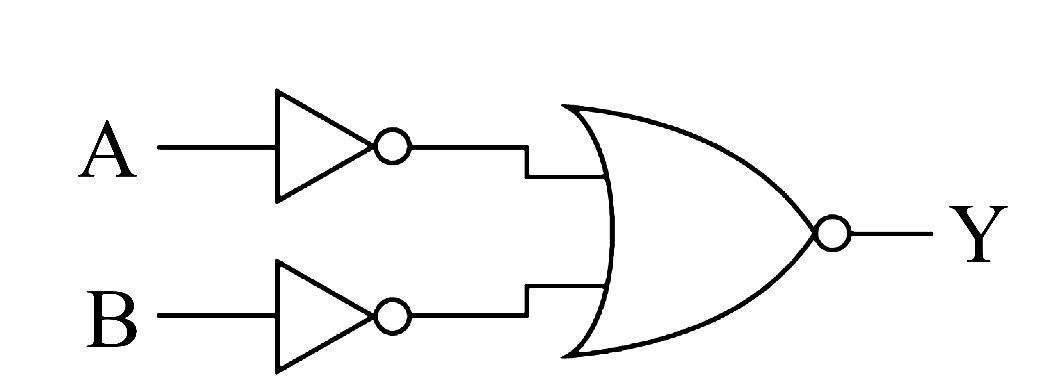
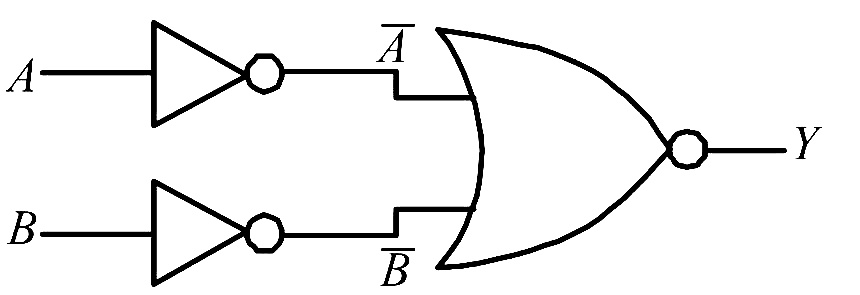
| A | B | Y |
|---|---|---|
| 0 | 0 | 0 |
| 0 | 1 | 1 |
| 1 | 0 | 1 |
| 1 | 1 | 1 |
| A | B | Y |
|---|---|---|
| 0 | 0 | 1 |
| 0 | 1 | 1 |
| 1 | 0 | 1 |
| 1 | 1 | 0 |
| A | B | Y |
|---|---|---|
| 0 | 0 | 1 |
| 0 | 1 | 0 |
| 1 | 0 | 0 |
| 1 | 1 | 0 |
| A | B | Y |
|---|---|---|
| 0 | 0 | 0 |
| 0 | 1 | 0 |
| 1 | 0 | 0 |
| 1 | 1 | 1 |


The correct answer to this question is collision frequency. Here's an explanation for each option to understand why:
Option A - Heat of Reaction: The heat of reaction, also known as the enthalpy change , is determined by the difference in the energy levels of the reactants and products. It is a characteristic feature of a particular chemical reaction and is not typically affected by the concentration of reactants except in cases of extremely high or non-ideal concentrations where volume changes might somewhat influence pressure and therefore the heat of reaction in gases. Under normal conditions, however, changing the concentration of reactants does not alter the heat of reaction.
Option B - Threshold Energy: Threshold energy is the minimum energy that reactant molecules must possess in order to undergo a successful collision, leading to a chemical reaction. This value is inherent to the specific reaction and is related to the strength of the bonds in the reactants as well as the energy required to form the activated complex during the reaction. The threshold energy does not change simply because the concentration of reactants is altered.
Option C - Collision Frequency: Collision frequency corresponds to how often reacting particles collide in a given time interval. When the concentration of reactants is increased, there are more reactant particles per unit volume. This statistically leads to an increased number of collisions per unit time, thereby raising the collision frequency. This is in accordance with the collision theory of chemical kinetics.
Option D - Activation Energy: Activation energy is the minimum energy barrier that must be overcome for reactants to be converted into products. It is a property of a particular reaction and is related to the nature of the reactants and the reaction pathway. Altering the concentration of reactants does not change the activation energy for that reaction.
Thus, the only factor among the provided options that changes with an increase in the concentration of reactants is indeed the collision frequency.
| Name | IUPAC Official Name | ||
|---|---|---|---|
| (A) | Unnilunium | (i) | Mendelevium |
| (B) | Unniltrium | (ii) | Lawrencium |
| (C) | Unnilhexium | (iii) | Seaborgium |
| (D) | Unununnium | (iv) | Darmstadtium |
| Oxide | Nature | ||
|---|---|---|---|
| (A) | CO | (i) | Basic |
| (B) | BaO | (ii) | Neutral |
| (C) | Al2O3 | (iii) | Acidic |
| (D) | Cl2O7 | (iv) | Amphoteric |
| (A) | (B) | (C) | (D) |
|---|---|---|---|
| (ii) | (i) | (iv) | (iii) |
| (A) | (B) | (C) | (D) |
|---|---|---|---|
| (iii) | (iv) | (i) | (ii) |
| (A) | (B) | (C) | (D) |
|---|---|---|---|
| (iv) | (iii) | (ii) | (i) |
| (A) | (B) | (C) | (D) |
|---|---|---|---|
| (i) | (ii) | (iii) | (iv) |

| (A) | CO(g) + H2(g) | (i) | Mg(HCO3)2 + Ca(HCO3)2 |
| (B) | Temporary hardness of water | (ii) | An electron deficient hydride |
| (C) | B2H6 | (iii) | Synthesis gas |
| (D) | H2O2 | (iv) | Non-planar structure |
| (A) | (B) | (C) | (D) |
|---|---|---|---|
| (iii) | (ii) | (i) | (iv) |
| (A) | (B) | (C) | (D) |
|---|---|---|---|
| (iii) | (iv) | (ii) | (i) |
| (A) | (B) | (C) | (D) |
|---|---|---|---|
| (i) | (iii) | (ii) | (iv) |
| (A) | (B) | (C) | (D) |
|---|---|---|---|
| (iii) | (i) | (ii) | (iv) |


Sucrose is a disaccharide composed of two monosaccharide units, glucose and fructose, joined together via a glycosidic bond. Upon hydrolysis, this bond is broken, and the two constituent monosaccharides are released. Hydrolysis of sucrose results in the formation of one molecule of glucose and one molecule of fructose. However, it is important to specify the configurations of these monosaccharides as they exist in specific forms.
Sucrose -D-Glucose + -D-FructoseGlucose in sucrose is in the -D form while fructose is in the -D configuration. Thus, the correct answer reflecting the products of sucrose hydrolysis is:
Option B: -D-Glucose + -D-Fructose
This reflects the correct stereochemistry and identity of the monosaccharides produced from the hydrolysis of sucrose.
| (a) Inhibitor of catalytic activity | (i) Ricin |
| (b) Possess peptide bonds | (ii) Malonate |
| (c) Cell wall material in fungi | (iii) Chitin |
| (d) Secondary metabolite | (iv) Collagen |
| Column-I | Column-II |
|---|---|
| (a) Clostridium butylicum | (i) Cyclosporin-A |
| (b) Trichoderma polysporum | (ii) Butyric Acid |
| (c) Monascus purpureus | (iii) Citric Acid |
| (d) Aspergillus niger | (iv) Blood cholesterol lowering agent |

The wrong statement is Option C.
Let us check each option one by one:
Option A: Sticky ends can be joined by using DNA ligases.
This is correct. Restriction enzymes often produce sticky ends, and these can be joined with the help of DNA ligase.
Option B: They cut the strand of DNA at palindromic sites.
This is correct. Restriction enzymes recognise specific palindromic nucleotide sequences in DNA and cut there.
Option C: Each restriction enzyme functions by inspecting the length of a DNA sequence.
This is wrong. Restriction enzymes do not inspect the length of DNA. They recognise and cut DNA at specific nucleotide sequences called recognition sites.
Option D: They are useful in genetic engineering.
This is correct. Restriction enzymes are very important tools in genetic engineering because they help in cutting DNA at desired sites.
So, the wrong statement is: Option C.
| (a) Bacillus thuringiensis | (i) Cloning vector |
| (b) Thermus aquaticus | (ii) Construction of first rDNA molecule |
| (c) Agrobacterium tumefaciens | (iii) DNA polymerase |
| (d) Salmonella typhimurium | (iv) Cry proteins |
The oxygenation activity of RuBisCo (Ribulose-1,5-bisphosphate carboxylase/oxygenase) in photorespiration leads to the formation of:
Option A
This implies the production of 1 molecule of a 3-carbon compound (3-phosphoglycerate) and 1 molecule of a 2-carbon compound (2-phosphoglycolate).
In detail, RuBisCo facilitates the reaction where ribulose-1,5-bisphosphate reacts with O instead of CO. This process yields one 3-phosphoglycerate (3-PGA) and one 2-phosphoglycolate, which is a distinctive feature of the oxygenation process in photorespiration as opposed to the carboxylation process in the Calvin cycle which produces two molecules of 3-PGA.
Thus, in the context of photorespiration:
This results in 1 molecule of a 3-carbon compound and 1 molecule of a 2-carbon compound.
| Column-I | Column-II |
|---|---|
| (a) Bt cotton | (i) Gene therapy |
| (b) Adenosine deaminase deficiency | (ii) Cellular defence |
| (c) RNAi | (iii) Detection of HIV infection |
| (d) PCR | (iv) Bacillus thuringiensis |
| Column-I | Column-II |
|---|---|
| (a) Typhoid | (i) Wuchereria |
| (b) Pneumonia | (ii) Plasmodium |
| (c) Filariasis | (iii) Salmonella |
| (d) Malaria | (iv) Haemophilus |
| Column-I | Column-II |
|---|---|
| (a) Eosinophils | (i) Immune response |
| (b) Basophils | (ii) Phagocytosis |
| (c) Neutrophils | (iii) Release histaminase, destructive enzymes |
| (d) Lymphocytes | (iv) Release granules containing histamine |
| Column-I | Column-II |
|---|---|
| (a) Floating Ribs | (i) Located between second and seventh ribs |
| (b) Acromion | (ii) Head of the Humerus |
| (c) Scapula | (iii) Clavicle |
| (d) Glenoid cavity | (iv) Do not connect with the sternum |
| Column-I | Column-II |
|---|---|
| (a) Organ of Corti | (i) Connects middle ear and pharynx |
| (b) Cochlea | (ii) Coiled part of the labyrinth |
| (c) Eustachian tube | (iii) Attached to the oval window |
| (d) Stapes | (iv) Located on the basilar membrane |
The correct answer is:
Option A: Columnar epithelial cells
Explanation:
Goblet cells are specialized for secretion of mucus.
They are found in the lining of the alimentary canal (for example, in the intestine).
Goblet cells are modified from columnar epithelial cells, which are tall and pillar-like in shape.
The other options are not correct:
Compound epithelial cells form layers (like skin) and are not modified into goblet cells.
Squamous epithelial cells are flat and thin, not columnar.
Chondrocytes are cells found in cartilage, not in the epithelial tissue.
So, the goblet cells are modified columnar epithelial cells.
| Column-I | Column-II |
|---|---|
| (a) Pituitary gland | (i) Grave’s disease |
| (b) Thyroid gland | (ii) Diabetes mellitus |
| (c) Adrenal gland | (iii) Diabetes insipidus |
| (d) Pancreas | (iv) Addison’s disease |
| Column-I | Column-II |
|---|---|
| (A) Placenta | (i) Androgens |
| (B) Zona pellucida | (ii) Human Chorionic Gonadotropin (hCG) |
| (C) Bulbo-urethral | (iii) Layer of the ovum |
| (D) Leydig cells | (iv) Lubrication of the Penis |
| Column-I | Column-II |
|---|---|
| (a) Gregarious, polyphagous pest |
(i) Asterias |
| (b) Adult with radial symmetry and larva with bilateral symmetry |
(ii) Scorpion |
| (c) Book lungs | (iii) Ctenoplana |
| (d) Bioluminescence | (iv) Locusta |
| (A) | (B) | (C) | (D) |
|---|---|---|---|
| (iv) | (i) | (ii) | (iii) |
| (A) | (B) | (C) | (D) |
|---|---|---|---|
| (iii) | (ii) | (i) | (iv) |
| (A) | (B) | (C) | (D) |
|---|---|---|---|
| (ii) | (i) | (iii) | (iv) |
| (A) | (B) | (C) | (D) |
|---|---|---|---|
| (i) | (iii) | (ii) | (iv) |
| Column-I | Column-II |
|---|---|
| (a) 6-15 pairs of gill slits | (i) Trygon |
| (b) Heterocercal | (ii) Cyclostomes |
| (c) Air Bladder | (iii) Chondrichthyes |
| (d) Poison sting | (iv) Osteichthyes |
| (A) | (B) | (C) | (D) |
|---|---|---|---|
| (iii) | (iv) | (i) | (ii) |
| (A) | (B) | (C) | (D) |
|---|---|---|---|
| (iv) | (ii) | (iii) | (i) |
| (A) | (B) | (C) | (D) |
|---|---|---|---|
| (i) | (iv) | (iii) | (ii) |
| (A) | (B) | (C) | (D) |
|---|---|---|---|
| (ii) | (iii) | (iv) | (i) |
Embryological support for evolution was disapproved by Karl Ernst von Baer.
To elaborate, Karl Ernst von Baer, a pioneering embryologist, analyzed the development stages of embryos and pointed out that embryos of different species do not resemble each other as closely as was previously thought, especially in their early stages. His observations indicated that while there may be superficial similarities in the embryonic stages of different species, these similarities do not necessarily support a common ancestry. This contradicted earlier notions that embryological development could provide strong evidence for evolution.
Therefore, the correct answer is:
Option C: Karl Ernst von Baer