NEET-UG 2024

NEET 2024 (Re-Examination)

Physics (Maximum Marks: 200)
  • This section contains 50 questions.
  • Each question has FOUR options (A), (B), (C) and (D). ONLY ONE of these four options is the correct answer.
  • Full Marks : +4 If ONLY the correct option is chosen;
  • Zero Marks : 0 If none of the options is chosen (i.e. the question is unanswered);
  • Negative Marks : −1 In all other cases.
Q.1

In an electrical circuit, the voltage is measured as volt and the current is measured as A. The value of the resistance is:

(A)
(B)
(C)
(D)
(B)

Solution

To determine the resistance using Ohm's law, we use the formula:

Given:

volts

amperes

First, calculate the nominal value of the resistance:

Next, we need to calculate the uncertainty in the resistance. For division, the relative uncertainties add up. The relative uncertainty for voltage is:

and for current:

Adding these relative uncertainties gives us the relative uncertainty for the resistance:

Now, we calculate the absolute uncertainty for the resistance:

Therefore, the resistance with its uncertainty is:

Thus, the correct answer is:

Option B
Q.2

The pitch of an error free screw gauge is and there are 100 divisions on the circular scale. While measuring the diameter of a thick wire, the pitch scale reads and division on the circular scale coincides with the reference line. The diameter of the wire is:

(A)
(B)
(C)
(D)
(B)

Solution

To determine the diameter of the wire using the screw gauge, we need to consider both the pitch scale reading and the circular scale reading. The formula to calculate the diameter is:

Where:

  • is the diameter of the wire.
  • is the pitch scale reading.
  • is the circular scale reading.
  • is the least count of the screw gauge.

Given:

  • Pitch of the screw gauge,
  • Number of divisions on the circular scale = 100
  • Pitch scale reading,
  • The circular scale reads division.

First, we calculate the least count of the screw gauge:

Next, we substitute the values into the formula for the diameter:

Calculate the product:

Now, add the pitch scale reading and the circular scale reading:

Convert to centimeters:

Therefore, the diameter of the wire is:

Option B:

Q.3

The potential energy of a particle moving along -direction varies as . The dimensions of are:

(A)
(B)
(C)
(D)
(C)

Solution

To determine the dimensions of , we start with the given potential energy expression:

The dimensions of potential energy () are . So, we need to consider the dimensions of the other terms in the expression to match these dimensions. Let's break it down step-by-step.

For the term , where represents distance:

has dimensions

Since both terms in the denominator have to be of the same dimensions for them to be added together, the dimensions of must also be .

Now the expression becomes:

Thus, the dimensions must be:

Substitute the dimensions of , , and :

Simplifying the right-hand side:

Therefore, the dimensions of must be:

We have dimensions of and . Now we need to find the dimensions of :

Divide by the dimensions of :

Thus, the dimensions of are:

Option C:

Q.4

A particle is moving along -axis with its position (x) varying with time as . The ratio of its initial velocity to its initial acceleration, respectively, is:

(A)
(B)
(C)
(D)
(D)

Solution

To find the ratio of the initial velocity to the initial acceleration of a particle moving along the -axis, we need to differentiate the given position function with respect to time .

Let's start by writing the position function:

To find the velocity (), we differentiate with respect to :

This gives us:

The initial velocity is the velocity at :

Next, to find the acceleration (), we differentiate with respect to :

This gives us:

The initial acceleration is the acceleration at :

Now, we find the ratio of the initial velocity to the initial acceleration:

Therefore, the correct answer is:

Option D:

Q.5

A bob is whirled in a horizontal circle by means of a string at an initial speed of . If the tension in the string is quadrupled while keeping the radius constant, the new speed is:

(A)
20 rpm
(B)
40 rpm
(C)
5 rpm
(D)
10 rpm
(A)

Solution

To solve this problem, we need to understand the relationship between the tension in the string and the speed of the bob whirling in a horizontal circle. The centripetal force acting on the bob is provided by the tension in the string, and it can be given by the formula:

where:

  • F is the centripetal force (or tension in the string)
  • m is the mass of the bob
  • v is the tangential speed of the bob
  • r is the radius of the circle

According to the problem, the initial speed of the bob is , and the radius is kept constant. Let’s denote the initial tension in the string as and the new tension as . Given that the tension in the string is quadrupled, we have:

Also, the centripetal force can be written in terms of tension:

By substituting into the second equation, we get:

We know from the first equation that:

Substituting this into our equation for :

The masses and radii cancel out, leaving us with:

Taking the square root of both sides:

The initial speed is given as . Therefore, the new speed is:

Hence, the new speed of the bob is 20 rpm. The correct answer is Option A.

Q.6

Let and be the angular speed of the second hand, minute hand and hour hand of a smoothly running analog clock, respectively. If and are their respective angular distances in 1 minute then the factor which remains constant is

(A)
(B)
(C)
(D)
(A)

Solution

Q.7

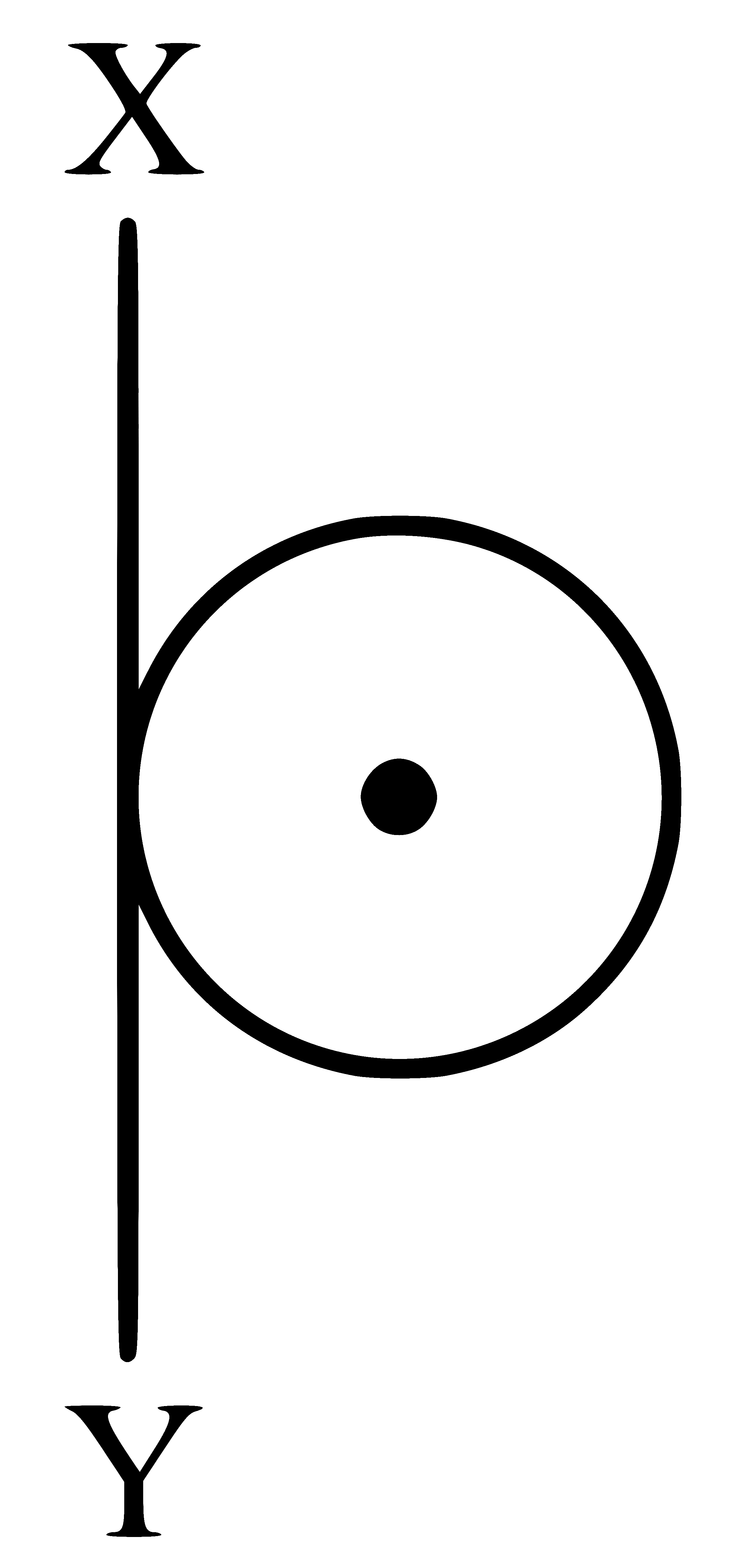
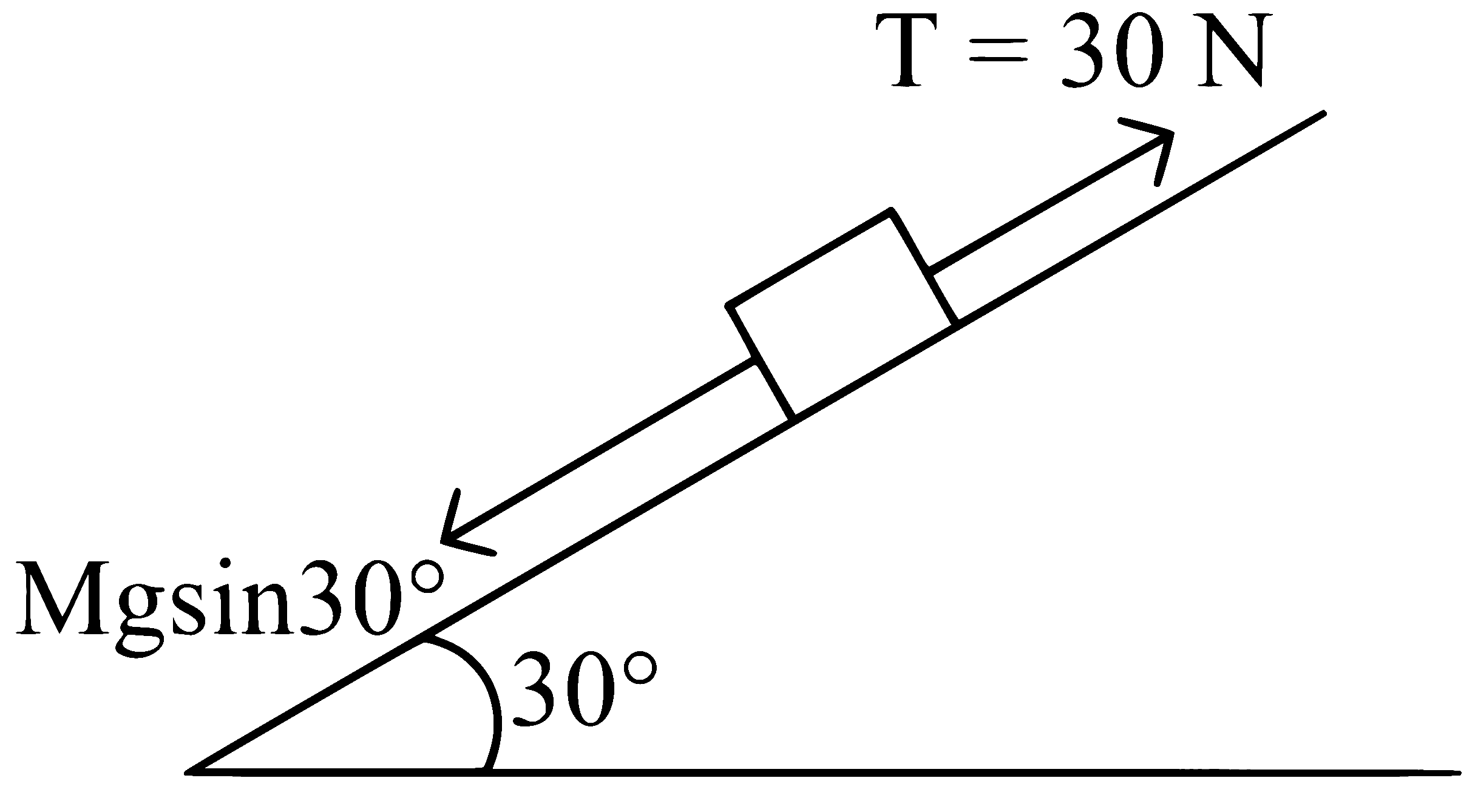
A box of mass is pulled by a cord, up along a frictionless plane inclined at with the horizontal. The tension in the cord is . The acceleration of the box is (Take )

(A)
(B)
Zero
(C)
(D)
(D)

Solution

NEET 2024 (Re-Examination) Physics - Laws of Motion Question 5 English Explanation

Q.8

An object moving along horizontal -direction with kinetic energy is displaced through by the force . The kinetic energy of the object at the end of the displacement is

(A)
(B)
(C)
(D)
(C)

Solution

To find the kinetic energy of the object at the end of the displacement, we need to calculate the work done by the force on the object during its displacement. The work done by a force is given by the dot product of the force and the displacement vectors:

Here, the force is given as:

And the displacement is given as:

The dot product of the two vectors is calculated as follows:

Since the component of the force does not contribute to the work done in the -direction, it can be ignored. Thus, the dot product yields:

The negative sign indicates that the force does work against the direction of displacement. Now, the initial kinetic energy of the object is:

The work-energy theorem relates the work done on an object to its change in kinetic energy:

Rearranging for the final kinetic energy gives:

Substituting the known values:

This simplifies to:

Hence, the kinetic energy of the object at the end of the displacement is Option C: .

Q.9

An object falls from a height of above the ground. After striking the ground it loses of its kinetic energy. The height upto which the object can rebounce from the ground is:

(A)
(B)
(C)
(D)
(D)

Solution

To solve this problem, we need to consider the principles of energy conservation and the behavior of the object during the rebound. Let's break it down step-by-step:

1. When the object falls from a height of , it converts its potential energy to kinetic energy at the point of impact. The potential energy (PE) just before hitting the ground can be calculated using the formula:

where:

  • is the mass of the object
  • is the acceleration due to gravity ()
  • is the height ()

The kinetic energy (KE) of the object just before impact is equal to the potential energy it had at the height of , because of the conservation of energy principle.

2. Upon hitting the ground, the object loses of its kinetic energy. Therefore, the kinetic energy after the impact is:

3. The object will now rebound to a height where its kinetic energy is converted back to potential energy. Let this height be . The potential energy at this rebound height is:

Since the kinetic energy after the impact is , we set this equal to the potential energy at the rebound height:

By canceling out the mass and the gravitational constant , we get:

Substituting , we find:

Therefore, the height up to which the object can rebound from the ground is . The correct answer is:

Option D

Q.10

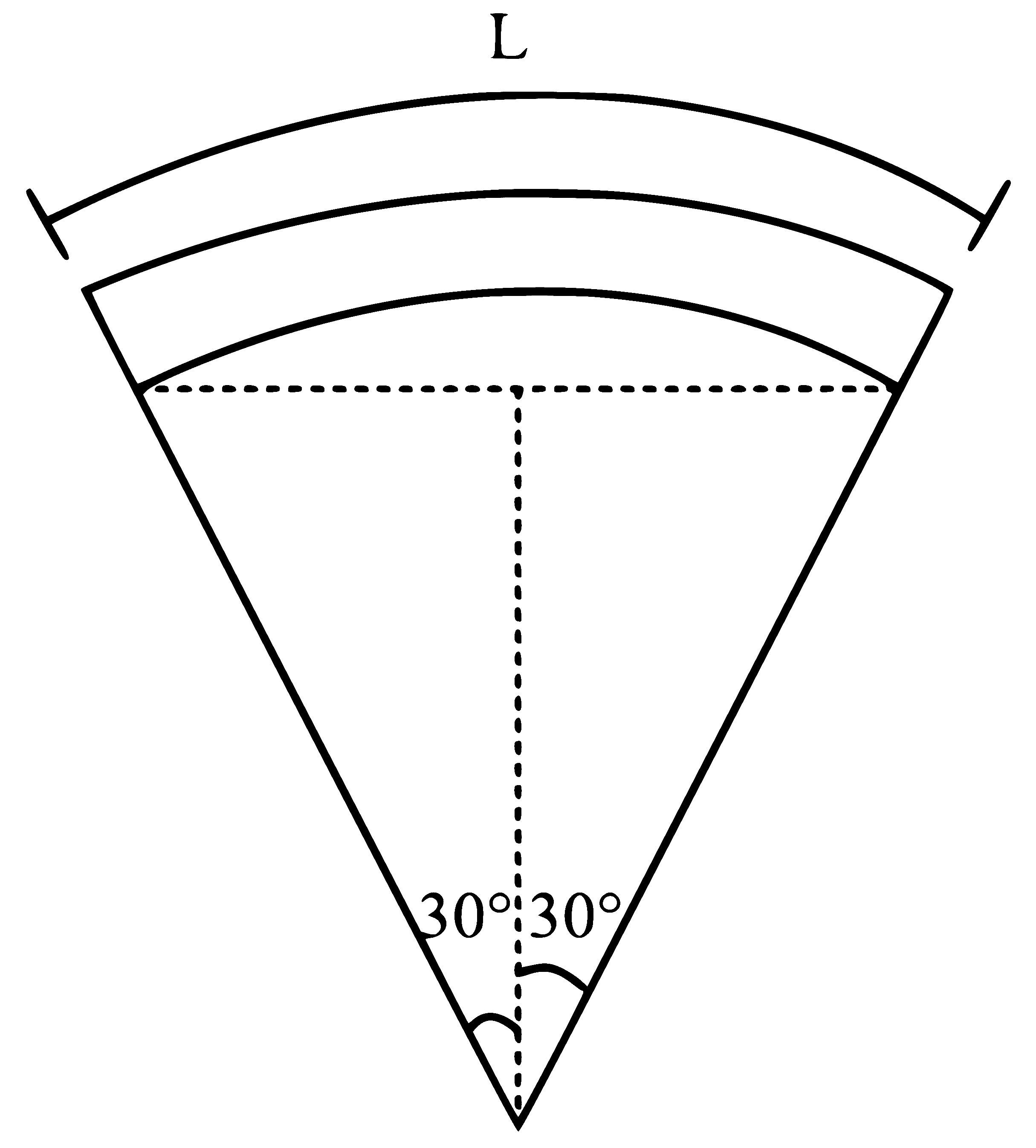
The radius of gyration of a solid sphere of mass about is as shown in figure. The radius of the sphere is , then the value of is:

NEET 2024 (Re-Examination) Physics - Rotational Motion Question 8 English

(A)
5
(B)
(C)
(D)
(D)

Solution

Q.11

The escape velocity for earth is . A planet having 9 times mass that of earth and radius, 16 times that of earth, has the escape velocity of:

(A)
(B)
(C)
(D)
(C)

Solution

Escape velocity of object from planet is given by

Now, and (given)

Q.12

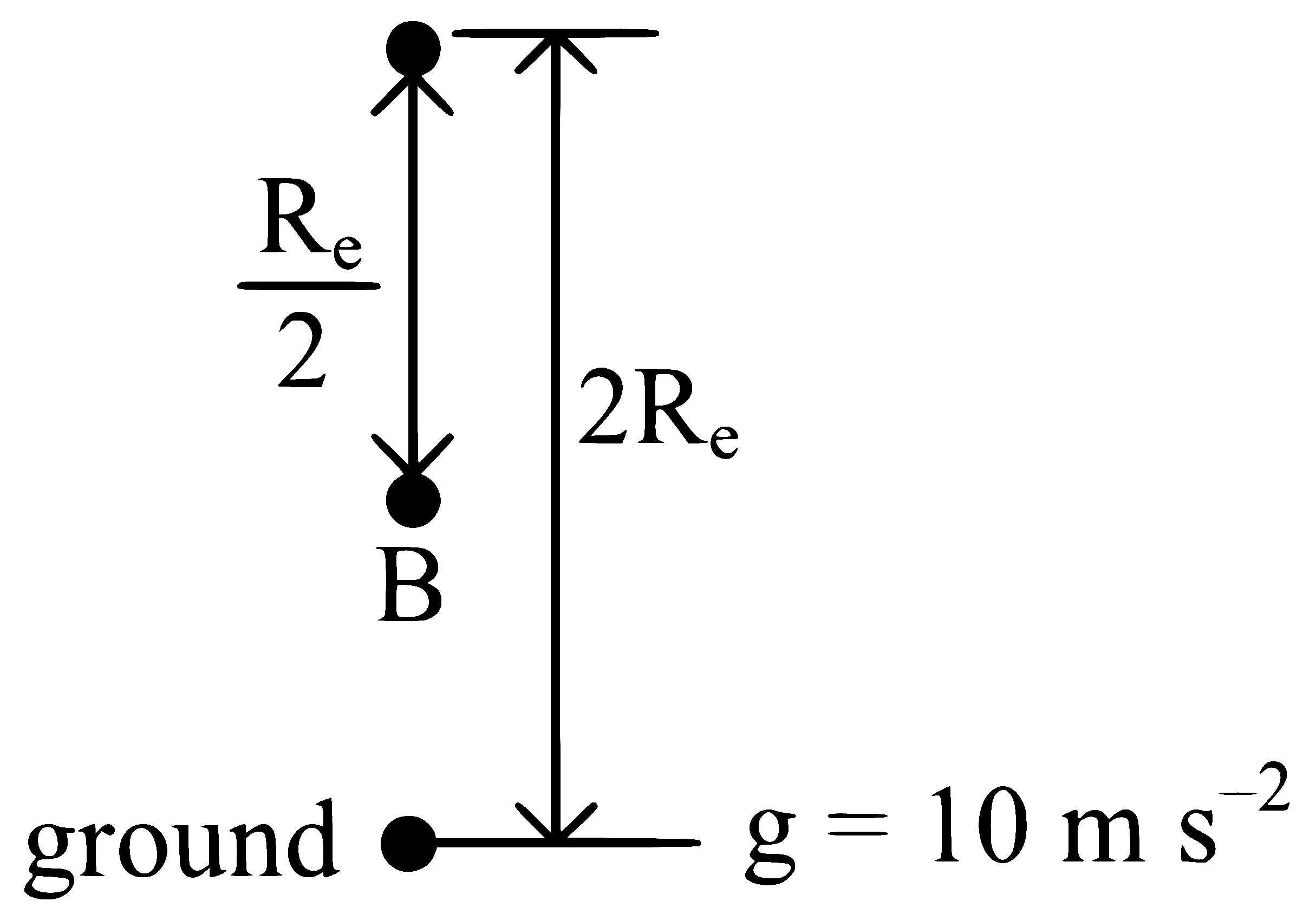
An object of mass falls from point to as shown in figure. The change in its weight, corrected to the nearest integer is ( is the radius of the earth)

NEET 2024 (Re-Examination) Physics - Gravitation Question 6 English

(A)
49 N
(B)
89 N
(C)
5 N
(D)
10 N
(A)

Solution

At

At

Change in weight

Q.13

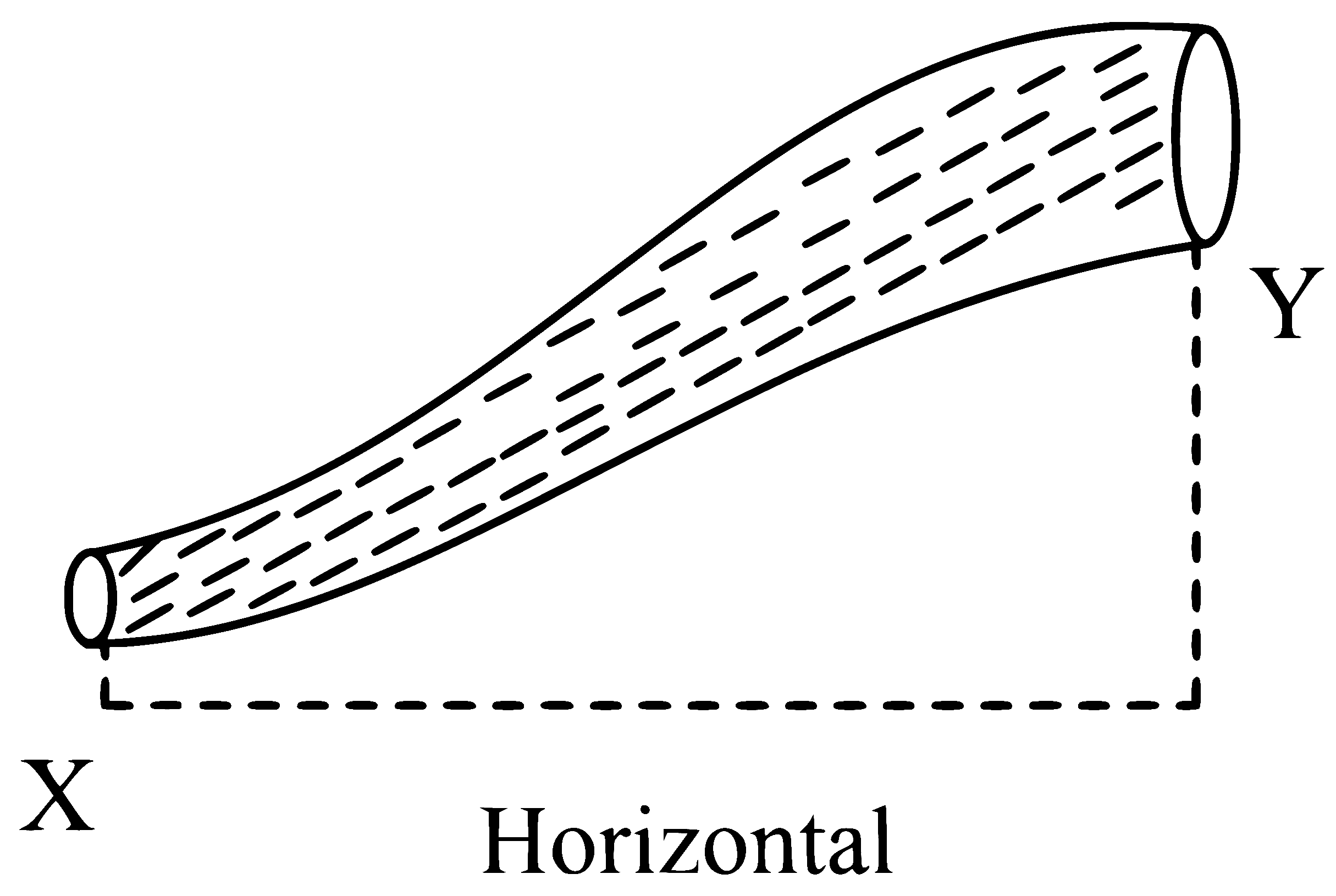
An ideal fluid is flowing in a non-uniform cross-sectional tube (as shown in the figure) from end to end . If and are the kinetic energy per unit volume of the fluid at and respectively, then the correct option is :

NEET 2024 (Re-Examination) Physics - Properties of Matter Question 6 English

(A)
(B)
(C)
(D)
(C)

Solution

According to Bernoulli's principle,

Kinetic energy per unit volume + Potential energy per unit volume + Pressure Constant

Apply Bernoulli's principle at point and ,

Q.14

Given below are two statements: One is labelled as Assertion and the other is labelled as Reason .

Assertion A: Houses made of concrete roofs overlaid with foam keep the room hotter during summer.

Reason R: The layer of foam insulation prohibits heat transfer, as it contains air pockets.

In the light of the above statements, choose the correct answer from the options given below.

(A)
A is true but R is false.
(B)
A is false but R is true.
(C)
Both A and R are true and R is the correct explanation of A.
(D)
Both A and R true but R is NOT the correct explanation of A.
(B)

Solution

Let's analyze the given statements to determine the correct answer.

Assertion : Houses made of concrete roofs overlaid with foam keep the room hotter during summer.

Reason : The layer of foam insulation prohibits heat transfer, as it contains air pockets.

Explanation:

Foam insulation generally acts as an effective thermal barrier because it contains numerous air pockets that impede heat transfer. The primary function of foam insulation is to reduce the amount of heat that penetrates into or escapes from a building, thereby maintaining a more constant internal temperature. If a house has a concrete roof overlaid with foam, the foam will work to keep the interior cooler in summer by prohibiting the transfer of heat from the outside into the room. Hence, the foam insulation should actually help in keeping rooms cooler during summer, not hotter.

Therefore, the Assertion is false because foam insulation typically helps in keeping rooms cooler during summer. Meanwhile, the Reason is true because air pockets within the foam insulation impede heat transfer.

Based on this analysis, the correct option is:

Option B: A is false but R is true.

Q.15

The equilibrium state of a thermodynamic system is described by

A. Pressure

B. Total heat

C. Temperature

D. Volume

E. Work done

Choose the most appropriate answer from the options given below.

(A)
A, B and E only
(B)
B, C and D only
(C)
A, B and C only
(D)
A, C and D only
(D)

Solution

The correct answer is Option D: A, C and D only. Here's why:

The equilibrium state of a thermodynamic system is defined by a set of conditions where the system is in a stable, unchanging state. These conditions include:

  • Pressure (A): A measure of the force exerted by the system per unit area. At equilibrium, the pressure within the system is constant and uniform.
  • Temperature (C): A measure of the average kinetic energy of the particles within the system. At equilibrium, the temperature throughout the system is constant and uniform.
  • Volume (D): The amount of space occupied by the system. At equilibrium, the volume remains constant unless external forces act upon the system.

Let's examine why the other options are incorrect:

  • Total heat (B): While heat transfer can occur during a process, the total heat content of a system is not a defining characteristic of its equilibrium state. Equilibrium is about the absence of net change, not the total amount of energy present.
  • Work done (E): Work is a process, not a state variable. It describes the energy transfer during a change in the system, not its equilibrium condition.

In summary, pressure, temperature, and volume are the key state variables that define the equilibrium state of a thermodynamic system because they are constant and uniform under these conditions.

Q.16

According to the law of equipartition of energy, the number of vibrational modes of a polyatomic gas of constant is ( where are the specific heat capacities of the gas at constant pressure and constant volume, respectively):

(A)
(B)
(C)
(D)
(C)

Solution

A polygamic gas has 3 translational, 3 rotational and vibration modes

Q.17

A particle executing simple harmonic motion with amplitude A has the same potential and kinetic energies at the displacement

(A)
(B)
(C)
(D)
(C)

Solution

In simple harmonic motion (SHM), the total mechanical energy of the system is conserved and is a combination of kinetic energy (KE) and potential energy (PE). The total energy (E) of the particle can be expressed as:

where is the spring constant, and is the amplitude of motion.

At a displacement , the potential energy (PE) and kinetic energy (KE) of the particle are given by:

We need to find the displacement where the potential and kinetic energies are equal. This implies:

Thus, we get:

By simplifying, we get:

Adding to both sides:

Now, solving for :

Therefore, the displacement at which the potential and kinetic energies are equal is:

Option C:

Q.18

The two-dimensional motion of a particle, described by is a/an:

A. parabolic path

B. elliptical path

C. periodic motion

D. simple harmonic motion

Choose the correct answer from the options given below:

(A)
B, C and D only
(B)
A, B and C only
(C)
A, C and D only
(D)
C and D only
(D)

Solution

The path is straight line.

The motion is SHM and periodic as

Q.19

The displacement of a travelling wave (at ) where is time, is distance and is the wavelength, all in S.I. units. Then the frequency of the wave is

(A)
(B)
(C)
(D)
(D)

Solution

To find the frequency of the wave, we need to start by analyzing the given displacement equation of the wave:

Where:

  • is the displacement of the wave
  • is the amplitude
  • is the wave number (denoting how many wavelengths fit into a unit length)
  • is the wavelength
  • is some constant (likely representing the speed of the wave)
  • is time
  • is the distance

By comparing with the standard form of a travelling wave, we have:

Where is the wave number:

From the standard wave equation, the argument of the sine function is usually written as:

This implies that in the wave equation represents the angular frequency of the wave:

Substituting into :

Angular frequency is related to the frequency by:

So:

Solving for the frequency :

Therefore, the correct answer is:

Option D:

Q.20

A metal cube of side is charged with . The surface charge density on the cube is

(A)
(B)
(C)
(D)
(D)

Solution

To find the surface charge density of a charged metal cube, we need to determine the charge per unit area. The surface charge density, denoted by , is given by:

where:

  • is the total charge on the cube
  • is the total surface area of the cube

The cube has a side length of , so each side of the cube is . Since 1 cm = 0.01 m, the side length in meters is:

The cube has 6 faces, and the area of one face is given by:

Therefore, the total surface area of the cube is:

The total charge, , is given as . Converting this to Coulombs:

Now, plugging the values into the formula for surface charge density:

Therefore, the surface charge density on the cube is:

So, the correct answer is:

Option D:

Q.21

The value of electric potential at a distance of from the point charge is [Given ] :

(A)
(B)
(C)
(D)
(D)

Solution

The electric potential (V) at a distance (r) from a point charge (q) is given by:

where is Coulomb's constant.

In this case, we have:

Substituting these values into the equation for electric potential, we get:

Therefore, the value of electric potential at a distance of from the point charge is .

The correct answer is Option D.

Q.22

A uniform wire of diameter carries a current of when the mean drift velocity of electrons in the wire is . For a wire of diameter of the same material to carry a current of , the mean drift velocity of electrons in the wire is

(A)
(B)
(C)
(D)
(B)

Solution

To solve this problem, we need to understand the relationship between the current, the drift velocity, and the cross-sectional area of the wire. The electric current in a wire is given by

where:

  • is the number density of electrons,
  • is the charge of an electron,
  • is the cross-sectional area of the wire, and
  • is the mean drift velocity of the electrons.

Let's denote the current in the thicker wire as and the current in the thinner wire as .

The diameter of the thicker wire is , so its cross-sectional area, , is

For the thinner wire, the diameter is , so its cross-sectional area, , is

Using the relation for current in the thicker wire, we have

Let the mean drift velocity in the thinner wire be denoted by . For the thinner wire:

Now, we can equate the expressions for current and solve for :

From the equation for the thicker wire:

Dividing the two equations, we get

Thus,

The mean drift velocity of electrons in the thinner wire is 8 times the mean drift velocity in the thicker wire. Therefore, the correct option is:

Option B:

Q.23

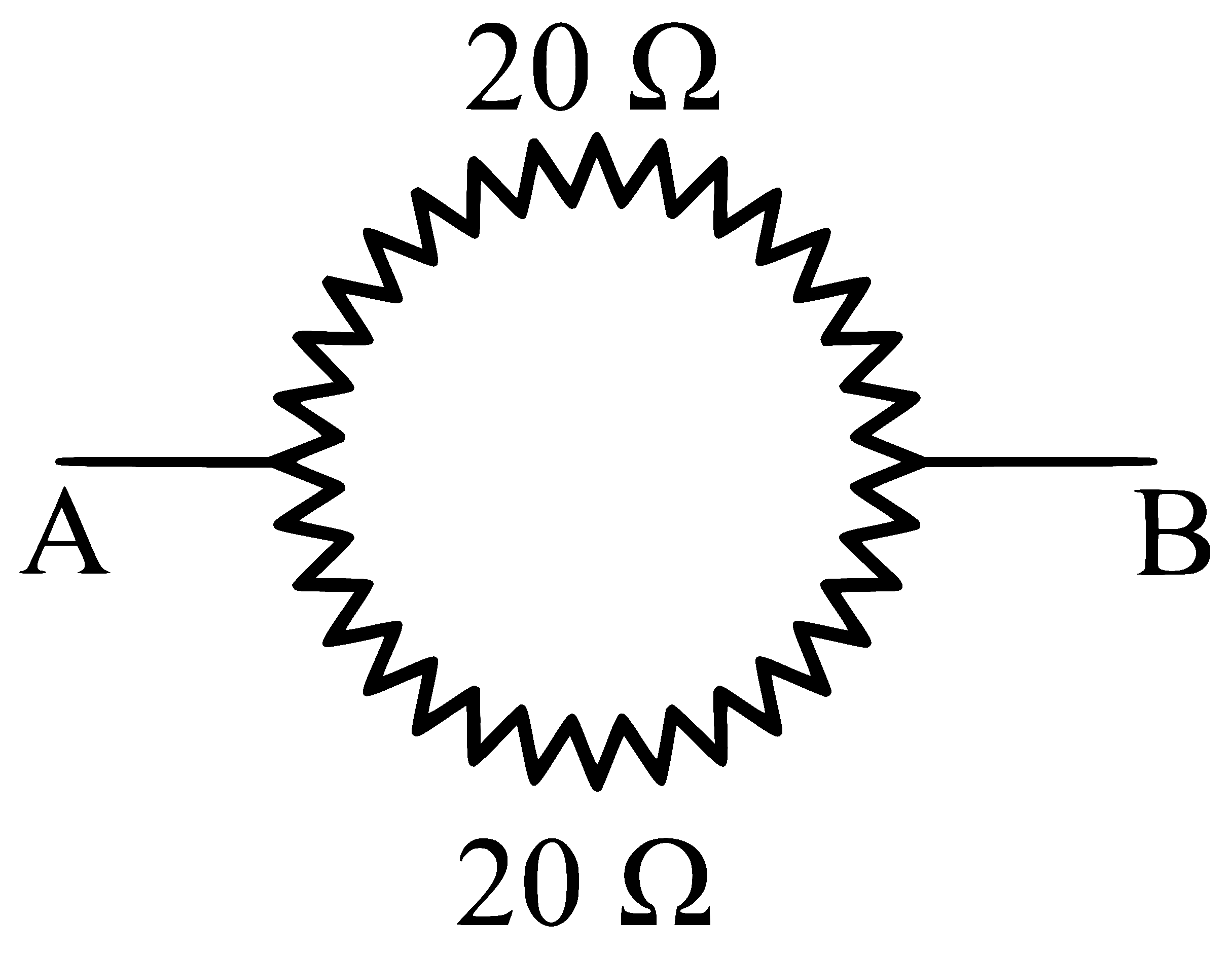
A uniform metal wire of length has resistance. Now this wire is stretched to a length and then bent to form a perfect circle. The equivalent resistance across any arbitrary diameter of that circle is

(A)
(B)
(C)
(D)
(A)

Solution

After stretching its length upto

NEET 2024 (Re-Examination) Physics - Current Electricity Question 10 English Explanation

Q.24

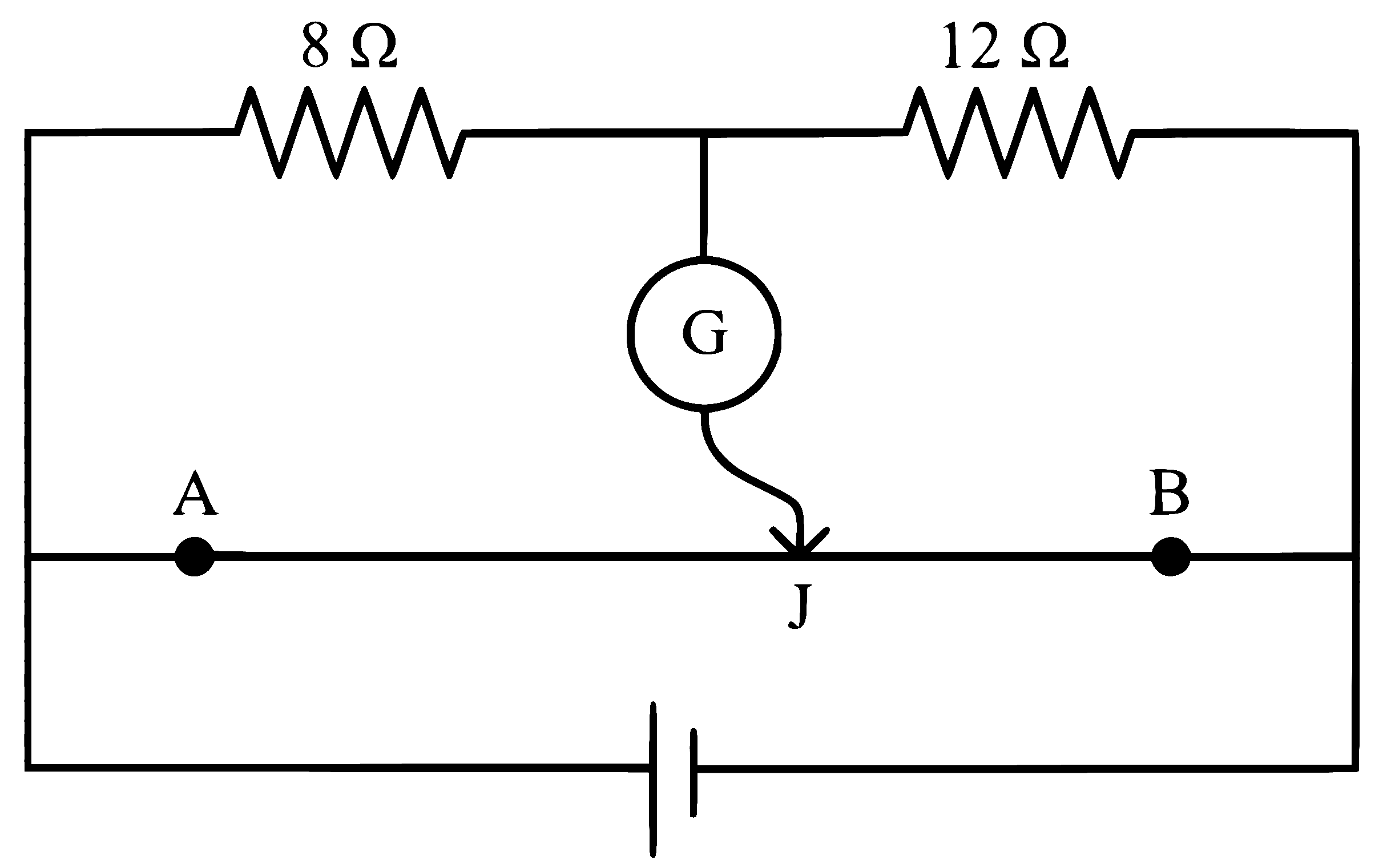
The given circuit shows a uniform straight wire of length fixed at both ends. In order to get zero reading in the galvanometer , the free end of is to be placed from at:

NEET 2024 (Re-Examination) Physics - Current Electricity Question 11 English

(A)
32 cm
(B)
8 cm
(C)
16 cm
(D)
24 cm
(D)

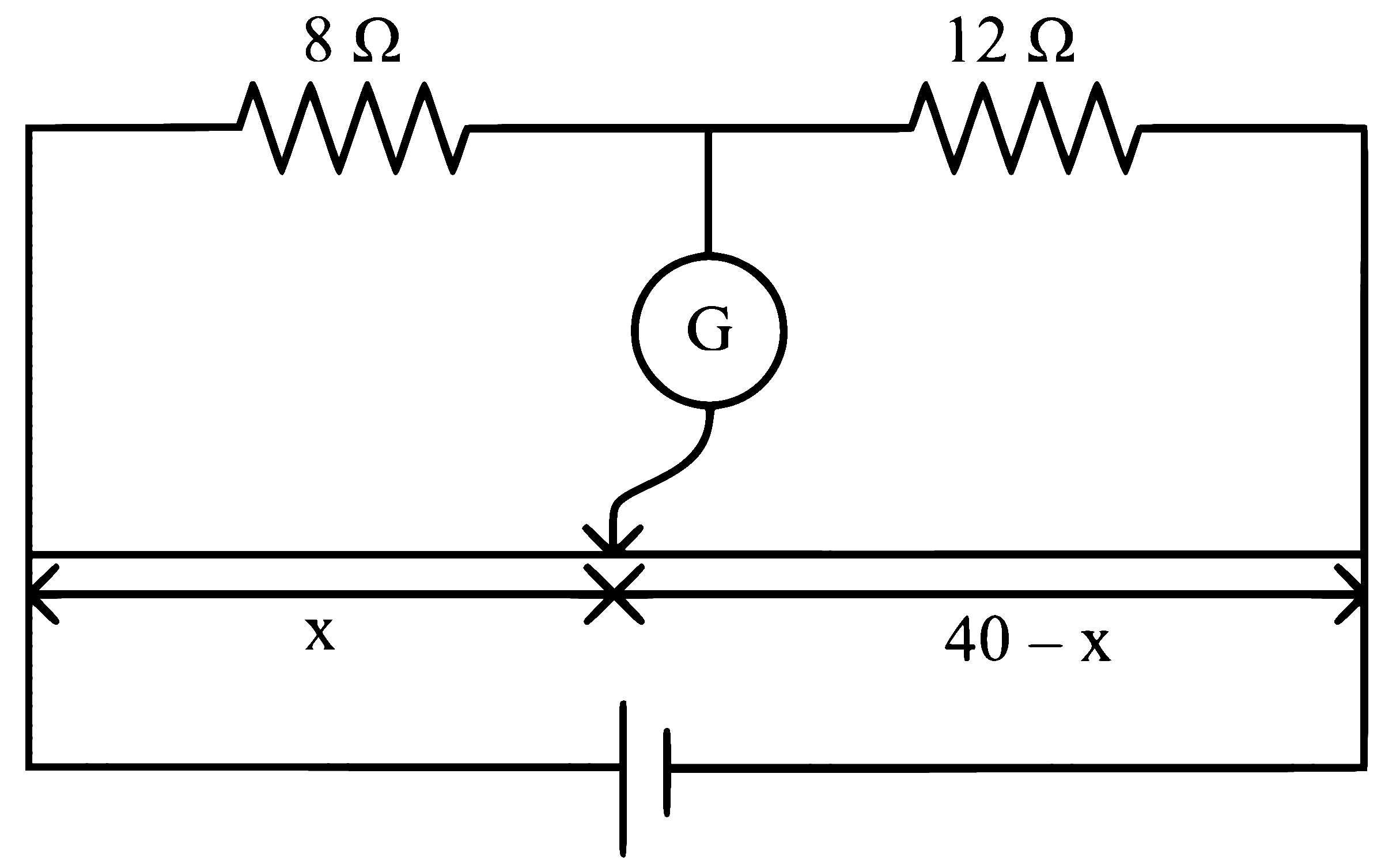
Solution

NEET 2024 (Re-Examination) Physics - Current Electricity Question 11 English Explanation

from

Q.25

A capacitor is connected to a battery, the electrostatic energy stored in the capacitor in is

(A)
15
(B)
7.5
(C)
0.3
(D)
150
(A)

Solution

The electrostatic energy stored in a capacitor can be calculated using the formula:

Where:

  • is the stored energy in joules (J)
  • is the capacitance in farads (F)
  • is the voltage in volts (V)

Given:

  • (which is F)

Substitute the values into the formula:

Calculate the values inside the parentheses first:

Now substitute this back into the equation:

Perform the multiplication:

Which simplifies to:

Convert this to nanojoules (nJ) by recognizing that :

Thus, the electrostatic energy stored in the capacitor is:

Option A: 15 nJ

Q.26

The capacitance of a capacitor with charge and a potential difference depends on

(A)
both and
(B)
the geometry of the capacitor
(C)
only
(D)
only
(B)

Solution

The correct answer is Option B: the geometry of the capacitor. Here's why:

Capacitance (denoted by *C*) is a fundamental property of a capacitor that describes its ability to store electrical energy. It's defined by the ratio of the charge stored on the capacitor (q) to the potential difference across its plates (V):

While the formula seems to suggest that capacitance depends on both charge and voltage, the reality is that the geometry of the capacitor determines its capacitance. Here's a breakdown:

  • Charge (q): The charge stored on a capacitor is directly proportional to the applied voltage. If you increase the voltage, you increase the charge stored. However, the capacitance itself remains constant for a given capacitor.

  • Voltage (V): Similarly, the voltage across a capacitor is directly proportional to the charge stored. Increasing the charge increases the voltage, but again, the capacitance remains unchanged.

  • Geometry: The geometry of a capacitor dictates how much electric field is created between its plates for a given charge. This electric field determines the potential difference between the plates. Here are some key factors:

    • Area of plates (A): Larger plates can hold more charge for a given voltage, resulting in higher capacitance.

    • Distance between plates (d): Smaller distances between plates create a stronger electric field, which leads to higher capacitance.

    • Dielectric material: The material between the plates (dielectric) affects the strength of the electric field and therefore the capacitance. A material with a higher dielectric constant increases the capacitance.

In summary, while charge and voltage are related to capacitance through the formula, they are not the determining factors. It's the capacitor's physical characteristics – its geometry – that ultimately determine its capacitance.

Q.27

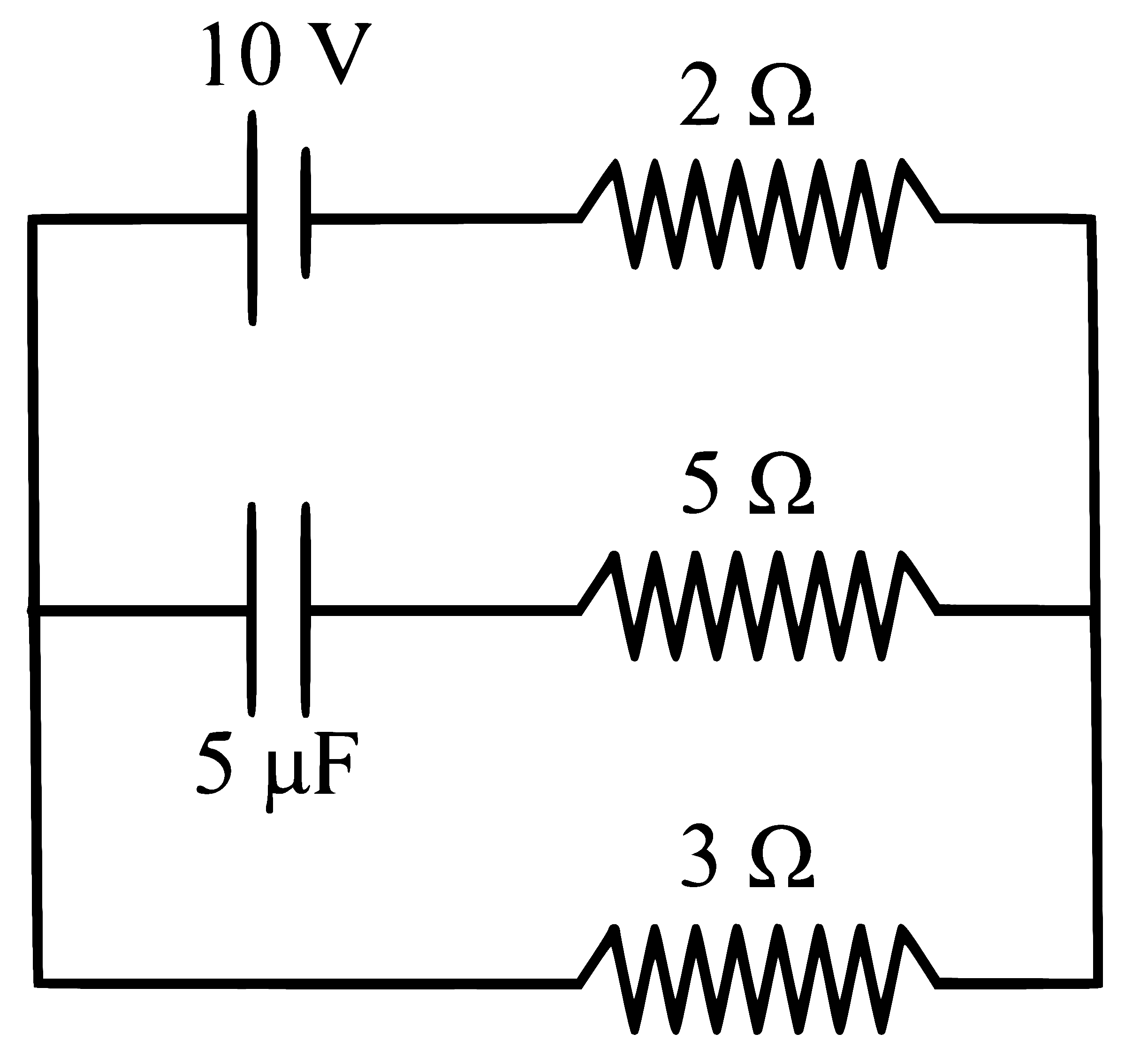
The steady state current in the circuit shown below is :

NEET 2024 (Re-Examination) Physics - Capacitor Question 5 English

(A)
0.67 A
(B)
1.5 A
(C)
2 A
(D)
1 A
(C)

Solution

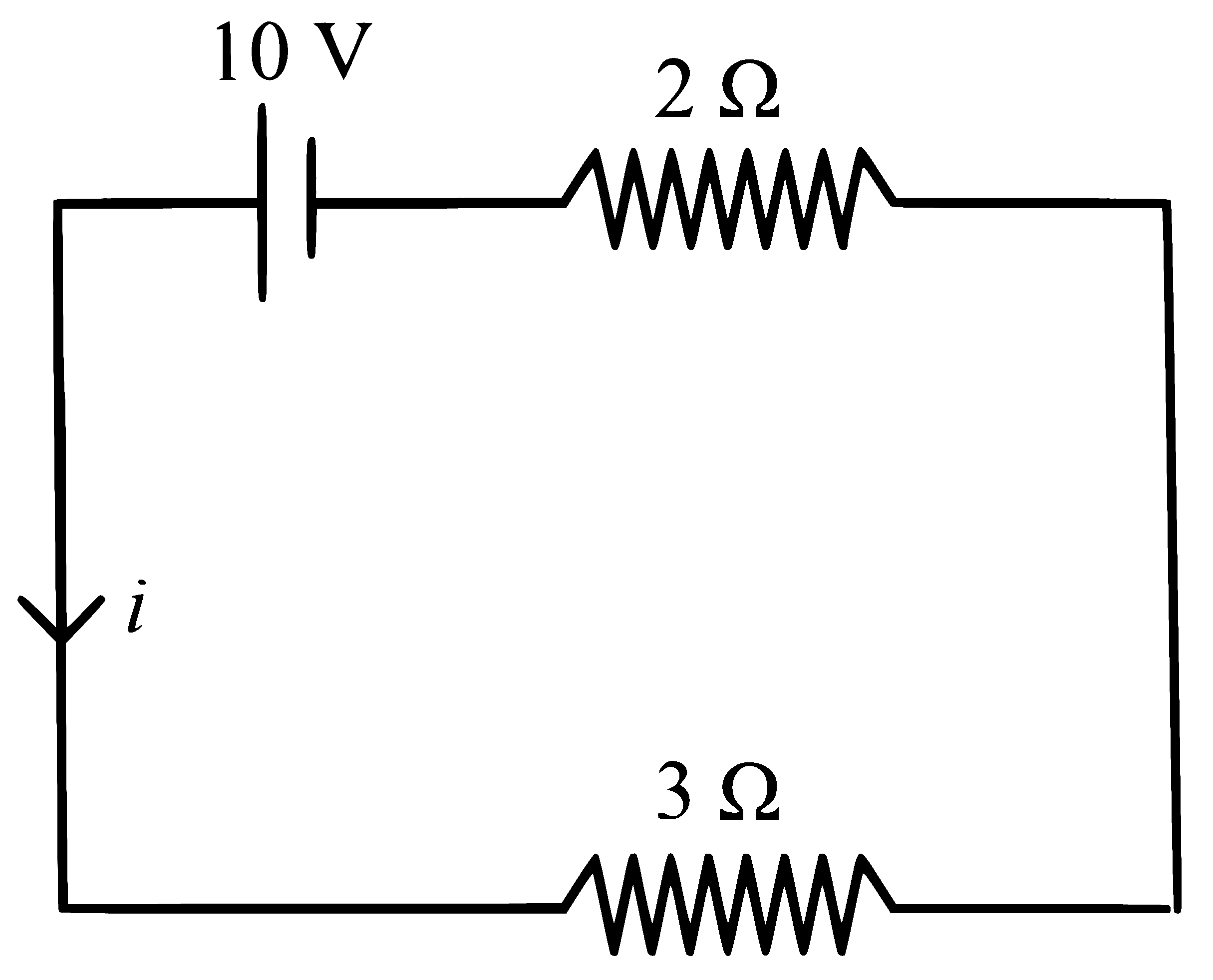
At steady state, capacitor will be completely charged and will not allow current to pass through it. The simplified circuit will be :

NEET 2024 (Re-Examination) Physics - Capacitor Question 5 English Explanation

Q.28

The magnetic potential energy, when a magnetic bar of magnetic moment is placed perpendicular to the magnetic field is

(A)
(B)
Zero
(C)
(D)
(B)

Solution

The magnetic potential energy of a magnetic dipole moment in a magnetic field is given by the formula:

Here, the dot product represents the scalar product of the vectors. When the magnetic moment is placed perpendicular to the magnetic field , the angle between these two vectors is 90 degrees. The dot product in this case can be written as:

Since , we have . Therefore, the magnetic potential energy becomes:

So, the magnetic potential energy when a magnetic bar of magnetic moment is placed perpendicular to the magnetic field is zero.

The correct answer is: Option B "Zero".
Q.29

The incorrect relation for a diamagnetic material (all the symbols carry their usual meaning and is a small positive number) is

(A)
(B)
(C)
(D)
(D)

Solution

For diamagnetic material,

Q.30

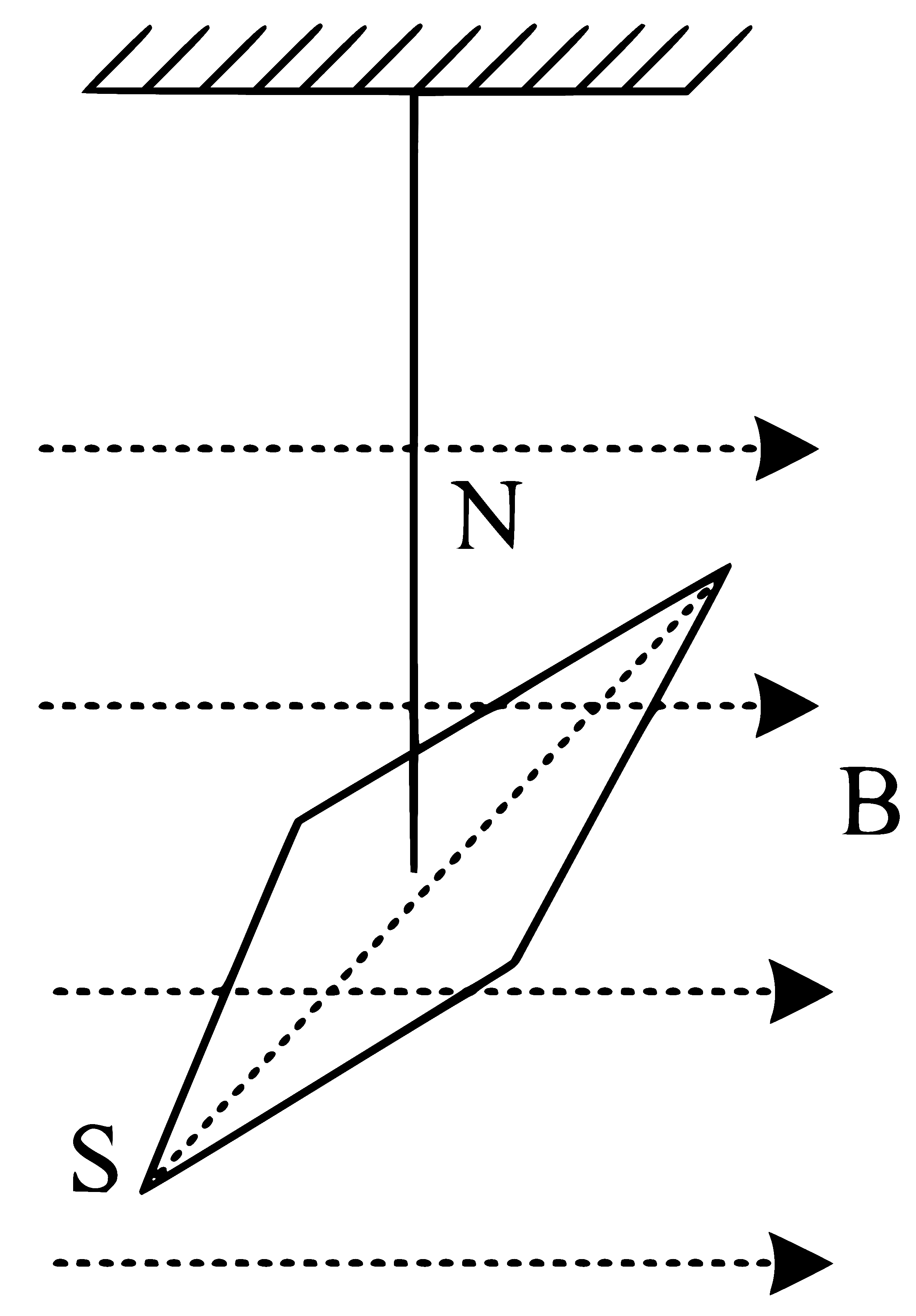
The magnetic moment and moment of inertia of a magnetic needle as shown are, respectively, and . If it completes 10 oscillations in , the magnitude of the magnetic field is

NEET 2024 (Re-Examination) Physics - Magnetism and Matter Question 2 English

(A)
0.4 T
(B)
4 T
(C)
0.4 mT
(D)
4 mT
(C)

Solution

Time period of oscillation of magnet inside the magnetic field

Q.31

The magnetic moment of an iron bar is . It is now bent in such a way that it forms an arc section of a circle subtending an angle of at the centre. The magnetic moment of this arc section is

(A)
(B)
(C)
(D)
(A)

Solution

NEET 2024 (Re-Examination) Physics - Magnetism and Matter Question 1 English Explanation

Q.32

Let us consider two solenoids and , made from same magnetic material of relative permeability and equal area of cross-section. Length of is twice that of and the number of turns per unit length in is half that of . The ratio of self inductances of the two solenoids, is

(A)
(B)
(C)
(D)
(A)

Solution

Q.33

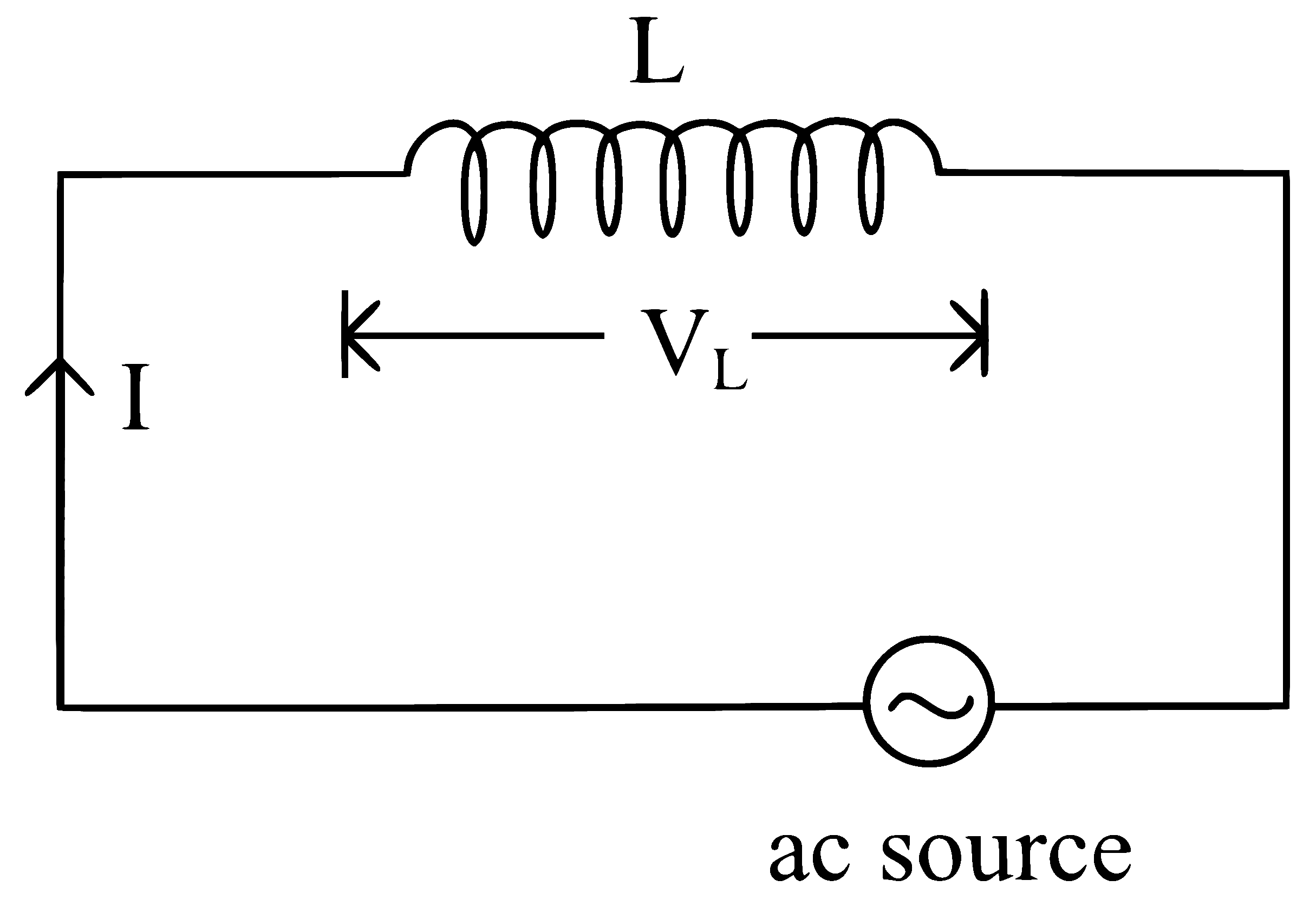
In the circuit shown below, the inductance is connected to an ac source. The current flowing in the circuit is . The voltage drop across is

NEET 2024 (Re-Examination) Physics - Alternating Current Question 5 English

(A)
(B)
(C)
(D)
(D)

Solution

leads current by

Q.34

A step up transformer is connected to an ac mains supply of to operate at watt. The current in the secondary circuit, ignoring the power loss in the transformer, is

(A)
8 mA
(B)
4 mA
(C)
0.4 A
(D)
4 A
(A)

Solution

Let's analyze the problem step by step. We are given a step-up transformer with the following specifications:

Primary Voltage (Vp) =
Secondary Voltage (Vs) =
Power (P) = watt

The power input to the transformer is equal to the power output, assuming there is no loss in the transformer.

Hence,

The power equations can be written as:


Given the power in the secondary winding is and the secondary voltage is , we can find the secondary current using the formula:

Rearranging to solve for gives:

Substituting the given values:

Simplifying this expression:


Therefore, the current in the secondary circuit, ignoring the power loss in the transformer, is 8 mA.

The correct option is Option A: 8 mA.

Q.35

The amplitude of the charge oscillating in a circuit decreases exponentially as , where is the charge at . The time at which charge amplitude decreases to is nearly:

[Given that ]

(A)
19.01 ms
(B)
11.09 ms
(C)
19.01 s
(D)
11.09 s
(B)

Solution

The given equation for the amplitude of the charge oscillating in a circuit is:

We need to find the time, , at which charge amplitude decreases to . So, we set :

Divide both sides by :

Take the natural logarithm on both sides to solve for :

Recall that . Substituting the given value , we get:

Remove the negative signs from both sides:

Now, solve for :

Substituting the given values and , we have:

Calculate the numerator and denominator:

Finally, compute the value of :

Therefore, the time at which the charge amplitude decreases to is nearly 11.09 ms. Thus, the correct answer is:

Option B: 11.09 ms

Q.36

The electromagnetic radiation which has the smallest wavelength are

(A)
X-rays
(B)
Gamma rays
(C)
Ultraviolet rays
(D)
Microwaves
(B)

Solution

The electromagnetic radiation with the smallest wavelength among the given options is Gamma rays.

Let's go through each option to understand more clearly:

Option A: X-rays

X-rays have very short wavelengths, typically in the range of 0.01 to 10 nanometers. They are used for medical imaging and other applications due to their ability to penetrate materials.

Option B: Gamma rays

Gamma rays have the smallest wavelengths of all electromagnetic radiation, often less than 0.01 nanometers (or 0.1 angstroms). They are highly energetic and are produced by nuclear reactions, radioactive decay, and other high-energy processes.

Option C: Ultraviolet rays

Ultraviolet (UV) rays have wavelengths ranging from about 10 to 400 nanometers. They are responsible for causing sunburns and are used in various scientific and industrial applications.

Option D: Microwaves

Microwaves have much longer wavelengths, typically ranging from 1 millimeter to 1 meter. They are commonly used in communication technologies and for heating food in microwave ovens.

Based on these explanations, the correct answer is:

Option B: Gamma rays

Q.37

If the ratio of relative permeability and relative permittivity of a uniform medium is . The ratio of the magnitudes of electric field intensity to the magnetic field intensity of an EM wave propagating in that medium is (Given that ):

(A)
(B)
(C)
(D)
(C)

Solution

Q.38

Given below are two statements:

Statement I : Image formation needs regular reflection and/or refraction.

Statement II : The variety in colour of objects we see around us is due to the constituent colours of the light incident on them.

In the light of the above statements, choose the most appropriate answer from the options given below :

(A)
Statement I is correct but statement II is incorrect
(B)
Statement I is incorrect but Statement II is correct
(C)
Both Statement I and Statement II are correct
(D)
Both Statement I and Statement II are incorrect
(C)

Solution

The correct answer is Option C: Both Statement I and Statement II are correct.

Here's why:

Statement I: Image formation needs regular reflection and/or refraction.

This statement is correct. Image formation relies on the interaction of light with surfaces. Here's how:

  • Regular Reflection: This occurs when parallel rays of light strike a smooth surface and reflect back in a parallel manner. Mirrors are a prime example of regular reflection. This type of reflection allows for clear, focused images.

  • Refraction: This occurs when light passes from one medium to another (like from air to water or air to glass). The change in speed causes the light to bend, resulting in image formation. This is how lenses in cameras, telescopes, and our own eyes work.

Statement II: The variety in colour of objects we see around us is due to the constituent colours of the light incident on them.

This statement is also correct. The colors we perceive are based on the interaction between light and objects:

  • White Light: Sunlight or light from a bulb contains all the colors of the rainbow (the visible spectrum).

  • Selective Absorption: Objects absorb certain colors of light and reflect others. For instance, a red apple absorbs most colors except red, which it reflects back to our eyes.

  • Pigments: Many objects, especially those we paint or dye, contain pigments that absorb specific colors and reflect others.

In summary, both statements are essential to understanding how we see images and perceive colors.

Q.39

Two slits in Young's double slit experiment are apart and the screen is placed at a distance of from the slits. If the wavelength of light used is then the fringe separation is

(A)
(B)
(C)
(D)
(D)

Solution

To find the fringe separation (also known as fringe width) in Young's double slit experiment, we use the formula:

where:

is the fringe width (fringe separation).

is the wavelength of the light used.

is the distance from the slits to the screen.

is the distance between the two slits.

Given values are:

Substituting these values into the formula:

Calculating the value:

Thus, the fringe separation is . The correct answer is:

Option D

Q.40

Interference pattern can be observed due to superposition of the following waves:

A.

B.

C.

D.

Choose the correct answer from the options given below.

(A)
B and C
(B)
B and D
(C)
A and C
(D)
A and B
(C)

Solution

The correct answer is Option C: A and C. Here's why:

Interference occurs when two waves superpose, resulting in a new wave with an amplitude that varies depending on the phase difference between the original waves. Let's analyze the given options:

Option A: y = a sin ωt and Option C: y = a sin (ωt - φ)

These two waves have the same frequency (ω) and amplitude (a), but they differ in phase by φ. This phase difference is crucial for interference. When waves with the same frequency and different phases superpose, they create an interference pattern with alternating regions of constructive and destructive interference.

Option B: y = a sin 2ωt and Option D: y = a sin 3ωt

These waves have different frequencies (2ω and 3ω). While superposition occurs, it doesn't lead to a stable interference pattern. The waves will not consistently reinforce or cancel each other out because their frequencies are not synchronized.

In summary, interference patterns are observed when two waves have the same frequency (or a very small difference in frequency, called "beats") and a phase difference. Options A and C satisfy these conditions, leading to interference.

Q.41

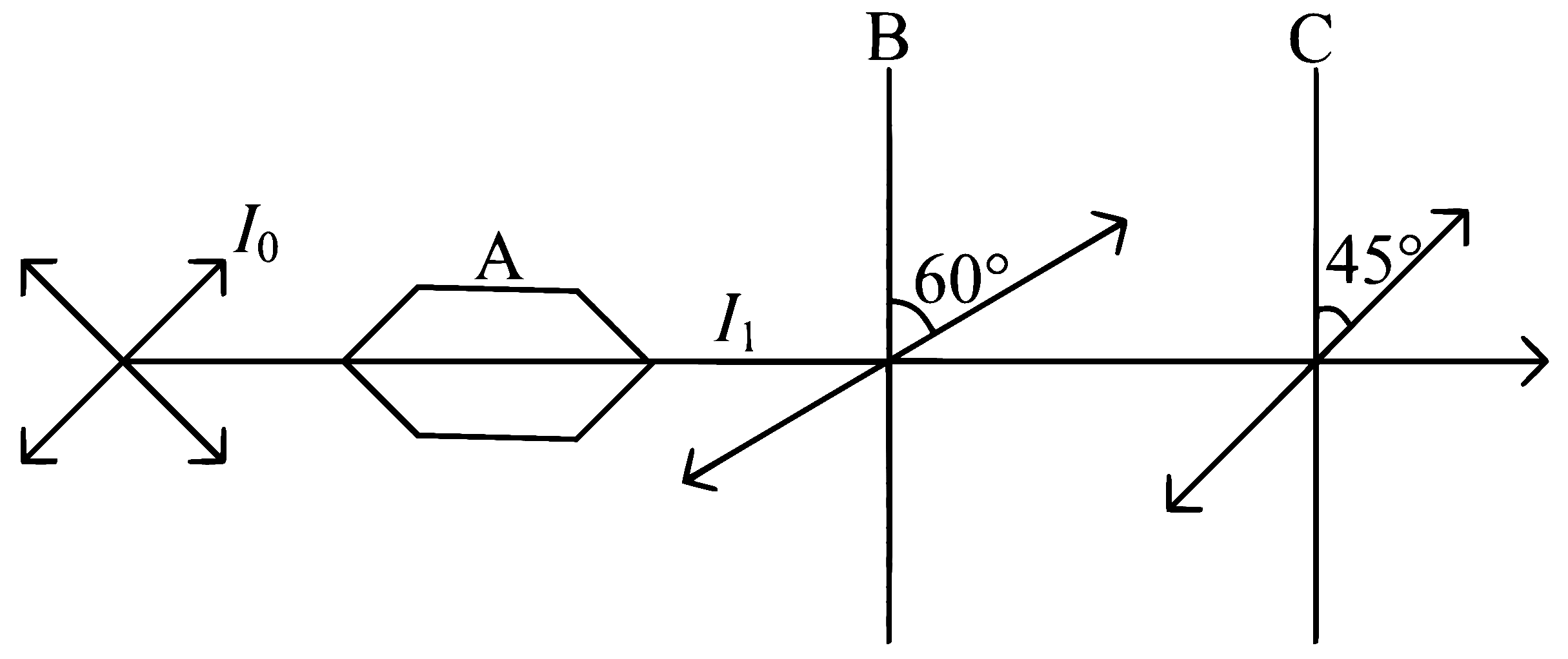
A beam of unpolarized light of intensity I0 is passed through a polaroid A, then through another polaroid B, oriented at and finally through another polaroid C, oriented at 45 relative to B as shown. The intensity of emergent light is:

NEET 2024 (Re-Examination) Physics - Wave Optics Question 5 English

(A)
(B)
(C)
(D)
(A)

Solution

Q.42

The spectral series which corresponds to the electronic transition from the levels to the level is

(A)
Pfund series
(B)
Brackett series
(C)
Lyman series
(D)
Balmer series
(B)

Solution

The spectral series corresponds to groups of wavelengths that are produced when electrons in an atom make transitions between energy levels. Each series is named after the scientist who discovered it and is characterized by the energy level to which the electrons transition.

The transitions to the level define the Brackett series. Electrons that fall to the fourth energy level (from higher levels with ) emit or absorb radiation in the infrared region of the electromagnetic spectrum.

Here's a quick summary of the different spectral series:

  • Pfund series: Transitions to
  • Brackett series: Transitions to
  • Lyman series: Transitions to
  • Balmer series: Transitions to

Therefore, the correct answer is:

Option B: Brackett series

Q.43

Water is used as a coolant in a nuclear reactor because of its

(A)
high thermal expansion coefficient
(B)
high specific heat capacity
(C)
low density
(D)
low boiling point
(B)

Solution

Water is used as a coolant in a nuclear reactor primarily because of its high specific heat capacity. High specific heat capacity means that water can absorb a large amount of heat energy with only a small increase in its own temperature. This property makes water an effective medium for transferring heat away from the reactor core, thereby maintaining safe operational temperatures and preventing overheating.

Therefore, the correct answer is:

Option B: high specific heat capacity

Q.44

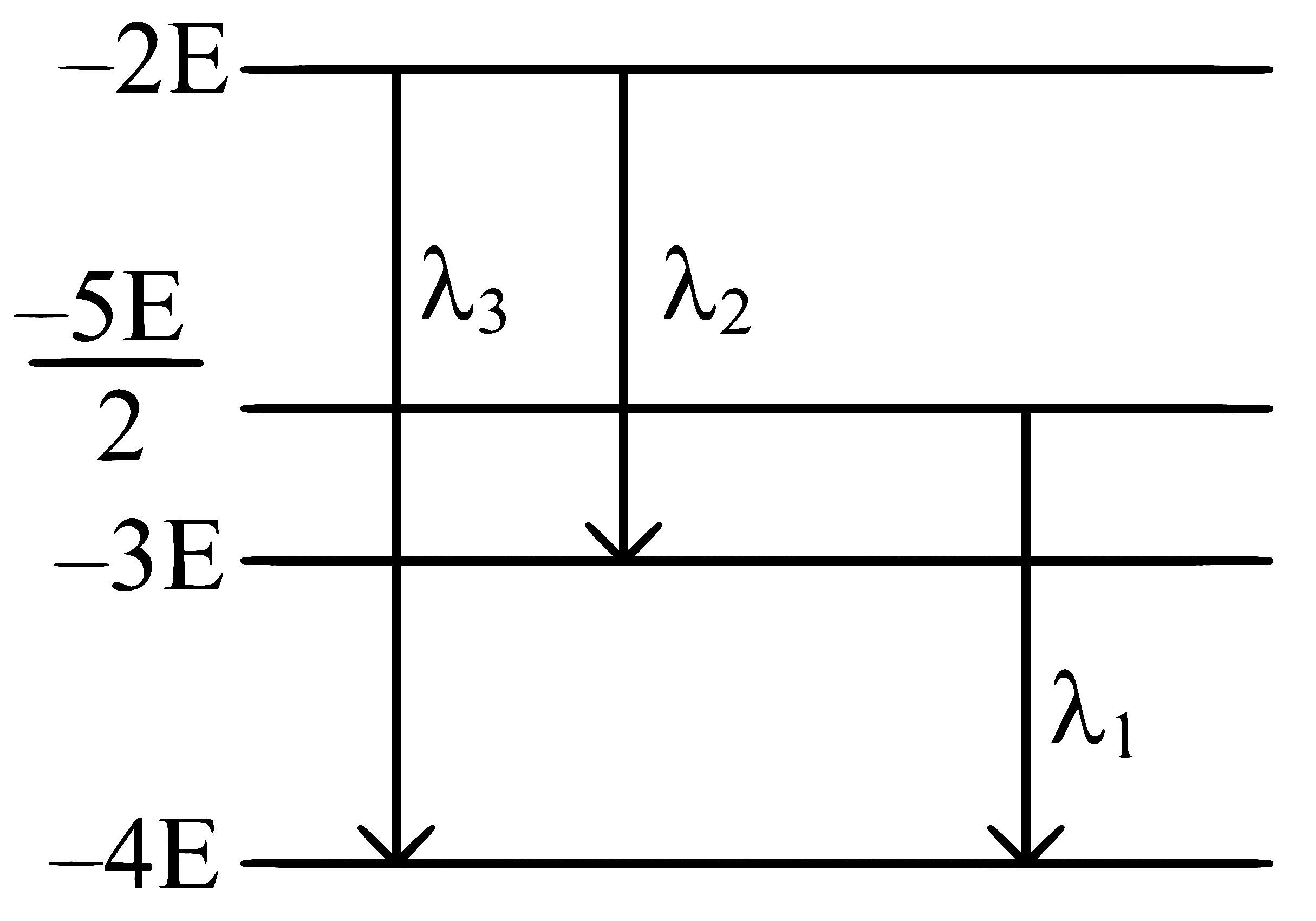
Some energy levels of a molecule are shown in the figure with their wavelengths of transitions. Then :

NEET 2024 (Re-Examination) Physics - Atoms and Nuclei Question 8 English

(A)
(B)
(C)
(D)
(D)

Solution

Comparing (2) and (3)

Comparing (1) and (2)

Q.45

Select the correct statements among the following :

A. Slow neutrons can cause fission in than fast neutrons.

B. -rays are Helium nuclei.

C. -rays are fast moving electrons or positrons.

D. -rays are electromagnetic radiations of wavelengths larger than -rays.

Choose the most appropriate answer from the options given below :

(A)
A, B and C only
(B)
A, B and D only
(C)
A and B only
(D)
C and D only
(A)

Solution

(A) Slow neutron can cause fission in than fast neutrons because fast neutrons are too quick so they scatter of atoms instead of being captured by them

(B) -rays are Helium nuclei, is a true statement

(C) -rays are generated when neutron is converted into proton by releasing electron or proton is converted into neutron by releasing positron.

(D) -rays have higher energies as compared to X-rays. So they have smaller wavelength as compared to X-rays.

Q.46

An electron and an alpha particle are accelerated by the same potential difference. Let and denote the de-Broglie wavelengths of the electron and the alpha particle, respectively, then:

(A)
(B)
(C)
(D)
(A)

Solution

de-Broglie wavelength is given by

For same potential difference

Q.47

If is the work function of photosensitive material in and light of wavelength of numerical value metre, is incident on it with energy above its threshold value at an instant then the maximum kinetic energy of the photo-electron ejected by it at that instant (Take -Plank's constant, -velocity of light in free space) is (in SI units):

(A)
(B)
(C)
(D)
(C)

Solution

The energy of the incident light is given by:

where is Planck's constant, is the speed of light, and is the wavelength of the light. Substituting the given value of , we get:

The maximum kinetic energy of the photoelectron is given by:

where is the work function. Substituting the values, we get:

Therefore, the correct answer is Option C.

Q.48

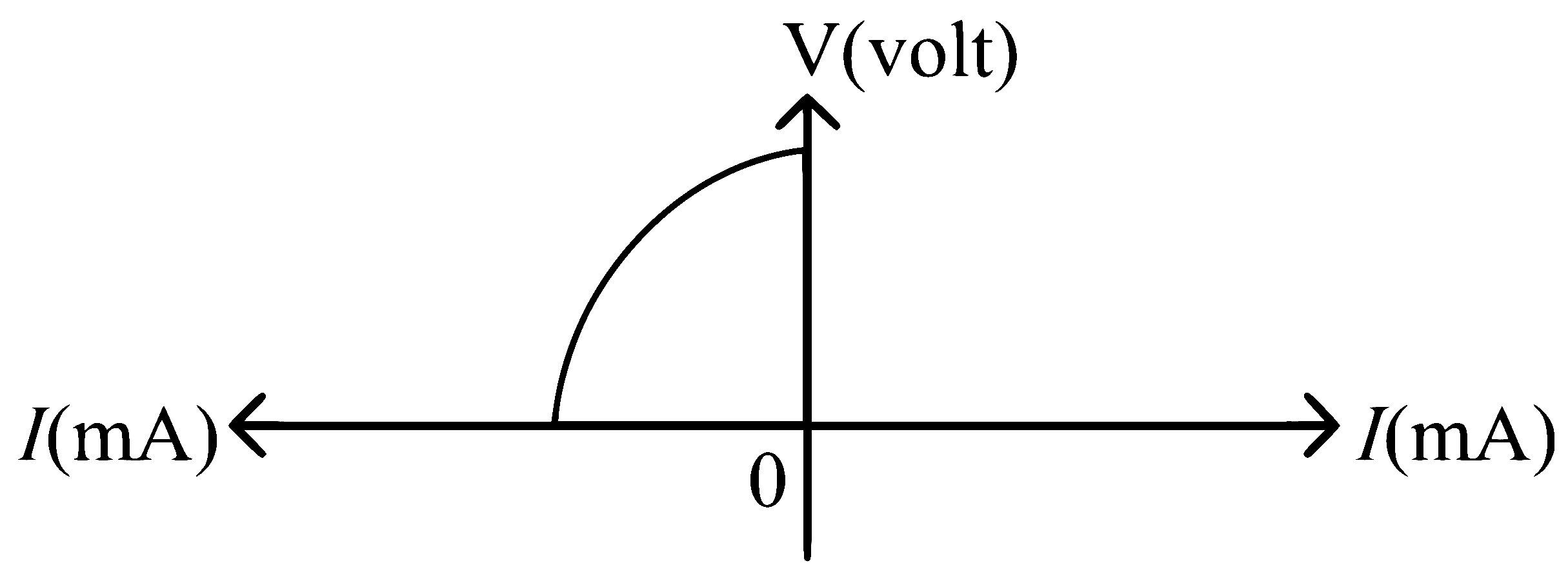
NEET 2024 (Re-Examination) Physics - Semiconductor Electronics Question 9 English

The I-V characteristics shown above are exhibited by a

(A)
Light emitting diode
(B)
Zener diode
(C)
Photodiode
(D)
Solar cell
(D)

Solution

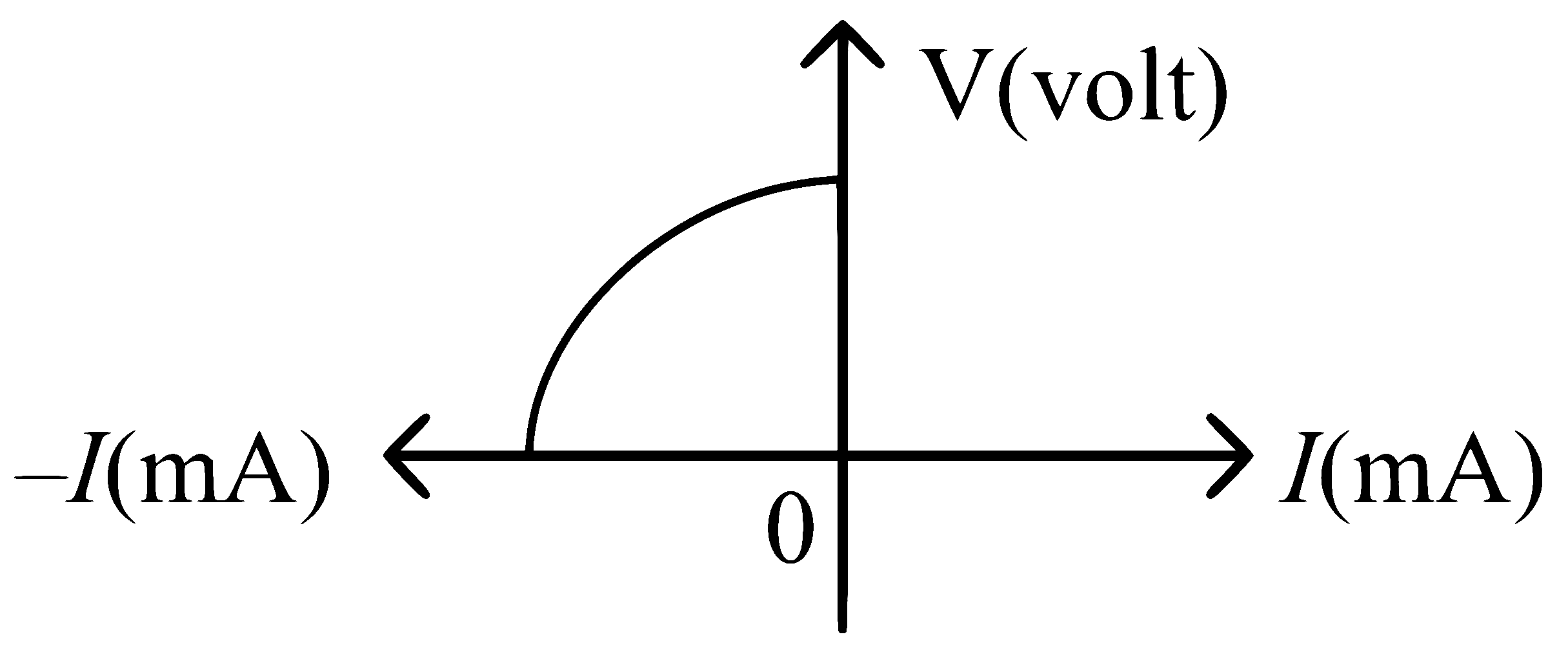
The I-V characteristics of solar cell is

NEET 2024 (Re-Examination) Physics - Semiconductor Electronics Question 9 English Explanation

Q.49

When the output of an OR gate is applied as input to a NOT gate, then the combination acts as a

(A)
NAND gate
(B)
NOR gate
(C)
AND gate
(D)
OR gate
(B)

Solution

When the output of an OR gate is applied as input to a NOT gate, the combination acts as a NOR gate. To understand why, let's examine the behavior of these logic gates.

An OR gate outputs a logic high (1) when at least one of its inputs is high. Mathematically, this can be expressed as:

Where and are the inputs, and is the output of the OR gate.

An OR gate followed by a NOT gate inverts this output. The NOT gate, also known as an inverter, changes a high input to a low output, and vice versa. So the output of the NOT gate can be expressed as:

This is exactly the logic operation performed by a NOR gate. Therefore, this combination of an OR gate followed by a NOT gate behaves as a NOR gate.

So, the correct answer is Option B: NOR gate.

Q.50

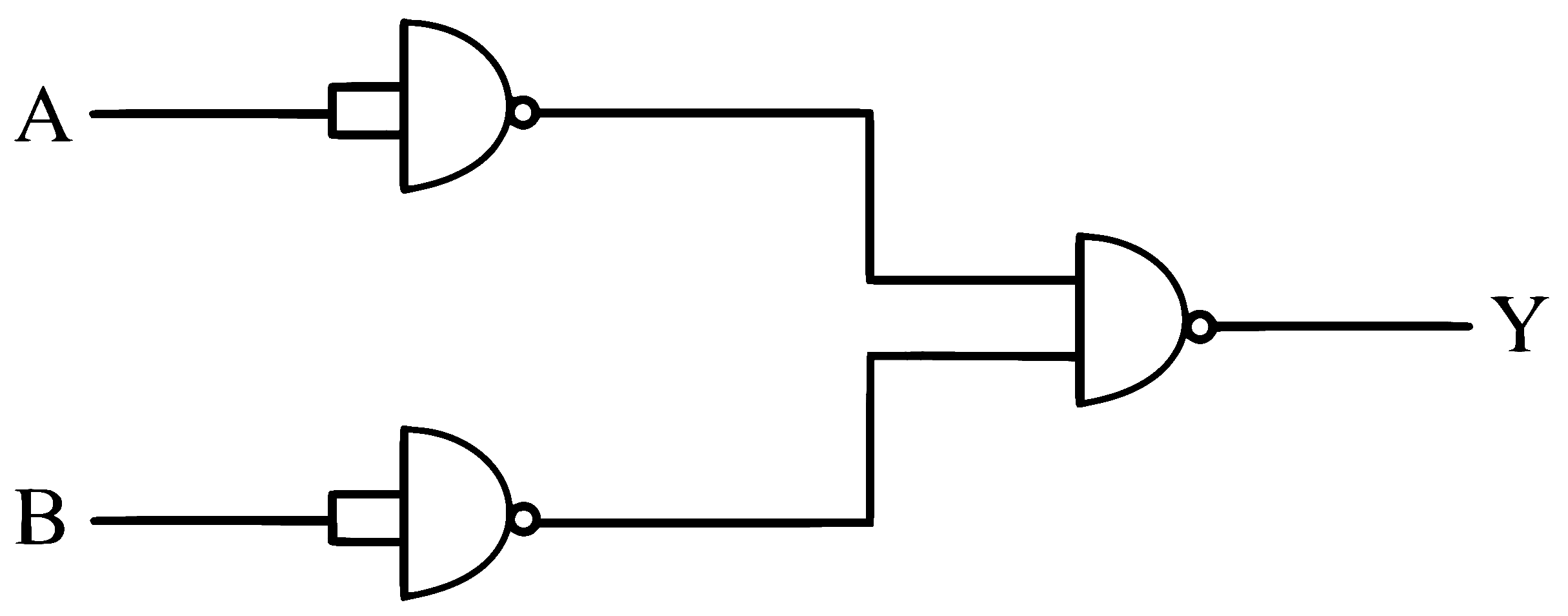
The output Y for the inputs A and B of the given logic circuit is:

NEET 2024 (Re-Examination) Physics - Semiconductor Electronics Question 8 English

(A)
(B)
(C)
(D)
(C)

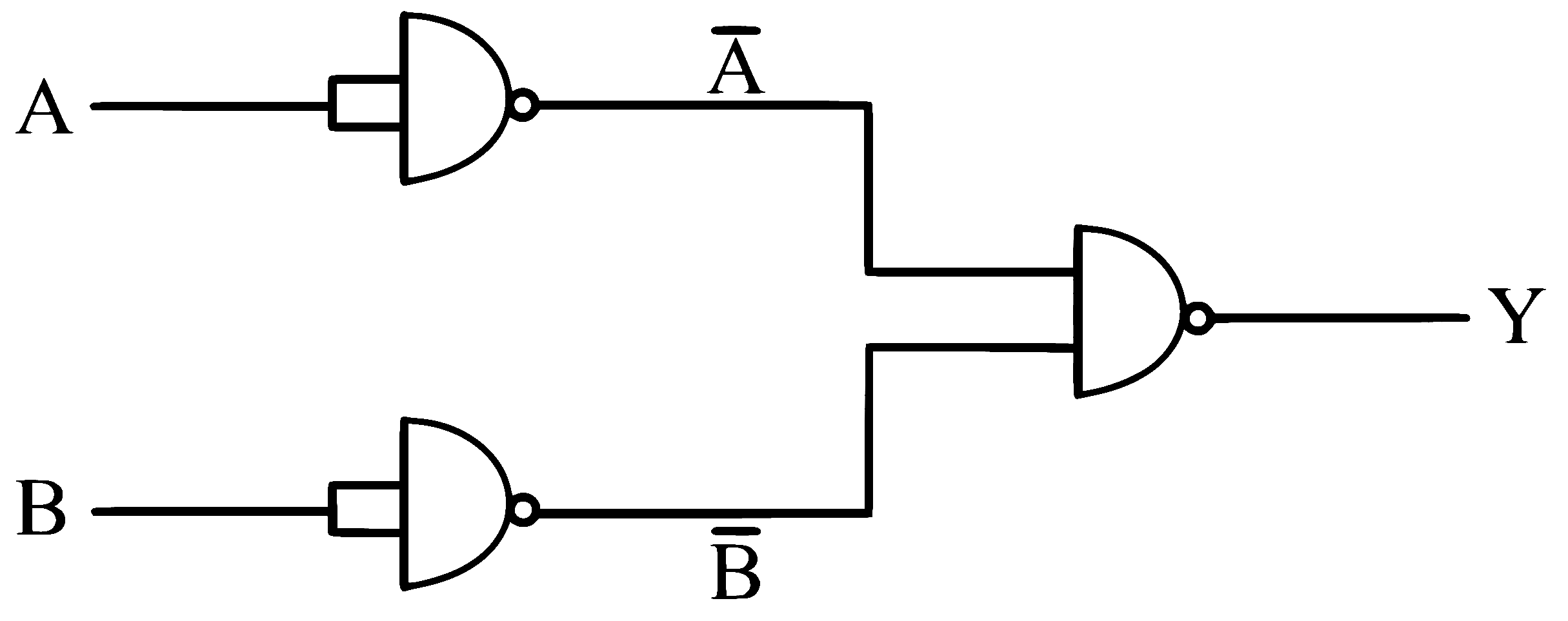
Solution

NEET 2024 (Re-Examination) Physics - Semiconductor Electronics Question 8 English Explanation

Chemistry (Maximum Marks: 200)
  • This section contains 50 questions.
  • Each question has FOUR options (A), (B), (C) and (D). ONLY ONE of these four options is the correct answer.
  • Full Marks : +4 If ONLY the correct option is chosen;
  • Zero Marks : 0 If none of the options is chosen (i.e. the question is unanswered);
  • Negative Marks : −1 In all other cases.
Q.1

The amount of glucose required to prepare of aqueous solution is :

(Molar mass of glucose : )

(A)
2.25 g
(B)
4.5 g
(C)
0.44 g
(D)
1.125 g
(A)

Solution

To find the amount of glucose required to prepare of a aqueous solution, we need to follow these steps:

1. Convert the volume from milliliters to liters, because molarity is expressed in moles per liter (M).

2. Use the equation for molarity:

where:

  • is the molarity (given as )
  • is the number of moles of solute
  • is the volume of the solution in liters

3. Rearrange the equation to solve for the number of moles of glucose ():

4. Convert the moles of glucose to grams using the molar mass of glucose.

Let's proceed with the calculations:

1. Convert the volume to liters:

2. Calculate the moles of glucose:

3. Convert the moles of glucose to grams using the molar mass of glucose:

So, the amount of glucose required is:

Option A: 2.25 g

Q.2

of has same number of molecules as in:

(A)
of
(B)
of
(C)
of
(D)
of
(A)

Solution

To determine which of the given options contains the same number of molecules as of , we need to use the concept of moles and Avogadro's number. First, let's calculate the number of moles in of .

The molar mass of is . Therefore, the number of moles of in can be calculated as:

Next, we need to find out which of the given options corresponds to the same number of moles. Let's calculate the number of moles for each option:

Option A: .

The molar mass of is . The number of moles of in is:

Option B: .

The molar mass of is . The number of moles of in is:

Option C: .

The molar mass of is . The number of moles of in is:

Option D: .

The molar mass of is . The number of moles of in is:

Comparing these calculated values, we can see that of (Option A) is equal to of . Therefore, the correct answer is:

Option A: of .

Q.3

On complete combustion, 0.3 g of an organic compound gave 0.2 g of CO and 0.1 g of HO. The percentage composition of carbon and hydrogen in the compound, respectively is:

(A)
4.07% and 15.02%
(B)
18.18% and 3.70%
(C)
15.02% and 4.07%
(D)
3.70% and 18.18%
(B)

Solution

To determine the percentage composition of carbon and hydrogen in the organic compound, we need to calculate the amounts of carbon in CO and hydrogen in HO produced from the complete combustion of the compound.

First, let's calculate the amount of carbon in CO:

The molar mass of CO is 44 g/mol, and the molar mass of carbon (C) is 12 g/mol. Given that 0.2 g of CO is produced, we can use the following proportion to find the mass of carbon:

Solving for (mass of carbon):

Next, let's calculate the amount of hydrogen in HO:

The molar mass of HO is 18 g/mol, and the molar mass of hydrogen (H) in a single HO molecule is 2 g/mol. Given that 0.1 g of HO is produced, we can use the following proportion to find the mass of hydrogen:

Solving for (mass of hydrogen):

Now, we can calculate the percentage composition of carbon and hydrogen in the organic compound, which has a total mass of 0.3 g.

Percentage of carbon:

Percentage of hydrogen:

Therefore, the correct answer is:

Option B: 18.18% and 3.70%

Q.4

The quantum numbers of four electrons are given below :

I.

II.

III.

IV.

The correct decreasing order of energy of these electrons is

(A)
IV II III I
(B)
I III II IV
(C)
III I II IV
(D)
I II III IV
(B)

Solution

(I) ; represents

(II) ; represents

(III) ; represents

(IV) ; represents

Order of energy depends on the , greater is the value greater is the energy, if is same, then it depends on ; if '' is more, energy is more.

Step-1: According to

Step-2 : If , then energy increases

Q.5

Given below are two statements:

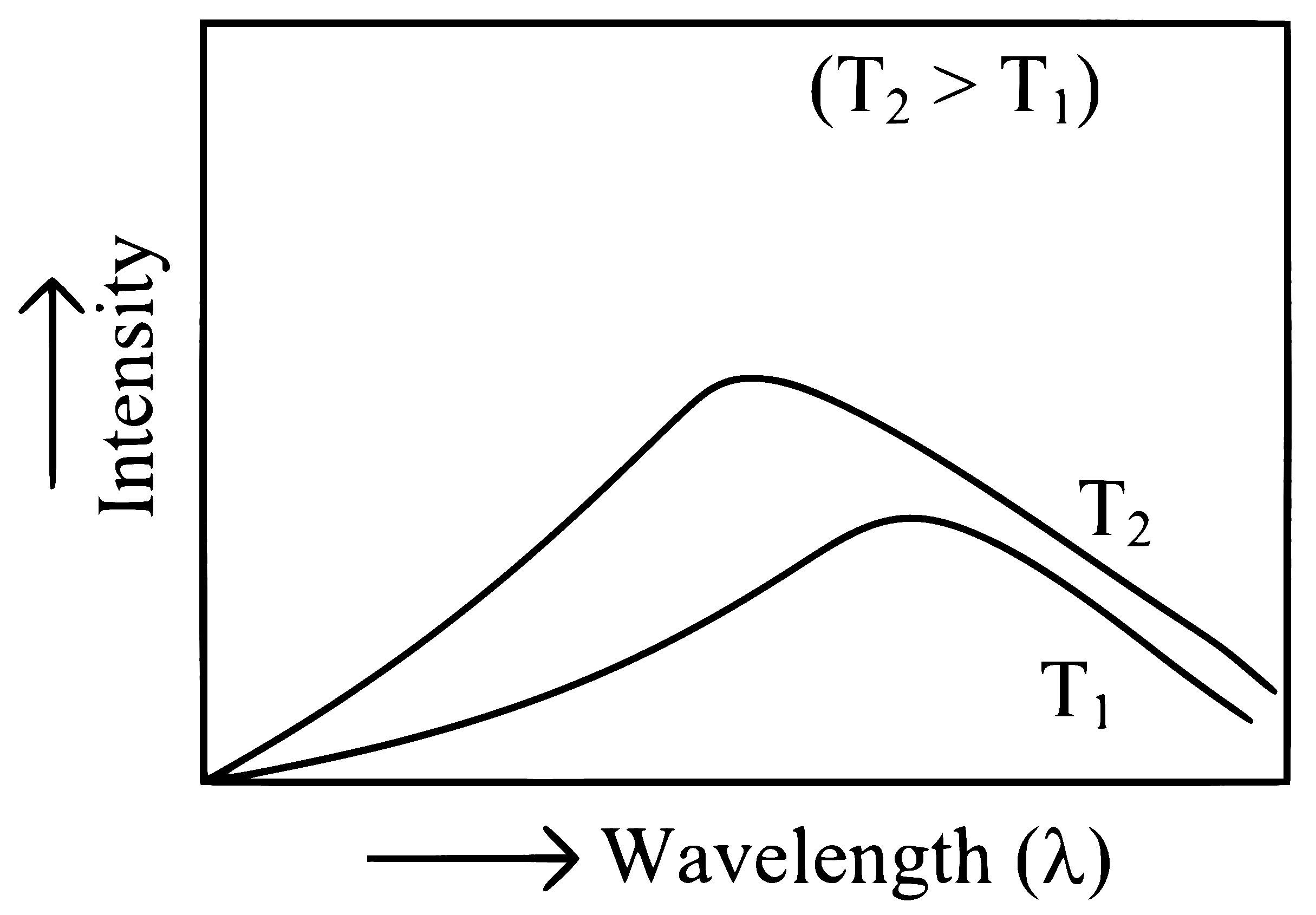
Statement I: The Balmer spectral line for H atom with lowest energy is located at .

( Rydberg constant)

Statement II: When the temperature of blackbody increases, the maxima of the curve (intensity and wavelength) shifts to shorter wavelength.

In the light of the above statements, choose the correct answer from the options given below:

(A)
Statement I is true but Statement II is false
(B)
Statement I is false but Statement II is true
(C)
Both Statement I and Statement II are true
(D)
Both Statement I and Statement II are false
(C)

Solution

For Balmer series

NEET 2024 (Re-Examination) Chemistry - Structure of Atom Question 6 English Explanation

Q.6

The oxidation states not shown by Mn in given reaction is :

A. +6

B. +2

C. +4

D. +7

E. +3

Choose the most appropriate answer from the options given below :

(A)
D and E only
(B)
B and D only
(C)
A and B only
(D)
B and E only
(D)

Solution

In the following reaction

Oxidation state of Mn Species
+6 MnO
+7 MnO
+4 MnO

So +2 and +3 oxidation state is not shown by Mn.

Q.7

At a given temperature and pressure, the equilibrium constant values for the equilibria are given below:

The relation between and is :

(A)
(B)
(C)
(D)
(D)

Solution

To find the relationship between and , let's carefully analyze the given equilibrium reactions and their constants.

First, let's write down the equilibrium reactions clearly:

Reaction 1: with equilibrium constant .

Reaction 2: with equilibrium constant .

Now, understand that represents the equilibrium constant of the reverse reaction of Reaction 1 but with both sides divided by 2. We need to relate these constants. Here is the step-by-step process:

We know Reaction 1 is: .

The equilibrium constant for Reaction 1 is: .

For Reaction 2: , the equilibrium constant can be expressed as the equilibrium constant of the reverse of Reaction 1, with adjusted coefficients.

The equilibrium constant for the reverse reaction of Reaction 1 would be . Since Reaction 2 includes halving the coefficients, the equilibrium constant should be adjusted by taking the square root:

.

Therefore, the relationship between and is:

Option D: .

Q.8

For the reaction in equilibrium

Reaction is favoured in forward direction by:

(A)
use of catalyst
(B)
decreasing concentration of
(C)
low pressure, high temperature and high concentration of ammonia
(D)
high pressure, low temperature and higher concentration of
(D)

Solution

The given chemical reaction is an example of the synthesis of ammonia, commonly known as the Haber process:

This reaction is exothermic, as indicated by the negative enthalpy change (). In order to determine which conditions favor the forward reaction, we need to consider Le Chatelier's principle, which states that the system will adjust to counteract any changes imposed upon it.

Let's analyze each option:

Option A: Use of catalyst

A catalyst does not favor the forward or reverse direction of a reaction. It only speeds up the rate at which equilibrium is achieved.

Option B: Decreasing concentration of

Decreasing the concentration of would shift the equilibrium to the left, favoring the reverse reaction to produce more and .

Option C: Low pressure, high temperature, and high concentration of ammonia

Low pressure and high temperature would favor the reverse reaction. Moreover, a high concentration of ammonia would also shift the equilibrium to the left. Thus, this set of conditions does not favor the forward reaction.

Option D: High pressure, low temperature and higher concentration of

High pressure favors the formation of ammonia because there are fewer moles of gas on the product side (2 moles) as compared to the reactant side (4 moles, i.e., 1 mole of and 3 moles of ). Low temperature favors the exothermic forward reaction. Additionally, a higher concentration of will shift the equilibrium to the right, forming more ammonia.

Therefore, the correct answer is:

Option D: High pressure, low temperature and higher concentration of

Q.9

Which indicator is used in the titration of sodium hydroxide against oxalic acid and what is the colour change at the end point?

(A)
Phenolphthalein, pink to yellow
(B)
Alkaline KMnO, colourless to pink
(C)
Phenolphthalein, colourless to pink
(D)
Methyl orange, yellow to pinkish red colour
(C)

Solution

The correct answer is Option C: Phenolphthalein, colourless to pink. Here's why:

Titration of Sodium Hydroxide (NaOH) against Oxalic Acid (H2C2O4)

Sodium hydroxide is a strong base, and oxalic acid is a weak acid. The reaction between them is a neutralization reaction:

Choosing the Right Indicator

An indicator is a substance that changes color at a specific pH range, signaling the endpoint of the titration. The ideal indicator for a titration should have a color change near the equivalence point of the reaction. The equivalence point is the point where the moles of acid and base are stoichiometrically equal.

In this case:

  • At the equivalence point, the solution will be slightly basic due to the formation of the sodium oxalate salt (Na2C2O4), which is the conjugate base of a weak acid.
  • Phenolphthalein changes color in the slightly basic pH range (around 8.2 to 10.0), making it an appropriate indicator for this titration.

Color Change

Phenolphthalein is colorless in acidic solutions and turns pink in basic solutions. So, the color change at the endpoint of this titration will be:

Colorless (before equivalence point) → Pink (at equivalence point)

Why Other Options Are Incorrect

  • Option A: Phenolphthalein does not change from pink to yellow, it changes from colorless to pink.
  • Option B: Alkaline KMnO4 is not a suitable indicator for this titration because it is not sensitive enough to detect the slight pH change at the equivalence point.
  • Option D: Methyl orange changes color in the acidic pH range (around 3.1 to 4.4) and is therefore not suitable for this titration.

Q.10

The ratio of solubility of AgCl in 0.1 M KCl solution to the solubility of AgCl in water is:

(Given : Solubility product of AgCl = 10)

(A)
10
(B)
10
(C)
10
(D)
10
(A)

Solution

To find the ratio of solubility of AgCl in 0.1 M KCl solution to the solubility of AgCl in water, we first need to understand how common ion effect influences solubility.

Let's denote the solubility product constant of AgCl as .

Given of AgCl = .

First, we calculate the solubility of AgCl in pure water:

In water, the dissociation of AgCl can be represented as:

If is the solubility of AgCl in water, then


Hence, the solubility product can be written as:


So,


Now, let's consider the solubility of AgCl in 0.1 M KCl solution. Because of the common ion effect, the presence of ions from KCl will suppress the solubility of AgCl.

Here, from KCl is 0.1 M. Let the new solubility of AgCl in this solution be .

Then,


Since is much smaller than 0.1 M, we can approximate:


Finally, we find the ratio of solubility in 0.1 M KCl to that in pure water:

Therefore, the correct answer is:

Option A

10

Q.11

Mass of glucose required to be dissolved to prepare one litre of its solution which is isotonic with solution of urea is (Given: Molar mass in )

(A)
55 g
(B)
15 g
(C)
30 g
(D)
45 g
(D)

Solution

For isotonic solutions [osmotic pressure must be equal]

Q.12

Choose the correct statement for the work done in the expansion and heat absorbed or released when 5 litres of an ideal gas at 10 atmospheric pressure isothermally expands into vacuum until volume is 15 litres :

(A)
Both the heat and work done will be greater than zero
(B)
Heat absorbed will be less than zero and work done will be positive
(C)
Work done will be zero and heat will also be zero
(D)
Work done will be greater than zero and heat will remain zero
(C)

Solution

Since it is isothermal,

Since expansion is taking place against vacuum

From first law of thermodynamics,

Q.13

For an endothermic reaction:

(A) is negative.

(B) is positive.

(C) is negative.

(D) is positive.

Choose the correct answer from the options given below:

(A)
B and D
(B)
C and D
(C)
A and B
(D)
A and C
(A)

Solution

For endothermic reactions,

NEET 2024 (Re-Examination) Chemistry - Thermodynamics Question 9 English Explanation

Q.14

For the following reaction at

the enthalpy change is , then the internal energy change is :

(A)
(B)
(C)
(D)
(A)

Solution

To determine the internal energy change (ΔU) for the reaction at , we will use the relationship between enthalpy change (ΔH) and internal energy change:

where is the enthalpy change, is the internal energy change, is the change in moles of gas, is the universal gas constant, and is the temperature.

Given:

From the balanced chemical equation:

Moles of reactants = 1 (for ) + 3 (for ) = 4 moles

Moles of products = 2 (for )

Therefore, = 2 (products) - 4 (reactants) = -2

Now, substituting these values into the equation:

Simplify the equation:

Therefore:

Hence, the internal energy change is:

Option A:

Q.15

From the following select the one which is not an example of corrosion.

(A)
Rusting of iron object
(B)
Production of hydrogen by electrolysis of water
(C)
Tarnishing of silver
(D)
Development of green coating on copper and bronze ornaments
(B)

Solution

Corrosion slowly coats the surfaces of metallic objects with oxides or other salts of the metal. The rusting of iron, tarnishing of silver, development of green coating on copper and bronze are some of the examples of corrosion.

Production of H by electrolysis of water is an example of electrolytic cell.

Q.16

The standard cell potential of the following cell is . Calculate the standard Gibbs energy change for the reaction:

(Given : )

(A)
(B)
(C)
(D)
(A)

Solution

To find the standard Gibbs energy change for the reaction, we can use the relationship between the standard Gibbs free energy change () and the standard cell potential () given by the following equation:

Where:

  • is the number of moles of electrons transferred in the reaction.
  • is the Faraday constant ().
  • is the standard cell potential.

From the given reaction:

It can be observed that because two electrons are transferred from zinc to iron.

Given data:

Now, substitute the values into the equation:

Calculate the value:

Converting the units to kJ/mol:

The closest answer, when rounded to two decimal places, is:

Therefore, the correct option is:

Option A:

Q.17

Following data is for a reaction between reactants A and B :

Rate
0.1 M 0.1 M
0.2 M 0.1 M
0.2 M 0.2 M

(A)
1, 0
(B)
0, 1
(C)
1, 2
(D)
2, 1
(C)

Solution

Let the rate equation is

Therefore, we can write

First order with respect to A while second order with respect to B.

Q.18

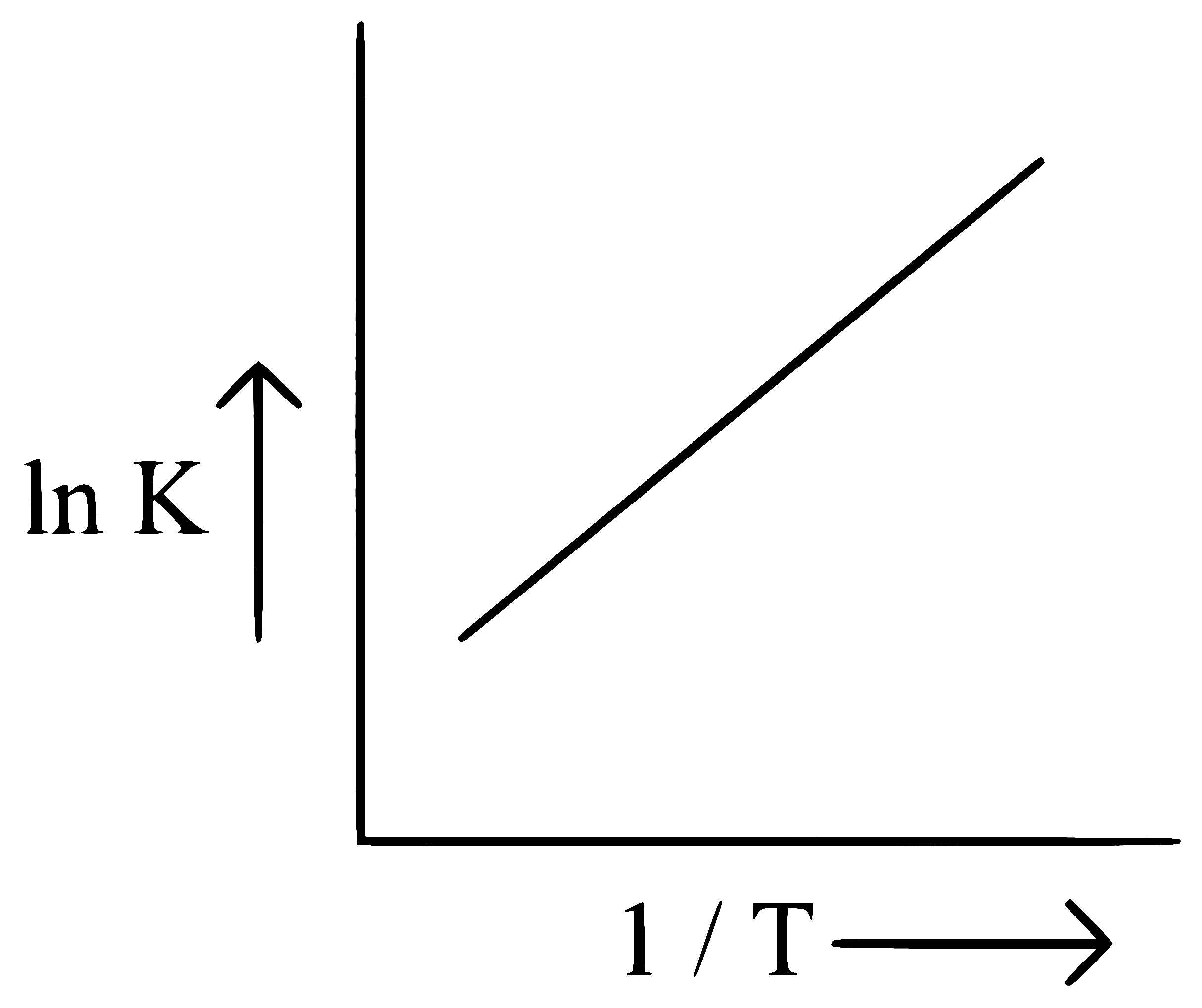
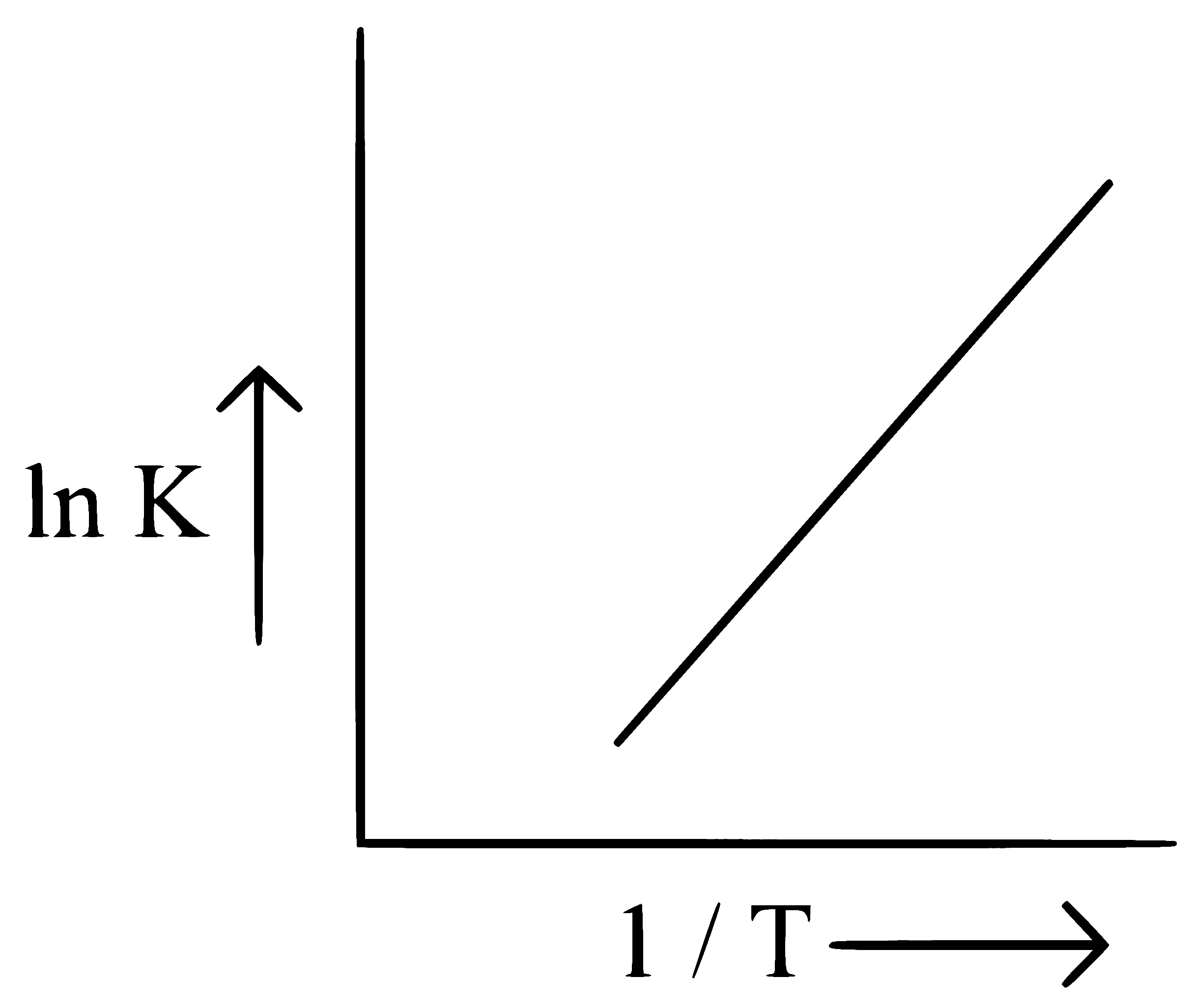
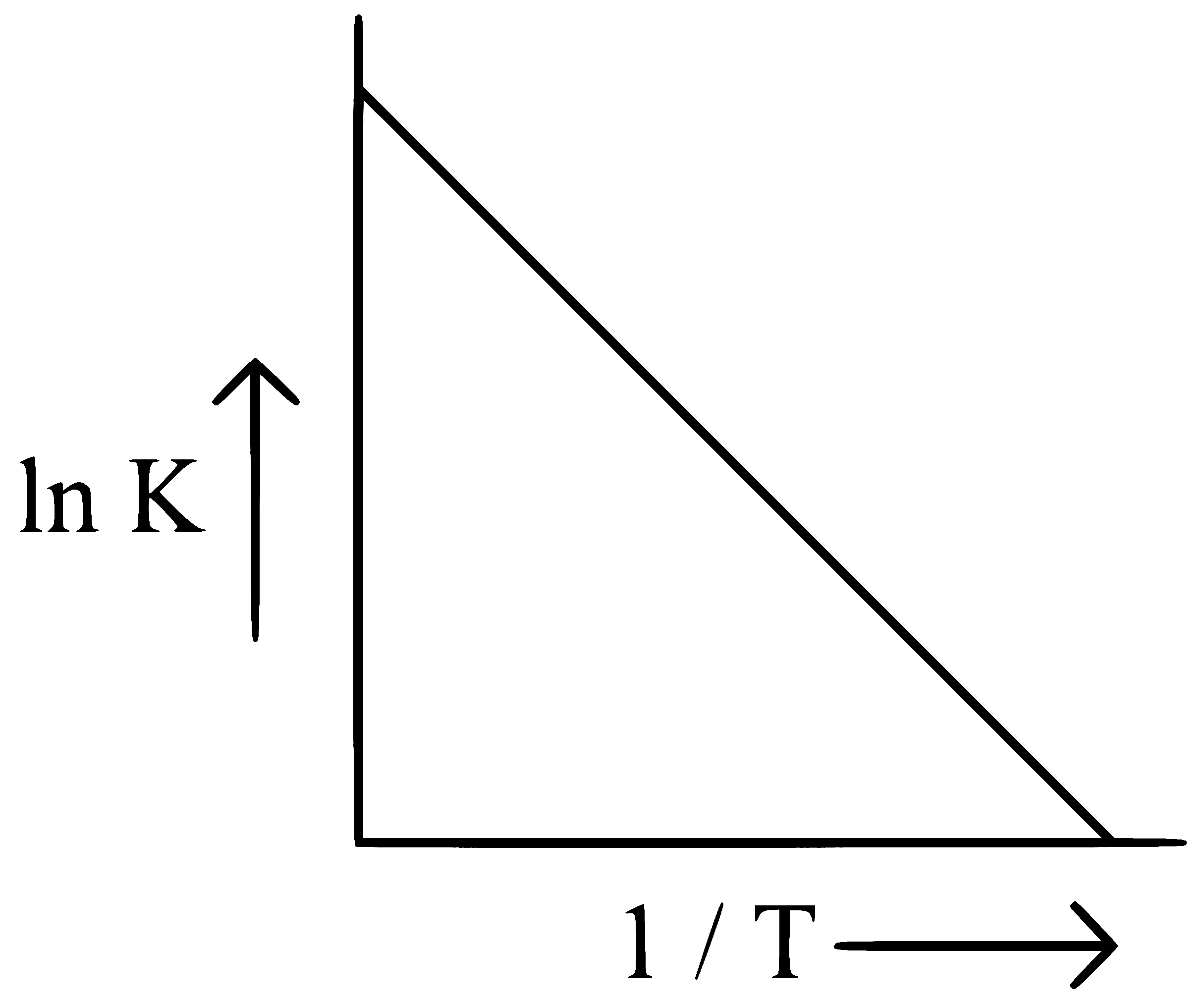
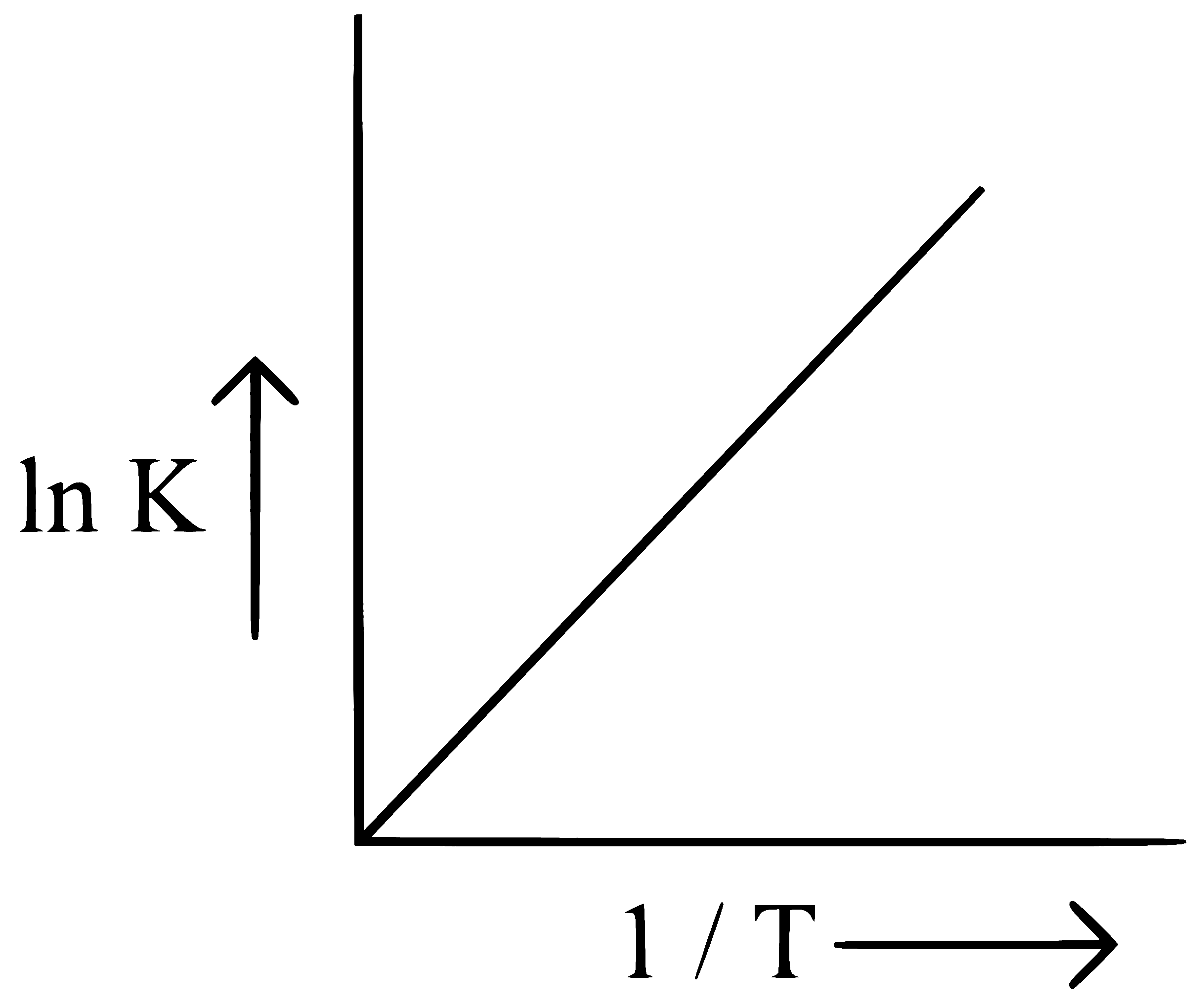
Which of the following plot represents the variation of versus in accordance with Arrhenius equation?

(A)
NEET 2024 (Re-Examination) Chemistry - Chemical Kinetics Question 9 English Option 1
(B)
NEET 2024 (Re-Examination) Chemistry - Chemical Kinetics Question 9 English Option 2
(C)
NEET 2024 (Re-Examination) Chemistry - Chemical Kinetics Question 9 English Option 3
(D)
NEET 2024 (Re-Examination) Chemistry - Chemical Kinetics Question 9 English Option 4
(C)

Solution

Using Arrhenius equation,

NEET 2024 (Re-Examination) Chemistry - Chemical Kinetics Question 9 English Explanation

Q.19

Rate constants of a reaction at and are and , respectively; then, activation energy of the reaction is :

(Given: )

(A)
182310 J
(B)
18500 J
(C)
18219 J
(D)
18030 J
(C)

Solution

After taking In both side

at temp. .... (i)

at temp. .... (ii)

Q.20

The correct decreasing order of atomic radii (pm) of and is

(A)
(B)
(C)
(D)
(B)

Solution

As the atomic number in a period increases, the effective nuclear charge also increases hence, atomic radii along the period decreases.

Correct order of atomic radii

Q.21

Match List I with List II :

List - I
(Atom/Molecule)
List - II
(Property)
(A) Nitrogen atom (I) Paramagnetic
(B) Fluorine molecule (II) Most relative element in group 18
(C) Oxygen molecule (III) Element with highest ionisation enthalpy in group 15
(D) Xenon atom (IV) Strongest oxidising agent

Identify the correct answer from the options given below :

(A)
A-III, B-I, C-IV, D-II
(B)
A-I, B-IV, C-III, D-II
(C)
A-II, B-IV, C-I, D-III
(D)
A-III, B-IV, C-I, D-II
(D)

Solution

(Atom/Molecule) (Property)
Nitrogen atom Element with highest ionisation enthalpy in group 15
Fluorine molecule Strongest oxidising agent
Oxygen molecule Paramagnetic in nature
Xenon atom Most reactive element in group 18

The correct match is A-III, B-IV, C-I, D-II

Q.22

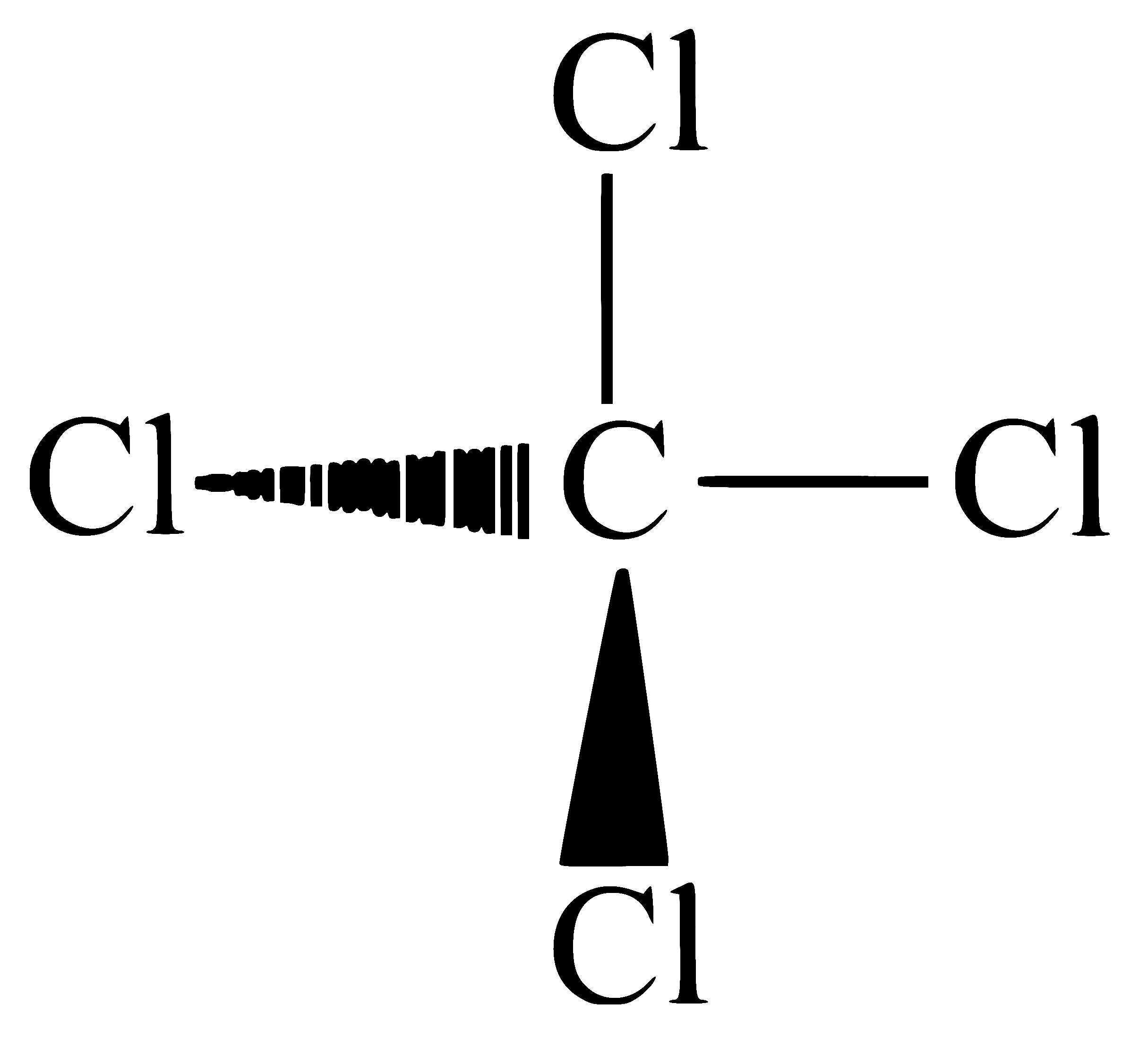
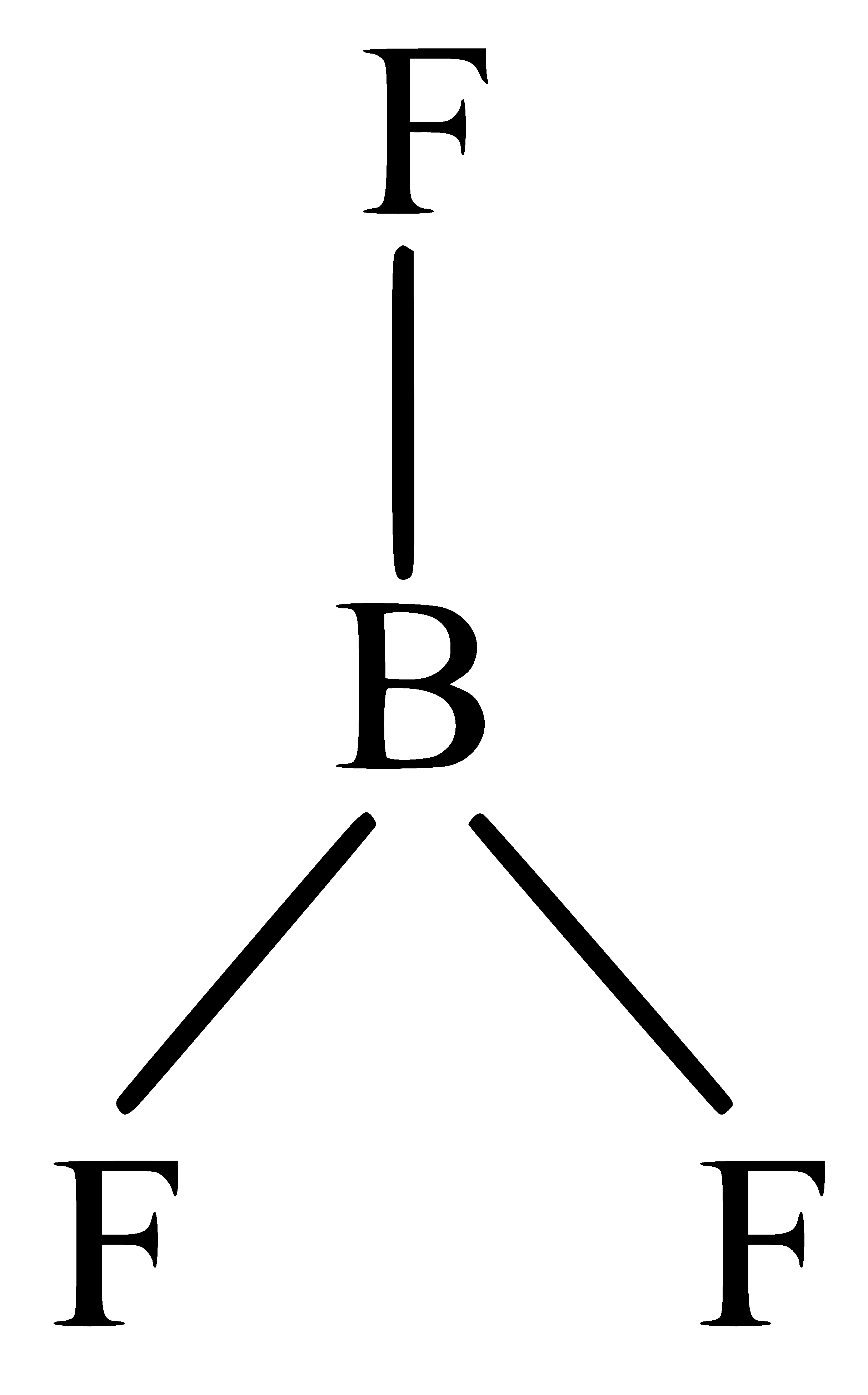
Which of the following molecules has "NON ZERO" dipole moment value?

(A)
(B)
(C)
(D)
(B)

Solution

Dipole moment of a molecule depends both on shape and bond dipole.

Molecule Shape (Debye)

NEET 2024 (Re-Examination) Chemistry - Chemical Bonding and Molecular Structure Question 11 English Explanation 1 0
0.38
0
NEET 2024 (Re-Examination) Chemistry - Chemical Bonding and Molecular Structure Question 11 English Explanation 2 0

Q.23

Arrange the following compounds in increasing order of their solubilities in chloroform: , cyclohexane,

(A)
Cyclohexane
(B)
Cyclohexane
(C)
Cyclohexane
(D)
Cyclohexane
(A)

Solution

Since is an organic solvent so, covalent (non-polar) compounds will be more soluble in it. As the dipole moment of solute increases, solubility in chloroform decreases. Hence increasing order of solubility.

Cyclohexane

Q.24

Identify the incorrect statement about .

(A)
possesses two different bond angles
(B)
All five bonds are identical in length
(C)
exhibits hybridisation
(D)
consists of five (sigma) bonds
(B)

Solution

NEET 2024 (Re-Examination) Chemistry - Chemical Bonding and Molecular Structure Question 9 English Explanation

It is hybridised with axial to equatorial angle of and equatorial bond angles of . It has five sigma bonds.

Axial bonds are longer than equatorial bonds.

Q.25

Match List-I with List-II:

List - I
Molecule
List - II
Bond enthalpy (kJ mol)
(A) HCl (I) 435.8
(B) N (II) 498
(C) H (III) 946.0
(D) O (IV) 431.0

Choose the correct answer from the options given below:

(A)
A-III, B-IV, C-I, D-II
(B)
A-IV, B-I, C-III, D-II
(C)
A-IV, B-III, C-II, D-I
(D)
A-IV, B-III, C-I, D-II
(D)

Solution

Molecule Bond enthalpy (kJ mol)
HCl 431.0
N 946.0
H 435.8
O 498

Q.26

Identify the incorrect statement from the following :

(A)
The acidic strength of and follows the order: .
(B)
Fluorine exhibits 1 oxidation state whereas other halogens exhibit and oxidation states also.
(C)
The enthalpy of dissociation of is smaller than that of .
(D)
Fluorine is stronger oxidising agent than chlorine.
(A)

Solution

Let's analyze each statement to identify the incorrect one:

Option A: The acidic strength of and follows the order: .

This statement is incorrect. The correct order of acidic strength for hydrohalic acids is . This is because as we move down the group, the bond strength between hydrogen and the halide decreases, making it easier to ionize in water and making the acid stronger.

Option B: Fluorine exhibits oxidation state whereas other halogens exhibit and oxidation states also.

This statement is correct. Fluorine is the most electronegative element and can only exhibit oxidation state. Other halogens can exhibit positive oxidation states due to the availability of d-orbitals.

Option C: The enthalpy of dissociation of is smaller than that of .

This statement is correct. The bond dissociation energy of is indeed smaller than that of because the F-F bond is weaker due to significant electron-electron repulsion between the non-bonding electrons in the small fluorine molecule.

Option D: Fluorine is a stronger oxidising agent than chlorine.

This statement is correct. Fluorine is the most electronegative element, which makes it the strongest oxidizing agent among the halogens.

Therefore, the incorrect statement is Option A.

Q.27

Match List I with List II:

List - I
Solid salt treated with dil. HSO
List - II
Anion detected
(A) effervescence of colourless gas (I) NO
(B) gas with smell of rotten egg (II) CO
(C) gas with pungent smell (III) S
(D) brown fumes (IV) SO

Choose the correct answer from the options given below:

(A)
A-II, B-III, C-IV, D-I
(B)
A-IV, B-III, C-II, D-I
(C)
A-I, B-II, C-III, D-IV
(D)
A-II, B-III, C-I, D-IV
(A)

Solution

Anion Observation on treatment with dil.

(A) Carbonate Brisk effervescence of colourless and odourless gas

(B) Sulphide Evolution of colourless gas with rotten egg like smell

(C) Sulphite Gas with pungent smell

(D) Nitrite Brown fumes

Correct Match : A – II, B-III, C-IV, D-I

Q.28

Baeyer's reagent is :

(A)
Acidic potassium permanganate solution
(B)
Acidic potassium dichromate solution
(C)
Cold, dilute, aqueous solution of potassium permanganate
(D)
Hot, concentrated solution of potassium permanganate
(C)

Solution

The correct answer is Option C: Cold, dilute, aqueous solution of potassium permanganate. Here's why:

Baeyer's reagent is a chemical test used to detect the presence of unsaturation in organic compounds, particularly the presence of carbon-carbon double bonds (C=C). It relies on the oxidizing power of potassium permanganate (KMnO4).

Here's a breakdown of why the other options are incorrect:

  • Option A: Acidic potassium permanganate solution - While acidic potassium permanganate is a strong oxidizing agent, it is too reactive and would oxidize other functional groups present in the molecule, making it unsuitable for specifically detecting unsaturation.
  • Option B: Acidic potassium dichromate solution - Acidic potassium dichromate is another strong oxidizing agent, but it is not typically used for detecting unsaturation. It is commonly used for oxidizing alcohols to aldehydes or ketones.
  • Option D: Hot, concentrated solution of potassium permanganate - A hot, concentrated solution of potassium permanganate would be too harsh and could lead to over-oxidation, making it unreliable for detecting unsaturation.

Why Cold, Dilute, Aqueous Potassium Permanganate Works

In Baeyer's test, the cold, dilute, aqueous solution of potassium permanganate acts as a mild oxidant. The purple color of the permanganate solution disappears as it reacts with the double bond, forming a brown precipitate of manganese dioxide (MnO2).

The reaction can be represented as follows:

The disappearance of the purple color and the formation of the brown precipitate indicate the presence of an unsaturated compound. This reaction is highly specific to alkenes and alkynes because they are readily oxidized by the permanganate ion.

Q.29

Which of the following pairs of ions will have same spin only magnetic moment values within the pair?

A.

B.

C.

D.

Choose the correct answer from the options given below :

(A)
C and D only
(B)
A and D only
(C)
A and B only
(D)
B and C only
(D)

Solution

Magnetic moment

Number of unpaired electrons

Ion n (BM)
Zn 0 0
Ti 2
Cr 4
Fe 4
Ti 1
Cu 1
V 3
Cu 0 0

Hence (Cr, Fe) and (Ti, Cu) are the pair of same magnetic moment.

Q.30

Which of the following set of ions act as oxidising agents?

(A)
and
(B)
and
(C)
and
(D)
and
(A)

Solution

Most stable oxidation state of lanthanoids is +3

and will get reduced easily and will be good oxidising agents.

Q.31

The UV-visible absorption bands in the spectra of lanthanoid ions are 'X', probably because of the excitation of electrons involving 'Y'. The 'X' and 'Y', respectively, are : Narrow and d and f orbitals

(A)
Broad and f orbitals
(B)
Narrow and f orbitals
(C)
Broad and d and f orbitals
(D)
Narrow and d and f orbitals
(B)

Solution

The UV-visible absorption bands in the spectra of lanthanoid ions are primarily influenced by the electronic transitions that occur within the f orbitals. Lanthanoid ions have partially filled 4f orbitals, and the transitions within these orbitals are generally quite narrow. This is because the 4f orbitals are well shielded by the outer 5s and 5p orbitals, which results in minimal interaction with the surrounding crystal field, leading to narrow absorption bands.

Therefore, the correct answer is:

Option B: Narrow and f orbitals

Q.32

Match List I with List II:

List - I
(Block/group in periodic table)
List - II
(Element)
(A) Lanthanoid (I) Ce
(B) d-block element (II) As
(C) p-block element (III) Cs
(D) s-block element (IV) Mn

Choose the correct answer from the options given below:

(A)
A-I, B-II, C-IV, D-III
(B)
A-I, B-IV, C-III, D-II
(C)
A-I, B-IV, C-II, D-III
(D)
A-IV, B-I, C-II, D-III
(C)

Solution

Let's match each element in List II with the appropriate block or group in List I:

(A) Lanthanoid - The Lanthanides or Lanthanoids are a series of 15 metallic elements from Lanthanum (La) to Lutetium (Lu). Cerium (Ce) is part of this series.

(B) d-block element - The d-block elements are also known as transition metals. Manganese (Mn) belongs to this group.

(C) p-block element - The p-block contains elements from groups 13 to 18 of the periodic table; Arsenic (As) belongs to this block.

(D) s-block element - The s-block elements include the first two groups (alkali metals and alkaline earth metals). Cesium (Cs) is one of the alkali metals, hence it is part of the s-block.

So, the correct matching is:

  • (A) Lanthanoid - (I) Ce
  • (B) d-block element - (IV) Mn
  • (C) p-block element - (II) As
  • (D) s-block element - (III) Cs

Thus, the correct option is Option C:

A-I, B-IV, C-II, D-III

Q.33

Identify the incorrect statement.

(A)
and as ligands can form bond with transition metals
(B)
The single bond is as strong as the single bond
(C)
Nitrogen has unique ability to form multiple bonds with nitrogen, carbon and oxygen
(D)
Nitrogen cannot form bond as other heavier elements of its group
(B)

Solution

and as ligands can form bond with transition metals.

The N – N single bond is weaker than the single P – P bond because of high inter-electronic repulsion of the non-bonding electrons.

Nitrogen has unique ability to form p-p multiple bonds with itself, carbon and oxygen.

Nitrogen cannot form d-p bond as other heavier elements of its group.

Q.34

Ethylene diaminetetraacetate ion is a/an:

(A)
hexadentate ligand
(B)
ambidentate ligand
(C)
monodentate ligand
(D)
bidentate ligand
(A)

Solution

Ethylene diaminetetraacetate

NEET 2024 (Re-Examination) Chemistry - Coordination Compounds Question 15 English Explanation

It is hexadentate as it can bind through two nitrogen and four oxygen atoms to a central metal ion.

Q.35

Which of the following is not an ambidentate ligand?

(A)
(B)
SCN
(C)
NO
(D)
CN
(A)

Solution

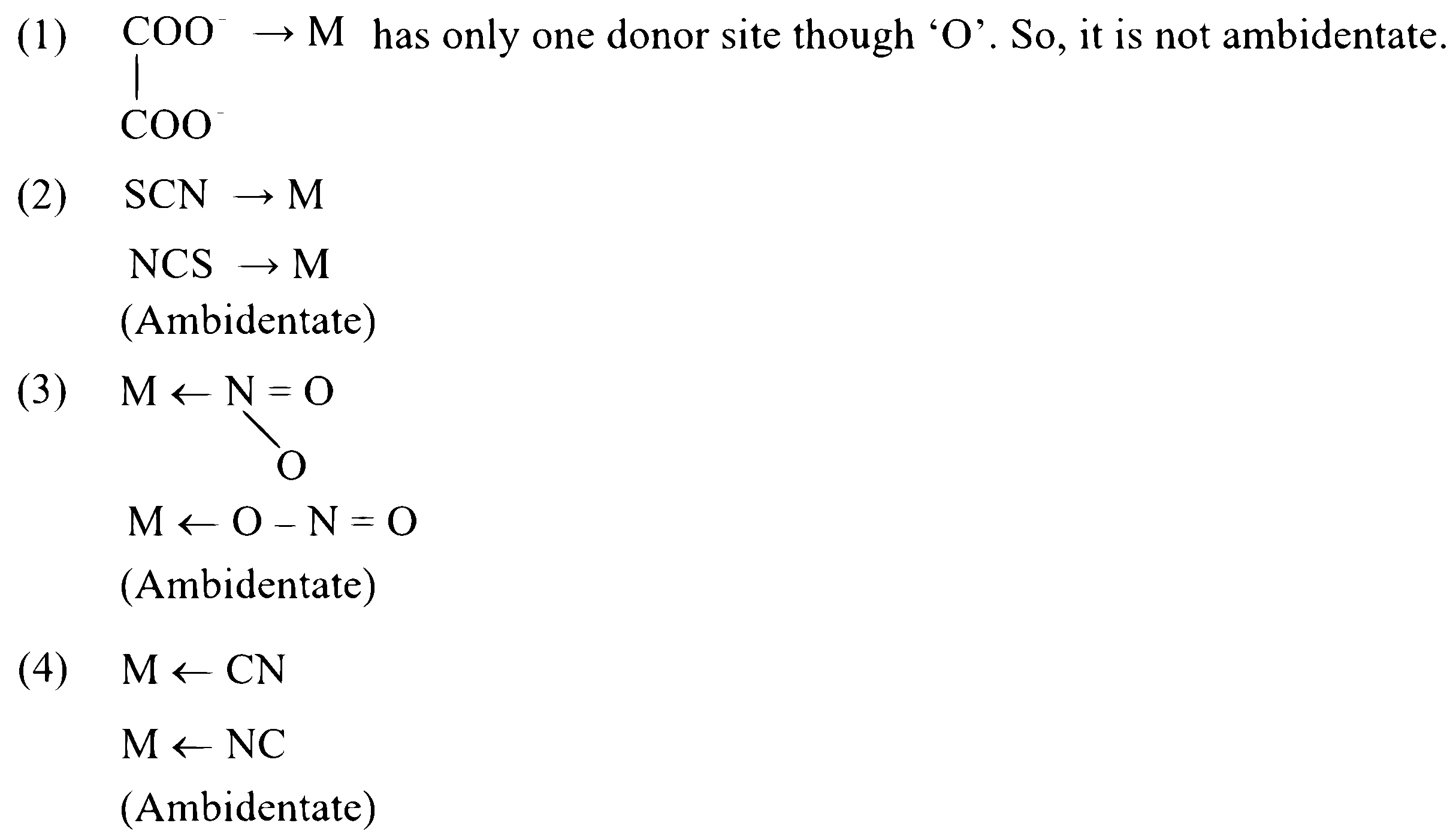
Ambidentate ligands are those ligands which have two different donor atoms and either of two donor atom is attached to the metal during complex formation.

NEET 2024 (Re-Examination) Chemistry - Coordination Compounds Question 14 English Explanation

Q.36

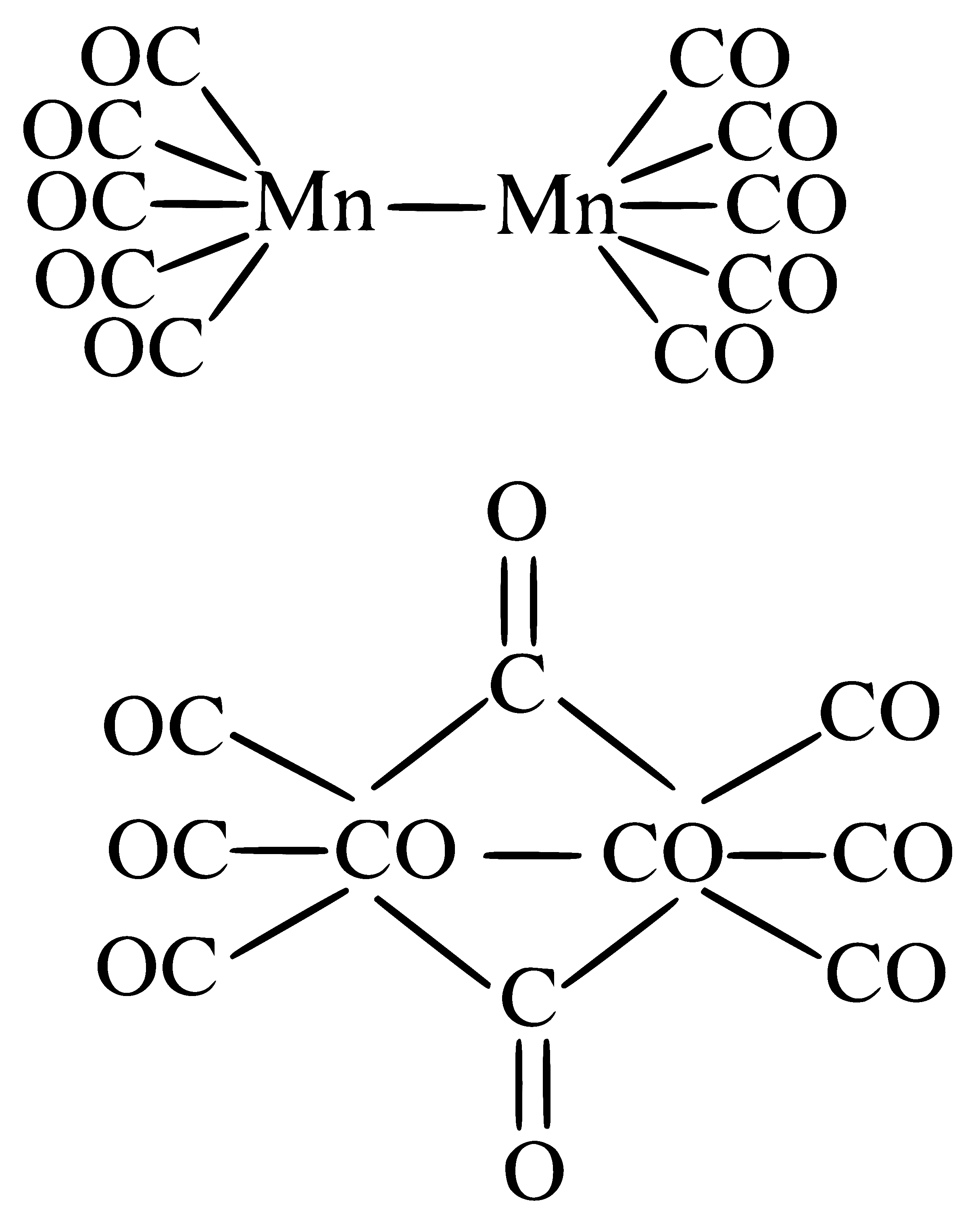
and structures have

A. Metal-Metal linkage

B. Terminal CO groups

C. Bridging CO groups

D. Metal in zero oxidation state

Choose the correct answer from the options given below

(A)
Only A, B, C
(B)
Only B, C, D
(C)
Only A, C, D
(D)
Only A, B, D
(D)

Solution

NEET 2024 (Re-Examination) Chemistry - Coordination Compounds Question 13 English Explanation

A. Metal-Metal linkage present.

B. Terminal CO groups are present

C. In bridging groups are not present.

D. Metal is in zero oxidation state.

Q.37

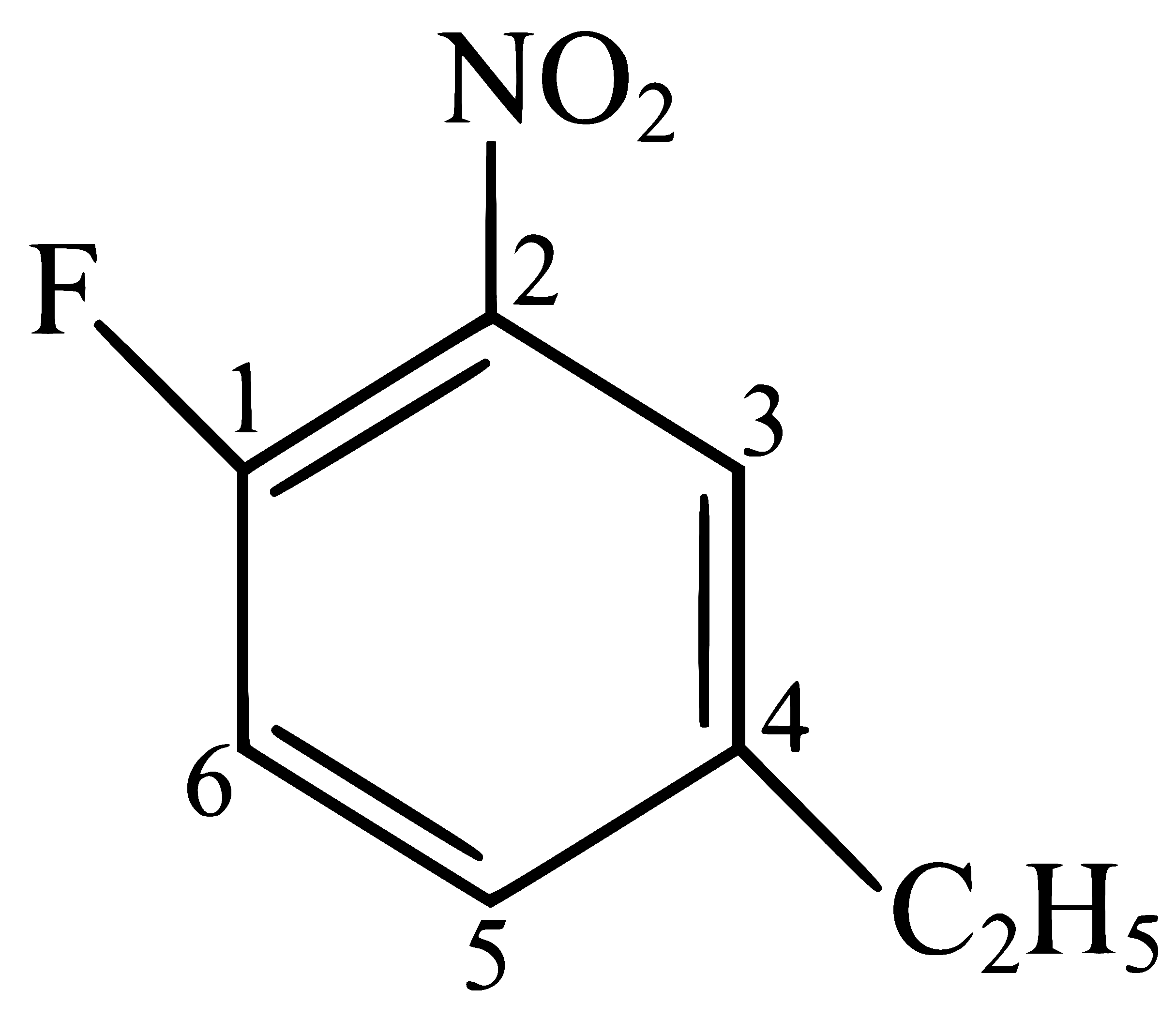
The correct IUPAC name of the compound

NEET 2024 (Re-Examination) Chemistry - Some Basic Concepts of Organic Chemistry Question 11 English

is :

(A)
4-ethyl-1-fluoro-2-nitrobenzene
(B)
4-ethyl-1-fluoro-6-nitrobenzene
(C)
3-ethyl-6-fluoro-1-nitrobenzene
(D)
1-ethyl-4-fluoro-3-nitrobenzene
(A)

Solution

NEET 2024 (Re-Examination) Chemistry - Some Basic Concepts of Organic Chemistry Question 11 English Explanation

Q.38

A steam volatile organic compound which is immiscible with water has a boiling point of . During steam distillation, a mixture of this organic compound and water will boil :

(A)
above but below
(B)
above
(C)
at
(D)
close to but below
(D)

Solution

Steam distillation is a separation technique used for purifying organic compounds that are immiscible with water and have high boiling points. In this method, the organic compound co-distills with water. The key concept here is that the total vapor pressure of the mixture is the sum of the vapor pressures of the organic compound and water. When the total vapor pressure equals atmospheric pressure, the mixture will boil.

For a compound that has a boiling point of and is immiscible with water, during steam distillation, the boiling point of the mixture will be influenced by both the vapor pressure of water and the organic compound. Since water has a boiling point of , steam distillation allows the mixture to boil at a temperature lower than the boiling point of the organic compound when in pure form. This is because the partial pressures of both the water and the organic compound add up to reach the atmospheric pressure more quickly than either would alone.

Practically, the mixture will boil at a temperature close to the boiling point of water, which is . Hence, the correct answer is:

Option D close to but below

Q.39

Match List-I with List-II :

List - I
(Test/reagent)
List - II
(Radical identified)
(A) Lake Test (I) NO
(B) Nessler's Reagent (II) Fe
(C) Potassium sulphocyanide (III) Al
(D) Brown Ring Test (IV) NH

Choose the correct answer from the options given below :

(A)
A-IV, B-II, C-III, D-I
(B)
A-II, B-IV, C-III, D-I
(C)
A-II, B-III, C-IV, D-I
(D)
A-III, B-IV, C-II, D-I
(D)

Solution

Q.40

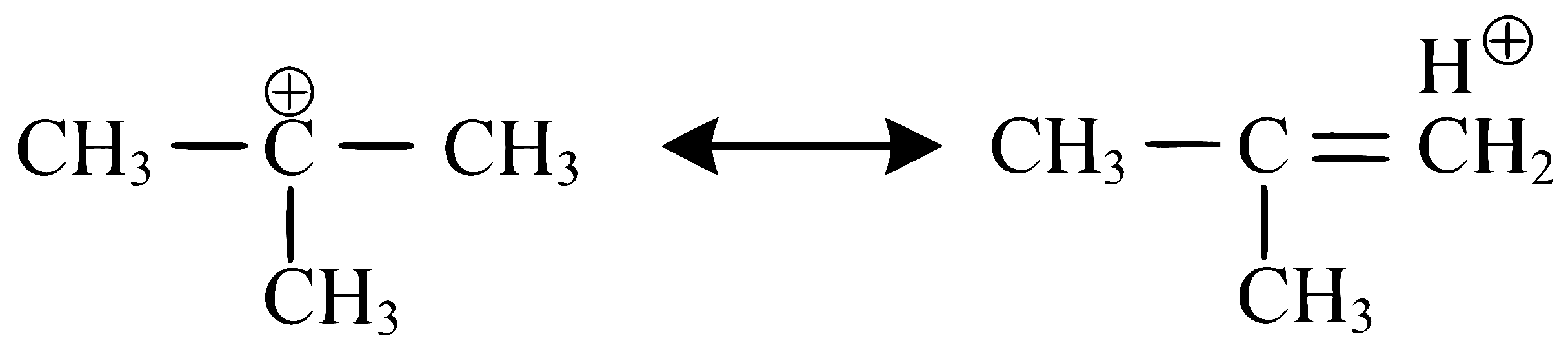
Methyl group attached to a positively charged carbon atom stabilizes the carbocation due to

(A)
–I inductive effect
(B)
electromeric effect
(C)
hyperconjugation
(D)
mesomeric effect
(C)

Solution

NEET 2024 (Re-Examination) Chemistry - Some Basic Concepts of Organic Chemistry Question 10 English Explanation

Methyl group attached to a positively charged carbon atom stabilizes the carbocation due to hyperconjugation and +I effect.

Q.41

Given below are two statements:

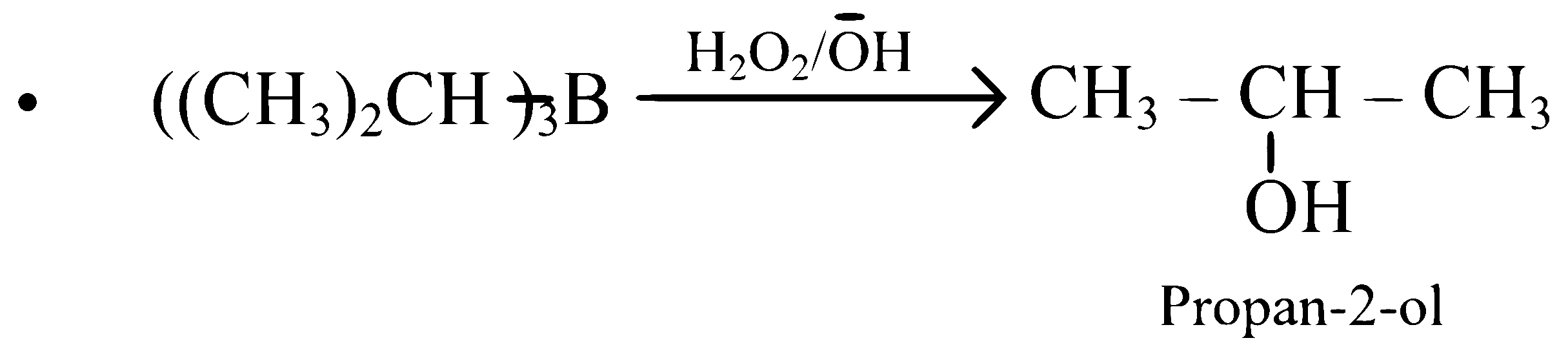
Statement I: Propene on treatment with diborane gives an addition product with the formula

NEET 2024 (Re-Examination) Chemistry - Hydrocarbons Question 9 English 1

Statement II: Oxidation of

NEET 2024 (Re-Examination) Chemistry - Hydrocarbons Question 9 English 2

with hydrogen peroxide in presence of gives propan-2ol.

In the light of the above statements, choose the most appropriate answer from the options given below:

(A)
Statement I is correct but Statement II is incorrect
(B)
Statement I is incorrect but Statement II is correct
(C)
Both Statement I and Statement II are correct
(D)
Both Statement I and Statement II are incorrect
(B)

Solution

NEET 2024 (Re-Examination) Chemistry - Hydrocarbons Question 9 English Explanation

Statement I is incorrect but Statement II is correct.

Q.42

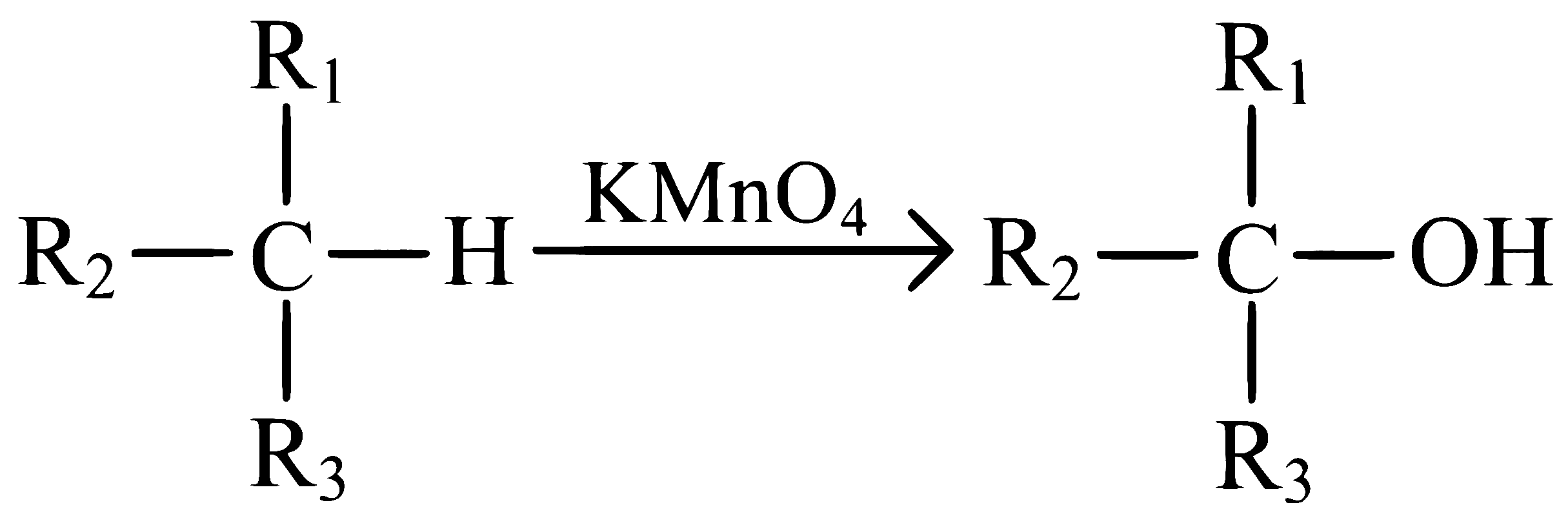
The alkane that can be oxidized to the corresponding alcohol by KMnO as per the equation

NEET 2024 (Re-Examination) Chemistry - Hydrocarbons Question 8 English

is, when :

(A)
(B)
(C)
(D)
(B)

Solution

Generally alkanes resist oxidation but alkane with tertiary H atom(s) can be oxidised to corresponding alcohols by KMnO

NEET 2024 (Re-Examination) Chemistry - Hydrocarbons Question 8 English Explanation

Q.43

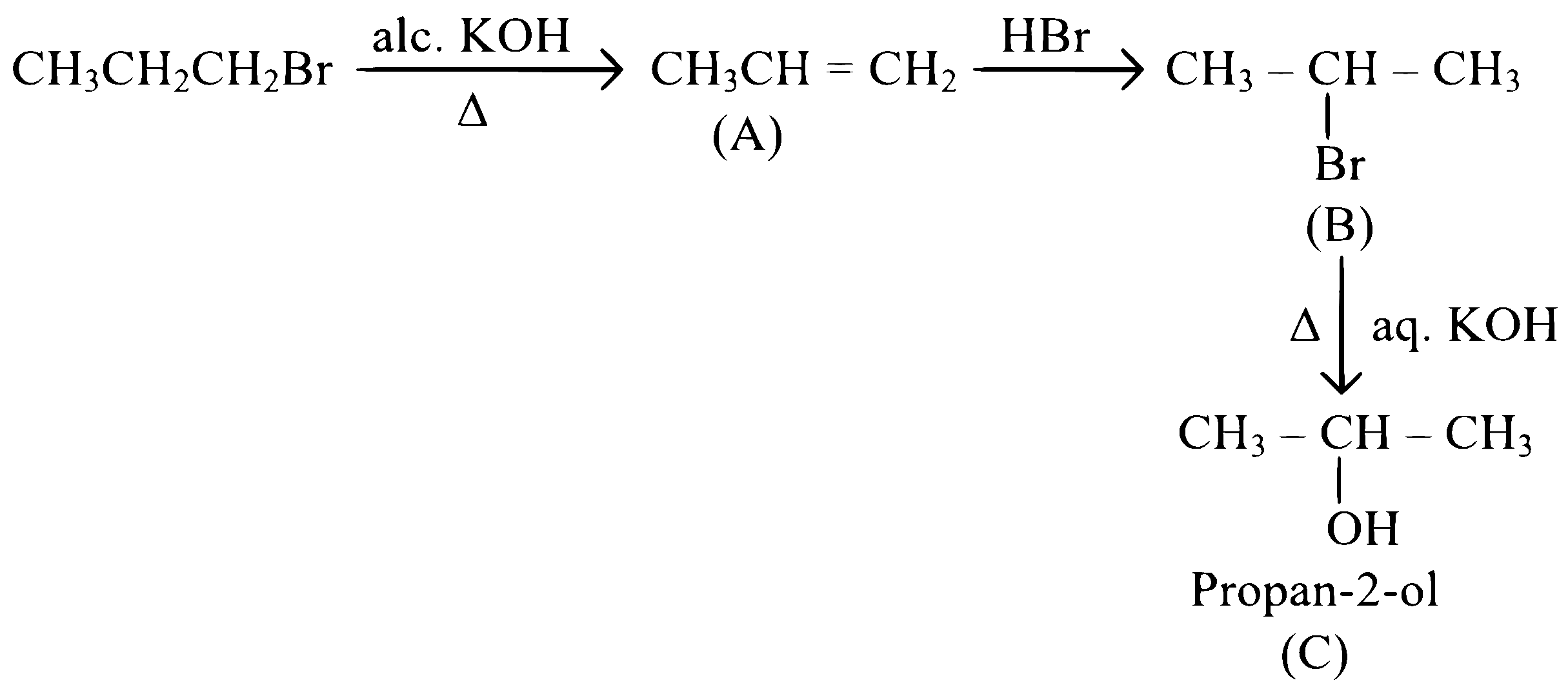
The major product in the below mentioned reaction is:

(A)
Propan-1-ol
(B)
Propan-2-ol
(C)
Propane
(D)
Propyne
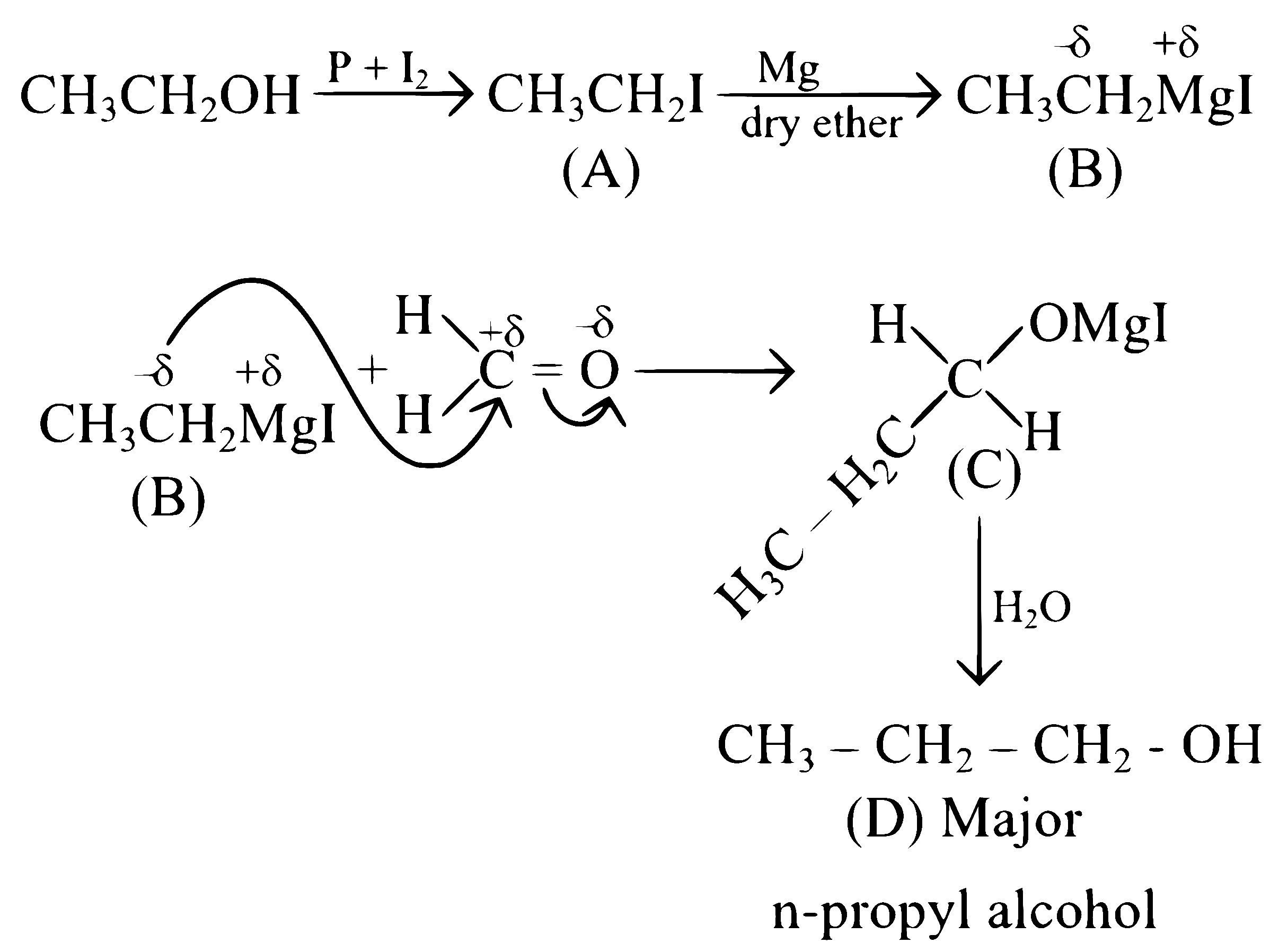
(B)

Solution

NEET 2024 (Re-Examination) Chemistry - Haloalkanes and Haloarenes Question 4 English Explanation

Q.44

The following reaction method

NEET 2024 (Re-Examination) Chemistry - Haloalkanes and Haloarenes Question 3 English

is not suitable for the preparation of the corresponding haloarene products, due to high reactivity of halogen, when X is :

(A)
F
(B)
I
(C)
Cl
(D)
Br
(A)

Solution

Aryl chlorides and bromides can easily be prepared by electrophilic substitution of arenes (toluene) with Cl and Br respectively in the presence of Lewis acid catalyst (Fe in dark).

Reaction with I is reversible and requires the presence of oxidising agent.

Corresponding fluoroarene is not prepared by this method due to high reactivity of fluorine. Hence, ‘X’ is F.

Q.45

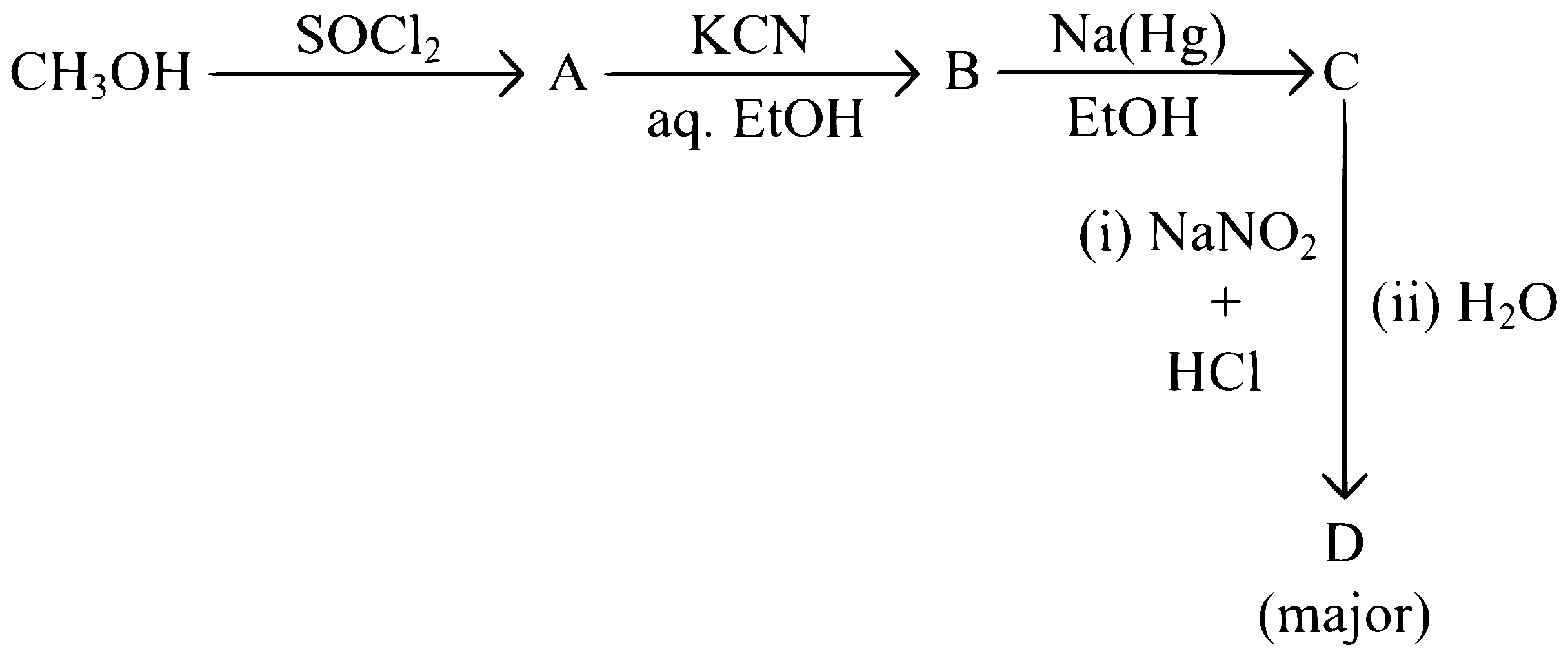
The major product D formed in the following reaction sequence is :

NEET 2024 (Re-Examination) Chemistry - Alcohol, Phenols and Ethers Question 6 English

(A)
NEET 2024 (Re-Examination) Chemistry - Alcohol, Phenols and Ethers Question 6 English Option 1
(B)
NEET 2024 (Re-Examination) Chemistry - Alcohol, Phenols and Ethers Question 6 English Option 2
(C)
(D)
(C)

Solution

NEET 2024 (Re-Examination) Chemistry - Alcohol, Phenols and Ethers Question 6 English Explanation

Q.46
Identify D in the following sequence of reactions:

NEET 2024 (Re-Examination) Chemistry - Alcohol, Phenols and Ethers Question 5 English

(A)
n-propyl alcohol
(B)
isopropyl alcohol
(C)
propanal
(D)
propionic acid
(A)

Solution

NEET 2024 (Re-Examination) Chemistry - Alcohol, Phenols and Ethers Question 5 English Explanation

Q.47

Select the incorrect reaction among the following :

(A)
(B)
NEET 2024 (Re-Examination) Chemistry - Aldehydes, Ketones and Carboxylic Acids Question 9 English Option 2
(C)
(D)
(B)

Solution

NEET 2024 (Re-Examination) Chemistry - Aldehydes, Ketones and Carboxylic Acids Question 9 English Explanation

Q.48

The major product X formed in the following reaction sequence is :

NEET 2024 (Re-Examination) Chemistry - Organic Compounds Containing Nitrogen Question 11 English

(A)
NEET 2024 (Re-Examination) Chemistry - Organic Compounds Containing Nitrogen Question 11 English Option 1
(B)
NEET 2024 (Re-Examination) Chemistry - Organic Compounds Containing Nitrogen Question 11 English Option 2
(C)
NEET 2024 (Re-Examination) Chemistry - Organic Compounds Containing Nitrogen Question 11 English Option 3
(D)
NEET 2024 (Re-Examination) Chemistry - Organic Compounds Containing Nitrogen Question 11 English Option 4
(C)

Solution

NEET 2024 (Re-Examination) Chemistry - Organic Compounds Containing Nitrogen Question 11 English Explanation

Q.49

The compound that does not undergo Friedel-Crafts alkylation reaction but gives a positive carbylamine test is :

(A)
Aniline
(B)
Pyridine
(C)
N-methylaniline
(D)
Triethylamine
(A)

Solution

For positive carbylamine test, there must be the presence of primary amine.

NEET 2024 (Re-Examination) Chemistry - Organic Compounds Containing Nitrogen Question 10 English Explanation

Q.50

Given below are two statements :

Statement I : Glycogen is similar to amylose in its structure.

Statement II : Glycogen is found in yeast and fungi also.

In the light of the above statements, choose the correct answer from the options given below :

(A)
Statement I is true but Statement II is false.
(B)
Statement I is false but Statement II is true.
(C)
Both Statement I and Statement II are true.
(D)
Both Statement I and Statement II are false.
(B)

Solution

Let's analyze the statements one by one:

Statement I: Glycogen is similar to amylose in its structure.

This statement is not correct. Glycogen and amylose are both polysaccharides, but they have different structures. Amylose is a linear polymer of glucose units linked by α-1,4-glycosidic bonds, which makes it a component of starch. Glycogen, on the other hand, is a highly branched polymer of glucose with α-1,4-glycosidic bonds in the linear chains and α-1,6-glycosidic bonds at the branching points. This high level of branching makes glycogen structurally distinct from amylose.

Statement II: Glycogen is found in yeast and fungi also.

This statement is correct. Glycogen is a form of energy storage in many organisms, including animals, plants, bacteria, and fungi. In fungi and yeasts, glycogen serves as a reserve of glucose which can be mobilized when needed.

Therefore, the correct option is:

Option B
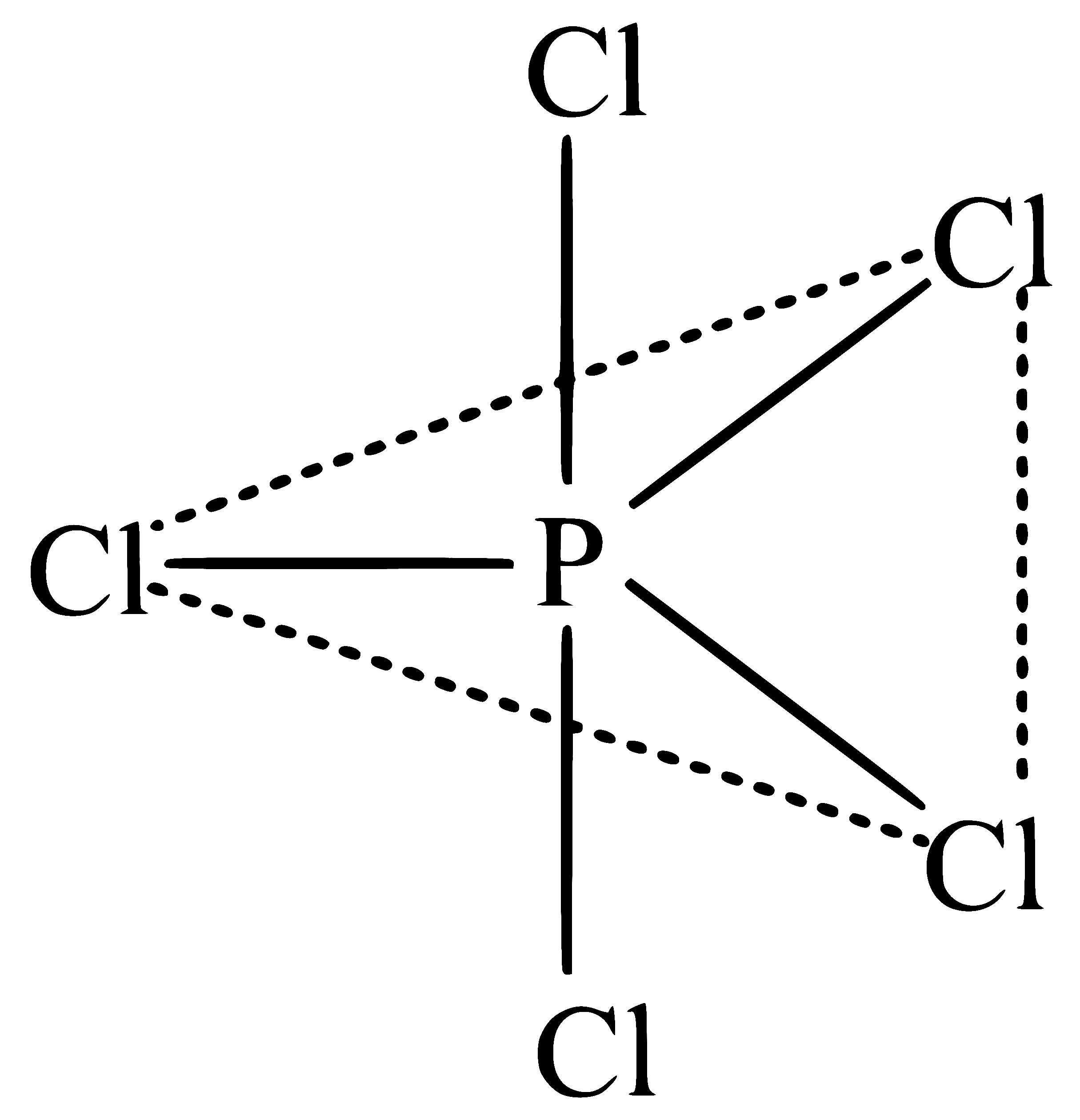
Statement I is false but Statement II is true.

Biology (Maximum Marks: 400)
  • This section contains 100 questions.
  • Each question has FOUR options (A), (B), (C) and (D). ONLY ONE of these four options is the correct answer.
  • Full Marks : +4 If ONLY the correct option is chosen;
  • Zero Marks : 0 If none of the options is chosen (i.e. the question is unanswered);
  • Negative Marks : −1 In all other cases.
Q.1

List - I List - II
(A) Fleming (I) Disc shaped sacs or cisternae near cell nucleus
(B) Robert Brown (II) Chromatin
(C) George Palade (III) Ribosomes
(D) Camillo Golgi (IV) Nucleus

Choose the correct answer from the options given below:

(A)
A-II, B-IV, C-III, D-I
(B)
A-II, B-III, C-I, D-IV
(C)
A-I, B-II, C-III, D-IV
(D)
A-IV, B-II, C-III, D-I
(A)

Solution

Nucleus as a cell organelle was first described by Robert Brown as early as 1831.

Later the material of the nucleus stained by the basic dyes was given the name chromatin by Flemming.

Ribosomes are the granular structure first observed under the microscope as dense particle by George Palade.

Camillo Golgi first observed densely stained reticular structure near the nucleus. It consist of many disc shaped sac or cisternae.

Hence, A-II, B-IV, C-III, D-I is correct.

Q.2

Mesosome in a cell is a :

(A)
Membrane bound vesicular structure
(B)
Chain of many ribosomes attached to a single mRNA
(C)
Special structure formed by extension of plasma membrane
(D)
Medium sized chromosome
(C)

Solution

The correct answer is Option C: Special structure formed by extension of plasma membrane.

Here's a detailed explanation:

Mesosomes are inward folds or invaginations of the plasma membrane in prokaryotic cells (bacteria and archaea). They are not present in all prokaryotes and are considered artifacts of chemical fixation used in electron microscopy. While they were once thought to be important for various cellular functions, they are now believed to be a result of the preparation process rather than a true cellular structure.

Let's look at why the other options are incorrect:

Option A: Membrane bound vesicular structure: While mesosomes are membrane-bound, they are not vesicular structures. Vesicles are small, membrane-enclosed sacs that transport materials within the cell. Mesosomes are more like extensions or folds of the plasma membrane.

Option B: Chain of many ribosomes attached to a single mRNA: This describes a polysome or polyribosome, which is a structure involved in protein synthesis.

Option D: Medium sized chromosome: Prokaryotes have a single, circular chromosome located in a region called the nucleoid. It's not a "medium-sized" chromosome in the same way eukaryotic cells have multiple, linear chromosomes.

In summary, mesosomes are an artifact of chemical fixation and are not considered true cellular structures. They are formed by extensions of the plasma membrane in prokaryotic cells.

Q.3

Match List-I with List-II:

List - I List - II
(A) Histones (I) Loosely packed chromatin
(B) Nucleosome (II) Densely packed chromatin
(C) Euchromatin (III) Positively charged basic proteins
(D) Heterochromatin (IV) DNA wrapped around histone octamer

Choose the correct answer from the options given below:

(A)
A-IV, B-III, C-II, D-I
(B)
A-III, B-I, C-IV, D-II
(C)
A-II, B-III, C-IV, D-I
(D)
A-III, B-IV, C-I, D-II
(D)

Solution

The correct answer is Option D: A-III, B-IV, C-I, D-II

Here's a breakdown of why:

Histones (A) - Positively charged basic proteins (III)

Histones are proteins that are rich in basic amino acids (like lysine and arginine), giving them a positive charge. This positive charge allows them to bind tightly to the negatively charged DNA molecule.

Nucleosome (B) - DNA wrapped around histone octamer (IV)

A nucleosome is the fundamental unit of chromatin. It consists of a core of eight histone proteins (two each of H2A, H2B, H3, and H4) around which a segment of DNA is wrapped. This wrapping is what gives chromatin its "beads-on-a-string" appearance.

Euchromatin (C) - Loosely packed chromatin (I)

Euchromatin is a less condensed form of chromatin that is actively transcribed. It is more loosely packed, allowing access for transcription factors and other proteins involved in gene expression.

Heterochromatin (D) - Densely packed chromatin (II)

Heterochromatin is a highly condensed form of chromatin that is generally inactive in transcription. It is densely packed, making it difficult for transcription factors to access the DNA.

Therefore, the correct match is:

A - III

B - IV

C - I

D - II

Q.4

Match List-I with List-II.

List - I List - II
(A) F Particles (I) Chromosomes
(B) Histones (II) Cillia
(C) Axoneme (III) Golgi apparatus
(D) Cisternae (IV) Mitochondria

Choose the correct answer from the options given below:

(A)
A-II, B-I, C-IV, D-III
(B)
A-IV, B-I, C-II, D-III
(C)
A-IV, B-I, C-III, D-II
(D)
A-IV, B-III, C-I, D-II
(B)

Solution

To solve this matching question, we need to correctly associate the items in List-I with the appropriate items in List-II based on their biological significance.

Here is the breakdown of the items:

1. F1 Particles (A) - These are found in the mitochondria and are involved in ATP synthesis via oxidative phosphorylation.

2. Histones (B) - Histones are proteins that package and order DNA into structural units called nucleosomes, and they are crucial components of chromosomes.

3. Axoneme (C) - The axoneme is the central strand of a cilium or flagellum, typically comprising a complex of microtubules.

4. Cisternae (D) - These are flattened membrane disk structures that are a part of the Golgi apparatus and the endoplasmic reticulum.

Based on these associations, we can match:

  • (A) F1 Particles → (IV) Mitochondria
  • (B) Histones → (I) Chromosomes
  • (C) Axoneme → (II) Cilia
  • (D) Cisternae → (III) Golgi apparatus

Therefore, the correct option is:

Option B: A-IV, B-I, C-II, D-III

Q.5

Given below are two statements :

Statement I : Concentrically arranged cisternae of Golgi complex are arranged near the nucleus with distinct convex cis or maturing and concave trans or forming face.

Statement II : A number of proteins are modified in the cisternae of Golgi complex before they are released from cis face.

In the light of the above statements, choose the correct answer from the option given below.

(A)
Statement I is true but Statement II is false.
(B)
Statement I is false but Statement II is true.
(C)
Both Statement I and Statement II are true
(D)
Both Statement I and Statement II are false
(D)

Solution

The Golgi cisternae are concentrically arranged near the nucleus with distinct convex cis or the forming face and concave trans or the maturing face.

A number of proteins synthesised by ribosomes on the endoplasmic reticulum are modified in the cisternae of the Golgi apparatus before they are released from its trans face.

Hence the correct answer is option (D).

Q.6

Which of the following is a nucleotide?

(A)
Uridine
(B)
Adenylic acid
(C)
Guanine
(D)
Guanosine
(B)

Solution

The correct answer is Option B: Adenylic acid. Here's why:

Let's break down the components of a nucleotide:

  • Sugar: A five-carbon sugar, either ribose (in RNA) or deoxyribose (in DNA).
  • Phosphate Group: A molecule containing phosphorus and oxygen, often attached to the sugar.
  • Nitrogenous Base: A molecule with nitrogen-containing rings, such as adenine (A), guanine (G), cytosine (C), thymine (T), or uracil (U).

Now let's analyze the options:

  • Option A: Uridine is a nucleoside. It consists of the nitrogenous base uracil and the sugar ribose but lacks the phosphate group.
  • Option B: Adenylic acid is a nucleotide. It consists of adenine, ribose, and a phosphate group.
  • Option C: Guanine is a nitrogenous base, a component of nucleotides, but not a complete nucleotide itself.
  • Option D: Guanosine is a nucleoside. It comprises guanine and ribose but lacks the phosphate group.

Therefore, Adenylic acid is the only option that contains all three components (sugar, phosphate, and nitrogenous base) required to be a complete nucleotide.

Q.7

Ligases is a class of enzymes responsible for catalysing the linking together of two compounds. Which of the following bonds is not catalysed by it?

(A)
C – C
(B)
P – O
(C)
C – O
(D)
C – N
(A)

Solution

Option (A) is the correct answer because, ligases are the enzymes that catalyse the linking together of 2 compounds, e.g., enzymes which catalyse joining of C – O, C – S, C – N, P – O etc. bonds.

Options (B), (C) and (D) are wrong as ligase catalyse the joining of P – O, C – O & C – N bonds.

Q.8

Which of the following are not fatty acids?

A. Glutamic acid

B. Arachidonic acid

C. Palmitic acid

D. Lecithin

E. Aspartic acid

Choose the correct answer from the options given below :

(A)
C, D and E only
(B)
A and B only
(C)
A, D and E only
(D)
B and C only
(C)

Solution

To determine which of the options are not fatty acids, we need to understand the nature of each compound mentioned:

Glutamic acid (A): This is an amino acid, not a fatty acid. Amino acids are the building blocks of proteins and have a structure completely different from that of fatty acids.

Arachidonic acid (B): This is a polyunsaturated omega-6 fatty acid, commonly found in the phospholipids of the cell membranes.

Palmitic acid (C): This is a saturated fatty acid that is commonly found in animals and plants. It is one of the most common fatty acids in body lipids.

Lecithin (D): Also known as phosphatidylcholine, lecithin is not a fatty acid but a fatty substance consisting of phospholipids. It is a major component of cell membranes.

Aspartic acid (E): This is another amino acid, not a fatty acid. Similar to glutamic acid, it is part of proteins and has a distinct structure from that of fatty acids.

Based on the information above:

Glutamic acid (A), Lecithin (D), and Aspartic acid (E) are not fatty acids.

Therefore, the correct option is:

Option C: A, D and E only

Q.9

Which of the following graphs depicts the effect of substrate concentration on velocity of enzyme catalysed reaction?

(A)
NEET 2024 (Re-Examination) Biology - Biomolecules Question 14 English Option 1
(B)
NEET 2024 (Re-Examination) Biology - Biomolecules Question 14 English Option 2
(C)
NEET 2024 (Re-Examination) Biology - Biomolecules Question 14 English Option 3
(D)
NEET 2024 (Re-Examination) Biology - Biomolecules Question 14 English Option 4
(A)

Solution

Option (1) is the correct answer because with the increase in substrate concentration, the velocity of enzymatic reaction rises at first. The reaction ultimately reaches maximum velocity (V) which is not exceeded by any further rise in concentration of the substrate. This is because the enzyme molecules are fewer than substrate molecules and after saturation of these molecules, there are no free enzyme molecules to bind the additional substrate molecules

NEET 2024 (Re-Examination) Biology - Biomolecules Question 14 English Explanation

Option (2) is incorrect as velocity of reaction is continuously increasing in the given graph. In option (3) after reaching at Vmax, velocity declines while in option (4) velocity of reaction declines from high on increasing substrate concentration. So, option (3) and (4) are incorrect.

Q.10

Enzymes that catalyse the removal of groups from substrates by mechanisms other than hydrolysis leaving double bonds, are known as :

(A)
Transferases
(B)
Oxidoreductases
(C)
Dehydrogenases
(D)
Lyases
(D)

Solution

The correct answer is Option D: Lyases.

Here's why:

Enzymes are biological catalysts that speed up chemical reactions in living organisms. They are classified into six main classes based on the type of reaction they catalyze.

Lyases are enzymes that catalyze the breaking of chemical bonds by means other than hydrolysis or oxidation. This typically results in the formation of a double bond or a new ring structure. They do not require water for the reaction and often produce a new double bond, ring, or a molecule of water.

Let's look at why the other options are incorrect:

Option A: Transferases These enzymes catalyze the transfer of functional groups (like methyl, phosphate, or amino groups) between molecules.

Option B: Oxidoreductases These enzymes catalyze oxidation-reduction reactions, where electrons are transferred between molecules.

Option C: Dehydrogenases These are a specific type of oxidoreductase that catalyze the removal of hydrogen atoms from a substrate.

In summary: Lyases are the enzymes responsible for breaking chemical bonds without using hydrolysis or oxidation, often creating double bonds or rings. This sets them apart from the other enzyme classes.

Q.11

Match List-I with List-II.

List - I List - II
(A) Primary structure of protein (I) Human haemoglobin
(B) Secondary structure of protein (II) Disulphide bonds
(C) Tertiary structure of protein (III) Polypeptide chain
(D) Quanternary structure of protein (IV) Alpha helix and sheet

Choose the correct answer from the options given below :

(A)
A-III, B-IV, C-II, D-I
(B)
A-III, B-II, C-I, D-IV
(C)
A-I, B-III, C-II, D-IV
(D)
A-IV, B-III, C-II, D-I
(A)

Solution

The correct answer is Option A: A-III, B-IV, C-II, D-I.

Here's a breakdown of the protein structures and their corresponding characteristics:

1. Primary Structure:

The primary structure refers to the linear sequence of amino acids in a polypeptide chain. This sequence is determined by the genetic code and is crucial for the protein's function.

Match: A - III (Polypeptide chain)

2. Secondary Structure:

The secondary structure arises from the hydrogen bonding between amino acids within the polypeptide chain. This results in the formation of regular, repeating patterns such as:

  • Alpha-helix: A coiled structure resembling a spring.
  • Beta-sheet: A sheet-like structure formed by hydrogen bonding between adjacent polypeptide segments.

Match: B - IV (Alpha helix and sheet)

3. Tertiary Structure:

The tertiary structure describes the three-dimensional shape of a single polypeptide chain. This structure is formed by interactions between various amino acid side chains, including:

  • Hydrogen bonds
  • Ionic bonds
  • Hydrophobic interactions
  • Disulfide bonds (formed between cysteine residues)

Match: C - II (Disulphide bonds)

4. Quaternary Structure:

The quaternary structure refers to the arrangement of multiple polypeptide chains (subunits) into a functional protein complex. This structure is stabilized by the same interactions responsible for the tertiary structure.

Match: D - I (Human haemoglobin)

Human haemoglobin is a classic example of a protein with a quaternary structure. It is composed of four polypeptide chains (two alpha and two beta chains), each of which binds to a heme group, enabling oxygen transport.

Q.12

Given below are two statements:

Statement I: Failure of segregation of chromatids during cell cycle resulting in the gain or loss of whole set of chromosome in an organism is known as aneuploidy.

Statement II: Failure of cytokinesis after anaphase stage of cell division results in the gain or loss of a chromosome is called polyploidy.

In the light of the above statements, choose the correct answer from the options given below:

(A)
Statement I is true but Statement II is false
(B)
Statement I is false but Statement II is true
(C)
Both Statement I and Statement II are true
(D)
Both Statement I and Statement II are false
(D)

Solution

To understand the correctness of the statements, let's break down the key terms mentioned in each statement.

Statement I: Failure of segregation of chromatids during cell cycle resulting in the gain or loss of whole set of chromosome in an organism is known as aneuploidy.

Aneuploidy refers to a condition in which the number of chromosomes is not an exact multiple of the haploid set. This typically results in the gain or loss of one or more chromosomes, not entire sets. Therefore, the definition provided in the statement is incorrect as it suggests a whole set of chromosomes, which is more aligned with polyploidy.

Statement II: Failure of cytokinesis after anaphase stage of cell division results in the gain or loss of a chromosome is called polyploidy.

Polyploidy is a condition in which an organism has more than two complete sets of chromosomes. This typically occurs due to the failure of cytokinesis, but it does not result in the gain or loss of a single chromosome, rather, it results in the addition of entire sets of chromosomes.

Given the explanations above, the correct answer would be:

Option D: Both Statement I and Statement II are false

Q.13

Recombination between homologous chromosomes is completed by the end of

(A)
Diakinesis
(B)
Zygotene
(C)
Diplotene
(D)
Pachytene
(D)

Solution

The correct answer is Option D: Pachytene. Here's why:

Meiosis is a cell division process that produces gametes (sperm and egg cells) with half the number of chromosomes as the parent cell. During meiosis, homologous chromosomes (pairs of chromosomes with the same genes) undergo a process called crossing over, which involves the exchange of genetic material.

Let's break down the stages of prophase I of meiosis, where recombination occurs:

  • Leptotene: Chromosomes condense and become visible.
  • Zygotene: Homologous chromosomes begin to pair up, forming structures called synaptonemal complexes.
  • Pachytene: This is where crossing over actually takes place. The synaptonemal complexes are fully formed, and the chromosomes are tightly paired. The exchange of genetic material between non-sister chromatids occurs within these complexes.
  • Diplotene: The synaptonemal complexes begin to dissolve, and the chromosomes start to separate. However, they remain attached at points called chiasmata, which are the visible sites of crossing over. Recombination is complete at this stage.
  • Diakinesis: The chromosomes condense further, and the chiasmata become more prominent. The nuclear envelope breaks down, and the spindle fibers start to form.

Therefore, recombination is completed by the end of Pachytene, where the exchange of genetic material is finished. Although chiasmata are still visible in Diplotene, the actual recombination event is already completed in Pachytene.

Q.14

Match List-I with List-II :

List - I List - II
(A) Metacentric chromosome (I) Chromosome has a terminal centromere
(B) Sub-metacentric chromosome (II) Middle centromere forming two equal arms of chromosome
(C) Acrocentric chromosome (III) Centromere is slightly away from the middle of chromosome resulting into two unequal arms
(D) Telocentric chromosome (IV) Centromere is situated close to its end forming one extremely short and one very long arm

Choose the correct answer from the options given below:

(A)
A-II, B-I, C-IV, D-III
(B)
A-IV, B-I, C-II, D-III
(C)
A-I, B-II, C-III, D-IV
(D)
A-II, B-III, C-IV, D-I
(D)

Solution

Here's a breakdown of the chromosome types and their corresponding centromere positions, helping you match the lists correctly:

Understanding Chromosome Structure

Chromosomes are thread-like structures made of DNA that carry genetic information. The centromere is a constricted region on the chromosome that holds sister chromatids (identical copies of DNA) together during cell division. The location of the centromere determines the shape of the chromosome and is used for classification.

Types of Chromosomes

  • Metacentric Chromosome (A): The centromere is located in the middle of the chromosome, resulting in two arms of equal length. (II)
  • Sub-metacentric Chromosome (B): The centromere is slightly off-center, leading to one arm slightly longer than the other. (III)
  • Acrocentric Chromosome (C): The centromere is located close to the end of the chromosome, creating one very short arm and one very long arm. (IV)
  • Telocentric Chromosome (D): The centromere is at the very end of the chromosome, resulting in a single, very long arm. (I)

Matching the Lists

Based on the above explanations, the correct match is:

Option D: A-II, B-III, C-IV, D-I

Q.15

Match List-I with List-II.

List - I
Event
List - II
Stage of Prophase-I (Meiosis-I)
(A) Chiasmata formation (I) Pachytene
(B) Crossing over (II) Diakinesis
(C) Synaptonemal complex formation (III) Diplotene
(D) Terminalisation of chiasmata (IV) Zygotene

Choose the correct answer from the options given below :

(A)
A-III, B-I, C-IV, D-II
(B)
A-II, B-I, C-III, D-IV
(C)
A-III, B-I, C-II, D-IV
(D)
A-II, B-III, C-IV, D-I
(A)

Solution

To match the events in List-I with the stages of Prophase-I (Meiosis-I) in List-II correctly, we need to understand the sequence of events that occur in each stage:

Chiasmata formation: This occurs during the Diplotene stage.

Crossing over: This occurs during the Pachytene stage.

Synaptonemal complex formation: This occurs during the Zygotene stage.

Terminalisation of chiasmata: This occurs during the Diakinesis stage.

So, matching these correctly:

(A) Chiasmata formation - (III) Diplotene

(B) Crossing over - (I) Pachytene

(C) Synaptonemal complex formation - (IV) Zygotene

(D) Terminalisation of chiasmata - (II) Diakinesis

The correct answer is:

Option A

A-III, B-I, C-IV, D-II

Q.16

Match List-I with List-II.

List - I List - II
(A) Cells are metabolically active and proliferate (I) G phase
(B) DNA replication takes place (II) G phase
(C) Proteins are synthesised (III) G phase
(D) Quiescent stage with metabolically active cells (IV) S phase

Choose the correct answer from the options given below:

(A)
A-IV, B-II, C-III, D-I
(B)
A-I, B-III, C-IV, D-II
(C)
A-I, B-I, C-III, D-IV
(D)
A-II, B-IV, C-I, D-III
(D)

Solution

To match List-I with List-II correctly, we need to understand what happens in each phase of the cell cycle:

1. G Phase: This is the first phase in interphase. During this phase, cells are metabolically active and proliferate. It fits for "Cells are metabolically active and proliferate".

2. S Phase: This is the phase where DNA replication takes place. It fits for "DNA replication takes place".

3. G Phase: During this phase, the cell continues to grow and proteins are synthesized in preparation for mitosis. It fits for "Proteins are synthesized".

4. G Phase: This is a resting or quiescent stage where cells remain metabolically active but do not proliferate. It fits for "Quiescent stage with metabolically active cells".

Now, let's match the items:

(A) Cells are metabolically active and proliferate - matches with G phase (II)

(B) DNA replication takes place - matches with S phase (IV)

(C) Proteins are synthesized - matches with G phase (I)

(D) Quiescent stage with metabolically active cells - matches with G phase (III)

Therefore, the correct matching is:

(A) - (II)

(B) - (IV)

(C) - (I)

(D) - (III)

The correct answer is:

Option D

A-II, B-IV, C-I, D-III

Q.17

Which part of the ovule stores reserve food materials?

(A)
Nucellus
(B)
Integument
(C)
Placenta
(D)
Funicle
(A)

Solution

The correct answer is Option A: Nucellus. Here's why:

The ovule is the structure within the ovary of a flower that develops into a seed after fertilization. Let's break down the parts of an ovule and their functions:

1. Nucellus:

  • This is the central core of the ovule.
  • It is composed of parenchyma cells, which are specialized cells that store nutrients.
  • The nucellus provides nourishment to the developing embryo sac (female gametophyte) and ultimately the developing embryo.

2. Integuments:

  • These are protective layers that surround the nucellus.
  • They develop into the seed coat (testa) after fertilization, protecting the seed.

3. Placenta:

  • This is a tissue within the ovary that connects the ovule to the ovary wall.
  • It plays a crucial role in the transport of nutrients and water to the developing ovule.

4. Funicle:

  • This is the stalk that attaches the ovule to the placenta.

In summary, the nucellus is the part of the ovule that specifically stores reserve food materials to support the development of the embryo within the seed.

Q.18

Pollen grains remain preserved as fossils due to the presence of :

(A)
Epidermal layer
(B)
Tapetum
(C)
Exine layer
(D)
Intine layer
(C)

Solution

The correct answer is Option C: Exine layer. Here's why:

Pollen grains are incredibly resilient and often survive fossilization due to their tough outer layer called the exine. Let's break down why the exine is so important:

Exine:

  • Structure: The exine is composed of a complex, highly resistant polymer called sporopollenin. This substance is incredibly durable, resistant to degradation by chemicals, enzymes, and even extreme temperatures.
  • Function: The exine acts as a protective barrier for the pollen grain, shielding it from environmental damage and ensuring its survival during transport to the stigma of a flower.
  • Preservation: The exine's robust nature allows it to withstand the pressures of fossilization, making it a common element in the fossil record.

Let's examine the other options:

Option A: Epidermal layer: While the epidermal layer of a plant does contribute to its structure, it's not the primary reason for pollen preservation.

Option B: Tapetum: The tapetum is a layer of cells within the anther that nourishes developing pollen grains. It doesn't directly contribute to the fossil record.

Option D: Intine layer: The intine is the inner layer of the pollen grain, composed of cellulose and pectin. It's less resistant to decay than the exine and is less likely to be preserved as a fossil.

In conclusion, the exine's unique composition and robust nature make it the crucial factor in the preservation of pollen grains as fossils.

Q.19

The part marked as ‘x’ in the given figure is

NEET 2024 (Re-Examination) Biology - Sexual Reproduction in Flowering Plants Question 14 English

(A)
Endosperm
(B)
Thalamus
(C)
Endocarp
(D)
Mesocarp
(B)

Solution

The given figure is of the false fruit, strawberry and ‘x’ represents the thalamus.

Q.20

Match List-I with List-II relating to microbes and their products:

List - I
(Microbes)
List - II
(Products)
(A) Streptococcus (I) Citric acid
(B) Trichoderma polysporum (II) Clot buster
(C) Monascus purpureus (III) Cyclosporin A
(D) Aspergillus niger (IV) Statins

Choose the correct answer from the options given below:

(A)
A-II, B-III, C-IV, D-I
(B)
A-I, B-II, C-III, D-IV
(C)
A-I, B-III, C-II, D-IV
(D)
A-I, B-IV, C-II, D-III
(A)

Solution

To match the microbes in List-I with their respective products in List-II, we need to understand the specific functions and products associated with these microbes:

  • Streptococcus: This genus is known for producing enzymes that can act as clot busters, commonly used in medical treatments for dissolving blood clots.
  • Trichoderma polysporum: This fungus is known for producing Cyclosporin A, which is an immunosuppressant drug used in organ transplantation.
  • Monascus purpureus: This fungus produces Statins, which are compounds used to lower cholesterol levels in blood.
  • Aspergillus niger: This fungus is known for producing Citric acid, which is widely used as a preservative and flavoring agent.

By matching the microbes with their respective products, we get:

List - I
(Microbes)
List - II
(Products)
(A) Streptococcus (II) Clot buster
(B) Trichoderma polysporum (III) Cyclosporin A
(C) Monascus purpureus (IV) Statins
(D) Aspergillus niger (I) Citric acid

So, the correct matching is:

Thus, the correct answer is Option A: A-II, B-III, C-IV, D-I.

Q.21

Which of the following simple tissues are commonly found in the fruit walls of nuts and pulp of pear?

(A)
Sclereids
(B)
Fibres
(C)
Parenchyma
(D)
Collenchyma
(A)

Solution

The correct answer is Option A: Sclereids. Here's why:

Sclereids are a type of sclerenchyma tissue, characterized by their thick, lignified cell walls. These rigid cells provide structural support and protection. They are commonly found in the hard, protective layers of nuts and the gritty texture of pear pulp. Let's break down why the other options are incorrect:

  • Fibres are another type of sclerenchyma tissue, but they are long and slender, providing tensile strength. While they are present in some plant structures, they are not the primary component of nut shells or pear pulp.
  • Parenchyma cells are thin-walled and loosely packed, making them suitable for storage and photosynthesis. They are found throughout plants but don't provide the same level of rigidity as sclereids.
  • Collenchyma cells have thickened cell walls at the corners, offering flexibility and support to young, growing tissues. They are not typically found in mature fruit structures.

In summary, the presence of sclereids with their thick, lignified walls explains the hardness of nut shells and the gritty texture of pear pulp.

Q.22

Which of the following helps in maintenance of the pressure gradient in sieve tubes?

(A)
Albuminous cells
(B)
Sieve cells
(C)
Phloem parenchyma
(D)
Companion cells
(D)

Solution

The maintenance of the pressure gradient in sieve tubes is crucial for the process of translocation of nutrients, primarily sugars, within the phloem of vascular plants. Among the given options, the correct answer is:

Option D
Companion cells

Companion cells play a vital role in the maintenance of the pressure gradient in sieve tubes. These cells are closely associated with sieve tube elements to which they are connected by numerous plasmodesmata. Companion cells assist in maintaining the pressure gradient through the following mechanisms:

1. Loading and Unloading of Sugars: Companion cells actively transport sugars into and out of the sieve tubes. This activity creates a concentration gradient, leading to osmosis which in turn generates turgor pressure within the sieve tubes. This pressure drives the flow of sap from source tissues (where sugars are produced) to sink tissues (where sugars are utilized or stored).

2. Metabolic Support: Companion cells provide metabolic support to the sieve tube elements, which lack a nucleus and other organelles necessary for their own metabolism, thereby maintaining the functional integrity of the sieve tubes.

Therefore, companion cells are integral in managing the pressure gradient required for efficient phloem transport, making Option D the correct choice.

Q.23

Given below are two statements:

Statement I: In a dicotyledonous leaf, the adaxial epidermis generally bears more stomata than the abaxial epidermis.

Statement II: In a dicotyledonous leaf, the adaxially placed palisade parenchyma is made up of elongated cells, which are arranged vertically and parallel to each other.

In the light of the above statements, choose the correct answer from the options given below:

(A)
Statement I is true but Statement II is false
(B)
Statement I is false but Statement II is true
(C)
Both Statement I and Statement II are true
(D)
Both Statement I and Statement II are false
(B)

Solution

To evaluate the given statements about dicotyledonous leaves, let's break down each statement and understand its validity.

Statement I: In a dicotyledonous leaf, the adaxial epidermis generally bears more stomata than the abaxial epidermis.

This statement is generally false. In most dicotyledonous leaves, the abaxial (lower) epidermis typically has more stomata than the adaxial (upper) epidermis. This adaptation helps in efficient gas exchange while minimizing water loss as the lower surface is less exposed to direct sunlight.

Statement II: In a dicotyledonous leaf, the adaxially placed palisade parenchyma is made up of elongated cells, which are arranged vertically and parallel to each other.

This statement is true. The palisade parenchyma in dicotyledonous leaves is located on the adaxial (upper) side and consists of elongated cells aligned vertically and parallel to each other. This arrangement is crucial for maximizing light absorption for photosynthesis.

Based on the explanation above, the correct evaluation of the given statements is:

Option B: Statement I is false but Statement II is true.

Q.24

Match List-I with List-II:

List - I List - II
(A) ETS Complex I (I) NADH Dehydrogenase
(B) ETS Complex II (II) Cytochrome bC
(C) ETS Complex III (III) Cytochrome C oxidase
(D) ETS Complex IV (IV) Succinate Dehydrogenase

Choose the correct answer from the options given below :

(A)
A-IV, B-I, C-III, D-II
(B)
A-I, B-IV, C-II, D-III
(C)
A-III, B-I, C-IV, D-II
(D)
A-I, B-II, C-IV, D-III
(B)

Solution

The correct answer is Option B: A-I, B-IV, C-II, D-III.

Here's why:

The Electron Transport System (ETS) in cellular respiration involves a series of protein complexes embedded in the inner mitochondrial membrane. Each complex plays a specific role in transferring electrons and pumping protons across the membrane, generating a proton gradient that drives ATP synthesis.

Let's break down the matching:

  1. ETS Complex I (NADH Dehydrogenase): This complex is responsible for accepting electrons from NADH, a reduced electron carrier generated in glycolysis and the Krebs cycle. It then pumps protons into the intermembrane space.
  2. ETS Complex II (Succinate Dehydrogenase): This complex is directly involved in the Krebs cycle, accepting electrons from succinate and transferring them to the electron transport chain. It does not pump protons.
  3. ETS Complex III (Cytochrome bC): This complex receives electrons from Complex I and II and passes them to cytochrome c. It also pumps protons across the membrane.
  4. ETS Complex IV (Cytochrome C Oxidase): This complex is the final electron acceptor in the chain, receiving electrons from cytochrome c and transferring them to molecular oxygen (O) to form water (HO). It also pumps protons.

Therefore, the correct match is:

  • (A) ETS Complex I - (I) NADH Dehydrogenase
  • (B) ETS Complex II - (IV) Succinate Dehydrogenase
  • (C) ETS Complex III - (II) Cytochrome bC
  • (D) ETS Complex IV - (III) Cytochrome C oxidase

Q.25

Which of the following are correct about cellular respiration?

A. Cellular respiration is the breaking of C-C bonds of complex organic molecules by oxidation.

B. The entire cellular respiration takes place in Mitochondria.

C. Fermentation takes place under anaerobic condition in germinating seeds.

D. The fate of pyruvate formed during glycolysis depends on the type of organism also.

E. Water is formed during respiration as a result of O accepting electrons and getting reduced.

Choose the correct answer from the options given below :

(A)
A, C, D, E only
(B)
A, B, E only
(C)
A, B, C, E only
(D)
B, C, D, E only
(A)

Solution

To determine the correct statements about cellular respiration, let's analyze each statement one by one:

A. Cellular respiration is the breaking of C-C bonds of complex organic molecules by oxidation.

This statement is correct. Cellular respiration involves the oxidation of organic molecules to break the carbon-carbon (C-C) bonds and release energy.

B. The entire cellular respiration takes place in Mitochondria.

This statement is incorrect. While the majority of cellular respiration (Krebs cycle and oxidative phosphorylation) occurs in the mitochondria, glycolysis (the first step) takes place in the cytoplasm.

C. Fermentation takes place under anaerobic condition in germinating seeds.

This statement is correct. Fermentation is an anaerobic process that converts sugars to acids, gases, or alcohol, and it can occur in germinating seeds when oxygen is scarce.

D. The fate of pyruvate formed during glycolysis depends on the type of organism also.

This statement is correct. The fate of pyruvate can vary depending on the type of organism and the presence of oxygen. For example, in aerobic conditions, pyruvate enters the mitochondria for the Krebs cycle, whereas in anaerobic conditions, it can be converted to lactate or ethanol, depending on the organism.

E. Water is formed during respiration as a result of O accepting electrons and getting reduced.

This statement is correct. During the electron transport chain in oxidative phosphorylation, oxygen () acts as the final electron acceptor and gets reduced to form water ().

Based on the analysis, the correct statements are A, C, D, and E. Hence, the correct option is:

Option A: A, C, D, E only

Q.26

Given below are two statements:

Statement I : The Indian Government has set up GEAC, which will make decisions regarding the validity of GM research.

Statement II : Biopiracy is the term used to refer to the use of bio-resources by native people.

In the light of the above statements, choose the correct answer from the options given below :

(A)
Statement I is true but Statement II is false
(B)
Statement I is false but Statement II is true
(C)
Both Statement I and Statement II are true
(D)
Both Statement I and Statement II are false
(A)

Solution

Let's analyze each statement separately to determine its validity:

Statement I: The Indian Government has set up GEAC, which will make decisions regarding the validity of GM research.

The Genetic Engineering Appraisal Committee (GEAC) is indeed an authority established by the Indian Government under the Ministry of Environment, Forest and Climate Change. Its role is to evaluate and make decisions regarding the research, development, and commercialization of genetically modified (GM) organisms and products. Therefore, Statement I is true.

Statement II: Biopiracy is the term used to refer to the use of bio-resources by native people.

Biopiracy refers to the unethical or unauthorized exploitation of biological resources, typically involving indigenous knowledge, by entities (often corporations or researchers from developed countries) without fair compensation to the native people or countries from which these resources originate. Therefore, this statement is incorrect as it should mention the exploitation by external entities rather than the use by native people themselves. Therefore, Statement II is false.

Based on the analysis, the correct answer is:

Option A: Statement I is true but Statement II is false

Q.27

Match List-I with List - II :

List - I List - II
(A) Genetically engineered Human Insulin (I) Gene therapy
(B) GM Cotton (II) E. coli
(C) ADA Deficiency (III) Antigen-antibody interaction
(D) ELISA (IV) Bacillus thuringiensis

Choose the correct answer from the options given below:

(A)
A-III, B-II, C-IV, D-I
(B)
A-II, B-I, C-IV, D-III
(C)
A-IV, B-III, C-I, D-II
(D)
A-II, B-IV, C-I, D-III
(D)

Solution

To match List-I with List-II, we need to find the correct association for each item provided:

(A) Genetically engineered Human Insulin - This is produced using recombinant DNA technology and commonly involves the bacterium E. coli.

(B) GM Cotton - This is genetically modified cotton, which typically involves the incorporation of genes from Bacillus thuringiensis (Bt) to produce pest-resistant cotton.

(C) ADA Deficiency - Ada deficiency is often treated using gene therapy.

(D) ELISA - ELISA (Enzyme-Linked Immunosorbent Assay) is a test that uses antigen-antibody interactions to detect the presence of a substance, usually an antigen or antibody, in a liquid sample.

Now let's match them with List-II:

List - I List - II
(A) Genetically engineered Human Insulin (II) E. coli
(B) GM Cotton (IV) Bacillus thuringiensis
(C) ADA Deficiency (I) Gene therapy
(D) ELISA (III) Antigen-antibody interaction

So, the correct answer is:

Option D: A-II, B-IV, C-I, D-III

Q.28

Identify the incorrect statement related to gel electrophoresis.

(A)
Separated DNA fragments can be directly seen under UV radiation
(B)
Separated DNA can be extracted from gel piece
(C)
Fragment of DNA moves toward anode
(D)
Sieving effect of agarose gel helps in separation of DNA fragments
(A)

Solution

The incorrect statement related to gel electrophoresis is Option A: Separated DNA fragments can be directly seen under UV radiation.

Here's why:

DNA itself is not fluorescent. To visualize DNA fragments after separation, a dye that binds to DNA and fluoresces under UV light is used. This dye, often ethidium bromide or SYBR Safe, intercalates between the DNA bases, making the DNA visible under UV light.

Let's look at the other options:

Option B: Separated DNA can be extracted from gel piece is correct. DNA fragments can be extracted from the gel by cutting out the desired band and using a method called gel extraction. This allows for further analysis or cloning of the extracted DNA.

Option C: Fragment of DNA moves toward anode is also correct. DNA molecules carry a negative charge due to the phosphate groups in their backbone. In gel electrophoresis, the DNA is loaded into wells at the negative end of the gel. When an electric current is applied, the negatively charged DNA fragments migrate towards the positive electrode (anode).

Option D: Sieving effect of agarose gel helps in separation of DNA fragments is correct. Agarose gel acts as a sieve, with pores that allow smaller fragments to travel through more easily than larger fragments. This difference in mobility, based on size, allows for separation of DNA fragments.

Q.29

Recombinant DNA molecule can be created normally by cutting the vector DNA and source DNA respectively with:

(A)
Hind II, Hind II
(B)
Hind II, Alu I
(C)
Hind II, EcoR I
(D)
Hind II, BamHI
(A)

Solution

Recombinant DNA technology involves the insertion of a specific gene from one organism into the DNA of another organism. This process requires the use of restriction enzymes to cut both the vector DNA and the source DNA at specific sites, creating compatible ends that can then be joined together.

Here's a breakdown of the options provided:

Option A: Hind II, Hind II

Both the vector DNA and the source DNA are cut with Hind II. However, since Hind II would cut both DNAs at the same sequence, it may not necessarily create sticky ends that are compatible for recombination.

Option B: Hind II, Alu I

Using Hind II for the vector DNA and Alu I for the source DNA means they are cut with different restriction enzymes. This typically wouldn’t create compatible ends for recombination.

Option C: Hind II, EcoR I

Similar to Option B, Hind II for the vector DNA and EcoR I for the source DNA won’t create compatible ends, as different enzymes recognize and cut at different sequences.

Option D: Hind II, BamHI

In this option, Hind II cuts the vector DNA and BamHI cuts the source DNA. Like Options B and C, using different restriction enzymes typically won’t create compatible ends for recombinant DNA formation.

Therefore, the correct answer is:

Option A: Hind II, Hind II

Because using the same restriction enzyme for both the vector and the source DNA increases the likelihood of generating compatible "sticky" ends that can be joined together to form a recombinant DNA molecule.

Q.30

The Bt toxin in genetically engineered Bt cotton kills the pest by:

(A)
Creating pores in the midgut
(B)
Damaging the respiratory system
(C)
Degenerating the nervous system
(D)
Altering the pH of body fluids
(A)

Solution

The correct answer is Option A: Creating pores in the midgut. Here's why:

Bt toxin, short for Bacillus thuringiensis toxin, is a naturally occurring insecticide produced by the bacterium Bacillus thuringiensis. When ingested by certain insect pests, it acts specifically on their digestive system.

Here's how it works:

  • Ingestion: Insect pests consume Bt toxin along with plant material.
  • Activation: The alkaline environment of the insect's midgut (the middle part of its digestive tract) activates the Bt toxin.
  • Binding: The activated toxin binds to specific receptor proteins on the epithelial cells lining the insect's midgut.
  • Pore Formation: This binding causes the toxin to insert itself into the cell membrane of the midgut cells, forming pores or holes.
  • Cell Disruption: The formation of these pores disrupts the cell's ability to maintain its structure and function. The cell leaks nutrients and fluids, ultimately leading to cell death.
  • Death: The widespread damage to the midgut cells results in the insect's death due to starvation and/or internal organ failure.

Let's look at why the other options are incorrect:

  • Option B: Damaging the respiratory system: Bt toxin primarily targets the digestive system of insects, not their respiratory system.
  • Option C: Degenerating the nervous system: While some insecticides do affect the nervous system, Bt toxin's primary mode of action is through the digestive system.
  • Option D: Altering the pH of body fluids: While Bt toxin's activation is influenced by pH, its primary effect is not on altering the overall pH of the insect's body fluids.

In summary, Bt toxin works by creating pores in the midgut of susceptible insect pests, leading to their death.

Q.31

Select the restriction endonuclease enzymes whose restriction sites are present for the tetracycline resistance (tet) gene in the pBR322 cloning vector.

(A)
Bam HI and Sal I
(B)
Sal I and Pst I
(C)
Pst I and Pvu I
(D)
Pvu I and Bam HI
(A)

Solution

The pBR322 cloning vector is a commonly used plasmid in molecular biology that contains two antibiotic resistance genes: the tetracycline resistance (tetR) gene and the ampicillin resistance (ampR) gene. Various restriction endonuclease enzymes can cut specific sequences within this plasmid, and each enzyme has specific restriction sites.

For the tetracycline resistance (tetR) gene, the restriction sites of interest are those that either flank or are within the gene sequence. The enzymes listed in the options are BamHI, SalI, PstI, and PvuI. We need to determine which of these enzymes have sites located within the tetR gene region in pBR322.

Upon analysis of the restriction map of the pBR322 vector, it is noted that:

  • BamHI: Has a recognition site within the tetR gene.
  • SalI: Cuts within the tetR gene.
  • PstI: Cuts outside the tetR gene.
  • PvuI: Cuts outside the tetR gene.

Therefore, the correct choice of restriction endonuclease enzymes whose restriction sites are present within the tetracycline resistance (tetR) gene in the pBR322 cloning vector is:

Option A: BamHI and SalI

Q.32

Which of the following are correct about EcoRI?

A. Cut the DNA with blunt end

B. Cut the DNA with sticky end

C. Recognise a specific palindromic sequence

D. Cut the DNA between the base and when encounters the DNA sequence 'GAATTC'

E. Exonuclease

Choose the correct answer from the options given below:

(A)
B, C, E only
(B)
A, D, E only
(C)
A, C, D only
(D)
B, C, D only
(D)

Solution

The correct answer is option (D) as

EcoRI does not cut the DNA with blunt ends. Instead, it cuts the DNA with sticky / cohesive / staggered ends on each strand.

EcoRI is a restriction endonuclease that recognises a specific palindromic sequence and cuts at a specific site within the DNA, known as the restriction site. It is not an exonuclease as exonucleases remove nucleotides from the free ends of the DNA.

The recognition sequence for EcoRI is and it cuts the DNA between bases G and A only when the sequence GAATTC is present in the DNA.

Therefore, ‘A’ and ‘E’ represent incorrect features about EcoRI, whereas ‘B’, ‘C’ and ‘D’ are correct features of EcoRI.

The other options, i.e., (A), (B) and (C) are incorrect as they represent incorrect combinations of features w.r.t. EcoRI.

Q.33

Following are the steps involved in the process of PCR.

A. Annealing

B. Amplification (~1 billion times)

C. Denaturation

D. Treatment with Taq polymerase and deoxynucleotides

E. Extension

Choose the correct sequence of steps of PCR from the options given below :

(A)
(B)
(C)
(D)
(A)

Solution

The Polymerase Chain Reaction (PCR) is a method used to amplify DNA. The correct sequence of steps involved in the process of PCR is:

  1. Denaturation: The double-stranded DNA is heated to separate it into two single strands.
  2. Annealing: The temperature is lowered to allow primers to attach to the single-stranded DNA.
  3. Extension: Taq polymerase extends the primers to form a new DNA strand.
  4. Amplification: This cycle of heating and cooling is repeated multiple times (~1 billion times) to amplify the DNA.

Therefore, the correct sequence of steps of PCR from the options given is:

Option A:

This option correctly represents the sequence of steps in PCR where:

  1. represents Denaturation.
  2. represents Annealing.
  3. represents Treatment with Taq polymerase and deoxynucleotides (which occurs during the Extension step).
  4. represents Extension.
  5. represents Amplification (~1 billion times).

Hence, Option A is the correct sequence.

Q.34

The regions with high level of species richness, high degree of endemism and a loss of of the species and habitat are identified as:

(A)
Natural Reserves
(B)
Sacred Groves
(C)
Biodiversity Hotspots
(D)
Biogeographical Regions
(C)

Solution

The regions with a high level of species richness, high degree of endemism, and a loss of of species and habitat are identified as:

Option C: Biodiversity Hotspots

Biodiversity hotspots are regions that are significantly rich in species, especially those endemic or unique to that area, meaning they are not found anywhere else. These regions also experience a substantial loss of their original habitat—typically or more has been degraded or destroyed. Recognizing these areas is crucial for conservation efforts as they harbor a large number of species that are at risk of extinction.

Q.35

Which one of the following is not included under in-situ conservation?

(A)
Wild-life sanctuary
(B)
Botanical garden
(C)
Biosphere reserve
(D)
National park
(B)

Solution

The correct answer is Option B: Botanical garden. Here's why:

In-situ conservation refers to the conservation of species in their natural habitats. This involves protecting and managing the ecosystems where these species live.

Let's analyze each option:

Option A: Wild-life sanctuary - These are protected areas specifically designated for the conservation of wild animals. They are prime examples of in-situ conservation.

Option B: Botanical garden - Botanical gardens are cultivated areas where plants are collected, grown, and displayed for scientific research, conservation, and public education. While they play a crucial role in plant conservation, they are not natural habitats and therefore don't fall under in-situ conservation.

Option C: Biosphere reserve - These are areas designated by UNESCO where humans and nature coexist sustainably. They encompass a range of ecosystems, promoting both conservation and sustainable use, making them a form of in-situ conservation.

Option D: National park - National parks are large areas of land protected for their natural beauty, wildlife, and ecosystems. They are dedicated to preserving nature in its natural state, making them a key example of in-situ conservation.

Therefore, the only option not included under in-situ conservation is Option B: Botanical garden.

Q.36

Cryopreservation technique is used for :

(A)
Protection of environment
(B)
Protection of Biodiversity hotspots
(C)
Preservation of gametes in viable and fertile condition for a long period
(D)
In-situ conservation
(C)

Solution

The correct answer is Option C: Preservation of gametes in viable and fertile condition for a long period.

Here's why:

Cryopreservation is the process of preserving biological materials, including cells, tissues, and organs, by freezing them at extremely low temperatures. This process significantly slows down or completely stops all biological activity, effectively putting the material in a state of suspended animation.

Let's break down the options:

Option A: Protection of the environment: While cryopreservation can be used to preserve certain environmental samples like microbial communities or seeds, it's not the primary technique for overall environmental protection. Environmental protection encompasses a wide range of practices, including pollution control, habitat conservation, and resource management.

Option B: Protection of Biodiversity hotspots: Cryopreservation can play a role in biodiversity conservation by preserving genetic material from endangered species. However, it's not the sole method for protecting biodiversity hotspots. In-situ conservation (protecting species in their natural habitats) is equally crucial.

Option C: Preservation of gametes in viable and fertile condition for a long period: This is the core application of cryopreservation. Gametes (sperm and eggs) are incredibly sensitive to temperature fluctuations and can easily lose their viability. Cryopreservation allows for the long-term storage of these gametes, ensuring their fertility even after years of storage. This is essential for various applications such as:

  • Assisted reproductive technologies (ART) like in-vitro fertilization (IVF)
  • Preservation of endangered species' genetic material
  • Storing gametes for future use, such as delaying parenthood

Option D: In-situ conservation: In-situ conservation refers to protecting species within their natural habitats. Cryopreservation is an ex-situ conservation technique, meaning it involves preserving genetic material outside of its natural environment.

In conclusion, cryopreservation is a valuable tool for preserving the viability and fertility of gametes for extended periods, making it crucial for various scientific, medical, and conservation applications.

Q.37

Match List-I with List-II:

List - I List - II
(A) Biodiversity hotspot (I) Khasi and Jantia hills in Meghalaya
(B) Sacred groves (II) World Summit on Sustainable Development 2002
(C) Johannesburg, South Africa (III) Parthenium
(D) Alien species invasion (IV) Western Ghats

Choose the correct answer from the options given below:

(A)
A-IV, B-I, C-II, D-III
(B)
A-II, B-III, C-IV, D-I
(C)
A-I, B-IV, C-III, D-II
(D)
A-III, B-I, C-II, D-IV
(A)

Solution

Let's match the items in List-I with those in List-II:

(A) Biodiversity hotspot refers to areas with a high level of endemic species that are under significant threat from humans. In this context, the Western Ghats is a well-known biodiversity hotspot in India.

(B) Sacred groves are areas of forest or natural vegetation that are conserved due to religious and cultural practices. The Khasi and Jantia hills in Meghalaya have such sacred groves.

(C) Johannesburg, South Africa is known for hosting significant international events, such as the World Summit on Sustainable Development 2002.

(D) Alien species invasion refers to the introduction of non-native species that can cause harm to the local ecosystem. Parthenium is an alien species known for its invasive nature.

Based on the descriptions above, the correct matches are:

  • A - IV (Biodiversity hotspot - Western Ghats)
  • B - I (Sacred groves - Khasi and Jantia hills in Meghalaya)
  • C - II (Johannesburg, South Africa - World Summit on Sustainable Development 2002)
  • D - III (Alien species invasion - Parthenium)

Therefore, the correct option is:

Option A: A-IV, B-I, C-II, D-III

Q.38

Match List-I with List-II:

List - I
Organisms
List - II
Mode of Nutrition
(A) Euglenoid (I) Parasitic
(B) Dinoflagellate (II) Saprophytic
(C) Slime mould (III) Photosynthetic
(D) Plasmodium (IV) Switching between photosynthetic and heterotrophic mode

Choose the correct answer from the options given below:

(A)
A-III, B-IV, C-II, D-I
(B)
A-IV, B-II, C-I, D-III
(C)
A-IV, B-III, C-II, D-I
(D)
A-IV, B-II, С-III, D-I
(C)

Solution

The correct answer is Option C: A-IV, B-III, C-II, D-I.

Here's a detailed explanation of the correct match:

Euglenoid (A): Switching between photosynthetic and heterotrophic mode (IV)

Euglenoids are unique protists that can exhibit both autotrophic (photosynthetic) and heterotrophic (consuming other organisms) modes of nutrition. They possess chloroplasts and can produce their own food in the presence of sunlight. However, in the absence of sunlight, they can switch to heterotrophic nutrition, consuming organic matter.

Dinoflagellate (B): Photosynthetic (III)

Dinoflagellates are primarily photosynthetic organisms, possessing chloroplasts and producing their own food through photosynthesis. They are significant contributors to marine phytoplankton, playing a vital role in aquatic food webs.

Slime mould (C): Saprophytic (II)

Slime moulds are heterotrophic organisms that obtain nutrition by decomposing dead organic matter. They are saprophytic, playing an essential role in the decomposition and recycling of organic materials in ecosystems.

Plasmodium (D): Parasitic (I)

Plasmodium is a parasitic protozoan responsible for causing malaria in humans. It obtains its nutrients from its host by invading red blood cells and consuming their contents. It is a parasitic mode of nutrition, relying on a host for survival and reproduction.

Q.39

Match List-I with List-II :

List - I List - II
(A) Vexillary aestivation (I) Brinjal
(B) Epipetalous stamens (II) Peach
(C) Epiphyllous stamens (III) Pea
(D) Perigynous flower (IV) Lily

Choose the correct answer from the options given below :

(A)
A-III, B-I, C-IV, D-II
(B)
A-III, B-IV, C-I, D-II
(C)
A-III, B-II, C-I, D-IV
(D)
A-II, B-I, C-IV, D-III
(A)

Solution

In pea, vexillary aestivation is found.

Perigynous flowers are observed in peach.

Epiphyllous stamens are found in lily.

Epipetalous stamens are found in brinjal.

Q.40

Match List-I with List-II :

List - I List - II
(A) China rose (I) Free central
(B) Mustard (II) Basal
(C) Primrose (III) Axile
(D) Marigold (IV) Parietal

Choose the correct answer from the options given below :

(A)
A-IV, B-III, C-II, D-I
(B)
A-II, B-III, C-IV, D-I
(C)
A-III, B-IV, C-I, D-II
(D)
A-III, B-IV, C-II, D-I
(C)

Solution

China rose exhibits axile placentation.

Mustard exhibits parietal placentation.

Primrose exhibits free central placentation.

Marigold exhibits basal placentation.

Q.41

Which of the following examples show monocarpellary, unilocular ovary with many ovules?

A. Sesbania

B. Brinjal

C. Indigofera

D. Tobacco

E. Asparagus

Choose the correct answer from the options given below :

(A)
B and E only
(B)
C, D and E only
(C)
A, B and D only
(D)
A and C only
(D)

Solution

To determine the correct answer, let's first understand the terms monocarpellary, unilocular, and the presence of many ovules.

A monocarpellary ovary is one that is formed from a single carpel. A unilocular ovary means that the ovary develops a single locule or chamber. Having many ovules indicates that numerous ovules are contained within this single locule. Now, let's examine each plant:

Sesbania: Monocarpellary and unilocular with many ovules.

Brinjal (Eggplant): Typically, this has a bicarpellary (two carpels) and bilocular (two chambers) ovary, not fitting the criteria.

Indigofera: Monocarpellary and unilocular with many ovules.

Tobacco: Usually has a bicarpellary and bilocular ovary, so it does not meet the criteria.

Asparagus: It usually has a tricarpellary and trilocular ovary, so it does not fit the criteria.

Based on the above information, the plants that have monocarpellary, unilocular ovaries with many ovules are Sesbania and Indigofera.

Therefore, the correct answer is:

Option D: A and C only

Q.42

Which of the following are required for the light reaction of Photosynthesis?

A.

B.

C.

D. Chlorophyll

E. Light

Choose the correct answer from the options given below:

(A)
A, C, D and E only
(B)
C, D and E only
(C)
A and B only
(D)
A, C and E only
(B)

Solution

The light reaction of photosynthesis, also known as the photochemical phase, takes place in the thylakoid membranes of the chloroplasts. This phase requires several key components to occur, which include:

Chlorophyll (D): Chlorophyll is the pigment that absorbs light energy, which is crucial for the light reaction. When chlorophyll absorbs light, it becomes excited and this energy is used to convert and (inorganic phosphate) into and to reduce into .

Light (E): Light provides the energy necessary for the excitation of chlorophyll electrons. Without light, the light reactions cannot take place.

(C): Water molecules are split during the light reaction in a process known as photolysis. This splitting produces electrons that replace those lost by chlorophyll, and it also generates oxygen as a byproduct.

While (A) is essential for photosynthesis, it is specifically used in the Calvin Cycle (dark reaction) and not directly required for the light reaction. (B) is a product of the light reaction, not a requirement.

Therefore, the correct components required for the light reaction of photosynthesis are:

Option B: C, D, and E only.

Q.43

Which one of the following products diffuses out of the chloroplast during photosynthesis?

(A)
ADP
(B)
NADPH
(C)
O
(D)
ATP
(C)

Solution

In the process of photosynthesis, several products are formed within the chloroplasts of plant cells. Photosynthesis involves the conversion of light energy into chemical energy, resulting in the production of glucose and oxygen as its primary products. Let's evaluate the options given:

Option A: ADP

ADP (Adenosine Diphosphate) is not a product of photosynthesis. Instead, it is involved in the cellular respiration process and is converted to ATP (Adenosine Triphosphate) during the light-dependent reactions of photosynthesis.

Option B: NADPH

NADPH (Nicotinamide Adenine Dinucleotide Phosphate) is a product of the light-dependent reactions of photosynthesis, but it remains within the chloroplast to be used in the Calvin cycle for the synthesis of glucose. Hence, it does not diffuse out of the chloroplast.

Option C: O

Oxygen (O) is a byproduct of the light-dependent reactions in the thylakoid membranes of the chloroplasts. This oxygen is released into the atmosphere and hence, diffuses out of the chloroplast.

Option D: ATP

ATP (Adenosine Triphosphate) is also produced during the light-dependent reactions of photosynthesis. However, like NADPH, ATP is utilized within the chloroplast for the Calvin cycle and does not diffuse out.

Therefore, the correct answer is:

Option C: O

Q.44

Observe the given figure. Identify the different stages labelled with alphabets by selecting the correct option.

NEET 2024 (Re-Examination) Biology - Photosynthesis in Higher Plants Question 11 English

(A)
A-Carboxylation, B-Regeneration, C-Reduction
(B)
A-Reduction, B-Decarboxylation, C-Regeneration
(C)
A-Carboxylation, B-Reduction, C-Regeneration
(D)
A-Reduction, B-Carboxylation, C-Regeneration
(C)

Solution

The calvin cycle proceeds in three stages:

(A) Carboxylation, during which CO combines with ribulose-1,5-bisphosphate.

(B) Reduction, during which carbohydrate is formed at the expense of the photochemically made ATP and NADPH.

(C) Regeneration during which the CO acceptor ribulose-1,5-bisphosphate is formed again so that the cycle continues.

Q.45

Given below are two statements:

Statement I: When many alleles of a single gene govern a character, it is called polygenic inheritance.

Statement II: In Polygenic inheritance, the effect of each allele is additive.

In the light of the above statements, choose the correct answer from the options given below.

(A)
Statement I is true but Statement II is false
(B)
Statement I is false but Statement II is true
(C)
Both Statement I and Statement II are true
(D)
Both Statement I and Statement II are false
(B)

Solution

Let's analyze both statements to determine their correctness with respect to the concept of polygenic inheritance.

Statement I: When many alleles of a single gene govern a character, it is called polygenic inheritance.

This statement is incorrect. Polygenic inheritance involves multiple genes (each with two or more alleles) contributing to a single phenotype, rather than many alleles of a single gene. So, this statement misrepresents the definition of polygenic inheritance.

Statement II: In Polygenic inheritance, the effect of each allele is additive.

This statement is correct. In polygenic inheritance, each allele of the different genes that contribute to a trait typically has a small, additive effect on the phenotype. For example, characteristics like human height and skin color are determined by the cumulative effect of multiple genes.

Based on the above analysis:

Option A

Statement I is true but Statement II is false

Option B

Statement I is false but Statement II is true

Option C

Both Statement I and Statement II are true

Option D

Both Statement I and Statement II are false

The correct answer is Option B: Statement I is false but Statement II is true.

Q.46

Match List-I with List-II:

List - I
Type of Inheritance
List - II
Example
(A) Incomplete dominance (I) Blood groups in human
(B) Co-dominance (II) Flower colour in Antirrhinum
(C) Pleiotropy (III) Skin colour in human
(D) Polygenic inheritance (IV) Phenylketonuria

Choose the correct answer from the options given below:

(A)
A-III, B-IV, C-II, D-I
(B)
A-II, B-I, C-IV, D-III
(C)
A-II, B-III, C-I, D-IV
(D)
A-IV, B-I, C-III, D-II
(B)

Solution

To match List-I with List-II correctly, let's analyze each type of inheritance and its corresponding example:

Incomplete dominance: This is when the heterozygote displays a phenotype that is intermediate between the two homozygous phenotypes. The classic example of this is the flower color in Antirrhinum (snapdragon). In this case, the heterozygous flowers have a color that is a blend of both parental colors, which is different from either homozygous parent. Therefore, Incomplete dominance matches with "Flower colour in Antirrhinum".

Co-dominance: This refers to a situation where both alleles in a heterozygote are fully expressed, resulting in a phenotype that displays both traits equally. A common example of this is blood groups in humans. In the case of the ABO blood group system, both A and B alleles are expressed in individuals with AB blood type. Therefore, Co-dominance matches with "Blood groups in human".

Pleiotropy: This occurs when one gene influences multiple traits. Phenylketonuria (PKU) is an example where a single genetic defect in the phenylalanine hydroxylase gene results in multiple symptoms in different organs. Therefore, Pleiotropy matches with "Phenylketonuria".

Polygenic inheritance: This refers to situations where multiple genes influence a single trait. An example of this is skin color in humans, where multiple genes contribute to the phenotype. Therefore, Polygenic inheritance matches with "Skin colour in human".

Based on this analysis, the correct matching would be:

(A) Incomplete dominance - (II) Flower colour in Antirrhinum

(B) Co-dominance - (I) Blood groups in human

(C) Pleiotropy - (IV) Phenylketonuria

(D) Polygenic inheritance - (III) Skin colour in human

Therefore, the correct option is:

Option B: A-II, B-I, C-IV, D-III

Q.47

When a tall pea plant with round seeds was selfed, it produced the progeny of :

(a) Tall plants with round seeds and

(b) Tall plants with wrinkled seeds.

Identify the genotype of the parent plant.

(A)
TtRr
(B)
TtRR
(C)
TTRR
(D)
TTRr
(D)

Solution

As per the type of given progeny the genotype of the parent will be TTRr.

NEET 2024 (Re-Examination) Biology - Principles of Inheritance and Variation Question 12 English Explanation

According to the above cross progeny will be Tall round and Tall wrinkle.

Q.48

Aneuploidy is a chromosomal disorder where chromosome number is not the exact copy of its haploid set of chromosomes, due to :

A. Substitution

B. Addition

C. Deletion

D. Translocation

E. Inversion

Choose the most appropriate answer from the options given below :

(A)
C and D only
(B)
D and E only
(C)
A and B only
(D)
B and C only
(D)

Solution

Aneuploidy is a chromosomal disorder characterized by an abnormal number of chromosomes, which is not an exact multiple of the haploid set. The primary causes of aneuploidy are related to the addition (gain) or deletion (loss) of chromosomes or chromosomal segments.

Let's examine the options given:

A. Substitution - This involves replacing one segment of a chromosome with another, which generally does not alter the chromosome number.

B. Addition - This involves the gain of an extra chromosome or chromosomal segment, which directly causes aneuploidy.

C. Deletion - This involves the loss of a chromosome or chromosomal segment, which also directly causes aneuploidy.

D. Translocation - This involves the rearrangement of parts between nonhomologous chromosomes and typically does not change the overall chromosome number.

E. Inversion - This involves a part of the chromosome being reversed end to end, which does not usually cause a change in the chromosome number.

Based on the explanation above, the most appropriate causes of aneuploidy from the options provided would be B (Addition) and C (Deletion).

Therefore, the correct choice is:

Option D

B and C only

Q.49

The mother has blood group the father has and the child is . What can be the possibility of genotypes of all three, respectively?

A.

B.

C.

D.

E.

Choose the correct answer from the option given below:

(A)
C and D
(B)
D and A
(C)
A and B
(D)
B and E
(D)

Solution

The correct answer is Option D: B and E. Here's why:

Let's break down the blood group system and genotypes:

  • Blood Groups: The ABO blood group system is determined by three alleles: , , and .
  • Genotypes: The combination of these alleles determines the blood group. Here are the possible genotypes and their corresponding blood groups:
    • or = Blood group A
    • or = Blood group B
    • = Blood group AB
    • = Blood group O
  • Rh Factor: The Rh factor is another blood group system. It's either positive (+) or negative (-). A person inherits one Rh allele from each parent.

Now, let's analyze the given information:

  • Mother: - Possible genotypes: or and Rh positive (can be or )
  • Father: - Possible genotypes: or and Rh positive (can be or )
  • Child: - Possible genotypes: or and Rh positive (can be or )

Now let's see why options B and E are correct:

Option B:

  • Mother: (Blood group A) and Rh positive (can be or )
  • Father: (Blood group B) and Rh positive (can be or )
  • Child: (Blood group A) and Rh positive (can be or )

Option E:

  • Mother: (Blood group A) and Rh positive (can be or )
  • Father: (Blood group B) and Rh positive (can be or )
  • Child: (Blood group A) and Rh positive (can be or )

Both Option B and E are valid possibilities because they fulfill the given blood group information for the parents and child.

The other options are incorrect because they either don't match the child's blood group or don't allow for the possibility of the father's blood group.

Q.50

In a chromosome, there is a specific DNA sequence, responsible for initiating replication. It is called as:

(A)
Recognition sequence
(B)
Cloning site
(C)
Restriction site
(D)
ori site
(D)

Solution

The correct answer is:

Option D
ori site

Explanation:

The specific DNA sequence in a chromosome that is responsible for initiating replication is known as the "origin of replication," typically abbreviated as "ori." The ori site is a crucial element in DNA replication because it is the point where the replication machinery assembles and begins the process of copying the DNA. In prokaryotes like E. coli, there is usually a single ori site, whereas eukaryotes have multiple ori sites along their chromosomes to ensure timely and efficient replication.

Let's summarize each option:

Option A - Recognition sequence: This refers to a specific sequence of nucleotides that is recognized by proteins, such as enzymes, which can bind to it and perform a function. While these sequences are important, they are not specifically involved in initiating DNA replication.

Option B - Cloning site: A cloning site refers to a location within a plasmid or other vector where DNA can be inserted for cloning purposes. This is not related to the initiation of DNA replication.

Option C - Restriction site: A restriction site is a specific sequence of nucleotides recognized and cut by a restriction enzyme. These sites are important in molecular biology for cutting and manipulating DNA but are not involved in the initiation of DNA replication.

Option D - ori site: The origin of replication (ori site) is indeed the specific DNA sequence where replication begins. This site is essential for the replication of DNA and marks where the replication machinery assembles to start the process of copying DNA.

Q.51

Given below are two statements regarding RNA polymerase in prokaryotes.

Statement I : In prokaryotes, RNA polymerase is capable of catalysing the process of elongation during transcription.

Statement II : RNA polymerase associate transiently with ‘Rho’ factor to initiate transcription.

In the light of the above statements, choose the correct answer from the options given below :

(A)
Statement I is true but Statement II is false
(B)
Statement I is false but Statement II is true
(C)
Both Statement I and Statement II are true
(D)
Both Statement I and Statement II are false
(A)

Solution

Let's analyze the given statements regarding RNA polymerase in prokaryotes:

Statement I: In prokaryotes, RNA polymerase is capable of catalysing the process of elongation during transcription.

In prokaryotes, RNA polymerase is indeed responsible for transcribing RNA from a DNA template. It performs various functions during transcription, including the elongation phase, where it synthesizes RNA by adding nucleotides to the growing RNA strand. Hence, Statement I is true.

Statement II: RNA polymerase associates transiently with the ‘Rho’ factor to initiate transcription.

This statement is incorrect. In prokaryotes, RNA polymerase associates with the sigma factor () to initiate transcription. The sigma factor helps the RNA polymerase to recognize the promoter regions of the DNA. The Rho factor (), on the other hand, is involved in the termination of transcription, not the initiation. Thus, Statement II is false.

Considering the above explanations, the correct answer is:

Option A: Statement I is true but Statement II is false

Q.52

Given below are two statements:

Statement I: In eukaryotes there are three RNA polymerases in the nucleus in addition to the RNA polymerase found in the organelles.

Statement II: All the three RNA polymerases in eukaryotic nucleus have different roles.

In the light of the above statements, choose the correct answer from the options given below:

(A)
Statement I is correct but Statement II is incorrect
(B)
Statement I is incorrect but Statement II is correct
(C)
Both Statement I and Statement II are correct
(D)
Both Statement I and Statement II are incorrect
(C)

Solution

The correct answer is Option C: Both Statement I and Statement II are correct.

Let's break down why:

Statement I: In eukaryotes there are three RNA polymerases in the nucleus in addition to the RNA polymerase found in the organelles.

This statement is correct. Eukaryotic cells possess three main nuclear RNA polymerases:

  • RNA polymerase I: This polymerase is responsible for transcribing ribosomal RNA (rRNA), which is essential for protein synthesis.
  • RNA polymerase II: This polymerase transcribes messenger RNA (mRNA), which carries genetic information from DNA to ribosomes for protein production. It also transcribes small nuclear RNAs (snRNAs) involved in splicing.
  • RNA polymerase III: This polymerase transcribes transfer RNA (tRNA), which brings amino acids to the ribosome during translation, and other small RNAs like 5S rRNA.

In addition to these nuclear RNA polymerases, eukaryotes also have RNA polymerases in their organelles, like mitochondria and chloroplasts. These organellar RNA polymerases have different structures and functions compared to the nuclear RNA polymerases.

Statement II: All the three RNA polymerases in eukaryotic nucleus have different roles.

This statement is also correct. As explained above, each of the three nuclear RNA polymerases has a specific function:

  • RNA polymerase I transcribes rRNA.
  • RNA polymerase II transcribes mRNA and snRNAs.
  • RNA polymerase III transcribes tRNA and other small RNAs.

Therefore, all three RNA polymerases in the eukaryotic nucleus have distinct roles in the process of gene expression. Their specialized functions ensure the proper synthesis of different types of RNA molecules essential for cellular processes.

Q.53

Given below are two statements :

Statement I: In the lac operon, the z gene codes for beta-galactosidase which is primarily responsible for the hydrolysis of lactose into galactose and glucose.

Statement II: In addition to lactose, glucose or galactose can also induce lac operon.

In the light of the above statements, choose the correct answer from the options given below :

(A)
Statement I is true but Statement II is false
(B)
Statement I is false but Statement II is true
(C)
Both Statement I and Statement II are true
(D)
Both Statement I and Statement II are false
(A)

Solution

Let's examine both statements to determine their validity.

Statement I: In the lac operon, the z gene codes for beta-galactosidase which is primarily responsible for the hydrolysis of lactose into galactose and glucose.

Explanation: This statement is correct. The lac operon in E. coli consists of three structural genes: lacZ, lacY, and lacA. The lacZ gene encodes for the enzyme beta-galactosidase, which catalyzes the hydrolysis of lactose into glucose and galactose.

Statement II: In addition to lactose, glucose or galactose can also induce lac operon.

Explanation: This statement is incorrect. The lac operon is specifically induced by lactose or allolactose (an isomer of lactose), which act as inducers by deactivating the lac repressor. Glucose, on the other hand, represses the lac operon through catabolite repression, a mechanism that ensures the operon is not expressed when glucose is available. Galactose does not serve as an inducer for the lac operon.

Based on the explanations above, we can conclude that:

Option A: Statement I is true but Statement II is false

Thus, the correct answer is:

Option A

Q.54

Given below are two statements :

Statement I : RNA interference takes place in all Eukaryotic organisms as method of cellular defense.

Statement II : RNAi involves the silencing of a specific mRNA due to a complementary single-stranded RNA molecule that binds and prevents translation of mRNA

In the light of the above statements, choose the correct answer from the options given below.

(A)
Statement I is true but Statement II is false.
(B)
Statement I is false but Statement II is true.
(C)
Both Statement I and Statement II are true.
(D)
Both Statement I and Statement II are false.
(A)

Solution

The correct answer is option (A) because Statement I is correct which states that RNA interference takes place in all eukaryotic organisms as method of cellular defense and Statement II is incorrect which states that RNAi involved the silencing of a specific mRNA due to a complementary ssRNA molecule that binds and prevents translation of mRNA.

In statement II, it should be complementary dsRNA molecule that is involved in silencing of a specific mRNA.

Options (B), (C) and (D) are incorrect as they represent wrong answer.

Q.55

Following are the steps involved in action of toxin in Bt. Cotton

A. The inactive toxin converted into active form due to alkaline pH of gut of insect.

B. Bacillus thuringiensis produce crystals with toxic insecticidal proteins.

C. The alkaline pH solubilises the crystals.

D. The activated toxin binds to the surface of midgut cells, creates pores and causes death of the insect.

E. The toxin proteins exist as inactive protoxins in bacteria.

Choose the correct sequence of steps from the options given below:

(A)
(B)
(C)
(D)
(D)

Solution

Option (D) is the correct answer because the correct sequence of action of toxin in Bt. cotton is

B. Bacillus thuringiensis produces crystals with toxic insecticidal proteins.

E. The toxin proteins exist as inactive protoxins in bacteria.

C. The alkaline pH solubilises the crystals.

A. The inactive toxin converted into active form due to alkaline pH of gut of insect.

D. The activated toxin binds to the surface of midgut cells, creates pores and causes death of the insect.

Hence, is the correct order.

Q.56

When will the population density increase, under special conditions? When the number of :

(A)
Deaths exceeds number of births and also number of emigrants equals number of immigrants.
(B)
Births plus number of immigrants equals number of deaths plus number of emigrants.
(C)
Births plus number of emigrants is more than the number of deaths plus number of immigrants.
(D)
Births plus number of immigrants is more than the sum of number of deaths and number of emigrants.
(D)

Solution

(N) is the population density at time t, then its density at time t + 1 is

Population density will increase if the number of births plus the number of immigrants (B + I) is more than the number of deaths plus the number of emigrants (D + E).

Q.57

Match List-I with List-II:

List - I List - II
(A) Predator (I) Ophrys
(B) Mutualism (II) Pisaster
(C) Parasitism (III) Female wasp and fig
(D) Sexual deceit (IV) Plasmodium

Chose the correct answer from the options given below:

(A)
A-III, B-II, C-I, D-IV
(B)
A-IV, B-I, C-II, D-III
(C)
A-II, B-III, C-I, D-IV
(D)
A-II, B-III, C-IV, D-I
(D)

Solution

(1) In predation one species is benefitted ‘+’ while the other is detrimental ‘–’. Pisaster is an important predator in the rocky intertidal communities of the American pacific coast.

(2) In many species of fig trees, there is tight one-to-one relationship with the pollinator species of wasp. It means that a given fig species can be pollinated only by its ‘partner’ wasp species and no other species is an example of mutualism.

(3) Plasmodium is an endoparasite in humans that causes malaria.

(4) The Mediterranean orchid Ophrys employs ‘sexual deceit’ to get pollination done by a species of bee.

Q.58

Match List-I with List-II.

List - I List - II
(A) Migratory flamingoes and resident fish in South American lakes (I) Interference competition
(B) Abingdon tortoise became extinct after introduction of goats in their habitat (II) Competitive release
(C) Chathamalus expands its distributional range in the absence of Balanus (III) Resource Partitioning
(D) Five closely related species of Warblers feeding in different locations on same tree (IV) Interspecific competition

Choose the correct answer from the options given below:

(A)
A-I, B-IV, C-III, D-II
(B)
A-IV, B-I, C-II, D-III
(C)
A-III, B-1, C-II, D-IV
(D)
A-II, B-IV, C-III, D-I
(B)

Solution

To correctly match List I with List II, let's understand the types of ecological interactions mentioned:

(A) Migratory flamingoes and resident fish in South American lakes would involve interaction for resources like food, which can be classified as interspecific competition (IV).

(B) Abingdon tortoise became extinct after introduction of goats in their habitat indicates that the introduction of goats led to the extinction due to competition for resources, categorizing it as interference competition (I).

(C) Chathamalus expands its distributional range in the absence of Balanus shows that one species expands its range when the other is absent, which is known as competitive release (II).

(D) Five closely related species of Warblers feeding in different locations on same tree is an example of resource partitioning (III), where species divide a niche to avoid competition.

Thus, the correct matches are:

(A) - IV

(B) - I

(C) - II

(D) - III

So, the correct option is:

Option B
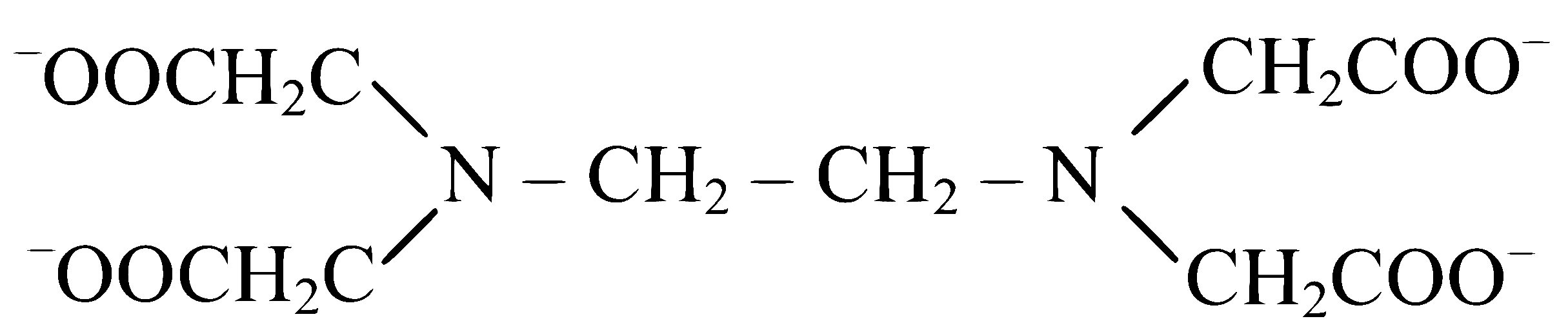
A-IV, B-I, C-II, D-III

Q.59

What do 'a' and 'b' represent in the following population growth curve?

NEET 2024 (Re-Examination) Biology - Organisms and Populations Question 10 English

(A)
‘a’ represents exponential growth when responses are not limiting the growth; and ‘b’ represents logistic growth when responses are limiting the growth.
(B)
‘a’ represents logistic growth when responses are not limiting the growth; ‘b’ represents exponential growth when responses are limiting the growth.
(C)
‘a’ represents carrying capacity and ‘b’ shows logistic growth when responses are limiting the growth.
(D)
‘a’ represents exponential growth when responses are not limiting the growth and ‘b’ shows carrying capacity.
(A)

Solution

The given graph represents the population growth curve where ‘a’ represents exponential growth when responses are not limiting the growth which forms a J-shaped curve and ‘b’ represents logistic growth when responses are limiting the growth which forms an S-shaped curve.

Q.60

Which one of the following is not found in Gymnosperms?

(A)
Sieve cells
(B)
Albuminous cells
(C)
Tracheids
(D)
Vessels
(D)

Solution

Gymnosperms are a group of seed-producing plants that include conifers, cycads, Ginkgo, and gnetophytes. Unlike angiosperms (flowering plants), gymnosperms do not have flowers and their seeds are not enclosed in an ovary. Let's look at each of the options provided to determine which one is not found in gymnosperms:

Option A: Sieve cells

Sieve cells are a type of cell found in the phloem tissue of vascular plants. Gymnosperms have sieve cells for their nutrient transport.

Option B: Albuminous cells

Albuminous cells, also known as Strasburger cells, are associated with sieve cells in gymnosperms. These cells play a role similar to companion cells in angiosperms by assisting in the function of sieve cells.

Option C: Tracheids

Tracheids are elongated cells in the xylem of vascular plants that serve in the transport of water and mineral salts. Gymnosperms rely on tracheids for their water conduction and structural support.

Option D: Vessels

Vessels are tube-like structures in the xylem that are responsible for the efficient transport of water. They are characteristic of angiosperms. Gymnosperms primarily use tracheids for water transport rather than vessels.

Based on the information above, the correct answer is:

Option D: Vessels

Q.61

Identify the incorrect pair :

(A)
Sphenopsida – Adiantum
(B)
Pteropsida – Dryopteris
(C)
Psilopsida – Psilotum
(D)
Lycopsida – Selaginella
(A)

Solution

To identify the incorrect pair, we need to understand the classification of different plant types under the division Pteridophyta, which include four classes:

1. Psilopsida: This class includes primitive vascular plants that do not have true leaves or roots. They have simpler structures. A common example is Psilotum.

2. Lycopsida: These are characterized by microphyllous leaves and strobili (cones). An example is Selaginella.

3. Sphenopsida: This class includes plants that have jointed stems and small leaves usually arranged in whorls. An example is Equisetum, rather than Adiantum.

4. Pteropsida: These are the most evolved among pteridophytes and include ferns with large leaves (megaphylls). Examples include Dryopteris, Pteridium, etc.

Now let's analyze each option:

Option A: Sphenopsida – Adiantum

This pair is incorrect. Sphenopsida includes plants like Equisetum, not Adiantum. Adiantum belongs to the class Pteropsida.

Option B: Pteropsida – Dryopteris

This pair is correct. Dryopteris is a type of fern and belongs to the class Pteropsida.

Option C: Psilopsida – Psilotum

This pair is correct. Psilotum is a representative of the class Psilopsida.

Option D: Lycopsida – Selaginella

This pair is correct. Selaginella is a member of the class Lycopsida.

Thus, the incorrect pair is:

Option A: Sphenopsida – Adiantum

Q.62

Which of the following is the correct match?

(A)
Gymnosperms : Cedrus, Pinus, Sequoia
(B)
Angiosperms : Wolffia, Eucalyptus, Sequoia
(C)
Bryophytes : Polytrichum, Polysiphonia, Sphagnum
(D)
Pteridophytes : Equisetum, Ginkgo, Adiantum
(A)

Solution

Let us carefully analyze each of the options given to determine the correct match:

Option A: Gymnosperms : Cedrus, Pinus, Sequoia

Explanation: Gymnosperms are a group of seed-producing plants that include conifers, cycads, Ginkgo, and gnetophytes. Both Cedrus (cedars), Pinus (pines), and Sequoia (redwoods) belong to the gymnosperms. Thus, the match is correct.

Option B: Angiosperms : Wolffia, Eucalyptus, Sequoia

Explanation: Angiosperms are flowering plants. While Wolffia (smallest flowering plant) and Eucalyptus are angiosperms, Sequoia is a gymnosperm. Hence, this match is incorrect.

Option C: Bryophytes : Polytrichum, Polysiphonia, Sphagnum

Explanation: Bryophytes are non-vascular plants like mosses and liverworts. While Polytrichum and Sphagnum are indeed bryophytes, Polysiphonia is a red algae (Rhodophyta) and not a bryophyte. Thus, this match is incorrect.

Option D: Pteridophytes : Equisetum, Ginkgo, Adiantum

Explanation: Pteridophytes are a group of vascular plants that reproduce via spores. Equisetum (horsetails) and Adiantum (maidenhair ferns) are pteridophytes, but Ginkgo is a gymnosperm. Hence, this match is incorrect.

Therefore, the correct match is:

Option A: Gymnosperms : Cedrus, Pinus, Sequoia

Q.63

Match List-I with List-II :

List - I List - II
(A) Abscisic acid (I) Promotes female flowers in cucumber
(B) Ethylene (II) Helps seeds to withstand desiccation
(C) Gibberellin (III) Helps in nutrient mobilisation
(D) Cytokinin (IV) Promotes bolting in beet, cabbage etc.

Choose the correct answer from the options given below:

(A)
A-II, B-III, C-IV, D-I
(B)
A-III, B-II, C-I, D-IV
(C)
A-II, B-I, C-IV, D-III
(D)
A-II, B-I, C-III, D-IV
(C)

Solution

Abscisic acid Helps seeds to withstand desiccation

Ethylene Promotes female flowers in cucumber

Gibberellin Promotes bolting in beet, cabbage etc.

Cytokinin Helps in nutrient mobilisation

Hence, the correct answer is option (C)

Q.64

F. Skoog observed that callus proliferated from the internodal segments of tobacco stem when auxin was supplied with one of the following except :

(A)
Extract of Vascular tissues
(B)
Coconut milk
(C)
Abscisic acid
(D)
Yeast Extract
(C)

Solution

F. Skoog's famous experimentation on plant tissue culture involved the proliferation of callus from internodal segments of the tobacco stem when auxin was supplied along with certain substances. The substances that supported callus proliferation included extracts from vascular tissues, coconut milk, and yeast extract. However, abscisic acid (ABA) did not support this proliferation. Hence, the correct answer to the question is Option C, Abscisic acid.

Let me explain why:

Auxins are a class of plant hormones that play a critical role in the growth and behavioral processes in a plant's life cycle. However, for the induction of callus (an unorganized mass of plant cells), auxin alone is often not sufficient. The addition of other substances can synergistically enhance its effect. This has been shown through Skoog’s observations with the following substances:

1. Extract of Vascular Tissues: Vascular tissues contain various nutrients and growth factors that can promote cell division and growth.

2. Coconut Milk: Rich in cytokinins, which promote cell division and cooperation with auxins enhances callus formation.

3. Yeast Extract: Contains vitamins and nutrients that can aid in the growth and development of plant tissues.

On the other hand,

4. Abscisic Acid (ABA): ABA is typically known for its role in inhibiting growth and promoting dormancy, not for promoting callus formation. It acts in contrast to auxins and cytokinins, often inhibiting processes like germination and cell division. Thus, it does not support callus proliferation and is not used for this purpose in Skoog’s experiments.

Therefore, the correct answer is:

Option C: Abscisic acid

Q.65

Given below are some statements about plant growth regulators.

A. All GAs are acidic in nature.

B. Auxins are antagonists to GAs.

C. Zeatin was isolated from coconut milk.

D. Ethylene induces flowering in Mango.

E. Abscisic acid induces parthenocarpy.

Choose the correct set of statements from the options given below :

(A)
A, C, D
(B)
B, E
(C)
A, B, C
(D)
B, D, E
(A)

Solution

The correct option is Option A: A, C, D.

Let's analyze each statement:

A. All GAs are acidic in nature.

This statement is true. Gibberellins (GAs) are a group of plant hormones that are primarily known for their role in stem elongation, seed germination, and flowering. Their chemical structure features a characteristic carboxyl group (COOH), making them acidic.

B. Auxins are antagonists to GAs.

This statement is false. While auxins and GAs can have opposing effects in some cases, they generally act synergistically, meaning they work together to enhance each other's effects. For example, both auxins and GAs can promote stem elongation, and their combined action can result in more pronounced growth than either hormone alone.

C. Zeatin was isolated from coconut milk.

This statement is true. Zeatin is a naturally occurring cytokinin, a class of plant hormones that promote cell division. It was first isolated from coconut milk, a rich source of plant growth regulators.

D. Ethylene induces flowering in Mango.

This statement is true. Ethylene, a gaseous plant hormone, plays a crucial role in fruit ripening and can also induce flowering in certain plant species, including Mango. Ethylene treatment can be used to synchronize flowering in Mango trees, leading to more efficient fruit production.

E. Abscisic acid induces parthenocarpy.

This statement is false. Abscisic acid (ABA) is a plant hormone primarily known for its role in stress responses, such as drought tolerance and dormancy. It does not induce parthenocarpy, which is the development of fruit without fertilization. Parthenocarpy can be induced by other hormones, such as auxins and gibberellins, depending on the plant species.

Therefore, the correct statements are A, C, and D, making Option A the correct choice.

Q.66

Consider the pyramid of energy of an ecosystem given below:

NEET 2024 (Re-Examination) Biology - Ecosystem Question 10 English

If T is equivalent to , what is the value at ?

(A)
(B)
(C)
10,000 J
(D)
10,00,000 J
(D)

Solution

According to the given pyramid of energy, if T is equivalent to 1000 J, then according to the 10 percent law, which states that only 10 percent of energy is transferred to each trophic level from the lower trophic level, the value at T is 10,00,000 J.

Q.67

Which one of the following is not a limitation of ecological pyramids?

(A)
Saprophytes are not given any place in ecological pyramids
(B)
It assumes a simple food chain, that almost never exists in nature
(C)
It accommodates a food web
(D)
It does not take into account the same species belonging to two or more trophic levels
(C)

Solution

The correct answer is Option C: It accommodates a food web. Here's why:

Ecological pyramids are a visual representation of the trophic levels in an ecosystem, depicting the flow of energy and biomass. However, they have limitations in accurately representing the complexities of real-world ecosystems.

Let's analyze each option:

Option A: Saprophytes are not given any place in ecological pyramids

This is a valid limitation. Saprophytes, organisms that decompose dead organic matter, play a crucial role in nutrient cycling but are often not included in traditional ecological pyramids.

Option B: It assumes a simple food chain, that almost never exists in nature

This is another valid limitation. Most ecosystems have intricate food webs, with organisms feeding on multiple trophic levels. Ecological pyramids struggle to capture these complex interrelationships.

Option C: It accommodates a food web

This is incorrect. Ecological pyramids are fundamentally based on simple food chains, not food webs. The complex interactions of a food web, where organisms occupy multiple trophic levels simultaneously, are difficult to represent using a pyramid.

Option D: It does not take into account the same species belonging to two or more trophic levels

This is another valid limitation. For example, a species like an omnivore might consume both producers and herbivores, making it difficult to categorize them in a single trophic level.

In summary, ecological pyramids are useful tools for visualizing energy flow and biomass distribution within an ecosystem. However, they are simplified models that cannot fully capture the complexity of real-world food webs and ecological relationships.

Q.68

Given below are two statements:

Statement I: Antibiotics are chemicals produced by microbes that kill other microbes.

Statement II: Antibodies are chemicals formed in body that eliminate microbes.

In the light of the above statements, choose the most appropriate answer from the options given below.

(A)
Statement I is correct but Statement II is incorrect
(B)
Statement I is incorrect but Statement II is correct
(C)
Both Statement I and Statement II are correct
(D)
Both Statement I and Statement II are incorrect
(C)

Solution

The correct answer is Option C: Both Statement I and Statement II are correct.

Let's break down why each statement is true:

Statement I: Antibiotics are chemicals produced by microbes that kill other microbes.

This statement is accurate. Antibiotics are naturally occurring substances produced by certain microorganisms, such as bacteria and fungi. These substances have the ability to inhibit the growth or kill other microorganisms, particularly bacteria.

Statement II: Antibodies are chemicals formed in the body that eliminate microbes.

This statement is also correct. Antibodies are specialized proteins produced by the immune system in response to the presence of foreign substances, such as bacteria, viruses, and toxins. These antibodies bind to specific antigens (markers) on the surface of the microbes, marking them for destruction by other immune cells.

In summary, both antibiotics and antibodies play critical roles in combating microbial infections, but they operate through different mechanisms. Antibiotics are produced by microbes and directly kill or inhibit the growth of other microbes, while antibodies are produced by the body's immune system and specifically target and neutralize microbes.

Q.69

Math List-I with List-II:

List - I List - II
(A) Malignant tumors (I) Destroy tumors
(B) MALT (II) AIDS
(C) NACO (III) Metastasis
(D) -Interferons (IV) Lymphoid tissue

Choose the correct answer from the options given below:

(A)
A-III, B-IV, C-II, D-I
(B)
A-IV, B-III, C-II, D-I
(C)
A-III, B-IV, C-I, D-II
(D)
A-III, B-I, C-IV, D-II
(A)

Solution

To solve this matching problem, we need to pair each item from List - I with the corresponding item in List - II. Let's analyze each pair:

(A) Malignant tumors - Malignant tumors are characterized by uncontrolled growth and the ability to invade or spread to other parts of the body. This process is known as Metastasis.

(B) MALT - MALT stands for Mucosa-Associated Lymphoid Tissue. It is a part of the immune system that includes tissues such as the tonsils and the Peyer's patches in the intestines. Therefore, it is associated with Lymphoid tissue.

(C) NACO - NACO stands for the National AIDS Control Organization, which is involved in the fight against AIDS in India. Thus, it relates to AIDS.

(D) -Interferons - -Interferons are a group of signaling proteins used in the treatment of various diseases, including some cancers, by helping the immune system destroy tumors. Therefore, they are connected to the action to Destroy tumors.

Now, let's match these correctly:

  • (A) Malignant tumors - (III) Metastasis
  • (B) MALT - (IV) Lymphoid tissue
  • (C) NACO - (II) AIDS
  • (D) -Interferons - (I) Destroy tumors

Thus, the correct option is:

Option A: A-III, B-IV, C-II, D-I

Therefore, the answer is: Option A

Q.70

Match List I with List II :

List - I List - II
(A) B-Lymphocytes (I) Passive immunity
(B) Interferons (II) Cell mediated immunity
(C) T-Lymphocytes (III) Produce an army of proteins in response to pathogens
(D) Colostrum (IV) Innate immunity

Choose the correct answer from the options given below :

(A)
A-I, B-IV, C-II, D-III
(B)
A-IV, B-II, C-III, D-I
(C)
A-III, B-IV, C-II, D-I
(D)
A-II, B-IV, C-I, D-III
(C)

Solution

To match the items in List I with those in List II, we need to understand the functions and roles of each item.

Here are the explanations for each item:

(A) B-Lymphocytes: These are a type of white blood cell that plays a significant role in humoral immunity (part of the adaptive immune system). They produce antibodies to neutralize pathogens. This matches with III - Produce an army of proteins in response to pathogens.

(B) Interferons: These are proteins produced by various cells in response to viral infections. They are part of innate immunity and help in reducing the spread of viruses. This matches with IV - Innate immunity.

(C) T-Lymphocytes: These are another type of white blood cell, crucial for cell-mediated immunity. They do not produce antibodies but directly attack infected cells. This matches with II - Cell mediated immunity.

(D) Colostrum: This is the first form of milk produced after childbirth, rich in antibodies, providing passive immunity to the newborn. This matches with I - Passive immunity.

Now, matching these explanations with the options given:

Option C: A-III, B-IV, C-II, D-I

Therefore, the correct answer is Option C.

Q.71

A person with blood group ARh– can receive the blood transfusion from which of the following types?

A. BRh

B. ABRh

C. ORh

D. ARh

E. ARh

Choose the correct answer from the options given below :

(A)
D and E only
(B)
D only
(C)
A and B only
(D)
C and D only
(D)

Solution

The blood group of a person determines which antigens are present on the surface of their red blood cells and which antibodies are present in their plasma. In this case, ARh implies that the person has A antigens on the surface of the red blood cells and does not have the Rh antigen (Rh-negative). Therefore, the person with ARh blood can only receive blood from donors whose blood does not contain any antigens that their immune system would recognize as foreign and mount a response against.

For a person with ARh blood, suitable donors would have:

1. A antigen (to match the recipient's A antigen) and be Rh-negative.

2. O blood group (which has no A/B antigens) and be Rh-negative.

Let's go through the options:

  • BRh: This blood group has B antigens, which would be recognized as foreign by the immune system of an A blood group recipient, hence it is not suitable.
  • ABRh: This blood group has both A and B antigens, which would also be recognized as foreign due to the presence of the B antigen, making it unsuitable.
  • ORh: This blood group has no A/B antigens, making it a universal donor for all ABO blood types and thus it is suitable for ARh recipients.
  • ARh: This blood group matches perfectly with the recipient since it has the same A antigen and is Rh-negative.
  • ARh: This blood group has the A antigen but also has the Rh antigen (Rh-positive). The Rh antigen can trigger an immune response in someone who is Rh-negative, making this option unsuitable.

Therefore, the correct answer is:

Option D: C and D only

Q.72

Diuresis is prevented by:

(A)
Renin from JG cell via switching off the osmoreceptors
(B)
ANF from atria of the heart
(C)
Aldosterone from adrenal medulla
(D)
Vasopressin from Neurohypophysis
(D)

Solution

The correct answer is Option D: Vasopressin from Neurohypophysis. Here's why:

Diuresis refers to increased urine production. Let's break down how each option affects urine production:

Option A: Renin from JG cells via switching off the osmoreceptors

Renin, released from the juxtaglomerular (JG) cells, is part of the renin-angiotensin-aldosterone system (RAAS). RAAS primarily affects blood pressure and volume by:

  • Increasing sodium reabsorption: This leads to water retention, thus increasing blood volume.
  • Constricting blood vessels: This raises blood pressure.

While RAAS can indirectly influence urine production, it doesn't directly prevent diuresis. Also, osmoreceptors are stimulated by increased blood osmolarity, not switched off by renin.

Option B: ANF from atria of the heart

Atrial natriuretic factor (ANF) is a hormone released from the heart's atria in response to high blood pressure. ANF acts to:

  • Decrease sodium reabsorption: This leads to increased urine output (diuresis) and lowers blood volume.
  • Dilate blood vessels: This lowers blood pressure.

Therefore, ANF actually promotes diuresis, not prevents it.

Option C: Aldosterone from adrenal medulla

Aldosterone is a hormone secreted by the adrenal cortex, not the medulla. Its primary function is to increase sodium reabsorption in the kidneys, leading to water retention and increased blood volume. This effect is opposite to diuresis.

Option D: Vasopressin from Neurohypophysis

Vasopressin, also known as antidiuretic hormone (ADH), is released from the posterior pituitary gland (neurohypophysis). Vasopressin plays a crucial role in regulating water balance by:

  • Increasing water reabsorption in the kidneys: This leads to concentrated urine and decreased urine output, preventing diuresis.

Vasopressin's action is the direct opposite of diuresis, making it the most effective in preventing excessive urine production.

In summary: Vasopressin (ADH) is the primary hormone responsible for preventing diuresis by increasing water reabsorption in the kidneys.

Q.73

'Lub' sound of Heart is caused by the _________.

(A)
closure of the semilunar valves
(B)
opening of tricuspid and bicuspid valves
(C)
opening of the semilunar valves
(D)
closure of the tricuspid and bicuspid valves
(D)

Solution

The correct answer is Option D: closure of the tricuspid and bicuspid valves. Here's why:

The "lub" sound of the heartbeat, known as the first heart sound (S1), is produced by the closure of the atrioventricular (AV) valves. These valves are the tricuspid valve (between the right atrium and right ventricle) and the bicuspid (mitral) valve (between the left atrium and left ventricle).

Here's a breakdown of the heart sounds and the events causing them:

  • S1 (Lub): Closure of the AV valves (tricuspid and bicuspid). This occurs at the beginning of ventricular contraction (systole) when the ventricles are pushing blood out.
  • S2 (Dub): Closure of the semilunar valves (pulmonary and aortic). This happens at the end of ventricular contraction when the ventricles are relaxing and filling with blood.

Let's look at why the other options are incorrect:

  • Option A: closure of the semilunar valves: This causes the "dub" sound, not the "lub" sound.
  • Option B: opening of tricuspid and bicuspid valves: This occurs during diastole (ventricular relaxation) and doesn't produce a significant heart sound.
  • Option C: opening of the semilunar valves: This happens at the beginning of ventricular contraction and is silent.

In summary, the "lub" sound of the heart is generated by the closure of the tricuspid and bicuspid valves as the ventricles contract and push blood into the aorta and pulmonary arteries.

Q.74

Match List-I with List-II:

List - I
Location of Joint
List - II
Type of Joint
(A) Joint between humerus and pectoral girdle (I) Gliding joint
(B) Knee joint (II) Ball and Socket joint
(C) Joint between atlas and axis (III) Hinge joint
(D) Joint between carpals (IV) Pivot joint

Chose the correct answer from the options given below:

(A)
A-II, B-III, C-IV, D-I
(B)
A-III, B-II, C-I, D-IV
(C)
A-I, B-IV, C-III, D-II
(D)
A-II, B-I, C-III, D-IV
(A)

Solution

To match the items in List-I (Location of Joint) with items in List-II (Type of Joint), consider the following relationships:

(A) Joint between humerus and pectoral girdle: This is a ball and socket joint because the humerus fits into the glenoid cavity of the pectoral girdle allowing a wide range of movement in all directions.

(B) Knee joint: This is a hinge joint, allowing movement primarily in one direction (flexion and extension).

(C) Joint between atlas and axis: This is a pivot joint because the atlas (C1 vertebra) rotates around the axis (C2 vertebra), allowing for the rotation of the head.

(D) Joint between carpals: This is a gliding joint because the bones in the wrist (carpals) slide over each other, allowing limited movement in various directions.

With this understanding, let's match List-I with List-II:

List - I
Location of Joint
List - II
Type of Joint
(A) Joint between humerus and pectoral girdle (II) Ball and Socket joint
(B) Knee joint (III) Hinge joint
(C) Joint between atlas and axis (IV) Pivot joint
(D) Joint between carpals (I) Gliding joint

From the matching, the correct answer is:

Option A: A-II, B-III, C-IV, D-I.

Q.75

Select the correct statements regarding mechanism of muscle contraction.

A. It is initiated by a signal sent by CNS via sensory neuron.

B. Neurotransmitter generates action potential in the sarcolemma.

C. Increased Ca level leads to the binding of calcium with troponin on action filaments.

D. Masking of active site for actin is activated.

E. Utilising the energy from ATP hydrolysis to form cross bridge.

Choose the most appropriate answer from the options given below:

(A)
B, C and E only
(B)
C, D and E only
(C)
A and D only
(D)
B, D and E only
(A)

Solution

Let's analyze each statement to determine its correctness regarding the mechanism of muscle contraction:

Statement A: It is initiated by a signal sent by CNS via sensory neuron.

This statement is incorrect because the signal for muscle contraction is sent by the central nervous system (CNS) via a motor neuron, not a sensory neuron. Sensory neurons carry information from sensory receptors to the CNS, whereas motor neurons carry signals from the CNS to muscles.

Statement B: Neurotransmitter generates action potential in the sarcolemma.

This statement is correct. When a motor neuron releases the neurotransmitter (typically acetylcholine) at the neuromuscular junction, it binds to receptors on the muscle cell membrane (sarcolemma) and generates an action potential.

Statement C: Increased Ca level leads to the binding of calcium with troponin on actin filaments.

This statement is correct. When the action potential travels along the sarcolemma and into the muscle via T-tubules, it triggers the release of Ca from the sarcoplasmic reticulum. The increase in Ca levels leads to calcium binding with troponin on actin filaments.

Statement D: Masking of active site for actin is activated.

This statement is incorrect. The active sites on actin are initially masked by the protein tropomyosin. When Ca binds to troponin, it causes a conformational change that moves tropomyosin away from the active sites on actin, thus exposing them for myosin binding. Therefore, masking is deactivated rather than activated.

Statement E: Utilising the energy from ATP hydrolysis to form cross bridge.

This statement is correct. The hydrolysis of ATP provides the energy necessary for the myosin heads to attach to actin, forming cross-bridges, and to perform the power stroke which leads to muscle contraction.

Based on this analysis, the correct statements are B, C, and E.

The most appropriate answer is Option A (B, C and E only).

Q.76

Match List-I with List -II

List - I List - II
(A) Schwann cells (I) Neurotransmitter
(B) Synaptic knob (II) Cerebral cortex
(C) Bipolar neurons (III) Myelin sheath
(D) Multipolar neurons (IV) Retina

Choose the correct answer from the options given below:

(A)
A-III, B-I, C-IV, D-II
(B)
A-I, B-IV, C-II, D-III
(C)
A-IV, B-III, C-II, D-I
(D)
A-II, B-III, C-I, D-IV
(A)

Solution

To match the items in List-I with those in List-II, let's understand the primary associations between them:

(A) Schwann cells

Schwann cells are responsible for producing the myelin sheath around the axons of peripheral neurons. Therefore, they should match with:

(III) Myelin sheath

(B) Synaptic knob

The synaptic knob is part of a neuron where neurotransmitters are stored and released. Hence, it should match with:

(I) Neurotransmitter

(C) Bipolar neurons

Bipolar neurons are typically found in sensory structures such as the retina of the eye. Hence, they should match with:

(IV) Retina

(D) Multipolar neurons

Multipolar neurons are commonly found in the cerebral cortex of the brain. So, they should match with:

(II) Cerebral cortex

Thus, the correct matches should be:

A-III, B-I, C-IV, D-II

The correct answer is:

Option A: A-III, B-I, C-IV, D-II

Q.77

Match List-I with List-II relating to examples of various kind of IUDs and barrier:

List - I List - II
(A) Copper releasing IUD (I) Vaults
(B) Non-medicated IUD (II) Multiload 375
(C) Contraceptive barrier (III) LNG-20
(D) Hormone releasing IUD (IV) Lippes loop

Choose the correct answer from the options given below:

(A)
A-II, B-IV, C-III, D-I
(B)
A-IV, B-III, C-I, D-II
(C)
A-II, B-I, C-III, D-IV
(D)
A-II, B-IV, C-I, D-III
(D)

Solution

The correct answer is option (D) because

Multiload 375 is a copper releasing IUD which suppresses sperm motility and fertilizing capacity of sperms.

Lippes loop is a non-medicated intra uterine device.

Vaults are barrier type of contraceptives which prevent physical meeting of ovum and sperms.

LNG-20 is a hormone releasing IUD that makes the uterus unsuitable for implantation and the cervix hostile to the sperms.

Hence the correct matches are

Q.78

Following is the list of STDs. Select the diseases which are not completely curable.

A. Genital warts

B. Genital herpes

C. Syphilis

D. Hepatitis-B

E. Trichomoniasis

Choose the correct answer from the options given below:

(A)
A and D only
(B)
B and D only
(C)
A and C only
(D)
D and E only
(B)

Solution

The correct answer is Option B: B and D only. Here's why:

Let's break down each STD and its curability:

A. Genital Warts: Caused by the Human Papillomavirus (HPV), genital warts are not always completely curable. While treatments like topical medications or surgical removal can eliminate visible warts, the virus itself may remain dormant in the body and reactivate later.

B. Genital Herpes: This viral infection caused by the Herpes Simplex Virus (HSV) is not curable. Antiviral medications can suppress outbreaks and reduce transmission, but the virus remains latent in the body, capable of recurring.

C. Syphilis: A bacterial infection, syphilis is completely curable with appropriate antibiotic treatment, especially in its early stages. However, untreated syphilis can cause serious long-term health complications.

D. Hepatitis-B: This viral infection is not curable, although a vaccine can prevent infection. Hepatitis-B can become chronic, potentially leading to liver damage and cirrhosis.

E. Trichomoniasis: A parasitic infection, trichomoniasis is completely curable with antibiotics.

Therefore, the only STDs from the list that are not completely curable are genital herpes (B) and hepatitis-B (D).

Q.79

Which of the following statements is correct about the type of junction and their role in our body?

(A)
Adhering junctions facilitate the cells to communicate with each other.
(B)
Tight junctions help to stop substances from leaking across a tissue.
(C)
Tight junctions help to perform cementing to keep neighbouring cells together.
(D)
Gap junctions help to create gap between the cells and tissues.
(B)

Solution

The correct statement about the type of junction and their role in our body is Option B: Tight junctions help to stop substances from leaking across a tissue.

Let's break down why this is correct and why the other options are incorrect:

Tight junctions are indeed responsible for forming a seal between cells, preventing the passage of fluids and molecules between them. This is crucial for maintaining the integrity of tissues and organs. Imagine the lining of your stomach or intestines - tight junctions ensure that digestive juices and enzymes don't leak out and cause damage to surrounding tissues.

Here's why the other options are incorrect:

Option A: Adhering junctions facilitate the cells to communicate with each other.

This statement is incorrect. While adhering junctions do help in holding cells together, they are primarily involved in providing structural support and mechanical strength to tissues. Communication between cells is primarily facilitated by gap junctions, not adhering junctions.

Option C: Tight junctions help to perform cementing to keep neighbouring cells together.

This statement is partially correct, but incomplete. While tight junctions do play a role in holding cells together, their primary function is to form a barrier, preventing leaks. Adhering junctions are more specifically responsible for cementing cells together.

Option D: Gap junctions help to create gaps between the cells and tissues.

This statement is completely incorrect. Gap junctions actually form channels between cells, allowing for the direct passage of ions, small molecules, and even electrical signals. These channels are essential for cell-to-cell communication and coordination in various tissues like heart muscle and smooth muscle.

In summary, tight junctions act as barriers, adhering junctions provide structural support, and gap junctions enable communication between cells.

Q.80

Which of the following is/are present in female cockroach?

A. Collateral gland

B. Mushroom gland

C. Spermatheca

D. Anal style

E. Phallic gland

Choose the most appropriate answer from the options given below:

(A)
B and D only
(B)
B and E only
(C)
A only
(D)
A and C only
(D)

Solution

The correct answer is option (D) as

A. Collateral gland Present in female cockroaches

It is a pair of gland that secrete the hard egg case or ootheca

B. Mushroom gland Absent in female cockroaches

Present in males in the to abdominal segments

C. Spermatheca Present in female cockroaches in the abdominal segment

D. Anal style Absent in female cockroaches

Present in males and project backwardly from sternum

E. Phallic gland Absent in female cockroaches

Present in males as a large club shaped gland located below the ejaculatory duct and reaches anteriorly up to the abdominal segment.

Thus, only structures represented by 'A' and 'C' are present in female cockroaches.

Whereas, structures indicated by 'B', 'D' and 'E' are present in males. Options (A) and (B) are incorrect as these structures are present in males.

Option (C) is incorrect as it represents only a single structure which is present in female cockroaches.

Q.81

In which of the following connective tissues, the cells secrete fibres of collagen or elastin?

A. Cartilage

B. Bone

C. Adipose tissue

D. Blood

E. Areolar tissue

Choose the most appropriate answer from the options given below :

(A)
B, C, D and E only
(B)
A, B, C and E only
(C)
B, C and D only
(D)
A, C and D only
(B)

Solution

The correct answer is Option B: A, B, C and E only.

Let's break down why:

Connective Tissues that Secrete Collagen or Elastin:

  • Cartilage (A): Cartilage cells, called chondrocytes, produce a matrix rich in collagen fibers, providing its structure and flexibility. Some types of cartilage also contain elastin fibers for added elasticity.
  • Bone (B): Bone cells, called osteoblasts, secrete a matrix containing collagen fibers, which provide tensile strength, and calcium phosphate crystals, which provide hardness.
  • Adipose Tissue (C): While primarily composed of fat cells (adipocytes), adipose tissue also contains a network of collagen fibers that provide structural support and help maintain the tissue's shape.
  • Areolar Tissue (E): Areolar tissue is a loose connective tissue with a rich network of collagen and elastin fibers. These fibers provide support, elasticity, and allow for the passage of blood vessels and nerves.

Blood (D): Blood is a fluid connective tissue. While it has proteins, it doesn't directly secrete collagen or elastin fibers. Its primary components are plasma, red blood cells, white blood cells, and platelets.

Therefore, the connective tissues that secrete collagen or elastin are cartilage, bone, adipose tissue, and areolar tissue, making Option B the correct answer.
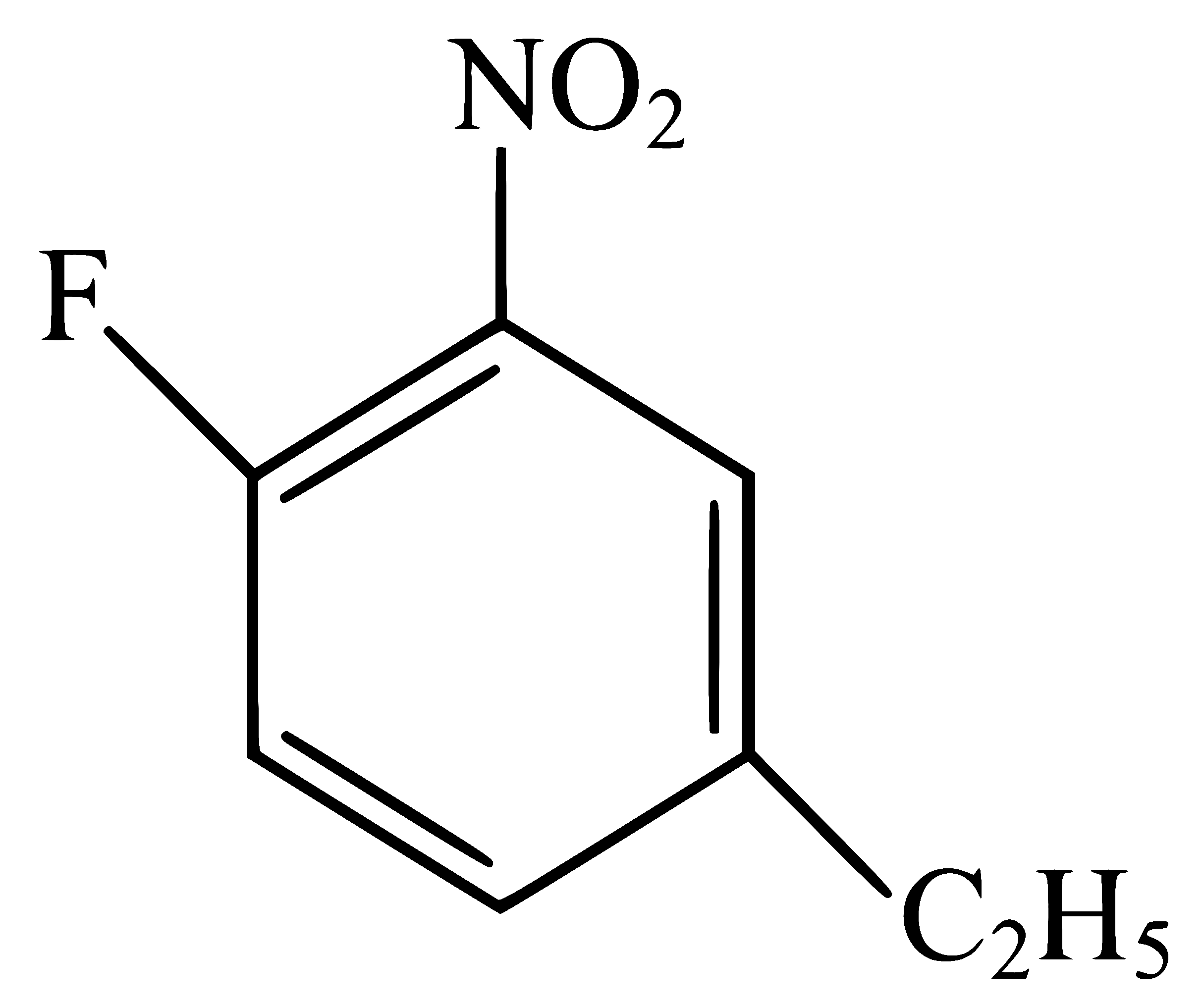
Q.82

Match List I with List II :

List - I List - II
(A) Squamous Epithelium (I) Goblet cells of alimentary canal
(B) Ciliated Epithelium (II) Inner lining of pancreatic ducts
(C) Glandular Epithelium (III) Walls of blood vessels
(D) Compound Epithelium (IV) Inner surface of Fallopian tubes

Choose the correct answer from the options given below :

(A)
A-II, B-III, C-I, D-IV
(B)
A-II, B-IV, C-III, D-I
(C)
A-III, B-I, C-II, D-IV
(D)
A-III, B-IV, C-I, D-II
(D)

Solution

Here's the breakdown of the matching between the types of epithelium and their locations:

(A) Squamous Epithelium:

Squamous epithelium is characterized by thin, flattened cells. This structure makes it ideal for diffusion and filtration. It's found in the walls of blood vessels (III), lining the alveoli of the lungs, and the lining of blood capillaries.

(B) Ciliated Epithelium:

Ciliated epithelium is characterized by cells possessing hair-like projections called cilia. These cilia beat rhythmically to move fluids or particles across the surface. It's found in the inner surface of Fallopian tubes (IV), trachea, and bronchi to propel mucus and foreign particles.

(C) Glandular Epithelium:

Glandular epithelium is specialized for secretion. It forms glands that release various substances like hormones, enzymes, and mucus. Goblet cells of the alimentary canal (I) are a prime example of glandular epithelium, as they secrete mucus.

(D) Compound Epithelium:

Compound epithelium is composed of two or more layers of cells. It provides protection and helps with secretion and absorption. While it can be found in the alimentary canal, it's not a definitive location.

Therefore, the correct matching is:

Option D: A-III, B-IV, C-I, D-II

Q.83

Given below are two statements:

Statements I: Concentrated urine is formed due to counter current mechanism in nephron.

Statement II: Counter current mechanism helps to maintain osmotic gradient in the medullary interstitium.

In the light of the above statements, choose the most appropriate answer from the options given below.

(A)
Statement I is correct but Statement II is incorrect.
(B)
Statement I is incorrect but Statement II is correct.
(C)
Both Statement I and Statement II are correct.
(D)
Both Statement I and Statement II are incorrect.
(C)

Solution

The correct answer is Option C: Both Statement I and Statement II are correct.

Here's why:

Statement I: Concentrated urine is formed due to the countercurrent mechanism in the nephron.

This statement is correct. The countercurrent mechanism in the nephron is crucial for forming concentrated urine. Here's how it works:

  • Loop of Henle: The loop of Henle, a part of the nephron, creates a concentration gradient in the medullary interstitium. The descending limb of the loop is permeable to water but not to solutes. As filtrate flows down this limb, water moves out due to the increasing solute concentration in the interstitium, making the filtrate more concentrated. The ascending limb is impermeable to water but permeable to solutes, actively pumping out solutes like sodium, potassium, and chloride ions. This contributes to the higher solute concentration in the interstitium.
  • Vasa Recta: The vasa recta, the capillaries surrounding the loop of Henle, also participate in maintaining the concentration gradient. They have a countercurrent flow, meaning blood flows in the opposite direction of the filtrate in the loop of Henle. This helps preserve the osmotic gradient by preventing rapid removal of solutes from the interstitium.
  • Collecting Duct: As filtrate flows through the collecting duct, it encounters the concentrated medullary interstitium. Water moves out of the collecting duct, becoming more concentrated, ultimately leading to the production of concentrated urine.

Statement II: Countercurrent mechanism helps to maintain the osmotic gradient in the medullary interstitium.

This statement is also correct. The countercurrent mechanism is the primary mechanism responsible for establishing and maintaining the high osmotic gradient in the medullary interstitium. This gradient is crucial for the reabsorption of water and for the excretion of concentrated urine.

In summary, the countercurrent mechanism in the nephron is essential for producing concentrated urine and maintaining the osmotic gradient in the medullary interstitium. Therefore, both statements are accurate.

Q.84

Match List-I with List-II.

List - I List - II
(A) Epinephrine (I) Hyperglycemia
(B) Thyroxine (II) Smooth muscle contraction
(C) Oxytocin (III) Basal metabolic rate
(D) Glucagon (IV) Emergency hormone

Choose the correct answer from the options given below :

(A)
A-II, B-I, C-IV, D-III
(B)
A-III, B-II, C-I, D-IV
(C)
A-IV, B-III, C-II, D-I
(D)
A-I, B-IV, C-III, D-II
(C)

Solution

To correctly match List-I with List-II, let us consider the primary functions or associations of each hormone:

Epinephrine: Also known as adrenaline, epinephrine is commonly released during stress or emergencies, causing increased heart rate, blood flow to muscles, and hyperglycemia (raised blood glucose levels). Hence, it is often referred to as the "emergency hormone". Therefore, Epinephrine matches with "Emergency hormone".

Thyroxine: This is a hormone produced by the thyroid gland and is primarily responsible for regulating the basal metabolic rate (BMR). Therefore, Thyroxine matches with "Basal metabolic rate".

Oxytocin: A hormone best known for its role in childbirth and lactation, it leads to smooth muscle contraction, particularly in the uterus during labor. Therefore, Oxytocin matches with "Smooth muscle contraction".

Glucagon: This hormone plays an essential role in glucose metabolism, particularly in raising blood glucose levels, leading to hyperglycemia. Therefore, Glucagon matches with "Hyperglycemia".

So, the correct matching is:

(A) Epinephrine - (IV) Emergency hormone

(B) Thyroxine - (III) Basal metabolic rate

(C) Oxytocin - (II) Smooth muscle contraction

(D) Glucagon - (I) Hyperglycemia

The correct answer is:

Option C

A-IV, B-III, C-II, D-I

Q.85

Identify the wrong statements :

A. Erythropoietin is produced by juxtaglomerular cells of the kidney

B. Leydig cells produce Androgens

C. Atrial Natriuretic factor, a peptide hormone is secreted by the seminiferous tubules of the testes

D. Cholecystokinin is produced by gastrointestinal tract

E. Gastrin acts on intestinal wall and helps in the production of pepsinogen

Choose the most appropriate answer from the options given below :

(A)
D and E only
(B)
A and B only
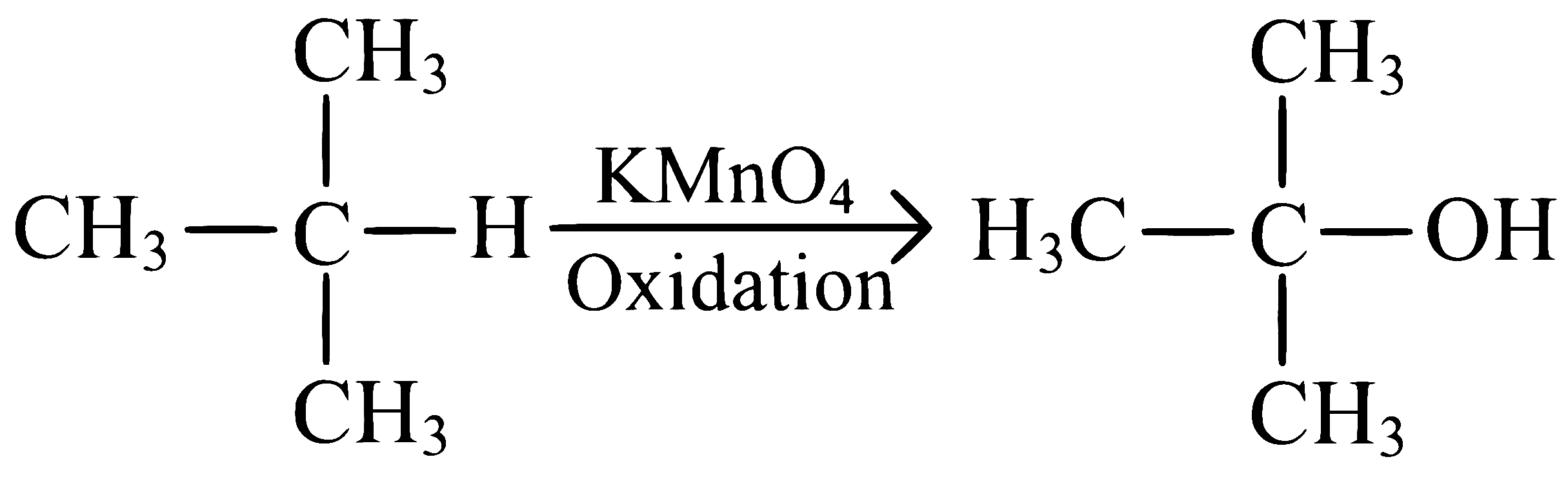
(C)
C and E only
(D)
A and C only
(C)

Solution

Let’s analyze each of the statements to identify the wrong ones:

A. Erythropoietin is produced by juxtaglomerular cells of the kidney

This statement is incorrect. Erythropoietin is primarily produced by the interstitial fibroblasts in the kidney, not by the juxtaglomerular cells.

B. Leydig cells produce Androgens

This statement is correct. Leydig cells in the testes produce androgens, such as testosterone.

C. Atrial Natriuretic factor, a peptide hormone, is secreted by the seminiferous tubules of the testes

This statement is incorrect. Atrial Natriuretic factor (ANF) is secreted by the cardiac atria, not by the seminiferous tubules of the testes.

D. Cholecystokinin is produced by the gastrointestinal tract

This statement is correct. Cholecystokinin is a hormone produced by the cells in the mucosal lining of the small intestine.

E. Gastrin acts on the intestinal wall and helps in the production of pepsinogen

This statement is incorrect. Gastrin primarily acts on the stomach lining (gastric mucosa) to stimulate the secretion of gastric acid and pepsinogen, not the intestinal wall.

Based on this analysis, the wrong statements are A, C, and E. Therefore, the most appropriate answer from the given options is:

Option C

C and E only

Q.86

Given below are two statements: One is labelled as Assertion A and the other is labelled as Reason R.

Assertion A: During menstrual cycle, the ovulation takes place approximately on 14th day.

Reason R: Rapid secretion of LH in the middle of menstrual cycle induces rupture of Graafian follicle and thereby the release of ovum.

In the light of the above statements, choose the most appropriate answer from the options given below.

(A)
A is correct but R is not correct.
(B)
A is not correct but R is correct.
(C)
Both A and R are correct and R is the correct explanation of A.
(D)
Both A and R are correct but R is NOT the correct explanation of A.
(C)

Solution

The correct answer is option (C), because in a 28 days menstrual cycle of a human female, rapid secretion of LH leading to its maximum level during the mid-cycle (14th day) called LH surge induces the rupture of Graafian follicle and thereby the release of ovum (ovulation).

Hence, both (A) and (R) are correct and (R) is the correct explanation of (A).

Q.87

Arrange the following parts in human Mammary gland, traversing the route of milk ejection.

A. Mammary duct

B. Lactiferous duct

C. Mammary alveolus

D. Ampulla

E. Mammary tubule

Choose the correct answer from the options given below:

(A)
(B)
(C)
(D)
(C)

Solution

To understand the correct sequence in the route of milk ejection from the human mammary gland, we need to follow the anatomical pathway that milk travels. Let's break down each part and its function in the sequence:

Mammary alveolus (C): These are the milk-producing structures in the mammary gland. Milk is initially produced here and stored in the alveolar cells.

Mammary tubule (E): The mammary alveoli are connected to small ductules called mammary tubules, which transport the milk out of the alveoli.

Mammary duct (A): The mammary tubules merge to form larger ducts known as mammary ducts. These ducts conduct the milk toward the nipple area.

Ampulla (D): The mammary ducts widen into lactiferous sinuses, known as ampullae, which act as reservoirs for the milk before it is ejected.

Lactiferous duct (B): Finally, the milk travels through the lactiferous ducts, which open at the nipple for milk ejection.

So, the correct sequence is:

Thus, the correct answer is:

Option C

Q.88

Match List-I with List-II relating to human female external genitalia.

List - I List - II
(A) Mons pubis (I) A fleshy fold of tissue surrounding the vaginal opening
(B) Clitoris (II) Fatty cushion of cells covered by skin and hair
(C) Hymen (III) Tiny finger-like structure above labia minora
(D) Labina majora (IV) A thin membrane-like structure covering vaginal opening

Choose the correct answer from the option given below :

(A)
A-II, B-III, C-IV, D-I
(B)
A-IV, B-III, C-II, D-I
(C)
A-I, B-IV, C-III, D-II
(D)
A-II, B-III, C-I, D-IV
(A)

Solution

The correct answer is option (A) because

Mons pubis is a cushion of fatty tissue covered by skin and pubic hair. So (A) matches with (II).

Clitoris is a tiny finger like structure which lies at the upper junction of the two labia minora above the urethral opening. So, (B) matches with (III)

Hymen is a membrane which partially covers the opening of vagina., So (C) matches with (IV)

Labia majora are fleshy folds of tissue which extends down from the mons pubis and surround the vaginal opening. So, (D) matches with (I)

Other options (B), (C) and (D) are incorrect as they represent mismatches for (A), (B), (C) and (D)

Q.89

Match List-I with List-II:

List - I List - II
(A) Parturition (I) Several antibodies for new-born babies
(B) Placenta (II) Collection of ovum after ovulation
(C) Colostrum (III) Foetal ejection reflex
(D) Fimbriae (IV) Secretion of the hormone hCG

Choose the correct answer from the option given below:

(A)
A-III, B-IV, C-I, D-II
(B)
A-I, B-IV, C-II, D-III
(C)
A-II, B-III, C-IV, D-I
(D)
A-III, B-IV, C-II, D-I
(A)

Solution

The correct answer is option (A) as

Parturition is induced by a complex neuroendocrine mechanism. The signals for parturition originate from the fully developed foetus and the placenta that induce mild uterine contractions called foetal ejection reflex.

Placenta acts as an endocrine tissue and produces several hormones like hCG, hPL estrogens, progestogens, etc.

The milk produced during the initial few days of lactation is called colostrum that contains several antibodies absolutely necessary to develop resistance for the new-born babies.

Fimbriae helps in collection of the ovum after ovulation.

Q.90

Match List-I with List-II.

List - I List - II
(A) Chondrichthyes (I) Clarias
(B) Cyclostomata (II) Carcharodon
(C) Osteichthyes (III) Myxine
(D) Amphibia (IV) Ichthyophis

Choose the correct answer from the options given below :

(A)
A-II, B-IV, C-I, D-III
(B)
A-I, B-III C-II, D-IV
(C)
A-II, B-III, C-I, D-IV
(D)
A-I, B-II, C-III, D-IV
(C)

Solution

To match List-I with List-II correctly, let's consider the characteristics and common representatives of each class of animals mentioned:

Chondrichthyes: This class includes cartilaginous fishes such as sharks. Among the options, Carcharodon (Great White Shark) fits this class.

Cyclostomata: This class includes jawless fish like lampreys and hagfishes. Among the options, Myxine (hagfish) fits this class.

Osteichthyes: This class includes bony fishes. Among the options, Clarias (catfish) fits this class.

Amphibia: This class includes amphibians. Among the options, Ichthyophis (a type of caecilian, which is an amphibian) fits this class.

Therefore, the correct matching should be:

(A) Chondrichthyes -> (II) Carcharodon

(B) Cyclostomata -> (III) Myxine

(C) Osteichthyes -> (I) Clarias

(D) Amphibia -> (IV) Ichthyophis

The correct answer is:

Option C: A-II, B-III, C-I, D-IV

Q.91

Open Circulatory system is present in :

(A)
Palaemon, Nereis, Balanoglossus
(B)
Hirudinaria, Bombyx, Salpa
(C)
Anopheles, Limax, Limulus
(D)
Pheretima, Musca, Pila
(C)

Solution

An open circulatory system is a type of circulatory system in which the blood is not entirely contained within blood vessels. Instead, the blood is pumped from the heart into the body cavities, where tissues are directly bathed in blood. This is typical of many invertebrates, including arthropods and some mollusks.

Let's analyze the options provided:

Option A: Palaemon, Nereis, Balanoglossus

- Palaemon is a type of prawn (crustacean, arthropod).

- Nereis is a polychaete worm (annelid).

- Balanoglossus is a hemichordate.

Here, Palaemon has an open circulatory system, but the other two do not fit this category.

Option B: Hirudinaria, Bombyx, Salpa

- Hirudinaria, a leech (annelid).

- Bombyx, the silkworm moth (arthropod).

- Salpa, a type of tunicate (urochordata).

Bombyx has an open circulatory system, but the other two do not.

Option C: Anopheles, Limax, Limulus

- Anopheles, a mosquito (arthropod).

- Limax, a type of slug (mollusk).

- Limulus, the horseshoe crab (arthropod).

All three organisms listed in Option C have an open circulatory system.

Option D: Pheretima, Musca, Pila

- Pheretima, an earthworm (annelid).

- Musca, the common housefly (arthropod).

- Pila, an apple snail (mollusk).

Musca and Pila have an open circulatory system, but Pheretima does not.

Based on this analysis, the correct answer is:

Option C: Anopheles, Limax, Limulus

Q.92

Which of the following pairs is an incorrect match?

(A)
Annelids and arthropods-Bilateral symmetry
(B)
Sponges-Acoelomates
(C)
Coelenterates and Ctenophores-Radial symmetry
(D)
Platyhelminthes-Diploblastic organisation
(D)

Solution

To evaluate which pair is an incorrect match, let's analyze the characteristics of each mentioned group in the options.

Option A: Annelids and arthropods - Bilateral symmetry

Annelids (segmented worms) and arthropods (such as insects, spiders, and crustaceans) both exhibit bilateral symmetry. This means they have a body plan that can be divided into symmetrical halves along a single plane. Therefore, this match is correct.

Option B: Sponges - Acoelomates

Sponges are indeed acoelomates. They lack a true body cavity (coelom) and are known for their simple, porous body structure. Hence, this match is also correct.

Option C: Coelenterates and Ctenophores - Radial symmetry

Both coelenterates (such as jellyfish and corals) and ctenophores (comb jellies) possess radial symmetry. Radial symmetry means their body parts are arranged around a central axis. Thus, this match is correct.

Option D: Platyhelminthes - Diploblastic organisation

Platyhelminthes, commonly known as flatworms, actually exhibit triploblastic organisation, meaning their body structure arises from three primary germ layers: the ectoderm, mesoderm, and endoderm. Diploblastic organisms have only two germ layers: the ectoderm and endoderm. Therefore, this match is incorrect.

So, the incorrect match is Option D: Platyhelminthes - Diploblastic organisation.

Q.93

Given below are two statements: One is labelled as Assertion A and the other is labelled as Reason R.

Assertion A: Members of subphylum vertebrata possess notochord during the embryonic period. The notochord is replaced by a cartilaginous or bony vertebral column in the adult.

Reason R: Thus all chordates are vertebrates not all vertebrates are chordates.

In the light of the above statements choose the correct answer from the option given below.

(A)
A is true but R is false.
(B)
A is false but R is true
(C)
Both A and R are true and R is the correct explanation of A.
(D)
Both A and R are true but R is NOT the correct explanation of A.
(A)

Solution

The correct answer is Option A: A is true but R is false.

Let's break down why:

Assertion A: This statement is true. Vertebrates, belonging to the subphylum Vertebrata, do indeed possess a notochord during their embryonic development. This notochord is a flexible rod that provides support. As the embryo develops, the notochord is gradually replaced by a vertebral column, which can be either cartilaginous or bony depending on the species.

Reason R: This statement is false. The statement "Thus all chordates are vertebrates, not all vertebrates are chordates" is incorrect. The relationship between chordates and vertebrates is actually the opposite.

Here's the correct relationship:

  • Chordates: This is a phylum that includes all animals possessing a notochord at some point in their life cycle. They also have other key features like a dorsal hollow nerve cord, pharyngeal slits, and a post-anal tail.
  • Vertebrates: This is a subphylum within the chordates. Vertebrates are distinguished by the presence of a vertebral column.

Therefore, all vertebrates are chordates, but not all chordates are vertebrates. There are other groups within the chordate phylum that lack a vertebral column, such as tunicates and cephalochordates.

In conclusion, Assertion A is a correct statement about the development of vertebrates. However, Reason R misrepresents the relationship between chordates and vertebrates.

Q.94

Match List-I with List-II:

List - I List - II
(A) Residual Volume (I) Maximum volume of air that can be breathed in after forced expiration
(B) Vital Capacity (II) Volume of air inspired or expired during normal respiration
(C) Expiratory Capacity (III) Volume of air remaining in lungs after forcible expiration
(D) Tidal Volume (IV) Total volume of air expired after normal inspiration

Choose the correct answer from the options given below:

(A)
A-IV, B-III, C-II, D-I
(B)
A-II, B-IV, C-I, D-III
(C)
A-III, B-I, C-IV, D-II
(D)
A-I, B-II, C-III, D-IV
(C)

Solution

To solve this question, we need to match the terms in List-I with their appropriate definitions in List-II:

(A) Residual Volume: This is the volume of air remaining in the lungs after forcible expiration.

(B) Vital Capacity: This is the maximum volume of air that can be breathed in after forced expiration.

(C) Expiratory Capacity: This is the total volume of air expired after normal inspiration.

(D) Tidal Volume: This is the volume of air inspired or expired during normal respiration.

Now match each item:

  • (A) Residual Volume matches with (III) Volume of air remaining in lungs after forcible expiration.
  • (B) Vital Capacity matches with (I) Maximum volume of air that can be breathed in after forced expiration.
  • (C) Expiratory Capacity matches with (IV) Total volume of air expired after normal inspiration.
  • (D) Tidal Volume matches with (II) Volume of air inspired or expired during normal respiration.

Hence, the correct matching is:

(A) - III, (B) - I, (C) - IV, (D) - II

The correct answer is:

Option C: A-III, B-I, C-IV, D-II

Q.95

Given below are two statements: One is labelled as Assertion A and the other is labelled as Reason R.

Assertion A: During the transportation of gases, about 20-25 percent of CO is carried by Haemoglobin as carbamino-haemoglobin.

Reason R: This binding is related to high pCO and low pO in tissues.

In the light of the above statements, choose the correct answer from the options given below.

(A)
A is true but R is false.
(B)
A is false but R is true.
(C)
Both A and R are true and R is the correct explanation of A.
(D)
Both A and R are true but R is NOT the correct explanation of A
(C)

Solution

Let's analyze the given statements:

Assertion A: During the transportation of gases, about 20-25 percent of CO is carried by Haemoglobin as carbamino-haemoglobin.

Reason R: This binding is related to high pCO and low pO in tissues.

Explanation:

1. Assertion A: It is true that during the transportation of gases in the blood, around 20-25% of carbon dioxide (CO) is indeed carried by hemoglobin in the form of carbamino-haemoglobin. Hemoglobin not only carries oxygen (O) but also plays a role in transporting CO from the tissues back to the lungs.

2. Reason R: This is also true. The binding of CO to hemoglobin to form carbamino-haemoglobin is influenced by the partial pressures of CO (pCO) and O (pO). In tissues where cellular respiration is occurring, the pCO is high, and the pO is low. This environment favors the formation of carbamino-haemoglobin, as hemoglobin has a higher affinity for CO under these conditions.

Therefore, both Assertion A and Reason R are true. Additionally, Reason R correctly explains why Assertion A is true, as the conditions in the tissues (high pCO and low pO) directly promote the formation of carbamino-haemoglobin.

Correct Answer: Option C - Both A and R are true and R is the correct explanation of A.

Q.96

Match List-I with List-II :

List - I List - II
(A) Gene pool (I) Stable within a generation
(B) Genetic drift (II) Change in gene frequency by chance
(C) Gene flow (III) Transfer of genes into or out of population
(D) Gene frequency (IV) Total number of genes and their alleles

Choose the correct answer from the options given below :

(A)
A-III, B-II, C-I, D-IV
(B)
A-IV, B-II, C-III, D-I
(C)
A-I, B-II, C-III, D-IV
(D)
A-II, B-III, C-IV, D-I
(B)

Solution

The correct answer is Option B: A-IV, B-II, C-III, D-I.

Here's the breakdown of each term and its corresponding definition:

(A) Gene pool: This refers to the total number of genes and their alleles within a population. So, the correct match for gene pool is (IV) Total number of genes and their alleles.

(B) Genetic drift: It's a random change in the frequency of alleles within a population due to chance events like natural disasters or small population size. Therefore, the correct match for genetic drift is (II) Change in gene frequency by chance.

(C) Gene flow: This involves the movement of genes between populations. It can occur through migration or the exchange of genetic material. So, the correct match for gene flow is (III) Transfer of genes into or out of population.

(D) Gene frequency: It represents the relative proportion of a specific allele within a population. Gene frequencies tend to remain stable within a generation unless acted upon by evolutionary forces. Therefore, the correct match for gene frequency is (I) Stable within a generation.

Q.97

Which evolutionary phenomenon is depicted by the sketch given in figure?

NEET 2024 (Re-Examination) Biology - Evolution Question 11 English

(A)
Artificial selection
(B)
Genetic drift
(C)
Convergent evolution
(D)
Adaptive radiation
(D)

Solution

The correct answer is option (D), because the evolutionary phenomenon depicted in the sketch is adaptive radiation as from the original seed-eating features, many other forms of finches with altered beaks arose, enabling them to become insectivorous and vegetarian finches.

Option (A) is incorrect because artificial selection is anthropogenic, where man breeds selected plants and animals for different uses.

Option (B) is incorrect because genetic drift is change in gene frequency by chance.

Option (C) is incorrect because convergent evolution is when different structures, with different origins evolve for the same function due to same habitat and hence have similarity. Darwin’s finches are the example of divergent evolution.

Q.98

Match List-I with List-II with respect to convergent evolution:

List - I List - II
(A) Lemur (I) Flying phalanger
(B) Bobcat (II) Numbat
(C) Anteater (III) Spotted cuscus
(D) Flying squirrels (IV) Tasmanian tiger cat

Choose the correct answer from the options given below:

(A)
A-III, B-IV, C-II, D-I
(B)
A-III, B-II, C-IV, D-I
(C)
A-IV, B-III, C-II, D-I
(D)
A-IV, B-II, C-III, D-I
(A)

Solution

Convergent evolution refers to the process where organisms not closely related independently evolve similar traits as a result of having to adapt to similar environments or ecological niches. Let's match List-I with List-II based on the principle of convergent evolution:

List - I List - II
(A) Lemur (I) Flying phalanger
(B) Bobcat (II) Numbat
(C) Anteater (III) Spotted cuscus
(D) Flying squirrels (IV) Tasmanian tiger cat

Here's the matching based on some understanding of convergent evolution species:

  • Lemur (A) matches with Spotted cuscus (III) - both are arboreal and have similar ecological roles in their environments.
  • Bobcat (B) matches with Tasmanian tiger cat (IV) - both are predatory and adapt similarly to their environments.
  • Anteater (C) matches with Numbat (II) - both have adapted to eating ants and termites.
  • Flying squirrels (D) matches with Flying phalanger (I) - both have developed the ability to glide.

So, the correct answer is:

Option A

A-III, B-IV, C-II, D-I

Q.99

Match List I with List II:

List - I List - II
(A) Living Fossil (I) Elongated canine teeth
(B) Connecting Link (II) Vermiform appendix
(C) Vestigial Organ (III) Echidna
(D) Atavism (IV) Latimeria

Choose the correct answer from the options given below:

(A)
A-IV, B-III, C-II, D-I
(B)
A-IV, B-II, C-III, D-I
(C)
A-IV, B-III, C-I, D-II
(D)
A-III, B-IV, C-I, D-II
(A)

Solution

Let's understand each term in the lists and then match them correctly.

List I:

  1. Living Fossil: Organisms that have remained virtually unchanged over millions of years. They are often considered evolutionary "relics" and provide valuable insights into past ecosystems.
  2. Connecting Link: Organisms that exhibit characteristics of both ancestral and more advanced groups, suggesting evolutionary transitions. They are crucial for understanding the branching patterns of evolutionary lineages.
  3. Vestigial Organ: Organs or structures that have lost their original function over time due to evolutionary changes. They often remain as reduced or non-functional remnants of their ancestral forms.
  4. Atavism: The reappearance of a trait that was lost in the evolutionary history of a species, often due to mutations or the re-expression of suppressed genes.

List II:

  1. Elongated canine teeth: These teeth are characteristic of carnivorous animals and are used for tearing flesh. They are not directly related to any of the terms in List I.
  2. Vermiform appendix: A small, finger-like projection from the cecum in the human digestive system. It is considered a vestigial organ, as it is believed to have lost its digestive function in humans.
  3. Echidna: A spiny anteater found in Australia and New Guinea. It is a fascinating example of a monotreme, a group of mammals that lay eggs. While it has unique adaptations, it is not considered a living fossil or a connecting link.
  4. Latimeria: A type of lobe-finned fish commonly known as the coelacanth. It is considered a living fossil due to its remarkable resemblance to ancient fish species that lived millions of years ago.

Now, let's match the terms:

  • (A) Living Fossil - (IV) Latimeria: Latimeria is a prime example of a living fossil, representing a lineage that has persisted for millions of years with minimal changes.
  • (B) Connecting Link - (III) Echidna: While Echidna is not a direct connecting link between different groups, its unique characteristics, being a mammal that lays eggs, demonstrate the evolutionary transition from reptilian ancestors to mammals.
  • (C) Vestigial Organ - (II) Vermiform appendix: The vermiform appendix is a well-known example of a vestigial organ in humans.
  • (D) Atavism - (I) Elongated canine teeth: While not directly related to the term "Atavism," elongated canine teeth are characteristic of carnivores and might reappear in species that have lost this trait due to a shift in their diet, demonstrating the potential for atavism.

Therefore, the correct matching is: A-IV, B-III, C-II, D-I. This corresponds to Option A.

Q.100

What is the correct order (old to recent) of periods in Paleozoic era?

(A)
Silurian, Devonian, Permian, Carboniferous
(B)
Silurian, Devonian, Carboniferous, Permian
(C)
Permian, Devonian, Silurian, Carboniferous
(D)
Silurian, Carboniferous, Permian, Devonian
(B)

Solution

The correct order of periods in the Paleozoic era from oldest to most recent is:

Option B: Silurian, Devonian, Carboniferous, Permian

Here's a breakdown of the Paleozoic periods and their approximate time spans:

  • Cambrian Period (541-485.4 million years ago): The Cambrian Period marks the beginning of the Paleozoic Era. Life diversified rapidly during this time, with the emergence of many new animal phyla.
  • Ordovician Period (485.4-443.8 million years ago): This period saw the continued diversification of marine life, including the evolution of the first vertebrates.
  • Silurian Period (443.8-419.2 million years ago): The Silurian Period was marked by the colonization of land by plants and animals. The first land plants evolved during this time, along with the first arthropods to live on land.
  • Devonian Period (419.2-358.9 million years ago): This period is often referred to as the "Age of Fishes" due to the abundance of fish species that evolved during this time. The first tetrapods (four-legged vertebrates) also emerged in the Devonian.
  • Carboniferous Period (358.9-298.9 million years ago): The Carboniferous Period was a time of extensive swamp forests, which gave rise to the vast coal deposits that are mined today. Amphibians and insects diversified during this time.
  • Permian Period (298.9-251.9 million years ago): The Permian Period ended with the largest mass extinction event in Earth's history, which wiped out over 90% of marine species and 70% of terrestrial species. The Permian extinction paved the way for the rise of dinosaurs in the Mesozoic Era.