Q.1
Consider that represents Stefan-Boltzmann constant, Boltzmann constant and Wien's displacement law constant, respectively. The dimension of is
(A)
(B)
(C)
(D)
(B)
Consider that represents Stefan-Boltzmann constant, Boltzmann constant and Wien's displacement law constant, respectively. The dimension of is
One main scale division of a Vernier calliper is equal to 1 mm and the number of divisions on the Vernier scale is 10 . When both the jaws touch each other, the Vernier scale shifts to the left of zero of the main scale in such a way that Vernier division coincides with a division of the main scale. If this Vernier calliper measures the length of the wire to be 1 cm , the actual length of the wire is :
1.04 cm
0.60 cm
0.96 cm
1.00 cm
⇒ There is negative zero error
⇒ Zero error L.C. (i)
From … (i),
Zero error
⇒ Zero correction Zero error
⇒ Correct reading
Zero correction
No option is correct
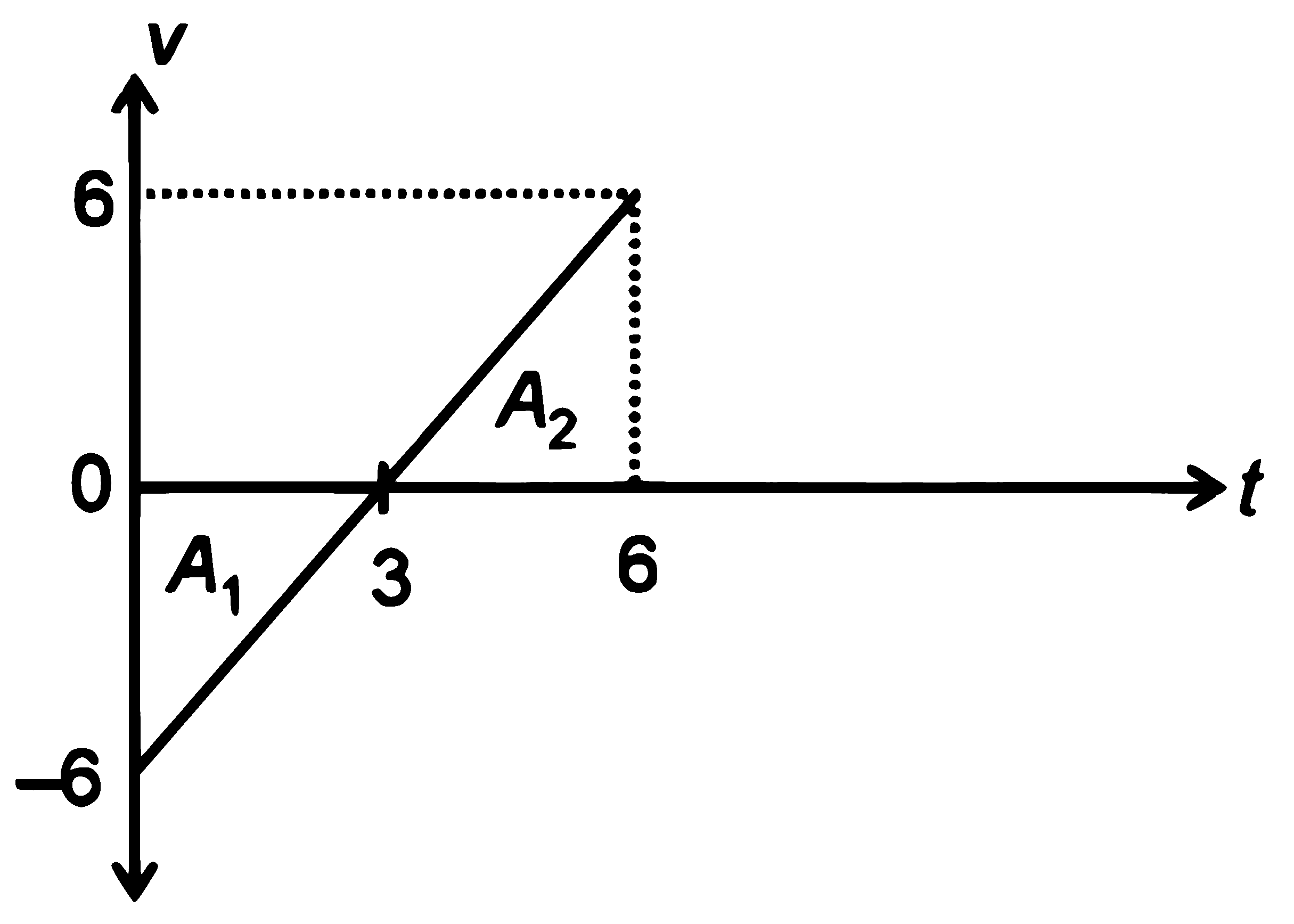
Consider a particle moving along a straight line, whose position as a function of time is given by , where and . The average speed of the particle, in from to is:
0
12
6
3
Position (s)
Velocity ( )
When
A car travels on a circular racetrack of radius 50 m , which is banked at an angle . If the car travels at a speed , then the wear and tear on its tyres is minimum. Taking the acceleration due to gravity to be , the value of is:
A particle of mass moves along a horizontal axis from to . The coefficient of kinetic friction varies as a function of as , where , are constants of appropriate dimensions, so that . The total work done by the frictional force during the motion is , where is the acceleration due to gravity. The value of is:
3
1
Given and Magnitude of work done by frictional force, where
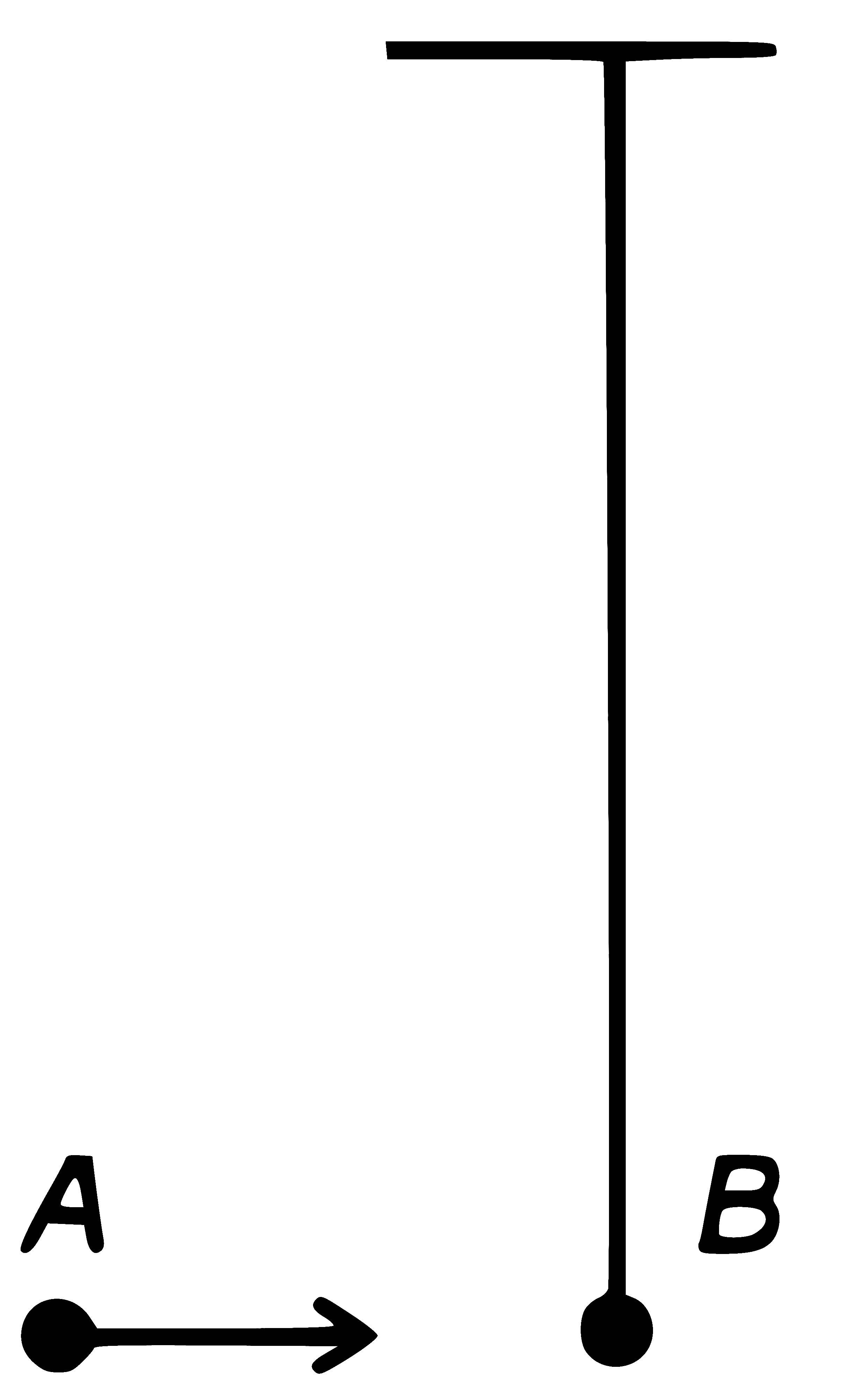
Bob of mass at rest is hanging vertically from the ceiling via a massless string of length 10 m , as shown in the figure. Point mass of mass travelling horizontally with speed hits bob elastically. The bob rises meter after the collision. Taking the acceleration due to gravity and neglecting the size of the bob, the value of is:
2.5
8
7
5
To reach the horizontal position, velocity of bob should be
Velocity of bob and point mass will be interchanged after elastic collision
By conservation of energy
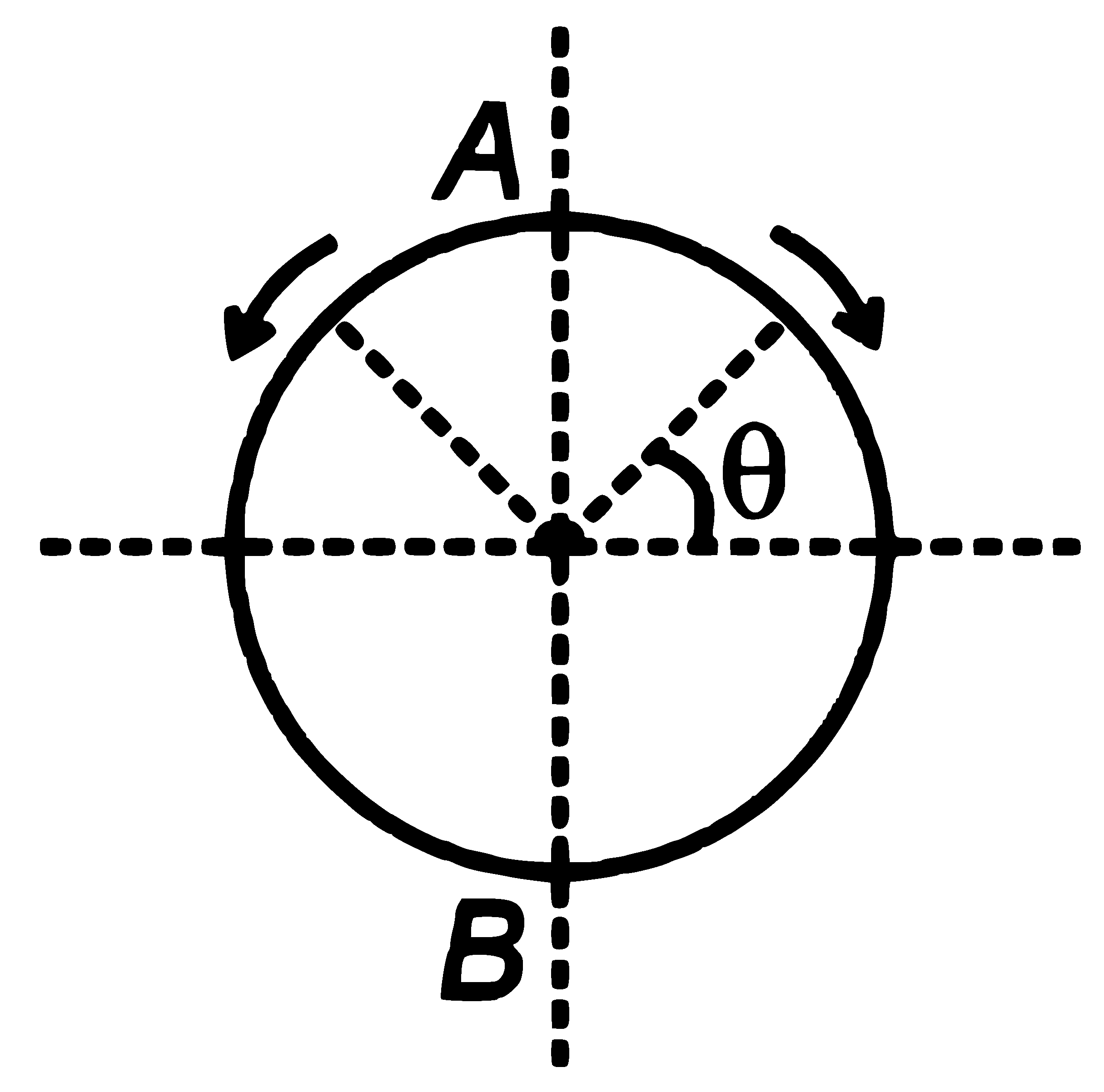
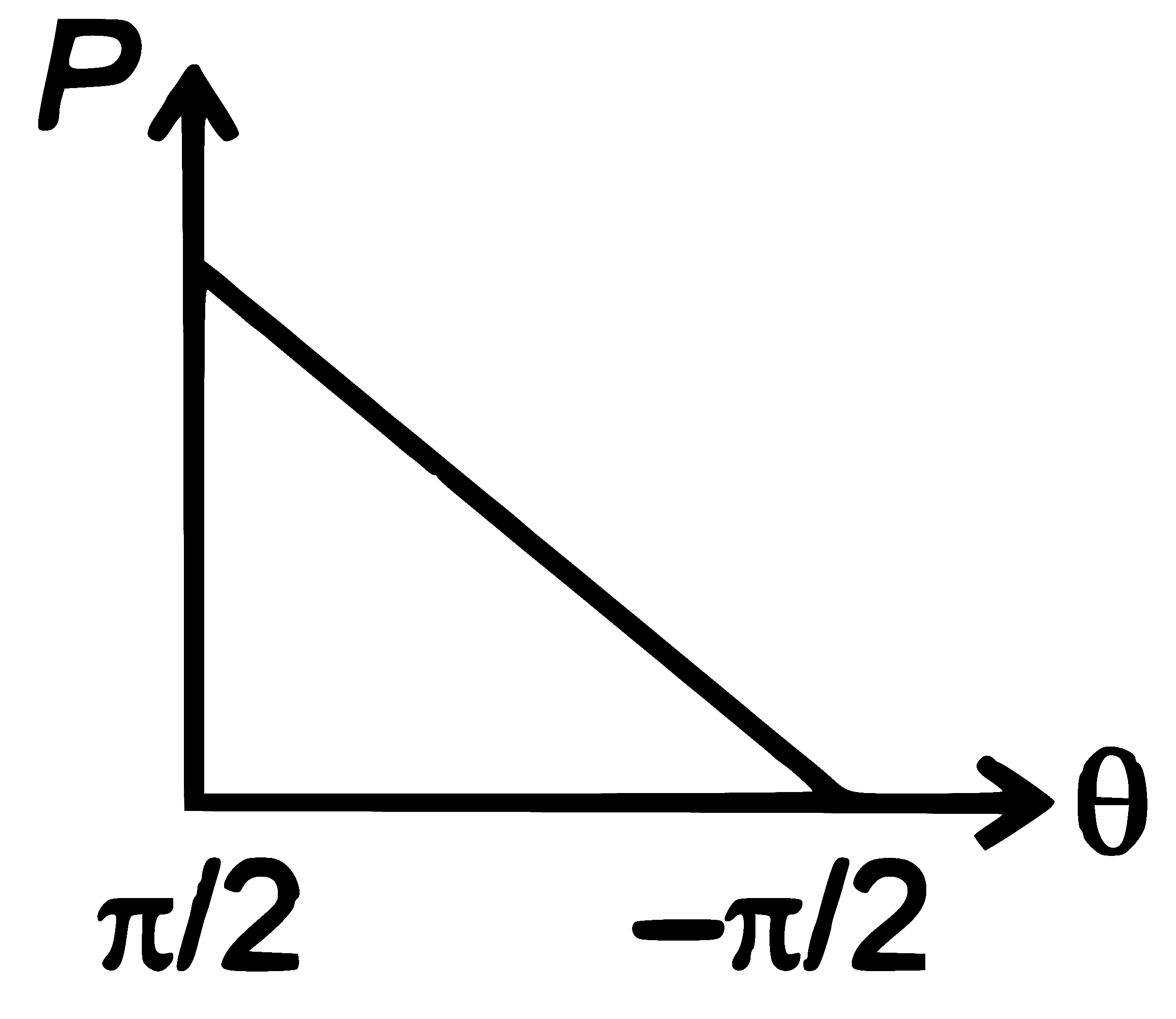
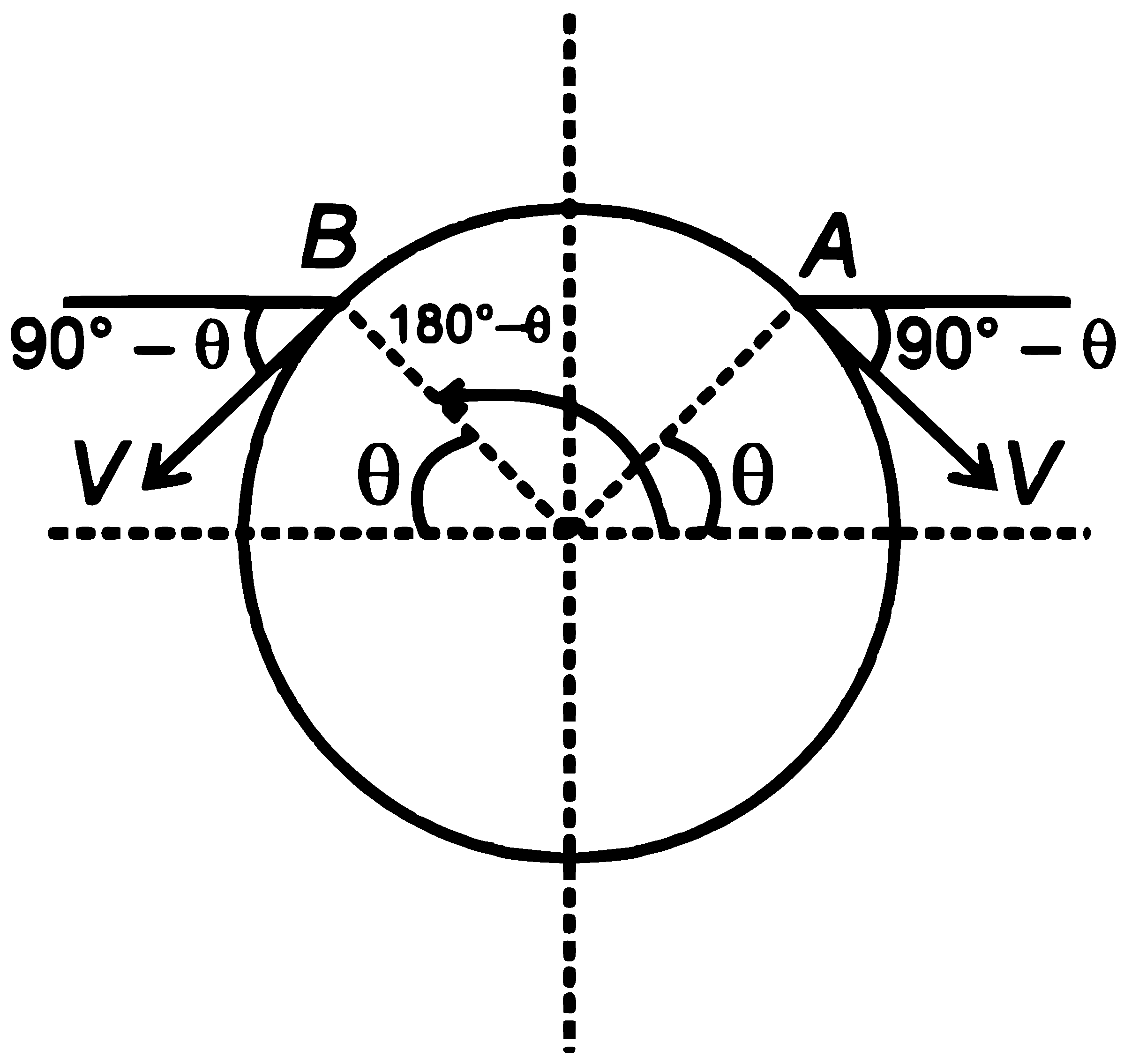
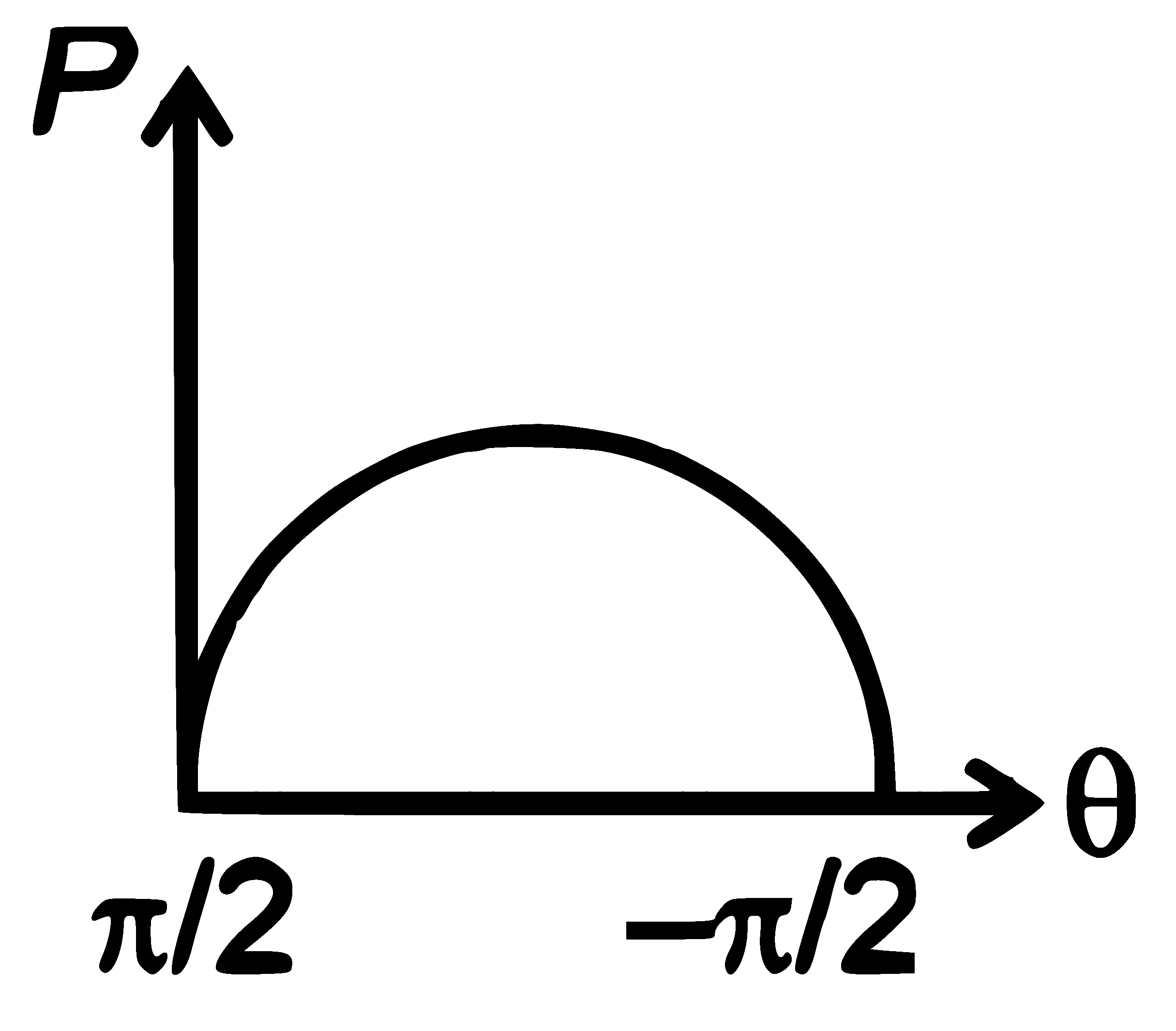
A frictionless circular wire of unit radius is fixed on the horizontal plane. Two-point particles of unit mass start moving simultaneously from point with identical uniform angular speeds in opposite directions, and meet again at point . During this time, which of the following figures schematically represent the magnitude of the total linear momentum of the system, as a function of ?
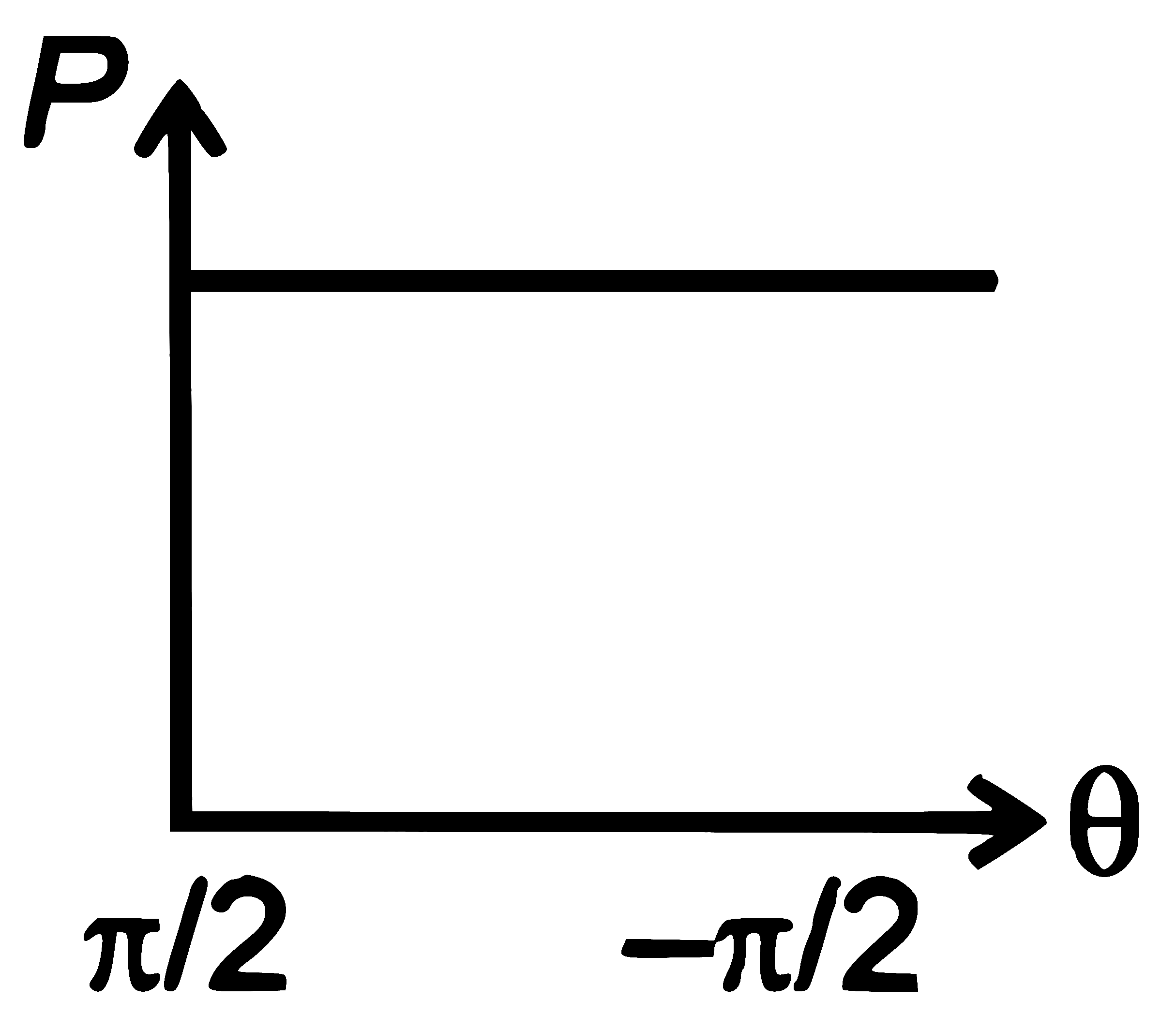
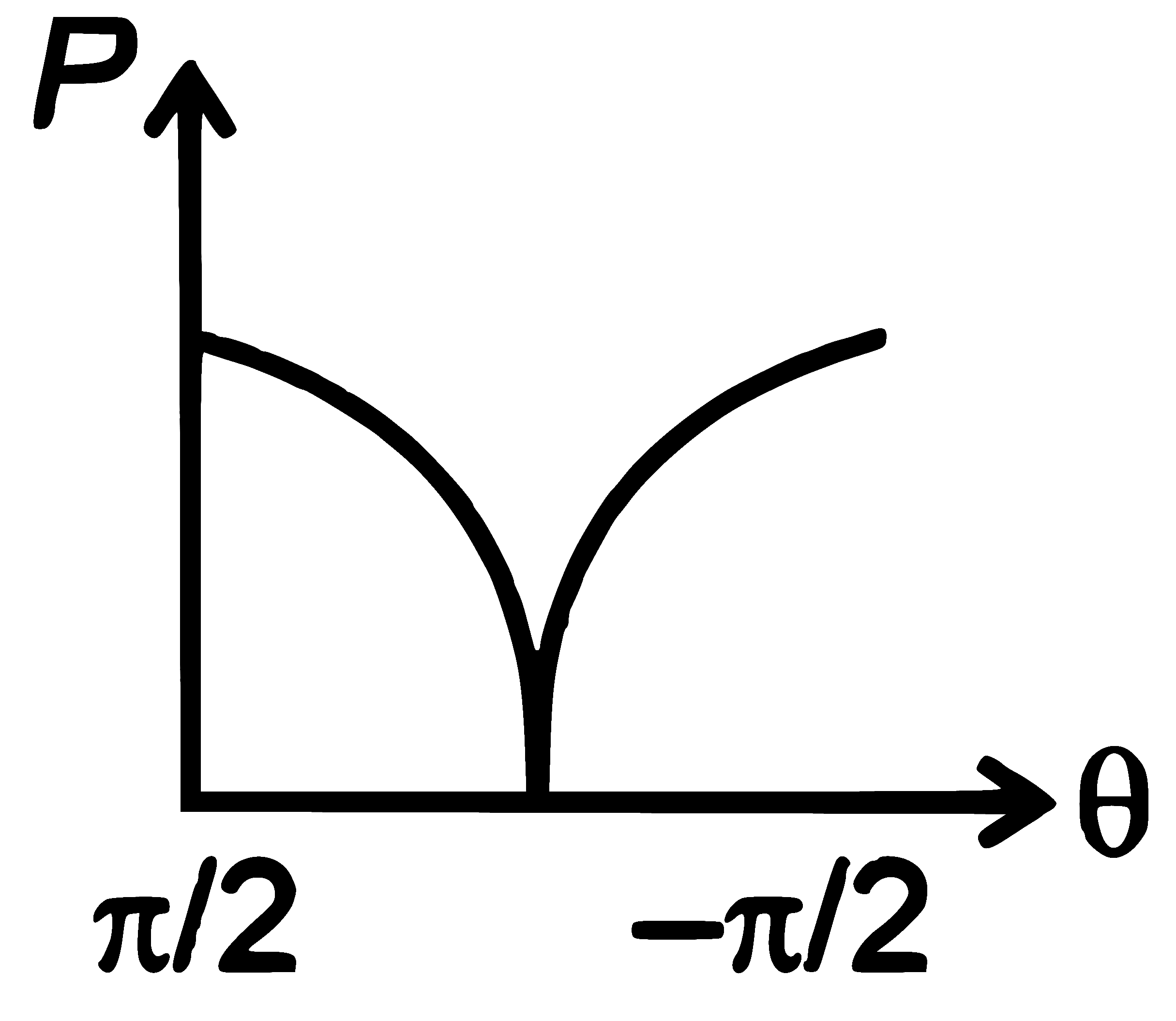
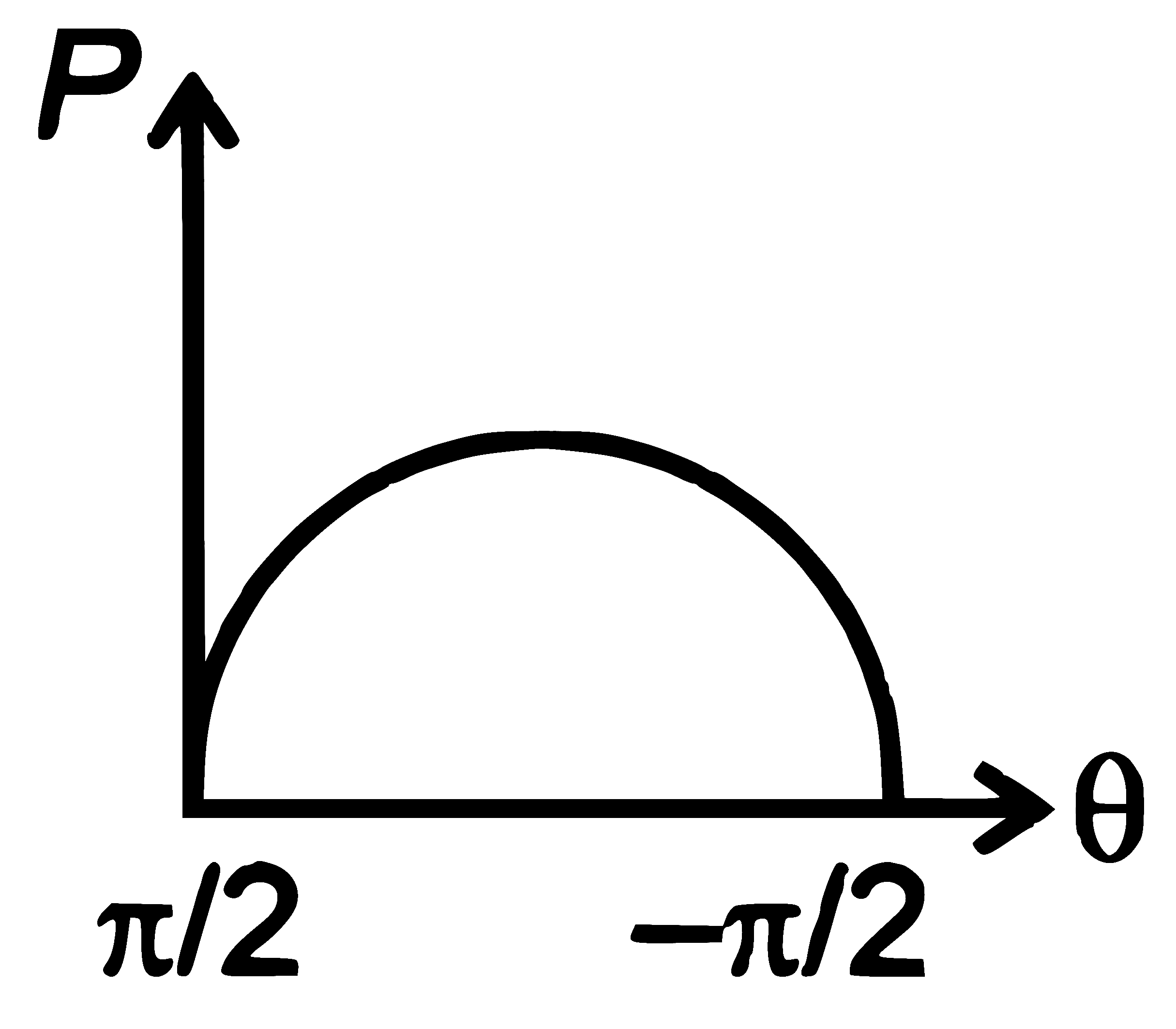
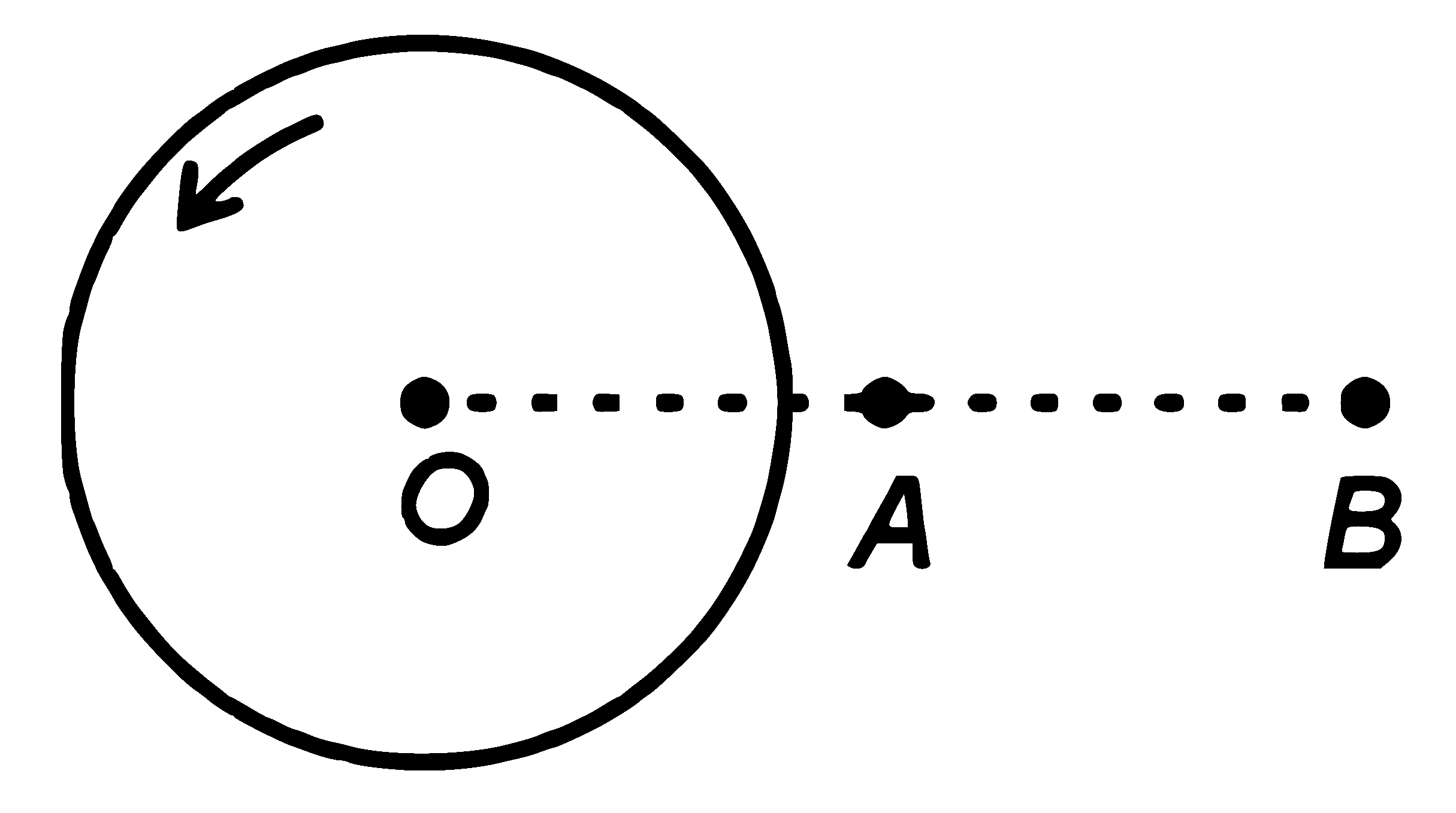
A thin horizontal disc is rotating about a vertical axis passing through its fixed centre . Its angular momentum is and computed about points and , respectively, with . The value of is:
2
1
for both axis
So
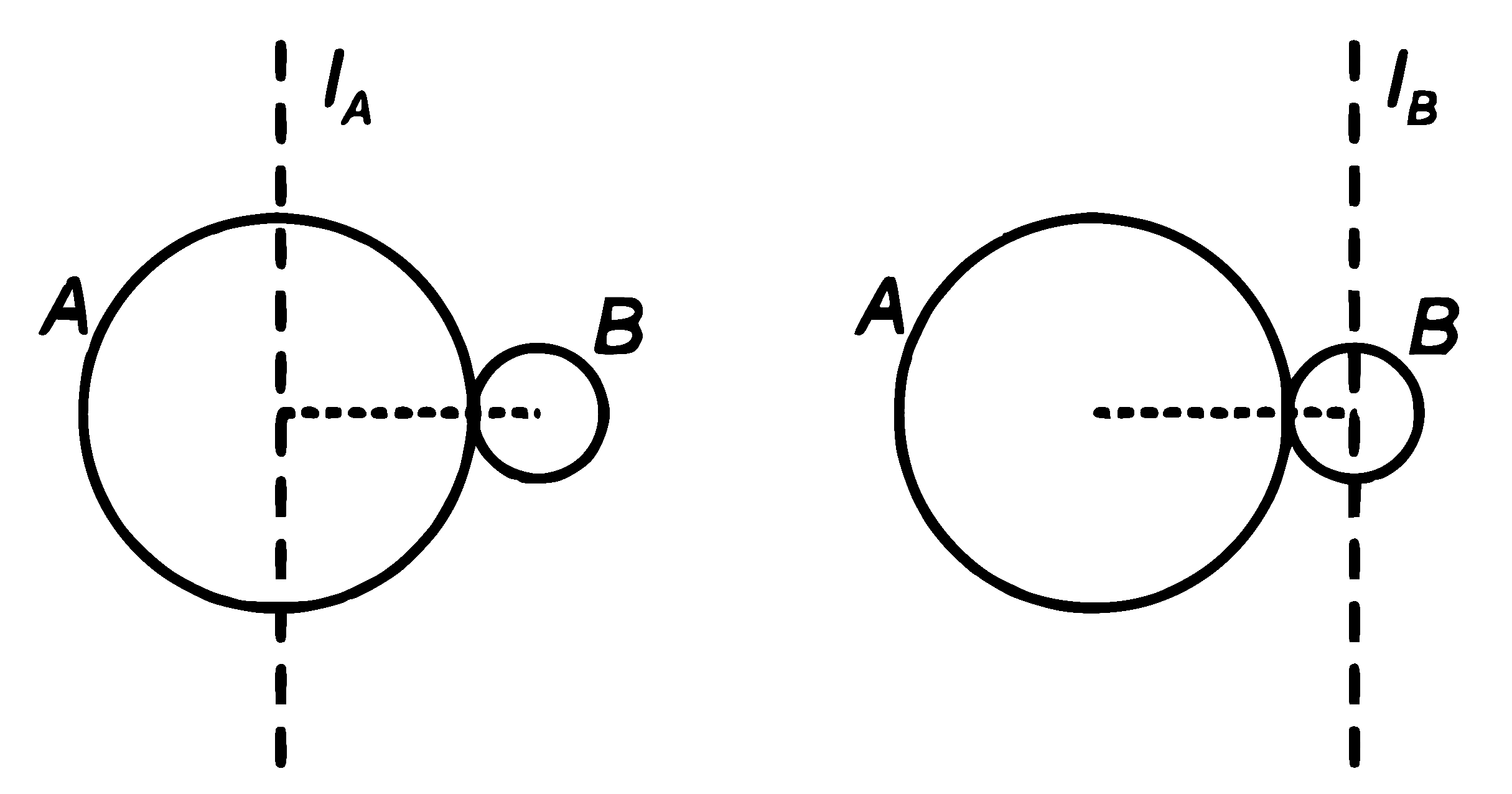
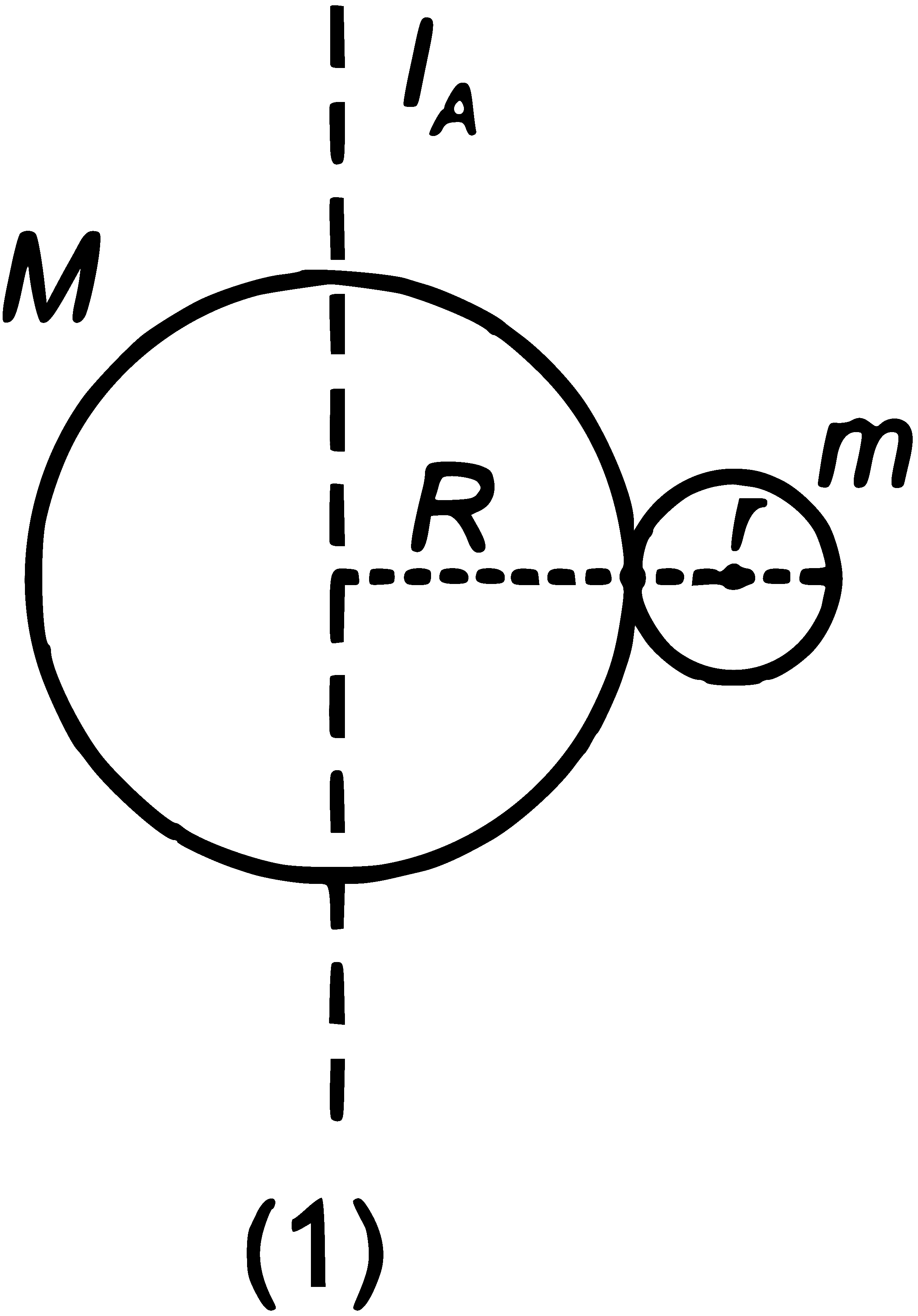
A solid sphere of radius and mass is attached at a point to a smaller solid sphere of radius and="" mass="" .="" assume="" that="" the="" line="" joining="" their="" centres="" lies="" along="" horizontal.="" moment="" of="" inertia="" system="" calculated="" about="" a="" vertical="" axis="" passing="" through="" centre="" ="" is="" ="" ="" .="" difference="" ="" is:<="" p="">
0
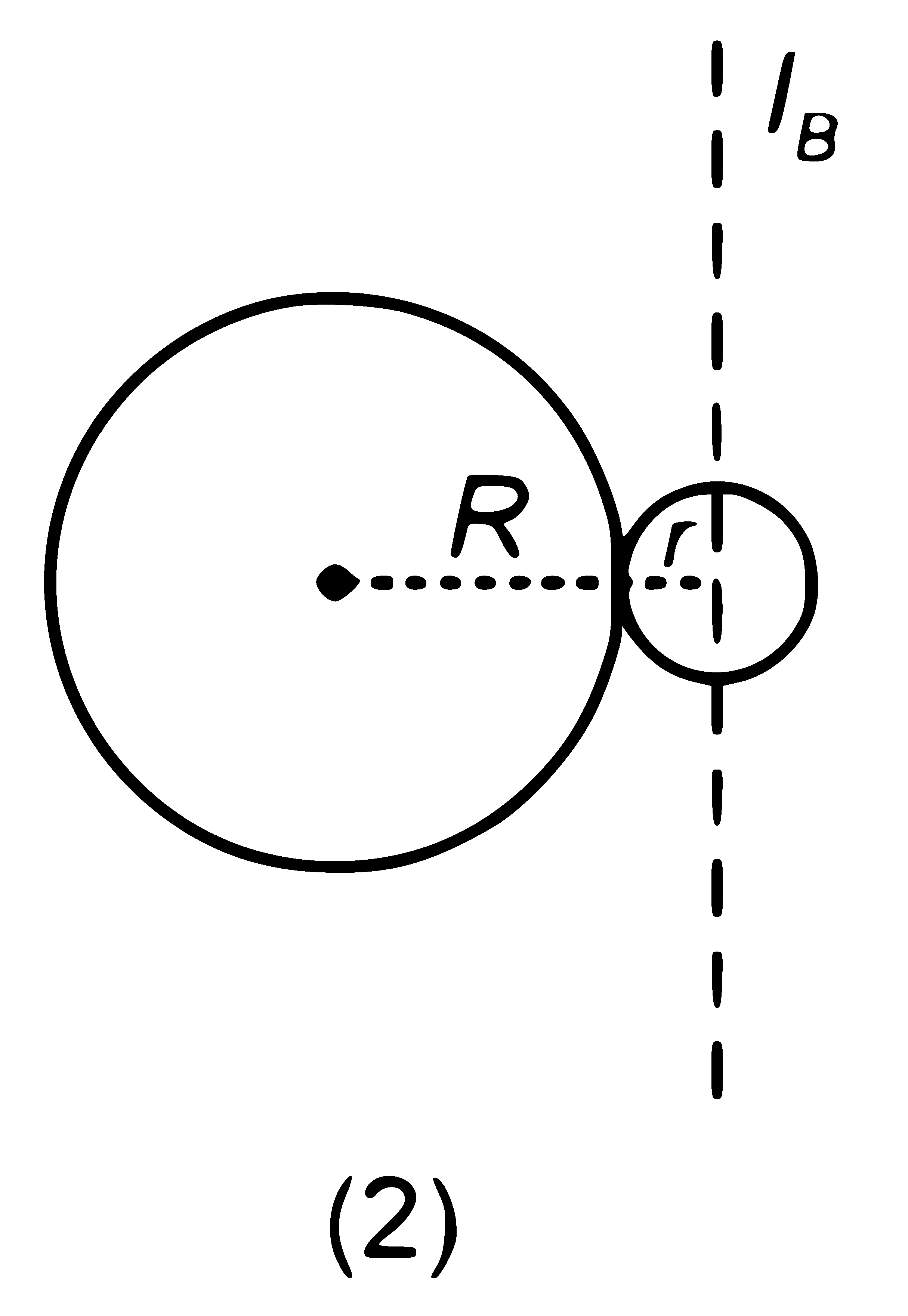
Two planets and with equal mass have radii and , respectively, where . The escape speeds of and are and , respectively. Then is:
2
1
In a solar system, the time-period of revolution of a planet tracing a circular orbit of radius is proportional to:
In planetary motion
Water flows in a streamline motion through a horizontal pipe of circular cross-section as shown in the figure. The pressure difference of water between and is . The area of cross-section at and are and , respectively. The rate of flow of water through the pipe, in , is:
[Take density of water ]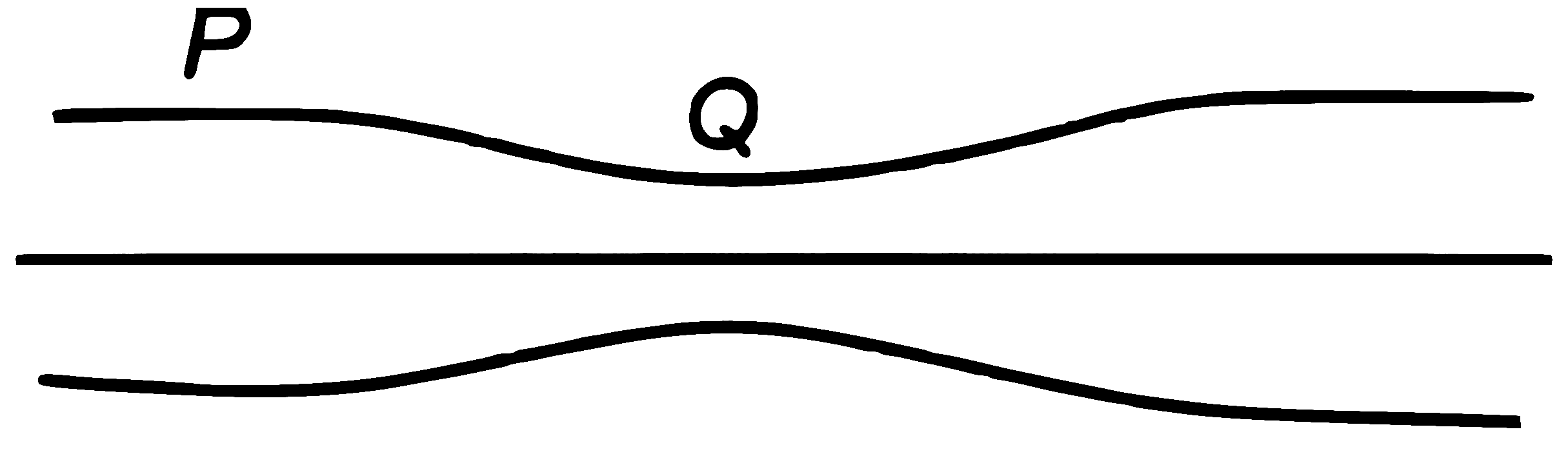
400
100
200
300
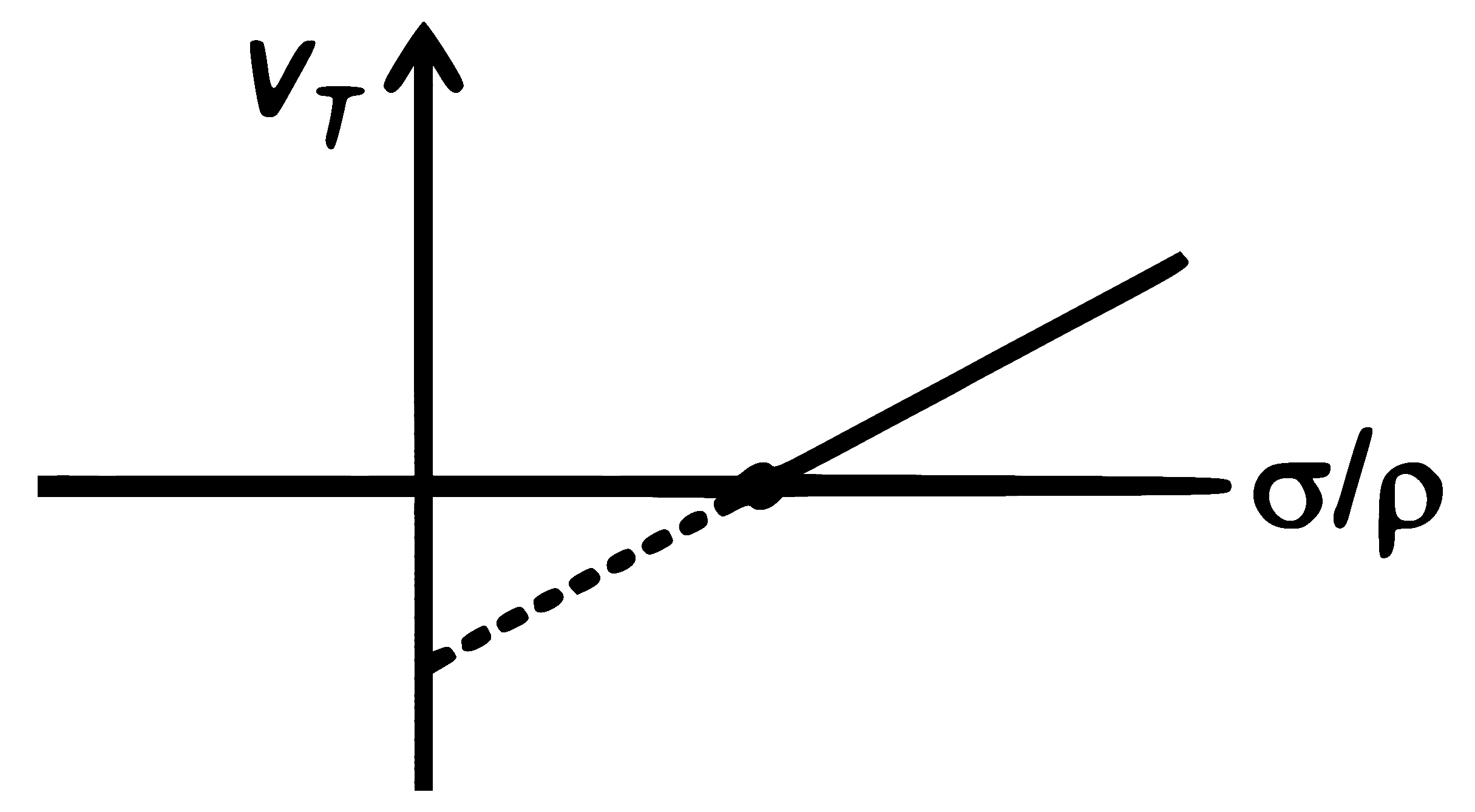
In the measurement of viscosity of liquids using terminal velocity experiment, spherical balls of same radius but having different densities are used. The variation of the terminal velocity ( ) with the ratio of density of spherical ball ( ) to density of the liquid ( ), is best represented by:
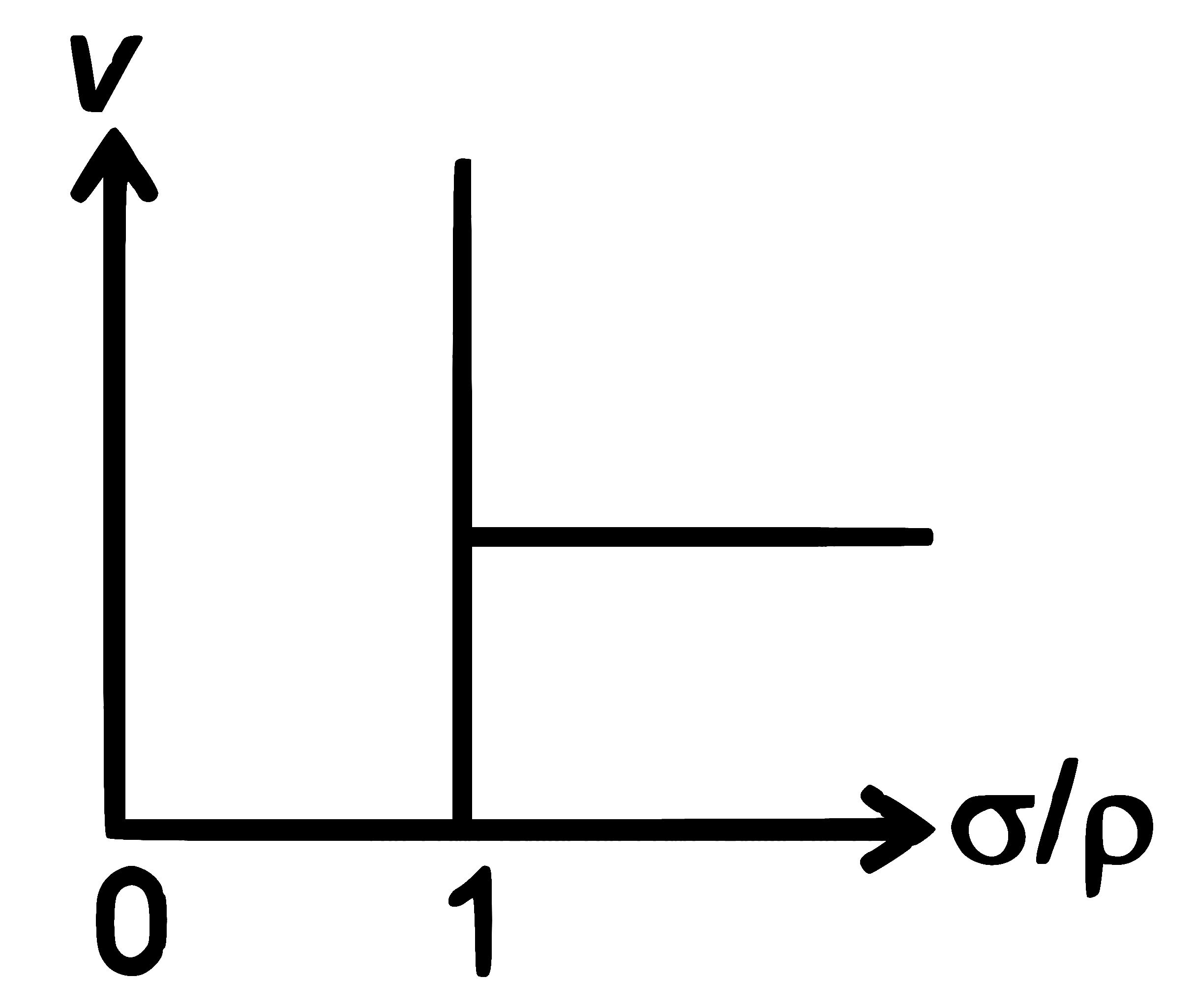
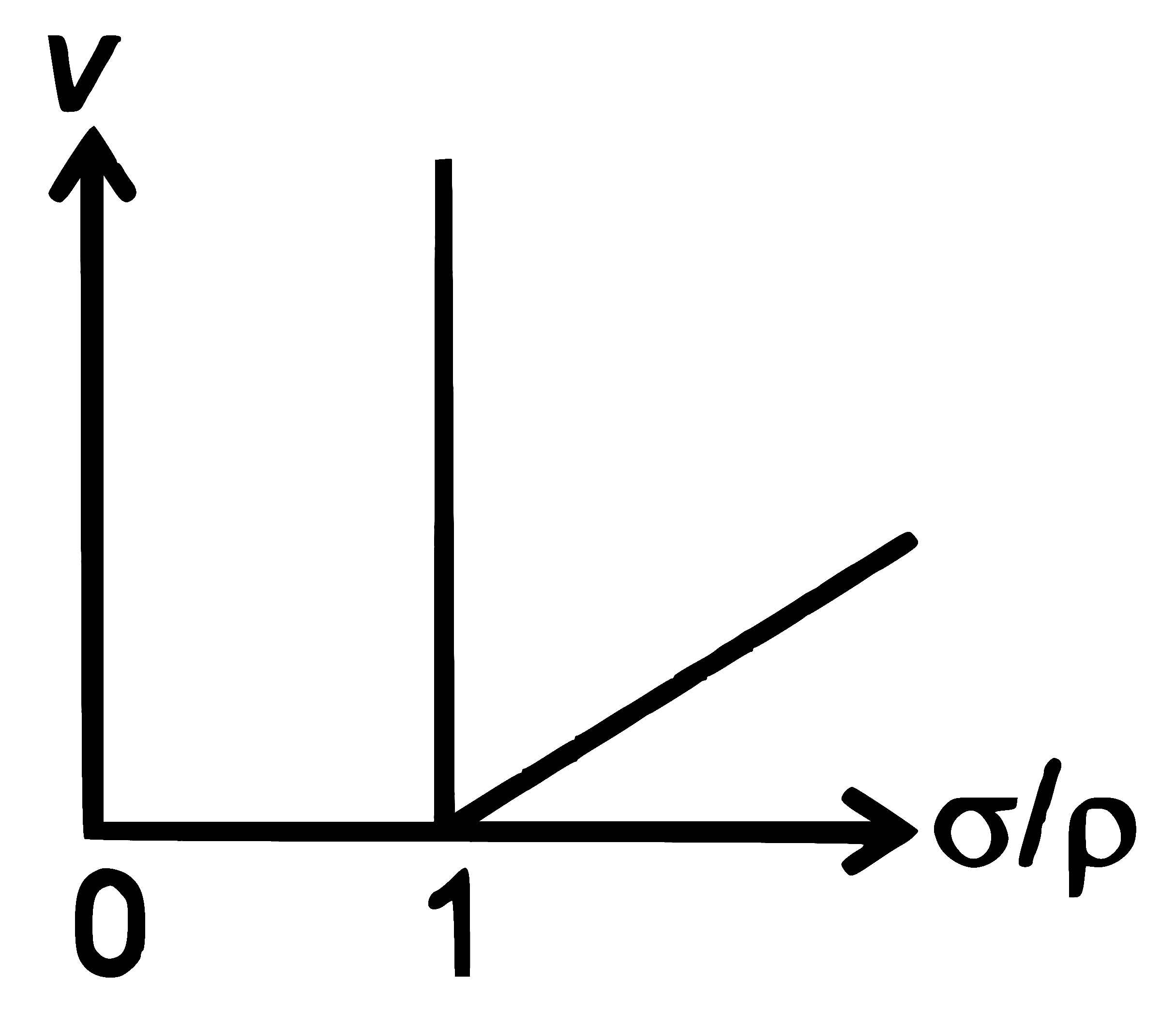
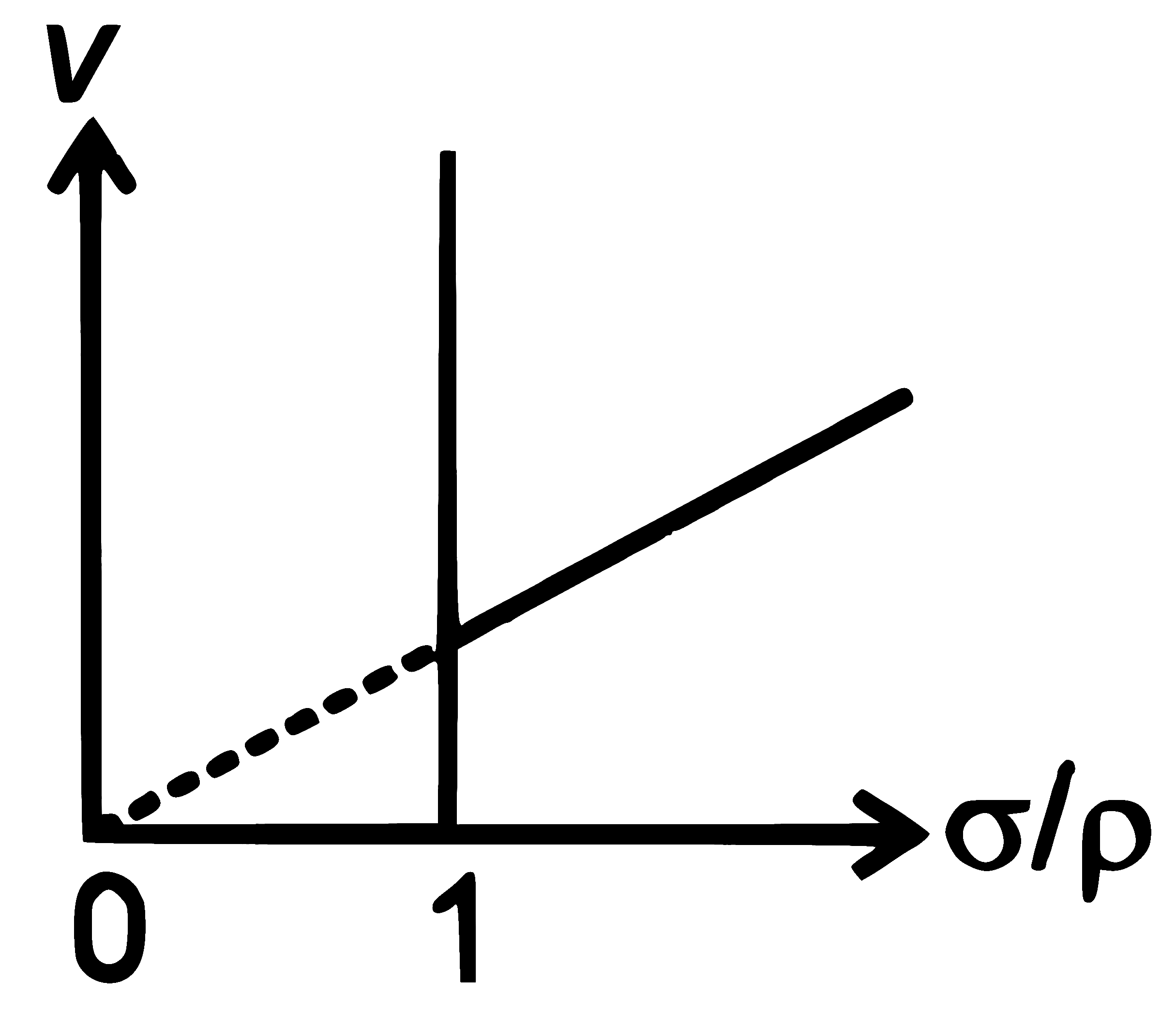
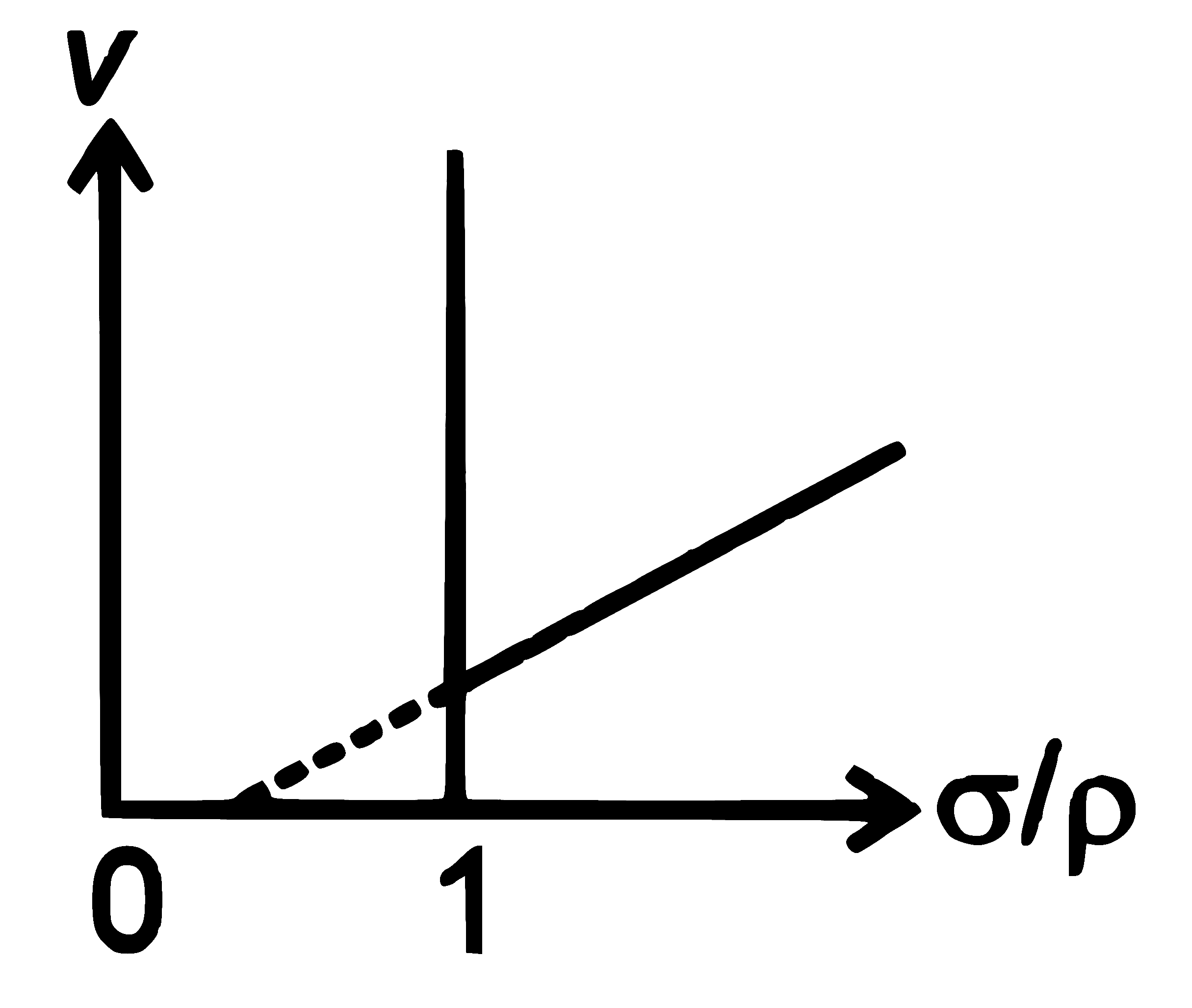
Terminal velocity
Equation number (I) is like equation number which is straight line with negative intercept.
The temperature of a metallic sphere of radius is increased by a small amount . If the linear coefficient of thermal expansion of the metal is , the approximate increase in the volume of the sphere is:
For the metallic sphere,
Volume of the sphere,
Increase in volume
In an adiabatic expansion, the temperature of one mole of an ideal monatomic gas ( ) decreases from 60 K to 50 K . The work done by the gas in the process is:
(Take the universal gas constant as )
166 J
41.5 J
83 J
124.5 J
An ideal gas is made of polyatomic molecules. Each of the molecules has three translational, three rotational and number of vibrational modes. If the ratio of heat capacities of the gas is , then the value of is:
1
4
3
2
The mean free path of molecules in an ideal gas is half that of another ideal gas . The diameter of the spherical molecules of gas is twice the diameter of the molecules of . If number densities of the gases and are and , respectively, the correct option is:
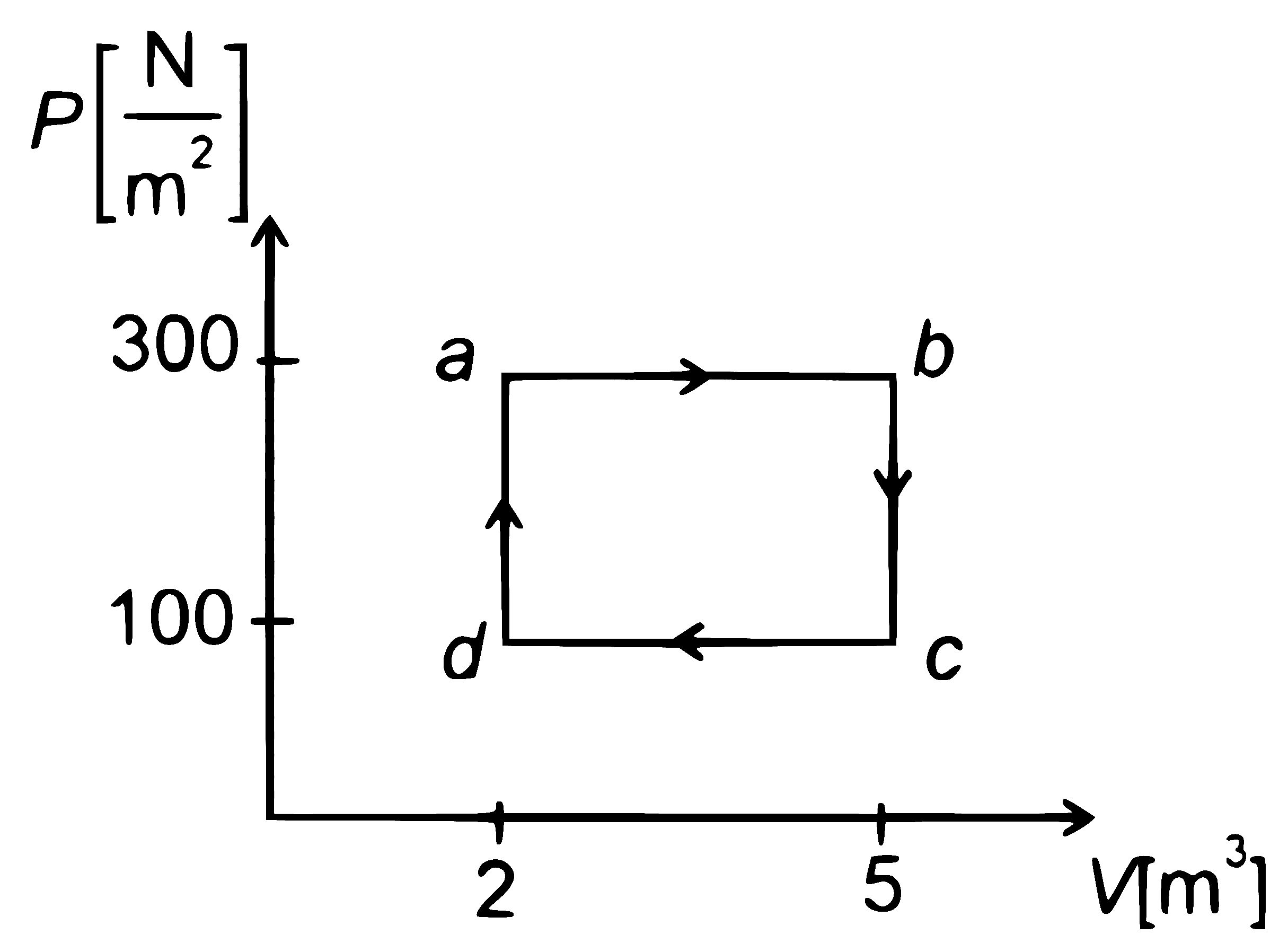
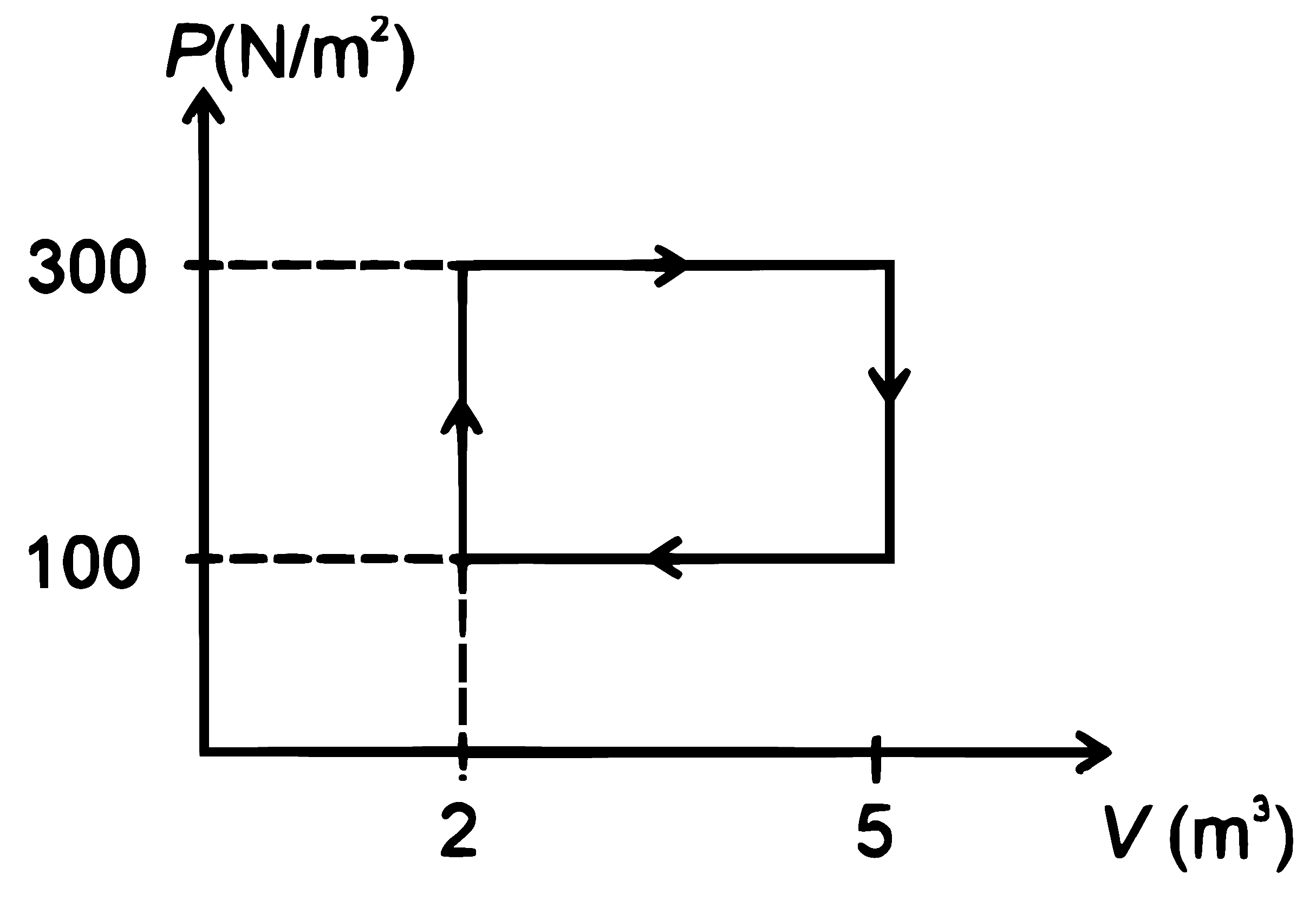
One mole of an ideal monatomic gas undergoes a cyclic process as shown in the figure. The total heat supplied to the gas is:
800 J
400 J
500 J
600 J
A cylindrical cork of uniform density floats in a liquid of density . If the cork is depressed slightly and released, it oscillates harmonically with time period . If the same cork floats in another liquid of density , then the similar oscillation has time period . The value of is:
1/4
4
2
Time period of a cylinder oscillating inside the liquid
Consider a spring-mass simple harmonic oscillator in one dimension. The mass of the particle is and the spring constant is . At a given instant, the extension of the spring is -meter and the speed of the particle is . On the plane, if the graph of as a function of is a circle, then the correct option is:
Velocity as a function of is given by
Given that above equation is of a circle
Hence,
For sound waves, if the number of nodes for the harmonic of an open-ended pipe is and that for the harmonic of the same pipe with one of its ends closed is , the ratio is
1
For open organ pipe
→ Number of nodes are same as number of harmonics
For closed organ pipe
→ There are only odd harmonics
For harmonic → Number of node → 1
For harmonic → Number of node
For harmonic → Number of node
For harmonic → Number of node
For harmonic → Number of node
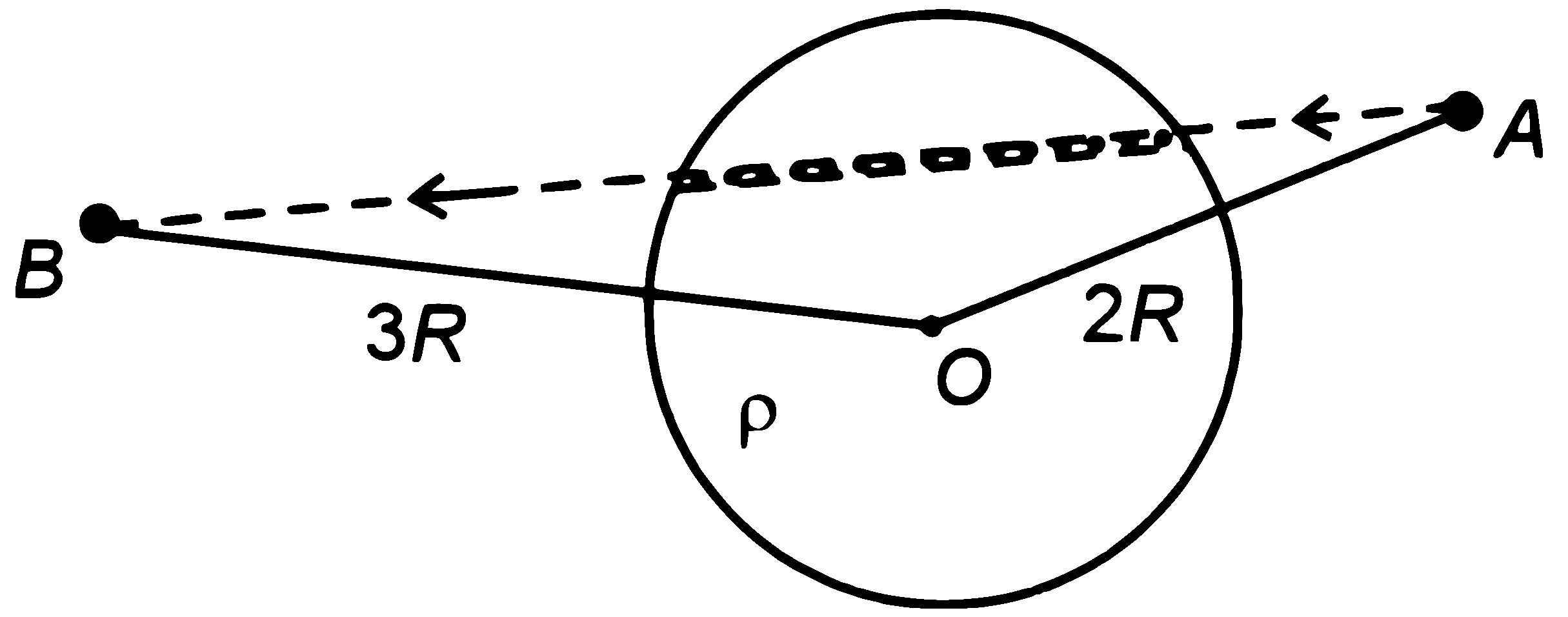
A unit positive point charge is taken slowly through an infinitesimally thin tube that is inside a charged dielectric sphere of radius , having uniform positive charge density , as shown in the figure. The initial and final positions of the charge are marked by and at distance and respectively, from the centre of the sphere. In this process, the magnitude of the total work done on the point charge is . The value of is : ( is the permittivity of vacuum)
18
2
6
9
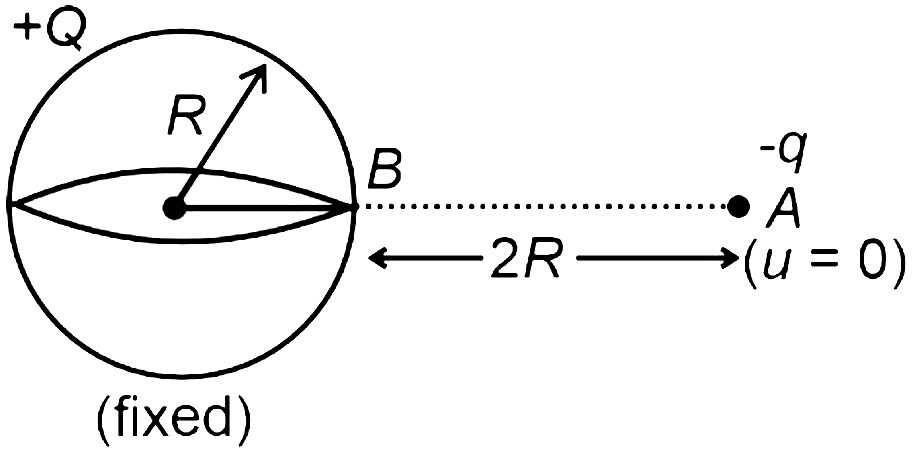
Consider a fixed uniformly charged insulating sphere with radius and total charge . A point charge ( ) with mass is released from rest at a distance of from the centre of the charged sphere. When the point charge reaches the surface of the sphere, its speed is:
( is the permittivity of vacuum, neglect gravitational forces).
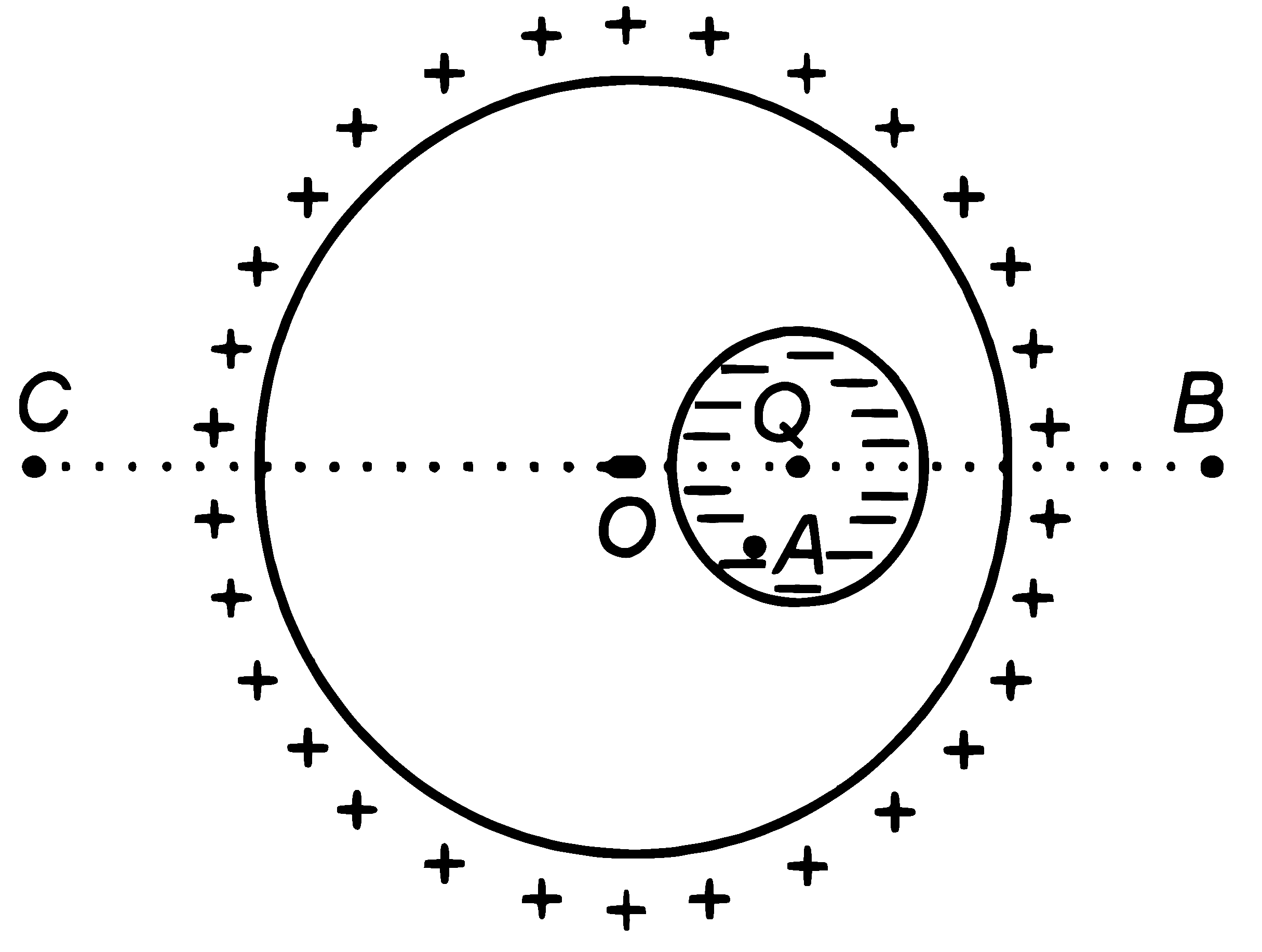
A point charge is placed inside a cavity within a solid isolated conducting sphere. Consider points and as shown in the figure, where the magnitudes of the electric fields are , respectively. The points and are at the same distance from the center of the solid sphere. The correct option is :
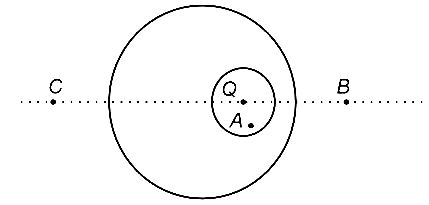
Due to charge present inside cavity,
Charge distribution will be uniform on the outer surface of conducting sphere, Since and are at same distance from centre of sphere,
(Due to electrostatic shielding)
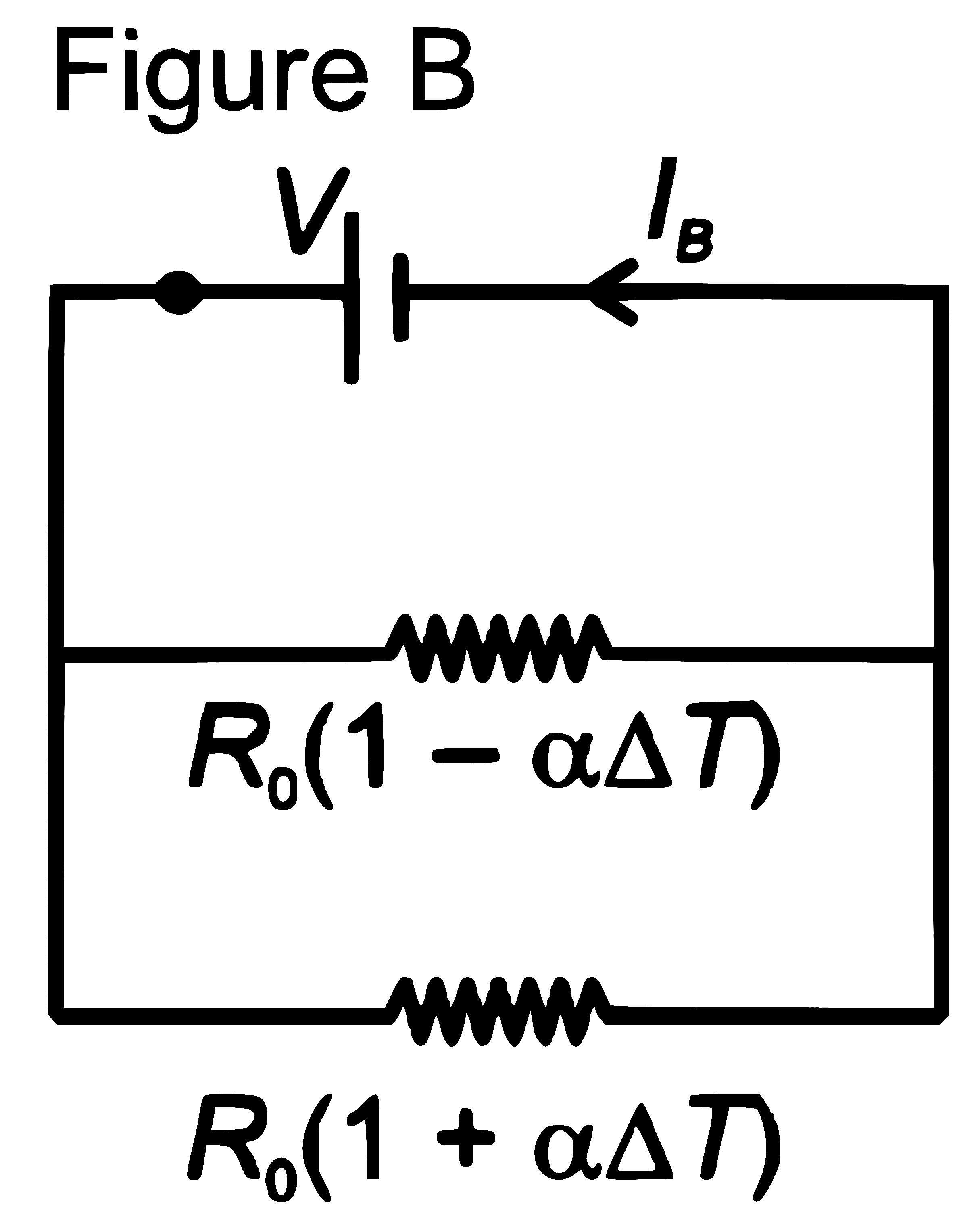
Consider two circuits, (A) and (B), each having two resistors. One of them has a positive temperature coefficient of resistance, , while the other one has a negative temperature of coefficient, , as shown in the figure. The current through these circuits are denoted by and . At initial temperature, the resistance of the two resistors is . As the temperature is increased, the correct option that describes the variation of current in these circuits is:
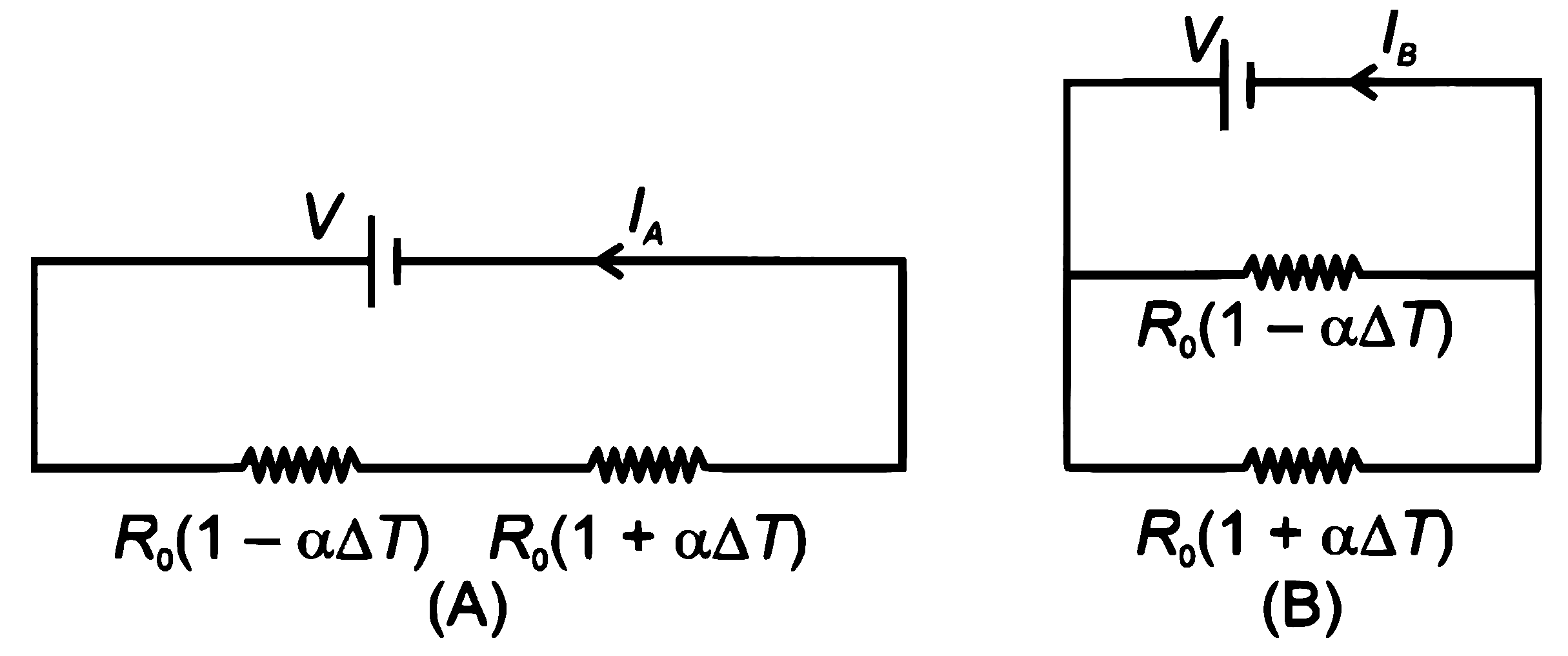
Both and remain constant
remains constant while increases
decreases while increases
increases while decreases
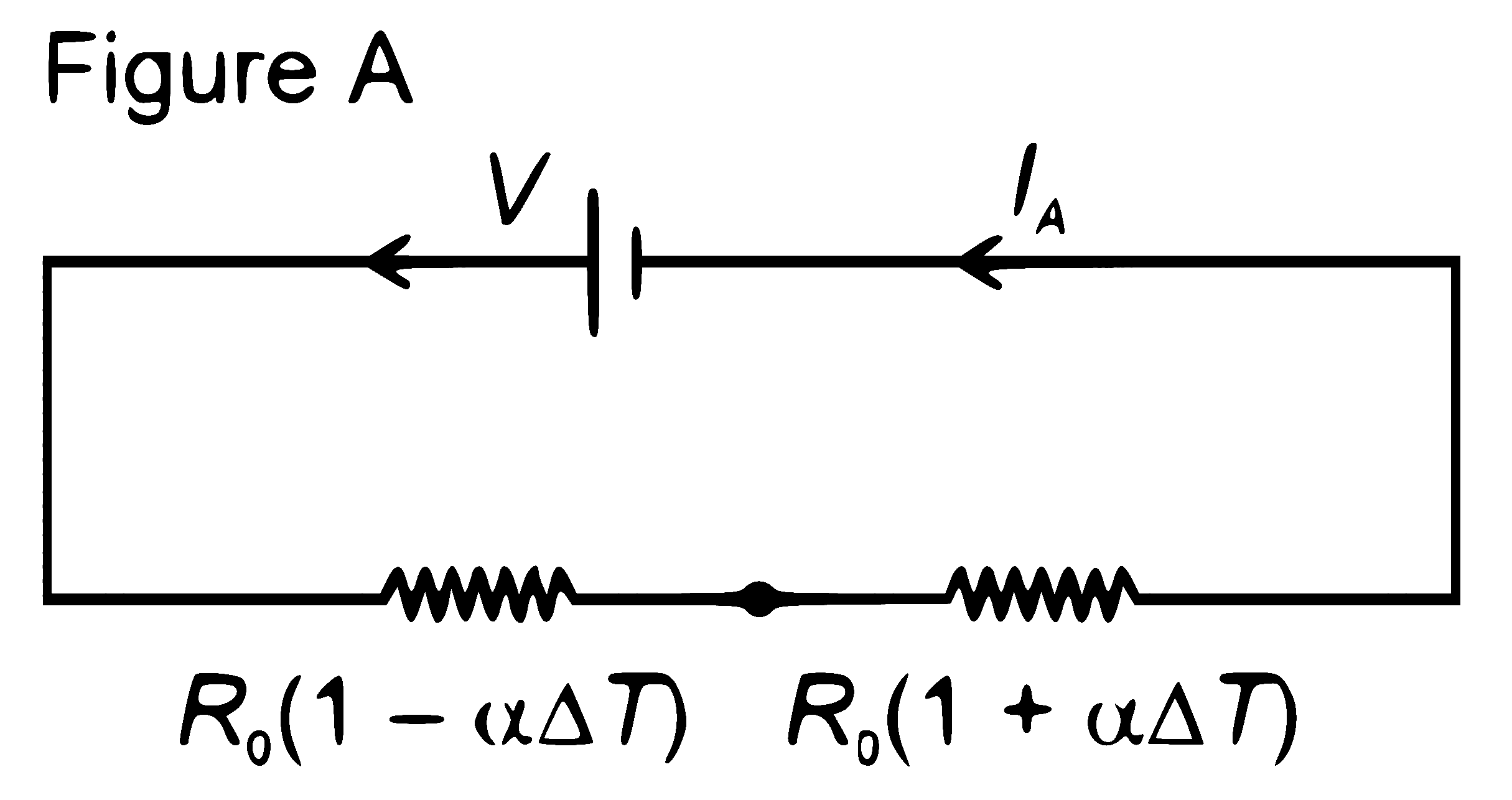
will decrease with rise in temperature
increases with rise in temperature
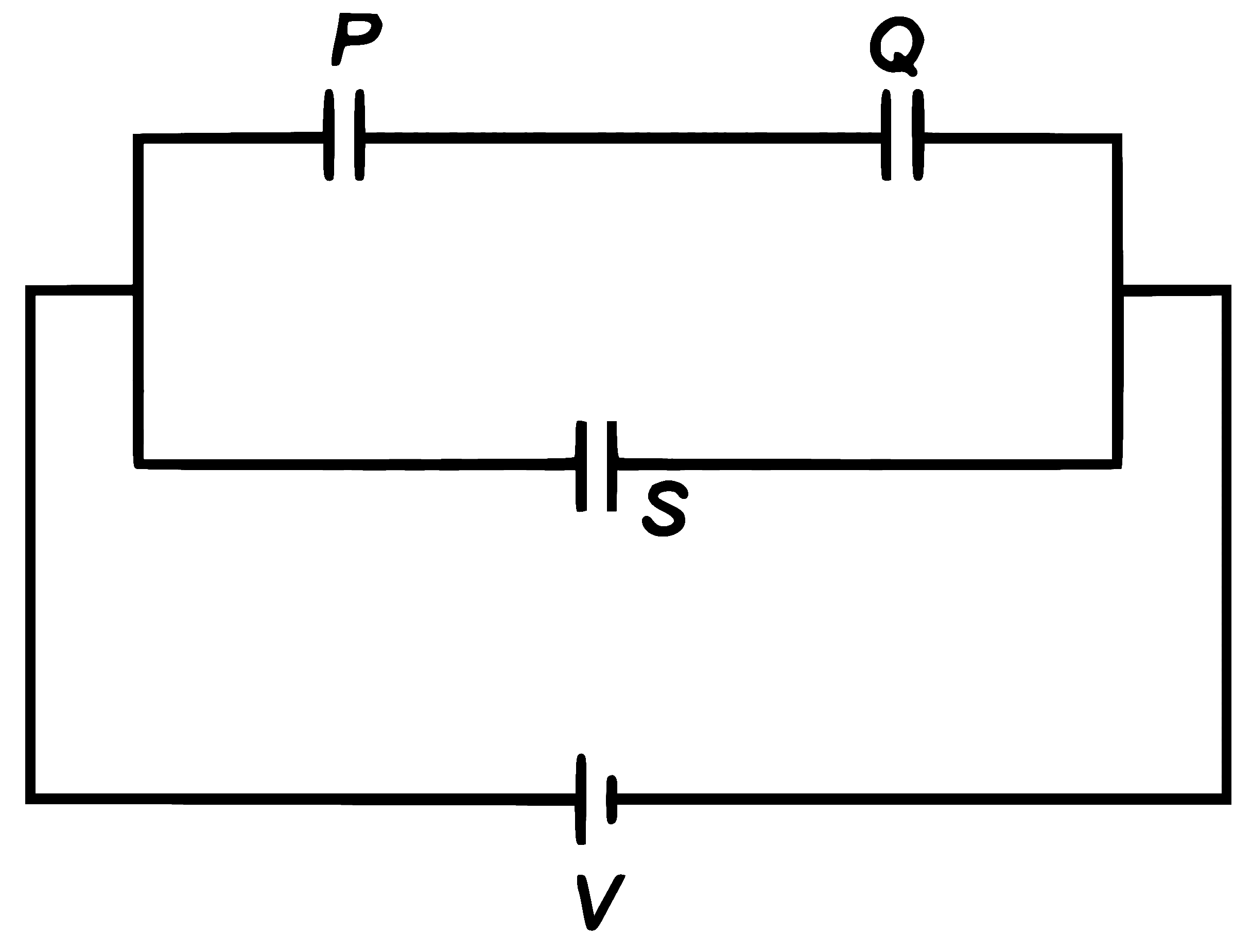
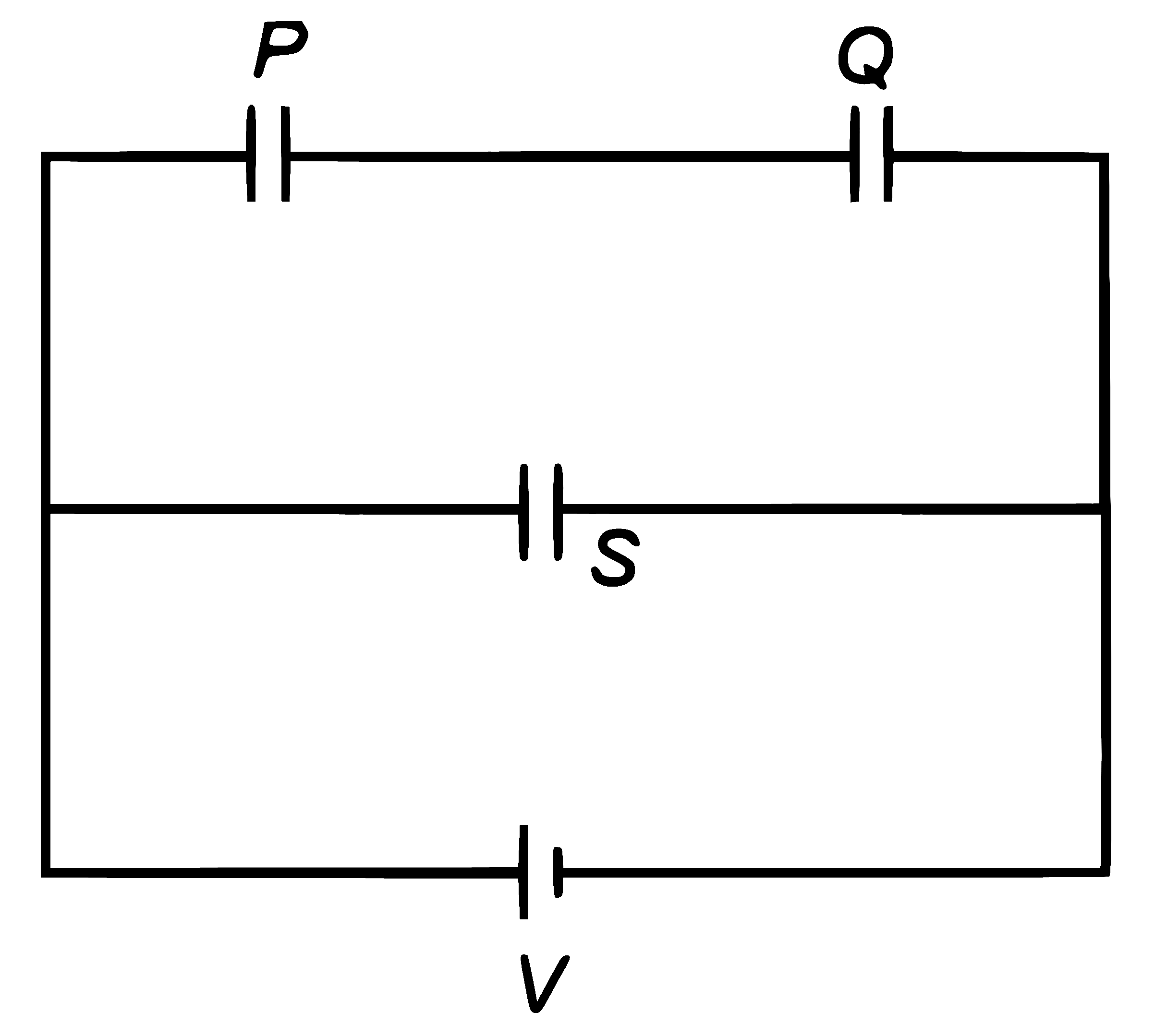
Three identical capacitors, and , each of the capacitance , are connected to a battery of voltage , as shown in the figure. If the energy stored in the capacitor and total energy stored in the system are and , respectively, then the ratio is:
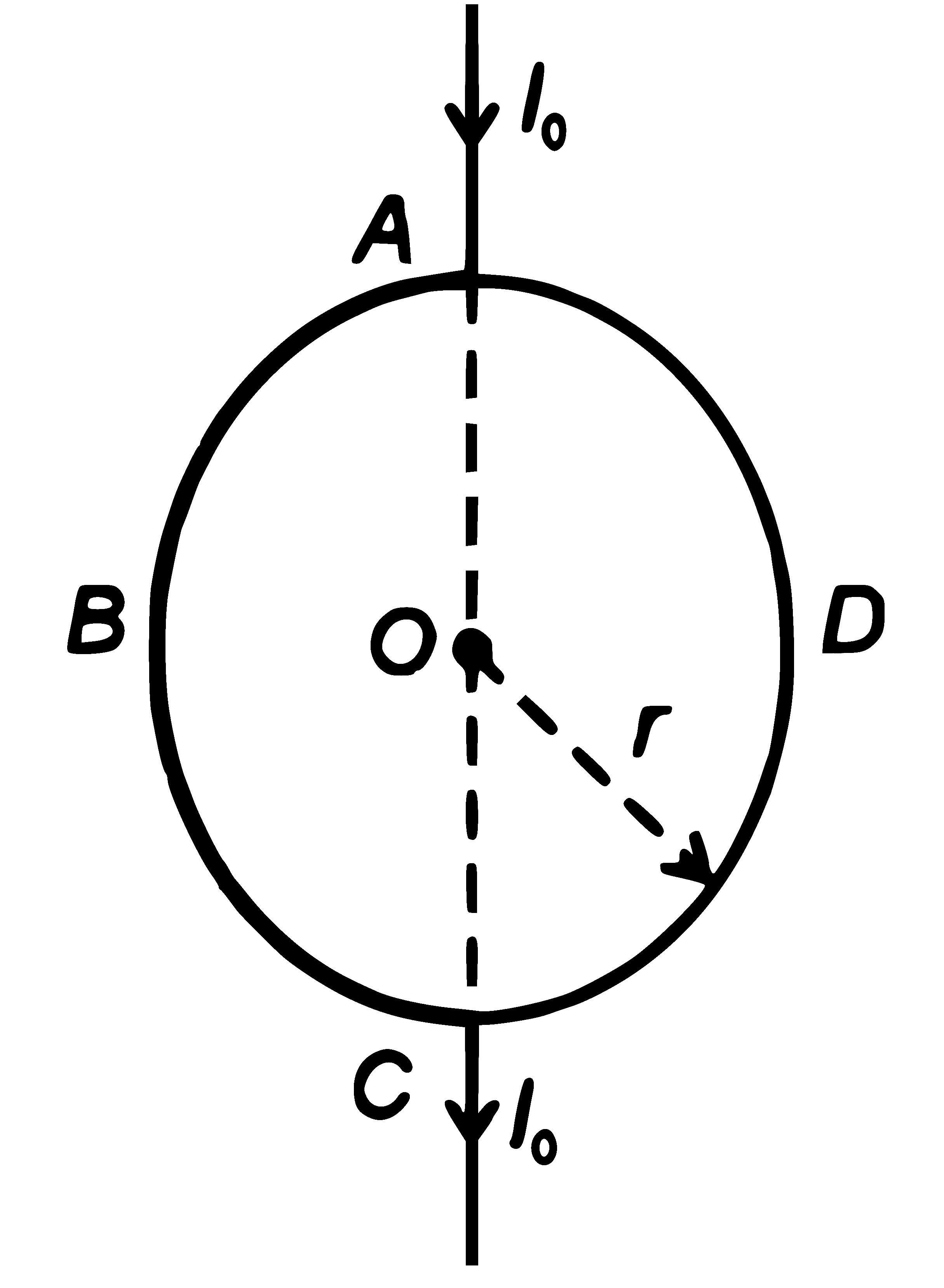
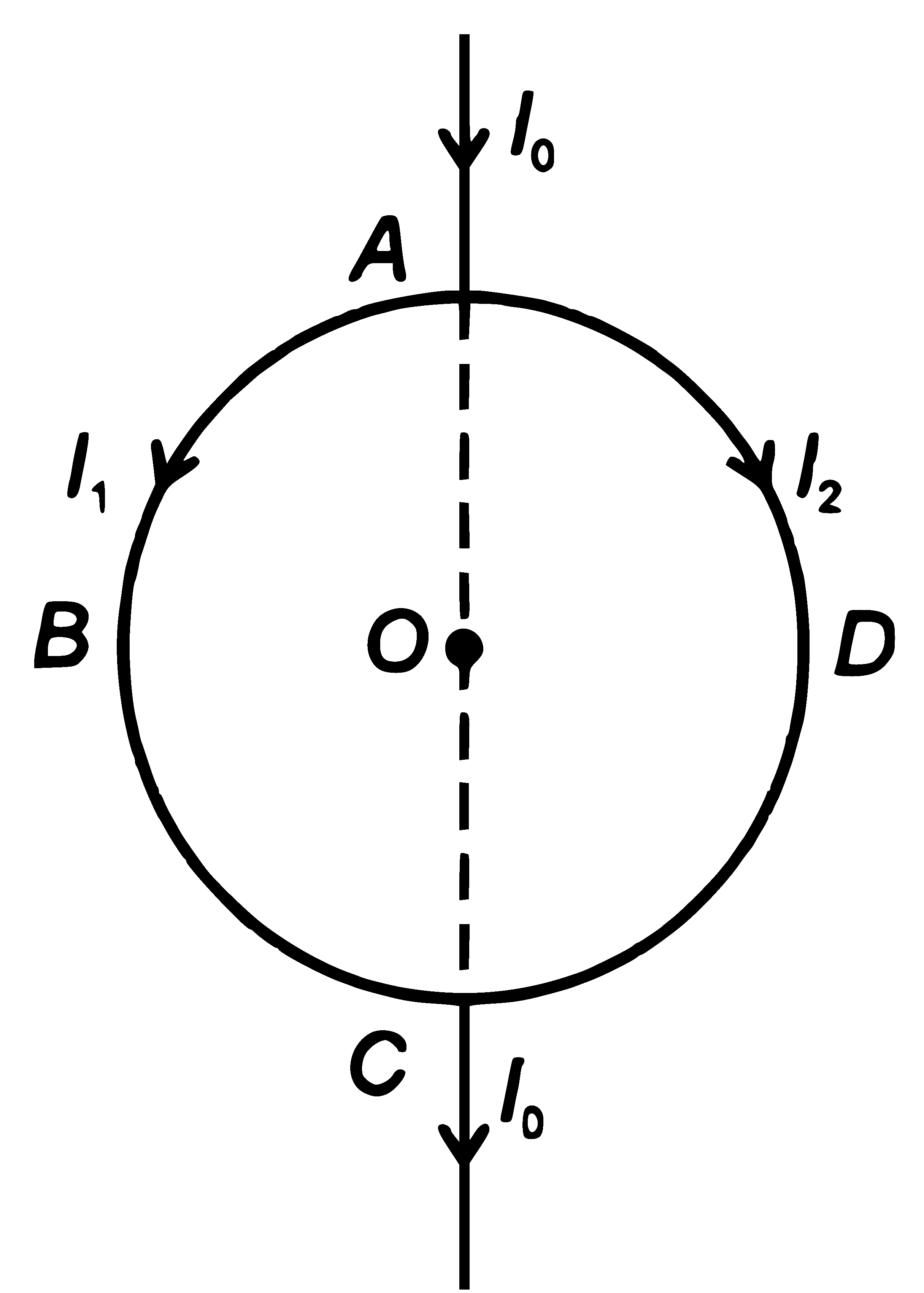
A current flows through a metallic circular loop of radius as shown in the figure. Resistance of the segment is half that of . Magnitude of magnetic field at the centre of the loop is :
Two infinitely long parallel conducting wires and carry currents and , respectively, in the same direction. The wire has uniform mass per unit length and lies on an insulated floor. The wire is kept fixed at a height above the floor. The minimum magnitude of so that the wire does not rise from the floor is: [ is the acceleration due to gravity and is the permeability of free space.]
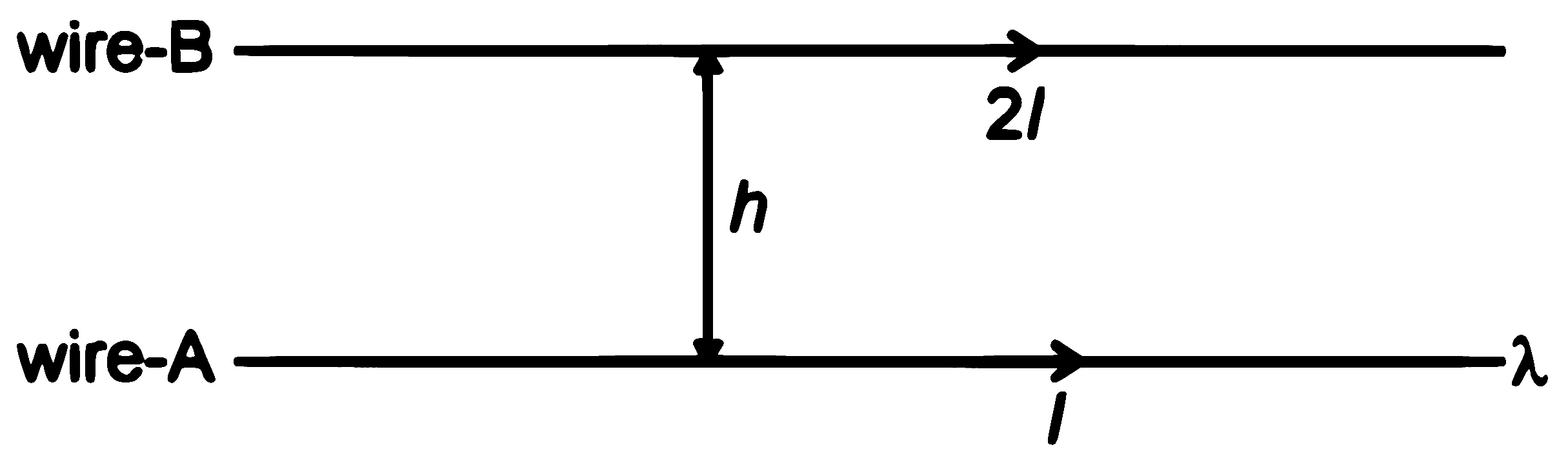
Force per unit length on wire by wire
If , weight of wire , then wire does not rise from the floor.
So, ,
Consider a long solenoid of length and radius . If is the number of turns per unit length and is the permeability of free space, the inductance of the solenoid is :
Self-inductance of solenoid
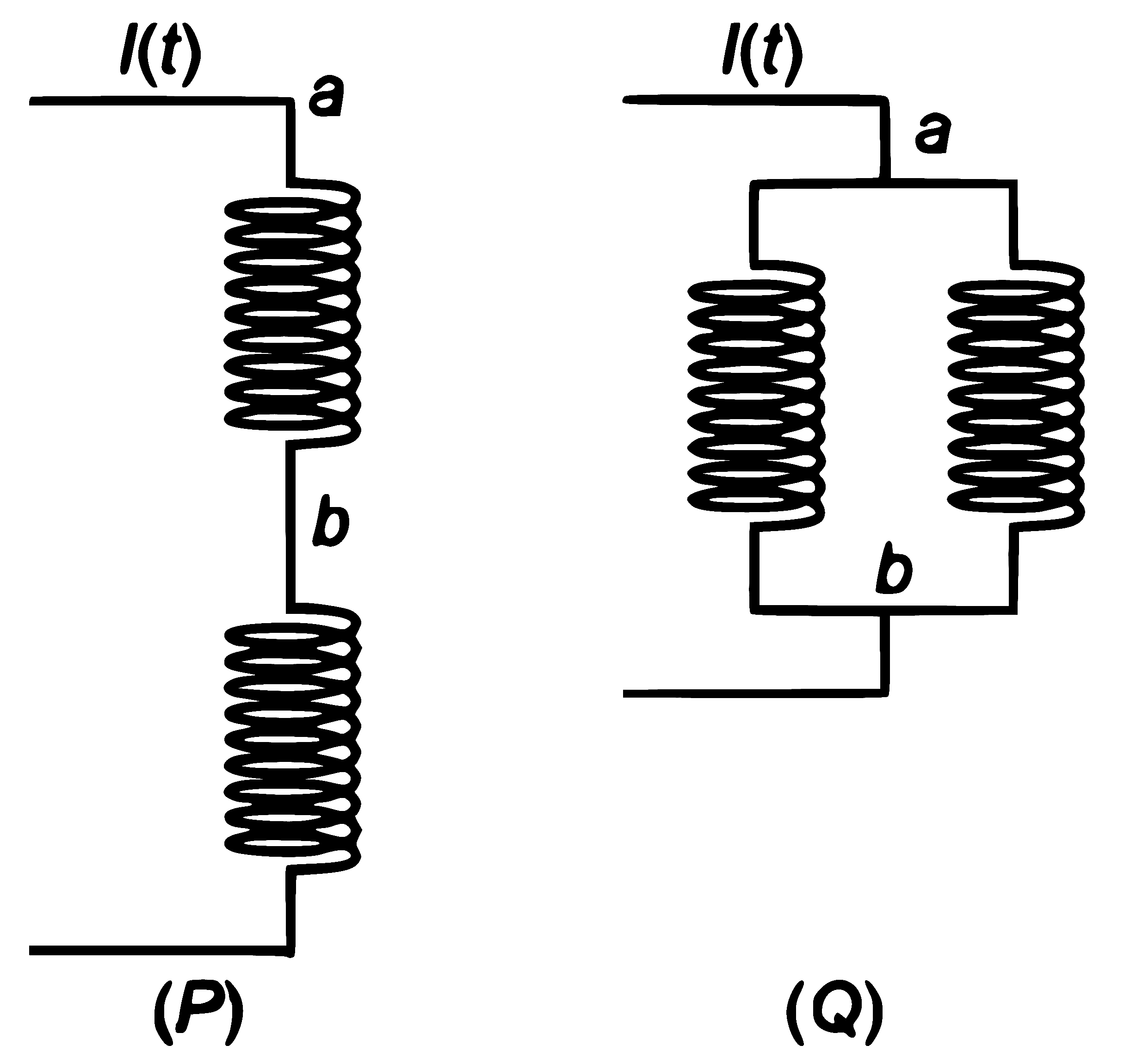
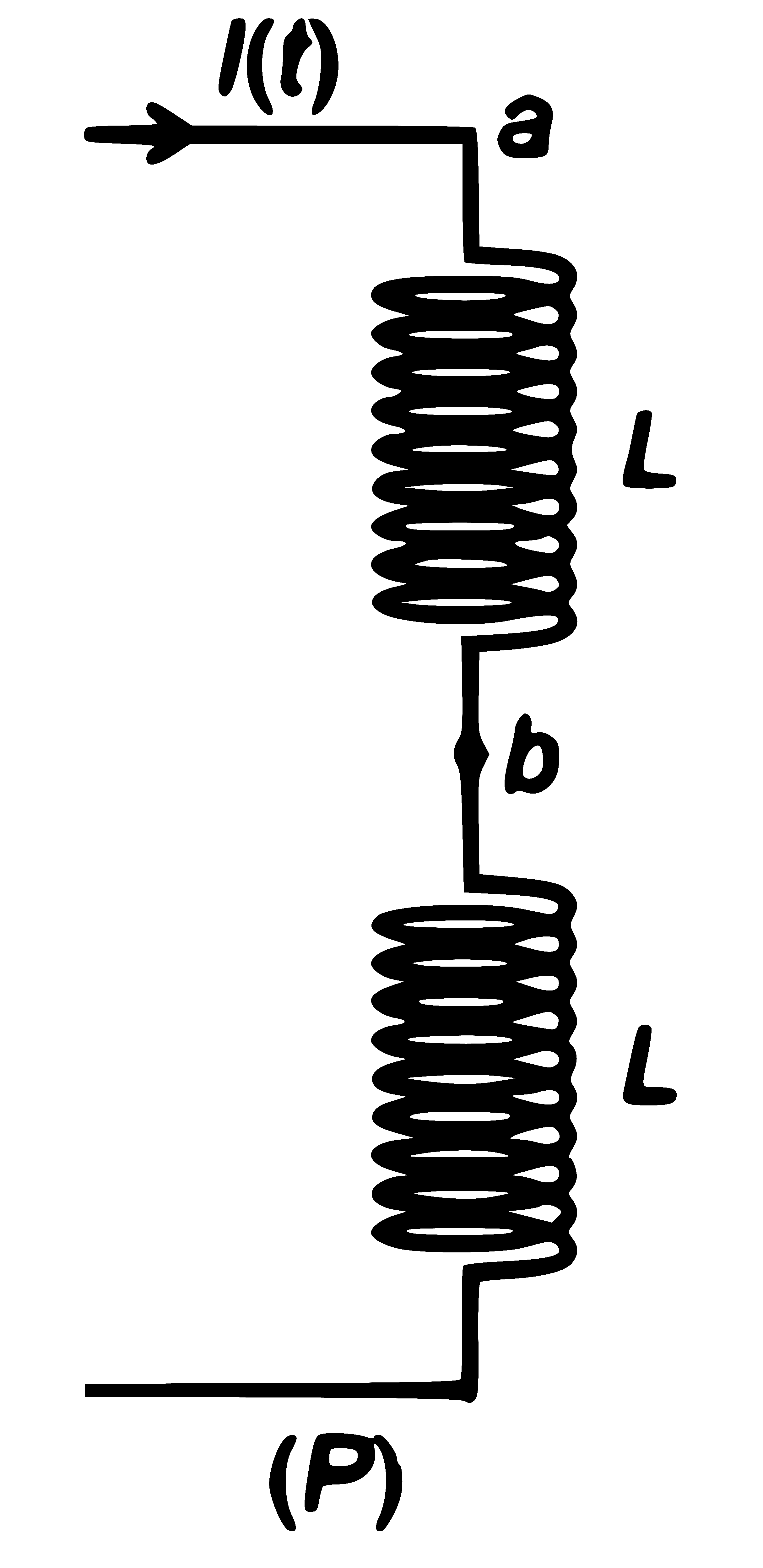
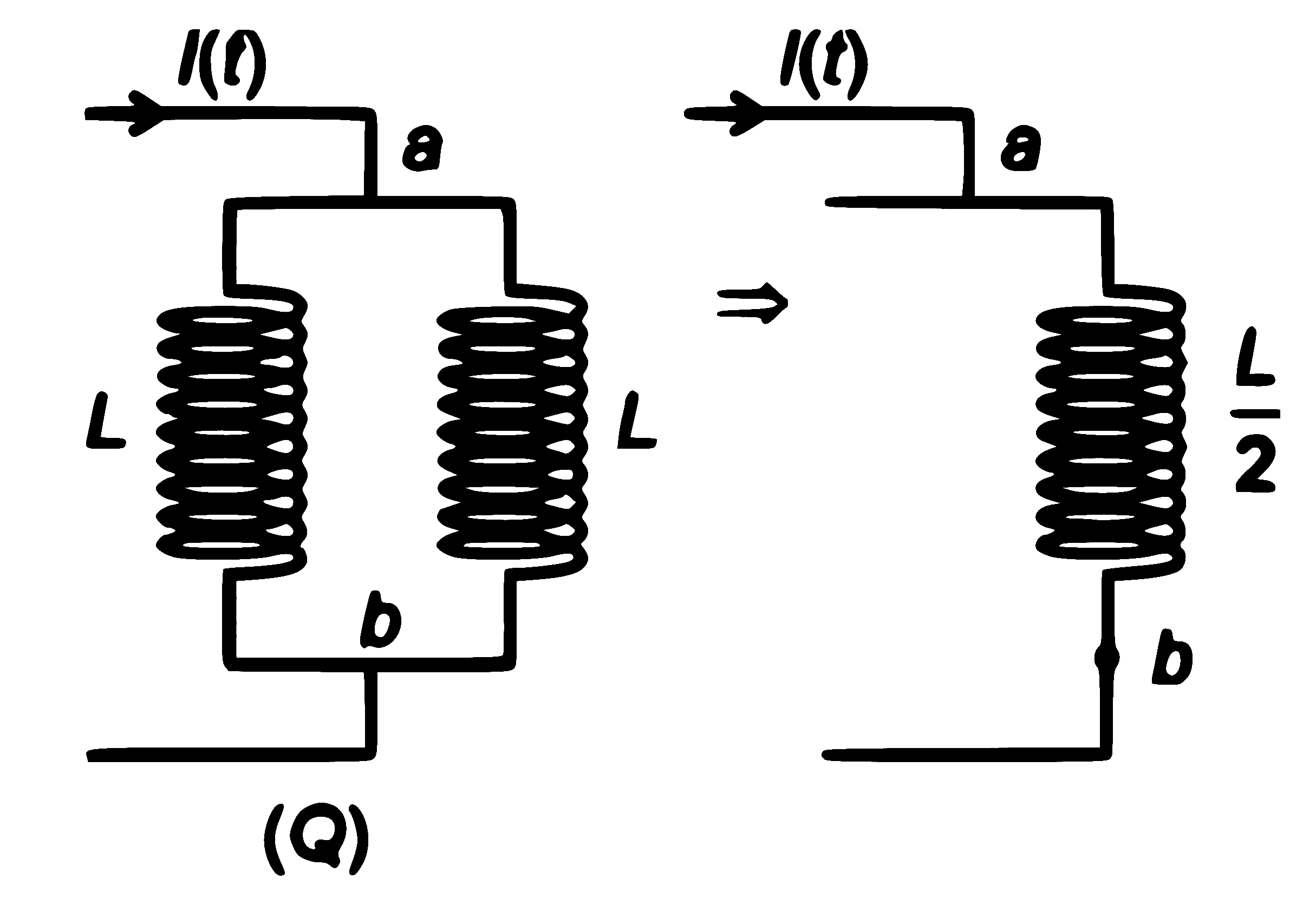
Two identical inductors are connected in two different configurations and , where a time varying current is flowing, as shown in the figure. The induced emf between points and for configuration is and that for configuration is . The ratio is:
[Neglect the effect of mutual inductance.]
2
1
A conducting loop of finite resistance lies on the plane. There is a constant magnetic field in the direction. The area of the loop varies with time , as in appropriate units. The figure that correctly indicates the qualitative behaviour of the power dissipated in the loop as a function of time is:
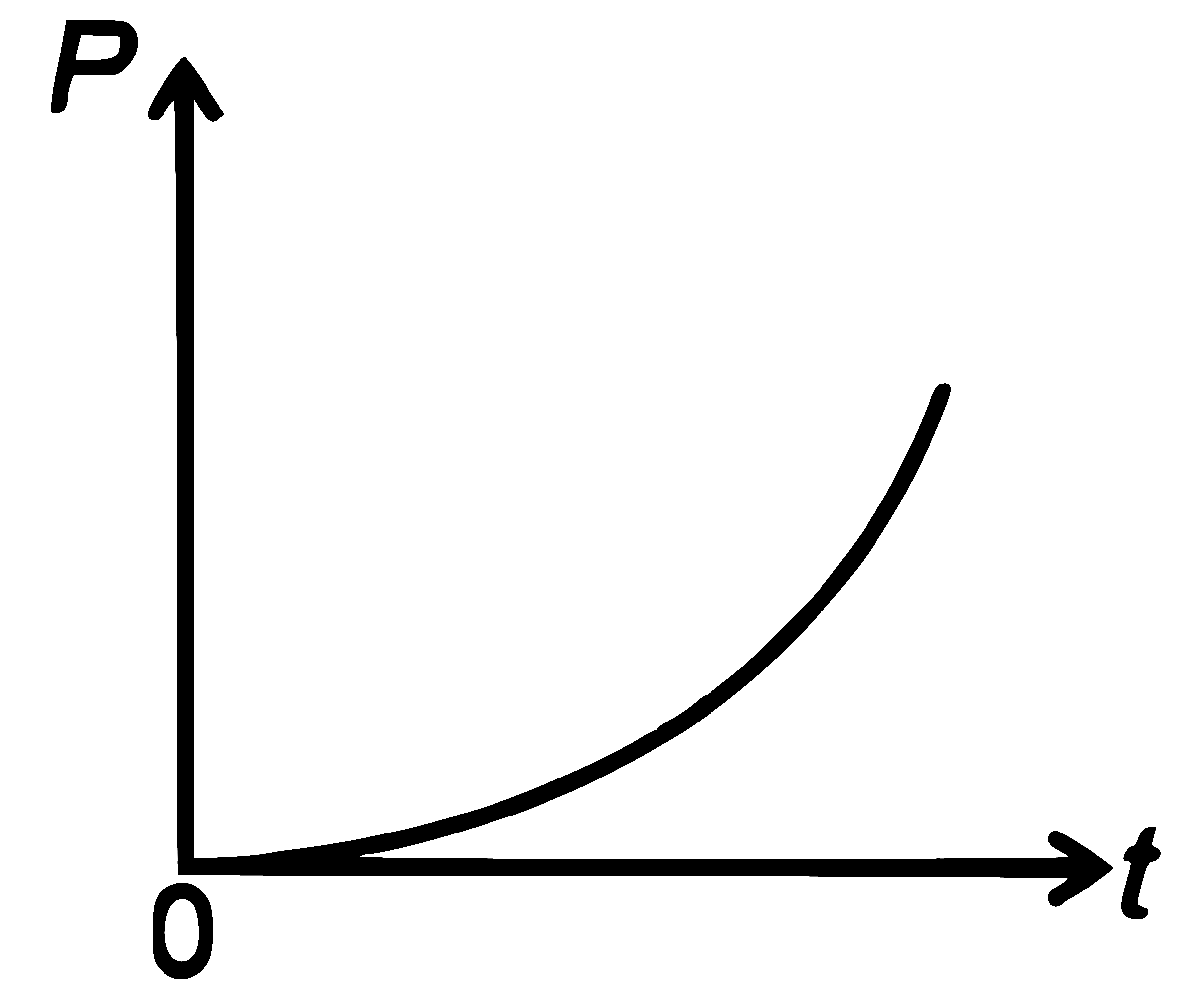
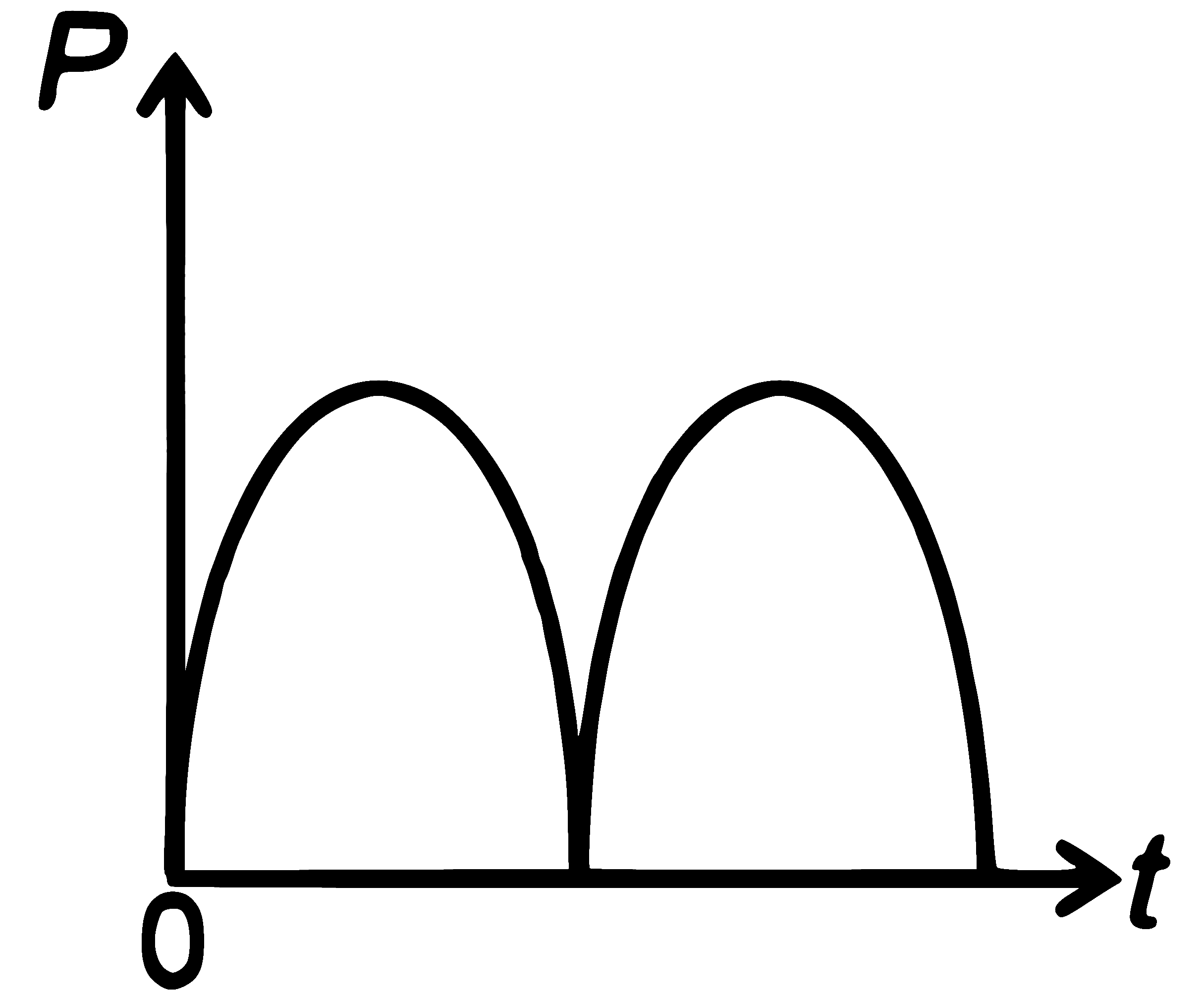
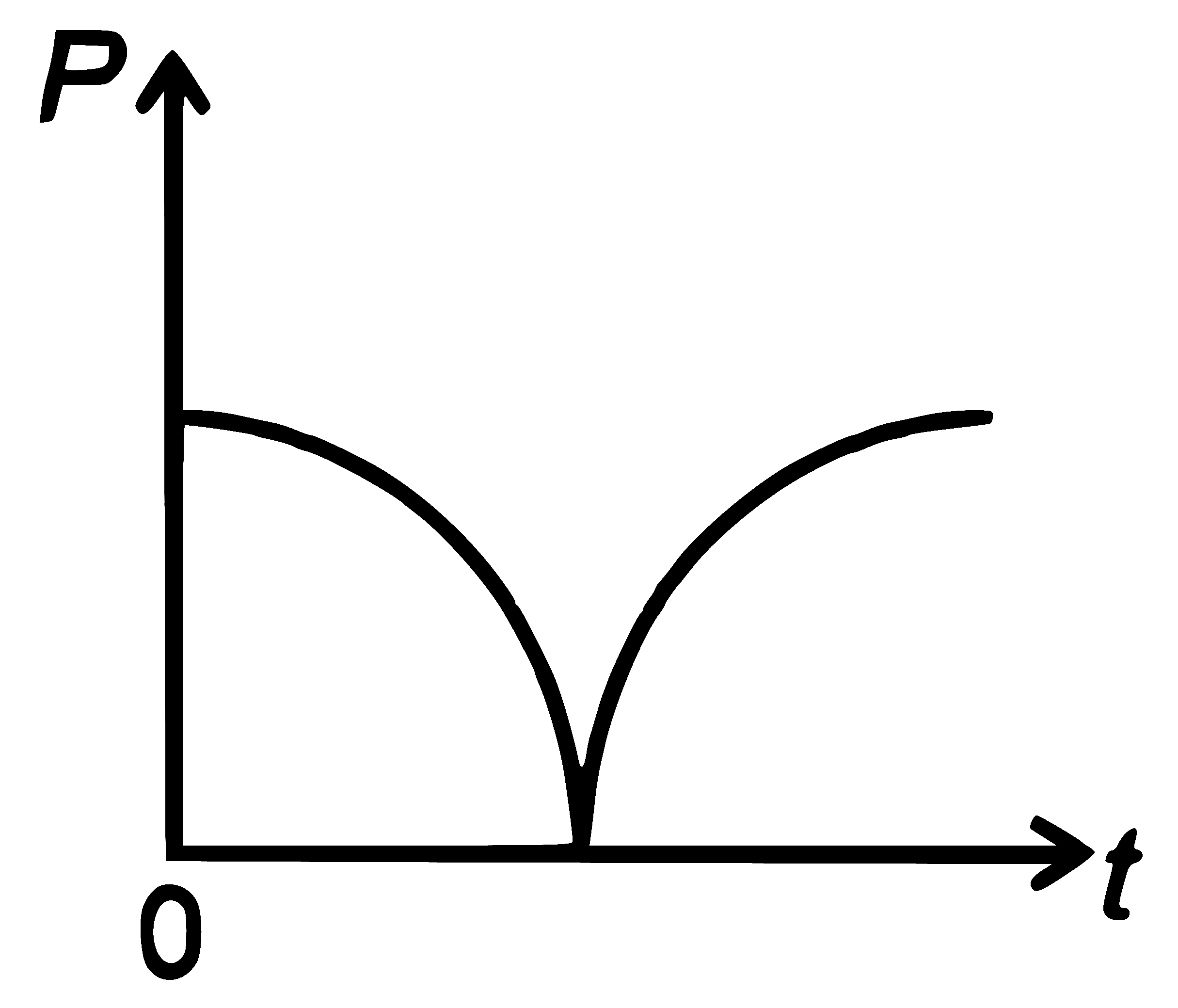
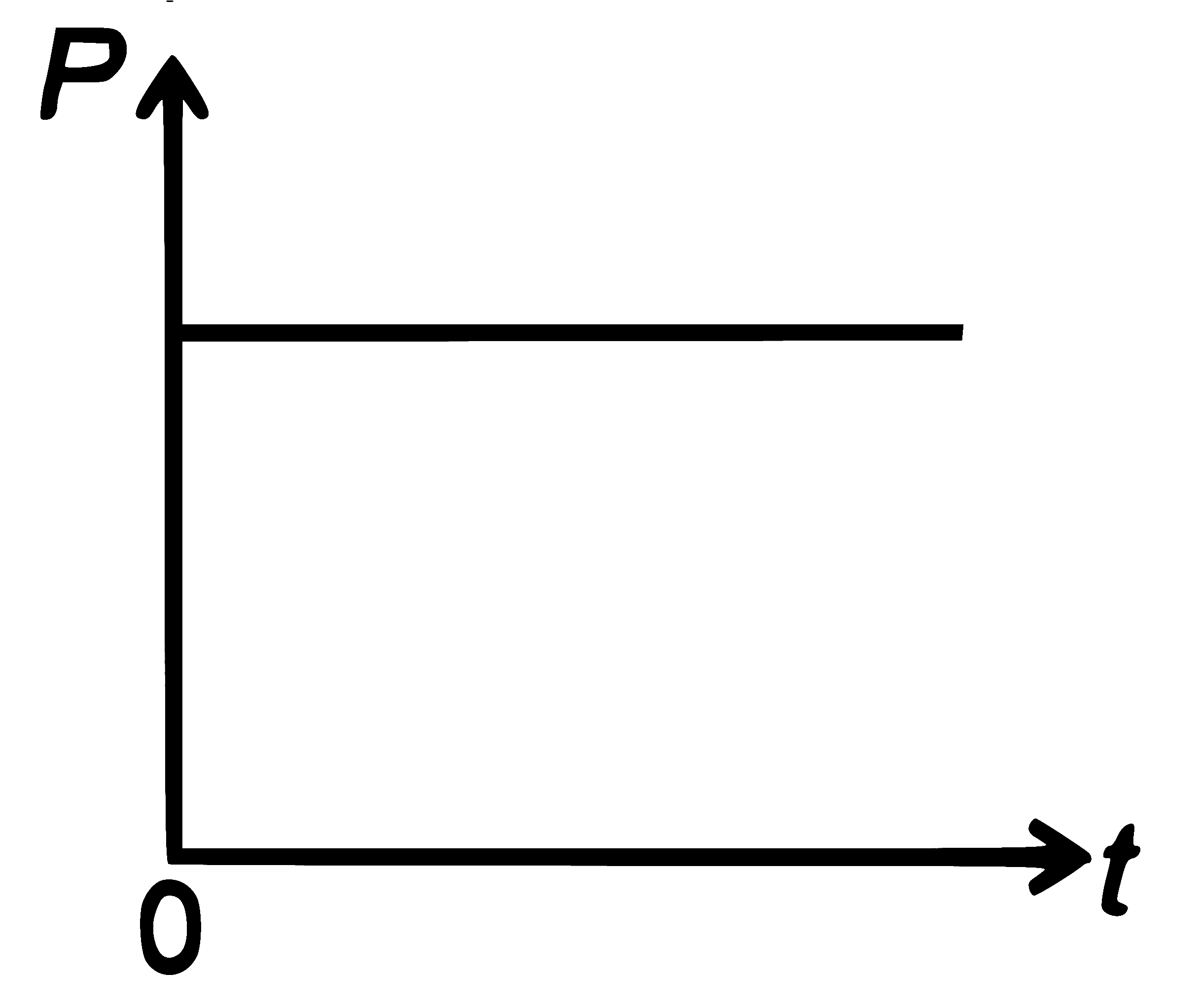
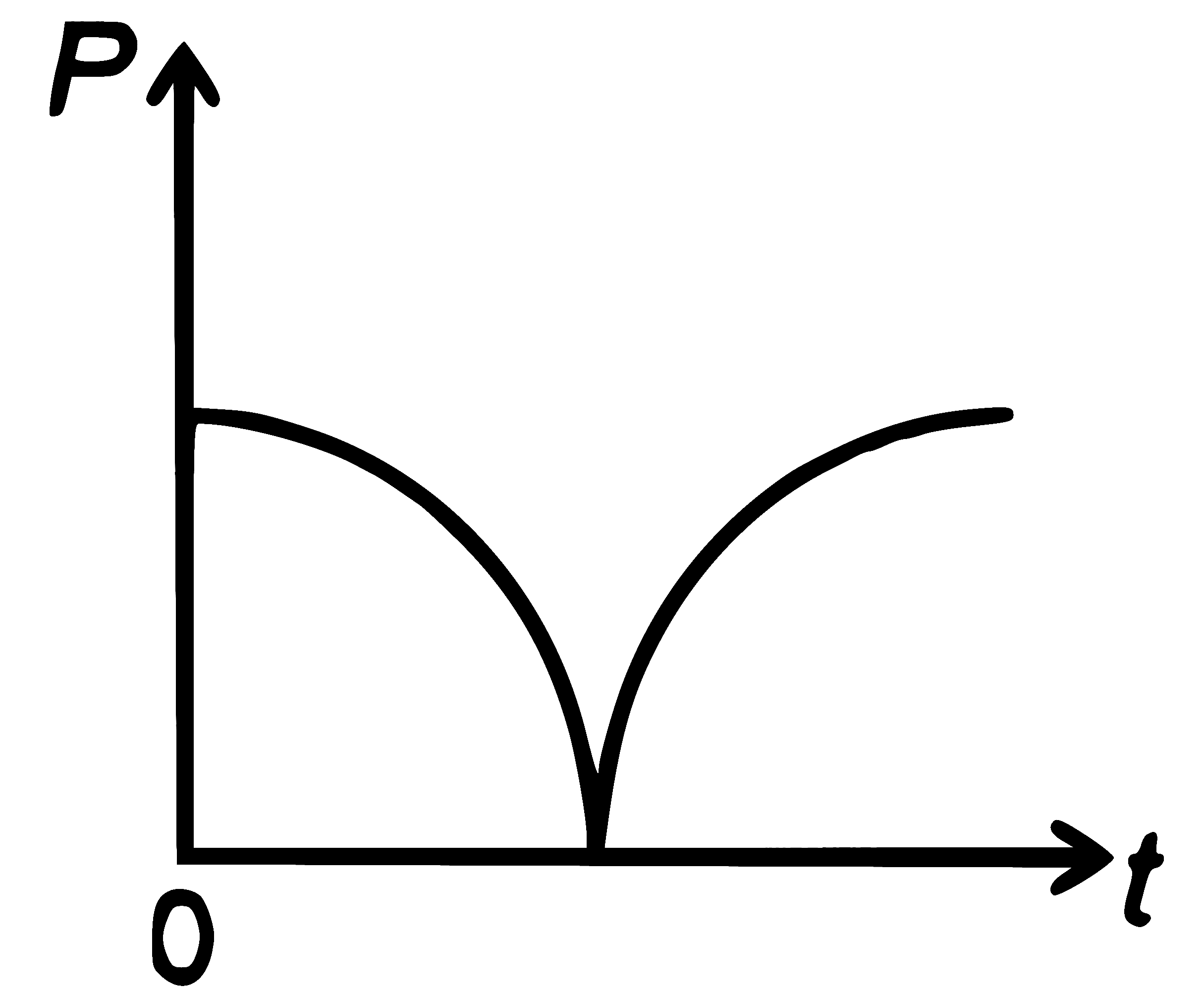
An ac voltage Volt is applied to a series LCR circuit. Then the current amplitude in this circuit is:
(Given : )
22.0 A
2.2 A
5.5 A
11.0 A
Angular frequency of source,
Inductive reactance,
Capacitive reactance,
Impedance for circuit and circuit is at resonance
∴ current amplitude,
The following table presents the part of the electromagnetic spectrum and their corresponding major applications.
| Part of the electromagnetic spectrum | Applications | ||
| P. | Microwave | I. | For purifying the water |
| Q. | UV rays | II. | For warming the food |
| R. | Gamma rays | III. | For AM and FM communication systems |
| S. | Radio wave | IV. | For treating the Cancer cells |
P-II, Q-IV, R-III, S-I
P-I, Q-II, R-III, S-IV
P-I, Q-IV, R-II, S-III
P-II, Q-I, R-IV, S-III
| Part of the electromagnetic spectrum | Applications | |
| Microwave | - | For warming of food |
| UV rays | - | For purifying the water |
| Gamma rays | - | For treating the cancer cells |
| Radio wave | - | For AM and FM communication systems |
An electromagnetic wave travelling in a lossless dielectric medium having a dielectric constant, , has the electric field, where is the amplitude and is the wave vector. Among the following options, the incorrect choice is
The direction of propagation of the electromagnetic wave is along
The speed of the electromagnetic wave inside the medium is
The wavelength of the electromagnetic wave inside the medium is 300 m
The magnetic field is given by the relation where is the speed of the electromagnetic wave inside the medium
⇒ Direction of propagation of wave is along axis.
⇒ Speed of wave in medium
⇒ Wavelength in medium
∴ Wavelength of the electromagnetic wave inside the medium is 100 m .
Note: Among the options, in the expression should be replaced by .
Consider three media and with refractive indices , and 1.5 respectively. The medium having a thickness of 5 cm is placed between extended media and as shown in the figure. An object is placed at the centre of medium . If viewed from medium near the normal direction, the apparent depth of is . For similar observation from medium , the apparent depth is . The value of , in cm , is:
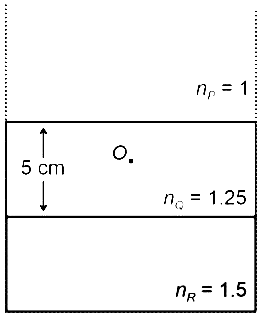
3
0
1
2
Apparent depth
(ii) When object is viewed from medium , Apparent depth
The lens combination as shown in the figure, consists of two lenses, and , of the focal lengths +10 cm and -10 cm , respectively. The position of the image formed is:
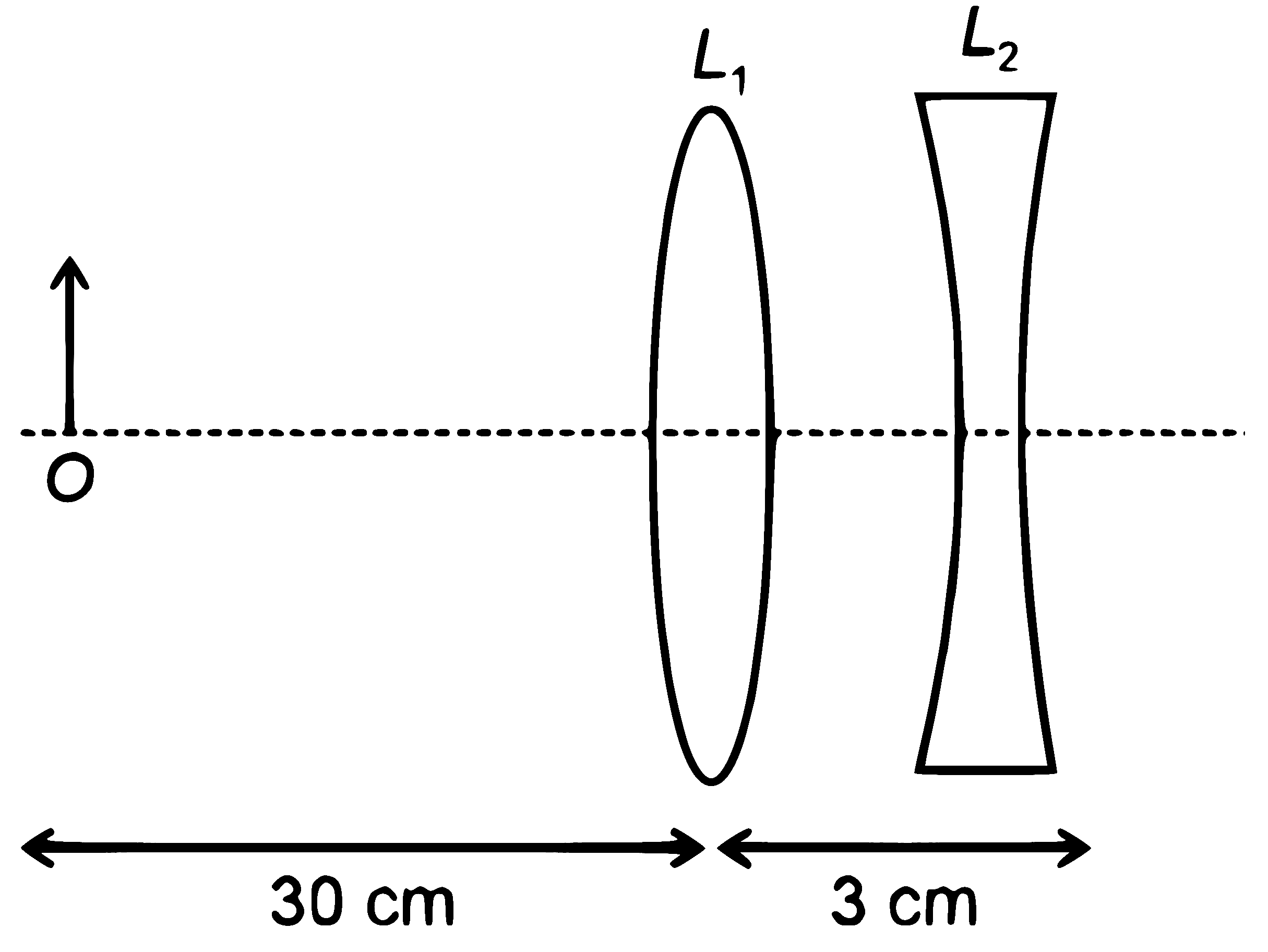
60 cm to the right of the concave lens
20 cm to the left of the concave lens
60 cm to the left of the concave lens
30 cm to the right of the concave lens
For convex lens and
Using $For concave lens and Using
⇒ Final image formed at 60 cm to the left of concave lens.
Which of the following measurements require 'index correction'?
Measurement of speed of sound using resonance tube
Measurement of resistance of a wire using meter bridge
Measurement of gravitational acceleration using simple pendulum
Measurement of focal length of lenses using optical bench
Index correction is an adjustment which need to perform in the experiments related to optical bench while measuring the focal length of lenses using optical bench.
Consider that an electron is revolving in an excited state of Hydrogen atom with velocity . The radius of the orbit is . The value of is:
[Take the mass of electron to the , charge of electron and ]
1
4
3
2
Consider the following nuclear reaction
Take masses of and as and 4.003 u , respectively. The value for the reaction, in keV, is:
[Given: ]
3740
3726
3730
3736
-value for the nuclear reaction is given by, has mass defect
In Geiger-Marsden experiment, the number of scattered -particles is plotted as a function of scattering angle . Which of the following options represents the correct plot?
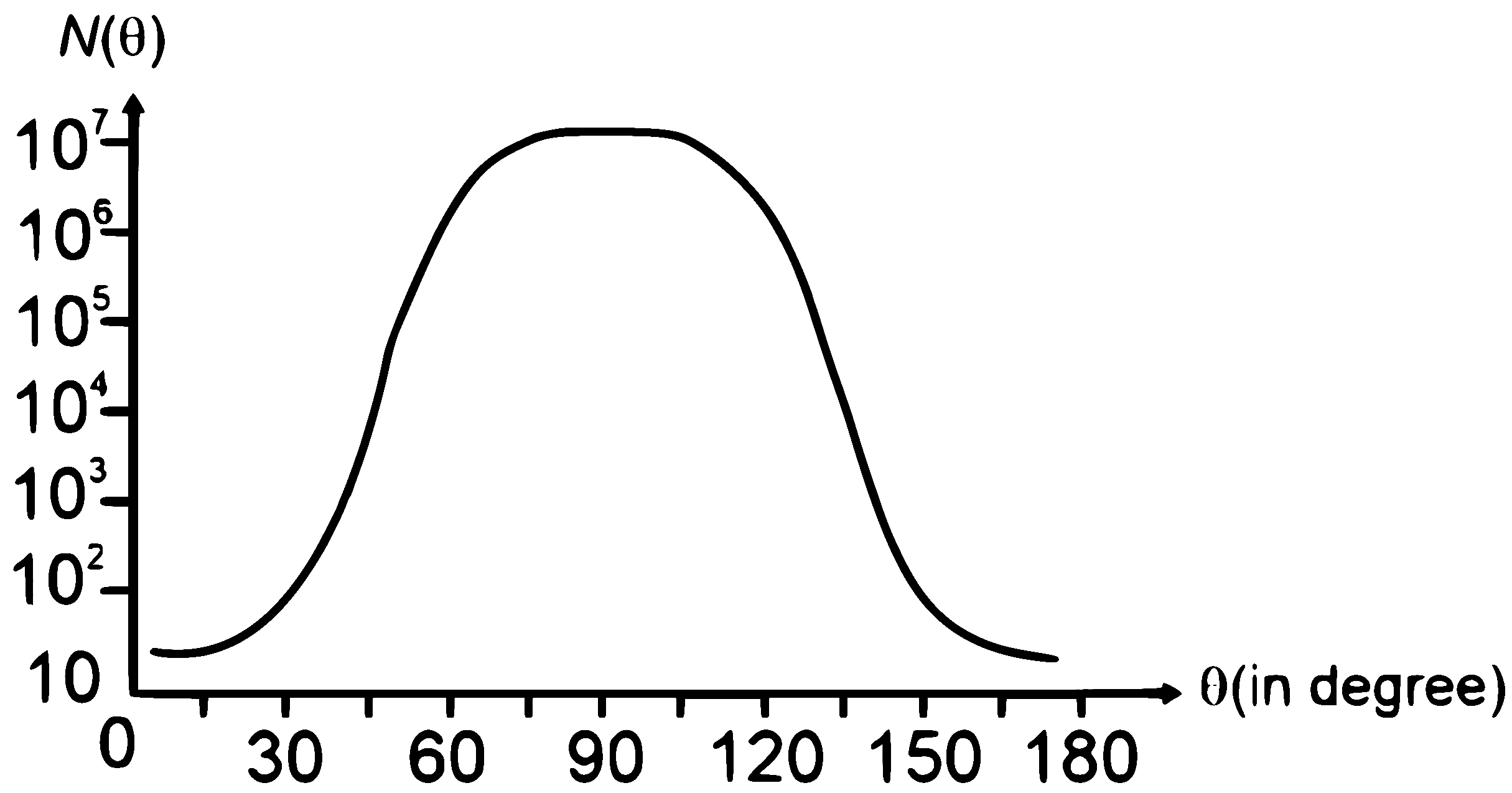
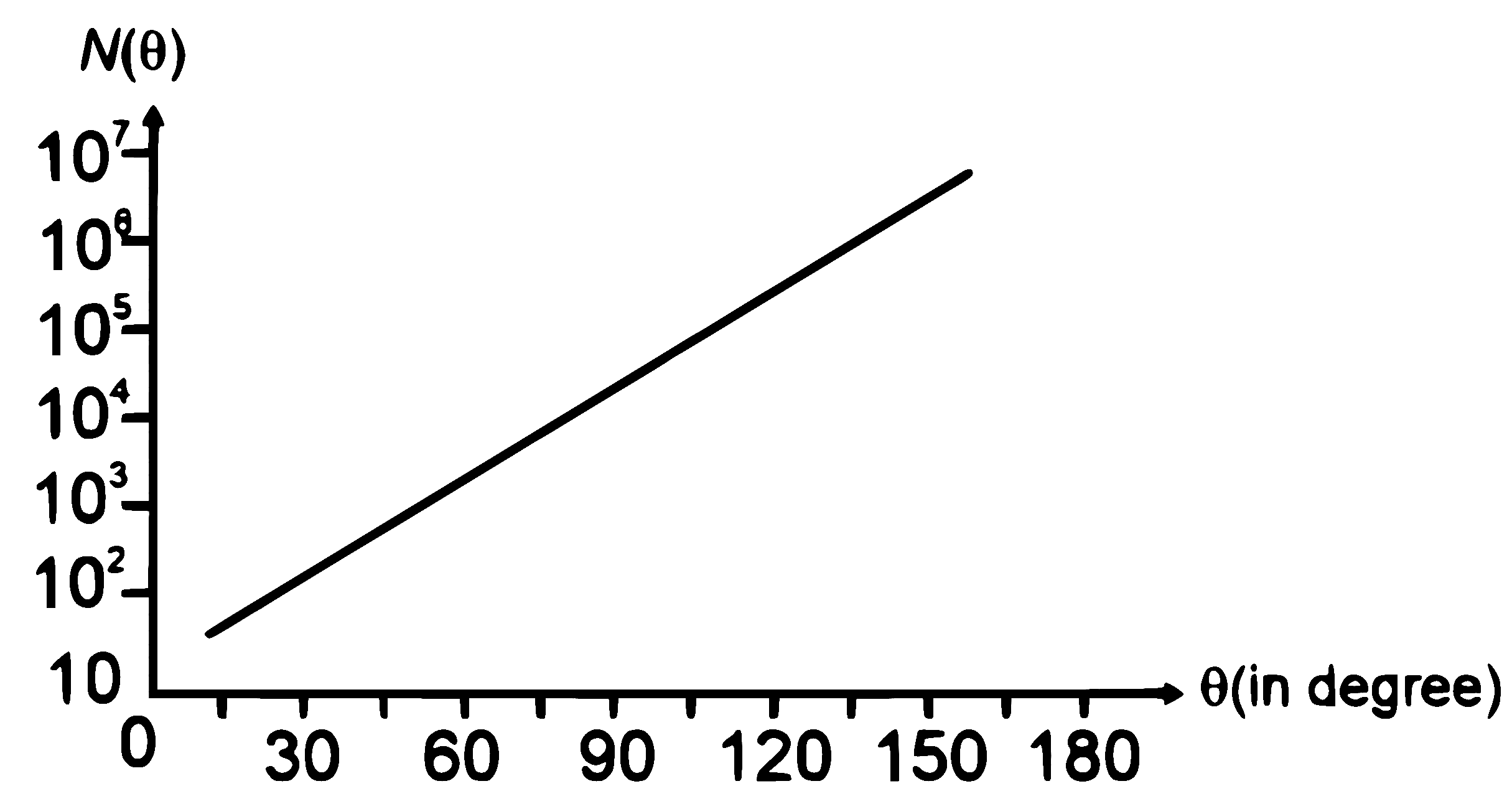
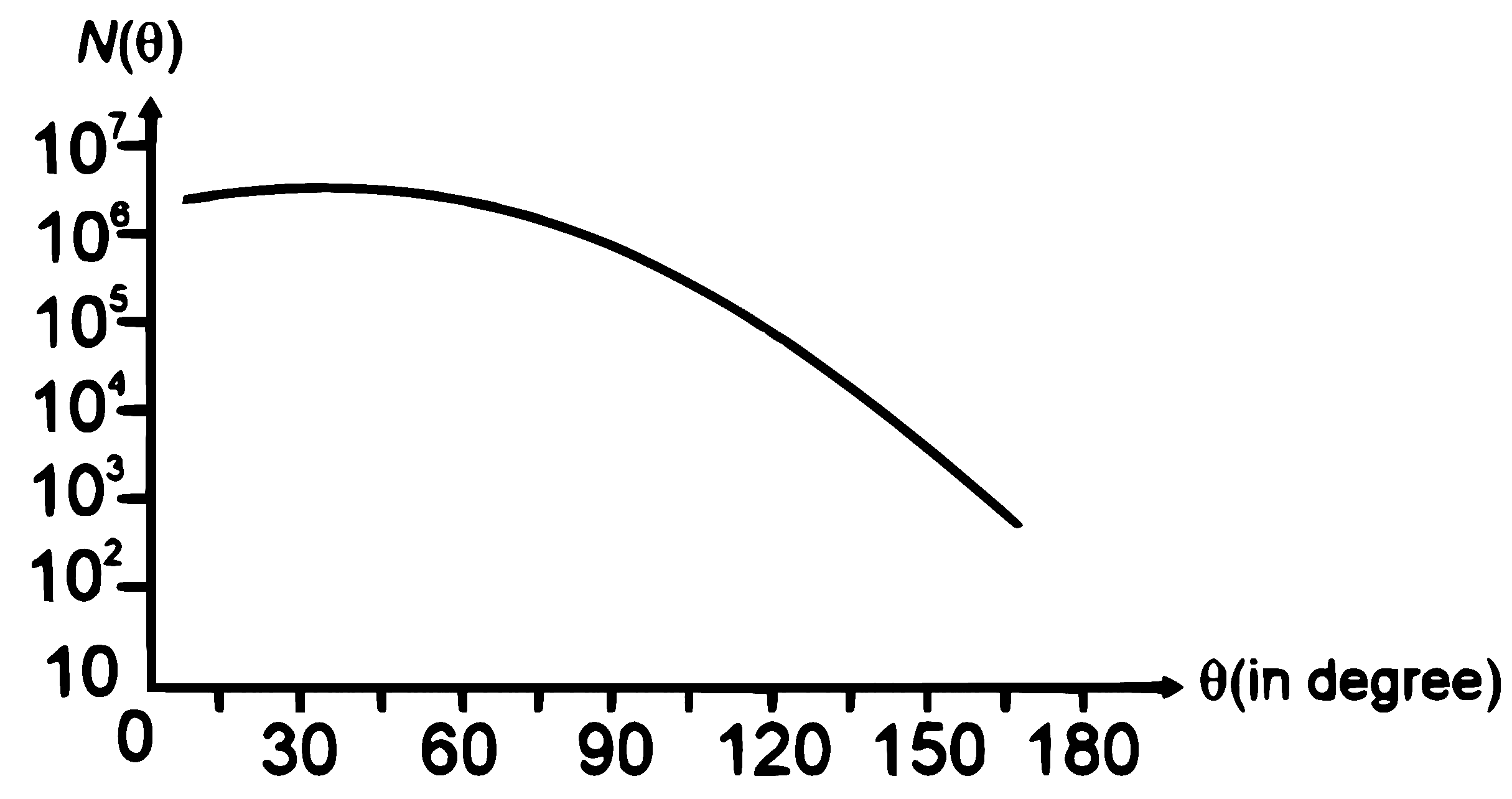
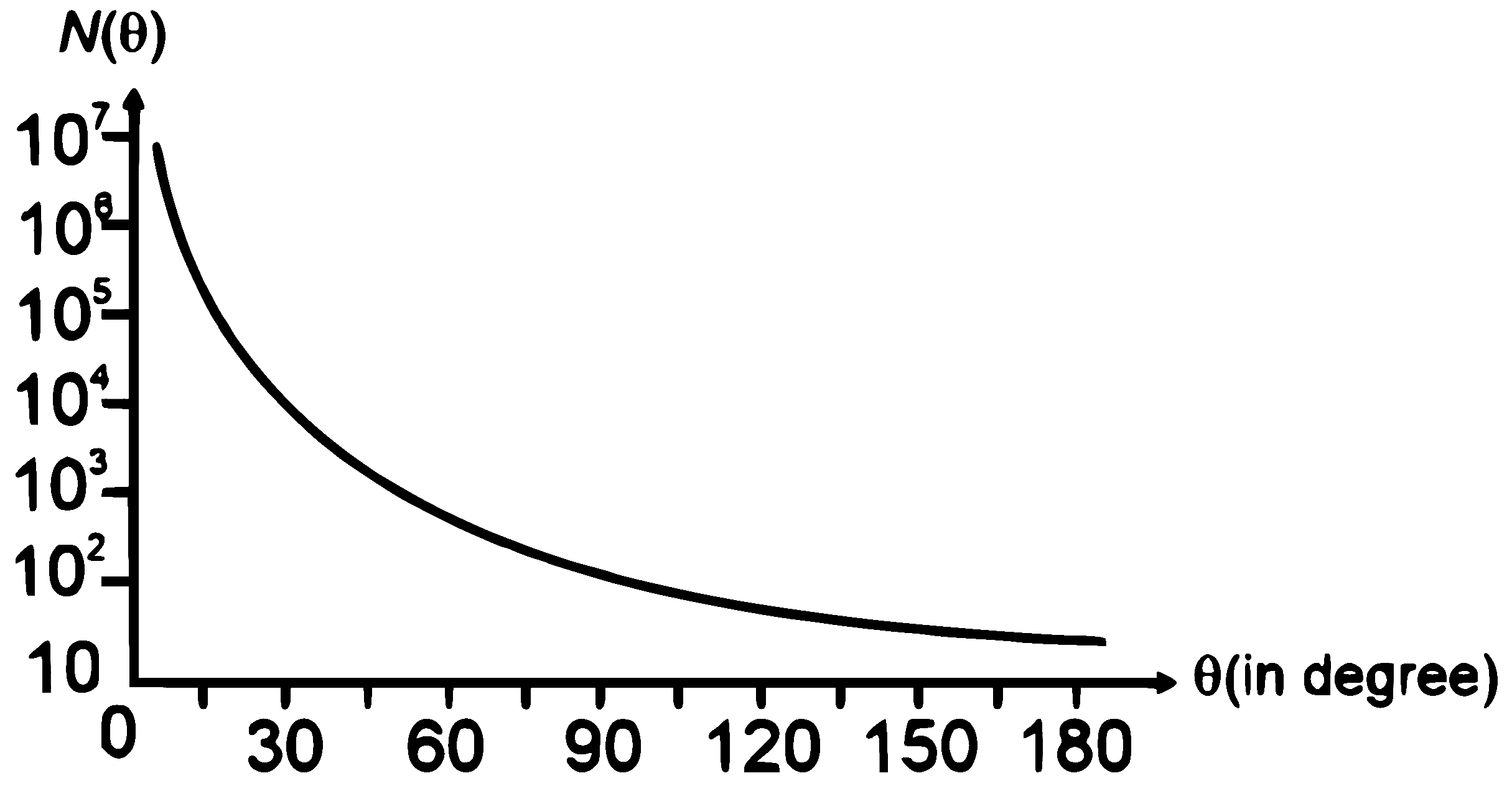
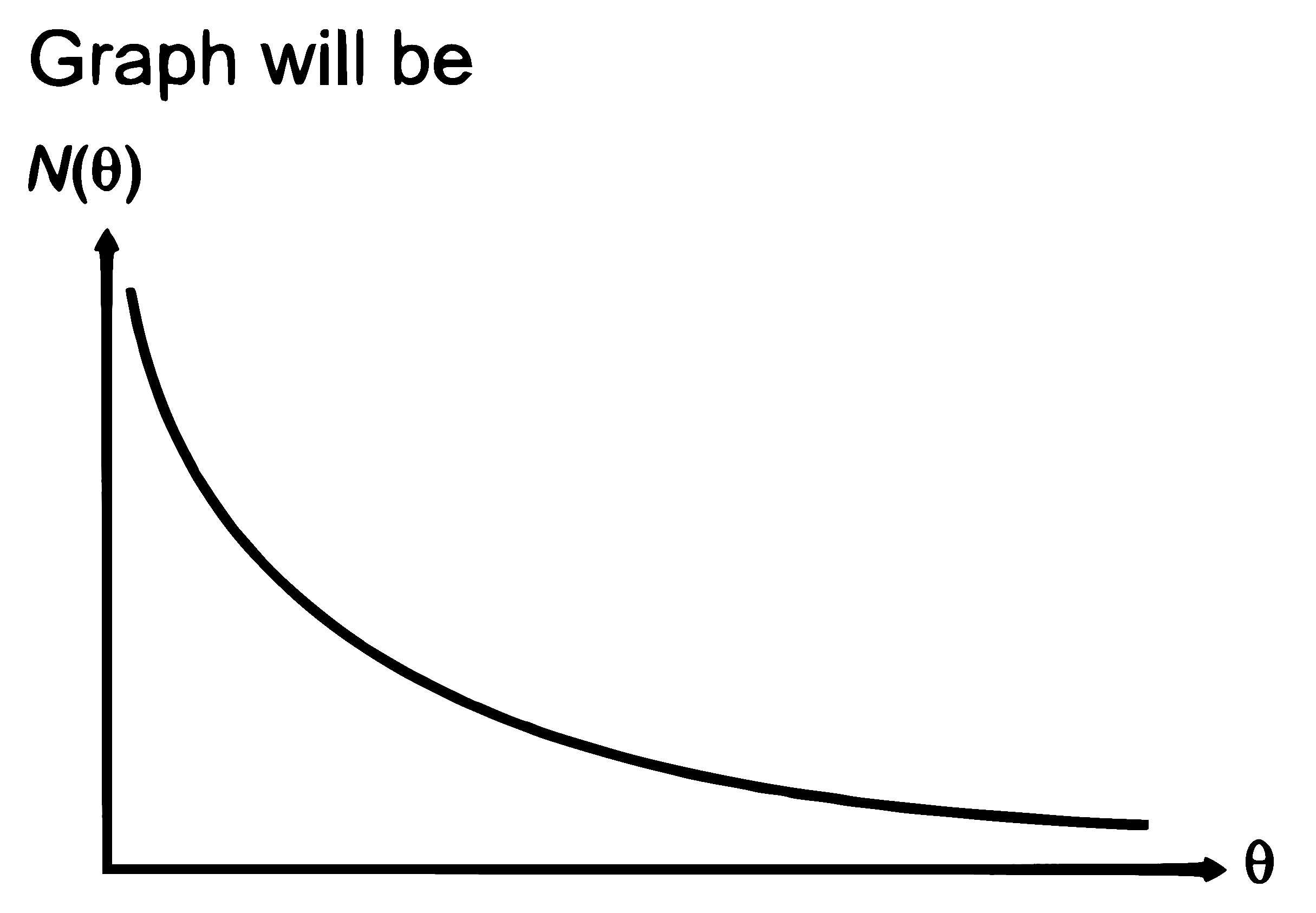
A photon and an electron, each of 20 eV energy, move in free space. The ratio of linear momentum of electron to that of photon is:
[Take speed of light , charge of electron and mass of electron ]
275
225
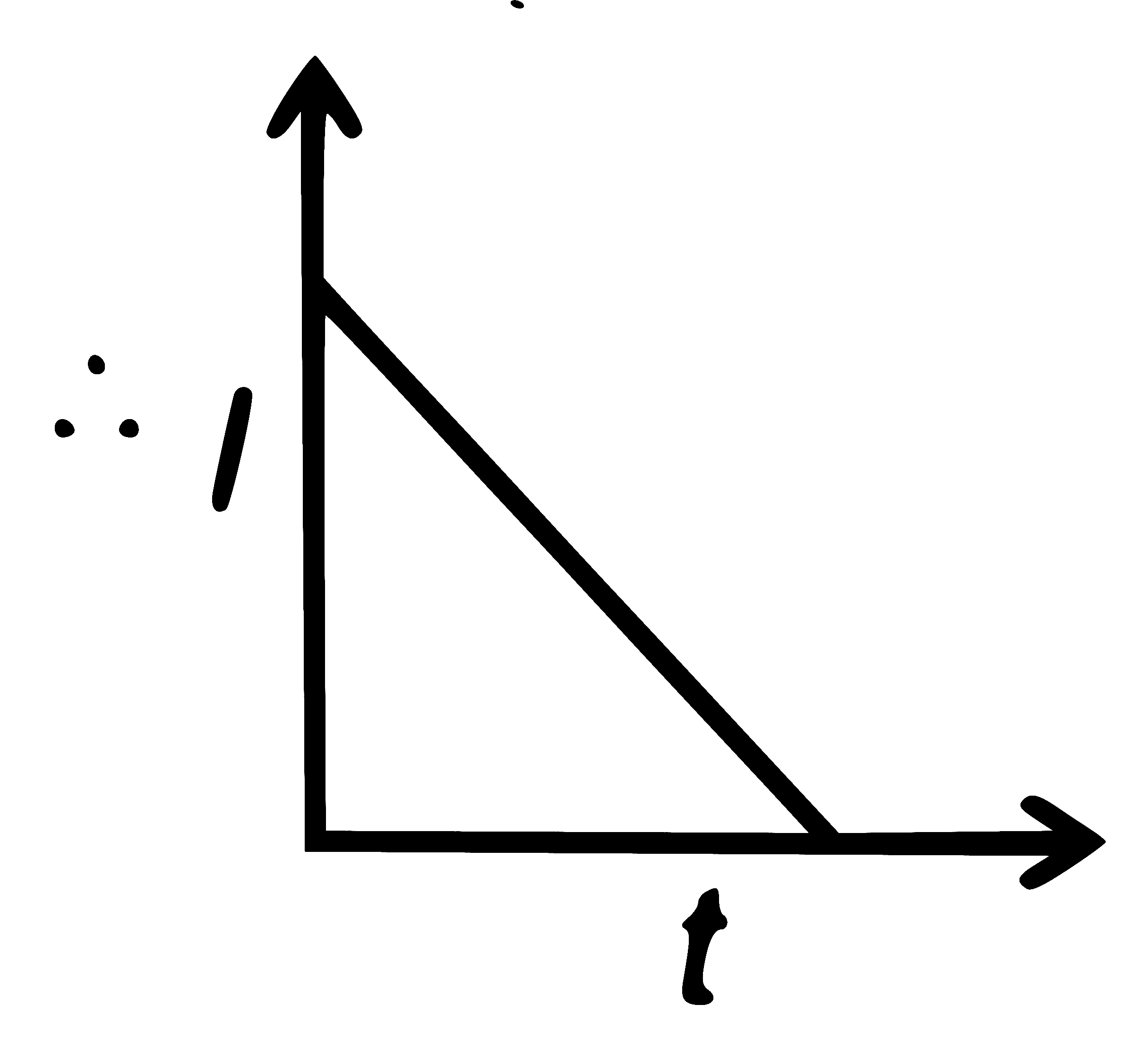
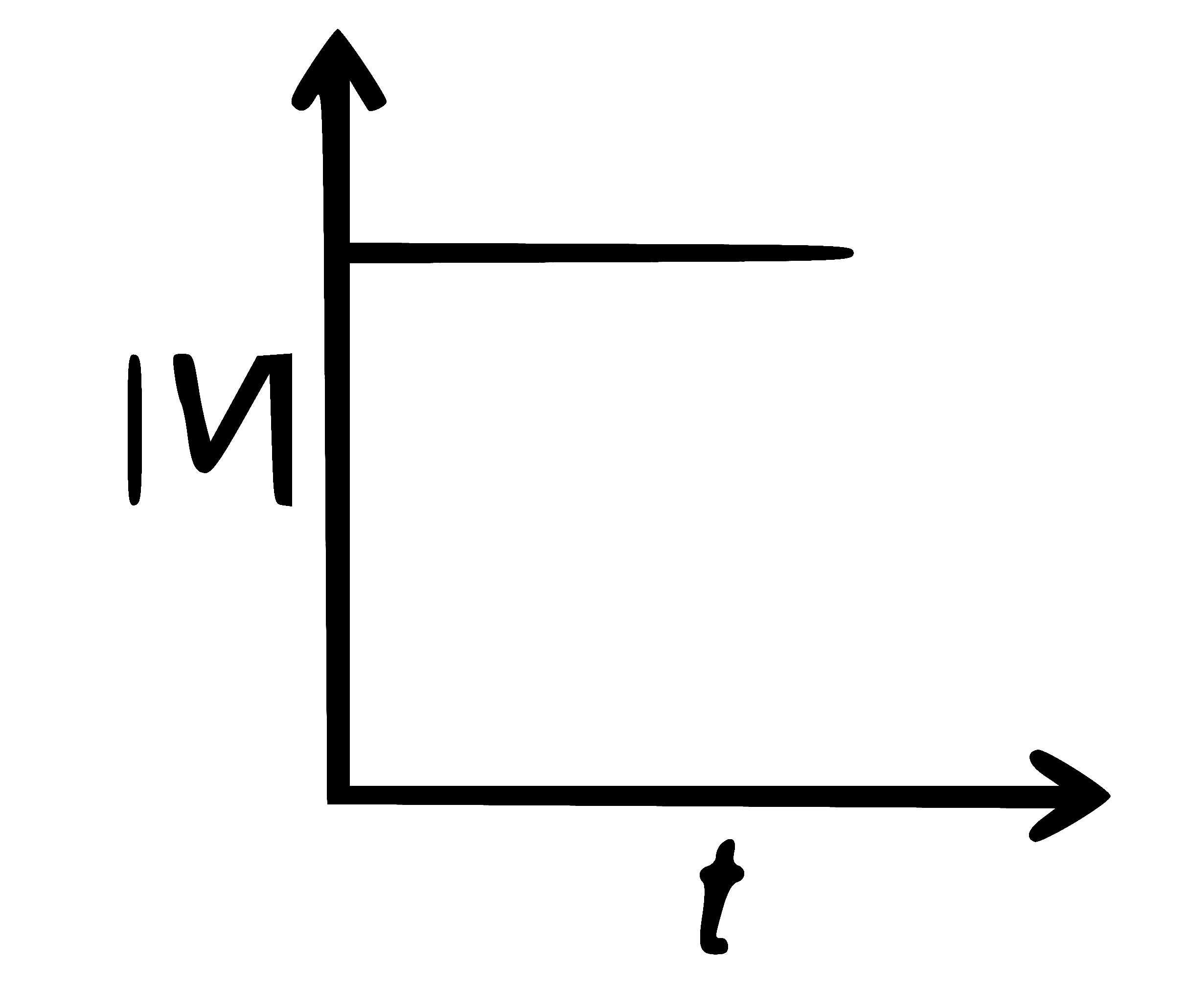
A beam of light falls on a metal surface such that photo-electrons are generated. If power of the light source starts to decrease linearly with time , then variation of the photocurrent and magnitude of the stopping potential with time is best represented by:
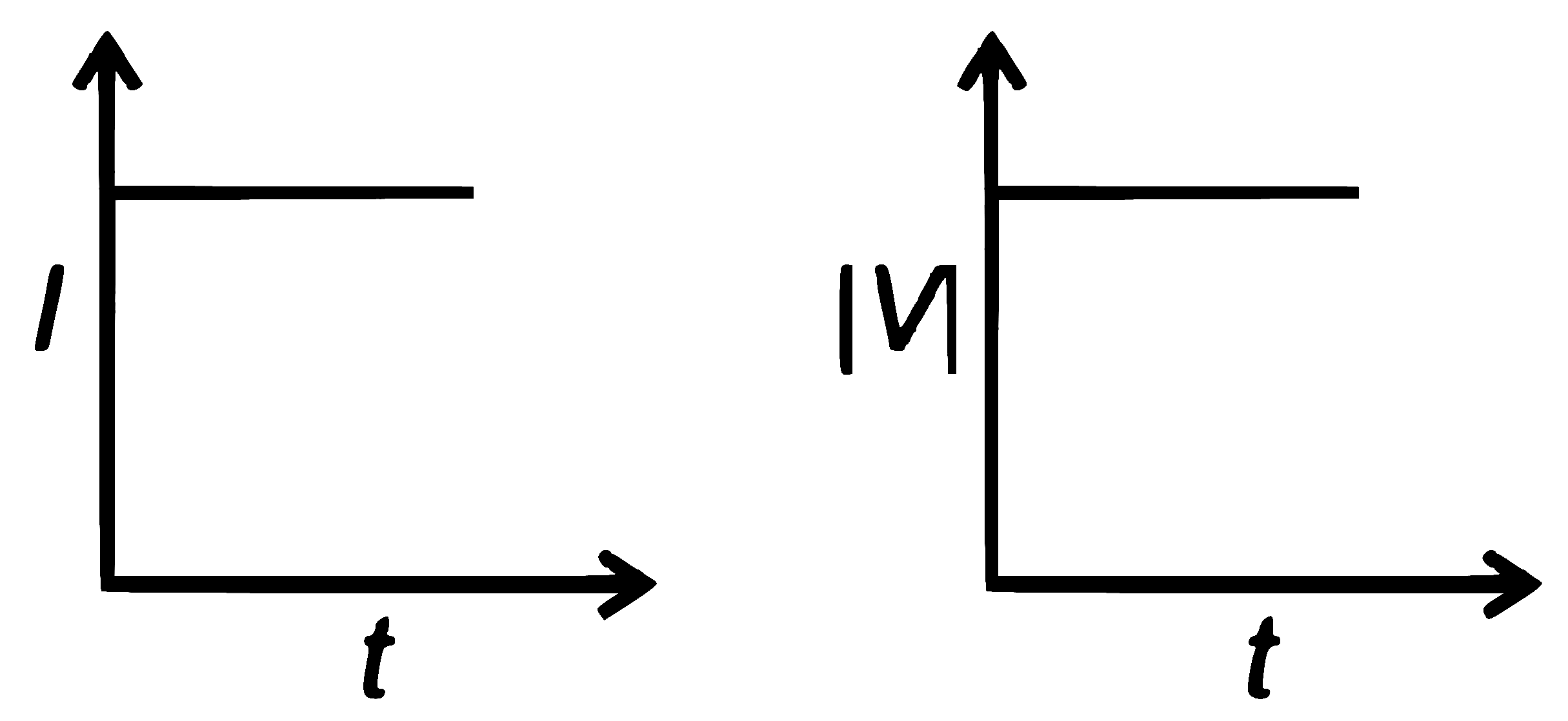
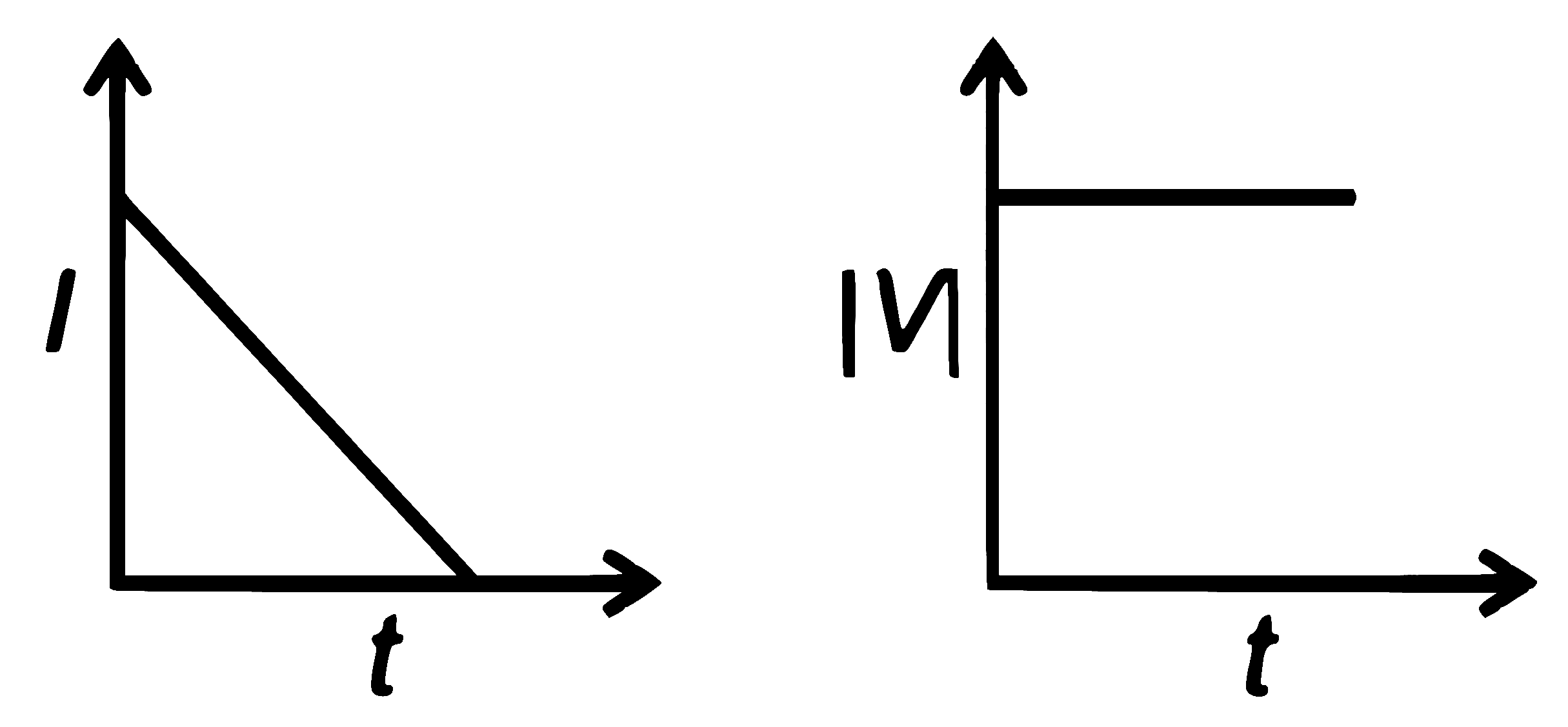
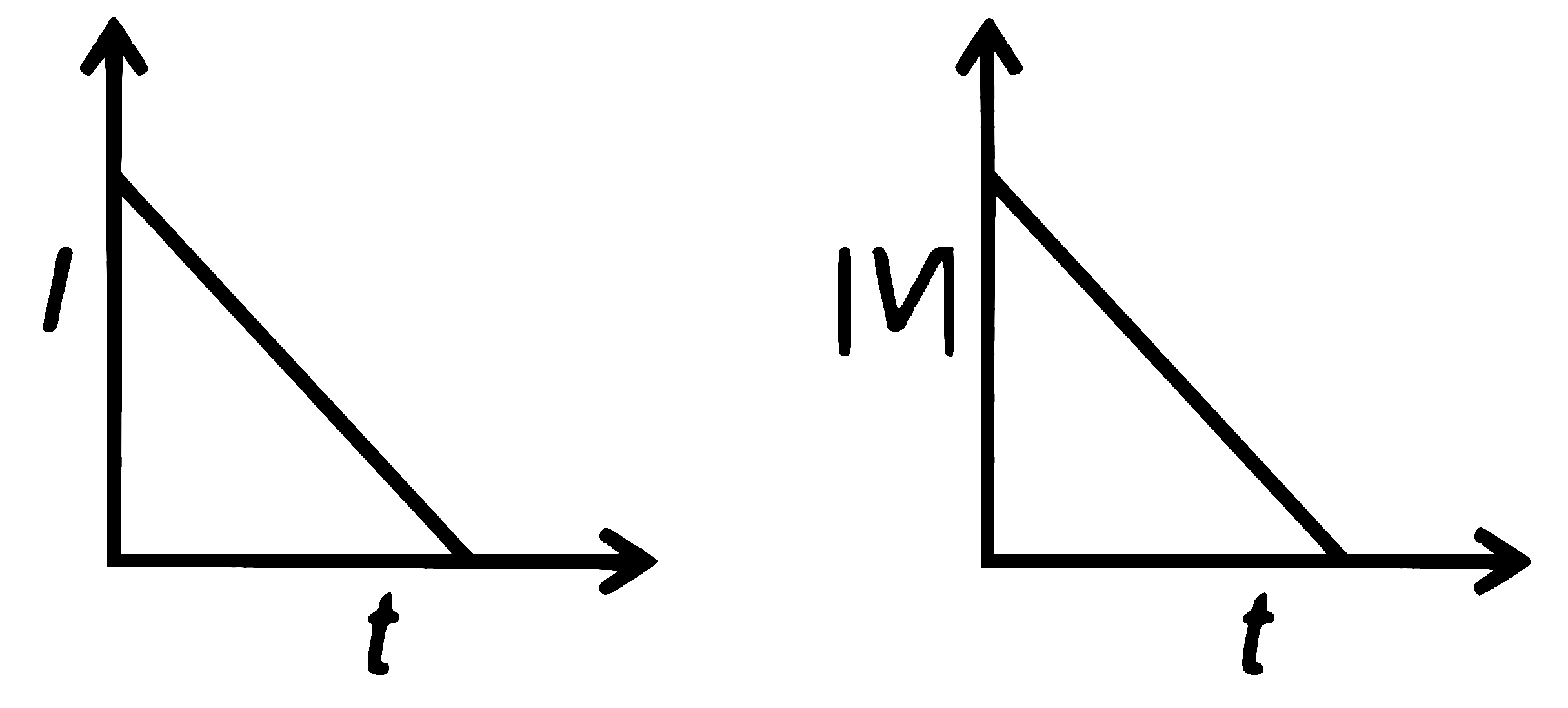
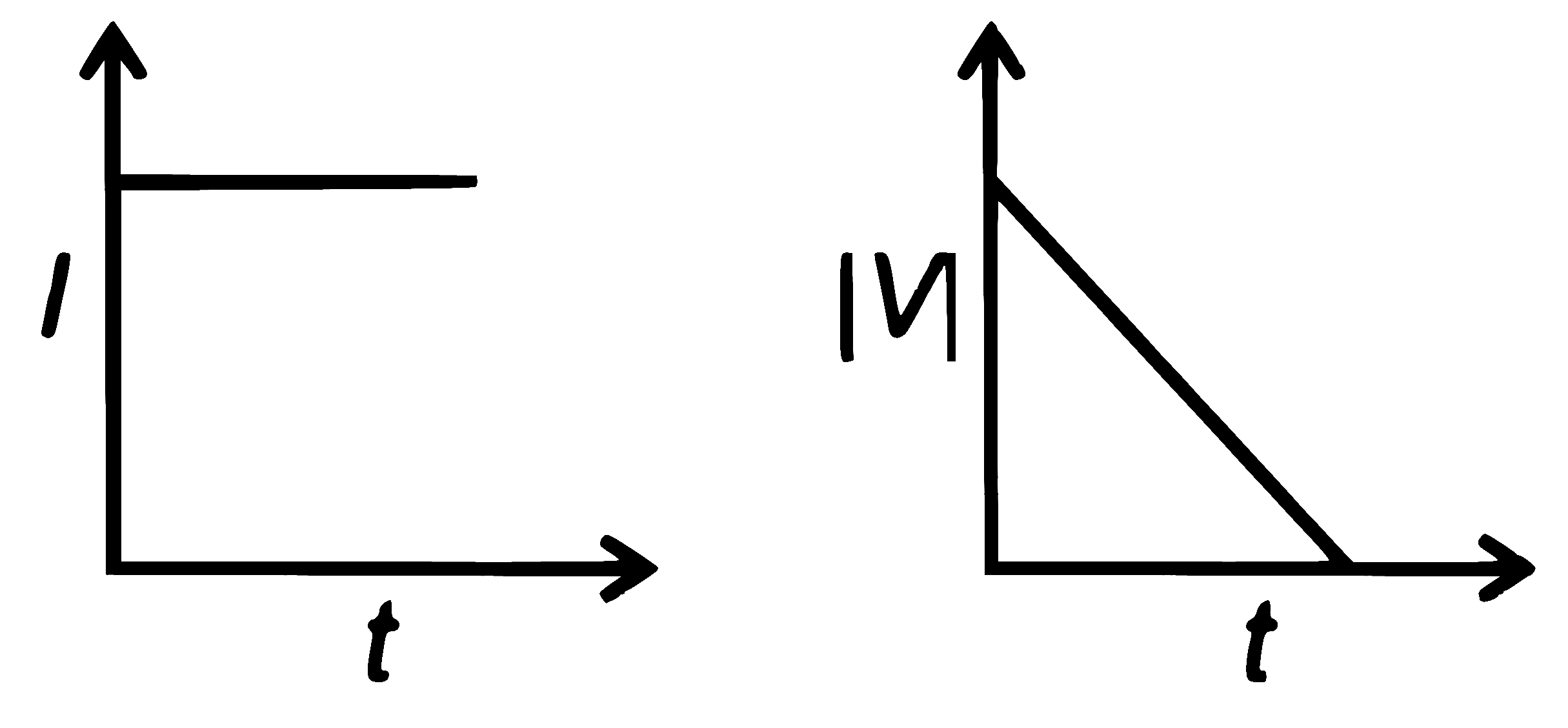
Power of source is decreasing that means number of photon is decreasing linearly with time and source is same so, energy of photon is same.
Power
(number of photons per second)
A ray of light with wavelength is incident on three different photoelectric cells namely 1,2 and 3 . The threshold wavelength of these photoelectric cells are , and , respectively and the magnitude of stopping potentials of these cells are and , respectively. The relation between and threshold wavelengths are and . The correct option is:
For ejection of electron energy of incident photon should be greater than work function
No electron will eject
By Einstein photoelectric equation
So,
An ideal Zener diode with breakdown voltage of -3 V is reverse biased with a negative input voltage . The magnitude of voltage difference between point and is:
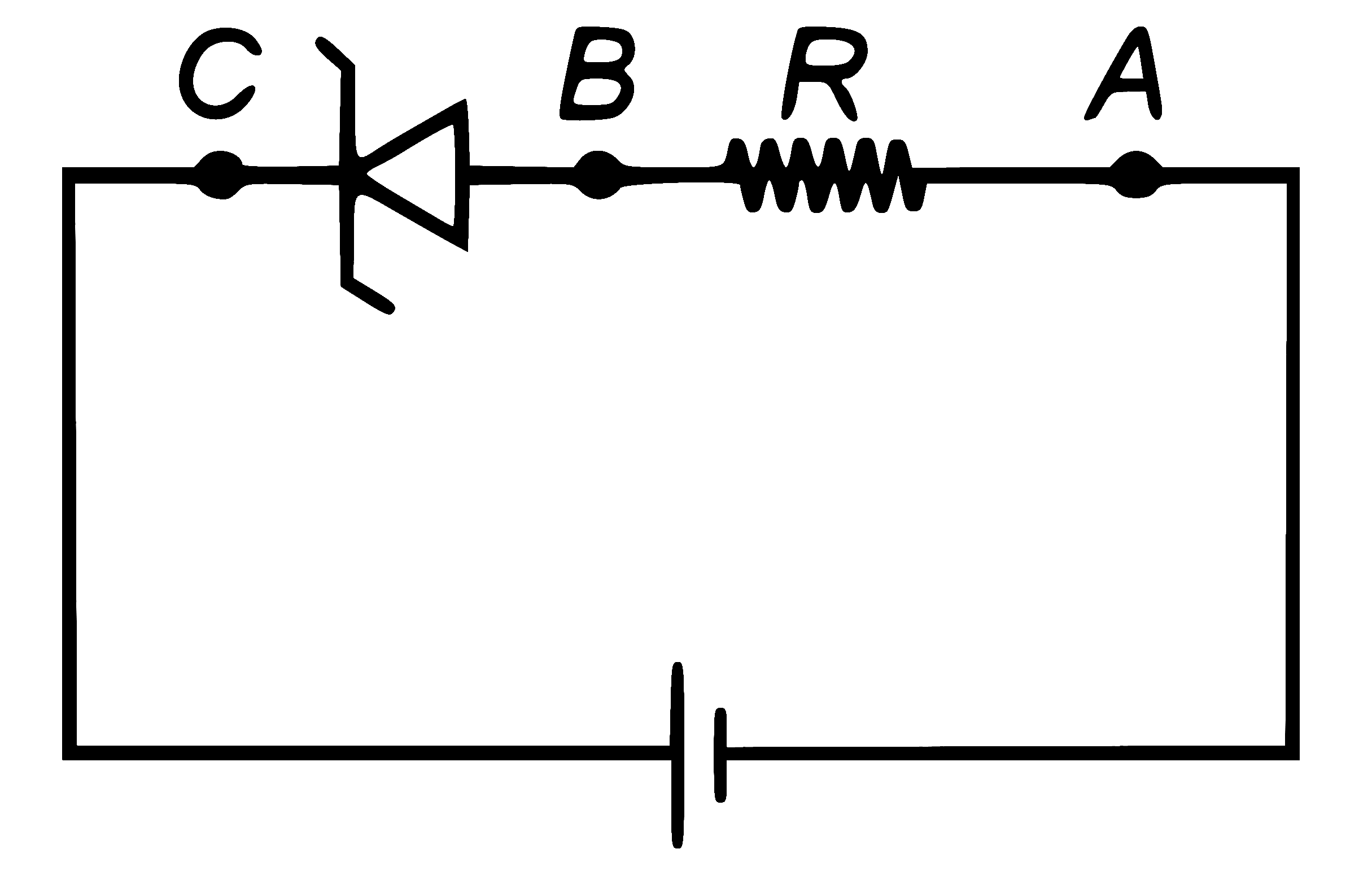
0 V
3 V
2 V
1 V
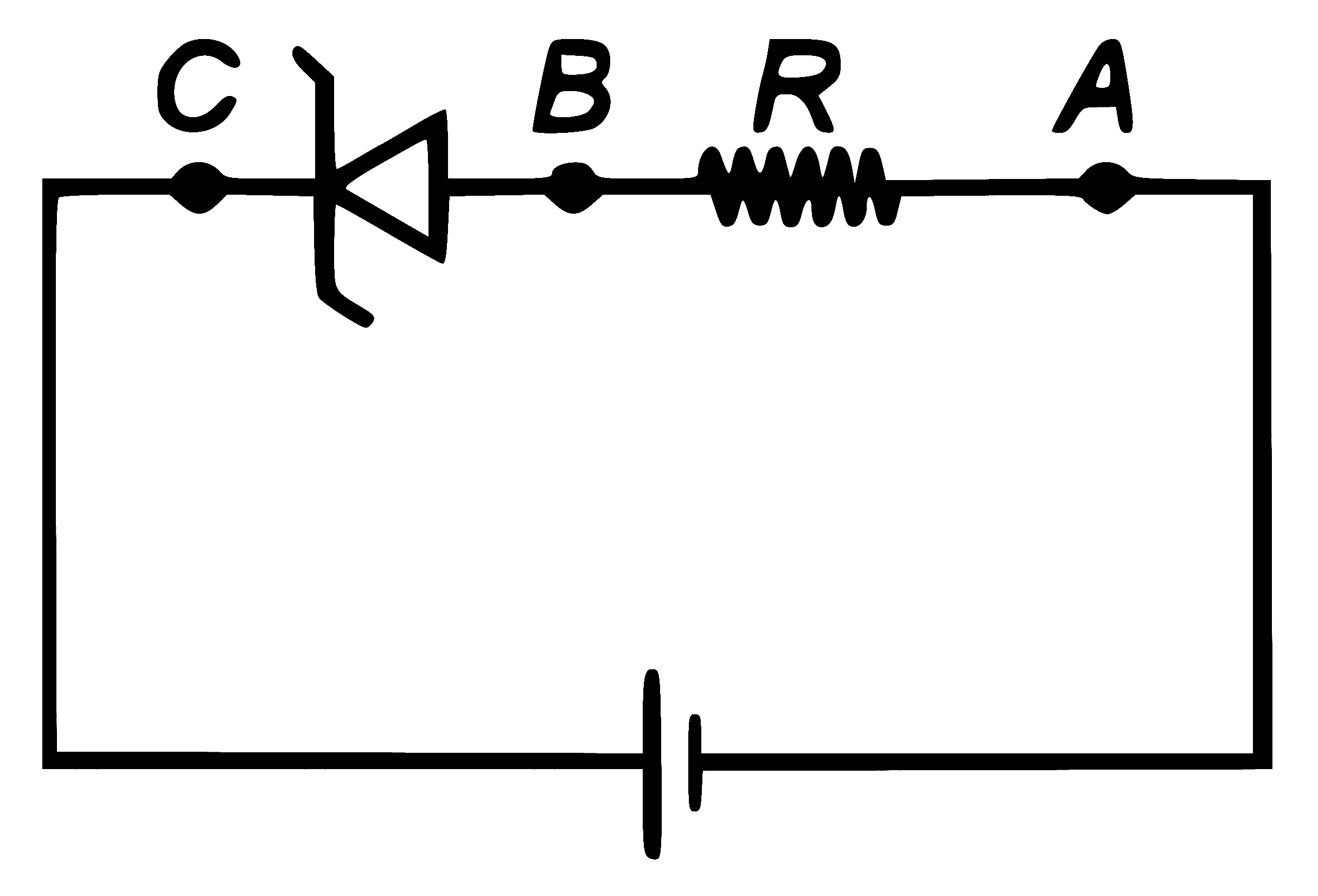
Three identical p-n junction diodes , and are connected across a battery as shown in the figure. If the width of the depletion regions of and are and , respectively, then the correct option is:
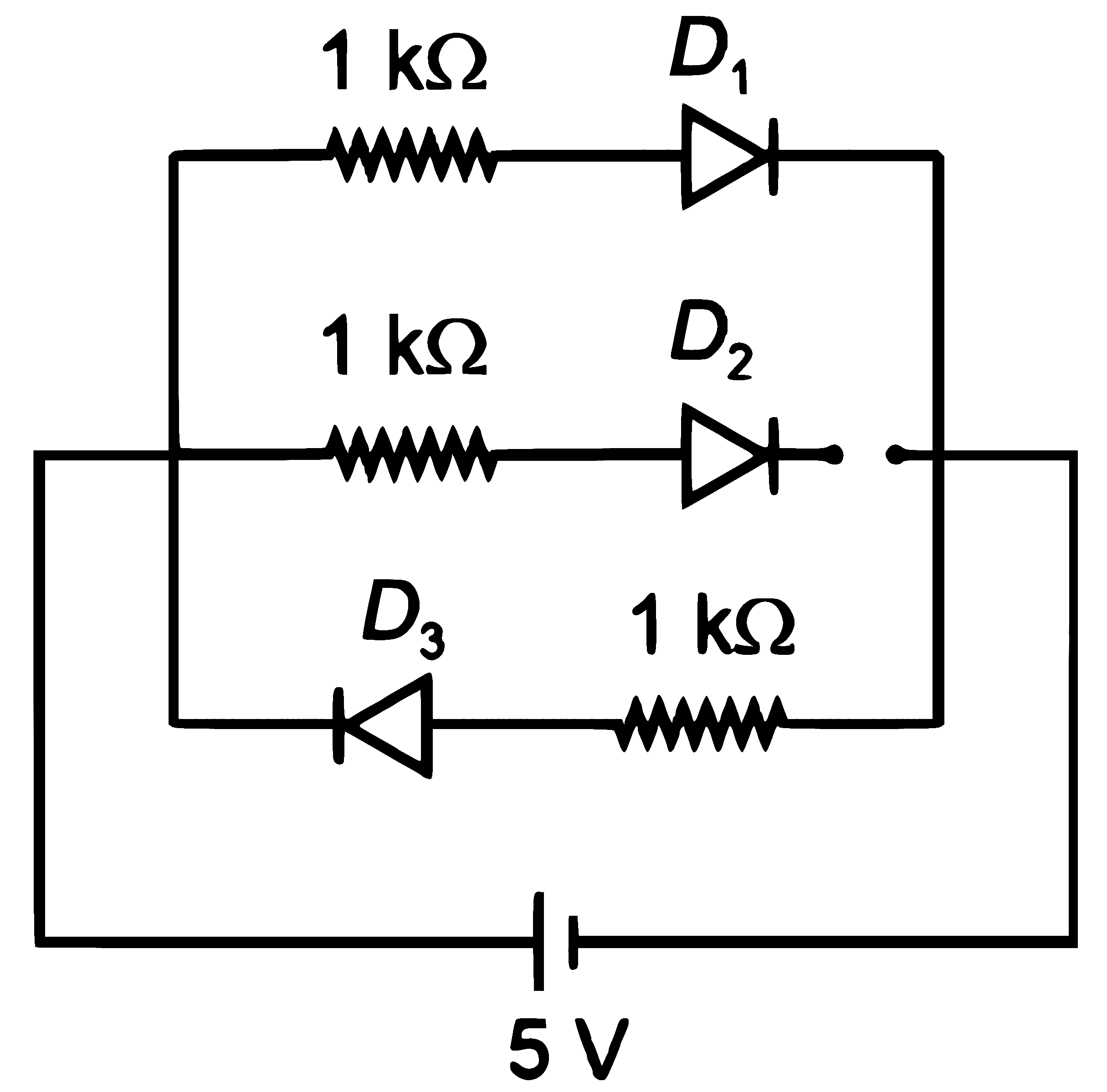
is forward biased
Depletion region of forward bias will be minimum
is reverse biased
Depletion region of reverse bias will be maximum
is unbiased
Depletion region ( ) will be between ( ) and ( )
Correct relation will be given as
The numbers 17.0145 and 21.0235 were rounded to three figures after the decimal point. The resulting numbers, respectively, are
17.015 and 21.024
17.014 and 21.023
17.015 and 21.023
17.014 and 21.024
If the rightmost digit to be removed is 5 , then the preceding number is not changed if it is an even number, but it is increased by one if it is an odd number.
The amount of carbon dioxide evolved upon complete combustion of of -butane is
(Given: atomic mass in amu and )
362 g
352 g
322 g
176 g
mole produces 4 mole
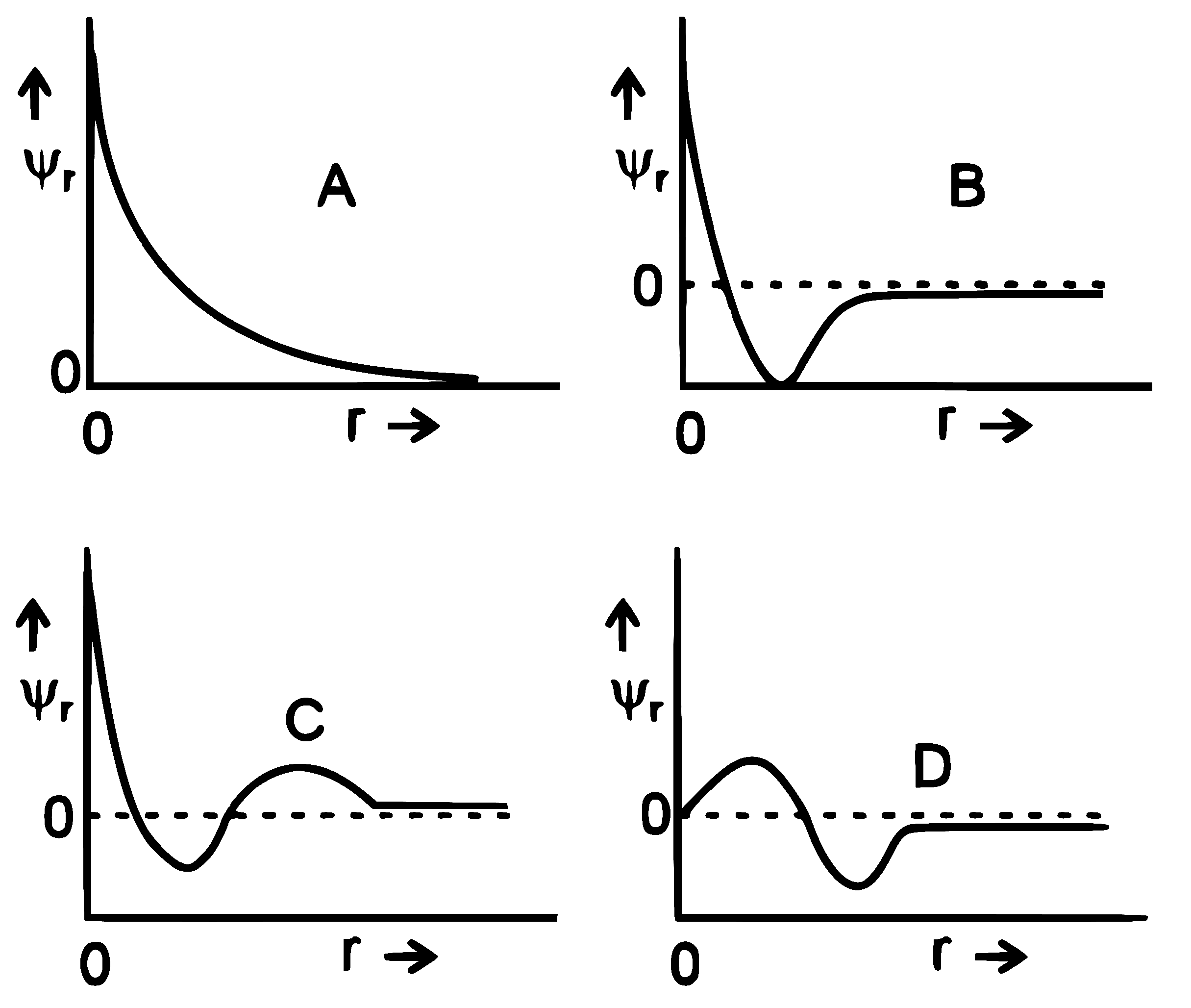
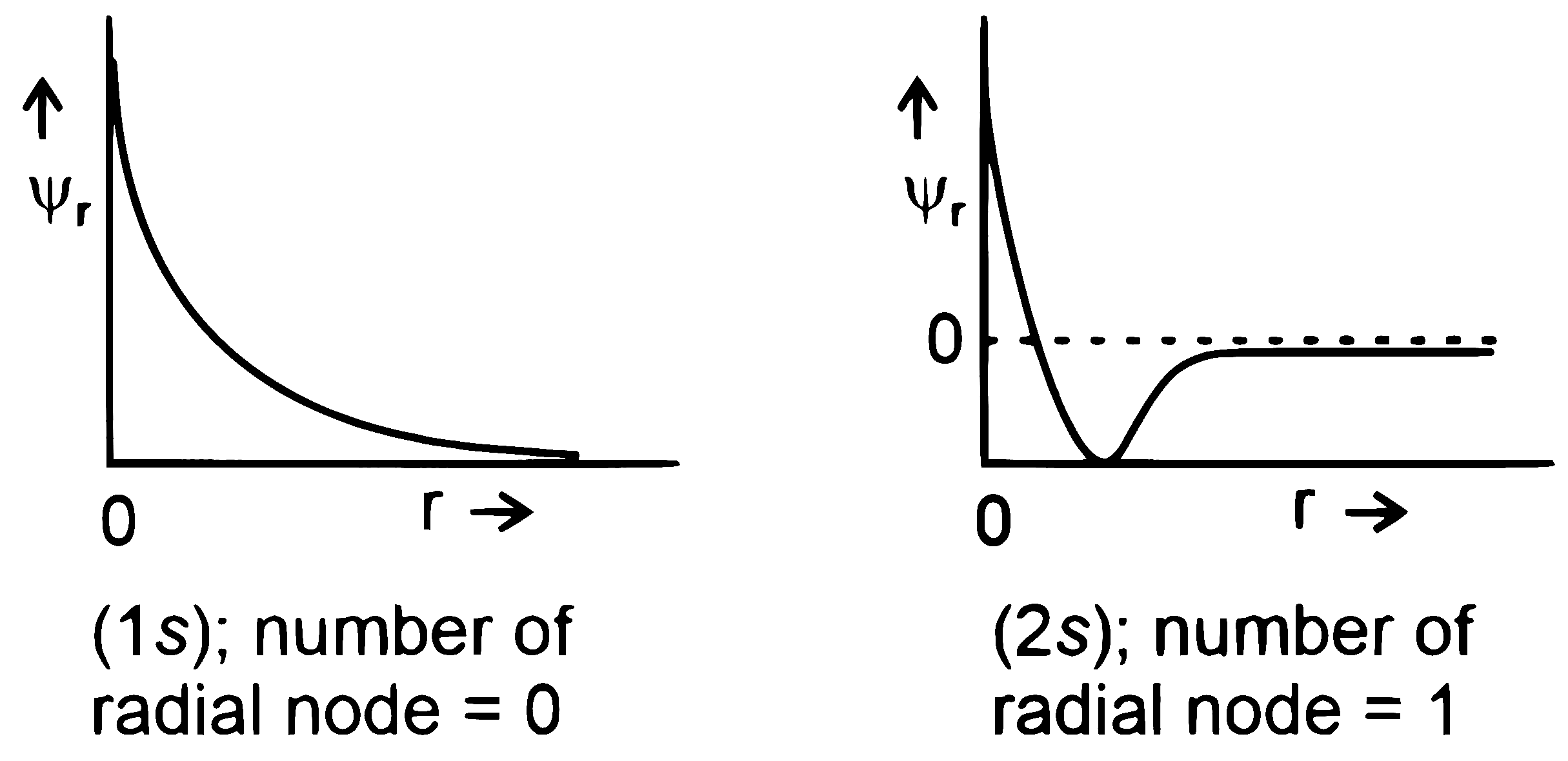
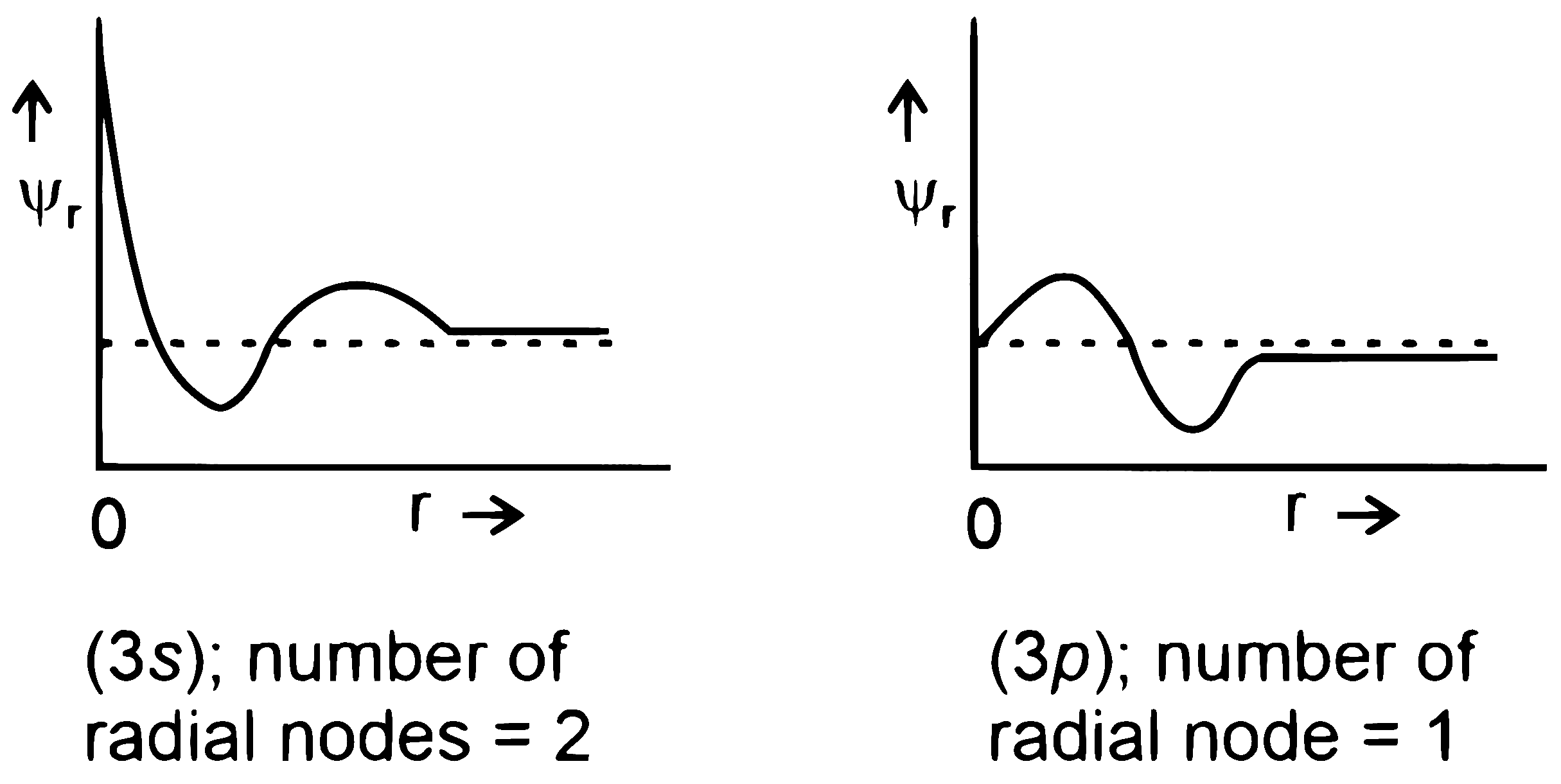
The figure representing two radial nodes in the orbital is
D
A
B
C
In an acidic medium, 10 mL of 0.25 M oxalic acid is titrated with solution. If the volume of solution required to reach end point is 10 mL , the strength of the solution is
0.15 M
0.10 M
0.20 M
0.25 M
No. of equivalent of . of equivalent of
The correct decreasing order of oxidation state of the in each molecule is
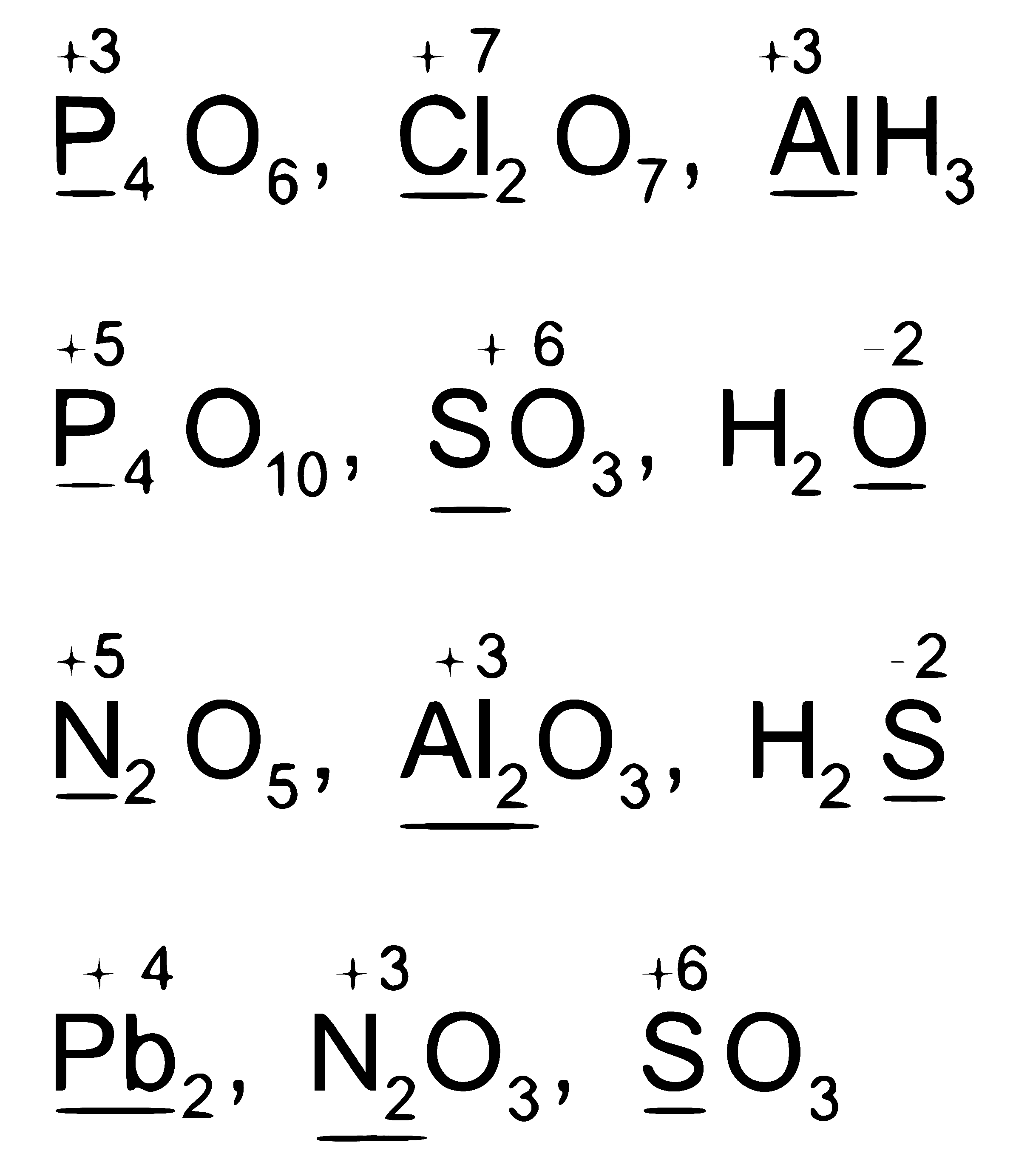
.
The correct order of solubility is:
Consider the following statements about the solutions formed by mixing two liquids.
A. An ideal solution thus formed obeys Raoult's law throughout the composition range.
B. Mixture of chloroform and acetone shows negative deviation from Raoult's law.
C. Mixture of aniline and phenol shows positive deviation from Raoult's law
A and C only
A and B only
B and C only
A only
In the case of phenol and aniline solution, the intermolecular hydrogen bonding between phenolic proton and lone pair on nitrogen atom of aniline is stronger than the respective intermolecular hydrogen bonding between similar molecules. Therefore it shows negative deviation.
Assertion A: For an ideal solution formed by mixing liquids and and
Reason R: No interactions occur between P and Q
In the light of the above statements, choose the most appropriate answer from the options given below.
is not correct but is correct
Both and are correct and is the correct explanation of
Both and are correct but is NOT the correct explanation of
is correct but is not correct
For ideal solution, and
In Ideal solution energy required to break interaction between P-P and Q-Q will be same as the energy released on the interaction of P-Q.
Two moles of an ideal gas undergo free expansion from 10 L to 100 L at 300 K . The values of and are
( is universal gas constant)
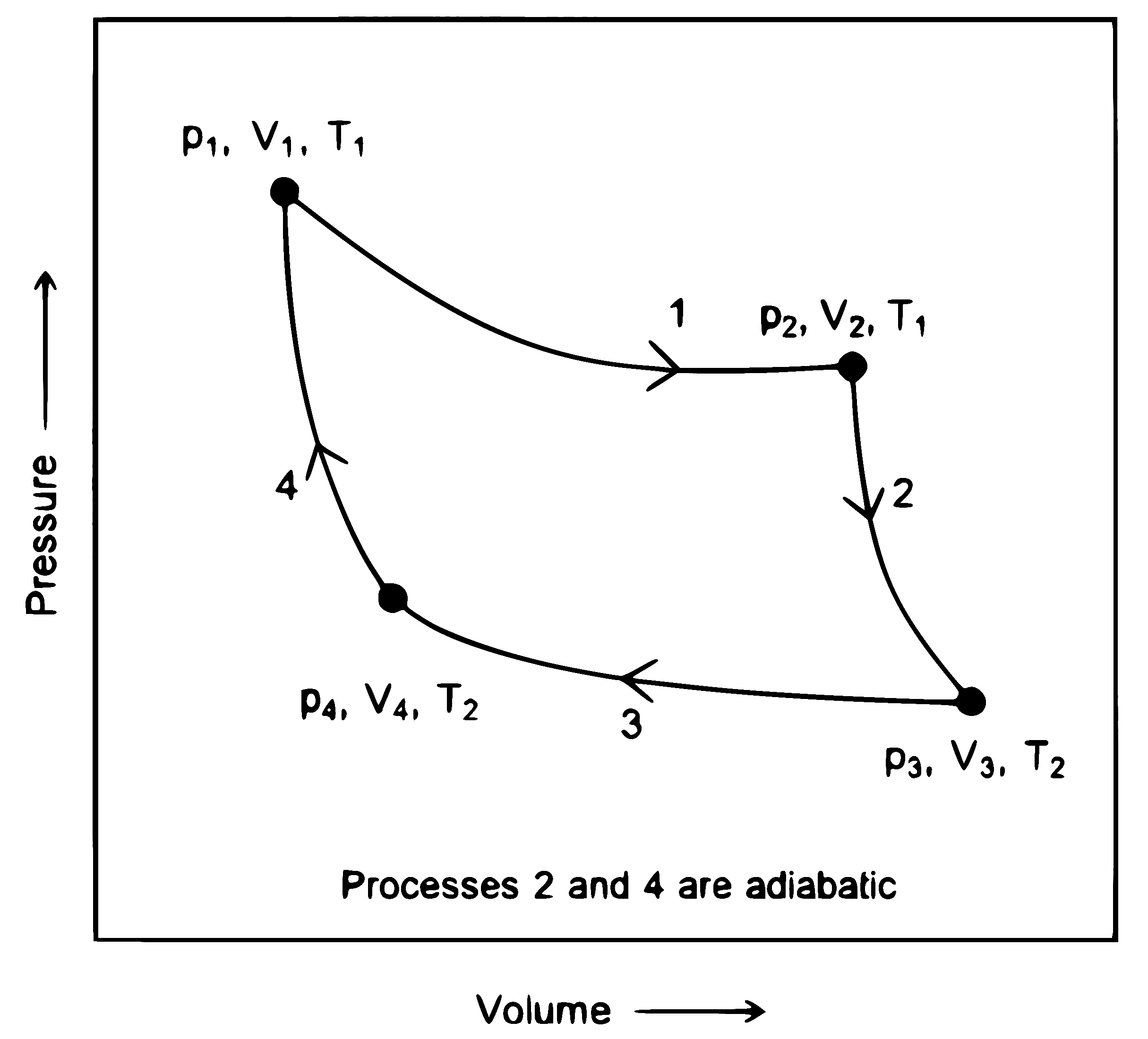
and represent work done (in calories) in the processes and 4 , respectively; and are changes in the internal energy for the processes 2 and 4, respectively.
[use ]
The correct option is
A protein undergoes reversible thermal denaturation from its initial state to denatured state according to . At , the concentrations of both and are equal at equilibrium, and the standard enthalpy change of denaturation is . The standard entropy change in ) of the protein upon denaturation at is closest to
11.1
2.0
2000.0
333.0
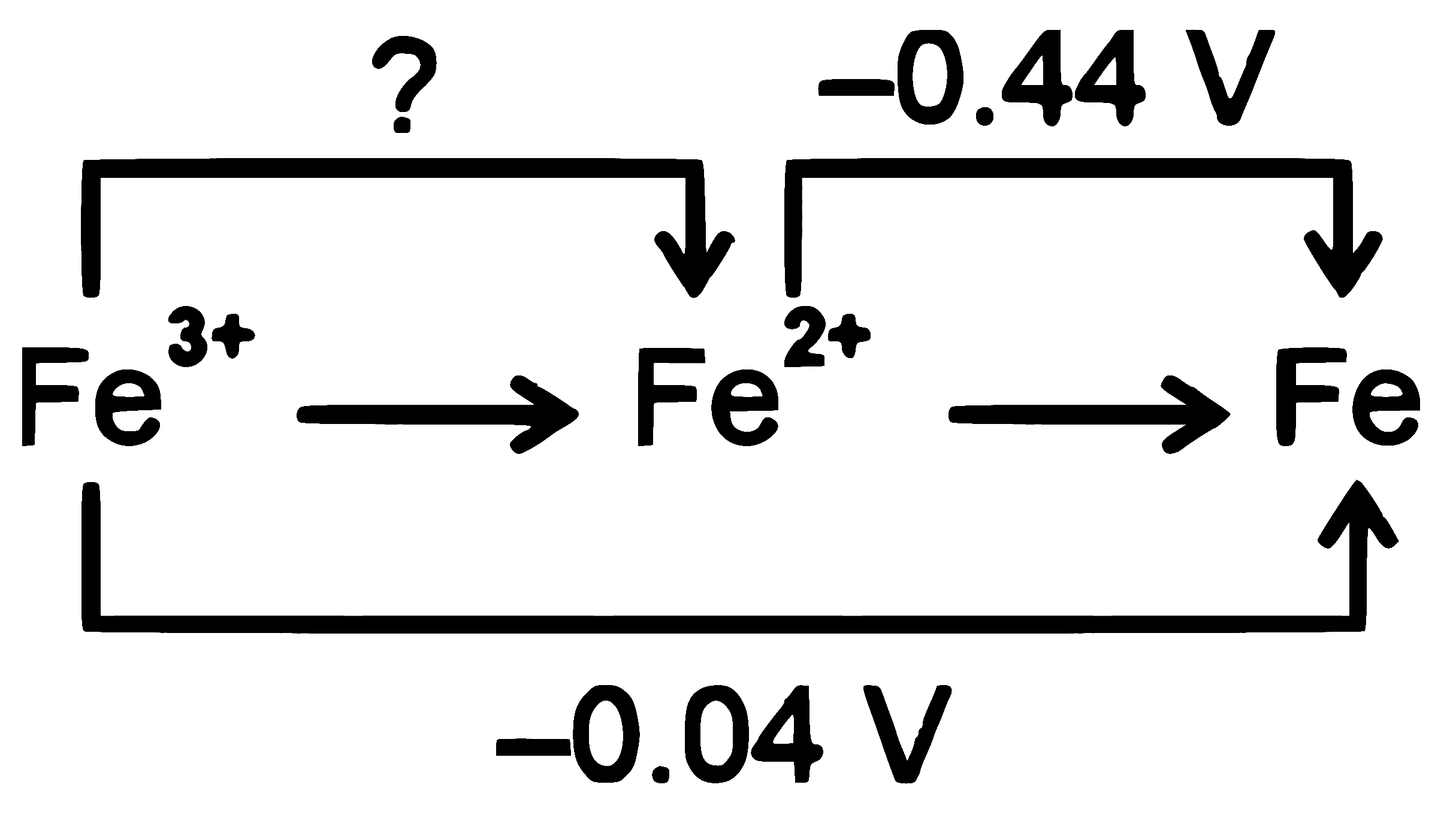
The standard electrode potential ( ) for the half-cell reaction at 298 K is (Given : and at 298 K )
+0.92 V
+0.40 V
+0.76 V
-0.48 V
For a salt XY, which is a strong electrolyte, the plot of versus has a slope of at 298 K . At 0.01 M concentration of , the value of is . The limiting molar conductivity of ion , in at 298 K will be
(Given : )
76.0
80.0
100.0
90.0
For an elementary chemical reaction, the Arrhenius plot is given below.
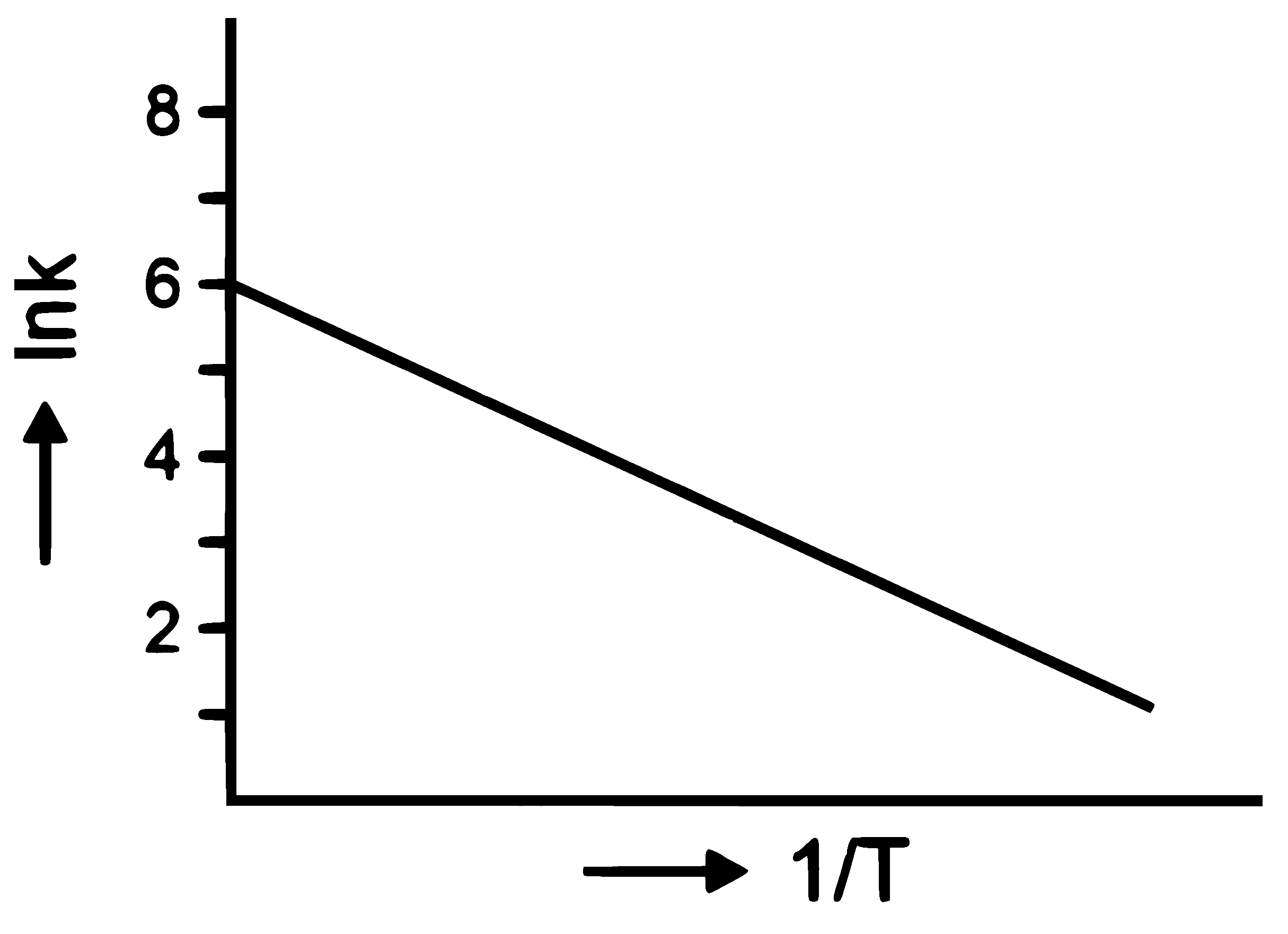
If the energy of activation is and , the temperature at which the rate constant becomes , is
250 K
125 K
150 K
200 K
is a zero-order reaction, where . If the initial concentration of is 2 M , then the time taken to complete of the reaction will be
2.0 min
1.5 min
0.75 min
1.0 min
For zero order reaction
Among the following options, the correct trend in the electron gain enthalpy is
Given below are two statements: One is labelled as Assertion A and the other is labelled as Reason R.
Assertion A: The first ionization enthalpy of O is lower than that of N and F .
Reason R: The loss of an electron from O leads to stable half-filled orbital
In light of the above statements, choose the most appropriate answer from the options given below:
is not correct but is correct
Both and are correct and is the correct explanation of
Both and are correct and is NOT the correct explanation of
is correct but is not correct.
First ionization enthalpy ( )
for
for
Due to half filled stable electronic configuration of nitrogen, It's first ionization enthalpy is higher than that of oxygen
(half filled p subshell)
The highest occupied molecular orbital for is
i.e. is highest occupied orbital.
| List-I | List-II | ||
| A. | I. | Tetrahedral | |
| B. | II. | Square Planar | |
| C. | III. | Trigonal bipyramidal | |
| D | IV. | Square pyramidal |
A-III, B-II, C-I, D-IV
A-IV, B-III, C-I, D-II
A-III, B-IV, C-I, D-II
A-III, B-I, C-II, D-IV
| Compound | Hybridization of central atom/ion | Geometry | |
| A. | Trigonal bipyramidal | ||
| B. | Square pyramidal | ||
| C. | Tetrahedral | ||
| D | Square planar |
Given below are two statements :
Statement-I : Heating NaCl with concentrated and results in oxidation of Mn .
Statement-II : Heating NaI with concentrated and results in reduction of Mn .
In light of the above statements, choose the most appropriate answer from the options given below.
Statement-I is incorrect but Statement-II is correct
Both Statement-I and Statement-II are correct
Both Statement-I and Statement-II are incorrect
Statement-I is correct but Statement-II is incorrect
Statement-I : (False)
So, reduction of Mn is taking place.
Statement-II : (True)
So, Mn has undergone reduction.
In potash alum, the ratio of and ions is
Potash alum
No. of
No. of
Ratio
The correct statement is
Aluminium has five valence orbitals.
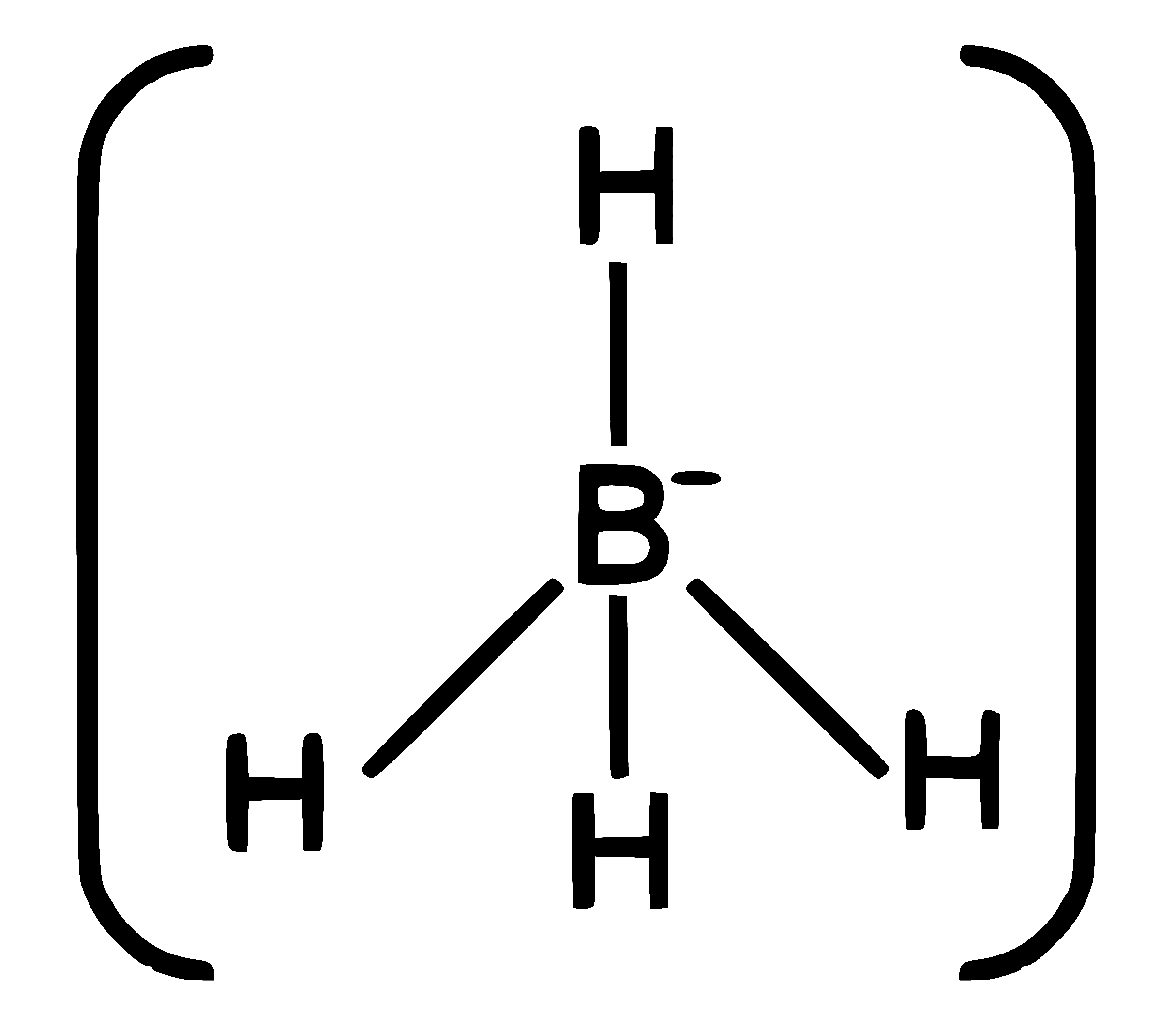
Boron has a maximum covalency of four.
Beryllium has three valence orbitals.
Magnesium has a maximum covalency of four.
Beryllium has four valence orbitals
Magnesium has a maximum covalency of six.
Boron has maximum covalency of four
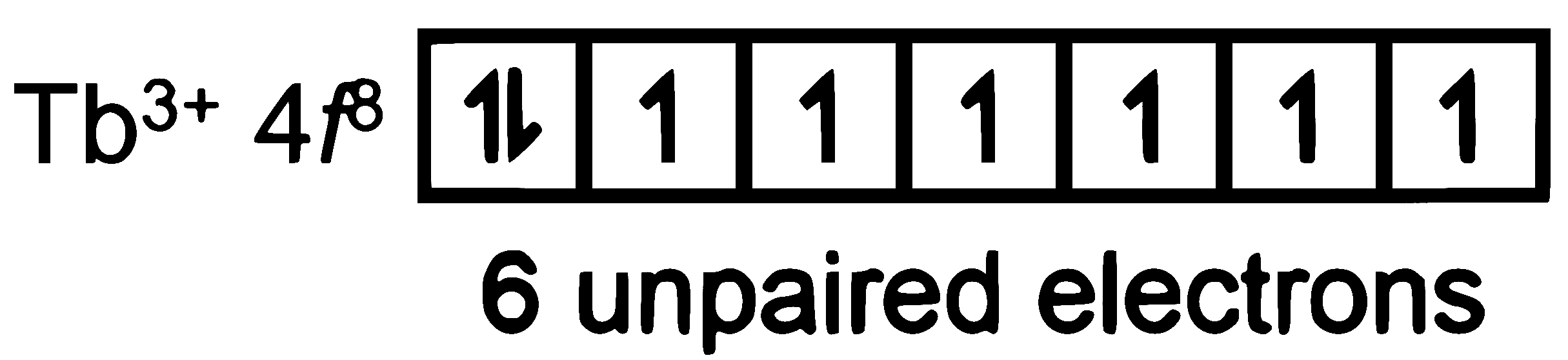
The lanthanide ion having four unpaired electrons is (Given : Atomic numbers of and )
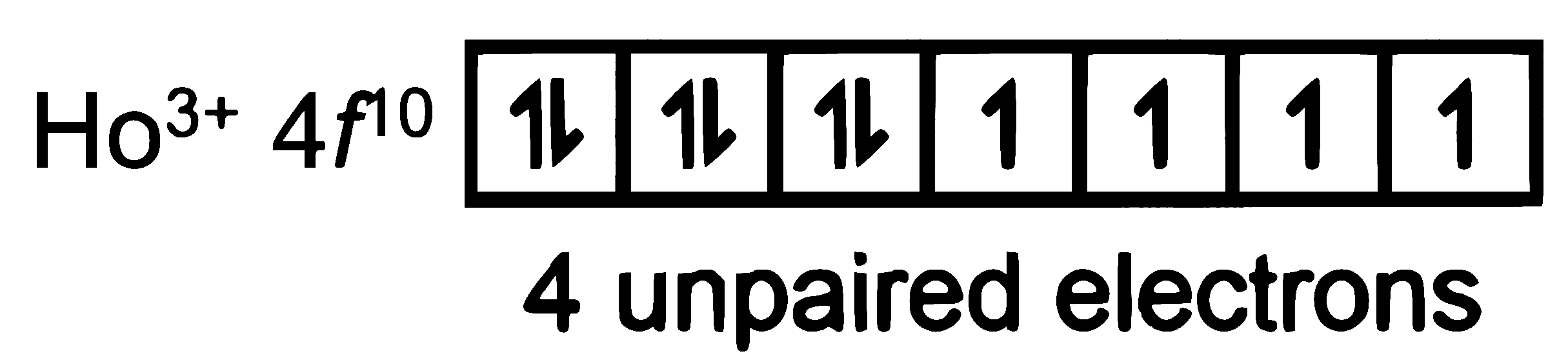
unpaired electrons
unpaired electron
The green paramagnetic species formed by heating at 513 K is
MnO
will form on heating which has green colour.
Given below are two statements: One is labelled as Assertion A and the other is labelled as Reason R.
Assertion A: Generally, transition metals have high melting points.
Reason R: Involvement of -electrons in addition to -electrons in the interatomic metallic bonding.
In light of the above statements, choose the most appropriate answer from the options given below:
is not correct but is correct
Both and are correct and is the correct explanation of
Both and are correct and is NOT the correct explanation of
is correct but is not correct.
The melting points of 3d transition metals are generally high. This is attributed to the involvement of greater number of electrons from ( ) in addition to the electrons in the interatomic metallic bonding.
The formula of tetraammineaquachloridocobalt(III) chloride is
Tetraammineaquachloridocobalt(III) chloride is .
Given below are two statements:
Statement-I : is chiral.
Statement-II : trans is chiral.
(Given : )
In light of the above statements, choose the most appropriate answer from the options given below:
Statement-I is incorrect but Statement-II is correct
Both Statement-I and Statement-II are correct
Both Statement-I and Statement-II are incorrect
Statement-I is correct but Statement-II is incorrect
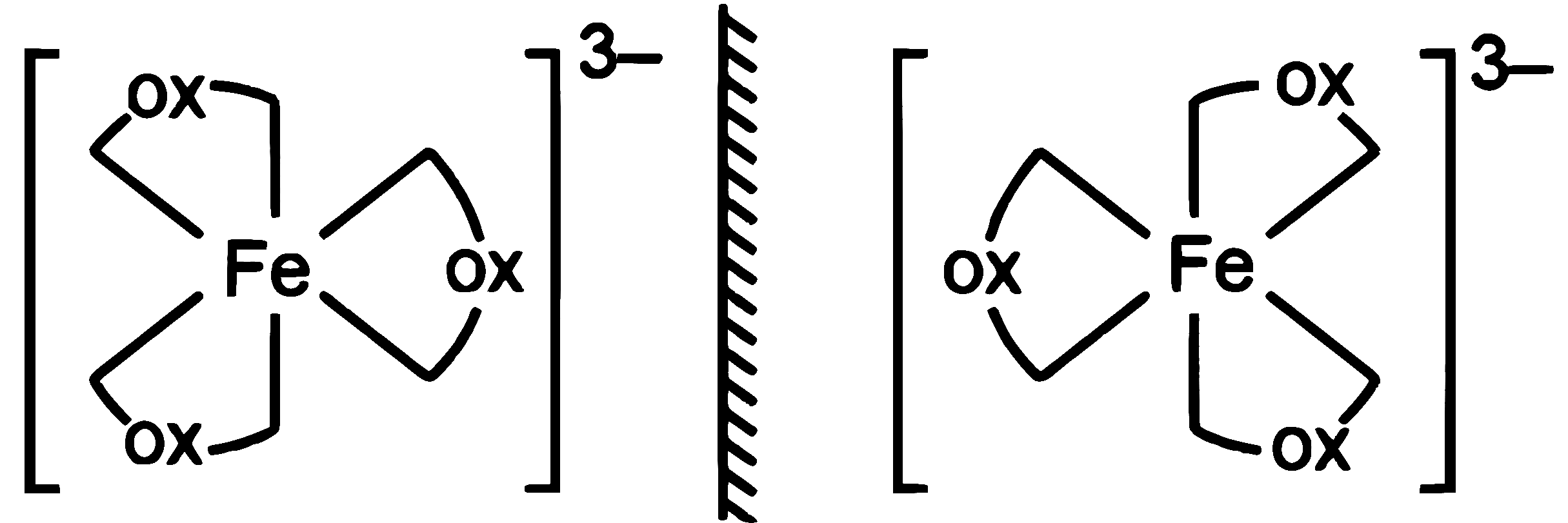
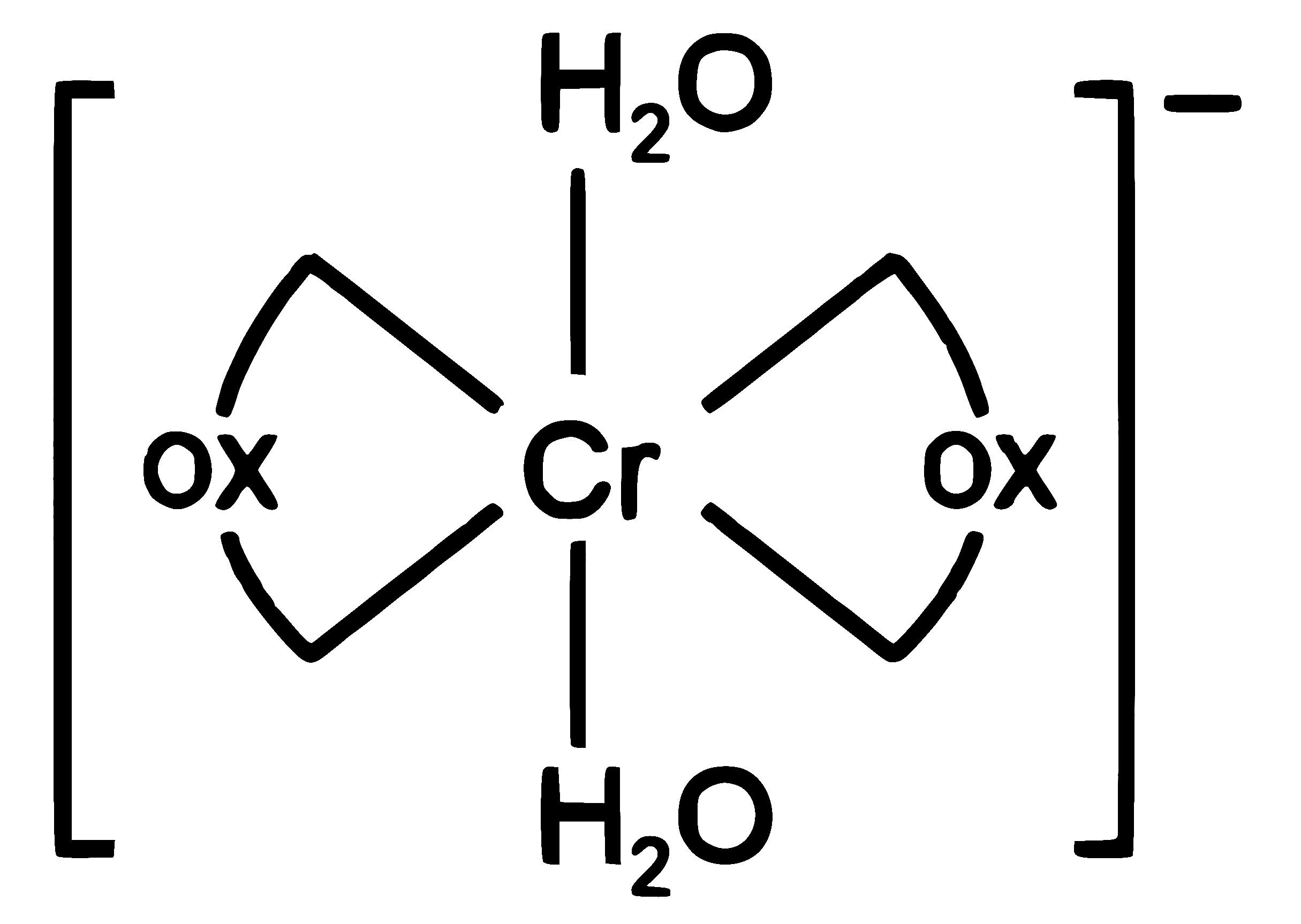
Plane of symmetry (POS) is present in given species.
It is NOT chiral and optically inactive.
The complex which has facial and meridional isomers is
(Given : py = pyridine and en = )
The complex with type type of complexes show fac and mer type of isomers.
shows fac and mer isomers.
A electrolyte in an aqueous solution is
The aqueous solution of is a type of type electrolyte as it undergoes dissociation into and ions.
According to crystal field theory, the correct order of ligands with respect to their decreasing order of field strength is
The correct decreasing order of field strength according to crystal field theory is
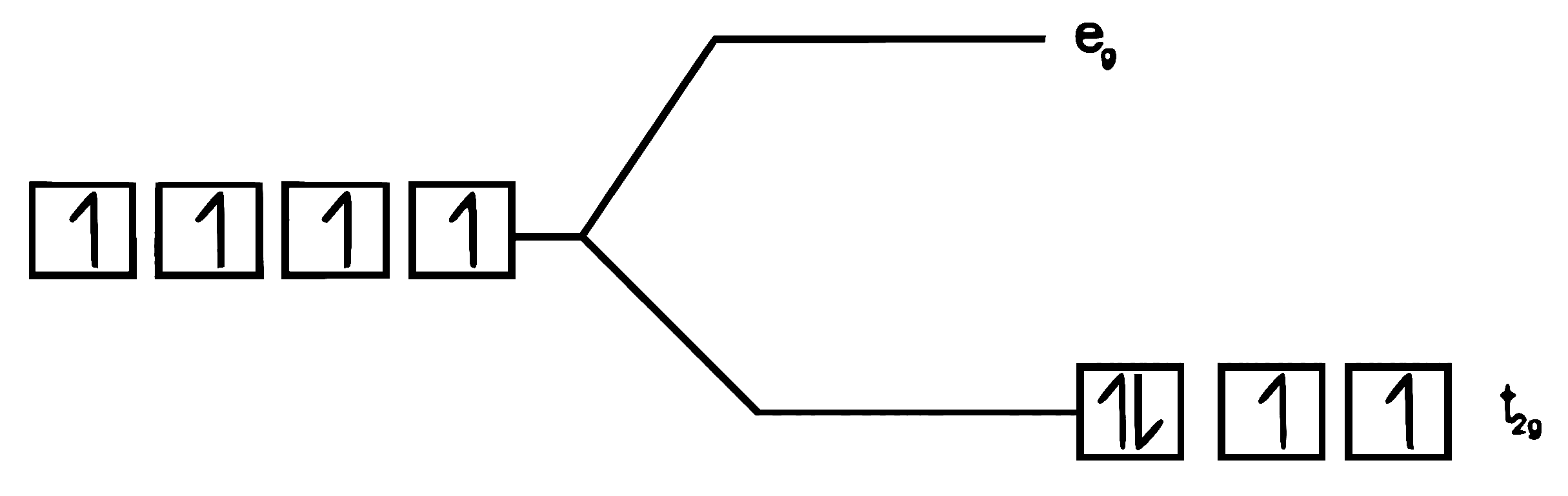
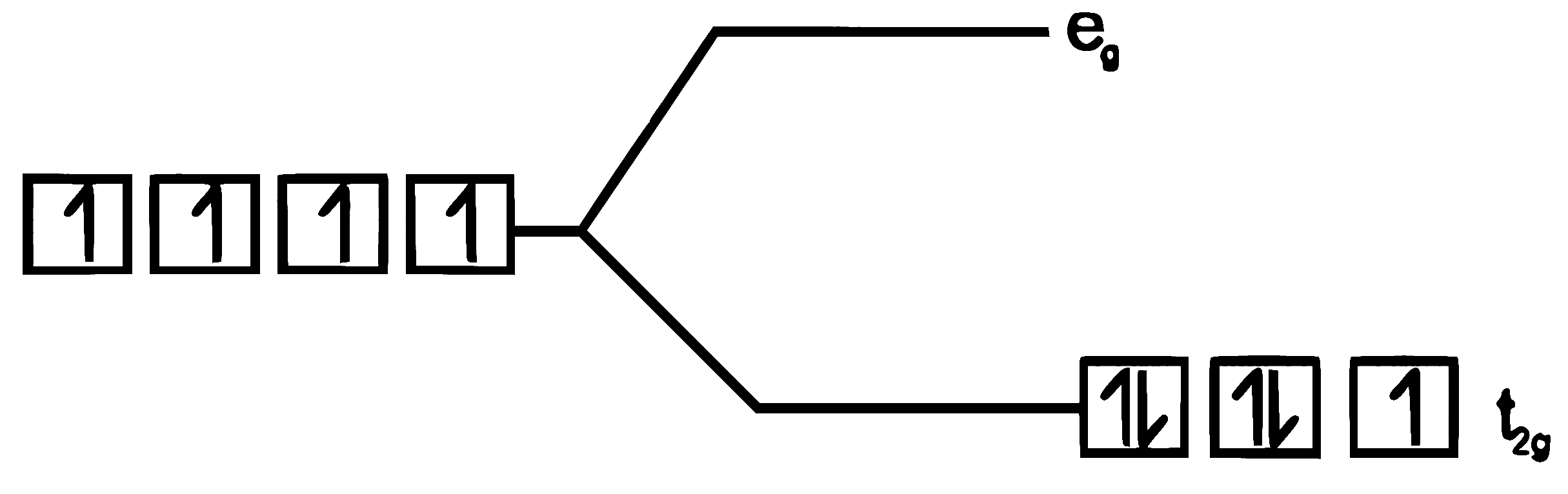
Among the species given below, the spin-only magnetic moment is highest for (Given: Atomic number of and )
In
Number of unpaired electron
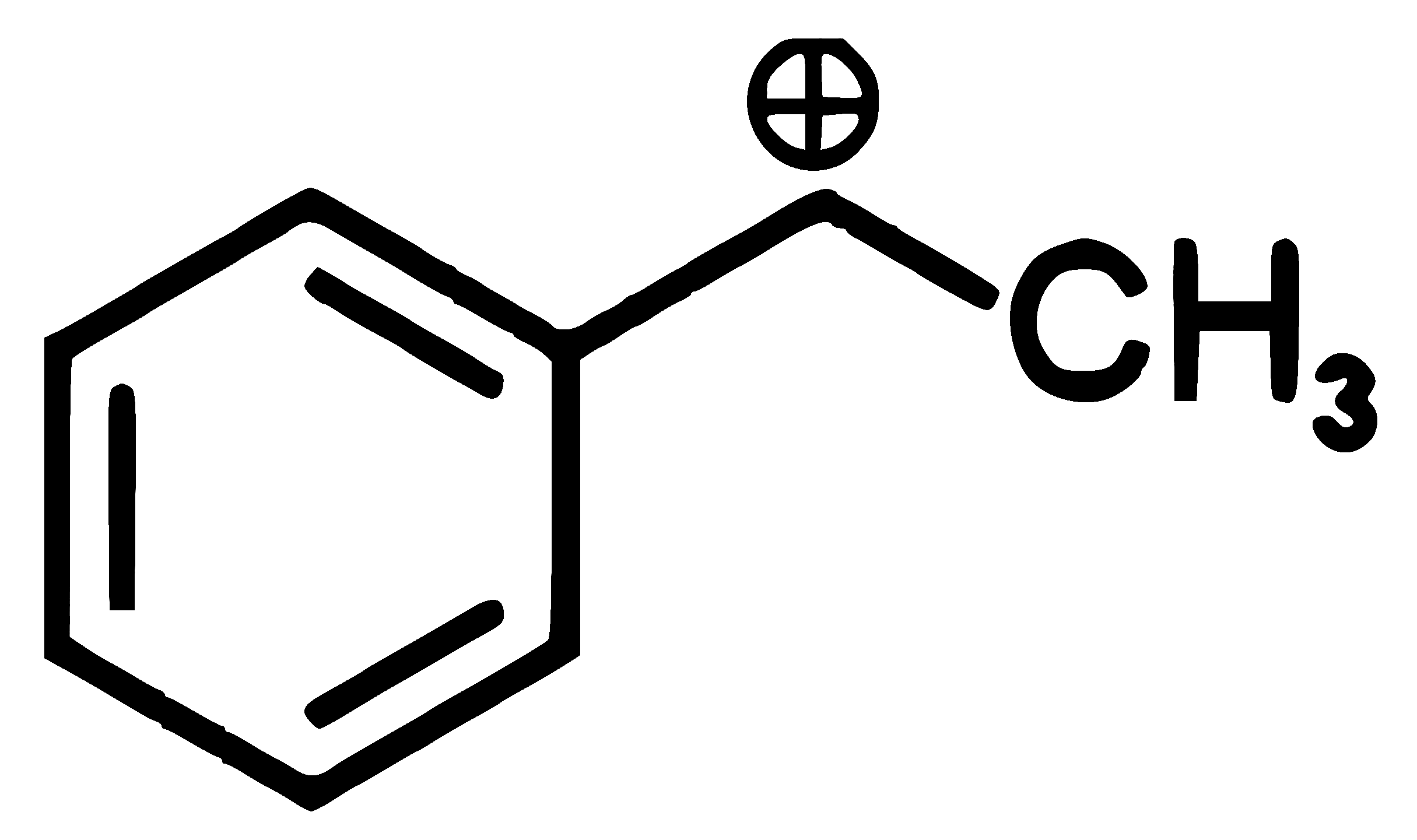
empty and empty orbitals
filled and filled orbitals
empty and empty orbitals
empty and filled orbitals
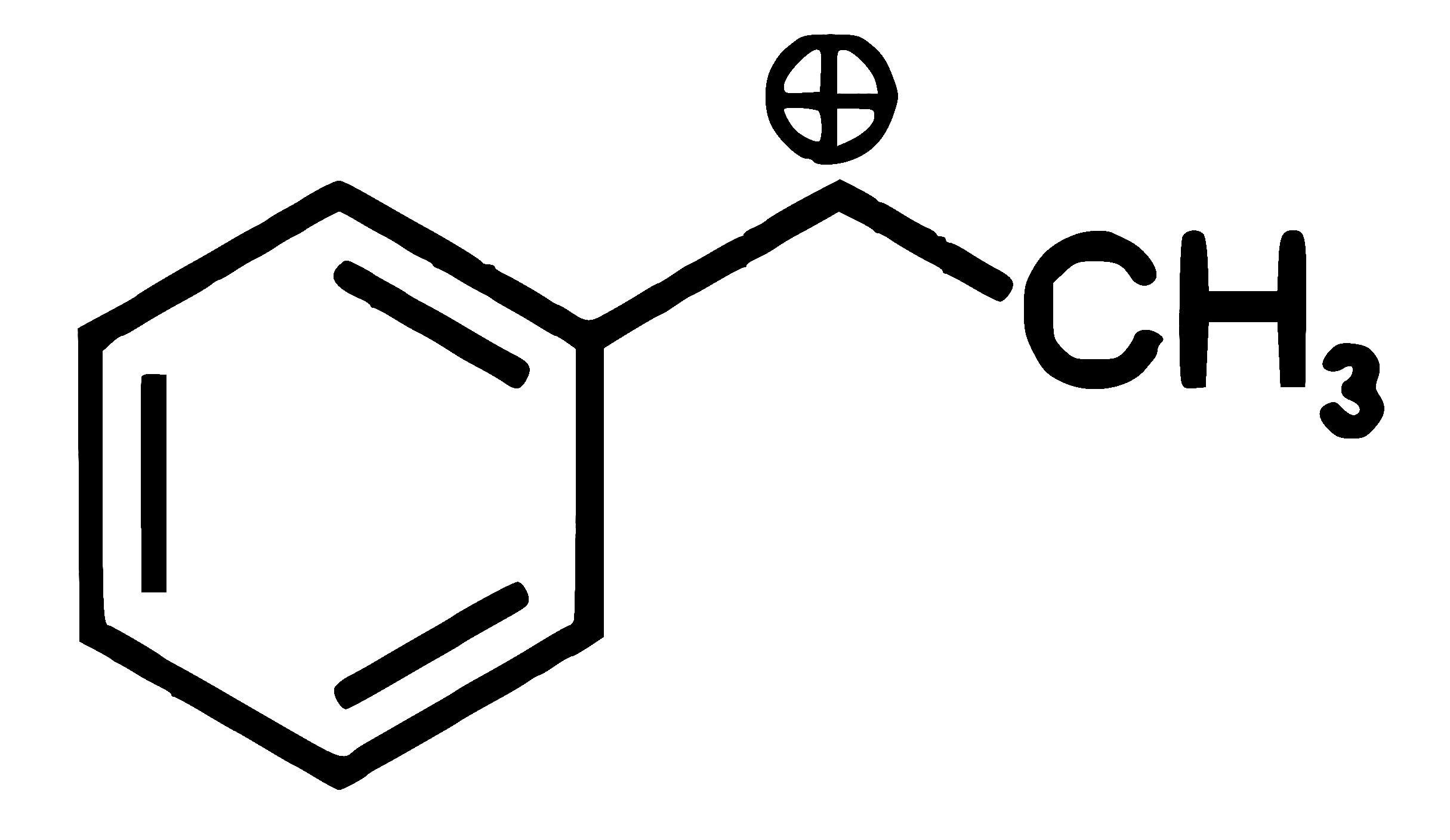
Due to resonance it is stabilised by filled orbital.
Due to hyperconjugation, it is stabilised by filled orbitals.
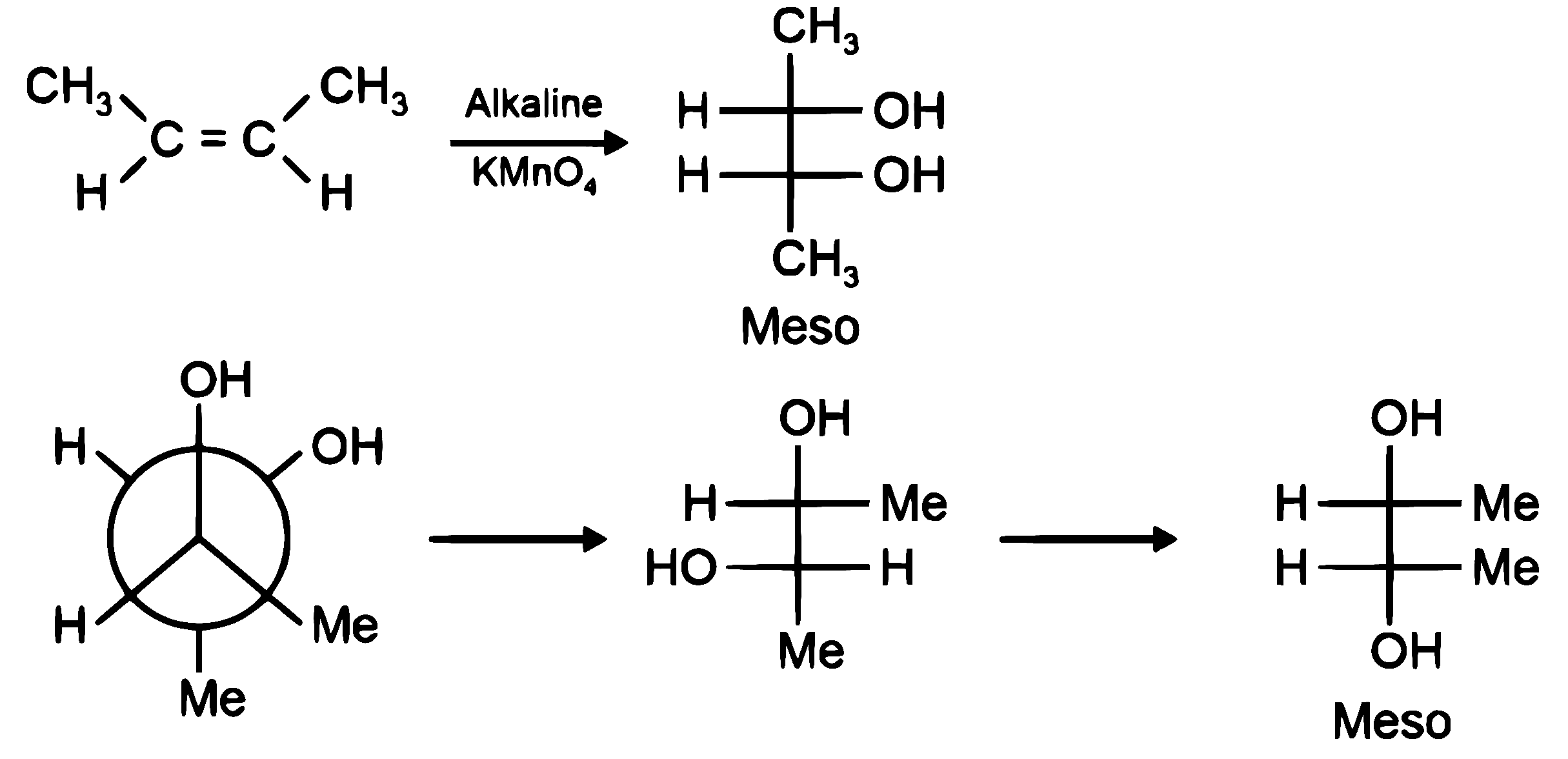
Given below are two statements :
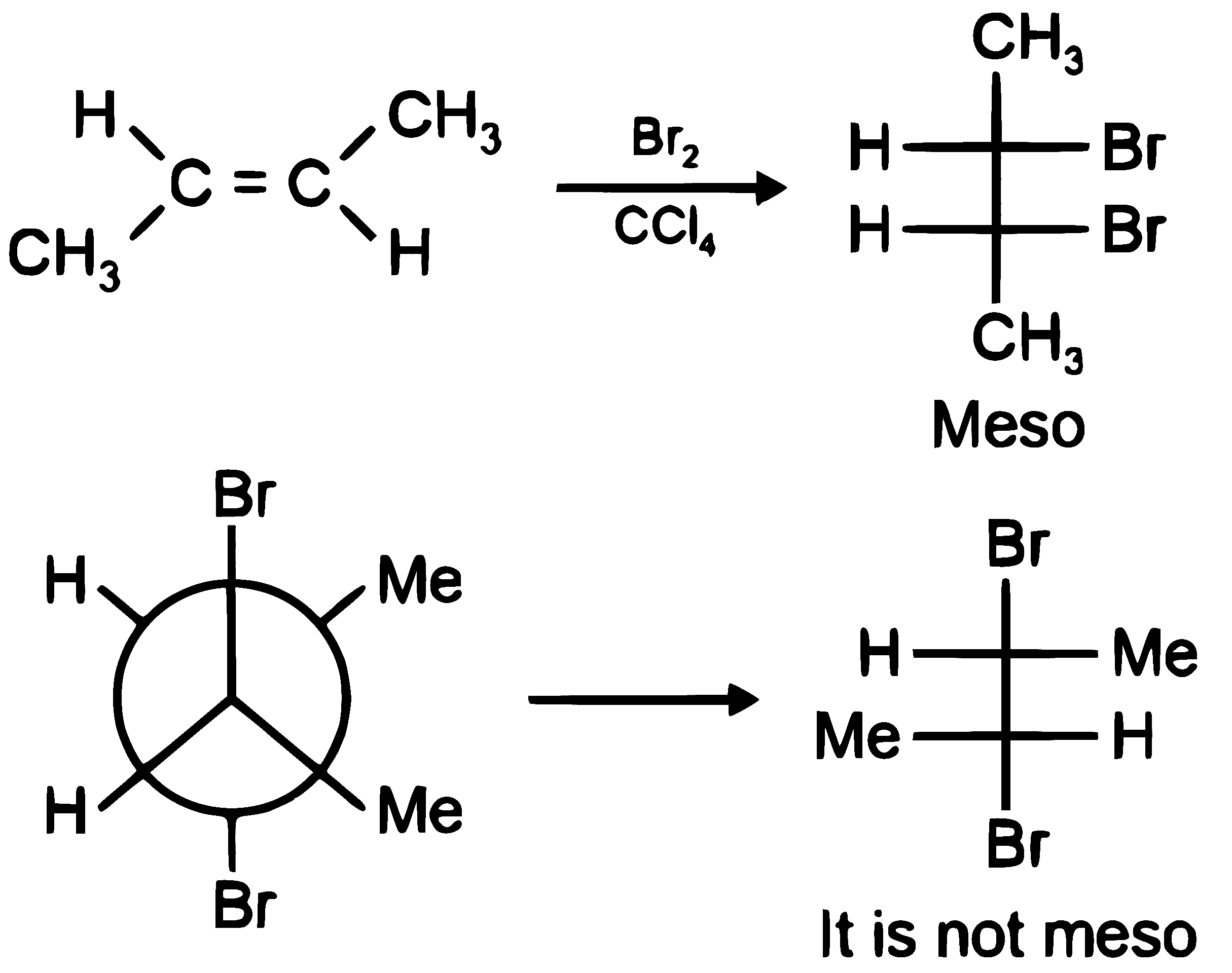
Statement I : trans-But-2-ene upon treatment with in gives the following product.
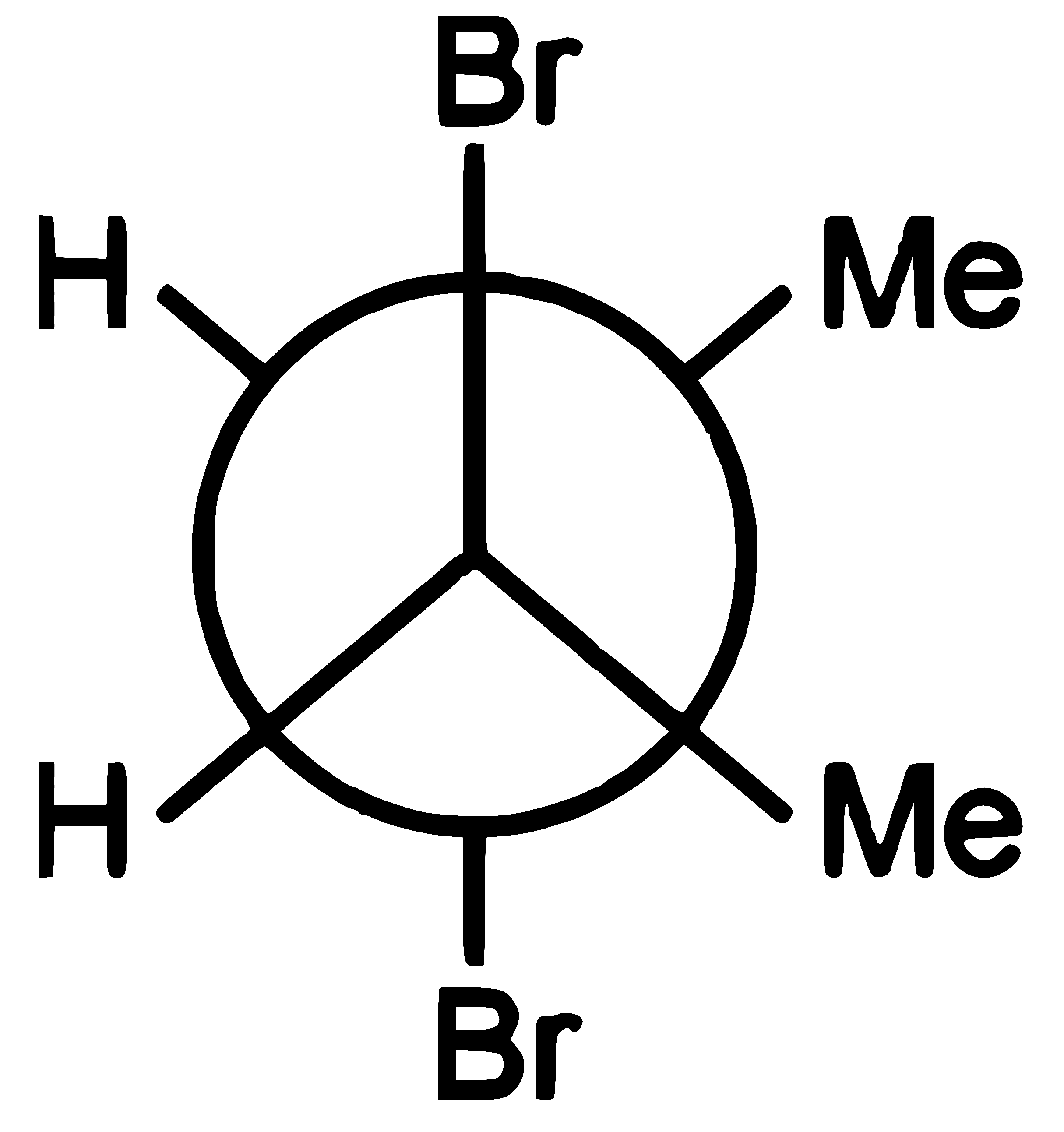
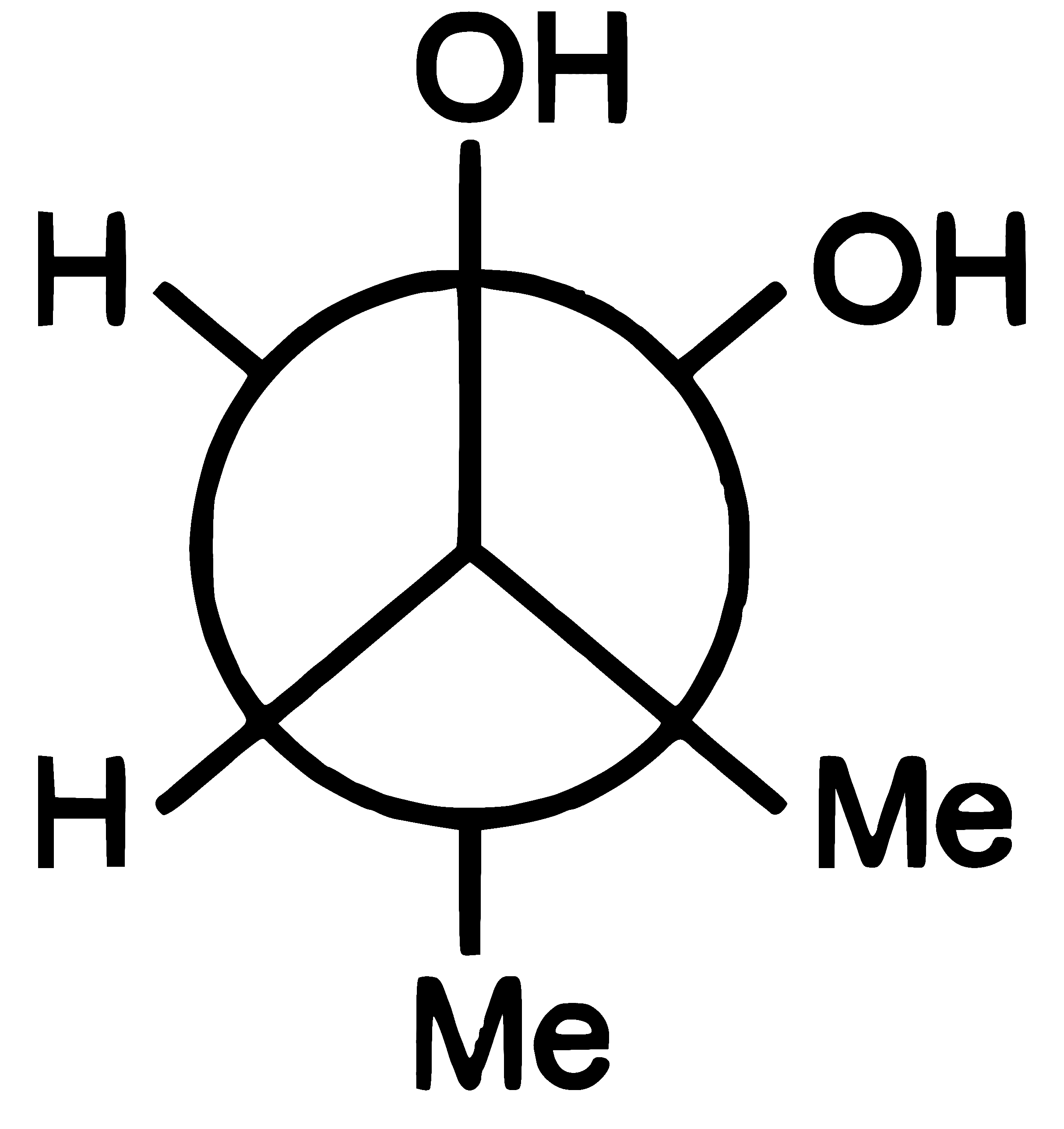
In the light of the above statements, choose the most appropriate answer from the options given below.
Statement I is incorrect but Statement II is correct
Both Statement I and Statement II are correct
Both Statement I and Statement II are incorrect
Statement I is correct but Statement II is incorrect
Among the following, the compound having conjugated double bonds is
hepta-1,6-diene
hepta-1,3-diene
hepta-1,4-diene
hepta-1,5-diene
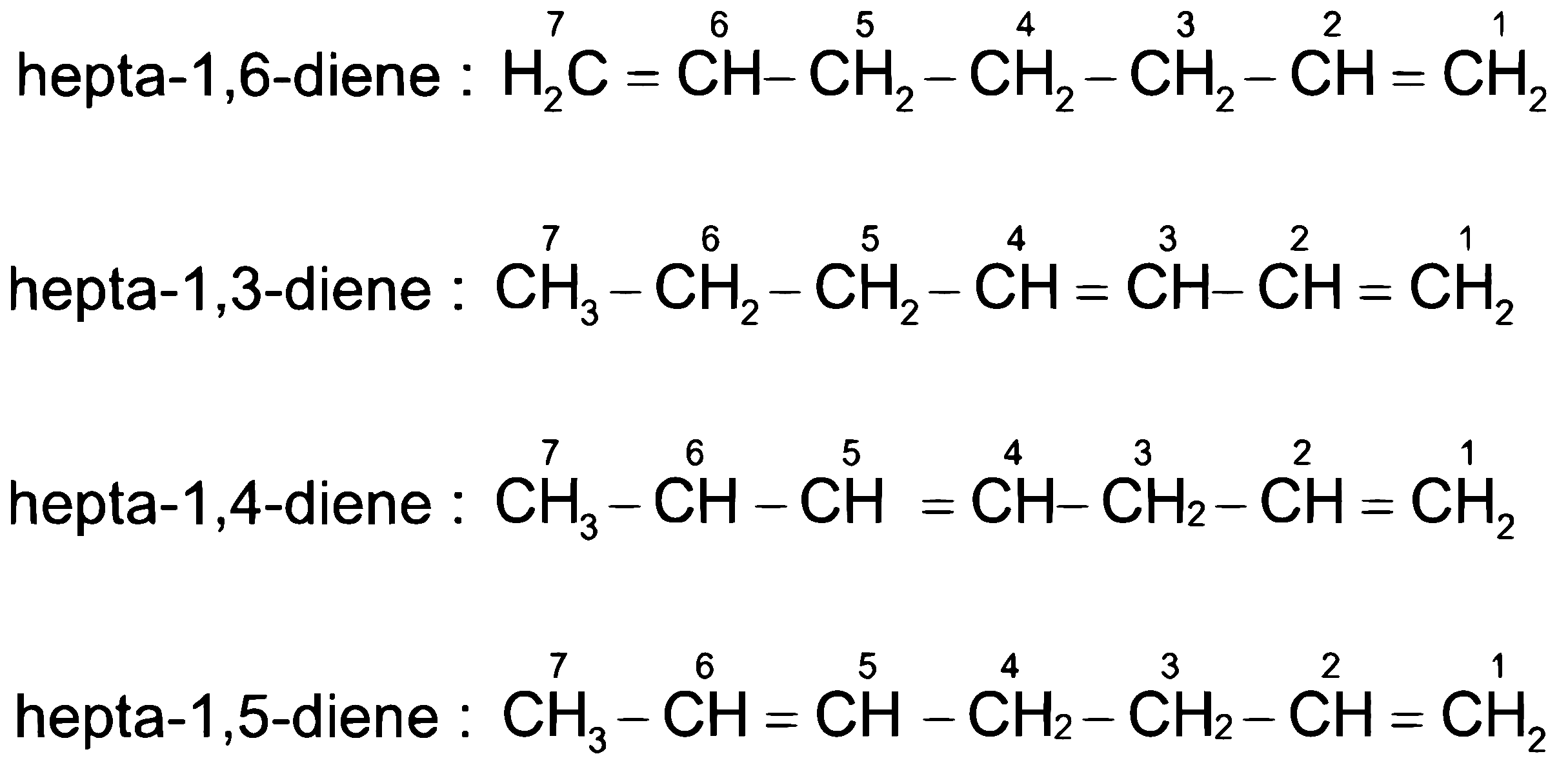
An organic compound (diene) with two double bonds separated by one single bond is termed as conjugated diene.
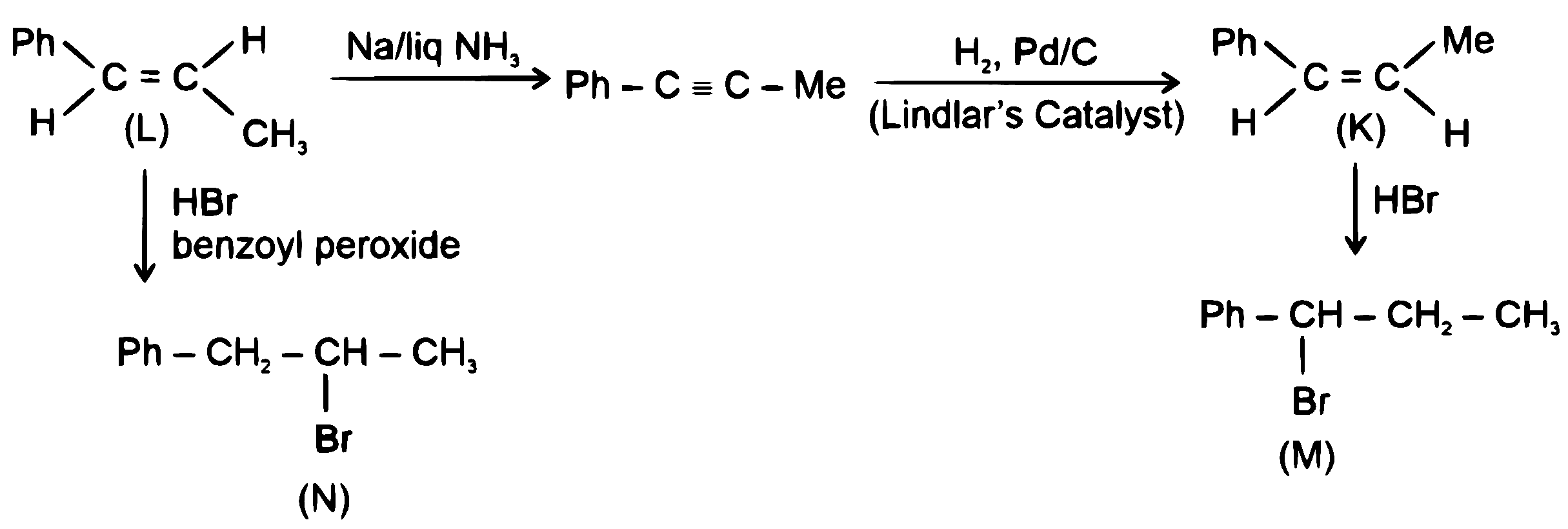
Consider the following reaction sequences and choose the correct option.
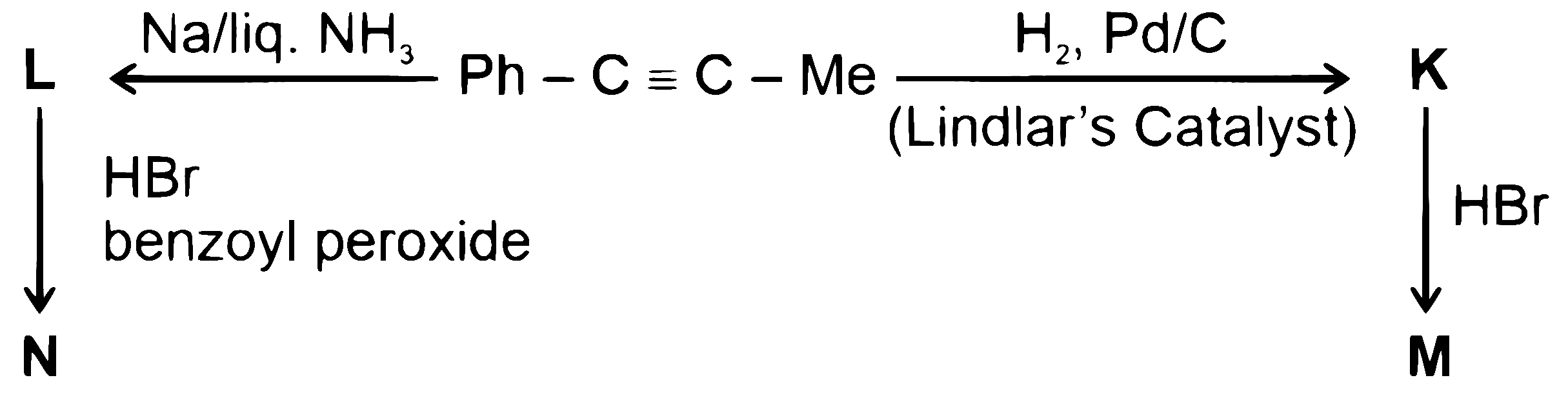
and are stereoisomers
and are geometrical isomers
and are enantiomers
and are geometrical isomers
Arrange the following compounds in the increasing order of polarity
A.
B.
C.
D.
Choose the correct answer from the options given below.
On the basis of polarity the correct order is
So correct order is
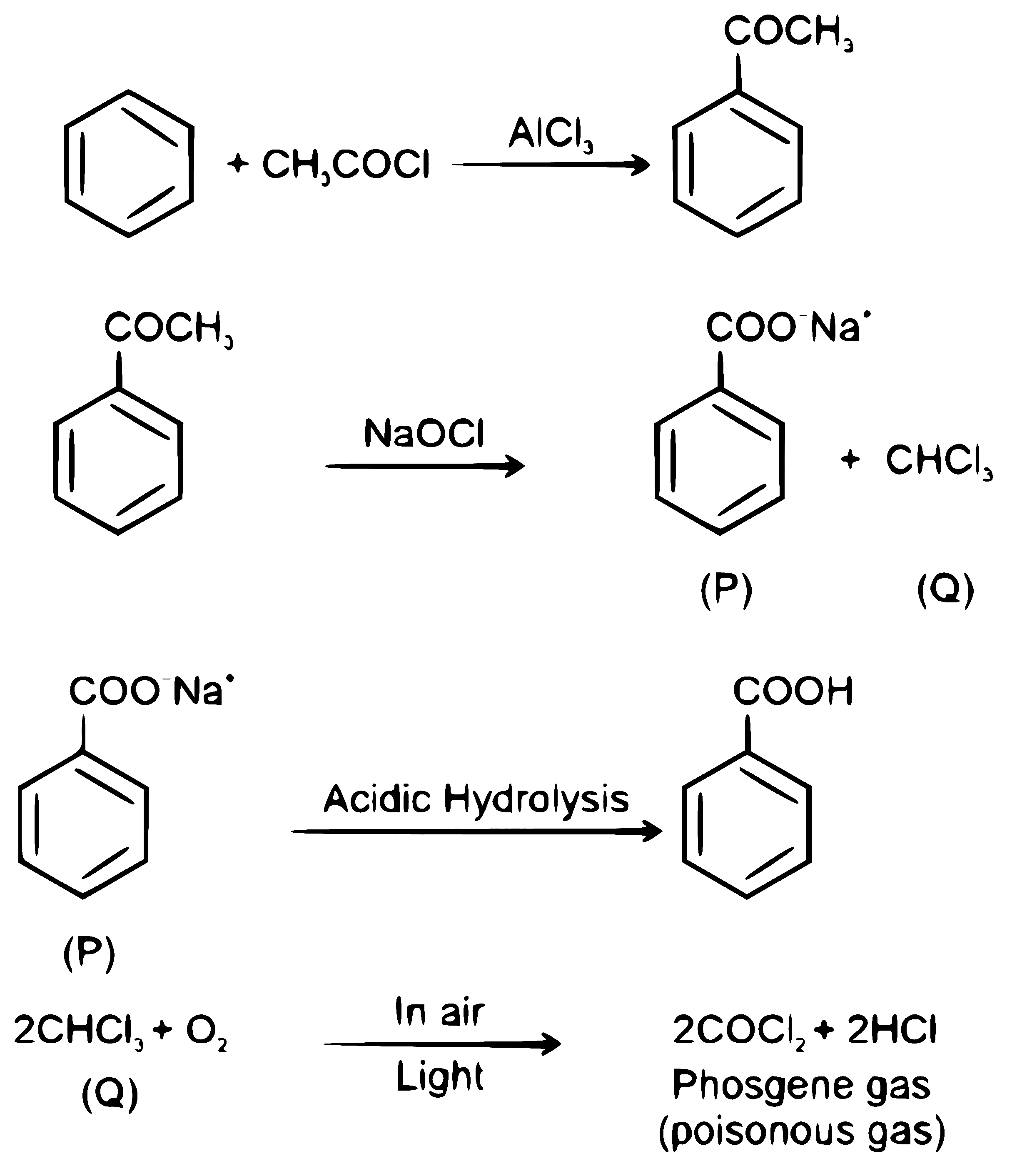
Consider the following reaction, and choose the correct option.
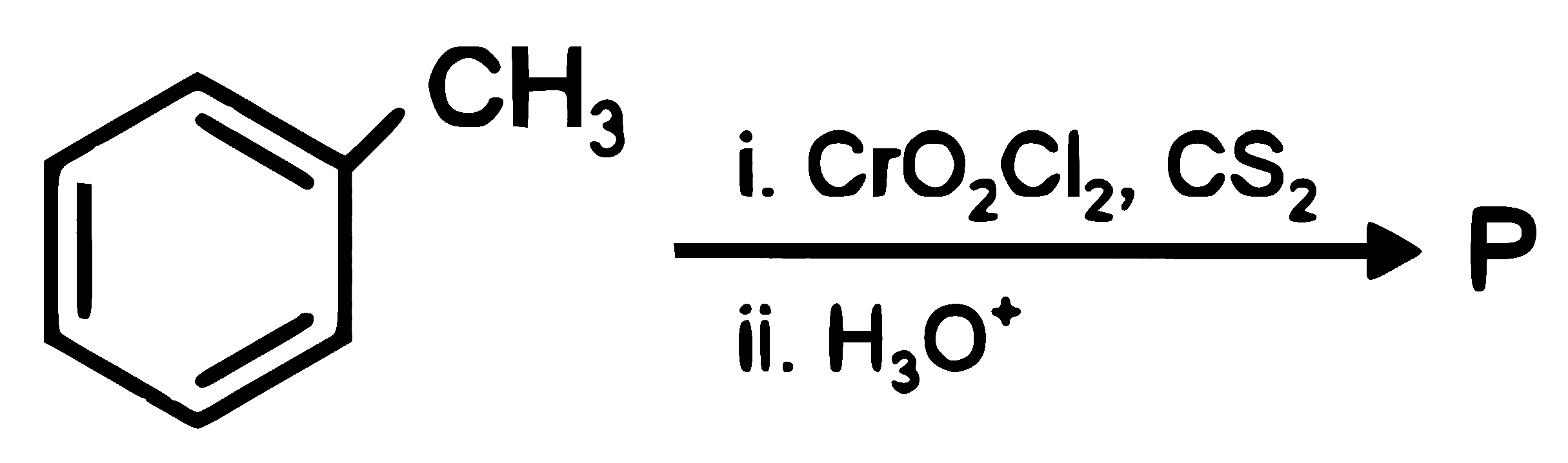
Compound is obtained by the hydrogenation of benzoyl chloride with Pd on
On treating compound with saturated solution, brisk effervescence is observed
Compound can be prepared by treating benzene with anhydrous and
On treating with bromine water, compound gives a white precipitate
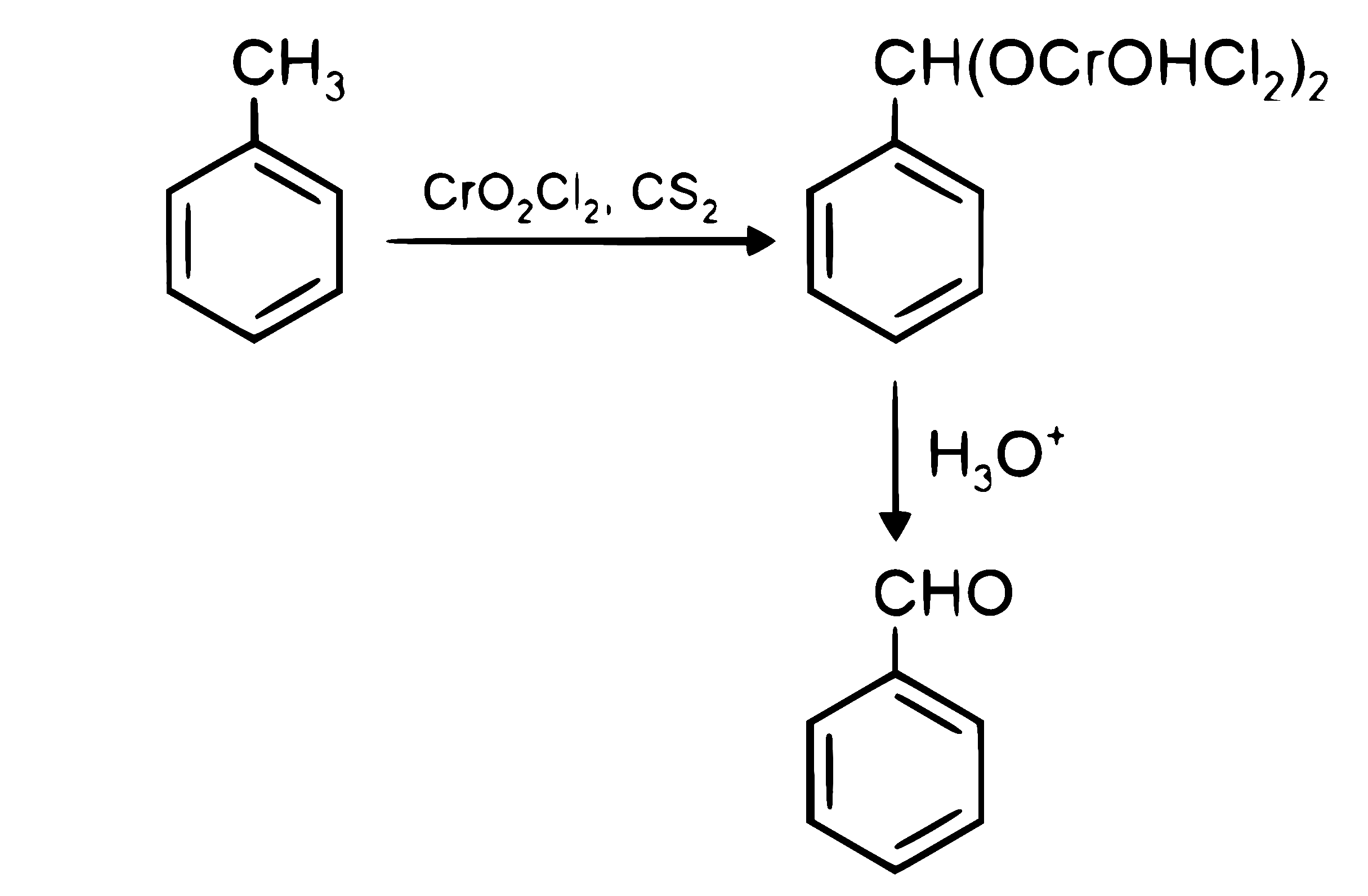
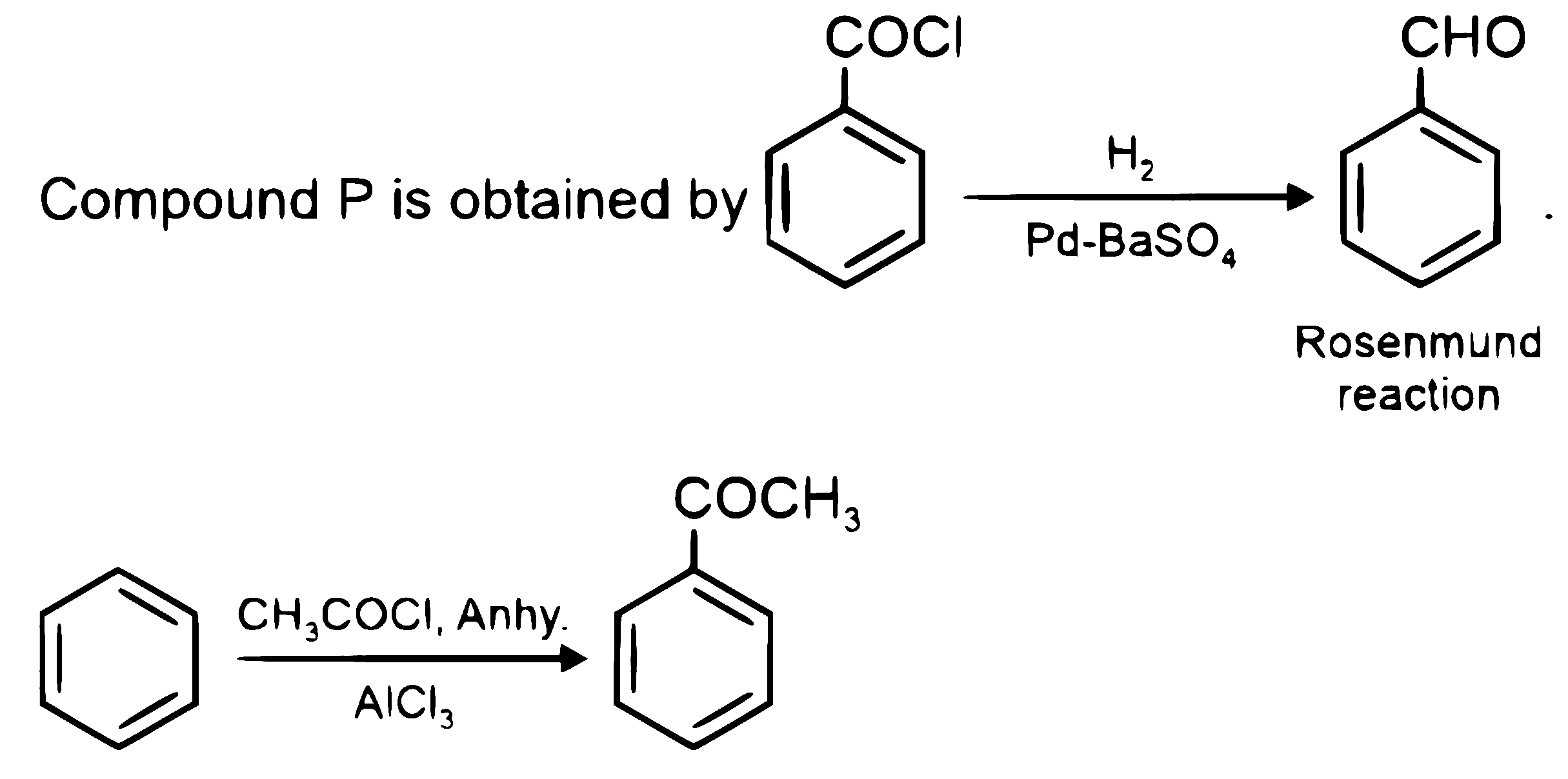
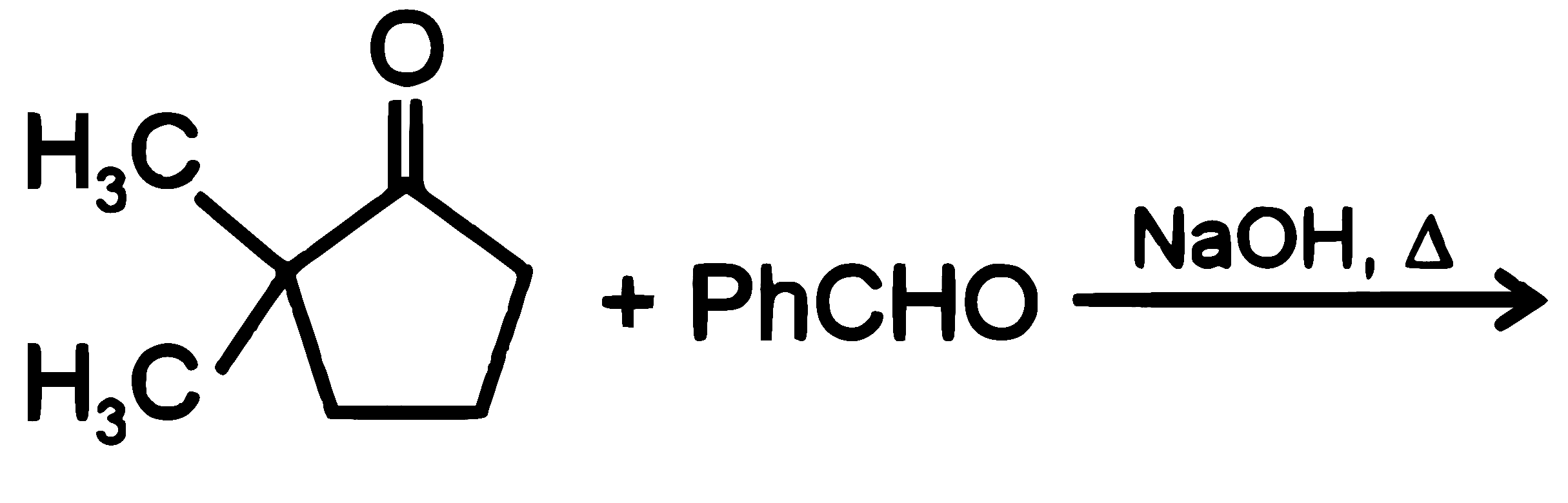
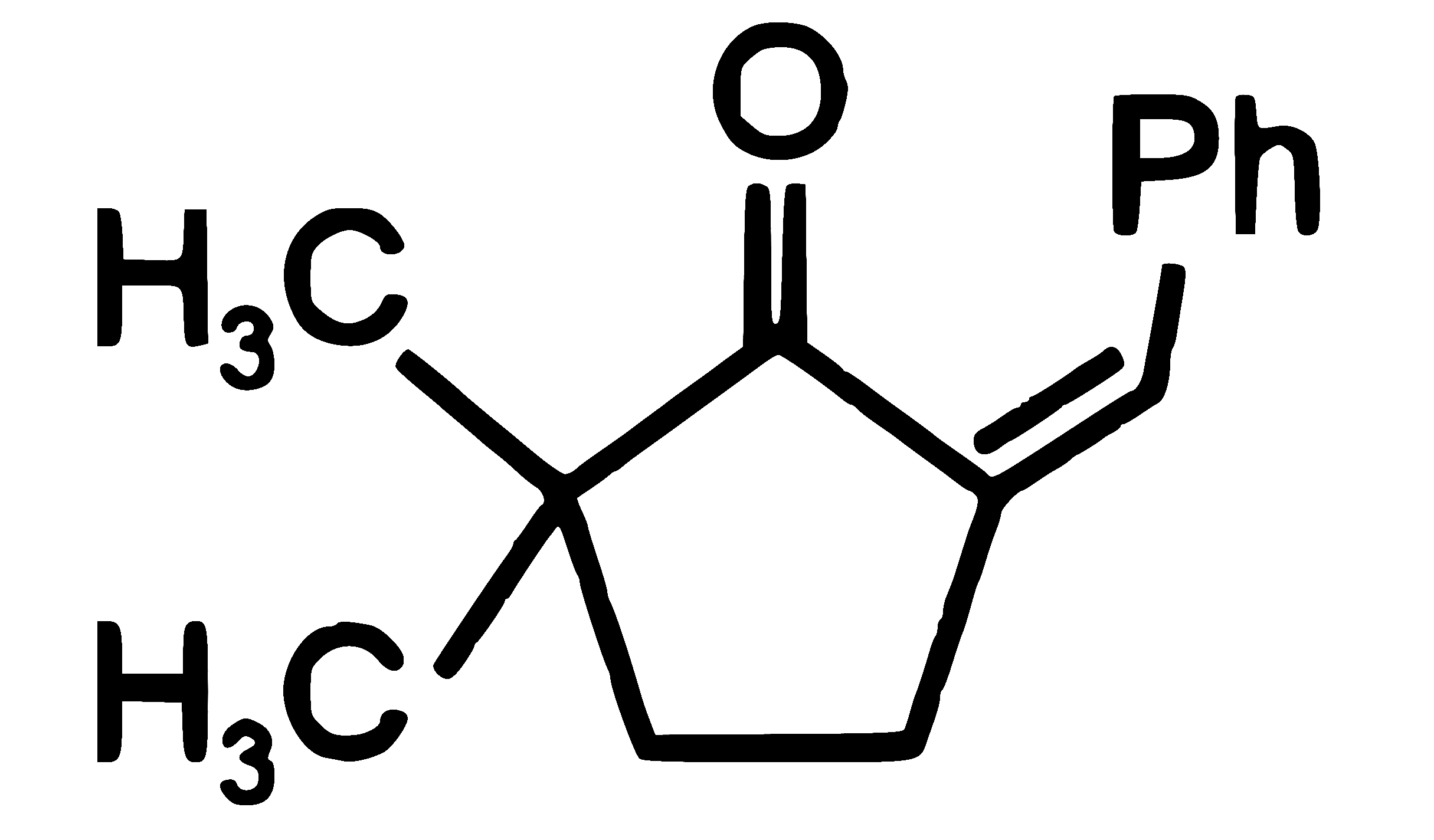
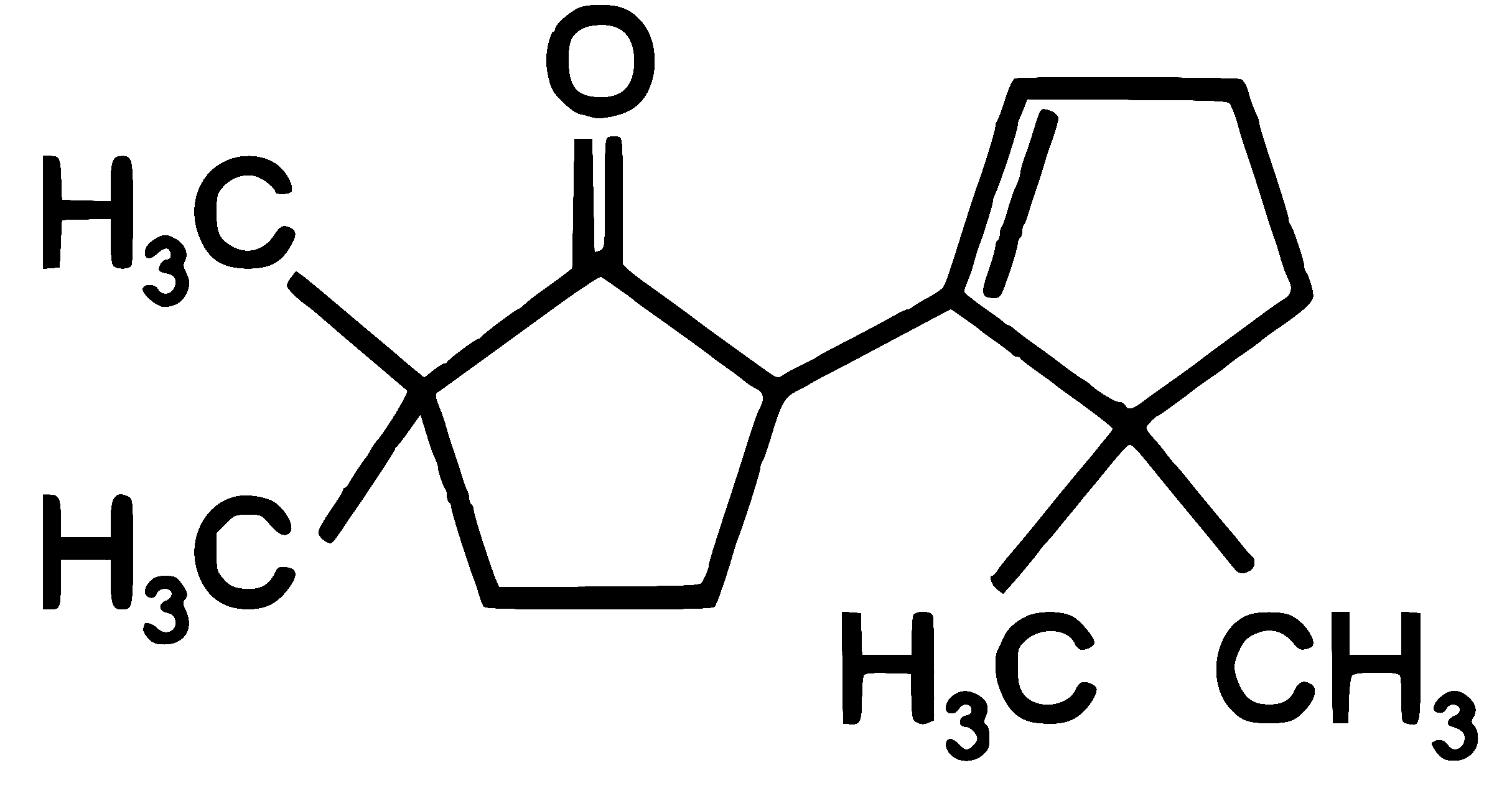
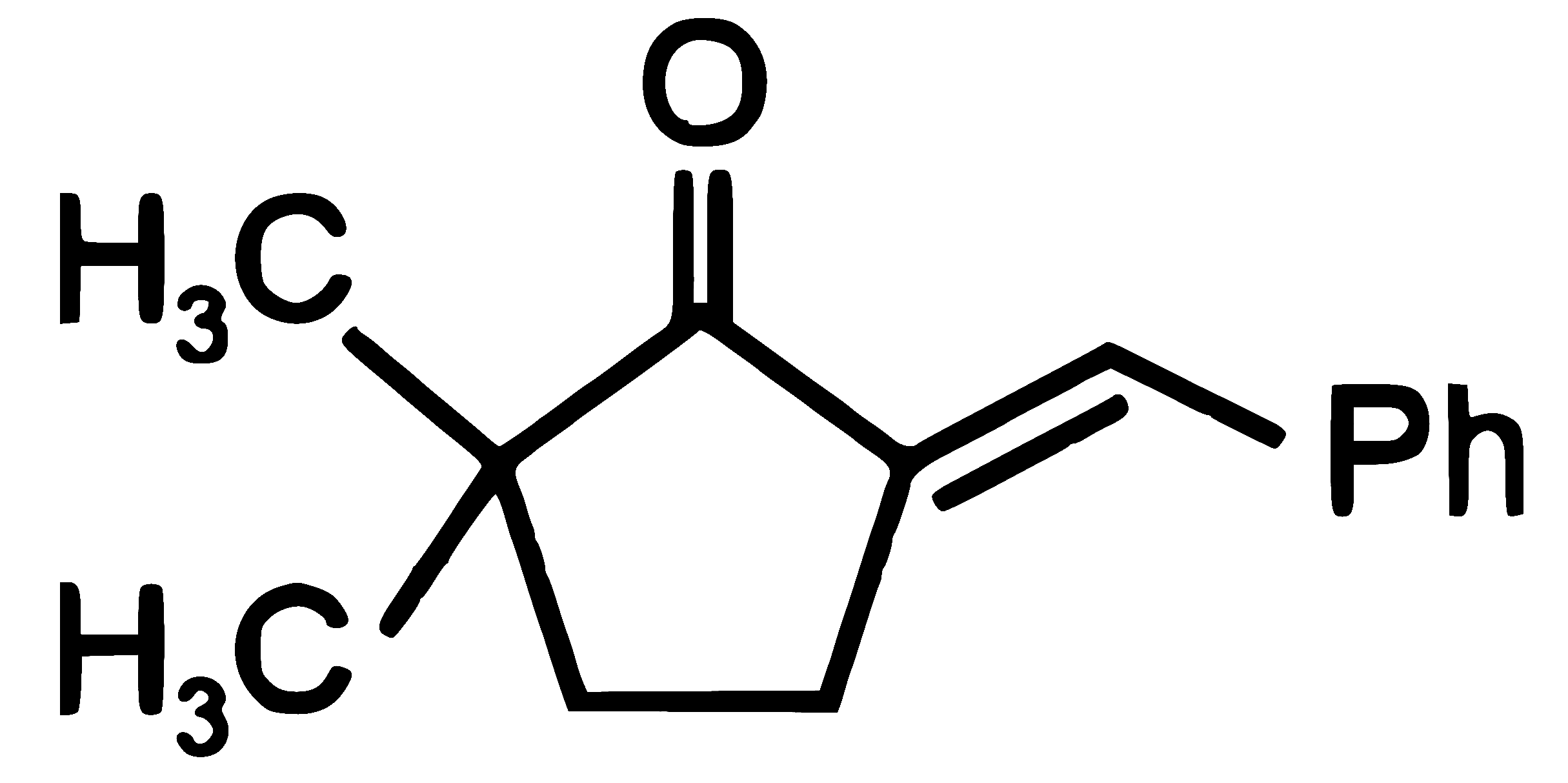
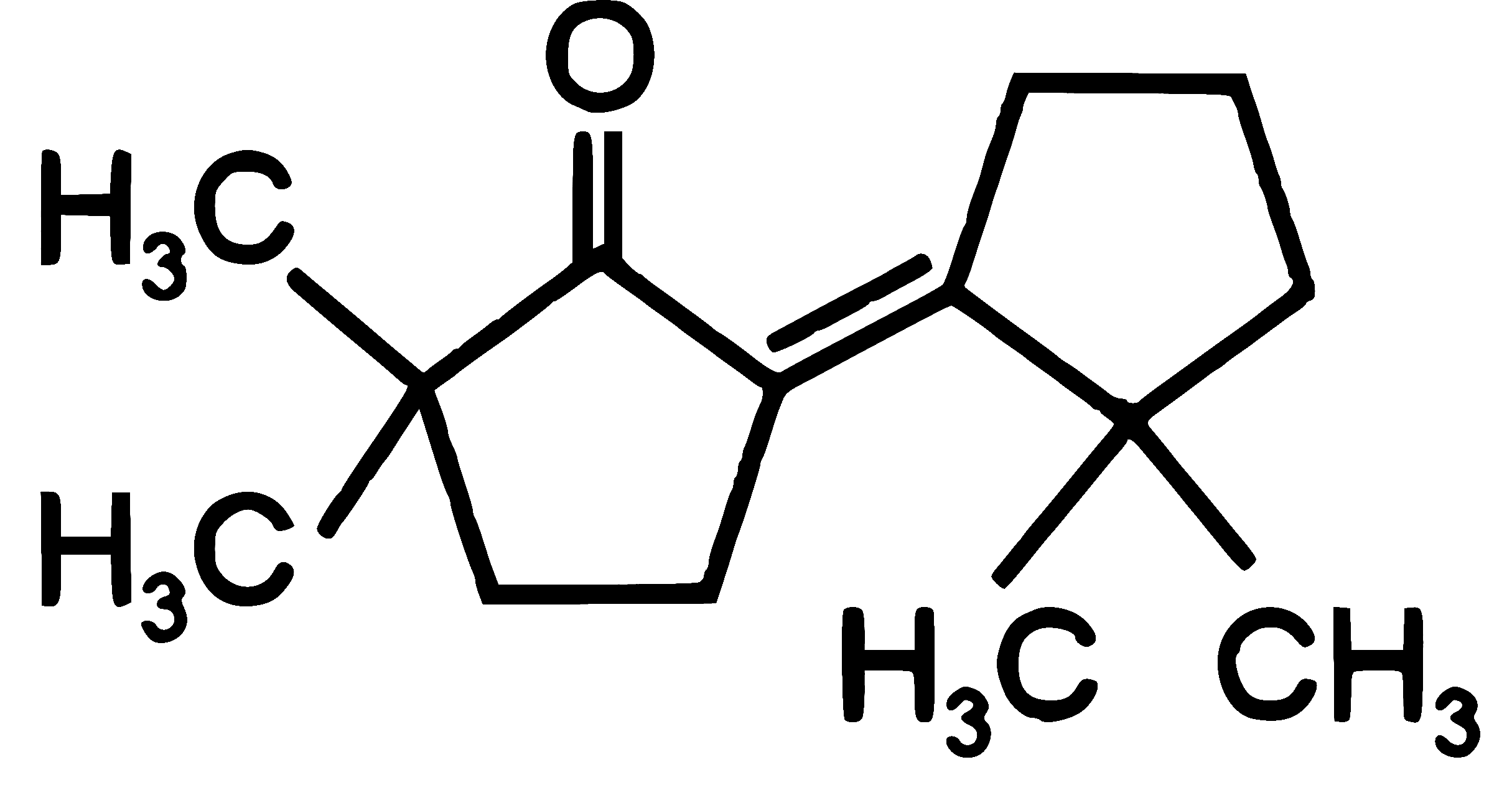
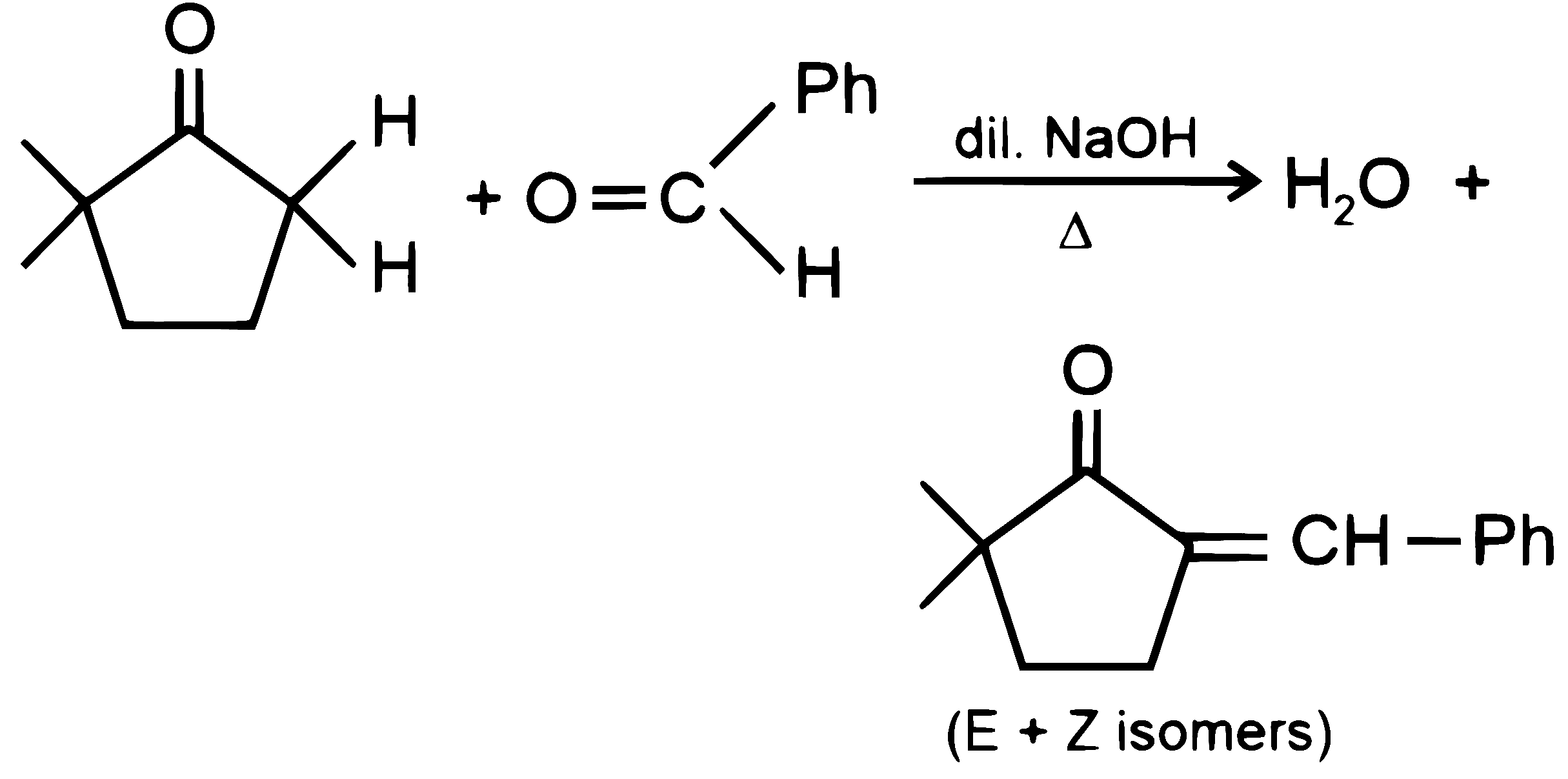
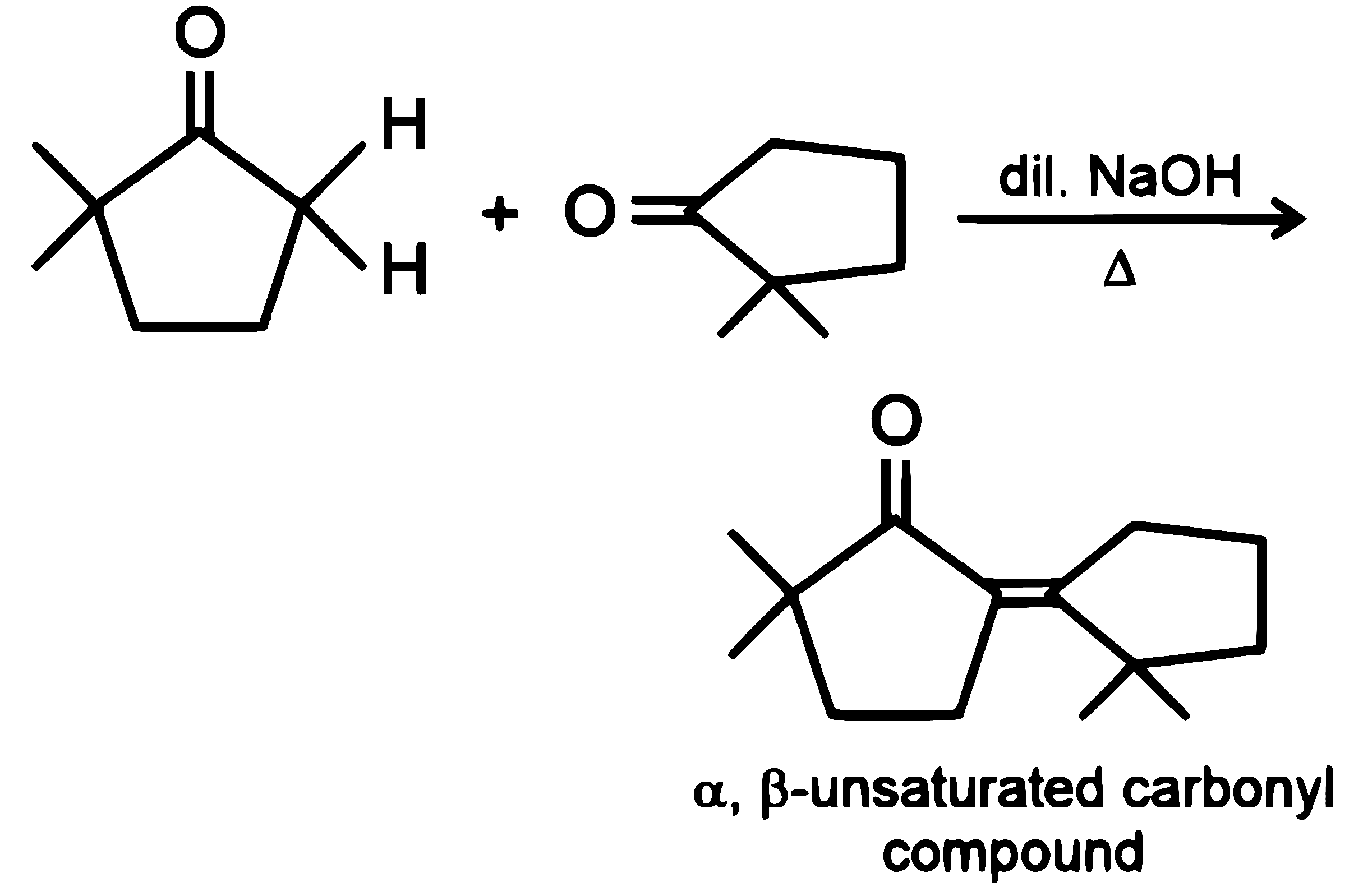

Both and are carbonyl compounds
If is the sodium salt of a carboxylic acid, is a primary alcohol
and are aromatic compounds
If gives a carboxylic acid on acidification, gives a poisonous gas on exposure to air and light

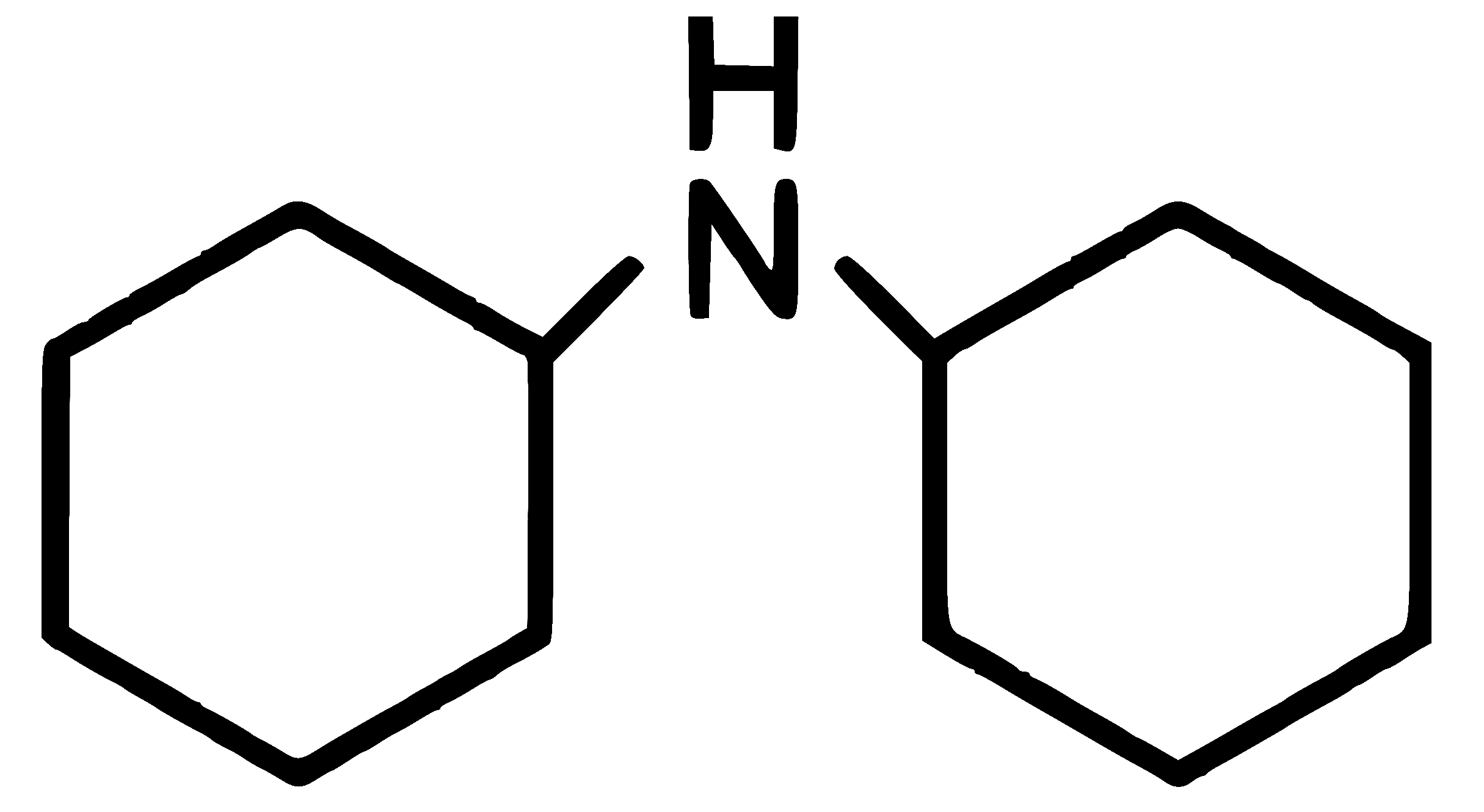
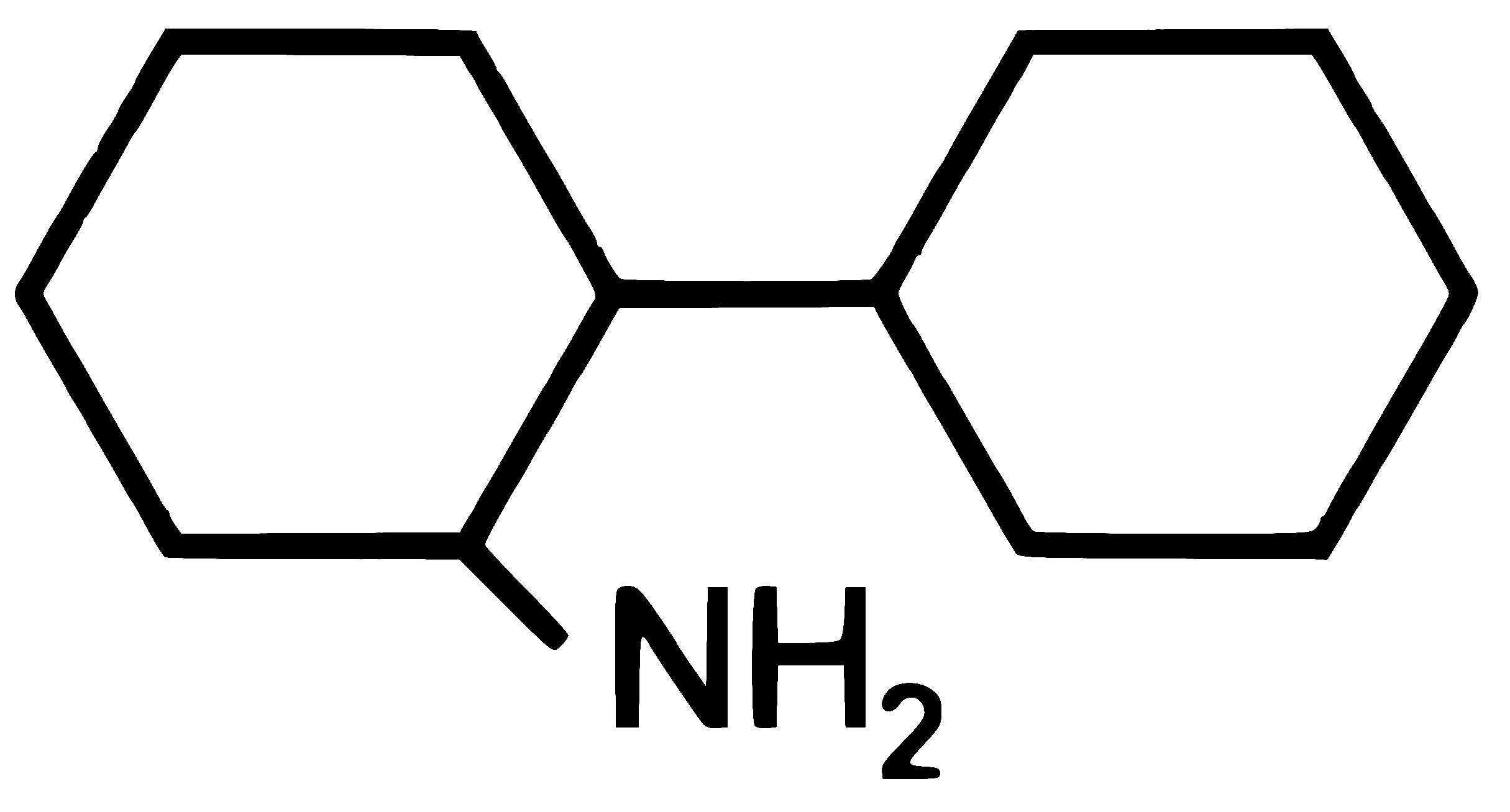
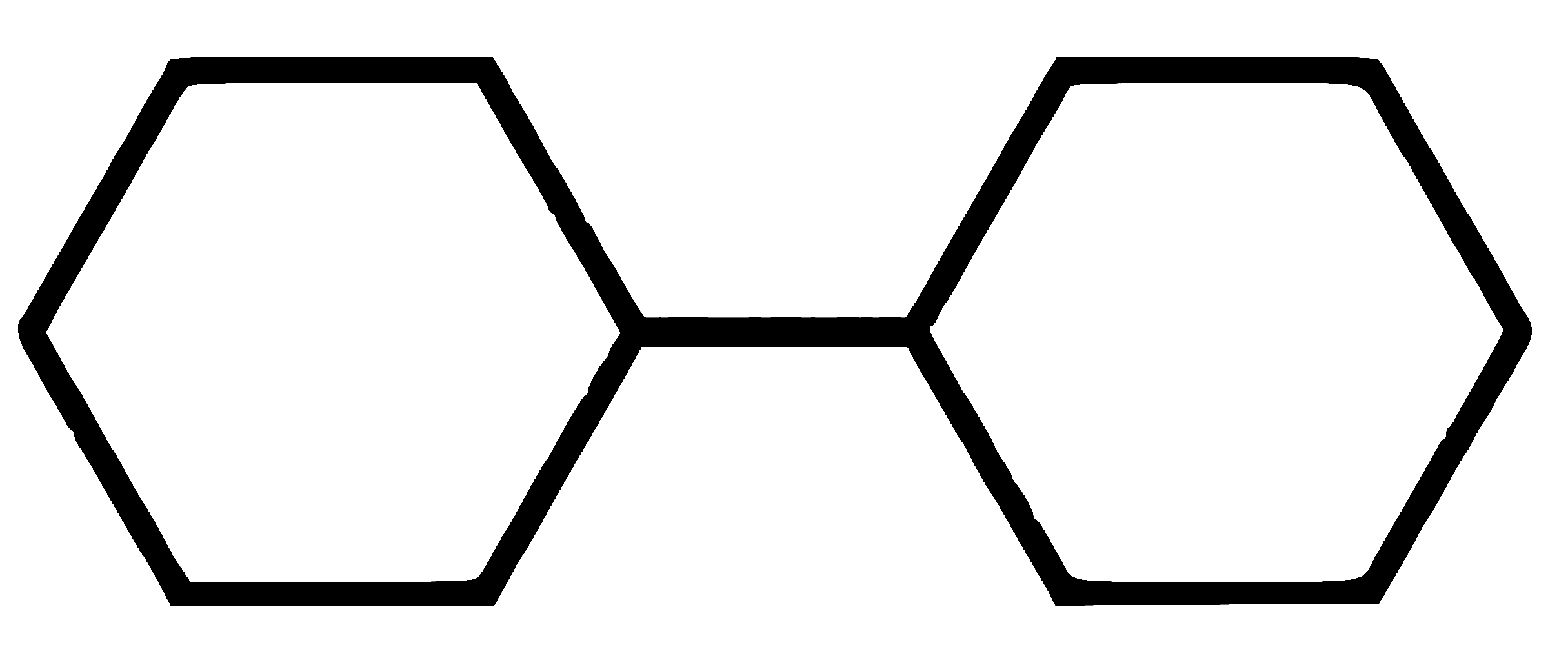
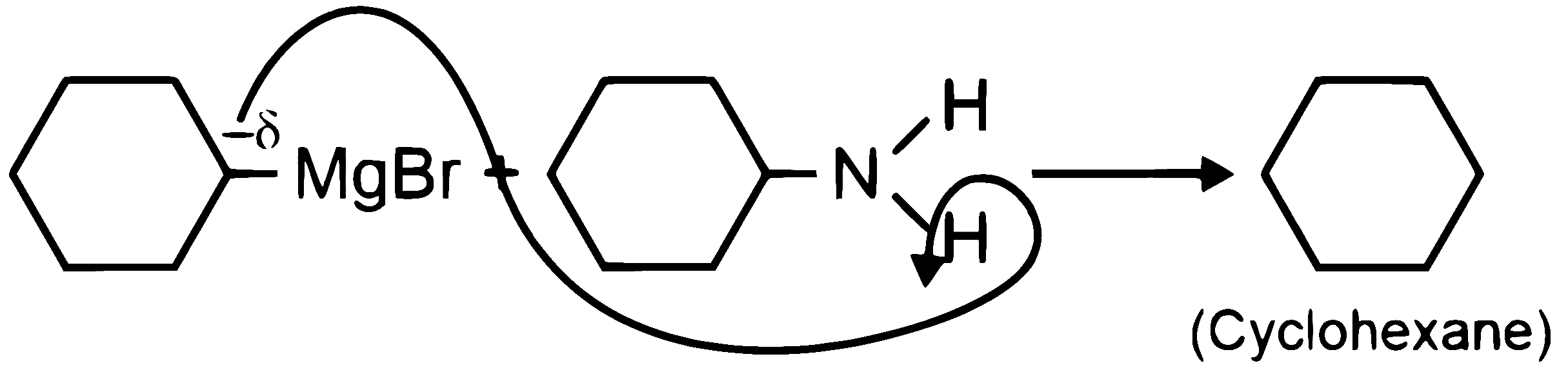
Given below are two statements:
Statement-I : Oxidation of p-nitrotoluene with acidic gives an acid that is stronger than benzoic acid.
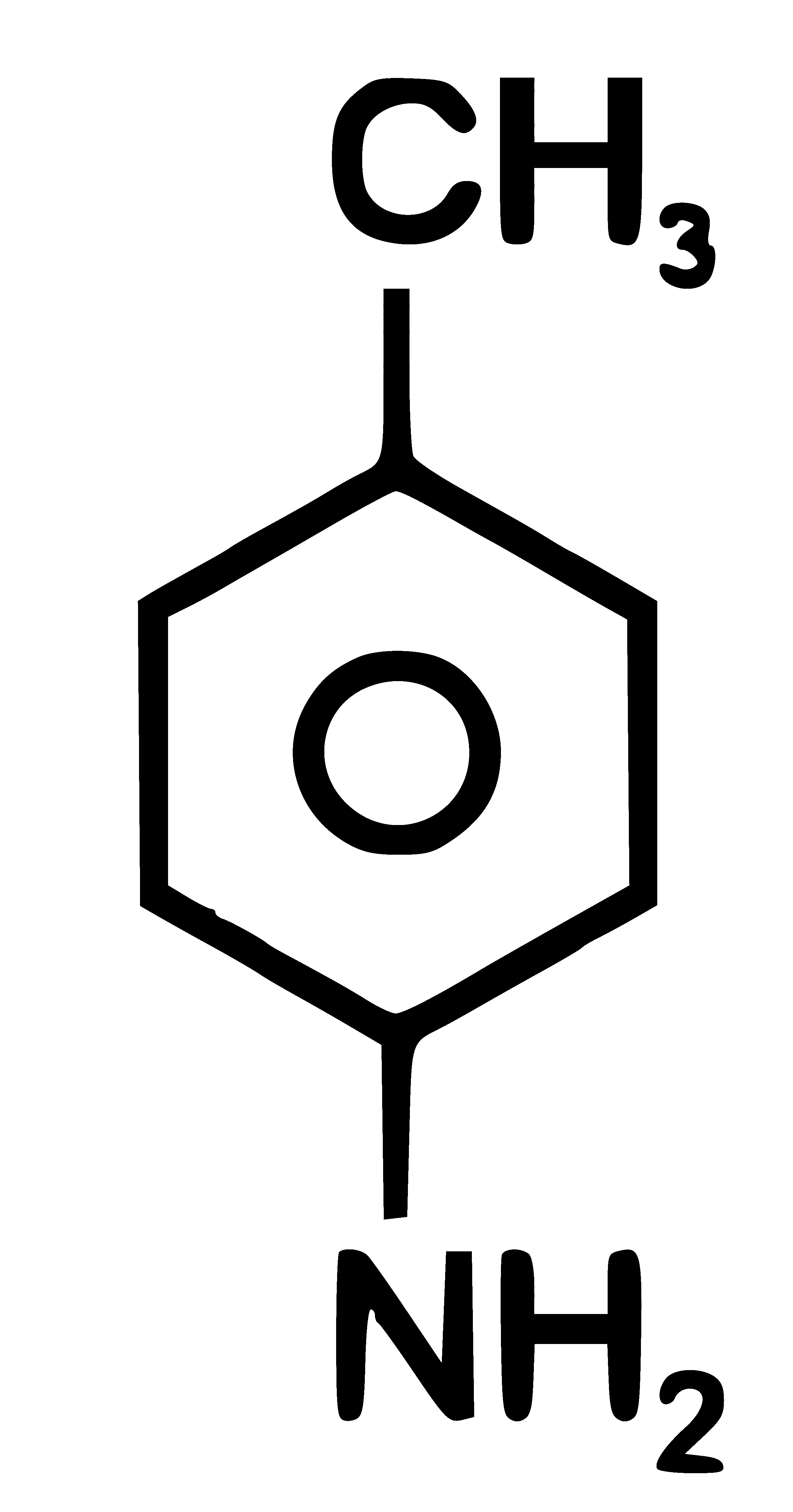
Statement-II : Reduction of p-nitrotoluene with followed by neutralization gives an amine that is more basic than aniline.
In light of the above statements, choose the most appropriate answer from the options given below.
Statement-I is incorrect but Statement-II is correct
Both Statement-I and Statement-II are correct
Both Statement-I and Statement-II are incorrect
Statement-I is correct but Statement-II is incorrect
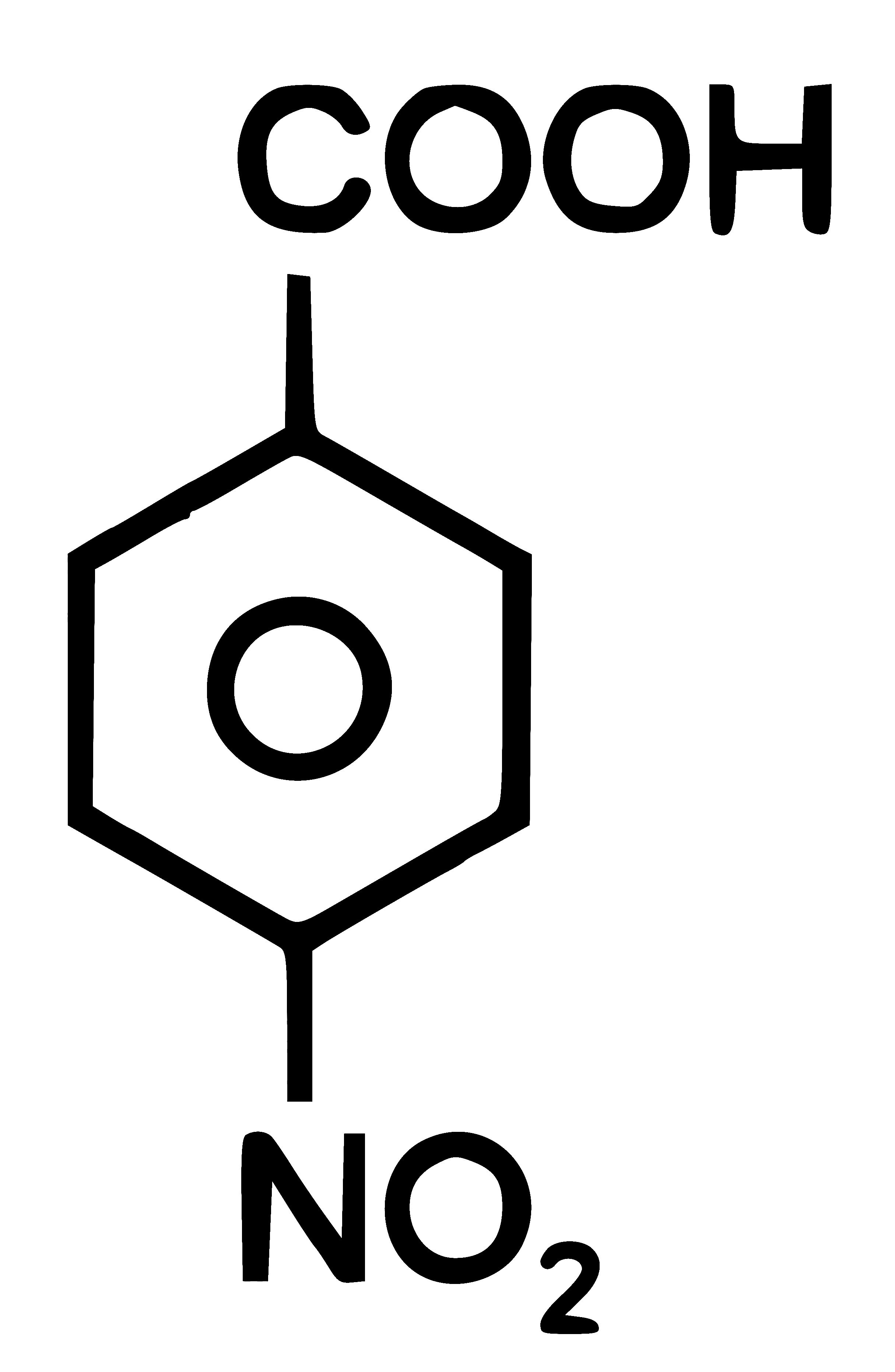
Reduction of p-nitrotoluene with followed by neutralization reduces the ( ) to an amino group ( ), forming p-toluidine.
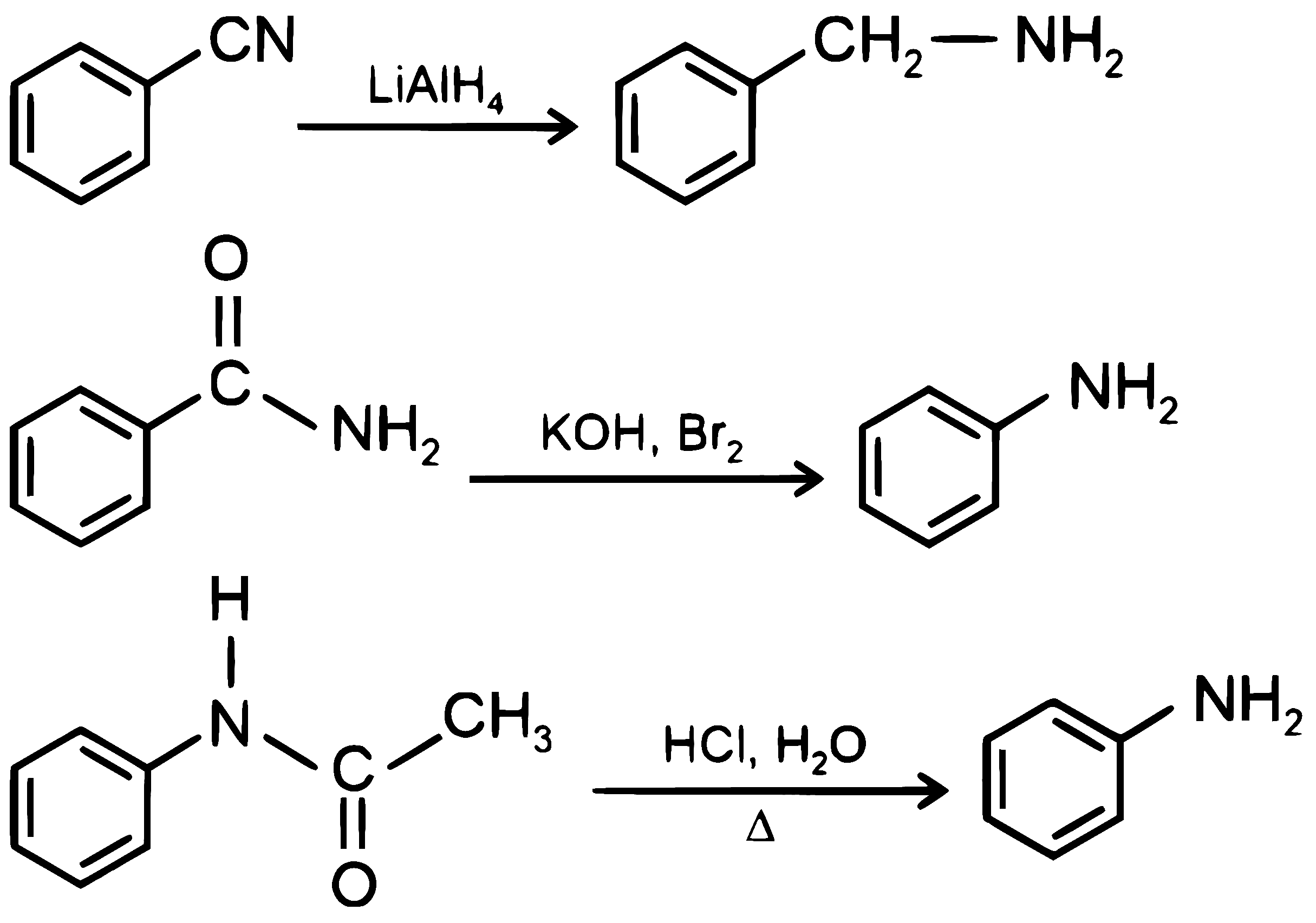
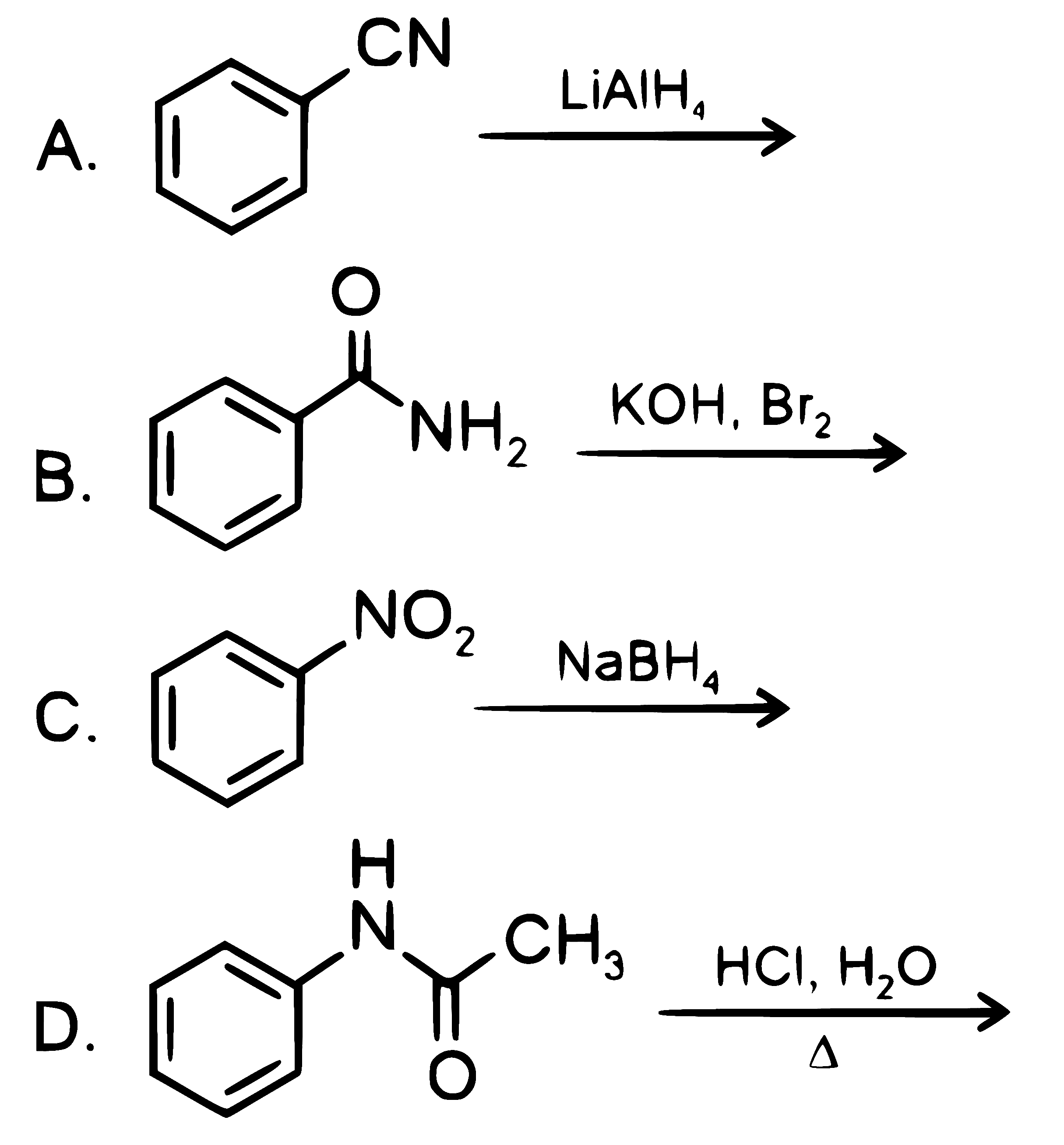 Choose the correct answer from the options given below.
C and D only
A and B only
B and D only
A and C only
The correct statement about peptides and proteins is
In -helices, the polypeptide chain is twisted into a left-handed screw (helix) through intramolecular hydrogen bonds
Tertiary structure of proteins has two or more polypeptide subunits
Only the proteins having a quaternary structure are biologically active
In -pleated sheet structures, peptide chains are held together by intermolecular hydrogen bonds
In -pleated sheet structure, peptide chains are held together by intermolecular hydrogen bonds.
This is only correct statement.
Remaining (1), (2) and (3) are incorrect statements.
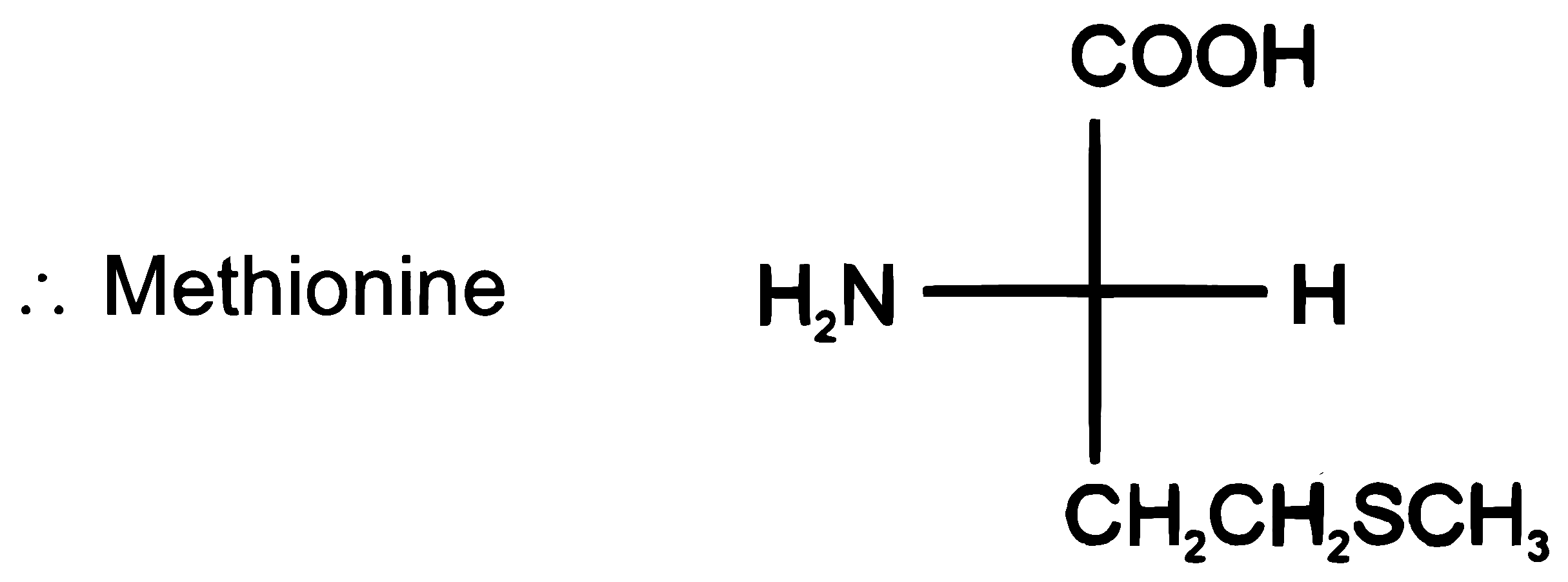
The amino acid that gives a red-blood colour on treating its sodium fusion extract with sodium nitroprusside is
serine
leucine
threonine
methionine
In case both nitrogen and sulphur are present in an organic compound, it gives blood red colour with sodium nitroprusside.
Choose the correct answer from the options given below.
A-III, B-I, C-IV, D-II
A-II, B-III, C-IV, D-I
A-IV, B-I, C-II, D-III
A-IV, B-II, C-I, D-III
| Vitamin | Sources | |
| A. | Vitamin A | Carrot |
| B. | Vitamin B |
Meat |
| C. | Vitamin E | Sunflower oil |
| D | Vitamin K | Green leafy vegetables |
Mitochondrial inner membrane encloses .
aqueous humor
matrix
cytosol
mucus
Mitochondrial inner membrane encloses matrix.
Cell theory was formulated by
Antonie Von Leeuwenhoek
Schleiden and Schwann
Robert Brown
Singer and Nicolson
Cell theory was formulated by Schleiden and Schwann.
The plastid that stores xanthophyll is known as .
amyloplast
chloroplast
chromoplast
aleuroplast
The plastid that stores xanthophyll is known as chromoplast.
Smooth endoplasmic reticulum .
is a site for the synthesis of carbohydrates
has ribosomes attached to its surface
is the major site for the synthesis of lipids
is actively involved in protein synthesis
The Smooth Endoplasmic Reticulum (SER) is responsible for synthesis of lipids as well as steroidal hormones. It is not associated with ribosomes and hence appears smooth.
Rough endoplasmic reticulum is actively involved in protein synthesis. Carbohydrate synthesis occurs in chloroplasts.
Which of the following are characteristics of prokaryotic cells?
(a) Ribosomes are made of 50 S and 30 S subunits
(b) They can have plasmids
(c) They contain mesosome
(d) They have peroxisomes
Choose the correct answer from the options given below :
(a), (b) and (c) only
(b) and (c) only
(a) and (c) only
(a), (c) and (d) only
The following are characteristics of prokaryotic cells.
Ribosomes are made of 50 S and 30 S subunits ( 70 S Ribosomes)
They can have plasmids (Extra chromosomal DNA)
They contain mesosome (Infoldings of plasma membrane)
They do not possess membrane bound organelles such as peroxisomes.
| List-I | List-II | ||
| A. | Cristae | 1. | Flat membrane sacs in stroma of chloroplast |
| B. | Cisternae | II. | Infoldings in mitochondria |
| C. | Thylakoids | III. | Cell membrane |
| D. | Phospholipid | IV. | Disc shaped sacs in the Golgi apparatus |
Choose the correct answer from the options given below:
A-IV, B-III, C-I, D-II
A-III, B-IV, C-I, D-II
A-II, B-IV, C-I, D-III
A-II, B-IV, C-III, D-I
| A. | Cristae | II. | Infoldings in mitochondria |
| B. | Cisternae | IV. | Disc shaped sacs in the Golgi apparatus |
| C. | Thylakoids | I. | Flat membrane sacs in stroma of chloroplast |
| D. | Phospholipid | III. | Cell membrane |
Endomembrane system includes .
Golgi complex, chloroplast, peroxisomes and vacuole
endoplasmic reticulum, Golgi complex, Iysosomes and vacuole
endoplasmic reticulum, chloroplast, peroxisomes and vacuole
mitochondria, chloroplast, peroxisomes and vacuole
Endomembrane system includes organelles whose functions are coordinated. It includes total four organelles, namely Endoplasmic reticulum, Golgi body, vacuole and Iysosomes.
Choose the correct answer from the options given below :
A-I, B-II, C-III, D-IV
A-I, B-II, C-IV, D-III
A-II, B-I, C-IV, D-III
A-II, B-I, C-III, D-IV
Starch → Energy storage
Antibody → Fight infection
Concanavalin A → Lectin
Glut-4 → Glucose transport
Arrange the following elements in descending order of their contribution to percentage weight of the human body.
(a) Oxygen
(b) Carbon
(c) Hydrogen
(d) Nitrogen
Choose the correct answer from the options given below :
(b), (a), (c), (d)
(a), (b), (c), (d)
(c), (a), (b), (d)
(b), (c), (d), (a)
The arrangement of elements in descending order of their contribution to percentage weight of the human body is
Oxygen Carbon Hydrogen Nitrogen
Given below are two statements :
Statement I : Chromosomes are fully condensed at the end of prophase I.
Statement II : Meiosis I resembles mitosis.
In the light of the above statements, choose the most appropriate answer from the options given below :
Statement I is incorrect, but Statement II is true
Both Statement I and Statement II are true
Both Statement I and Statement II are false
Statement I is correct, but Statement II is false
The final stage of meiotic prophase-I is diakinesis. So, at the end of prophase-I the chromosomes are fully condensed and the meiotic spindle is assembled to prepare the homologous chromosomes for separation. So, Statement I is correct.
Meiosis II resembles mitosis as it is an equational division.
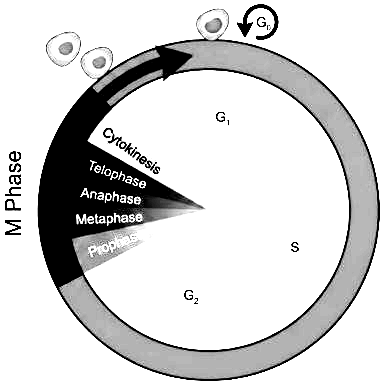
The correct sequence of adult cell cycle phases is .
S-M-G2-G1
G1-G2-S-M
G1-M-G2-S
G1-S-G2-M
Gap1 phase is the first phase of interphase. After Gap1 phase, synthesis phase starts in which DNA replicates, then Gap2 phase occur and finally cell cycle ends with M phase (mitosis).
Which of the following plant produces non-albuminous seeds?
Pea
Wheat
Maize
Barley
Non-albuminous seeds have no residual endosperm as it is completely consumed during embryo development. E.g. Pea.
Wheat, maize and barley are the examples of albuminous seeds.
Which of the following in female gametophyte of an angiosperm helps in guiding the pollen tube for fertilizing the eggs?
Polar nucleus
Antipodals
Synergids
Central cells
Synergids guide the entry of pollen tube for fertilizing the eggs, in a typical angiospermic embryo sac.
If the diploid chromosome number of typical angiosperm is 36 , what would be the chromosome number in its endosperm?
72
18
36
54
The endosperm is triploid, if the diploid chromosome number of typical angiosperm is 36
i.e. thenHow many theca are present in each lobe of a typical bilobed angiosperm anther ?
12
2
6
8
A typical anther is bilobed with each lobe having two theca i.e. they are dithecous.
Which of the following is used as a clot buster?
Statins
Streptokinase
Penicillin
Cyclosporin A
Streptokinase produced by the bacterium Streptococcus and modified by genetic engineering is used as a 'clot-buster' for removing clots from the blood vessels of patients who have undergone myocardial infarction leading to heart attack.
How many molecules of pyruvic acid are produced at the end of glycolysis from 206 molecules of glucose?
412
206
309
103
Two molecules of pyruvic acid are formed at the end of glycolysis from one molecule of glucose. From 206 molecules of glucose, 412 molecules of pyruvic acid are formed.
Given below are two statements : one is labelled as Assertion A and the other is labelled as Reason R.
Assertion A : In recombinant DNA technology, lysozyme is used for disrupting bacterial cells while cellulase is for plant cells.
Reason R : Isolation of genetic material needs disruption of cells.
In the light of the above statements, choose the most appropriate answer from the options given below :
is not correct but is correct
Both and are correct and is the correct explanation of
Both and are correct but is not the correct explanation of
is correct but is not correct
Since, the DNA is enclosed within the membranes, we have to break the cell open to release DNA along with other macromolecules such as RNA, proteins, polysaccharides and also lipids. This can be achieved by treating the bacterial cells/plant or animal tissue with enzymes such as lysozyme (bacteria), cellulase (plant cells), chitinase (fungus).
| List-I | List-II | ||
| A. | Transformation | I. | Restriction enzyme |
| B. | Cloning site | II. | Transfer DNA to host bacteria |
| C. | Selection | III. | Replication |
| D. | Ori | IV. | Antibiotic |
Choose the correct answer from the options given below:
A-IV, B-I, C-III, D-II
A-II, B-I, C-IV, D-III
A-I, B-II, C-IV, D-III
A-III, B-IV, C-II, D-I
Transformation - Transfer of DNA to the host bacteria
Cloning site - It is a segment of DNA within a plasmid vector that contains multiple unique recognition sequences for restriction enzymes.
Selection - Antibiotics help in the selection of recombinants.
Ori - Specific DNA sequence where the host cell's replication machinery begins duplicating the plasmid.
Given below are two statements :
Statement I : Plasmids are autonomously replicating DNA.
Statement II: Plasmids are extrachromosomal DNA.
In the light of the above statements, choose the most appropriate answer from the options given below:
Statement I is incorrect but Statement II is correct
Both Statement I and Statement II are correct
Both Statement I and Statement II are incorrect
Statement I is correct but Statement II is incorrect
Plasmids are used as cloning vectors in genetic engineering.
Plasmids are autonomously replicating circular extra chromosomal DNA.
They have ability to replicate within bacterial cells independent of the control of its chromosomal DNA
During PCR, primers bind to the DNA strands in the step.
ligation
denaturation
extension
annealing
PCR involves three steps, i.e. denaturation, annealing and extension. During PCR, primers bind to the DNA strands in the annealing step.
Arrange the following in descending order of number of species in the Amazonian rain forest.
(a) Plants
(b) Birds
(c) Fishes
(d) Invertebrates
(e) Mammals
Choose the correct answer from the options given below :
(b) (a) (d) (c) (e)
(c) (b) (d) (e) (a)
(d) (a) (c) (b) (e)
(e) (b) (a) (c) (d)
The Amazonian rain forest is home to more than 40,000 species of plants, 3,000 of fishes, 1300 of birds, 427 of mammals, 378 of reptiles and of more than 1,25,000 invertebrates.
Hence the correct decreasing order would be
Genus represents .
a group of closely related families
an individual plant or animal
a population of plants and animals
a group of closely related species
Genus comprises a group of related species which has more characters in common in comparison to species of other genera.
Arrange the following taxonomic categories in ascending order.
(a) Genus
(b) Class
(c) Order
(d) Phylum
(e) Family
(f) Kingdom
(g) Species
Choose the correct answer from the options given below :
(f), (c), (b), (g), (d), (e), (a)
(g), (a), (e), (c), (b), (d), (f)
(a), (c), (d), (g), (f), (b), (e)
(g), (c), (d), (b), (e), (a), (f)
The following is the arrangement of taxonomic categories in ascending order. Species (g), Genus (a), Family (e), Order (c), Class (b), Phylum (d), Kingdom (f).
| List-I | List-II | ||
| A. | Family | I. | Sapindales |
| B. | Genus | II. | Dicotyledonae |
| C. | Class | III. | Anacardiaceae |
| D. | Phylum | IV. | Angiospermae |
| E. | Order | V. | Mangifera |
A-III, B-V, C-II, D-IV, E-I
A-I, B-V, C-II, D-IV, E-III
A-II, B-I, C-III, D-IV, E-V
A-II, B-III, C-V, D-I, E-IV
Mangifera represents Genus, Anacardiaceae represents family, Sapindales represents order, Dicotyledonae represents class, Phylum Angiospermae [correct should be division]
| List-I | List-II | ||
| A. | Fusion of protoplasms between gametes | I. | Meiosis |
| B. | Fusion of two nuclei | II. | Plasmogamy |
| C. | Generation of haploid spores | III. | Karyogamy |
A-I, B-III, C-II
A-II, B-III, C-I
A-II, B-I, C-III
A-III, B-II, C-I
Karyogamy involve fusion of two nuclei.
Plasmogamy is fusion of protoplasm.
Meiosis leads to the production of haploid spores.
Mad cow disease is caused by
Mycoplasma .
prions
viroids
Aspergillus .
Mad cow disease is caused by prions.
Choose the correct answer from the options given below :
A-II, B-IV, C-I, D-III
A-I, B-III, C-II, D-IV
A-III, B-II, C-I, D-IV
A-II, B-I, C-IV, D-III
Bacteria are grouped under four categories based on their shape :
Spherical → Coccus
Rod-shaped → Bacillus
Comma-shaped → Vibrium
Spiral → Spirillum
Symbiotic association between fungi and algae are called .
chrysophytes
lichens
sponges
mycorrhiza
Lichens are symbiotic associations i.e. mutually useful associations, between algae and fungi. Mycorrhiza are associations between fungi and roots of higher plants.
Which of the following is not a prokaryote?
Fungi
Bacteria
Blue green algae
Mycoplasma
The prokaryotic cells are represented by bacteria, blue-green algae, Mycoplasma and PPLO. Fungi are eukaryotic organisms.
Phyllotaxy is the pattern of arrangement of .
sepals
leaves
flowers
fruits
Phyllotaxy is the pattern of arrangement of leaves on the stem.
| List-I | List-II | ||
| A. | Marginal placentation | I. | Argemone |
| B. | Axile placentation | II. | Tomato |
| C. | Parietal placentation | III. | Primrose |
| D. | Free central placentation | IV. | Pea |
Choose the correct answer from the options given below :
A-IV, B-II, C-I, D-III
A-II, B-IV, C-I, D-III
A-IV, B-II, C-III, D-I
A-IV, B-III, C-I, D-II
Marginal placentation - Pea
Axile placentation - Tomato
Parietal placentation - Argemone
Free central placentation - Primrose
Which of the following are characteristic features of Solanaceae family?
(a) Flowers are bisexual and actinomorphic
(b) Calyx have five sepals and are united
(c) Androecium have five stamens and are epipetalous
(d) Ovary is inferior
Choose the correct answer from the options given below :
(b), (c) and (d) only
(a), (b) and (c) only
(d) only
(a) and (b) only
In Solanaceae family, flowers are bisexual and actinomorphic. Calyx include five sepals that are united. Androecium include five stamens and it is epipetalous. Ovary is superior.
How many turns of Calvin cycle are required for the formation of three molecules of glucose?
18
6
3
1
To make one molecule of glucose 6 turns of the cycle are required.
Therefore, for the formation of three molecules of glucose, , turns of Calvin cycle are required.
Photorespiration reaction catalyzed by RuBisCo is shown below:
3-Phosphoglycerate +X . Identify " X " from the given options:
Malate
Phosphoenolpyruvate
2-Phosphoglycolate
Oxaloacetate
During the process of photorespiration, RuBP binds with and RuBP instead of being converted to 2 molecules of PGA, forms one molecule each of phosphoglycerate and phosphoglycolate. Hence, in the given reaction, the " " is 2-phosphoglycolate.
Which pigment has absorption peak at 700 nm in the photosynthetic reaction centre PS I (P700)?
Carotenoids
Chlorophyll b
Chlorophyll a
Xanthophylls
In PSI, the reaction centre chlorophyll a has an absorption peak at 700 nm and hence, is called .
Which of the following statements regarding photorespiration are correct?
(a) Do not occur in C 3 plants
(b) is consumed and is generated
(c) Phosphoglycolate is formed
(d) No synthesis of ATP and NADPH
Choose the correct answer from the options given below:
(a) and (b) only
(a) and (d) only
(c) and (d) only
(b) and (d) only
Photorespiration can occur in C3 plants.
In photorespiration, is consumed and is released.
Phosphoglycolate is formed as the initial product.
There is no synthesis of ATP and NADPH in photorespiration.
Select the correct sequence of experiments that led to a gradual understanding of photosynthesis in green plants.
Production of glucose → role of air → release of oxygen → absorption spectra of chlorophyll and
Absorption spectra of chlorophyll a and production of glucose → release of oxygen role of air
Role of air → release of oxygen → production of glucose → absorption spectra of chlorophyll and
Release of oxygen → production of glucose → absorption spectra of chlorophyll and role of air
Following is the appropriate sequence of experiments that led to a gradual understanding of photosynthesis in green plants.
Role of air in Glucose (Joseph Priestley's bell jar experiment) 1770
Release of oxygen (Jan Ingenhousz's experiment using aquatic plant)
Production of Glucose (Julius Von Sach's experiment) 1854
Absorption spectra of chlorophyll a and b (T.W. Engelmann's experiment)
Given below are two statements : one is labelled as Assertion A and the other is labelled as Reason R.
Assertion A : In an experiment, Mendel observed that the F1 progeny plants are all tall and none are dwarf.
Reason R : Stem height is a contrasting trait, with tall being dominant and dwarf being recessive.
In the light of the above statements, choose the most appropriate answer from the options given below :
is not correct but is correct
Both and are correct and is the correct explanation of
Both and are correct but is not the correct explanation of
is correct but is not correct
Mendel crossed tall and dwarf plants and observed that all the progeny plants are tall.
The trait ' T ' or tall is said to be dominant over the other allele ' t ' or 'dwarf' trait.
It is thus due to this dominance of one trait over the other that all the are tall.
For a person with blood group 'O', which of the following is not a possible combination of parents' blood group genotypes?
Father : and Mother :
Father : and Mother :
Father : and Mother :
Father : and Mother :
When and are present together they both express their own type of sugars.
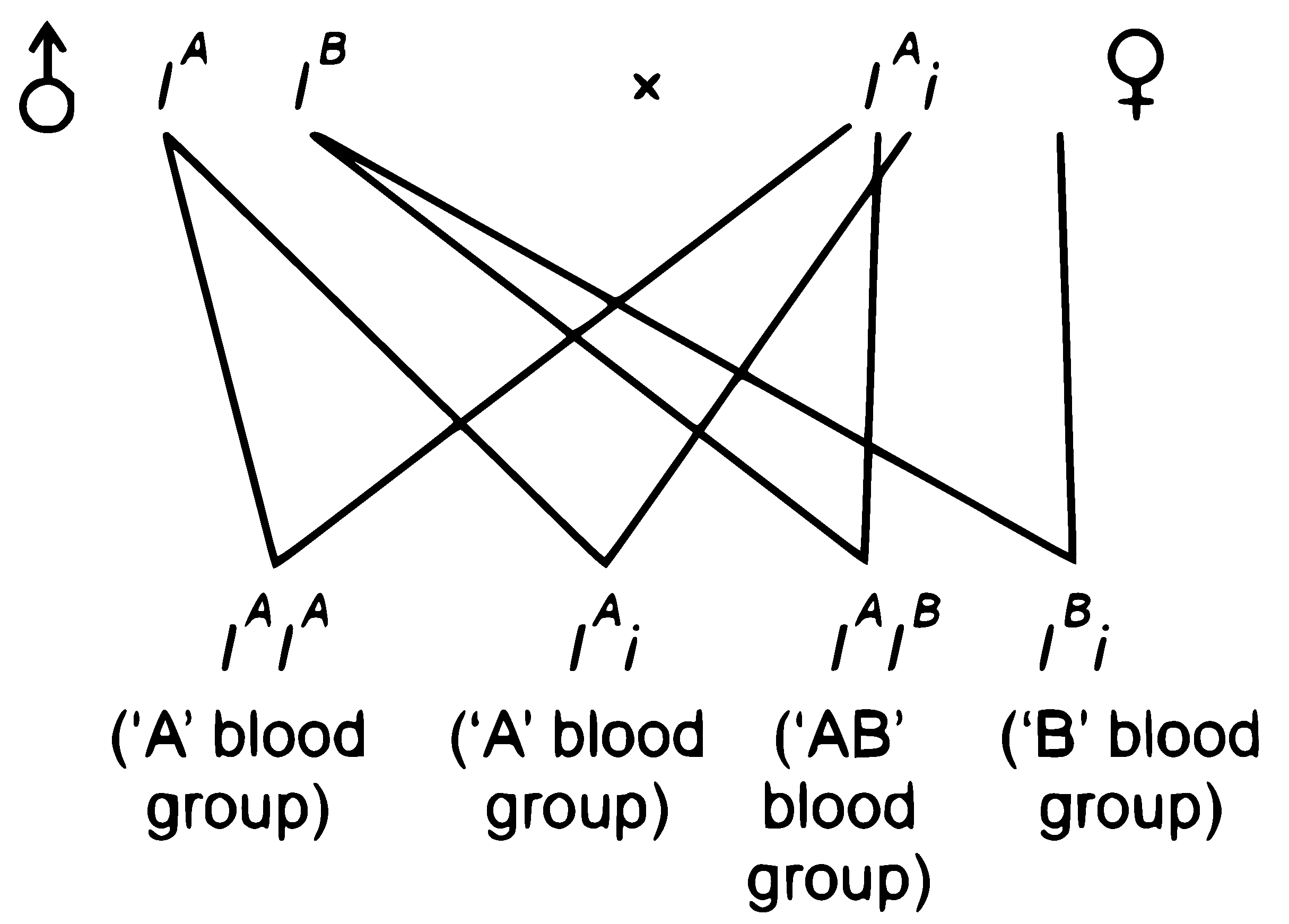
This combination of parent blood group are not possible for a person with blood group 'O'.
For a child to have type 'O' blood, both biological parents must carry the recessive 'O' allele and pass it down.
Given below are two statements :
Statement I : Down's syndrome is caused by the absence of one of the X-chromosomes.
Statement II : Turner's syndrome is caused by the presence of an additional copy of the chromosomes.
In the light of the above statements, choose the correct answer from the options given below:
Statement I is incorrect but Statement II is correct
Both Statement I and Statement II are correct
Both Statement I and Statement II are incorrect
Statement I is correct but Statement II is incorrect
The cause of genetic disorder-Down's syndrome is the presence of an additional copy of the chromosome number 21 (Trisomy 21).
The cause of genetic disorder-Turner's syndrome is the absence of one of the X-chromosomes; i.e. 45 with X0.
Which of the following statements about lac-operon is correct?
Galactose can act as an inducer of lac operon
Gene is constitutively expressed
Lactose activates repressor to bind to the operator
Genes and a share single common promoter
Galactose cannot act as an inducer of lac operon. Gene is constitutively expressed in lac operon. Repressor binds to the operator when the lactose is not available. Genes and are structural genes and have a different promoter than that of the gene.
Which of the following enzymes synthesizes precursor mRNA?
DNA polymerase
RNA polymerase I
RNA polymerase II
RNA polymerase III
The RNA polymerase II transcribes precursor of mRNA, the heterogeneous nuclear RNA (hnRNA)
The inactive form of Bt toxin is converted to the active form in the insect gut
by nucleases
due to alkaline pH
due to acidic pH
by proteases
Bt toxin protein exists as inactive protoxins, but once an insect ingests the inactive toxin, it is converted into an active form of toxin due to the alkaline pH of the gut which solubilises the crystals.
Given below are two statements : one is labelled as Assertion A and the other is labelled as Reason .
Assertion A : Abingdon tortoise in Galapagos islands became extinct within a decade after goats were introduced.
Reason R: Goats were more efficient at browsing than Abingdon tortoise.
In the light of the above statements, choose the most appropriate answer from the options given below:
is not correct but is correct
Both and are correct and is the correct explanation of
Both and are correct but is not the correct explanation of
is correct but is not correct
Abingdon tortoise in Galapagos islands became extinct within a decade after goats were introduced on the island, appararently due to the greater browsing efficiency of the goats.
Consider a population of 10 million cells. Given the per-capita birth rate of 0.002 (per unit time) and the percapita death rate of 0.002 (per unit time), the expected number of cells after 10 generations is .
100 million
1 million
5 million
10 million
The per-capita birth rate of bacteria is 0.002 .
The per-capita death rate of bacteria is 0.002 .
The population dynamic equation is
Since
So, the population remains constant at all times. Thus, even after 10 generations, the expected number of cells will be 10 million.
Given below are two statements : one is labelled as Assertion A and the other is labelled as Reason R.
Assertion A : The logistic growth model of populations is considered more realistic than the exponential growth model.
Reason R: Resources are finite.
In the light of the above statements, choose the most appropriate answer from the options given below :
is not correct but is correct
Both and are correct and is the correct explanation of
Both and are correct but is not the correct explanation of
is correct but is not correct
The logistic growth model of populations is considered more realistic than the exponential growth model because resources are limited/finite in nature.
| List-I | List-II | ||
| A. | Both species are harmed | I. | Predation |
| B. | One species is harmed and the other is benefited | II. | Mutualism |
| C. | Both species are benefited | III. | Competition |
| D. | One is benefited while the other has no effect | IV. | Commensalism |
A-III, B-I, C-II, D-IV
A-III, B-IV, C-II, D-I
A-I, B-II, C-III, D-IV
A-II, B-I, C-IV, D-III
Both species are harmed in competition.
One species is harmed and the other is benefited in predation.
Both species are benefited in mutualism.
One species is benefited while the other has no effect in commensalism.
Given below are two statements:
Statement I: In gymnosperms, the male and female gametophytes remain within the sporangia.
Statement II: In gymnosperms, seeds are not covered.
In the light of the above statements, choose the most appropriate answer from the options given below:
Statement I is incorrect but Statement II is correct
Both Statement I and Statement II are correct
Both Statement I and Statement II are incorrect
Statement I is correct but Statement II is incorrect
In gymnosperm, the male and female gametophytes do not have an independent free-living existence. They remain within sporangia, retained on the sporophyte.
In gymnosperms the ovules are not enclosed by any ovary wall and remain exposed, both before and after fertilisation. The seeds that develop post fertilisation, are not covered, i.e., naked.
Sphenopsida class belongs to .
pteridophytes
bryophytes
angiosperms
gymnosperms
Sphenopsida class belongs to pteridophytes.
Which of the following plant growth regulators promotes internode elongation prior to flowering in cabbage?
Ethephon
Abscisic acid
Gibberellin
Indole butyric acid
Gibberellin promotes internode elongation prior to flowering in cabbage.
Which of the following plant growth regulators is used as herbicide?
Gibberellin
Kinetin
Abscisic acid
2, 4-D is an artificial auxin, which is widely used as herbicide.
Length of the stem at time 0 is 20 cm . The arithmetic growth rate is 30 cm per day. What is the length of the stem at the end of the day?
460 cm
50 cm
170 cm
230 cm
Arithmetic growth can be expressed as :
[where, length at time ' t ', Length at time 'zero', growth rate]
The length of the stem at the end of day is 230 cm .
Which of the following are primary consumers in a food chain?
Carnivores
Parasites
Predators
Herbivores
Primary consumers in a food chain are the herbivores.
Which of the following statements are Correct?
(a) Energy flow from producers to consumers is unidirectional
(b) Energy pyramid can never be inverted
(c) Transfer of energy follows the law
Choose the correct answer from the options given below :
(b) and (c) only
(a), (b) and (c)
(a) and (b) only
(a) and (c) only
Energy flow is unidirectional. First plants capture solar energy and then, food is transferred from the producers to decomposers.
Pyramid of energy is always upright. It can never be inverted, because when energy flows from a particular trophic level to the next trophic level, some energy is always lost as heat at each step.
The transfer of energy follows 10 per cent law - only 10 per cent of the energy is transferred to each trophic level from the lower trophic level.
Which of the following is used as an effective sedative and painkiller for treating post-surgery patients?
Anti-retroviral drugs
Interferon
Antibiotics
Morphine
Morphine is a very effective sedative and painkiller and is very useful in patients who have undergone surgery.
Interferon belongs to cytokine barrier of innate immunity.
Antibiotics are used for restricting the growth of bacteria.
Colostrum, secreted by mother during initial days of lactation, is abundant in .
lgD
IgG
lgM
Colostrum, secreted by the mother during the initial days of lactation, is abundant in antibody. IgG antibody passes through the placenta and provides natural passive immunity.
Which of the following statements is correct about Plasmodium?
Fertilization takes place in mosquito gut
Reproduces sexually in liver cells
Reproduces sexually in RBCs
Gametocytes develop in mosquito gut
Plasmodium reproduces asexually in liver cells. Plasmodium parasite reproduce asexually in red blood cells, bursting the RBCs ad causing cycles of fever and other symptoms. Released parasites infect new red blood cell. Female anopheles mosquito takes up gametocytes with blood meal.
Fertilization and development take place in the mosquito's gut.
Sexual stages of plasmodium (gametocytes) develop in RBC.
Which of the following are secondary lymphoid organs?
(a) Bone marrow
(b) Tonsils
(c) Spleen
(d) Thymus
Choose the correct answer from the options given below:
(a) and (d) only
(a) and (b) only
(b) and (c) only
(b) and (d) only
Bone marrow and thymus are primary lymphoid organs while tonsils, spleen are secondary lymphoid organs.
Which of the following statements is incorrect?
Fibrinogen is produced from fibrin
Blood coagulates in response to an injury
Blood clot consists of fibrins
Fibrin is produced from fibrinogen
Fibrins are formed by the conversion of inactive fibrinogen in the plasma by the enzyme thrombin.
The number of action potentials generated by sino-atrial node (SAN) in a healthy human is per minute.
The number of action potentials generated by sino-atrial node (SAN) in a healthy human is 70-75 per minute.
The opening between the right atrium and the right ventricle is guarded by .
sino-atrial node
bicuspid valve
tricuspid valve
semilunar valve
The opening between the right atrium and the right ventricle is guarded by a valve formed of three muscular flaps or cusps, called the tricuspid valve.
A bicuspid/mitral valve guards the opening between the left atrium and the left ventricle.
The openings of the right and the left ventricles into the pulmonary artery and the aorta, respectively, are provided with the semilunar valves.
Which of the following represents the correct sequence of arrangement of bones in the lower limb of humans?
Femur-tarsal-patella-tibia
Femur-tibia-patella-tarsal
Patella-femur-tibia-tarsal
Femur-patella-tibia-tarsal
Each hindlimb consists of 30 bones.
The bones of the lower limb is femur (thigh bone), A cup shaped bone called patella cover the knee ventrally (knee cap), tibia and fibula, tarsals (ankle bones), metatarsals and phalanges.
So, the correct sequence of arrangement of bones in the lower limb of humans will be Femur - patella - tibia -tarsal.
The number of vertebrae in a human is .
206
7
12
26
The number of vertebrae in adult human is 26 .
Muscle contraction is initiated by a signal sent by the central nervous system by the release of .
cyclic adenine monophosphate
acetyl choline
acetyl coenzyme A
cyclic guanine monophosphate
Muscle concraction is initiated by a signal sent by the central nervous system (CNS) via a motor neuron. The junction between a motor neuron and the sarcolemma of the muscle fibre is called the neuromuscular junction or motor-end plate. A neural signal reaching this junction releases a neurotransmitter (Acetylcholine) which generates an action potential in the sarcolemma.
Which of the following is the correct order of arrangement of vertebrate column from the head to toe?
Cervical vertebra, thoracic vertebra, lumbar vertebra, sacrum
Cervical vertebra, thoracic vertebra, sacrum, lumbar vertebra
Sacrum, lumbar vertebra, thoracic vertebra, cervical vertebra
Cervical vertebra, lumbar vertebra, thoracic vertebra, sacrum
The vertebral column is formed by 26 serially arranged units called vertebrae and is dorsally placed.
The vertebral column is differentiated into cervical (7), thoracic (12), lumbar (5), sacral (1-fused) and coccygeal (1-fused) regions starting from the skull.
So, the correct sequence will be : Cervical, thoracic, lumbar, sacrum and coccyx.
Which of the following is not a part of human central neural system?
Pericardium
Arachnoid
Dura mater
Pia mater
Pericardium is a double walled membranous bag that protects the heart.
Arachnoid, dura mater and pia mater are meninges, which cover the brain inside the skull.
The method of directly of injecting a sperm into ovum in assisted reproductive technology is called :
Embryo transfer (ET)
Gamete intra fallopian transfer (GIFT)
Zygote intra fallopian transfer (ZIFT)
Intra cytoplasmic sperm injection (ICSI)
Intra cytoplasmic sperm injection (ICSI) is a procedure to form an embryo in the laboratory in which a sperm is directly injected into the ovum.
ZIFT (Zygote intra fallopian transfer) involves transfer of the zygote or early embryos with upto 8 blastomeres into the fallopian tube.
GIFT (Gamete intra fallopian transfer) involves transfer of an ovum collected from a donor into the fallopian tube of another female who cannot produce one, but can provide suitable environment for fertilisation and further development.
Which of the following disease is not sexually transmitted?
Genital warts
Syphilis
Tuberculosis
Gonorrhoea
Genital warts, syphilis and gonorrhoea are sexually transmitted diseases.
Genital warts is caused by Human papilloma virus.
Syphilis is caused by Treponema pallidum.
Gonorrhoea is caused by Neisseria gonorrhoeae.
Tuberculosis is caused by Mycobacterium tuberculosis.
This disease spreads through air.
In frogs, the number of pairs of cranial nerves arising from the brain are .
12
6
9
10
In frogs, there are ten pairs of cranial nerves arising from the brain.
Which of the following statements about the reabsorption process in Henle's loop are correct?
(a) The descending limb of Henle's loop is permeable to water but almost impermeable to electrolytes.
(b) Urine gets concentrated in Henle's loop.
(c) Reabsorption of and water takes place in Henle's loop.
(d) Active or passive transport of electrolytes occurs in the ascending limb of Henle's loop.
Choose the correct answer from the options given below:
(a), (b) and (d) only
(a) and (b) only
(b), (c) and (d) only
(a), (b) and (c) only
None of the given options are correct
Which of the following statements related to pituitary gland are correct?
(a) It is divided anatomically into adenohypophysis and neurohypophysis
(b) It secretes follicle stimulating hormone
(c) It secretes melanocyte stimulating hormone
(d) It does not secrete prolactin
Choose the correct answer from the options given below :
(b) and (c) only
(a) and (b) only
(a), (b) and (c) only
(c) and (d) only
Adenohypophysis of pituitary gland also secrets prolactin.
Which one of the following statements is incorrect?
-cells of pancreas secrete insulin
-cells of pancreas secrete glucagon
-cells of pancreas secrete insulin
Glucagon stimulates glycogenolysis
The two main types of cells in the Islet of Langerhans are called -cells and -cells.
The -cells secrete a hormone called glucagon, while the -cells secrete insulin.
Glucagon stimulates glycogenolysis while insulin stimulates glycogenesis.
| List-I | List-II |
| (A) Excess growth hormone | (I) Reabsorption of water and electrolytes in kidney |
| (B) Luteinizing hormone | (II) Contraction of uterus during child birth |
| (C) Vasopressin | (III) Acromegaly |
| (D) Oxytocin | (IV) Ovulation |
A-IV, B-III, C-I, D-II
A-III, B-IV, C-II, D-I
A-III, B-IV, C-I, D-II
A-II, B-IV, C-I, D-III
Excess growth hormone → Acromegaly
Luteinizing hormone → Ovulation
Vasopressin → Reabsorption of water and electrolytes in kidneys
Oxytocin → Contraction of uterus during child birth.
The covering of ovum at ovulation is .
chorion
endometrium
zona radiata
zona pellucida
The Graafian follicle ruptures to release the secondary oocyte (ovum) from the ovary by the process called ovulation.
The secondary oocyte forms a membrane called zona pellucida surrounding it.
Endometrium is the innermost layer of uterine wall.
Chorion is the outermost extraembryonic membrane that surrounds the embryo.
Which of the following struture is not a part of the male reproductive system?
Infundibulum
Rete testis
Epididymis
Vasa efferentia
The male sex accessory ducts include rete testis, vasa efferentia, epididymis and vas deferens. The oviducts, uterus and vagina constitute the female accessory ducts.
Infundibulum is the part of oviduct.
Given below are two statements:
Statement I : Ovulation is caused by LH surge leading to rupture of Graafian follicles.
Statement II: Graafian follicle remaining after ovulation transform into corpus luteum and secretes large amount of estrogen.
In the light of the above statements, choose the most appropriate answer from the options given below:
Statement I is incorrect but Statement II is correct
Both Statement I and Statement II are correct
Both Statement I and Statement II are incorrect
Statement I is correct but Statement II is incorrect
Rapid secretion of LH leading to its maximum level during the mid-cycle called LH surge induces rupture of Graafian follicle and thereby the release of ovum (ovulation).
The remaining parts of the Graafian follicle transform as the corpus luteum, which secretes large amounts of progesterone.
Sperm motility is due to .
muscular movement
flagellar movement
ciliary movement
amoeboid movement
Sperm travels across the fallopian tube via flagellar movement.
Which of the following hormone is not secreted by human placenta?
LH
hCG
Estrogen
Progesterone
The placenta acts as a temporary endocrine gland during pregnancy, secreting several vital hormones essential for fetal development and maintenance of pregnancy.
Several hormones produced by placenta are human chorionic gonadotropin (hCG), human placental lactogen (hPL), estrogen, progestogens, etc.
Luteinizing hormone (LH) is secreted by anterior pituitary.
Given below are two statements:
Statement I : The class name Reptilia refers to creeping or crawling mode of locomotion.
Statement II : All organisms belonging to Reptilia have three chambered heart.
In the light of the above statements, choose the most appropriate answer from the options given below:
Statement I is incorrect but Statement II is correct
Both Statement I and Statement II are correct
Both Statement I and Statement II are incorrect
Statement I is correct but Statement II is incorrect
The class Reptilia refers to their creeping or crawling mode of locomotion. Heart is usually threechambered, but four-chambered in crocodiles.
So, All organisms belonging to class Reptilia does not possess three chambered heart.
Which of the following is not a characteristic of chordates?
Presence of post anal part (tail)
Presence of notochord
Central nervous system is dorsal
Absence of gills
The members of phylum Chordata shows following features at any stage of life.
(1) Presence of notochord
(2) Pharynx perforated by gill slits
(3) Dorsal, hollow and single central nervous system
(4) Ventral heart
(5) A post-anal tail
Gill slits are absent in non-chordates.
Given below are two statements :
Statement I : When any plane passing through the central axis of the body divides the organism into two identical halves, it is called radial symmetry.
Statement II : In phylum Echinodermata, both adults and larvae are radially symmetrical.
In the light of the above statements, choose the most appropriate answer from the options given below :
Statement I is incorrect but Statement II is correct
Both Statement I and Statement II are correct
Both Statement I and Statement II are incorrect
Statement I is correct but Statement II is incorrect
When any plane passing through the central axis of the body divides the organism into two identical halves, it is called radial symmetry. The members of the phylum Echinodermata exhibits radial or bilateral symmetry depending on the stage.
Adult echinoderms are radially symmetrical while larval echinoderms are bilaterally symmetrical.
In water, frogs respire using .
trachea
skin
buccal cavity
lungs
Frogs respire on land and in water by different methods. In water, skin acts as aquatic respiratory organ (cutaneous respiration). Dissolved oxygen in the water is exchanged through the skin by diffusion. On land, the buccal cavity, skin and lungs act as the respiratory organs.
Sponges exchange with by .
gills
simple diffusion over their entire body surfaces
moist cuticle
tracheal tubes
Mechanisms of breathing vary among different groups of animals depending mainly on their habitats and levels of organisation.
Lower invertebrates like sponges, coelenterates, flatworms, etc., exchange with by simple diffusion over their entire body surfaces. Earthworms use their moist cuticle and insects have a network of tubes (tracheal tubes) to transport atmospheric air within the body.
Gills are used by most of the aquatic arthropods and molluscs.
Adaptive radiation in placental mammals and Australian Marsupials leading to similarity between distant species is an example of .
genetic drift
divergent evolution
convergent evolution
founder effect
When more than one adaptive radiation appeared to have occurred in an isolated geographical area (representing different habitats), one can call this convergent evolution.
Placental mammals in Australia also exhibit adaptive radiation in evolving into varieties of such placental mammals each of which appears to be 'similar' to a corresponding marsupial.
Given below are two statements :
Statement I : Modern Homo sapiens arose in Australia and moved across continents.
Statement II: Homo sapiens arose around 75000 to 10000 years ago.
In the light of the above statements, choose the most appropriate answer from the options given below:
Statement I is incorrect but Statement II is correct
Both Statement I and Statement II are correct
Both Statement I and Statement II are incorrect
Statement I is correct but Statement II is incorrect
Homo sapiens arose in Africa and moved across continents and developed into distinct races. During ice age, between 75,000-10,000 years ago, modern Homo sapiens arose.
A population of diploid organisms is at Hardy-Weinberg equilibrium. If the frequency of allele is 0.1 , the frequency of AA is .
0.99
0.01
0.02
0.10
The frequency of allele
As per the Hardy-Weinberg equilibrium,
Frequency of
Given below are two statements : one is labelled as Assertion A and the other is labelled as Reason .
Assertion A : Forelimbs of human and bats are homologous.
Reason R : Forelimbs of humans and bats have similar anatomical structure.
In the light of the above statements, choose the most appropriate answer from the options given below.
is false but is true
Both and are correct and is the correct explanation of
Both and are true, but is not the correct explanation of
is true but is false
Forelimbs of bats and humans share similarities in the pattern of bone arrangement.
Though their forelimbs perform different functions, they have similar anatomical structure, as all of them have humerus, radius, ulna, carpals, metacarpals and phalanges in their forelimbs.
Hence, in these animals, the same structure developed along different directions due to adaptation to different needs. This is divergent evolution, and these structures are homologous.
Natural selection can lead to .
(a) stabilisation
(b) genetic drift
(c) directional change
(d) disruption
Choose the correct answer from the options given below :
(a) and (c) only
(a) only
(a), (c) and (d) only
(a), (b), (c) and (d)
Natural selection can lead to stabilization, directional change or disruption. Natural selection is a process in which heritable variations enabling better survival enabled to reproduce and leave greater number of progeny. A critical analysis makes us believe that variation due to mutation or recombination during gametogenesis , or due to gene flow or genetic drift results in changed frequency of genes and alleles in future generation.
Which of the following is not evidence for evolution?
Divergent evolution of anatomical structures such as forelimbs
Convergent evolution of traits like wings of birds and butterflies
Paleontological evidence from fossil records
Embryological support for evolution as proposed by Ernst Heckel
Divergent evolution of anatomical structures, such as forelimbs, indicate homology.
Homology indicates common ancestry and acts as the evidence of evolution.
When same structure develops along different directions due to adaptation to different needs, they are called homologous structures.
Convergent evolution does not act as the evidence for evolution, because species can develop similar features without a common ancestor.
Fossils are remains of hard parts of life-forms found in rocks.
A study of fossils in different sedimentary layers indicates the geological period in which they existed. Embryological support for evolution was proposed by Ernst Heckel based upon the observation of certain features during embryonic stage common to all vertebrates that are absent in adult. But later, this proposal was disapproved on careful study performed by Karl Ernst von Baer.